文化产业

Search documents
江海匠心耀沪上 文体融合绽新篇——南通名品馆亮相第六届长三角文博会
Yang Zi Wan Bao Wang· 2025-11-24 15:11
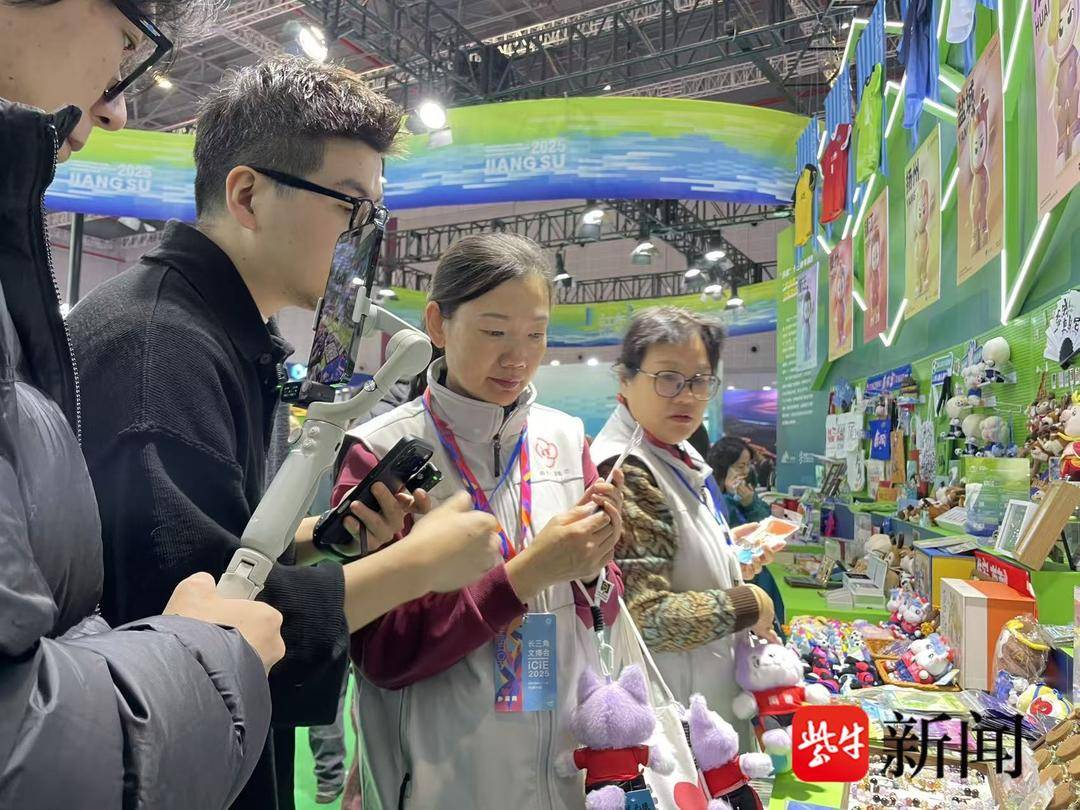
Core Viewpoint - The sixth Yangtze River Delta International Cultural Industry Expo highlights the integration of culture and economic development, showcasing over 1,500 cultural enterprises and emphasizing the theme of cultural empowerment in innovation and creativity [1] Group 1: Event Overview - The expo serves as a platform for the integration of culture and economy in the Yangtze River Delta region, featuring a diverse range of cultural enterprises [1] - The event is themed "Cultural Empowerment for Economic and Social Development, Stimulating Innovation and Creativity in the Cultural Industry" [1] Group 2: Company Participation - Tonghui Company showcased its customized cultural and creative products related to the Suzhou Super League team, blending local culture with sports [3] - The company presented a variety of innovative products, including a wolf mascot doll, folding fans depicting local scenery, and a customized calendar featuring highlights of the team [3][5] Group 3: Product Innovation - Tonghui Company collaborated with local merchants to promote traditional crafts and local flavors, introducing products like portable fragrance cards and essential oil hats [5] - The exhibition featured unique items such as a custom poker set and embroidered artworks that reflect the cultural heritage of Nantong [5] Group 4: Strategic Insights - The participation in the expo allowed Tonghui Company to act as a bridge for cultural dissemination and industry integration, promoting a model of "enterprise empowerment + merchant collaboration + IP value addition" [7] - The company aims to leverage market-oriented strategies to activate traditional crafts and expand industry boundaries through cultural and sports integration [7] Group 5: Future Directions - Tonghui Company plans to continue exploring the integration of culture and technology, focusing on innovation while maintaining cultural roots [9] - The goal is to create a product matrix that embodies regional characteristics and market vitality, contributing to the cultural development of the Yangtze River Delta [9]

《中国·长江文化发展城市指数报告2025》发布
Nan Jing Ri Bao· 2025-11-24 02:37
Core Insights - The "China Yangtze Culture Development City Index Report 2025" highlights Nanjing as one of the seven "benchmark cities" for cultural development along the Yangtze River [1][2] - The report indicates a positive trend in the cultural development index, showcasing a virtuous cycle between economic growth and cultural preservation in benchmark cities [1] Group 1: Cultural Resources and Research - Nanjing and Wuhan are noted for their rich cultural resources and high research activity, with Nanjing's universities playing a significant role in cultural studies [2] - Nanjing has hosted numerous high-profile academic events and is actively integrating resources to expand cultural initiatives, such as the upcoming "Nanjing Yangtze Culture Civilization Practice Belt" [2] Group 2: Industrial Development and Regional Collaboration - The Yangtze River Delta is emerging as a cultural industry hub, with a shift from simple resource aggregation to deep development characterized by regional collaboration, innovative business models, and ecological empowerment [2] - The report emphasizes the importance of integrating cultural tourism within the Yangtze River basin, moving towards a more interconnected and innovative approach [2] Group 3: Ecological Development - The report highlights the integration of new development concepts along the Yangtze River, showcasing initiatives like the establishment of a provincial-level natural protection zone for the Yangtze River dolphin and a strict "ten-year fishing ban" [2] - These ecological efforts have led to an increase in the dolphin population, demonstrating effective conservation outcomes [2] Group 4: Nanjing's Cultural Identity and Innovation - Nanjing is described as "an ancient capital with new charm," focusing on ecological restoration, cultural symbol refinement, and the integration of cultural practices into daily life [2] - The city aims to stimulate innovation and release cultural value while establishing itself as a practical benchmark for cultural development [2]
文化投资新热潮!大湾区力挺产业全链条,吸引百亿资金落地
Nan Fang Du Shi Bao· 2025-11-24 02:11
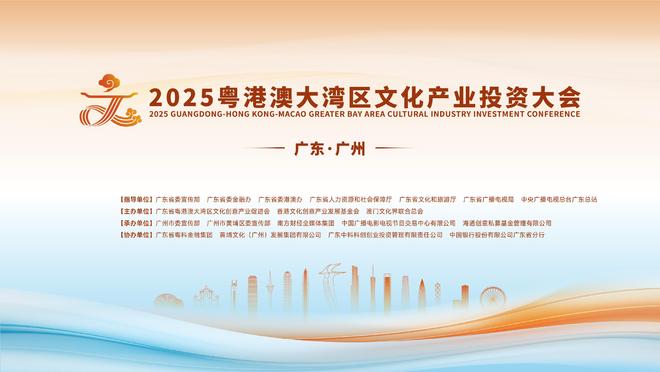
Core Insights - Guangdong is intensifying its efforts in the cultural industry, launching six major policy packages to promote high-quality development, showcasing cultural technology products at the Cultural Expo, and integrating Lingnan culture with sports during the 15th National Games [1][3] - The 2025 Greater Bay Area Cultural Investment Conference will take place from November 26 to 28 in Guangzhou, aiming to create a comprehensive investment and financing ecosystem for cultural enterprises and innovative projects [1][9] - The previous two conferences facilitated nearly half of the participating projects to secure investments, totaling nearly 10 billion yuan in actual financing [3][4] Cultural Industry Development - Guangdong is the largest cultural industry province in China, with a total cultural industry scale ranking first nationally for 22 consecutive years [3] - In 2024, the revenue of large-scale cultural enterprises in Guangdong is projected to reach 2.5 trillion yuan, accounting for approximately one-sixth of the national total [3] - New cultural business models generated 915 billion yuan in revenue, growing by 10.5%, showcasing strong competitive advantages in digital creativity, animation, gaming, and digital cultural manufacturing [3] Investment Opportunities - The previous two conferences had 58 projects presented, with 28 projects receiving funding, resulting in a conversion rate of about 50% and an average funding of approximately 340 million yuan per project [4][6] - The upcoming conference will feature 60 high-quality projects selected from 298 submissions, with a significant focus on innovative fields such as AI, AR/VR, and content production [9][10] Policy and Ecosystem Support - In 2023, Guangdong introduced a comprehensive policy package with 87 measures to activate the cultural market, covering various sectors including film, performing arts, and digital games [6][8] - The conference will implement a "1+8+N" framework, including a main conference, specialized roadshows, and various supporting activities to enhance project funding and collaboration [9][10] Participation and Engagement - Over 80 investment institutions have registered for the conference, with expectations to exceed 100, significantly higher than the previous year's 60 [10] - Notable investment institutions managing over 20 billion yuan in assets will participate, including well-known firms like Zhongwang Capital and Hillhouse Capital [10]
城记 | 非遗燃烟火,科技引潮来——倾听149亿元交易额背后的长三角文化“脉动”
Xin Hua Cai Jing· 2025-11-23 02:35
Core Insights - The sixth Yangtze River Delta International Cultural Industry Expo showcased over 1,500 enterprises, attracting 120,000 visitors and generating an intended transaction and signing amount of 14.9 billion yuan, marking a significant shift in China's cultural industry from "product output" to "industry integration" [1] Group 1: Cultural Products and Trends - The expo featured a diverse range of innovative cultural products, including traditional crafts and popular IP derivatives, indicating a transformation from mere exhibits to marketable goods [2] - The integration of cultural value and commercial value is evolving, with cultural products becoming essential in brand value creation and consumer experience [2][3] - The shift from "cultural labeling" to "cultural embedding" signifies a deeper integration of cultural narratives and regional spirit into product attributes, enhancing market vitality and cultural transmission [3] Group 2: Live Cultural Experiences - Live demonstrations at the expo highlighted the dynamic nature of cultural transmission, emphasizing that culture should be experienced rather than merely displayed [4] - Performances such as the "Weifeng Drum" and "Yingge" dance showcased the emotional resonance of cultural heritage, making it accessible and relatable to audiences [5][6] - The ultimate goal of cultural transmission is to embed it in people's memories, transforming intangible heritage into a tangible cultural force [7] Group 3: Digital Technology in Cultural Industry - The integration of digital technology is revolutionizing cultural experiences, with innovations like AI interactive display cabinets enhancing audience engagement [8] - The use of VR technology allows for immersive experiences that connect historical narratives with contemporary audiences, breaking traditional exhibition constraints [9][10] - Projects like the "Empire Code - Qin Shi Huang Mausoleum" exhibit exemplify the commercial potential of cultural experiences, expanding their reach beyond traditional venues [10]
文化前海加速启航
Jing Ji Ri Bao· 2025-11-22 21:48
Core Insights - The cultural industry in Qianhai is experiencing rapid growth, with a reported revenue increase of 26% from January to October this year [1] - The release of the "Measures for Promoting High-Quality Development of the Cultural Industry" outlines 18 innovative initiatives aimed at enhancing cultural industry development through deep Hong Kong-Shenzhen cooperation, industry growth, and cultural tourism consumption [1][2] Group 1: Cultural Industry Development - Qianhai has established itself as a hub for cultural enterprises, attracting companies like Tencent and various digital creative firms, contributing to a vibrant cultural ecosystem [2][3] - The new measures provide financial incentives ranging from 50,000 to 3 million yuan for cultural institutions, with a potential total support of up to 10 million yuan for qualifying entities [2] - The digital creative sector has seen significant growth, with over 20 leading companies setting up operations in Qianhai, and the number of gaming enterprises increasing from 6 to 16, with revenue rising from 579 million yuan to 4.848 billion yuan [3] Group 2: Tourism and Cultural Exchange - Qianhai is positioning itself as a world-class tourism destination, with multiple 4A scenic spots and international hotel brands, while also enhancing its cultural tourism offerings [7] - The region has established a "golden channel" for cultural element circulation, facilitating deeper cultural exchanges between Hong Kong and the global market [6] - Initiatives include support for inbound tourism and cultural events, with annual allocations of up to 5 million yuan in tourism consumption vouchers to stimulate the market [7] Group 3: IP and Experience Economy - Qianhai is actively promoting the development of interactive experience-based consumption scenarios through the integration of popular IPs, leading to significant retail success [8] - The measures support investments in themed cultural and tourism facilities, offering up to 300,000 yuan for projects that meet specific criteria [8] - The focus on IP-driven development aims to enhance the cultural landscape and attract more visitors, thereby increasing overall economic activity in the region [9]
探寻乡村振兴片区化发展的山东密码
Jing Ji Guan Cha Wang· 2025-11-22 16:12
Group 1 - The article highlights the theme of "regional-led rural revitalization" in Shandong, showcasing six cities that have developed unique paths based on their resource endowments [1] - The cities have adopted various strategies such as deep processing of traditional agriculture, integration of agriculture with culture and tourism, and technological empowerment to modernize agriculture [1][3] - A common theme among these cities is the focus on core industries to optimize resource allocation, extend industrial chains, and enhance community benefits through collective interests [1][2] Group 2 - In Zaozhuang, the pomegranate industry has become a significant source of income, with a new operational model that allows farmers to retain all sales revenue, leading to an average income increase of 23,000 yuan per household [2] - Jining's edible mushroom industry is a major economic pillar, with a production area of 26 million square meters and an annual output value exceeding 3.5 billion yuan, employing nearly 30,000 people [3] - The integration of traditional agriculture with new business models, such as the collaboration between agricultural research institutes and local farmers, has led to increased yields and economic diversification [4][5] Group 3 - The revitalization of traditional crafts, such as the Gongbi Peony painting in Heze, has created job opportunities for thousands of villagers, with some earning around 6,000 yuan monthly through art [5] - The "Nine Villages" project in Dong'a County focuses on ecological protection while developing industries like mugwort cultivation, attracting 234 million yuan in social capital [6] - The peach industry in Feicheng has evolved from primary agriculture to a model that integrates cultural tourism, significantly increasing local farmers' incomes and creating job opportunities [7]
“符号松江”文化标识设计成果亮相长三角文博会
Guo Ji Jin Rong Bao· 2025-11-22 12:30
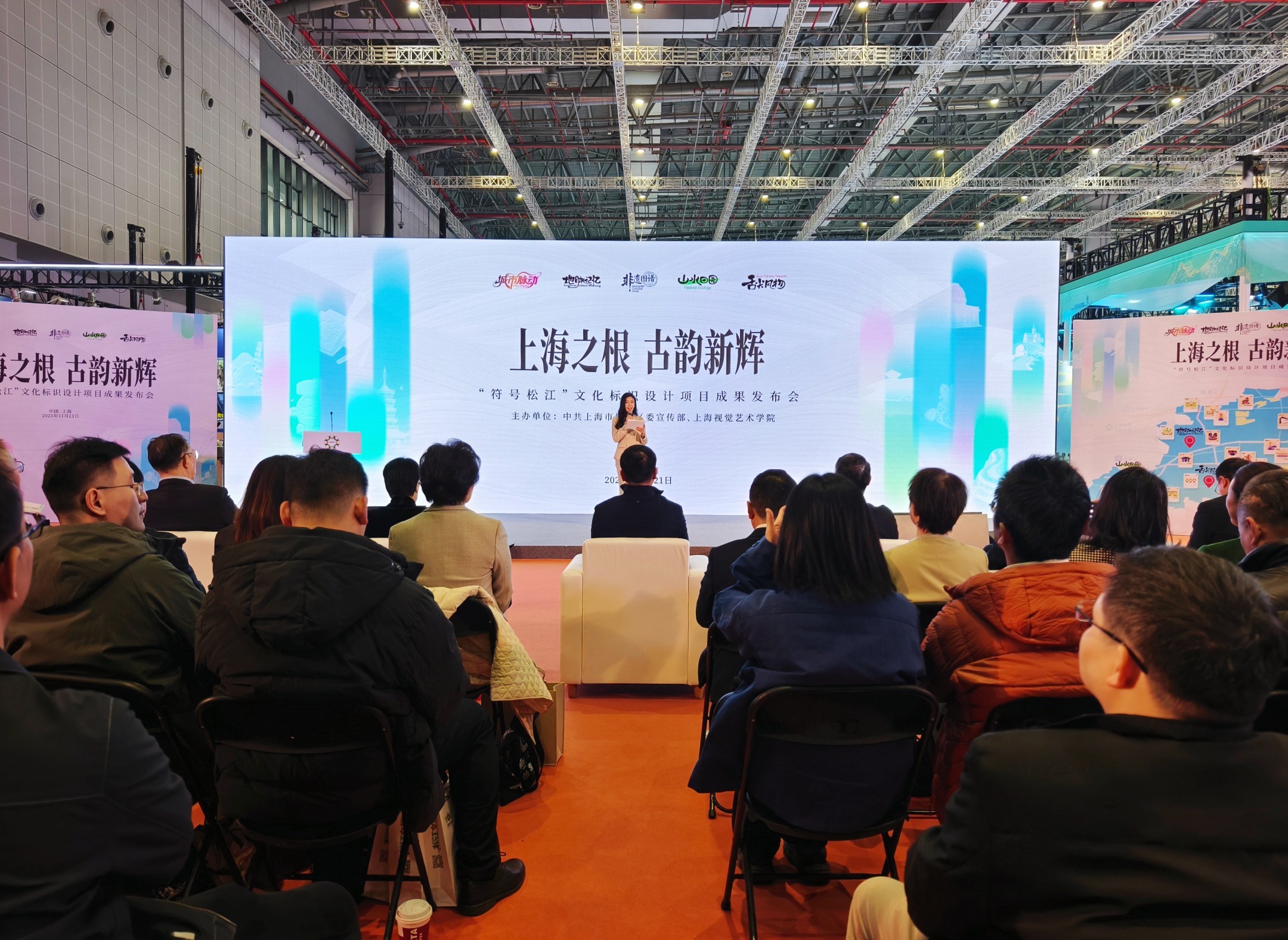
当下,松江正聚焦"沪上之巅、文博之府、浦江之首、花园之城、大学之府、影视之都"6个品牌,通过构造多元融合消费场景、文旅商体农展多业态联 动不断强化文化与经济融合发展能级,大力培育"上海之根"文旅大IP,进而带动更多人"游上海松江,寻上海之根",为上海国际文化大都市和"人文之城"建 设提供重要支撑。 据介绍,"符号松江"始自于松江区委宣传部与上海视觉艺术学院携手打造的一项城市文化IP创作计划。该项目充分发动松江大学城师生的创作动能,以 现代化的意象重构深入挖掘"上海之根"的内涵,为这座城市寻根溯源和传承历史文脉;而通过符号的提炼活化与应用转化亦可将厚重的历史转化为可触摸、 可感知、可传播的文化资产,进而赋能产业经济,融入现代生活,让优秀传统文化在守正创新中焕发时代光彩。 后续,这100个具有高度辨识性与文化代表性的符号元素将作为统一的视觉语言,赋能松江文旅商体农展方方面面,进一步诠释好"上海之根"的文化内 涵,让更多人在丰富多彩、可触可及的体验中激活群体记忆,重新认识松江、深深爱上松江。 现场,上海松江文化旅游发展有限公司、上海之根文化传媒有限公司分别与项目方签约,并达成合作意向。后续,校企双方会围绕"符号松江 ...
加快发展文化产业
Jing Ji Ri Bao· 2025-11-21 22:38
Core Viewpoint - The development of the cultural industry is essential for cultural innovation and is a significant support for building a culturally strong nation, as emphasized in the "14th Five-Year Plan" which aims to accelerate the growth of the cultural industry [1] Market and Policy Synergy - The "14th Five-Year Plan" suggests stimulating national cultural innovation and promoting socialist culture through various dimensions, including enhancing the influence of Chinese civilization [1] - The cultural industry in China has seen substantial growth, with total assets reaching 34.4 trillion yuan, generating over 19 trillion yuan in revenue and approximately 1.8 trillion yuan in profit [1] - Structural issues such as insufficient high-quality cultural product supply and weak cultural business entities need to be addressed for high-quality development during the "14th Five-Year" period [1][2] Technology Empowering Industry Upgrade - The rapid development of global cutting-edge technology is transforming the cultural industry, enhancing production efficiency and international competitiveness through digitalization [3] - The integration of culture and technology is expected to deepen, with artificial intelligence playing a significant role in the gaming industry and related sectors [3][4] Digital Economy and Cultural Development - The "14th Five-Year" period will focus on leveraging digital economy advantages to enhance digital cultural initiatives and create a networked cultural content innovation system [4] - Artificial intelligence is increasingly involved in cultural production across various sectors, emphasizing the importance of maintaining cultural depth amidst technological advancements [4] Integration of Culture and Tourism - The integration of culture and tourism is a key focus, enhancing visitors' experiences and promoting cultural understanding [6] - The deep integration of cultural and tourism sectors is expected to stimulate economic growth and create new value across various industries [6][7] Future Directions - The "14th Five-Year" period will see a strong emphasis on cross-industry integration, with "culture + various industries" becoming a driving force for consumption development [7]
2025大湾区文投会将在11月26—28日举行
Guang Zhou Ri Bao· 2025-11-21 08:11
Group 1 - The cultural industry is becoming a focal point for technology and capital, with the 2025 Guangdong-Hong Kong-Macao Greater Bay Area Cultural Industry Investment Conference scheduled for November 26-28 [1] - The conference aims to create an efficient platform for cultural enterprises and investment institutions to connect, promoting deep integration of culture, technology, and finance [1] - The event will feature a series of innovative activities organized in a "1+8+N" format, including one main conference, eight specialized investment roadshows, and multiple supporting activities [1][2] Group 2 - This year's conference will be the third edition, focusing on enhancing transaction functions, industry-finance cooperation, and resource matching [2] - A key highlight will be the introduction of a "mentor" mechanism, inviting successful entrepreneurs to empower innovative small and medium cultural enterprises [2] - The conference will emphasize six major cultural industry sectors, including film, performing arts, animation, online games, e-sports, and online audio-visual, aligning with the recent policy package for high-quality cultural industry development [2] Group 3 - A total of 298 innovative cultural industry projects have been collected for this year's conference, with 60 selected for live presentations [3] - Over 80 investment institutions and 132 investors have registered to attend the conference [3] - Previous editions of the conference saw 58 projects presented, with 28 securing funding within a year, achieving a conversion rate of approximately 50% and raising over 9.5 billion [3]
1500家企业齐聚,激活文化创新新动能!第六届长三角文博会开幕
Guo Ji Jin Rong Bao· 2025-11-21 07:13
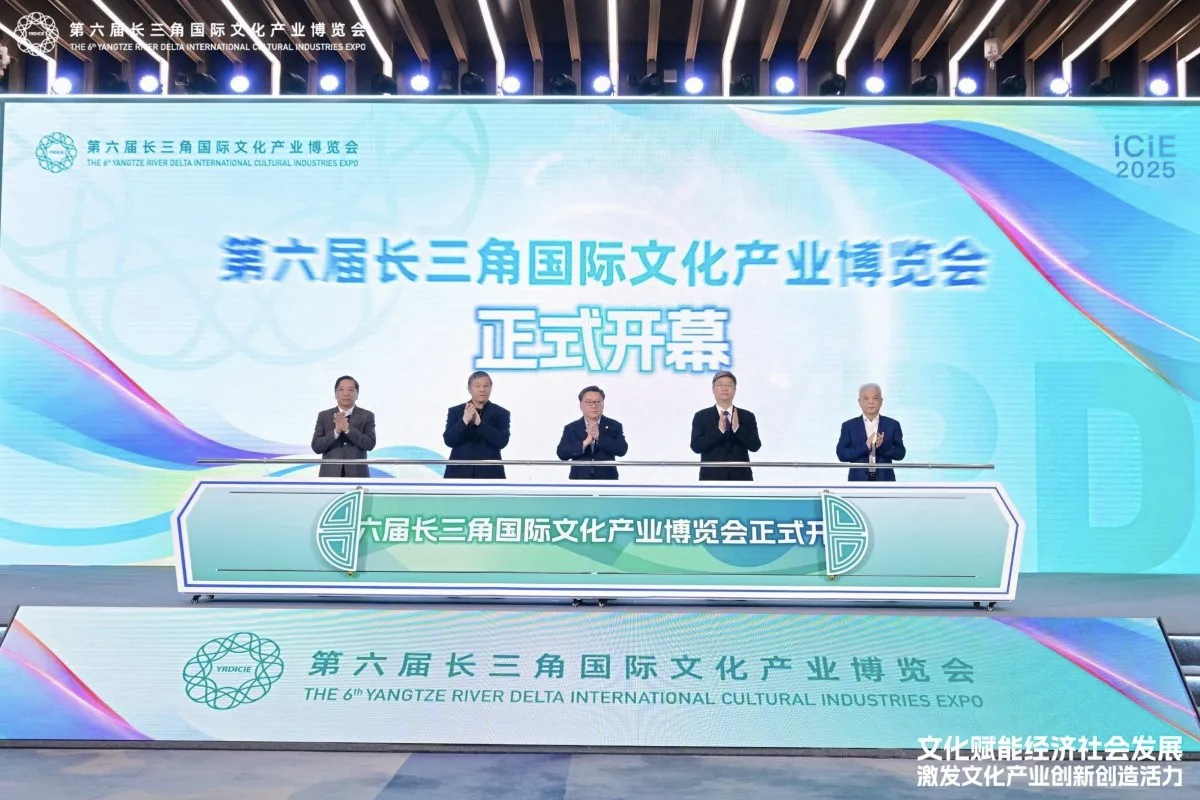
Core Viewpoint - The sixth Yangtze River Delta International Cultural Industry Expo emphasizes the integration and high-quality development of the cultural industry in the Yangtze River Delta region, showcasing over 1,500 cultural industry-related entities and a total exhibition area of 80,000 square meters [3][6]. Group 1: Event Overview - The expo is co-hosted by the propaganda departments of Shanghai, Jiangsu, Zhejiang, and Anhui, with the theme "Cultural Empowerment for Economic and Social Development" [3]. - The event features a "1+6" exhibition format, including one comprehensive development section and six specialized exhibitions, along with 126 industry summits and performances [3][5]. - The "Yangtze River Delta Smart Cultural Industry Fund" was officially launched, and several key research publications were released, including the "Yangtze River Delta Cultural Industry Development Blue Book" [3][6]. Group 2: Regional Highlights - Shanghai's exhibition area showcases various cultural innovations, including immersive experiences and technology integration, such as the "Shen Yu Li" light show and the "IP Star Chain Factory" [4][5]. - Jiangsu's exhibition covers 2,000 square meters with themes like "Su Chao" and features over 10,000 cultural products, including innovative tech like AR glasses [5]. - Zhejiang's 2,000 square meter area highlights cultural heritage and digital entertainment, showcasing ancient crafts and modern cultural exports [5]. Group 3: Industry Development and Collaboration - The expo includes multiple industry forums and trade meetings focusing on emerging topics like the immersive industry, AI, and cultural tourism investment [6]. - The event aims to activate cultural consumption and promote the high-quality integration of the cultural industry in the Yangtze River Delta, contributing to regional economic and social development [6].