运动服饰

Search documents
白银,暴跌
Zhong Guo Ji Jin Bao· 2026-01-01 01:15
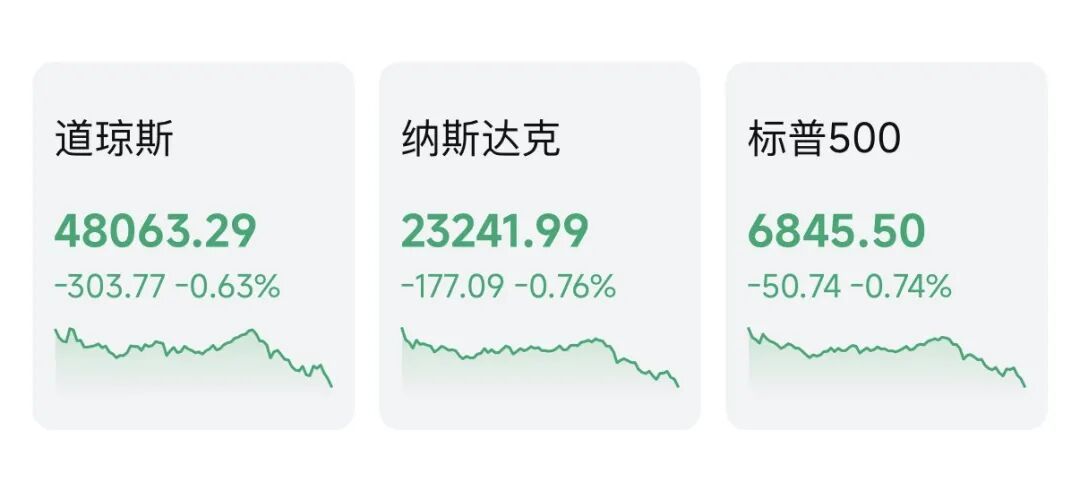
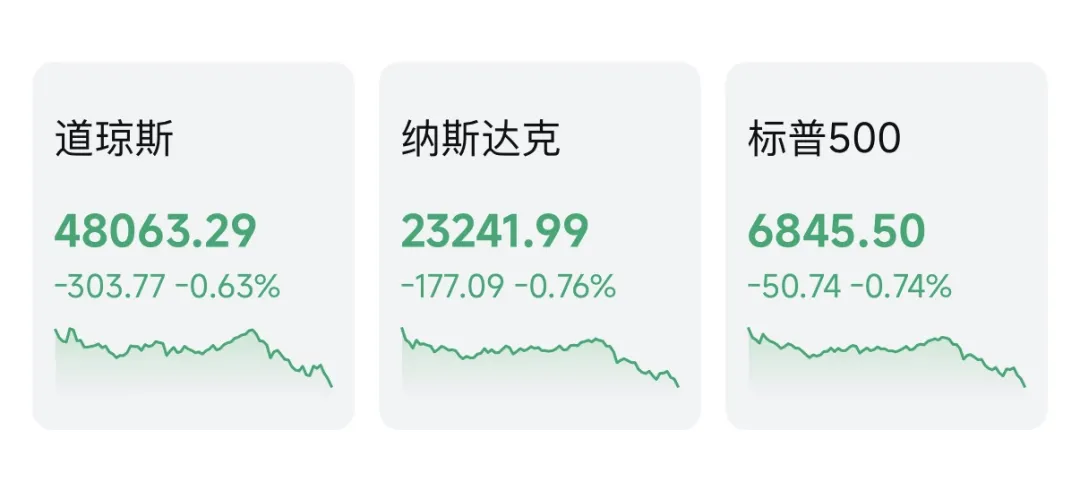
Market Overview - On December 31, 2025, U.S. stock indices closed lower, marking the end of the trading year with the Dow Jones down 0.63% at 48,063.29 points, the S&P 500 down 0.74% at 6,845.5 points, and the Nasdaq down 0.76% at 23,241.99 points, all recording four consecutive declines [1] - For the entire year of 2025, the Dow Jones increased by 12.97%, the S&P 500 by 16.39%, and the Nasdaq by 20.36%, achieving three consecutive annual gains [1] Silver Market - On December 31, precious metals experienced a significant pullback, with New York silver futures dropping by 8.91% and London silver spot prices falling by 6.08% [3] Nike Stock Performance - Nike's stock surged by 4.17% to $63.74 per share, with a total market capitalization of $94.4 billion, following substantial stock purchases by internal executives [6][8] - Tim Cook, CEO of Apple, increased his stake in Nike by approximately 50,000 shares, raising his ownership by 90% [9] - Nike's CEO, Elliott Hill, also purchased about 16,400 shares in a transaction valued at $1 million, increasing his personal stake by over 7% [9] Offshore Renminbi - On December 31, the offshore renminbi rose above 6.98, reaching a 15-month high, and was reported around 6.79530 at the time of publication [10]


白银暴跌!贵金属全线回调 铂、钯均大跌
Zhong Guo Ji Jin Bao· 2026-01-01 00:25
Group 1 - The U.S. stock market ended the year 2025 with declines across major indices, with the Dow Jones down 0.63% at 48,063.29 points, the S&P 500 down 0.74% at 6,845.5 points, and the Nasdaq down 0.76% at 23,241.99 points, marking four consecutive days of losses [1] - In 2025, the Dow Jones increased by 12.97%, the S&P 500 rose by 16.39%, and the Nasdaq gained 20.36%, all recording three consecutive annual gains [1] - Citigroup's U.S. equity strategy head, Scott Chronert, believes the market is in a "prosperity phase" rather than a "bubble phase," maintaining an optimistic outlook for the upcoming year based on strong earnings expectations and emerging sector expansion [3] Group 2 - Silver prices experienced a significant drop, with New York silver futures falling by 8.91% and London spot silver prices declining by 6.08%, alongside declines in platinum and palladium [4] - Nike's stock surged by 4.17% to $63.74 per share, with a total market capitalization of $94.4 billion, following substantial stock purchases by insiders, including CEO Tim Cook, who increased his stake by 90% [7] - Tim Cook purchased approximately 50,000 shares of Nike, while another board member, Robert Holmes Swan, increased his holdings by 24% with an additional 8,700 shares [7] Group 3 - The offshore Chinese yuan reached a 15-month high, breaking the 6.98 mark, trading around 6.79530 at the time of reporting [7]
白银,暴跌!
中国基金报· 2026-01-01 00:22
Market Overview - The U.S. stock market closed on December 31, 2025, with all three major indices recording declines, marking the end of the trading year. The Dow Jones fell by 0.63% to 48,063.29 points, the S&P 500 dropped by 0.74% to 6,845.5 points, and the Nasdaq decreased by 0.76% to 23,241.99 points, resulting in four consecutive days of losses. However, for the entire year, the Dow rose by 12.97%, the S&P 500 increased by 16.39%, and the Nasdaq gained 20.36%, all achieving three consecutive annual gains [1][2]. Precious Metals - On December 31, 2025, precious metals experienced a significant pullback, with New York silver futures plummeting by 8.91% and London silver spot prices dropping by 6.08%. Gold futures fell by over 1%, while platinum and palladium also saw substantial declines [5]. Nike Stock Activity - Following a year of poor performance, Nike's stock surged after internal stakeholders, including CEO Tim Cook, made substantial purchases of the company's shares. Nike's stock rose by 4.17% to $63.74 per share, with a total market capitalization of $94.4 billion. Despite this increase, the stock remains at only 40% of its historical high [9][10]. Executive Stock Purchases - Tim Cook, CEO of Apple, increased his stake in Nike by acquiring approximately 50,000 shares, resulting in a 90% increase in his ownership. Additionally, Robert Holmes Swan, a member of Nike's board, purchased about 8,700 shares, raising his stake by 24%. Nike's CEO, Elliott Hill, also bought around 16,400 shares in a transaction valued at $1 million, increasing his personal stake by over 7% [12].

把握消费增长主线机会
2025-12-31 16:02
Summary of Conference Call Records Industry Overview - The retail market in 2025 is experiencing a slowdown, with online retail sales declining by 0.1% year-on-year, while offline retail sales grew by 0.5% [1][4] - From January to November 2025, online retail sales of goods and services increased by approximately 9%, outperforming offline sales, indicating a loss of momentum in consumer spending in the second half of the year [1][4] Key Insights on Consumer Goods - Consumer goods performance from 2023 to 2025 shows divergence: staple foods remain stable, beverage growth is slowing, tobacco and alcohol are experiencing negative growth, while daily necessities are accelerating [1][5] - In discretionary spending, jewelry and cosmetics are expected to rebound in 2025 after a negative growth in 2024, while sports goods continue to perform well [1][5] - The real estate market significantly impacts post-cycle consumer categories, with automobiles shifting from positive to negative growth [5] E-commerce Performance - Major platforms like Tmall, JD, and Douyin reported negative year-on-year GMV growth in November 2025, partly due to the early Double Eleven promotions [1][6] - Traditional e-commerce growth from January to November 2025 is close to 6%, aligning with GDP growth, but the second half of the year faced a cooling environment [7] Future Outlook - Despite a challenging overall environment, significant differentiation exists among categories, with some trends reversing, indicating structural opportunities [8] - Consumer confidence remains low, necessitating more policy support and market stimulation to revive activity [8] Notable Growth Categories in E-commerce - In 2025, categories like transportation cycling products saw significant online penetration growth, driven by new brands and demand [9] - Other categories achieving around 20% online growth include household tools, outdoor apparel, and health-related products [9] Price Trends and Sales Performance - From January to November 2025, categories such as digital products, outdoor apparel, home improvement materials, and office supplies saw average price increases exceeding 10% due to new demand drivers [11] - However, categories like clothing accessories, shoes, and office equipment experienced declining online penetration and sales [12] Competitive Landscape - The concentration in certain sectors has increased significantly post-pandemic, with digital products and large home appliances showing the highest concentration growth [13] - Leading brands in the digital appliance sector include Apple, Huawei, and Xiaomi, with Midea and Haier dominating large appliances [14][15] Sector-Specific Insights - The beauty and personal care sector remains stable, with skincare products led by domestic and high-end international brands [16] - The home appliance market is stable, with brands like Xiaomi and Midea performing well, driven by brand effects and innovative products [15] - The snack and grain oil sectors show stable growth among leading companies, while smaller brands are innovating [19] Conclusion - The overall consumer market in 2025 is characterized by a mix of stability in essential goods and volatility in discretionary spending, with e-commerce facing challenges despite pockets of growth in specific categories. The competitive landscape is evolving, with increased concentration in certain sectors and opportunities for innovation among smaller players.
深夜!美股跳水,黄金拉升!特朗普概念股,大涨!
Sou Hu Cai Jing· 2025-12-31 15:45
Market Performance - The three major U.S. stock indices opened slightly higher but turned to decline, with the Dow Jones down 0.03%, S&P 500 down 0.05%, and Nasdaq down 0.08% [1] - Individual stocks showed mixed results, with Nvidia opening up over 1% after announcing a $5 billion acquisition of Intel shares through a private placement [1] - Nike shares rose over 2% following news that Apple CEO Tim Cook significantly increased his stake in the company by purchasing approximately 50,000 shares, raising his ownership by 90% [1] - Trump Media & Technology Group saw a rise of over 6% after announcing plans to distribute digital tokens to shareholders [1] - Chinese stocks showed a mixed performance, with the Nasdaq Golden Dragon China Index declining over 1%, and NIO dropping over 8% while XPeng and Li Auto fell more than 4% [1] Economic Indicators - International precious metals experienced volatility, with spot gold rising slightly while silver's decline narrowed to 2.95% [2] - The U.S. Department of Labor reported that initial jobless claims fell by 16,000 to 199,000, marking one of the lowest levels this year, which reflects the typical volatility during the holiday season [2] - The Federal Reserve's December meeting minutes indicated that most officials believe further rate cuts would be appropriate if inflation decreases as expected, although some officials suggested maintaining rates for a period [2] - The minutes from the December 9-10 Federal Open Market Committee (FOMC) meeting highlighted internal divisions within the Fed and the challenges faced in recent decision-making [2]
耐克(NKE.US)盘前上涨 CEO斥资100万美元增持股票
Zhi Tong Cai Jing· 2025-12-31 14:44
Core Viewpoint - Nike's stock price increased by 2.93% to $62.98 following CEO Elliott Hill's stock purchase, indicating potential investor confidence in the company's future performance [1] Group 1: Stock Purchase Details - Elliott Hill purchased 16,388 shares of Nike at $61.10 per share, totaling slightly over $1 million [1] - Hill currently holds 241,587 shares of Nike [1] Group 2: Leadership and Company Outlook - Hill returned to Nike at the end of 2024 after retiring in 2020, marking a significant moment in his 32-year career with the company [1] - Analysts believe Hill's return could be pivotal in reversing the company's performance decline [1] Group 3: Stock Performance - Nike's stock has a 52-week range of $52.28 to $82.44, and it has not reached a three-digit price since March 2024 [1]
耐克失守中国市场,开始自救
2 1 Shi Ji Jing Ji Bao Dao· 2025-12-31 14:25
记者丨贺泓源 李音桦 编辑丨高梦阳 严峻市场压力下,耐克需要给在华团队进一步放权。 近期,耐克宣布,大中华区等四个区域负责人直接进入高级领导管理层,向全球CEO汇报,以加速推进 Win Now计划。 落地到具体高管,便是耐克大中华区董事长兼CEO董炜进一步升职。"我期待与她及团队展开更紧密的 合作。"在业绩会上,耐克集团总裁兼首席执行官贺雁峰(Elliott Hill)说。 董 炜进入耐克高级领导管理层。图片来源:耐克 需要注意的是,董炜近年一直在被重用。2024年10月,她就已升任耐克大中华区董事长兼CEO,并担任 ACG品牌全球CEO。董炜于2005年加入耐克中国,过去十年间,她出任耐克全球副总裁、耐克大中华 区总经理。 另据21世纪经济报道记者了解,董炜与贺雁峰有着长久共事基础。 而董炜升职背后是,耐克在华需要更灵活的运营机制。 在华"收缩" 客观上,耐克正"失守"中国市场。 在截至2025年11月末的最新财季,耐克在华销售额同比下滑16%至14.23亿美元,EBIT(息税前利润) 同比下降 49%。其中,耐克直营业务下降18%(数字业务下降36%,门店业务下降5%);批发业务下 降15%。 "门店客流 ...
耐克失守中国市场,开始自救
21世纪经济报道· 2025-12-31 13:52
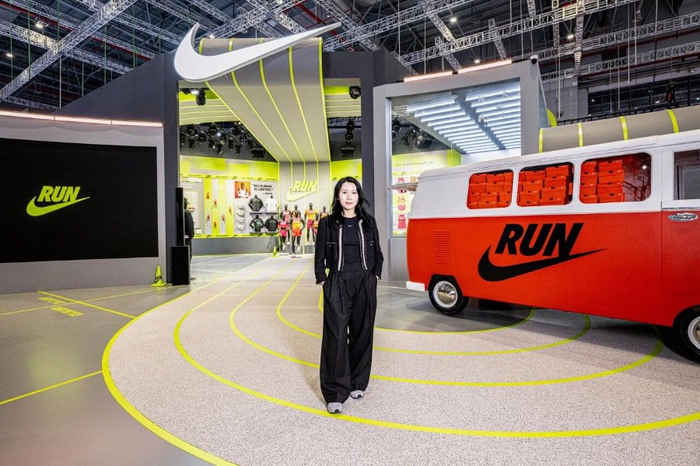
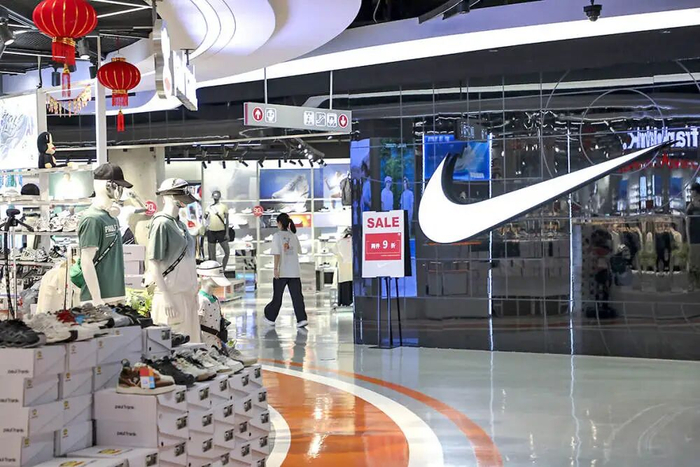
严峻市场压力下,耐克需要给在华团队进一步放权。 近期,耐克宣布,大中华区等四个区域负责人直接进入高级领导管理层,向全球CEO汇报,以 加速推进Win Now计划。 落地到具体高管,便是耐克大中华区董事长兼CEO董炜进一步升职。"我期待与她及团队展开 更紧密的合作。"在业绩会上,耐克集团总裁兼首席执行官贺雁峰(Elliott Hill)说。 记者丨贺泓源 李音桦 编辑丨高梦阳 董炜进入耐克高级领导管理层。图片来源:耐克 来到运动市场,巨头们普遍遭遇增长压力。 需要注意的是,董炜近年一直在被重用。 2024年10月,她就已升任耐克大中华区董事长兼 CEO,并担任ACG品牌全球CEO。董炜于2005年加入耐克中国,过去十年间,她出任耐克全 球副总裁、耐克大中华区总经理。 另据21世纪经济报道记者了解,董炜与贺雁峰有着长久共事基础。 而董炜升职背后是,耐克在华需要更灵活的运营机制。 在华"收缩" 客观上,耐克正"失守"中国市场。 在截至2025年11月末的最新财季,耐克在华销售额同比下滑16%至14.23亿美元,EBIT(息税 前利润)同比下降 49%。其中,耐克直营业务下降18%(数字业务下降36%,门店业务下降 ...
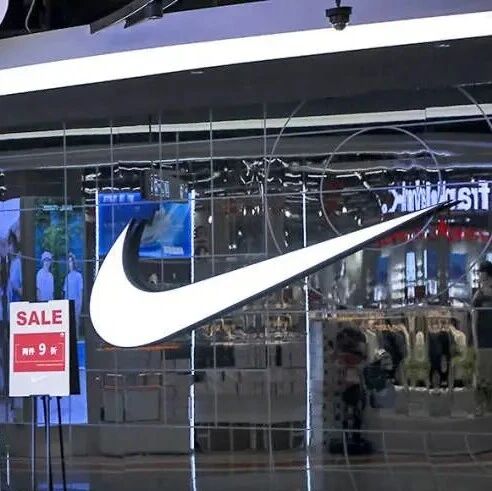
耐克中国自救,从给在华高管加速放权开始
2 1 Shi Ji Jing Ji Bao Dao· 2025-12-31 09:11
Core Insights - Nike is facing significant market pressure in China, necessitating a more flexible operational mechanism and empowering local teams [3][4] - The appointment of Dong Wei as the CEO of Greater China reflects Nike's strategy to enhance collaboration and adapt to local market conditions [1][2] Group 1: Market Performance - Nike's sales in China have declined by 16% year-on-year to $1.423 billion, with EBIT dropping by 49% [4] - Direct sales have decreased by 18%, with digital sales down 36% and store sales down 5%, while wholesale business fell by 15% [4] - The brand is perceived as a discount brand, impacting its high-end market positioning and leading to increased discount sales and higher return rates [4] Group 2: Competitive Landscape - The Chinese sports market is becoming increasingly competitive, with domestic brands gaining market share [5][6] - Adidas's market share in China has dropped from 15% in 2021 to 8.7% in 2024, while Nike's share decreased from 18.1% to 16.2% [6] - Domestic brands like Anta and Li Ning are also experiencing growth challenges, with Anta reporting low single-digit growth and Li Ning experiencing a decline in retail sales [6] Group 3: Strategic Adjustments - Nike is working to reshape its brand image in China by reducing discount rates and focusing on maintaining its premium positioning [7][9] - The company plans to upgrade key stores and has seen a 25% increase in sales for upgraded product lines [10] - Nike is also reducing its spring product distribution and cutting summer product purchases to improve sales rates and full-price sales [11] Group 4: Continued Investment - Despite challenges, Nike remains confident in the Chinese market, as evidenced by the launch of its first creative center outside the U.S. in Shanghai [11] - The establishment of the Nike China Sports Research Lab in Shanghai further demonstrates the company's commitment to the market [11][12] - Nike's marketing strategies, including collaborations with local sports stars, highlight its deep integration into the Chinese market [12]
耐克中国自救,从给在华高管加速放权开始丨小贺说
2 1 Shi Ji Jing Ji Bao Dao· 2025-12-31 08:47
Core Insights - Nike is facing significant market pressure in China, necessitating a more flexible operational mechanism and empowering local teams [1][3] - The company has appointed regional leaders, including the promotion of Dong Wei to a higher management level, to enhance collaboration and accelerate the Win Now plan [1][3] - Nike's sales in China have declined by 16% year-on-year to $1.423 billion, with EBIT dropping by 49% [3][4] Company Performance - Nike's direct business in China has seen an 18% decline, with digital sales down 36% and store sales down 5% [3] - The wholesale business has also decreased by 15%, indicating broader challenges in the market [3] - Increased discount sales and higher return rates have negatively impacted profitability in the Greater China region [4] Market Competition - The competitive landscape in the Chinese sports market is intensifying, with domestic brands gaining market share [5][6] - Nike's market share has decreased from 18.1% to 16.2%, while Adidas has dropped from 15% to 8.7% [6] - Domestic brands like Anta and Li Ning are experiencing growth, with Anta's market share increasing from 9.8% to 10.5% [6] Strategic Adjustments - Nike is working to reshape its brand image in China by reducing discount rates to maintain its premium positioning [7][9] - The company plans to upgrade key stores and has seen a 25% increase in sales for upgraded product categories [10] - Nike is also reducing inventory levels, with a 20% decrease in stock compared to the previous year, and is adjusting its product procurement strategy [10] Future Outlook - Despite current challenges, Nike remains confident in the Chinese market, as evidenced by the launch of its first creative center outside the U.S. in Shanghai [11] - The company continues to leverage its marketing strengths by collaborating with local sports stars and engaging in significant events like the National Games [11] - The recent management changes reflect Nike's response to the evolving market dynamics in China [11]