空调

Search documents
格力电器20250806
2025-08-06 14:45
Summary of Gree Electric's Conference Call Company Overview - Gree Electric is a leading player in the domestic air conditioning industry, maintaining its market leadership through product development, quality enhancement, and brand strength despite rising copper prices [2][5][6]. Key Points and Arguments - **Cost Management and Market Share**: Gree Electric successfully managed cost pressures through technological breakthroughs and brand advantages during periods of rising copper prices, which constituted about 30% of air conditioning costs. This allowed Gree to increase prices and consolidate market share, rising to 25%-30% during competitive market exits of rivals like Chunlan and Huabao [2][6]. - **High Barriers to Entry in the Air Conditioning Industry**: The air conditioning industry is characterized by high barriers to entry, primarily due to scale effects. Leading companies like Gree benefit from large-scale production, which reduces costs and increases profit margins. For instance, Gree produces 35 million units annually with a profit margin exceeding 15%, compared to competitors like Midea and Haier [7]. - **Management Reforms Under Dong Mingzhu**: Since Dong Mingzhu's leadership, Gree has implemented significant management reforms, including the establishment of the Shengshi New Emerging Plan and optimizing the dealer system. These reforms have improved operational efficiency and strengthened relationships with partners [4][8][9]. - **Challenges in Channel System**: Gree's channel system faces challenges that necessitate digital transformation. The company aims to adopt cloud warehousing and a sales-driven production model to enhance channel efficiency and reduce inventory pressure [2][11][12]. - **Introduction of Gree Digital Science**: Gree launched "Gree Digital Science" to replace the original Shengshi team with lower operational costs, enhancing the advantages of offline dealers in response to online price wars [2][12]. Additional Important Insights - **Current Valuation and Dividend Yield**: Gree Electric is currently valued at 8 times earnings, with a dividend yield of 6-7%. The market has low growth expectations, but positive changes in product and management perspectives suggest potential for long-term investment [3][13]. - **Future Investment Outlook**: Despite current market conditions, Gree Electric is seen as having investment value due to ongoing reforms, strong risk resistance, and a focus on technological innovation and product upgrades. Long-term investors may consider holding or increasing their positions [10][13].

小米空调销量暴涨20倍,董明珠终于不说话了
商业洞察· 2025-08-06 09:24
Core Viewpoint - The article discusses the significant surge in sales of Xiaomi air conditioners in Northeast China due to unprecedented high temperatures, highlighting the competitive dynamics with Gree and Midea in the air conditioning market [4][9][11]. Group 1: Sales Surge and Market Dynamics - Xiaomi's air conditioner sales in Northeast China increased by 20 times compared to the same period last year, with a market share of 16.5% in June, narrowing the gap with Gree to less than 1 percentage point [4][9]. - The extreme heat in Northeast China, with temperatures exceeding 35°C, has led to a 418% year-on-year increase in air conditioning demand, with Heilongjiang seeing a 700% increase and Jilin a 400% increase [9][10]. - Xiaomi's air conditioner market share has risen from seventh place in 2021 to third place in 2024, indicating a growing acceptance among consumers [10][11]. Group 2: Challenges and Competitive Landscape - Despite online sales growth, Xiaomi's offline presence remains limited, with a market share of only 0.22% in 2024, indicating a stark contrast to its online performance [14][16]. - The competitive landscape shows that traditional brands like Midea and Gree maintain strong offline sales, with Midea and Gree holding 32.64% and 28.31% market shares respectively [14][24]. - Xiaomi's pricing strategy is under pressure as competitors have begun to lower their prices, diminishing Xiaomi's previous price advantage [18][20]. Group 3: Channel and Service Limitations - Xiaomi's reliance on its own retail channels limits its ability to compete effectively in the offline market, where traditional brands leverage extensive dealer networks for installation and service [22][25]. - The company faces challenges in after-sales service, with reports of poor installation experiences and difficulties in accessing service personnel [25][27]. - The low profit margins of Xiaomi air conditioners, estimated at around 1.5%, hinder the company's ability to incentivize dealers and expand its offline network [20][26].



海信家电半年报:核心业务在报告期内“全面突破、高端领跑”
Cai Fu Zai Xian· 2025-08-06 06:16
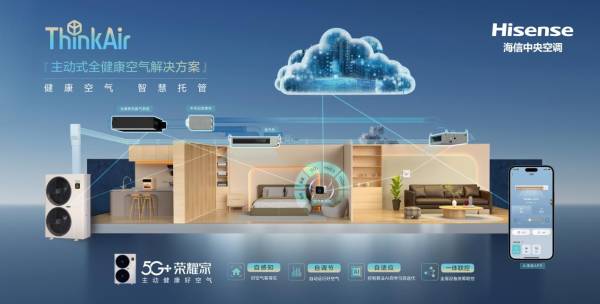
Core Insights - Hisense Home Appliances reported strong growth in its core business, Hisense Central Air Conditioning, achieving over 20% market share in the multi-split central air conditioning segment [1][3] - The sales of the 5G series products increased by more than double digits year-on-year, reflecting the successful implementation of 5G technology in their offerings [1][3] Group 1 - Since 2015, the company has focused on the research and development of 5G central air conditioning, launching its first 5G IoT central air conditioning unit in 2019 and upgrading to the 5G+ Glory Home series in 2025 [3] - Hisense leads the fresh air air conditioning segment with a sales revenue market share of 43.9%, an increase of 12.3 percentage points year-on-year, establishing itself as a benchmark for healthy air solutions [3] Group 2 - In response to national carbon neutrality goals, Hisense Central Air Conditioning promotes green development with its "Photosynthesis & Direct Drive" series, leading the industry's green transformation [3] - The company has provided services to several projects, including the Jinan Changling Mountain Biomedical Industry Park and the Qingdao Baofeng Times Center, with ultra-level energy efficiency to create comfortable office environments [3] Group 3 - Hisense Central Air Conditioning's technological leadership in 5G, AI, and green innovation, along with its market dominance in multi-split and fresh air systems, positions it as a pillar of Hisense Home Appliances' performance [3] - The integration of whole-house air solutions further strengthens the company's core competitiveness based on technology, providing long-term growth momentum for the home appliance sector [3]
海尔空调登TOP2后,8.7郑州将发新科技巩固领先
Sou Hu Wang· 2025-08-05 09:17
今年夏季全国多地持续刷新历史高温纪录,部分地区连续数日出现 40℃以上极端天气。持续高温对居 民日常生活造成严重影响,不仅考验着空调性能,也对长期稳定的市场格局形成冲击。 极端高温天气对每天高负荷运行的空调系统提出挑战。按照国家标准,空调正常工作温度上限为 43℃,当环境温度超过这一界限时,多数空调会出现制冷效果衰减,甚至因过热保护机制启动而停止运 行。在此背景下,空调在极端环境下的制冷能力和运行稳定性成为市场竞争的关键。市场数据统计,7 月以来,具备"15 秒速冷"、"高温制冷不停机"等性能的海尔空调,在东北市场销量迎来暴涨,销售额 猛增超300%。 进入高温季,空调安装需求激增,安装人员短缺、服务周期延长是行业普遍面临的难题,品牌的服务响 应能力成为市场竞争的又一重要因素。入夏以来,海尔空调在全国新增服务网点,尤其在下沉市场,进 一步完善服务网络布局,通过优化服务流程,缩短响应周期,让用户更快用上空调解暑。这种"技术 +服务"的组合拳,在今年高温环境下的市场竞争中成效显著。GfK中怡康最新市场数据显示,今夏高温 催热下,海尔空调多次登上市场零售份额TOP2。 受持续高温影响,用户在选择空调时,对空调制冷性 ...

人员和空调都要规范!海尔空调主导行业首个高空安装标准发布
Quan Jing Wang· 2025-08-05 05:39
全国持续高温引爆空调市场,安装需求激增。然而,这场"清凉热"的背后,是消费者与安装工人的双重 焦虑。消费者苦于:高空作业费不明晰、旺季安装等待漫长,期盼的清凉打了折扣。安装师傅则面临: 烈日下高危作业——单绳防护、凭经验操作的传统模式,每一次攀爬都潜藏着巨大风险。面对行业长期 存在的安全无保障、收费不规范、高温效率低等痛点,一项关键标准的出台正为改变带来契机。 8月3日,"链动安全、智汇应急"论坛暨青岛市应急管理协会二届三次会员代表大会胜利召开。会上,中 国应急管理学会正式发布了由青岛海尔空调器有限总公司主导编制的《绳索高空作业安全要求》团体标 准。海尔空调作为主要起草单位参与制定了首个行业标准,填补行业空白,终结行业"无规范、凭经 验"的乱象,为海尔空调创新"海巧天工"高空绳索吊装作业模式背书。 因此,海尔空调是行业唯一整合"技术标准+培训体系+补贴政策"的全链路安全解决方案,推动行业 从"粗放式"向"专业化"升级。 这不仅为用户带来高效透明服务,更迈出了引领行业规范化、高质量发 展的关键一步,让安全与品质真正落地。 会议期间,海尔空气产业安装服务总经理牛部长发表了题为《技术革新创"海巧天工"模式 安全高效 ...

海尔空调一城一气候列车 前方到站 西安
Sou Hu Wang· 2025-08-04 09:49
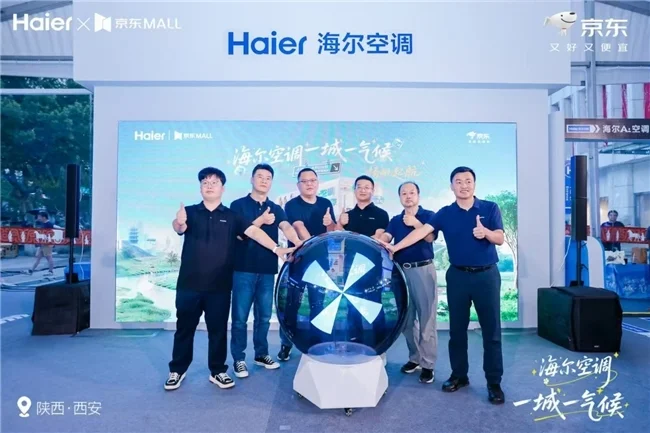
Core Viewpoint - Haier Air Conditioning is launching a "Healthy Breathing" initiative in Xi'an, addressing local climate challenges with AI technology tailored solutions [1][5][9] Group 1: Event Overview - The event took place on August 1, featuring Haier's AI technology to provide customized air solutions for the unique climate issues in Shaanxi province [1][5] - Key participants included executives from Haier and JD Wuxing Electric, emphasizing collaboration for better consumer experiences [3][5] Group 2: Climate Challenges and Solutions - Haier's solutions target three specific climate issues: smog in Guanzhong, dryness from sandstorms in northern Shaanxi, and humidity in southern Shaanxi [1][9] - The air conditioning products include features like ion washing and self-cleaning to combat PM2.5 and other pollutants, ensuring respiratory health [9] - AI technology enables real-time environmental monitoring and automatic adjustment of air conditioning settings based on regional and household needs [9] Group 3: Consumer Experience - The event included interactive experience zones where attendees could feel the immediate comfort provided by Haier's air conditioning systems, highlighting their efficiency and low noise levels [11] - The initiative will continue until August 20, with ongoing activities to promote the benefits of Haier's air solutions across the region [13] Group 4: Future Plans - Haier aims to expand its "One City, One Climate" initiative, integrating local cultural characteristics into its air solutions for broader consumer reach [13]
中观景气 7 月第 5 期:周期品延续涨价,空调内销排产转负
GUOTAI HAITONG SECURITIES· 2025-08-01 11:16
Group 1 - The report indicates that the prices of cyclical products continue to rise, while the domestic production of air conditioners has turned negative [7][8]. - Real estate sales remain sluggish, with a year-on-year decline of 11.0% in the transaction area of 30 major cities, and the air conditioner production for August is expected to decline significantly due to high base effects from the previous year [8][11]. - The service consumption sector shows seasonal improvement, but long-distance passenger transport demand has decreased, indicating that the summer service consumption outlook remains uncertain [7][8]. Group 2 - In the manufacturing sector, the expectation of anti-involution policies has increased, leading to a rise in steel and float glass prices, while cement prices remain under pressure due to weak demand affected by rainy weather [9][26]. - The operating rates in the manufacturing sector show mixed trends, with a notable decline in petroleum asphalt production, while recruitment intentions among companies have slightly improved [37][9]. - The prices of upstream resources, including thermal coal and industrial metals, have continued to rise, driven by increased demand and tightening supply expectations [46][48]. Group 3 - Long-distance passenger transport demand has slightly decreased, while domestic freight and express logistics have shown a decline in activity, with highway truck traffic and railway freight volume down by 0.6% and 2.1% respectively [55][57]. - The report highlights that the average price of live pigs has decreased by 1.2% week-on-week, attributed to increased market supply due to rising temperatures [13][19]. - The report notes that the average price of floating glass has increased by 2.2% week-on-week, reflecting improved market demand despite general market conditions [30][26].
高温炙烤下的空调江湖:新旧势力混战东北,价格血拼难解库存承压
Hua Xia Shi Bao· 2025-08-01 04:51
Core Insights - The air conditioning industry is experiencing significant growth due to the "old-for-new" national subsidy policy and extreme summer temperatures, particularly in the Northeast region of China [1][2] - Intense competition among major brands is evident as they vie for market share, leading to aggressive pricing strategies [1][6] - Online sales channels have become the dominant force in the air conditioning market, accounting for approximately 60% of total sales in the first half of the year [2][3] Market Dynamics - The Northeast market has become a battleground for air conditioning companies, with major brands like Xiaomi, Gree, and Midea mobilizing resources to meet demand [4][5] - Online sales of air conditioners reached 38.45 million units in the first half of the year, a 15.6% increase year-on-year, with online channels growing by 18% [2][3] - Offline channels still hold a significant share, contributing to 50.3% of total sales despite a lower volume share [3] Competitive Landscape - Major players like Gree, Midea, and Haier dominate the market, collectively holding nearly 70% of the retail volume and 73.6% of the retail value [5] - Xiaomi aims to become the third-largest air conditioning brand in China, targeting 10 million units shipped this year [5][6] - The price war has intensified, with low-end models seeing significant price reductions, making it challenging for new entrants to compete [7][8] Pricing Strategies - The average online price for Gree and Midea air conditioners has decreased by approximately 10% and 2% respectively, while Xiaomi's average price dropped by 20% [8] - The offline market shows a different trend, with Gree maintaining the highest average price at 4,770 yuan, despite a 4.5% decrease [8][9] - The competition in the low-end market is fierce, with prices for popular models dropping below 1,200 yuan [7] Future Outlook - The high temperatures in the Northeast are expected to provide a temporary boost to air conditioning sales, but overall growth may be limited due to the region's small market share [10][11] - Analysts predict a potential decline in sales volume by approximately 5.6% in the second half of the year, influenced by high inventory levels and previous strong demand [10][11] - The overall market is expected to maintain slight growth, but challenges remain due to high base effects and economic conditions [11]
东北热过三亚,沙漠种出水稻,毒虫开始北上,气候彻底乱套了
3 6 Ke· 2025-08-01 01:18
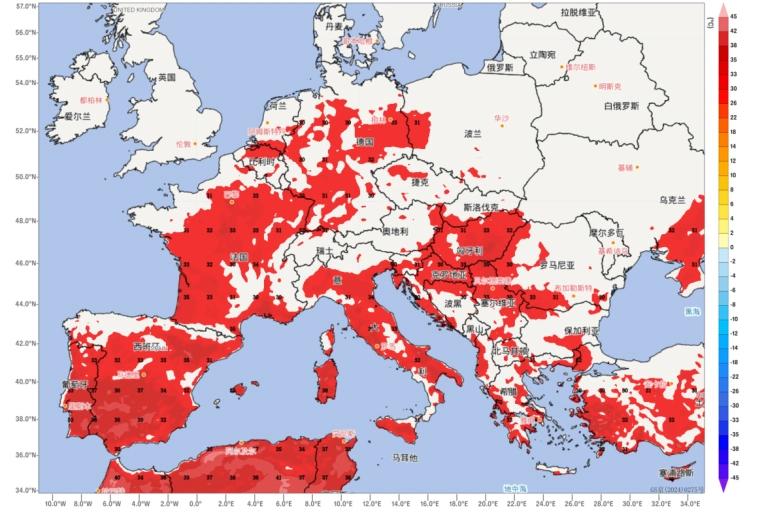
Group 1 - The Northeast region of China is experiencing unprecedented high temperatures, with some areas reaching nearly 40 degrees Celsius, which is significantly higher than the historical average of around 20 degrees Celsius [4][12][20] - Air conditioning has become a necessity in the Northeast, with sales skyrocketing; for instance, Mijia air conditioner sales peaked at 20 times that of the previous year, and Midea reported a 356% increase in sales in Heilongjiang and Jilin provinces [9][11][30] - The extreme heat has led to a surge in demand for air conditioning units, resulting in shortages and out-of-stock situations in many areas [9][30] Group 2 - In Xinjiang, the extreme heat has allowed for the cultivation of rice in desert areas, a significant agricultural breakthrough given the region's historically low rainfall [13][15][17] - The climate change phenomenon is pushing temperature thresholds higher, with Xinjiang experiencing record summer temperatures, which have enabled agricultural advancements previously thought impossible [14][18][24] - The overall trend of rising temperatures is affecting various regions globally, including Europe, where countries are facing unprecedented heat waves, with temperatures exceeding 40 degrees Celsius in several locations [19][20][24] Group 3 - The abnormal weather patterns are attributed to a combination of factors, including the westward expansion of the subtropical high-pressure system, which has altered traditional weather patterns and prevented cooler air from entering the Northeast [20][21][24] - The impact of climate change is evident, with predictions indicating that 2025 may be one of the hottest years on record, highlighting the urgent need for cities and individuals to prepare for increasing temperatures [25][30] - Urban infrastructure in both Northeast China and Europe is struggling to cope with the rising temperatures, as many buildings were designed for cold weather rather than heat, leading to uncomfortable living conditions [26][30]
卖不动空调的东北今年卖爆了,雷军笑到了最后?
Sou Hu Cai Jing· 2025-07-31 23:32
往年根本卖不动空调的东三省,今夏空调彻底卖爆了。 据京东7月7日至13日周销售数据显示,东北地区空调的销售量暴增,其中吉林省成交额同比增长25倍、辽宁省成交额同比增长10倍、黑龙江省成交额同比 增长6倍,东北三省首次购买空调的用户数同比增长超过60%。 这在以往是不可想象的。因为东三省是出了名的"空调洼地"。作为纬度较高的地区,东北三省居民对空调的需求远不如南方地区大,据官方统计显示, 1981-2010年哈尔滨7月平均气温最高仅为27.8℃。截至2023年,黑吉辽平均每百户家庭空调保有量分别是15.6台、21.5台、65.6台,同期全国居民平均每百 户空调拥有量为145.9台,黑吉辽的空调保有量远低于全国平均水平,尤其黑龙江甚至只有全国平均值的1/10左右。 今年进入7月,东北35℃以上的高温区域不断扩大,高温席卷东北平原。习惯了凉爽天气的东北人在高温下难以适应。就连黑龙江的最北端漠河近期也饱 受高温折磨,在以往的夏天里,漠河的平均气温只有十几度,即使偶尔有高温,也只是在30度左右。但今年罕见地迎来了35度的高温,很多漠河的家庭也 破天荒地装上了空调。 此前,多家媒体集中报道东北高校的学生在操场上睡觉。有视 ...