
制鞋业

Search documents
睢县:“中国鞋都”迸发“新”活力
He Nan Ri Bao· 2025-05-29 03:14
5月19日,位于商丘市睢县高新技术产业开发区的中乔(河南)体育有限公司生产车间内一片繁忙。工人 们熟练地进行裁剪、缝纫、包装等,自动化生产线上的机械臂精准作业,与人工协同配合。一双双款 式新颖、质量上乘的成品鞋不断下线,装箱后准备发往各地市场。 中乔(河南)体育有限公司由中乔集团投资建设,目前在睢县拥有3条智能自动化生产线、10条成品鞋生 产线和8条鞋底标准化生产线,具备年产500万双运动鞋、1000万双鞋底的能力,年产值达5亿元。 此后,特步、足力健、李宁、中国乔丹、鸿星尔克等众多知名品牌纷纷入驻睢县,睢县制鞋产业实现 了由小到大、由散到聚的重大转变,形成了强大的集群集聚发展效应。通过举办全国鞋类设计师职业 技能大赛、中原鞋都国际鞋业高峰论坛,引进深慧视制鞋机器人工厂等,汇聚了大量鞋业精英人才, 为睢县制鞋产业发展提供了坚实的人才支撑和智力保障。 优化环境培育鞋业发展沃土 "在睢县,公司从签约到入驻、投产,仅用了70天,创造了集团公司自创办以来的新纪录。"中乔体育 项目负责人邹银芳介绍。 为了让制鞋企业和产业工人能够顺利入驻、安心留下并扎根发展,睢县推行"1+X"工作法,全面落实一 个项目由一名县级领导牵头 ...
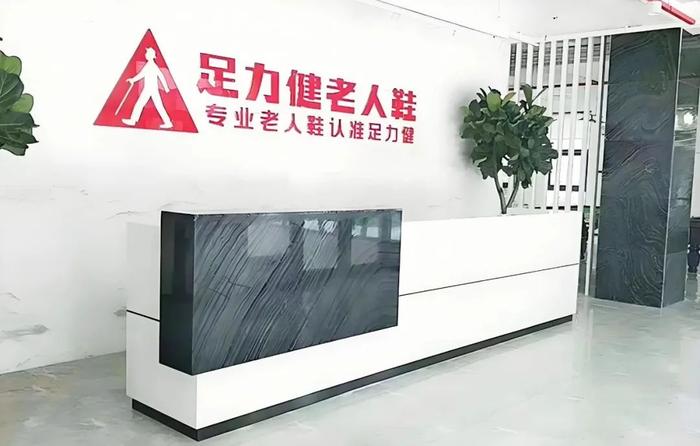
“老人鞋之王”跌落神坛,足力健为何留不住大爷大妈心?
Xin Lang Cai Jing· 2025-05-27 15:23
Core Viewpoint - The elderly shoe brand "足力健" (Zulijian) is facing significant challenges, including debt issues and a decline in consumer interest, despite the growing elderly population in China [4][12][29]. Group 1: Company Background and Growth - 足力健 was founded by Zhang Jingkang, who initially struggled in the health product industry before pivoting to the elderly shoe market, achieving rapid growth with sales reaching 40 billion yuan [5][6]. - The company expanded aggressively, establishing thousands of stores and launching a large-scale production facility, which led to a peak revenue of 40 billion yuan in 2019 [6][7]. - However, the rapid expansion resulted in high inventory pressure and cash flow issues, exacerbated by the COVID-19 pandemic, leading to store closures and debt accumulation [6][12]. Group 2: Financial and Legal Challenges - 足力健's manufacturing company, 睢县足力健鞋业有限公司, has accumulated debts totaling approximately 15.42 million yuan and is involved in numerous legal disputes, with total claims reaching 8.08 billion yuan [4][7][8]. - Zhang Jingkang himself has been restricted from high consumption and is listed as a defaulter, with the company reportedly using 70-80% of its annual revenue to service debts [12][18]. - The company has faced multiple asset auctions that ended in failure, indicating severe financial distress [10][12]. Group 3: Marketing and Brand Perception - 足力健's marketing strategy has relied heavily on traditional advertising methods, which are becoming less effective in the current digital landscape, leading to a perception of being outdated [18][19]. - The brand's focus on comfort over aesthetics has resulted in products being perceived as unattractive, failing to meet the evolving preferences of the elderly demographic [22][23]. - Despite high brand recognition, the company struggles with a lack of innovative marketing strategies and product offerings, leading to stagnation in growth [22][29]. Group 4: Product Quality and Competition - 足力健 has faced quality control issues, with several products failing to meet safety standards, resulting in public trust issues [23][24]. - The competitive landscape is intensifying as other brands, including Nike and Skechers, are entering the elderly market with targeted products, further challenging 足力健's market position [22][29]. - The prevalence of counterfeit products in the market has also undermined the brand's reputation, complicating consumer trust and brand integrity [27][29].

华利集团(300979) - 300979华利集团投资者关系管理信息20250521
2025-05-21 09:16
Group 1: Investor Relations Activities - The investor relations activity included a specific research meeting with representatives from various investment firms on May 20-21, 2025, both offline in Shenzhen and online via Zoom [2] - The company’s board secretary, Fang Lingling, was present to address investor inquiries [2] Group 2: Impact of Tariff Policies - The company is monitoring the developments of the U.S. tariff policies on Southeast Asian countries, particularly Vietnam and Indonesia, but has not seen significant order cancellations due to tariffs [2] - The company has prepared different response plans based on potential tariff increases and maintains close communication with clients [2] Group 3: Order Outlook for 2025 - The company has a diverse client base, with most clients being publicly listed companies, and expects stable order growth in 2025 based on clients' performance guidance [2] - The company is confident about its 2025 performance, although it acknowledges increased uncertainty in the international economic environment due to recent tariff policies [2] Group 4: Average Selling Price and Gross Margin - Changes in average selling price are influenced by customer and product mix, with fluctuations in brand order volumes affecting overall pricing [3] - The gross margin is currently impacted by the ramp-up phase of new factories and the training of new employees, but efficiency is expected to improve as operations stabilize [4] Group 5: Production Capacity and Utilization - The company’s production capacity is primarily located in Vietnam, with new factories in Indonesia and Sichuan still in the early stages of production [6] - The company is actively investing in new capacity to meet order demands, with a flexible capacity allocation based on annual order volumes [6] Group 6: Automation and Efficiency - Full automation in sneaker production is challenging due to the variety of styles and materials, but the company is continuously improving automation levels [7] - In 2024, the company introduced over 500 intelligent cutting machines and 4 automated molding lines to enhance production efficiency [7] Group 7: Dividend Policy - The company has a strong commitment to shareholder returns, with cash dividends in 2021 accounting for approximately 89% of net profit, and 2022 and 2023 dividends at 43% and 44% of net profit, respectively [8] - The company plans to maintain a reasonable dividend policy while balancing capital expenditures and operational needs, with a significant retained earnings balance of approximately 10.4 billion RMB by the end of 2024 [8]
京东2000亿扶持计划 助外贸企业打开国内市场
Sou Hu Cai Jing· 2025-05-16 17:16
Core Insights - The article highlights the collaboration between JD.com and Desai Group, showcasing the integration of domestic and foreign trade in China's manufacturing sector [1][3]. Group 1: JD.com's Support for Foreign Trade Enterprises - JD.com has launched a 200 billion yuan support plan specifically for foreign trade enterprises to help them penetrate the domestic market, providing significant opportunities for companies like Desai [3]. - The company offers systematic support to foreign trade enterprises by optimizing product structures and providing dedicated traffic channels on its platform, resulting in a threefold increase in traffic and sales for Desai's products after going live on JD.com [3][5]. Group 2: Desai Group's Strategic Shift - Desai Group, a traditional foreign trade enterprise with over 30 years in the footwear industry, produces 8 million pairs of shoes annually and anticipates a production value of 1.098 billion yuan in 2024 [3]. - The company is actively adjusting its strategic direction in response to changes in international market demand, leveraging JD.com's resources to explore new pathways for integrated domestic and foreign trade [3]. Group 3: JD.com's New Merchant Incentives - In May 2023, JD.com upgraded its new merchant incentive policy, offering unprecedented support such as zero commission and up to 100% rebates for new merchants in various fashion categories [5]. - This initiative aims to reduce operational costs for merchants and foster high-quality growth, with a tiered rebate mechanism designed to encourage sales and enhance profitability for new entrants [5].


福建省市场监督管理局公布50批次童鞋产品质量省级监督抽查结果
Zhong Guo Zhi Liang Xin Wen Wang· 2025-05-16 08:55
Summary of Key Points Core Viewpoint - The Fujian Provincial Market Supervision Administration announced the results of the second batch of quality supervision inspections for daily consumer goods in 2024, revealing that out of 50 batches of children's shoes from 48 manufacturers, 2 batches were found to be non-compliant, resulting in a non-compliance rate of 4% [1]. Group 1: Inspection Results - A total of 50 batches of children's shoes were inspected, with 2 batches failing the quality standards [1]. - The non-compliance rate for the inspected children's shoes was reported at 4% [1]. Group 2: Actions Taken - The Fujian Provincial Market Supervision Administration has instructed local market supervision authorities to take legal action against the non-compliant products and their manufacturers [1]. Group 3: Compliance Details - The inspection results included a list of compliant and non-compliant products, detailing the manufacturers, product names, specifications, and inspection outcomes [1]. - Notable compliant manufacturers included Xiamen Tebu Children's Products Co., Ltd. and Jinjiang Superba Footwear Co., Ltd., among others [1]. - Non-compliant products were identified from Quanzhou Baitong Sports Goods Co., Ltd. and Fujian Laiku Sports Goods Co., Ltd. [1].

华利集团(300979):新客拉动收入较优 新厂爬坡拖累毛利率
Xin Lang Cai Jing· 2025-05-15 10:45
Core Viewpoint - The company reported a revenue of 5.35 billion yuan for Q1 2025, reflecting a year-on-year increase of 12%, while net profit attributable to shareholders decreased by 3% to 760 million yuan [1][2]. Revenue Analysis - The company's revenue growth is attributed to an increase in sales volume and a rise in average selling price due to product mix adjustments, with Q1 sales volume reaching 49 million pairs, up 8.2% year-on-year, and an average selling price of approximately 108.4 yuan per pair, up 3.8% year-on-year [2]. - The net profit margin decreased by 2.3 percentage points year-on-year to 14.2%, influenced by a decline in gross margin, which fell to 22.9%, down 5.5 percentage points year-on-year [2]. Cost and Profitability - The decline in gross margin is primarily due to the ramp-up of a new factory, while the company maintained strong cost control, with total expense ratio decreasing by 2 percentage points year-on-year [2]. - The effective tax rate benefited from weaker profitability in some Vietnamese factories, resulting in a year-on-year decrease in tax expenses by 32.21 million yuan, positively impacting profits [2]. Future Outlook - The company expects to stabilize its fundamentals in 2025, with anticipated profit growth of 5%, 16%, and 17% for the years 2025, 2026, and 2027, respectively, projecting net profits of 4.03 billion, 4.67 billion, and 5.48 billion yuan [3]. - The current price corresponds to a price-to-earnings ratio of 16, 14, and 12 for the years 2025 to 2027, with a projected dividend yield of 4.3% for 2025 based on a 70% payout ratio [3].
华利集团(300979):新客拉动收入较优,新厂爬坡拖累毛利率
Changjiang Securities· 2025-05-15 09:15
Investment Rating - The report maintains a "Buy" rating for the company [6]. Core Views - The company's fundamentals are expected to stabilize in 2025, with a rebound in performance and valuation anticipated starting in 2026. Short-term growth is supported by a significant increase in new customers, while existing customers remain stable, allowing for a favorable growth rate in 2025. In the medium term, the stabilization of existing customers combined with the continued growth of new customers is expected to drive a new growth cycle. Active capacity expansion is anticipated to enhance performance elasticity, and improvements in industry dynamics and profit margins are likely to lead to valuation uplift. The projected net profits for 2025-2027 are 40.3 billion, 46.7 billion, and 54.8 billion yuan, representing year-on-year growth of 5%, 16%, and 17%, respectively. The current price corresponds to a PE ratio of 16, 14, and 12 times for the respective years, with a projected dividend yield of 4.3% for 2025 based on a 70% payout ratio [2][4][6]. Financial Performance - In Q1 2025, the company achieved revenue of 5.35 billion yuan, a year-on-year increase of 12%, while net profit attributable to the parent company was 760 million yuan, reflecting a decrease of 3% year-on-year. The gross profit margin for Q1 2025 was 22.9%, down 5.5 percentage points year-on-year, primarily due to the ramp-up of a new factory. The company maintained strong cost control, with a decrease in expense ratios despite the pressure on profit margins [4][9].
华利集团(300979) - 300979华利集团投资者关系管理信息20250513
2025-05-13 15:02
Group 1: Investor Relations Activities - The investor relations activities included specific object research and broker strategy meetings held on May 12-13, 2025, in Zhongshan and Shenzhen [2] - The company engaged with investors regarding the impact of U.S. tariff policies on Southeast Asian countries, indicating no significant changes in order volumes due to tariffs [2][3] - The company maintains a stable production pace with full orders and normal operations across factories [2] Group 2: Order and Revenue Outlook - The company is optimistic about 2025 orders, with most clients showing growth, although some face slower terminal sales [3] - The average selling price is influenced by customer and product mix, with fluctuations based on brand order volumes [4] Group 3: Production Capacity and Expansion - The main production base is in Vietnam, with a new finished shoe factory expected to start production in 2025; the Indonesian base is projected to have a capacity of over 60 million pairs, starting in mid-2024 [5] - New factories typically require 1.5 to 2 years to reach full production capacity [11] - The company plans to maintain active capital expenditure between 1.1 to 1.7 billion RMB annually from 2022 to 2024 for capacity expansion and automation upgrades [13] Group 4: Profitability and Cost Management - The gross margin is expected to be affected by the initial inefficiencies of new factories and the training of new employees [6] - The pricing model for products is based on a cost-plus approach, leading to similar gross and net margins across different price points [7][8] - Labor costs in Indonesia and Vietnam are expected to be comparable, with no significant differences in profit margins anticipated once the Indonesian factory is fully operational [9] Group 5: Industry Trends and Strategic Adjustments - The company is monitoring changes in the international economic environment due to tariff policies and is prepared to adjust its operational strategies accordingly [3] - The footwear industry lacks integrated manufacturers due to the complexity of raw material supply chains, but the company is open to investing in raw material development if industry trends shift [12]
用中国技术推动3D打印一体鞋从概念到消费
Zhong Guo Jing Ji Wang· 2025-05-13 04:45
Core Insights - STARAY, a new national trend brand, opened its second store in Japan, highlighting its rapid expansion in the market within six months [1] - The brand was founded in 2020 in Hangzhou and is recognized as the world's first 3D-printed consumer goods leader, focusing on "technology empowerment + humanistic care" [1][2] - STARAY's innovative approach includes a unique lattice design and AI algorithms for optimizing shoe comfort and support based on ergonomic calculations [1][2] Product Innovation - The "Cells" series of shoes represents a significant advancement in 3D printing technology, utilizing a new generation of ultra-fast light-curing 3D printing techniques and proprietary flexible materials [2] - The production process eliminates traditional manufacturing steps, aligning with green development principles by removing the need for glue [2] - Despite the high cost of 3D-printed shoes, with prices typically above 1,000 yuan, STARAY has achieved a remarkable 400% repurchase rate, indicating strong customer loyalty [2] Market Strategy - The Japanese market serves as both a testing ground and a strategic foothold for STARAY's global expansion [2] - STARAY's participation in the 78th Cannes Film Festival as a partner for "China Night" signifies a shift from "manufacturing overseas" to "cultural exploration" for Chinese brands [3]
以“智造+创造”让成都女鞋在产业变革浪潮中“稳住”
Si Chuan Ri Bao· 2025-05-12 04:00
Core Insights - The footwear industry in Sichuan, particularly in Chengdu, faces significant challenges due to international trade friction and competition from Southeast Asia, which has lower labor costs and advanced technology barriers [1][3] - Chengdu's footwear sector, while historically significant and a major production hub for women's shoes, is currently struggling with a lack of self-owned brands and high-value segments, primarily focusing on OEM and low-end products [2][3] - The industry is undergoing a transformation, with a shift from traditional manufacturing to a focus on innovation, branding, and digitalization, which is essential for maintaining competitiveness [4][5] Current Industry Status - Chengdu has over 2,400 footwear enterprises, with around 2,000 located in the city, accounting for 83.3% of the province's total [1] - The footwear industry is heavily reliant on OEM production, with less than 5% of companies having their own brands, and about 70% focusing on mid to low-end women's shoes [2] - The industry is experiencing a decline in scale due to urbanization and environmental regulations, leading many companies to shift towards trade rather than manufacturing [2] External Challenges - The Chinese footwear export market is facing a downturn, with decreases in quantity, export value, and average price due to reduced overseas consumption and increased competition [3] - Trade tensions and currency issues are causing a noticeable reduction in foreign trade orders for footwear companies [3] - The majority of Chengdu's footwear enterprises are small to medium-sized, making it difficult for them to invest in necessary digital transformations, which can cost 150%-200% of their annual profits [3] Recommendations for Growth - The industry should focus on innovation to enhance brand value and promote intelligent upgrades, targeting the mid to high-end female consumer market [4][5] - Establishing collaborative platforms with local universities for research and development can help in creating new materials and processes, thus transitioning towards luxury and personalized products [4] - Implementing smart manufacturing and green transformation initiatives is crucial, with recommendations for government support in technology innovation and equipment upgrades [5][6] Strategic Initiatives - Developing a "footwear+" ecosystem that integrates various lifestyle elements can enhance consumer engagement and brand loyalty [7] - Establishing a digital collaborative platform to streamline the supply chain and reduce costs for small and medium enterprises can strengthen Chengdu's position in the industry [7] - Promoting Chengdu as a hub for fashion trends through high-profile events and collaborations with design institutions can elevate the city's status in the global footwear market [7]