
理财

Search documents
低利率时代,信银理财“慧盈象”多策略布局,智取稳健收益
2 1 Shi Ji Jing Ji Bao Dao· 2025-11-14 01:12
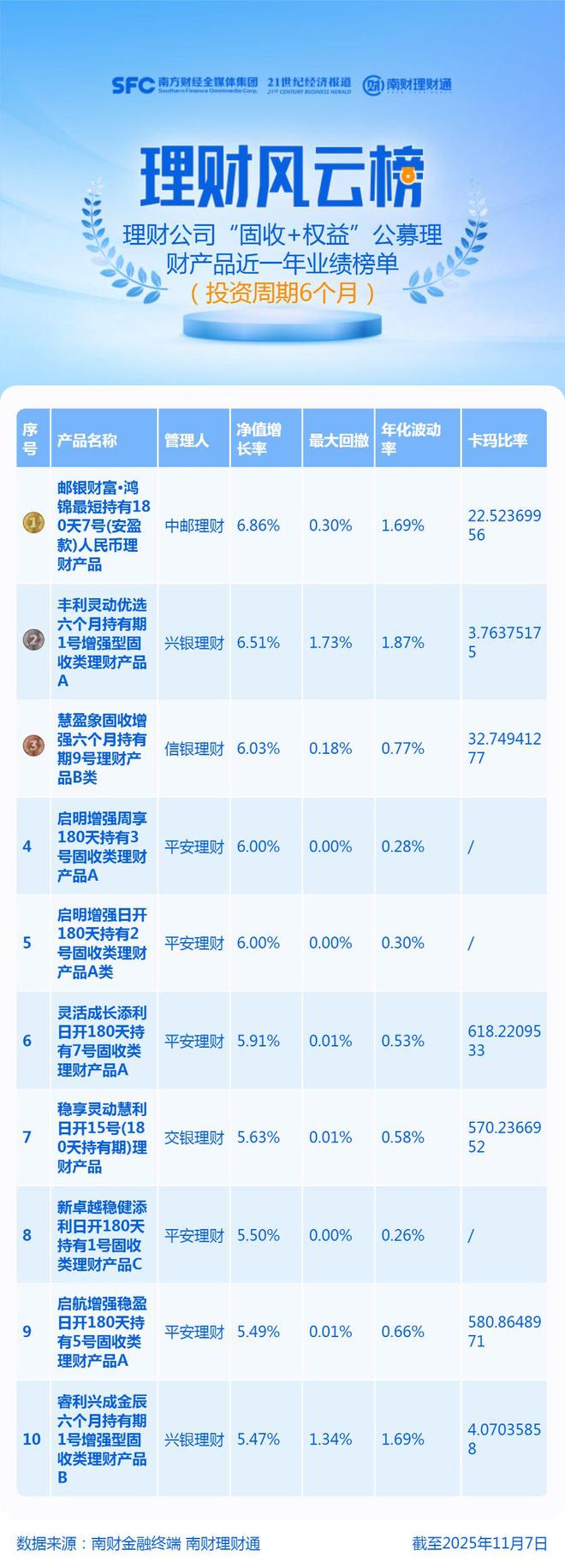
Core Viewpoint - The report highlights the performance of various public "fixed income + equity" financial products with a six-month investment cycle, showcasing the top performers in terms of net value growth over the past year, particularly from companies like Xinyin Wealth and Ping An Wealth [5]. Group 1: Product Performance - As of November 7, 2025, there are a total of 414 public "fixed income + equity" products with a six-month investment period, with the top ten products in net value growth coming from five wealth management companies [5]. - The "Huiyingxiang Fixed Income Enhanced Six-Month Holding Period No. 9 Financial Product B" from Xinyin Wealth achieved a net value growth rate of 6.03%, ranking third in the list, while maintaining a maximum drawdown of only 0.18% [5][6]. - The product has shown consistent performance, with annualized returns of 6.53% and 4.56% in the first and second quarters of 2025, respectively, outperforming the benchmark [7]. Group 2: Product Strategy and Composition - The "Huiyingxiang" series focuses on multi-asset and multi-strategy allocation, with different equity allocation ratios defining the fixed income enhancement series [6]. - The product employs a strategy of "fixed income base, strategy enhancement," with a focus on high-quality debt assets while controlling credit and interest rate risks [6]. - As of the end of Q3 2025, the product's asset allocation consisted of 55.03% in bonds and 41.92% in cash and bank deposits, indicating a conservative investment approach [6]. Group 3: Future Outlook - The management team anticipates a slight weakening in the bond market fundamentals in Q4 2025, but expects market sentiment to improve compared to Q3, indicating resilience in the market [8].

特别策划 | 农银理财养老金融:产品创新与收益并进,让养老更顺心
Sou Hu Cai Jing· 2025-11-13 11:40
2025年10月30日,养老理财试点地区扩大至全国,试点期限三年。作为国有大行理财子公司,农银理财近年来在养老金融领域持续发力,通过完善产品体 系、优化投资策略、加强投资者服务,探索出一条服务居民养老需求、支持银发经济高质量发展的有效路径。 分红落袋彰显诚意,投资运作成效显著 今年以来,农银理财两只"农银顺心"系列封闭式老理财产品迎来新一轮分红,两只产品合计现金分红金额近4亿元,成立以来累计现金分红近8亿元,实实 在在将"养老钱"的增值收益落到投资者口袋,是农银理财践行"以客户为中心"养老金融服务承诺的直接体现。另外,两只产品2024年度年平均年化收益达 5.24%,更彰显了其在养老理财产品运作上的稳健实力。 在"稳健为先"的投资理念指导下,农银理财产品的长期收益表现展现出行业领先水平。今年以来,因为债市调整,仅依靠票息难以满足投资者对"稳中求 进"的双重诉求。在此情况下,农银理财养老理财产品充分发挥了大类资产配置的优势,"固收+"策略中"+"的部分对实现目标收益起了更为重要的作用。 农银理财扎实打造投研体系,提升投研能力,布局了指数策略、红利策略、量化策略以及商品策略等多种投资策略,丰富了权益投资的工具箱, ...

收益突围!兴银理财丰利兴动多策略包揽“固收+期权”榜单冠亚军
2 1 Shi Ji Jing Ji Bao Dao· 2025-11-13 06:41
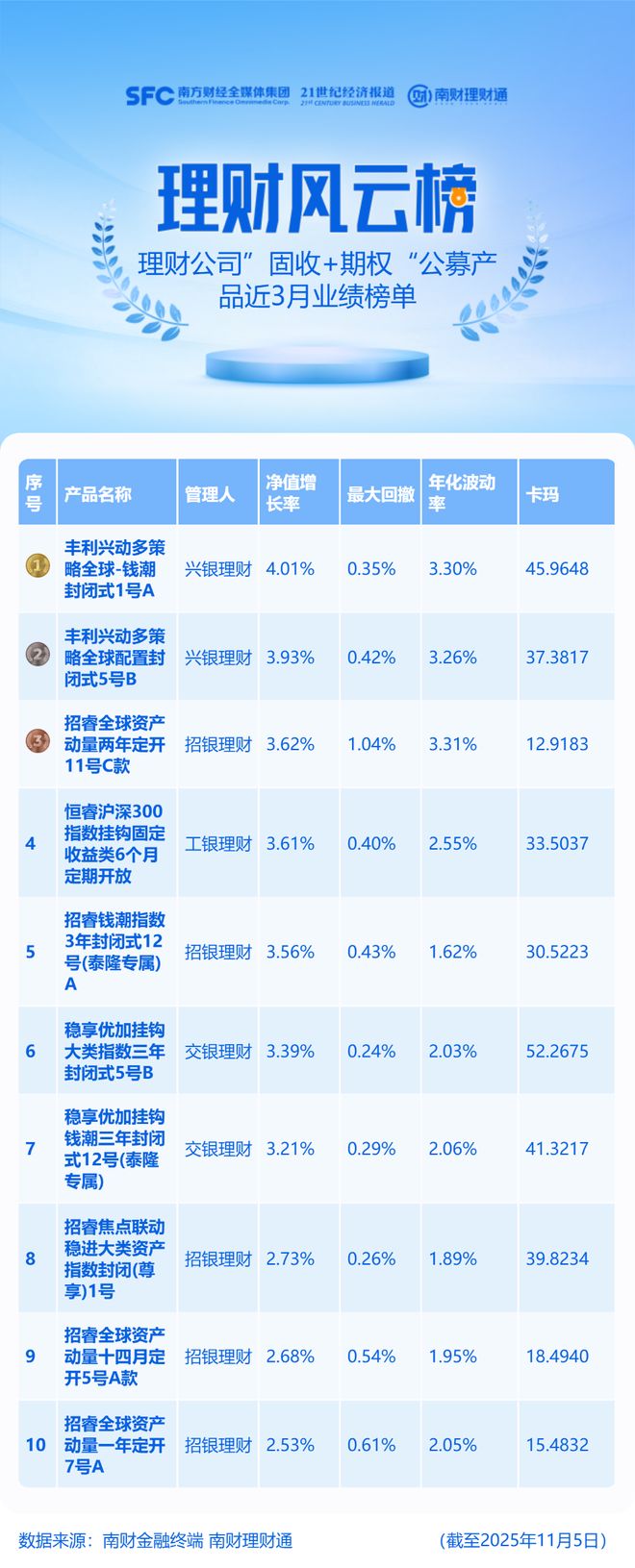
Core Insights - The article discusses the increasing demand for asset reallocation among residents towards "stable appreciation + yield elasticity" in a low interest rate environment, highlighting the importance of "fixed income + options" strategies [4][8] - It emphasizes the performance of "fixed income + options" products, which have shown positive returns in a volatile market, with an average net value growth rate of 2.30% over the past three months [4][6] Product Performance - As of November 5, 2025, there are 173 existing "fixed income + options" products, all of which achieved positive returns in the last three months [4][6] - The top-performing product, "Fengli Xindong Multi-Strategy Global - Qianchao Closed-end No. 1A," had a net value growth rate exceeding 4%, while the second product, "Fengli Xindong Multi-Strategy Global Configuration Closed-end No. 5B," achieved a growth rate of 3.93% [4][6] Investment Strategy - The leading product employs a conservative income strategy, controlling interest rate and credit exposure to maintain stable returns, while utilizing European call options linked to the Qianchao Index [5][7] - The Qianchao Index encompasses a broad range of global assets, including bonds, stocks, and commodities, and is designed to provide a quantitative strategy based on risk parity and momentum principles [6][7] Risk Management - The "Fengli Xindong Multi-Strategy" series combines stable debt assets with limited-loss option structures, effectively controlling downside risk while allowing for potential high returns when linked assets perform well [7][8] - The maximum loss from the option structure is limited to the option premium, theoretically securing the maximum downside risk while enabling significant upside potential [8]
汇华理财五周年 总经理王茜拆解三乘三九个关键词
Zhong Zheng Wang· 2025-11-12 06:49
Core Insights - The core message of the news is the strategic vision and achievements of Huihua Wealth Management over the past five years, highlighting its unique advantages as the first joint venture wealth management company in China and its plans for future growth [1][2]. Group 1: Company Development - Huihua Wealth Management has experienced a transformative journey characterized by "gorgeous opening, changing winds, and breaking out of the cocoon" over the past five years [1]. - The company has successfully doubled its asset management scale and significantly improved product returns, demonstrating strong competitiveness in a low-interest-rate environment [1]. - The firm has achieved near-perfect compliance rates for its fixed income plus product series, reflecting the substance of its absolute return product system [1]. Group 2: Strategic Focus - The company emphasizes "global allocation, diversified enhancement, and professional standing" as key strategies to address industry challenges [2]. - Data comparison shows that the annualized return of A-shares over the past decade is only 1.7%, while the average return from mainstream global markets can achieve 10.76% with lower volatility [2]. - The company aims to balance scale and returns by focusing on steady investment performance and innovative service solutions, committing to creating long-term value for investors through "absolute returns" [2].
不追规模重稳健 汇华理财五周年定调下一个五年:以国际视野行稳致远
Zhong Zheng Wang· 2025-11-12 06:03
Core Viewpoint - The company aims to establish itself as a benchmark in wealth management with a focus on stable absolute returns, global allocation capabilities, and innovative vitality over the next five years [1] Group 1: Strategic Direction - The strategic direction for the next five years is defined as "international vision, innovation leadership, and steady progress" [1] - The company emphasizes that scale is not the ultimate goal; instead, stable returns and customer reputation are the core logic for long-term success [1] Group 2: Industry Challenges - The banking wealth management industry is facing common challenges, with many peers experiencing confusion as the "valuation magic" fades [1] - The company acknowledges past difficulties due to market volatility and single strategies, leading to a transformation towards diversified development [1] Group 3: Future Focus - The company will not prioritize scale but will focus on "steady progress," maintaining conservative strategies in unfavorable market conditions and enhancing returns when opportunities arise [1] - As the first joint venture wealth management company in the country, the company plans to leverage its international vision to achieve innovation leadership in investment solutions and comprehensive services [1]
养老理财市场将迎来更多“长钱”
Jin Rong Shi Bao· 2025-11-12 01:31
Core Viewpoint - The recent notification from the National Financial Supervision Administration aims to promote the sustainable development of pension financial products by expanding the pilot program nationwide for three years, addressing the growing demand for pension finance due to the deepening aging population in China [1][2]. Summary by Sections Expansion of Pilot Program - The pilot program for pension financial products will now cover the entire country, with a three-year duration and a significant increase in fundraising limits for financial companies, allowing them to raise up to five times their net capital after deducting risk capital [2][3]. Institutional and Product Design Breakthroughs - The new policy focuses on enhancing the accessibility and risk management capabilities of pension financial products for the elderly, reflecting a cautious approach to the long-term development of pension finance [3][4]. - Approximately 29 financial companies meet the new criteria, with 11 already qualified for the pilot program, indicating a potential increase in market participants [3][4]. Market Growth and Product Characteristics - Since the pilot program's initiation in September 2021, the market for pension financial products has expanded rapidly, surpassing 100 billion yuan in the first quarter of 2023, with 51 products currently in existence [4][5]. - The notification encourages the issuance of long-term pension financial products with a minimum holding period of five years, aiming to align with the long-term investment needs of consumers [5][6]. Future Market Trends - The expansion of the pilot program is expected to attract more financial companies and insurance institutions, leading to a rise in long-term products and a diversification of asset allocation strategies [6][7]. - The integration of pension financial products with personal pension systems is anticipated to enhance the overall pension asset allocation for residents, particularly benefiting the elderly population in rural and less developed areas [6][7].
拼C位!低利率时代金融服务启新程,这场行业评鉴活动启动
Nan Fang Du Shi Bao· 2025-11-12 01:21
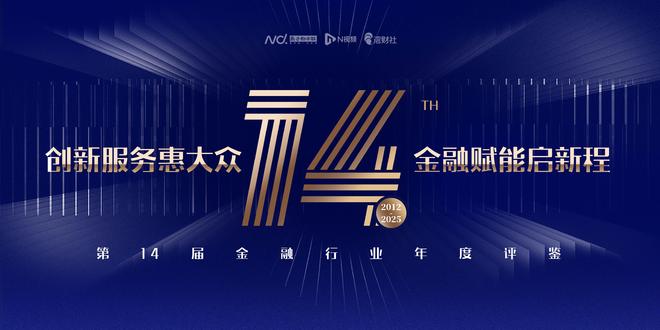
Core Insights - The article emphasizes the call for a strong financial sector as part of the "15th Five-Year Plan," highlighting the importance of enhancing financial services for high-quality economic development by 2025 [2][6] - The 14th Annual Financial Industry Evaluation has commenced, focusing on innovation and service upgrades in financial institutions, aiming to identify industry benchmarks and promote advanced experiences [2][7] Financial Services to the Real Economy - Financial services are crucial for the real economy, with significant growth in loans for technology, green, inclusive, elderly care, and digital economy sectors, showing year-on-year increases of 11.8%, 22.9%, 11.2%, 58.2%, and 12.9% respectively [3] - The insurance sector demonstrated stability with a reported insurance payout of 1.87 trillion yuan, a year-on-year increase of 8.06%, with life insurance payouts rising by 42.5% [3] - Capital market reforms have led to 98 companies going public, raising 91.8 billion yuan, with 86% being private enterprises and 92% in strategic emerging industries [3] Financial Innovation Pilot Programs - Pilot programs in financial asset investment, insurance fund long-term investment reform, technology enterprise acquisition loans, and intellectual property finance have collectively added over 1 trillion yuan in investments to the technology sector [4] Annual Financial Industry Evaluation - The 14th Annual Financial Industry Evaluation aims to discover industry benchmarks and stimulate innovation, inviting submissions from various financial sectors to showcase outstanding cases that address market needs and demonstrate responsibility [7][8] Submission Directions for Various Sectors - The evaluation seeks innovative cases from banks focusing on digital technology, supply chain finance, and regional empowerment [8] - The insurance sector is encouraged to submit cases that support livelihood security and service the real economy, particularly in agriculture and specialized industries [9] - The securities sector is invited to present innovations in investment banking services and investment empowerment for small and micro enterprises [10] - Fund management is looking for innovations in ETF products and investor services to enhance accessibility for retail investors [11] - Wealth management is focused on "fixed income plus" product innovations and solutions for rural and underserved markets [12][13] - Consumer finance is targeting core needs in the consumption market, especially for new citizens, with a focus on technology-enabled, customized financial services [14] - The state-owned asset financing platform is exploring innovative models to support the financial needs of small and micro technology enterprises [15]
面对全球市场波动 农银理财以多元资产配置破局
Jin Rong Shi Bao· 2025-11-11 08:36
Core Insights - In 2025, various assets exhibited distinct performance driven by macroeconomic policies, market sentiment, and structural transformations after experiencing volatility due to tariff shocks [1][2] - The bond yield in China has been rising from historical lows, while global equity risk assets have rebounded significantly, and precious metals have shown even more pronounced gains as safe-haven assets [1][2] Asset Performance - The bond market faced headwinds this year, with factors like new bond tax rates and fund redemption fees contributing to rising yields [2] - The performance of safe-haven assets, particularly gold, has been strong, reflecting heightened investor risk aversion and concerns over the U.S. dollar's credit system amid increasing trade tensions [2][3] Equity Market Dynamics - The weakening U.S. dollar has alleviated external debt pressures for emerging markets, leading to a rebound in equity markets after the tariff shocks in April [3] - The A-share market has reached a nearly 10-year high, driven by improved confidence in China's industrial upgrades and supportive policies [3] Fixed Income and Multi-Asset Strategies - The "fixed income plus" products are gaining traction as they address the challenges of low interest rates and volatility by incorporating diverse asset classes to enhance overall returns [4][5] - Companies are innovating within the "fixed income plus" strategy, offering products that combine stable income with growth opportunities, such as the "dividend growth dual enjoyment" strategy [6][8] Multi-Asset Allocation - The "multi-asset allocation" approach is becoming a strategic focus for financial institutions, moving away from reliance on single asset performance to mitigate market volatility [8] - The "multi-dimensional balance enjoyment" series products utilize risk parity theory to equalize risk contributions from various assets, suitable for investors seeking long-term stable returns [8]
中银理财:达到止盈条件,稳富固收增强目标盈封闭式2025年10期提前终止
Cai Jing Wang· 2025-11-11 07:38
Core Viewpoint - Bank of China Wealth Management announced the early termination of its wealth management product "Bank of China Wealth Management - Stable Wealth Fixed Income Enhanced Target Yield Closed-end 2025 Issue 10" due to achieving the profit-taking conditions set in the product's prospectus [1] Group 1 - The originally expected maturity date of the product was March 25, 2026 [1] - The product reached the profit-taking condition as it recorded an annualized yield of no less than the target yield of 2.55% for two consecutive valuation days during the observation period [1] - The early termination date is set for November 13, 2025 [1]
通达集团(00698.HK)附属认购5000万元理财产品
Ge Long Hui· 2025-11-10 14:56
Core Viewpoint - Tongda Group (00698.HK) announced the investment of idle funds into various financial products, indicating a strategic move to optimize asset management and enhance returns [1] Group 1 - The company plans to subscribe to several financial products through its indirect non-wholly owned subsidiary, Tongda Chuangzhi [1] - The subscription amounts for the financial products are as follows: RMB 10 million for China Post Financial Products, RMB 10 million for Xinyin Financial Products, and RMB 30 million for China Merchants Bank Financial Products [1]