酒业

Search documents
眉山市东坡区妙品酒业经营部(个体工商户)成立 注册资本2万人民币
Sou Hu Cai Jing· 2025-11-06 13:51
天眼查App显示,近日,眉山市东坡区妙品酒业经营部(个体工商户)成立,法定代表人为夏安刚,注 册资本2万人民币,经营范围为许可项目:酒类经营;食品互联网销售;食品销售。(依法须经批准的 项目,经相关部门批准后方可开展经营活动,具体经营项目以相关部门批准文件或许可证件为准)一般 项目:食品销售(仅销售预包装食品);保健食品(预包装)销售;食品互联网销售(仅销售预包装食 品);农副产品销售;日用品销售;日用百货销售;互联网销售(除销售需要许可的商品);新鲜水果 批发;新鲜水果零售。(除依法须经批准的项目外,凭营业执照依法自主开展经营活动)。 ...
新酒饮/新消费/新场景/新品类爆款案例揭秘,三大智库同台献技
Sou Hu Cai Jing· 2025-11-06 09:43
Core Insights - The Chinese liquor industry is undergoing significant structural adjustments, with the white liquor market experiencing slowed growth and changing consumer demands, leading to traditional marketing and product models facing bottlenecks [2][5] - Consulting firms are becoming crucial advisors for liquor companies in their transformation and upgrading processes, especially at this pivotal moment in the industry [2][5] Market Trends - The new liquor market is rapidly developing, with low-alcohol and diversified products like low-alcohol fruit wine, pre-mixed drinks, and tea wine emerging as core directions [4] - The new liquor market is projected to exceed 74 billion yuan by 2025, representing a significant growth area for the liquor industry amidst existing competition [4] Consumption Changes - In the first half of 2025, white liquor production was 1.9159 million kiloliters, marking a 5.8% year-on-year decline, indicating the industry is in a phase of stock competition [7] - Changes in consumer demographics and preferences are reshaping demand, with new consumption scenarios such as solo drinking, small gatherings, and outdoor leisure providing opportunities for market segmentation [7] Strategic Insights - The upcoming AIIC2025 Liquor Innovation and Investment Conference will feature insights from three consulting firms on new liquor consumption trends, demographic shifts, and the youth-oriented transformation of yellow wine [5][14] - The conference will include discussions on how to balance tradition and innovation in liquor branding to attract younger consumers, which is essential for future growth [10]

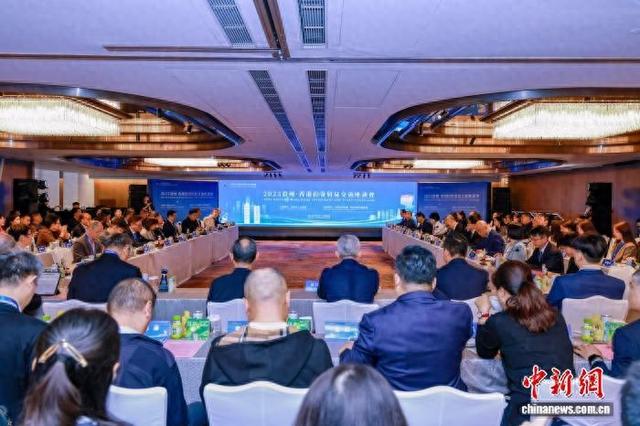
“2025贵州·香港投资贸易交流座谈会”在香港举行
Zhong Guo Xin Wen Wang· 2025-11-06 03:21
Core Points - The "2025 Guizhou-Hong Kong Investment and Trade Exchange Seminar" was held in Hong Kong, emphasizing Guizhou's unique modern industrial clusters and investment opportunities [1][3] - Guizhou's government officials highlighted the province's potential in ecological tourism, open development, new productivity, and a favorable business environment, inviting Hong Kong entrepreneurs to invest [3][5] - The seminar featured discussions on deepening cooperation between Guizhou and Hong Kong, with a focus on promoting Guizhou's unique products and expanding their market reach [5][6] Investment Opportunities - Guizhou offers diverse investment opportunities in sectors such as textiles, food, and health products, appealing to Hong Kong investors [5] - The province's rich tourism resources and improved transportation infrastructure present significant opportunities for cultural and tourism development [5][8] - The signing of six projects with a total value of $20.087 million indicates strong investment interest and collaboration between Guizhou and Hong Kong [8] Industry Collaboration - The seminar included representatives from various sectors, showcasing Guizhou's industrial diversity and attractiveness for investment [8] - Emphasis was placed on enhancing cooperation in technology and digital economy, particularly in areas like big data and artificial intelligence [6] - The event attracted nearly 150 participants from trade, finance, logistics, and other sectors, indicating a robust interest in investment collaboration [8]
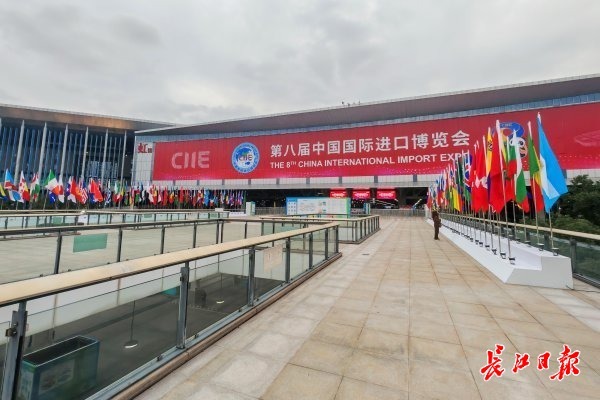
469家武汉企业奔赴进博会,机器人在湖北馆打太极
Chang Jiang Ri Bao· 2025-11-05 00:38
Group 1 - The 8th China International Import Expo (CIIE) will be held from November 5 to 10 at the National Exhibition and Convention Center in Shanghai, with 469 participating companies and 1,951 registered professional visitors from Wuhan, maintaining the same scale as the previous year [1] - The Hubei comprehensive image display area is themed "Hubei as a Pivot, Smart Chain for the World," designed to showcase Hubei's cultural charm and industrial innovation to a global audience [2] - The display area features a mix of traditional brands like Huanghelou Liquor and emerging local tea brands, alongside technology companies showcasing interactive experiences such as humanoid robots and AI smart glasses [6] Group 2 - The Wuhan Municipal Bureau of Commerce has actively promoted enterprises to "go out" and secure orders, resulting in significant achievements, including organizing seven delegations and over 100 companies to participate in exhibitions in various countries, successfully connecting with over 1,200 overseas clients and reaching a preliminary trade cooperation intention amount exceeding $100 million [7] - Future plans include building an import goods distribution center focused on bulk commodities, fresh cold chain, consumer goods, and components, enhancing the import scale and supporting the development of the national import trade innovation demonstration zone in the East Lake High-tech Zone [9] - Hubei enterprises such as Dongfeng Motor, Huazhong University of Science and Technology, and Puzhou Technology are prominently featured at the expo [10]

从茅台换帅到全行业转型,2025酒业变局解析
Sou Hu Cai Jing· 2025-11-04 06:15
Core Viewpoint - The recent leadership change at Kweichow Moutai, with Chen Hua replacing Zhang Deqin as chairman, has sparked discussions about the future strategic direction of the company and the broader implications for the liquor industry during a period of significant adjustment [1][3]. Group 1: Leadership Changes in the Industry - Kweichow Moutai's leadership change is part of a broader trend in the liquor industry, where high-level personnel changes have accelerated, with over 50 companies reporting leadership shifts in 2025 alone [5][6]. - Other notable changes include the management transition at Zhenjiu Li Du, where former CEO Yan Tao became vice chairman, and the appointment of Tang Xiangyang as the new CEO [3][4]. - The leadership reshuffles are not limited to major players; regional brands are also experiencing urgent changes, such as the resignation of Yang Weiguo from Yanghe and the appointment of Gu Yu as chairman [3][4]. Group 2: Industry Challenges and Responses - The liquor industry is facing significant challenges, transitioning from a "golden era" of growth to a period characterized by declining volumes and profits, with Kweichow Moutai's revenue growth slowing to 7.28% and net profit growth to 5.25% in Q2 2025 [6][8]. - Other companies, such as Yanghe, reported a 35.32% decline in revenue and a 45.34% drop in net profit, highlighting the widespread pressure across the sector [8]. - Companies are increasingly focusing on transformation strategies, with Kweichow Moutai emphasizing a shift from selling liquor to selling lifestyle, while Yanghe pursues a dual strategy of high-end and national expansion [8][10]. Group 3: Market Dynamics and Inventory Issues - The liquor industry is grappling with high inventory levels, with 58.1% of distributors reporting increased stock compared to the previous year, leading to a challenging sales environment [10]. - The phenomenon of price inversion, where retail prices fall below factory prices, is exacerbating the difficulties for distributors, resulting in a "vicious cycle" of price cuts and unsold inventory [10]. - As distributors face cash flow issues and some withdraw from networks, companies are compelled to adjust their management teams to meet sales targets [10]. Group 4: Strategic Innovations and Consumer Adaptation - The industry is shifting from reactive measures to proactive strategies, focusing on governance innovation and adapting to changing consumer demands [11][13]. - Companies are exploring new product offerings and marketing strategies to cater to younger consumers, such as Kweichow Moutai's introduction of blueberry sparkling wine and Wuliangye's lower-alcohol products [13][15]. - The transformation reflects a broader trend towards personalized and diverse drinking experiences, moving away from traditional consumption patterns [15].

广元市利州区锦聚缘酒业经营部(个体工商户)成立 注册资本50万人民币
Sou Hu Cai Jing· 2025-11-04 05:42
Core Insights - A new individual business named Guangyuan Lijiu District Jinjuyuan Liquor Industry has been established, with a registered capital of 500,000 RMB [1] - The legal representative of the business is Shen Xuemei [1] Business Scope - The business is authorized to operate in the following areas: liquor sales, retail of tobacco products, and food sales, subject to necessary approvals [1] - General business activities include: sales of agricultural and sideline products, organizing cultural and artistic exchange activities, initial processing of edible agricultural products, primary agricultural product acquisition, retail of fresh vegetables and fruits, tea set sales, information consulting services (excluding licensed consulting services), daily necessities sales, toy sales, cosmetics retail, and retail of edible agricultural products [1]
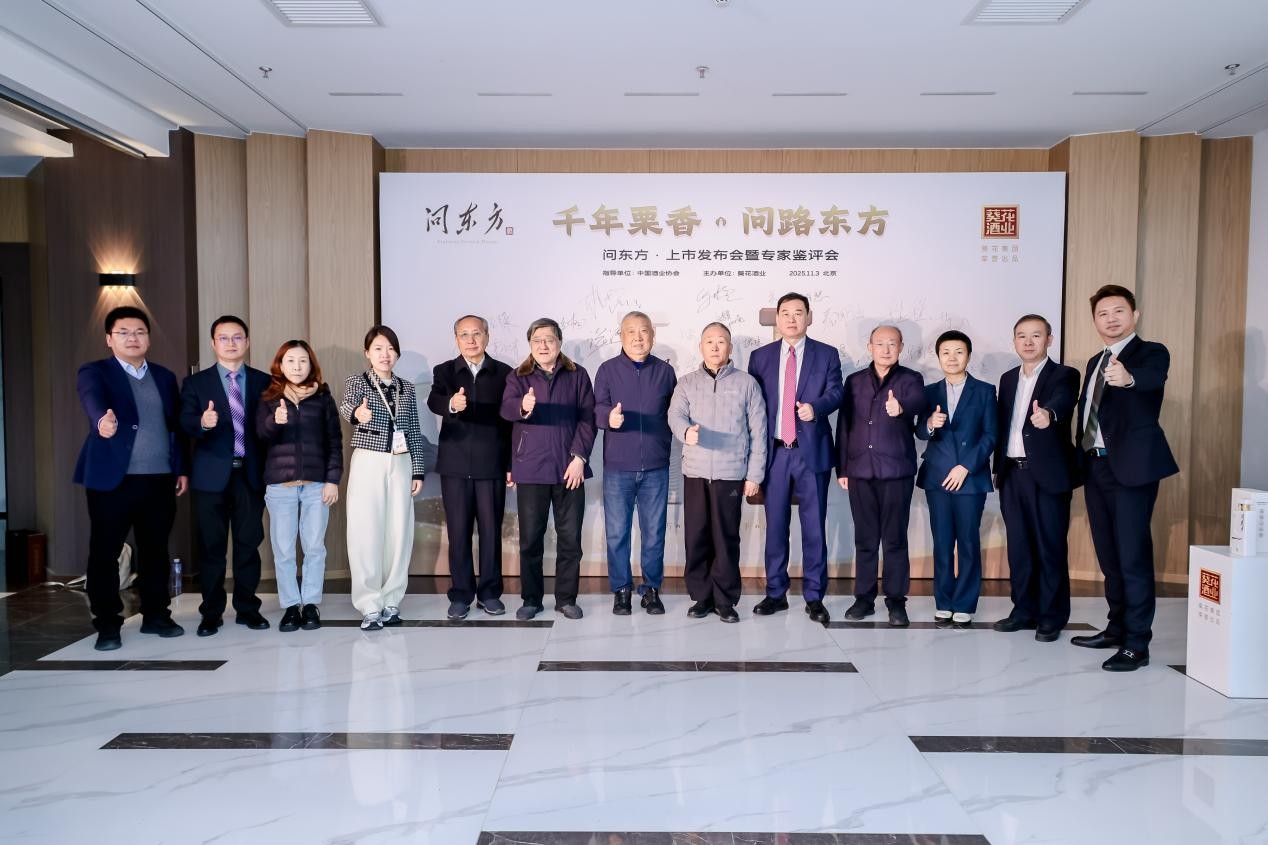
葵花酒业“问东方”上市发布会在京举行
Ren Min Wang· 2025-11-04 02:51
Core Viewpoint - The first brand launch event for herbal liquor, "Wen Dong Fang," was held in Beijing, focusing on the health drinking topic that is of public concern [1] Industry Insights - The Chinese liquor industry is undergoing a significant transformation in consumer structure, with diversification and personalization becoming irreversible trends [2] - Innovation is emphasized as the primary driving force for development, with a call for the liquor industry to integrate innovation throughout the entire supply chain and all processes [2] Company Developments - The chairman of Kuihua Group stated the company's ambition to create a benchmark brand for new herbal health liquor in China, aiming to redefine the culture of healthy drinking [2] - "Wen Dong Fang" leverages Kuihua Group's 27 years of experience in traditional Chinese medicine and collaborates with the Food Fermentation Industrial Research Institute to ensure the product's herbal activity and health value [2]
抚州市临川区贵标酒业经营部(个体工商户)成立 注册资本20万人民币
Sou Hu Cai Jing· 2025-11-04 00:45
天眼查App显示,近日,抚州市临川区贵标酒业经营部(个体工商户)成立,法定代表人为杨贵标,注 册资本20万人民币,经营范围为许可项目:酒类经营,食品销售(依法须经批准的项目,经相关部门批 准后在许可有效期内方可开展经营活动,具体经营项目和许可期限以相关部门批准文件或许可证件为 准)一般项目:食品销售(仅销售预包装食品),保健食品(预包装)销售(除依法须经批准的项目 外,凭营业执照依法自主开展经营活动)。 ...
段永平捐赠1万股茅台股票;沱牌舍得品牌线上授权店铺公布丨酒业早参
Mei Ri Jing Ji Xin Wen· 2025-11-03 01:05
Group 1 - Duan Yongping donated 10,000 shares of Kweichow Moutai, valued at 15 million RMB, emphasizing the importance of dividends over market value [1] - Kweichow Moutai has a strong dividend capability, having distributed over 330 billion RMB in dividends since its listing, with projected dividends exceeding 500,000 RMB for the donated shares in 2024 [1] - The donation reflects confidence in the core value of leading companies in the liquor industry, highlighting that true industry barriers stem from sustained profitability and dividend capacity rather than short-term market fluctuations [1] Group 2 - Shede Liquor announced the official authorized online stores for its "Tuo Pai She De" brand across major e-commerce platforms, aiming to combat counterfeit risks [2] - This initiative is a significant step in channel governance, protecting consumer rights and maintaining brand reputation while preventing unauthorized low-price sales that could disrupt offline distribution networks [2] Group 3 - Taobao and Tmall reported over 50% year-on-year growth in liquor sales, with notable performance in baijiu, beer, and health food liquor [3] - Brands like Fenjiu and Guojiao 1573 experienced substantial sales increases during the "Double 11" shopping event, indicating strong online operational effectiveness [3] - The explosive growth in online sales, particularly the 20-fold increase in orders for Yijiu Yijiu's flash sales, demonstrates the power of the "online traffic + instant delivery" model, highlighting the accelerating trend of online penetration in the industry [3]
茅台降速,生态生变
Jing Ji Guan Cha Wang· 2025-11-01 05:48
Core Viewpoint - Guizhou Moutai's Q3 financial report shows the lowest revenue and net profit growth since 2015, indicating a significant slowdown in performance and potential challenges in meeting annual targets [2] Financial Performance - In the first three quarters, Guizhou Moutai's revenue growth was 6.3%, requiring approximately 590 billion yuan in Q4 to achieve a 9% annual growth target, which translates to over 17% year-on-year growth [2] - The company's revenue accounts for 22% of the overall sales in the Chinese liquor industry, reflecting the broader pressure on the sector [2] Market Dynamics - The slowdown has shifted the Moutai ecosystem from a "lying down to earn" model to a "survival" mode for distributors, with the pawn price of Feitian Moutai dropping below 1,000 yuan [2][4] - The demand for Moutai among traditional high-end clients, such as construction and real estate companies, has decreased due to reduced business activities and tighter fiscal policies [3] Leadership Changes - Guizhou Moutai has undergone its fourth leadership change in five years, with the appointment of Chen Hua as the new chairman, raising concerns about potential market strategy shifts and continuity [2][3] Sales and Distribution Challenges - Moutai's series liquor revenue fell by 7.78% in the first three quarters, with the proportion of series liquor in total revenue declining to 13.89% [10] - Distributors are facing inventory buildup and cash flow issues, with some resorting to selling other products to maintain revenue [10][12] Collectors and Pawn Market - The financial appeal of Moutai has diminished, with pawn shops offering significantly lower prices than before, indicating a loss of confidence in Moutai's value as an investment [5][6] - The restructuring of Moutai's collectors' associations has led to a decline in sales prices for collectible Moutai, with many collectors facing financial losses [8] Stock Market Reaction - Moutai's stock price has been stagnant, with a decline of approximately 0.93% since the beginning of the year, reflecting investor sentiment amid the company's performance challenges [13]