
蔬菜种植

Search documents
四中全会精神在基层丨锚定高质量发展 书写中部崛起新篇章
Xin Hua She· 2025-11-04 00:04
Group 1 - The central region of China, covering six provinces, is emphasized as a key area for high-quality development and modernization, aligning with the goals set by the 20th Central Committee of the Communist Party [1] - New emerging industries are being cultivated, including advancements in hydrogen technology and precision agriculture with autonomous machinery [1][2] - The establishment of a modern industrial system is underway, with companies like Hunan Sheny Precision Parts Co., Ltd. showcasing innovative production processes [2] Group 2 - Hubei has implemented a comprehensive fair competition review system, enhancing market regulation and oversight across 4,060 units [3] - The region is breaking geographical limitations by developing extensive transportation networks, such as the Zhoukou Port, which connects domestic and international markets [3][4] - The agricultural sector is thriving, with initiatives in Jiangxi focusing on high-value crops like chili peppers, contributing to local economic development and job creation [4][5] Group 3 - The focus on improving product quality and expanding sales channels is evident in local agricultural initiatives, aiming to enhance the brand and economic conditions for farmers [5] - The integration of technology and innovation in various sectors is being prioritized to support sustainable development and economic growth in the central region [2][4]
第一现场丨“特色蔬菜产业铺就一条致富路”
Ren Min Ri Bao· 2025-11-03 03:46
Core Insights - The article highlights the transformation of Jin Hua Village in Laos through the development of a specialized vegetable planting industry, showcasing successful poverty alleviation efforts through agricultural modernization and cooperation with Chinese experts [1][5]. Group 1: Agricultural Development - Jin Hua Village has established over 20 vegetable greenhouses, including three high-standard smart greenhouses built in 2024, which utilize modern technologies such as intelligent temperature and light control [1][4]. - The introduction of modern agricultural techniques has allowed local farmers to increase their vegetable yields and income, with each harvest generating between 180,000 to 250,000 Lao Kip (approximately $8.18 to $11.36) [2][3]. Group 2: Economic Impact - Approximately 60% of households in Jin Hua Village are now engaged in vegetable cultivation, with a total of 52 households operating greenhouses and 45 households growing vegetables outdoors, covering nearly 83 acres combined [4]. - The average annual income for villagers is projected to rise to 1,027,000 Lao Kip (around $46.67) this year, with some families reporting stable monthly incomes of 600,000 Lao Kip (about $27.27) from greenhouse operations [4]. Group 3: Collaborative Efforts - The project includes not only greenhouse construction but also infrastructure improvements such as road building, vegetable collection points, and drainage systems, with completion expected by June 2026 [4]. - The success of Jin Hua Village serves as a model for poverty alleviation in Laos, with plans for additional cooperation projects between Laos and China to further enhance agricultural practices and economic development [5].
同城化发展提速增效 武汉无人机人形机器人都市圈生根发芽
Chang Jiang Ri Bao· 2025-11-03 00:35
Core Viewpoint - The Wuhan metropolitan area is rapidly advancing in industrial collaboration, showcasing innovations in low-altitude economy, robotics, and agricultural supply chains, which are expected to drive regional economic growth and enhance competitiveness in various sectors [1][2][4][6]. Industry Development - The establishment of the Low Altitude Economy Innovation Research Institute in Xianning aims to create a hundred billion-level low-altitude economy industrial cluster, focusing on six key research areas including low-altitude environment modeling and real-time monitoring [2][3]. - The Xianning testing base has completed airspace approval and essential infrastructure, with expectations to form a significant low-altitude manufacturing and testing service industry cluster within three years [3]. - The Tianwen humanoid robot project in Xiaogan, with an investment of 500 million yuan, has begun mass production, aiming for an annual output of 1,500 units and projected annual revenue of 300 million yuan [4][5]. Technological Innovation - The Tianwen humanoid robot leverages a full-stack technology team and features self-developed core components, emphasizing low cost and high reliability [4]. - The Xianggang National High-tech Zone is extending the optoelectronic information industry chain, with significant contributions from companies like Huagong Technology, which supplies 60% of China's PTC heaters for new energy vehicles [5]. Agricultural Supply Chain - The agricultural sector in Jia Yu County is efficiently supplying fresh produce, with a vegetable corridor producing 210,000 tons annually, and products being exported to countries like South Korea and Japan [6][7]. - The Shouheng City project in Xiaogan, with a total investment of 30 billion yuan, aims to create a comprehensive logistics and commerce hub, enhancing the distribution of agricultural products across the central China region [6][7].


因地制宜培育特色产业
Jing Ji Ri Bao· 2025-11-03 00:07
Core Insights - The article emphasizes the importance of green transformation for sustainable development, using the example of Chicheng County in Hebei Province as a model for integrating ecological advantages into economic growth [1][2] - The shift from a resource-extractive economy to a sustainable model is highlighted as essential for long-term prosperity and environmental protection [1][2] Group 1: Economic Transformation - Chicheng County has transitioned from a mining-based economy to one focused on agriculture, tourism, and ecological industries, demonstrating the potential of sustainable development [1] - The closure of mines was a difficult but necessary decision that has led to the growth of industries such as ecological tourism and vegetable cultivation, which are now key to local prosperity [1][2] Group 2: Industry Development - The county has adopted a tailored approach to industry development, leveraging local resources such as climate and water quality to promote vegetable farming and renewable energy sectors like photovoltaics and hydrogen production [2] - Proximity to Beijing has been utilized to develop tourism, positioning Chicheng as a destination for outdoor activities and wellness retreats, enhancing its economic landscape [2] Group 3: Ecological and Social Benefits - The green transformation aligns with the public's expectations for improved living conditions, leading to increased happiness and retention of residents [2] - The synergy between environmental improvement and industrial upgrading is crucial for achieving economic, social, and ecological benefits, ultimately fostering a harmonious relationship between wealth generation and ecological preservation [2]
“特色蔬菜产业铺就一条致富路”(第一现场)
Ren Min Ri Bao· 2025-11-02 22:21
Core Insights - The article highlights the transformation of Jin Hua Village in Laos through the development of a specialty vegetable planting industry, showcasing successful poverty alleviation efforts through agricultural modernization and Chinese technical assistance [1][6]. Group 1: Agricultural Development - Jin Hua Village has established over 20 vegetable greenhouses, including three newly built high-standard smart greenhouses in 2024, enhancing local agricultural practices [1][6]. - The introduction of modern greenhouse technologies, such as intelligent temperature and light control, has significantly improved vegetable yields and quality, making local produce popular in nearby markets [2][3]. Group 2: Economic Impact - Approximately 60% of households in Jin Hua Village are now engaged in vegetable cultivation, with a total planting area of nearly 30 acres for greenhouse vegetables and 53 acres for open-field vegetables [4]. - The expected average annual income for villagers is projected to rise to 1,027,000 Lao Kip, with individual farmers reporting stable monthly incomes of around 600,000 Lao Kip from greenhouse operations [4]. Group 3: Collaborative Efforts - The project includes not only greenhouse construction but also infrastructure improvements, such as roads and vegetable collection points, and aims for completion by June 2026 [6]. - The success of Jin Hua Village serves as a model for poverty alleviation in Laos, with plans for further collaboration between Laos and China to implement additional poverty reduction projects in other villages [6].

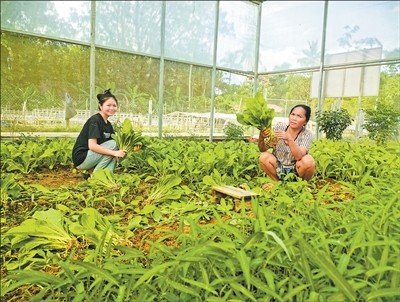
在老挝金花村感受中老减贫合作示范项目成果—— “特色蔬菜产业铺就一条致富路”(第一现场)
Ren Min Ri Bao· 2025-11-02 22:18
Core Insights - The article highlights the transformation of Jin Hua Village in Laos through the development of a specialty vegetable planting industry, showcasing successful poverty alleviation efforts through agricultural modernization and cooperation with Chinese experts [1][5]. Group 1: Agricultural Development - Jin Hua Village has established over 20 vegetable greenhouses with three newly built high-standard smart greenhouses in 2024, utilizing modern technologies such as intelligent temperature and light control [1][4]. - The introduction of smart greenhouses has allowed local farmers to grow vegetables year-round, significantly increasing their income and improving crop quality [3][4]. Group 2: Economic Impact - Approximately 60% of households in Jin Hua Village are now engaged in vegetable cultivation, with a total planting area of nearly 30 acres for greenhouse vegetables and 53 acres for open-field vegetables [4]. - The expected annual income per capita in Jin Hua Village is projected to rise to 1,027,000 Lao Kip, with individual farmers reporting stable monthly incomes of around 600,000 Lao Kip from greenhouse operations [4]. Group 3: Collaborative Efforts - The project includes not only the construction of greenhouses but also the development of infrastructure such as roads, vegetable collection points, and drainage systems, with completion expected by June 2026 [4]. - The success of Jin Hua Village is part of a broader trend in Vientiane, where 99.43% of families have escaped poverty, attributed to the cooperation between Laos and China in poverty alleviation initiatives [5].
四中全会精神在基层丨“三股绳”拧成一道力
Xin Hua Wang· 2025-11-02 12:46
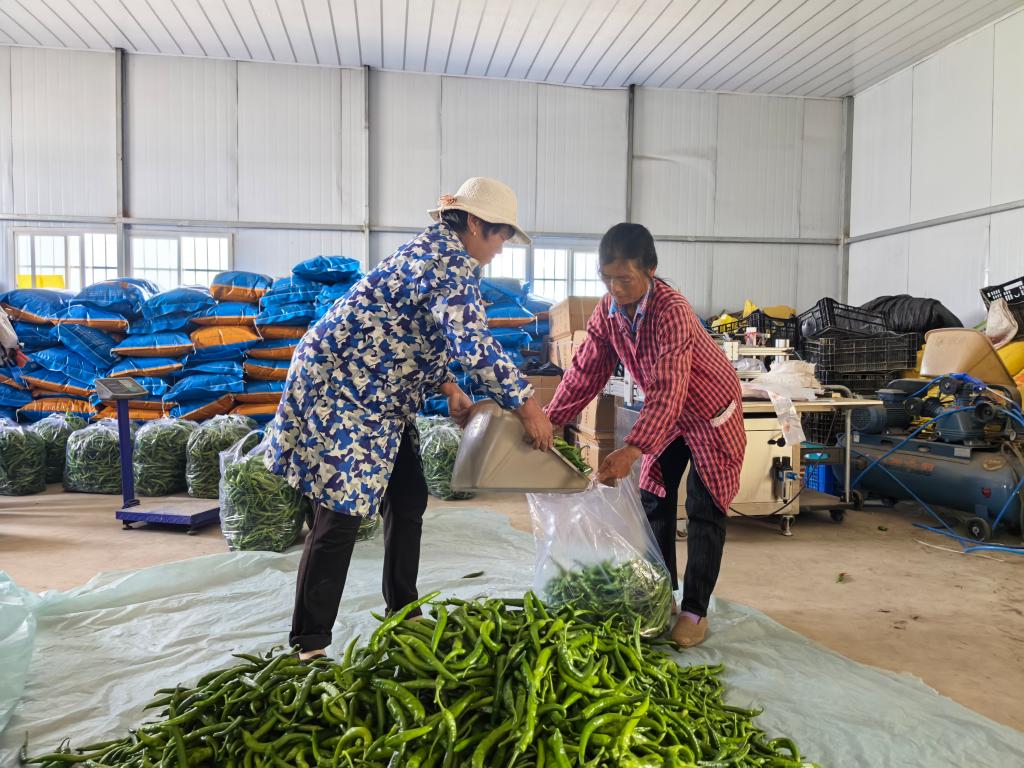
Core Insights - The article highlights the revitalization of the chili pepper industry in Jiangxi Province, particularly in Gao'an City, through the introduction of new varieties and modern agricultural techniques, leading to increased yields and higher prices for farmers [1][2]. Group 1: Industry Development - Jiangxi's chili pepper industry has been transformed with the introduction of over 300 new chili varieties in 2024, resulting in prices that are approximately 50% higher than ordinary peppers [2]. - The annual chili planting area in Shanghu Township is about 15,000 acres, with an annual output of approximately 60,000 tons, contributing to an average income increase of around 3,000 yuan per acre for local farmers [2]. Group 2: Technological Innovation - The establishment of a chili industry research institute and demonstration base in collaboration with Hunan Agricultural University and Jiangxi Agricultural Academy has been pivotal in breeding new varieties [1][2]. - The use of smart greenhouses equipped with integrated water and fertilizer systems has improved the quality and efficiency of chili production [5]. Group 3: Economic Impact - The local chili farmers have seen significant income increases, with some farmers earning over 100,000 yuan annually from chili cultivation [6]. - The transformation of the chili industry has created job opportunities, with large-scale farmers employing local villagers and providing them with training and market access [5][6]. Group 4: Government Support - Local government initiatives have played a crucial role in supporting the agricultural sector, including financial subsidies for large-scale cultivation and infrastructure improvements [7]. - The government's proactive approach in providing technical guidance and resources has facilitated the growth of the chili and traditional Chinese medicine industries in the region [7].
10月份全国蔬菜价格先降后升,原因几何?专家分析→
Sou Hu Cai Jing· 2025-11-01 06:04
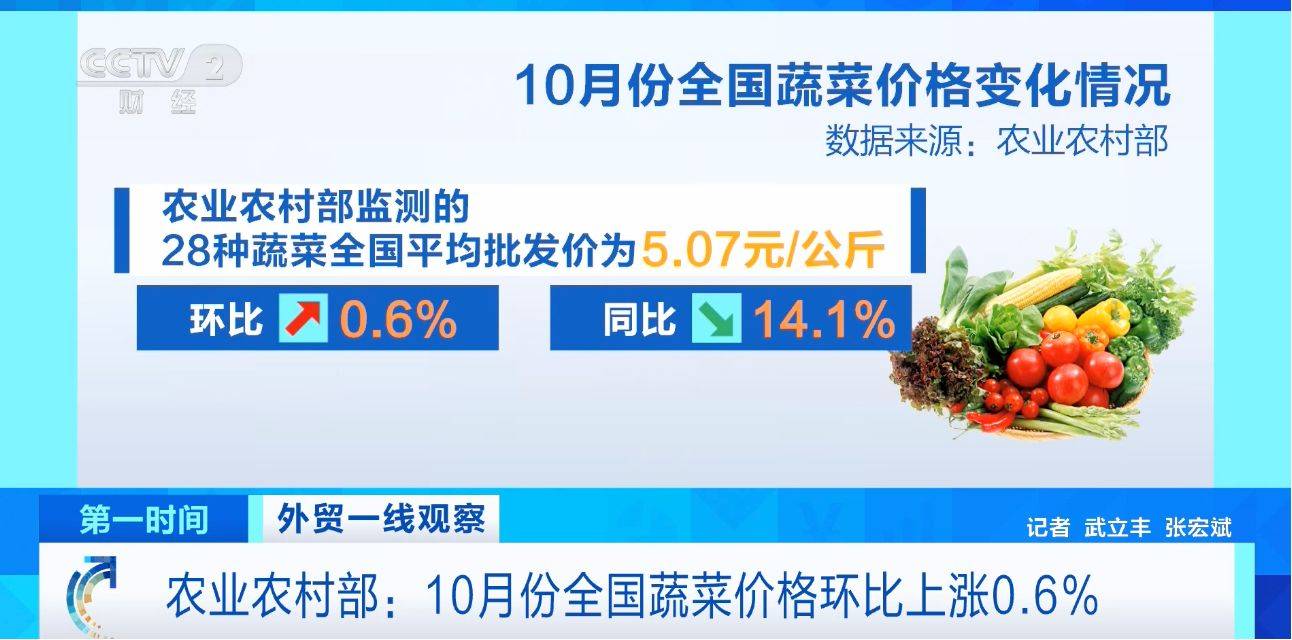
Core Insights - In October, the average wholesale price of 28 vegetables in China was 5.07 yuan per kilogram, reflecting a month-on-month increase of 0.6% but a year-on-year decrease of 14.1% [2] - The price trend showed that 15 vegetable varieties increased in price while 13 decreased, with notable price increases for asparagus and winter melon exceeding 15% [2] Group 1: Price Trends - The overall vegetable prices in October exhibited a slight upward trend after an initial decline, primarily due to adverse weather conditions impacting supply [4] - Major vegetable-producing regions such as Hebei, Henan, and Shandong experienced reduced yields for certain varieties like cucumbers, tomatoes, spinach, and rapeseed due to rain and low temperatures, leading to sustained price increases [5] Group 2: Supply Chain and Production - The continuous rainfall and rapid temperature drop in North China during October slowed vegetable growth and reduced yields, causing delays in the market availability of vegetables [4] - As northern regions transition into winter, open-field vegetable production is ending, shifting to greenhouse production and southern regions, which will increase production and transportation costs, suggesting that vegetable prices are likely to remain relatively high in the future [5]
注入科技力量!喻景权院士指导“岭南蔬菜之乡”建设
Nan Fang Nong Cun Bao· 2025-10-31 09:31
Core Viewpoint - The collaboration between Huai Ji County and Academician Yu Jingquan's team from Zhejiang University aims to enhance the "Lingnan Vegetable Town" initiative through technological advancements in agriculture [2][4][22]. Group 1: Collaboration Details - A video conference was held to discuss the construction of the "Lingnan Vegetable Town" industry demonstration zone [2]. - The partnership will focus on establishing "technology small courtyards," introducing new varieties and technologies, and creating high-standard demonstration greenhouses [3][4]. - The collaboration aims to shift the vegetable industry from a "quantity-oriented" approach to a "quality-oriented" model [7][22]. Group 2: Agricultural Development in Huai Ji County - Huai Ji County, located at the intersection of Guangdong, Guangxi, and Hunan provinces, is the largest county-level administrative region in the Guangdong-Hong Kong-Macao Greater Bay Area [11]. - The county has been promoting the scale, standardization, and branding of its vegetable industry, leveraging its favorable natural conditions and geographical advantages [12]. - Currently, the vegetable planting area in Huai Ji County is 268,200 acres, with an annual output exceeding 700,000 tons [14]. Group 3: Future Prospects - The collaboration is expected to lead to the development of resilient and high-yield vegetable varieties through advanced research and technology [20][22]. - The initiative aims to transform Huai Ji's vegetable industry towards modernization, intelligence, and digitization, establishing it as a leading agricultural demonstration benchmark in the Greater Bay Area [23][24]. - The project is anticipated to enhance the overall efficiency of the industry and increase farmers' income, contributing to high-quality development in the national vegetable sector [24][25].

党建引领兴产业,百色田阳新建村民走上多元致富路
Nan Fang Nong Cun Bao· 2025-10-30 05:03
Core Viewpoint - The article highlights the successful transformation of XinJian Village in Tianyang District, Baise City, through the integration of party leadership and industrial development, leading to diversified income sources for villagers [9][10]. Group 1: Agricultural Development - XinJian Village has established a vegetable planting base, focusing on high-quality organic vegetables, particularly soft-skinned chili peppers, leveraging local soil and climate conditions [30][31]. - The village has integrated nearly 750 acres of land for standardized and large-scale vegetable cultivation, creating a solid foundation for industrial growth [34]. - The vegetable industry has generated nearly 14 million yuan in output value this year, with products being supplied directly to supermarkets in Guangdong-Hong Kong and sold nationwide through e-commerce platforms [57]. Group 2: Employment Opportunities - The establishment of a garment workshop in XinJian Village has created around 60 local jobs, allowing residents to work close to home while supporting their families [70][71]. - The garment factory, part of Guangxi Guangmei Garment Co., has seen a continuous increase in orders, prompting plans to expand production and hire more workers [63][64]. - The village's employment initiatives have significantly improved the livelihoods of residents, reducing the need for them to seek work far from home [72]. Group 3: Community and Economic Impact - The average disposable income for farmers in XinJian Village is projected to reach 24,590 yuan in 2024, with collective economic income surpassing 570,000 yuan [10]. - The village has developed a "1+1+N" benefit-sharing mechanism involving a leading enterprise, village collective, and local residents, ensuring that all parties benefit from the agricultural initiatives [53]. - The community has successfully attracted returning talents and enhanced local capabilities through training and collaboration with agricultural experts [24][26].