
医疗保障

Search documents
从交通基础的网络完善到城市更新的品质升级,从医疗服务的普惠到教育事业的走心
Nan Jing Ri Bao· 2026-01-08 03:42
Group 1: Urban Development and Infrastructure - The opening of the elevated main line of National Highway 312 between Ningzhen and Qixianghe has improved connectivity between the two areas, reducing travel time by nearly 20 minutes for residents [1] - Nanjing has been selected as one of the first pilot cities for urban renewal during the 14th Five-Year Plan, launching 48 urban renewal pilot projects, enhancing the quality of urban life [2][3] - The city has implemented micro-transformation plans to alleviate traffic congestion, resulting in a 30% decrease in congestion index and a 20% increase in average vehicle speed on key road segments [3] Group 2: Transportation Enhancements - The newly opened 2-kilometer dual six-lane expressway has significantly reduced travel time from 90 minutes to 40 minutes for drivers traveling to Zhenjiang [5] - Nanjing's urban rail transit system has expanded to 524.4 kilometers, adding 129.7 kilometers since the end of the 13th Five-Year Plan, enhancing commuting convenience for residents [6] - The introduction of the "Little Blue Whale" micro-circulation bus brand has improved access to public transportation, addressing the "last mile" issue for residents [6] Group 3: Social Services and Welfare - Nanjing has implemented a high-quality, inclusive elderly care service strategy, achieving 100% coverage of district-level elderly service centers and over 1,400 community care centers [9] - The city has introduced a "zero out-of-pocket" policy for hospitalization expenses related to childbirth, significantly reducing financial burdens for families [10] - The establishment of "Ninghai Shiguangli," an all-age dining facility, exemplifies the city's commitment to enhancing elderly care services [7][8] Group 4: Education Improvements - Nanjing has launched 24 educational projects during the 14th Five-Year Plan, including the installation of air conditioning in all ordinary classrooms, improving the learning environment for students [11][12] - The city has added approximately 120,000 new compulsory education seats and over 40,000 high school seats, facilitating access to quality education [12] - Comprehensive health monitoring and nutritional standards have been established for students, ensuring their well-being and academic performance [12]
酝酿9年的社保“第六险”,这次真的要来了
第一财经· 2026-01-06 09:26
以下文章来源于健闻咨询 ,作者健闻咨询 健闻咨询 . 医疗行业跨界洞察 2026.01. 06 本文字数:2981,阅读时长大约5分钟 作者 | 健闻咨询 "六险一金"的时代即将开启。 筹资标准为0.3%。职工参保人员由个人和单位分别缴纳0.15%;居民参保人员则以当地居民人均可 支配收入为标准,个人缴纳和政府补贴分别为0.15%。 据了解,在即将出台的国家层面的政策文件中,按人头筹资的模式将逐步取消,费率制将成为主流, 这也意味着"收入越高,缴费越多"。 此外,新建立的长护险制度摒弃了过往医保的两大做法, 一是不再区分职工和居民,全民享受同等 待遇保障,按照报销70%的政策指导线提供保障;二是不再设置停缴的条件,只有终身缴纳,才能 享受照护服务。 中国社会科学院经济研究所研究员王震长期跟踪研究长护险制度建设,他解释称:"符合条件的居民 都应当参加长期护理保险,这既是权利,也是义务。" 在近日召开的全国长期护理保险(下称"长护险")高质量发展大会上,国家医保局党组书记、局长 章轲表示,"十五五"期间,长护险制度将从试点转向全面建制。 《健闻咨询》独家获悉,在顶层设计上,长护险已经明确了"按费率筹资""不设置停 ...


江西安远:创新宣传形式 让医保政策“飞入寻常百姓家”
Xin Lang Cai Jing· 2026-01-06 02:56
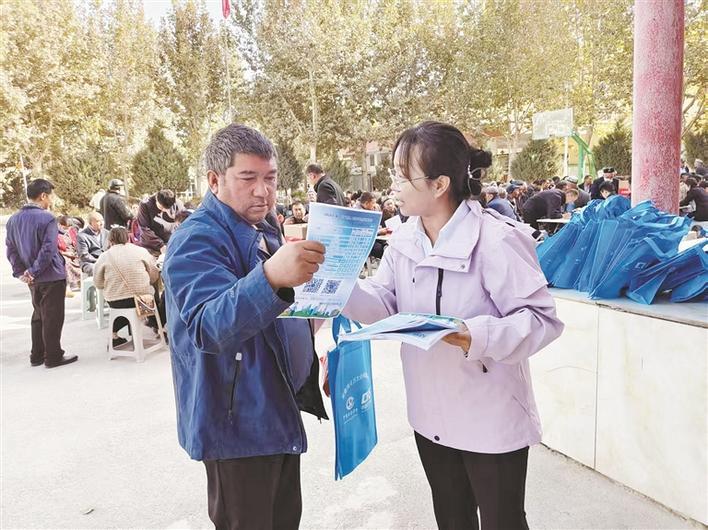
"不仅住院,门诊也能报销,这日子过得心里踏实!"近日,在江西省赣州市医疗保障局安远分局与安远 采茶戏保护传承中心联合举办的"2026年城乡居民医保政策下基层活动"现场,居民张大爷手里拿着刚领 取的宣传折页,正和街坊邻居兴致勃勃地交流着医保带来的实惠。 活动现场,传统的"说教式"宣讲不见了踪影,取而代之的是群众喜闻乐见的视听享受。安远采茶戏保护 传承中心的演员们化身"政策宣讲员",一段段节奏明快的快板《医保惠民谱新篇》《幸亏有医靠》精彩 上演,用通俗俏皮的唱词将参保意义、缴费标准、报销流程等"硬核"政策娓娓道来,让原本枯燥的政策 条文变得鲜活灵动,引得台下观众掌声连连。 为实现精准触达,该局联合三大运营商发送短信20万条,投放电视开机及彩铃广告曝光量超60万次,推 送微信朋友圈广告30万次,让医保提醒无处不在;同时,定制医保宣传游车深入各乡镇巡回宣传, 变"人找政策"为"政策找人"。此外,工作人员还带着印有标语的围裙、帆布袋等实用物资,深入社区、 企业、学校进行面对面宣讲,用真情服务织密民生保障网,切实让群众感受到医保政策的温度。(杜金 辉) 这不仅是一场广场活动,更是安远分局构建全方位医保宣传矩阵的生动实践。 ...
青海健全医疗保障体系群众医疗负担显著减轻
Xin Lang Cai Jing· 2026-01-03 19:18
Group 1 - The core viewpoint of the news is that the provincial medical insurance system has made significant progress during the "14th Five-Year Plan" period, focusing on ensuring comprehensive coverage and reducing the medical burden on the population [1][2][3] Group 2 - The provincial government has strengthened financial support for insurance, ensuring that vulnerable groups such as the extremely poor and low-income individuals are fully covered, with a total of 247.27 million people benefiting from insurance subsidies amounting to 570 million yuan [1] - A three-tiered system has been established to alleviate medical concerns, with a 50% reduction in the threshold for major illness insurance and a 5% increase in reimbursement rates, resulting in an overall hospitalization reimbursement rate exceeding 80% for low-income populations [2] - Focused initiatives for the elderly and children have been implemented, including the integration of 26 outpatient chronic disease categories and the introduction of long-term care insurance, benefiting over 600,000 elderly patients annually [3]
青海基本医保参保扩面成效显著
Xin Lang Cai Jing· 2026-01-03 17:12
Core Insights - Qinghai Province is undergoing significant reforms in its medical insurance system during the "14th Five-Year Plan" period, aiming to enhance public welfare and achieve a comprehensive healthcare framework [1][2] Group 1: Policy and Framework Development - The provincial government has implemented key documents such as the "Implementation Opinions on Deepening Medical Insurance System Reform" and the "14th Five-Year Plan for Universal Medical Insurance" to strengthen the top-level design of the healthcare system [1] - Qinghai has become the first province in China to initiate provincial-level coordination of medical assistance, establishing a unified basic medical insurance, critical illness insurance, and medical assistance system [1] - The province has also introduced a medical insurance benefits list system to standardize policy decisions and has made progress in various insurance schemes, including employee medical insurance and long-term care insurance [1] Group 2: Benefit and Coverage Enhancements - The province has achieved a basic medical insurance coverage rate of 100.69% for 2025, exceeding national targets for three consecutive years, with a stable reimbursement rate of over 80% for hospitalization costs [2] - A total of 109.55 billion yuan has been alleviated for vulnerable groups through a "three-tier" protection system, which has been recognized as excellent in national evaluations [2] - Qinghai has effectively addressed high drug prices by implementing centralized procurement for 1,202 types of drugs and 127 categories of consumables, achieving an average price reduction of over 50% [2] Group 3: Fund Management and Security - The province prioritizes fund security as a political task, enhancing monitoring mechanisms and budget management to ensure efficient fund operation [2] - Systematic efforts to combat fraud have led to over 20,000 inspections of medical institutions, with more than 8,900 institutions penalized and nearly 600 million yuan recovered [2] Group 4: Integrated Healthcare Services - Qinghai is advancing the integration of medical services and insurance, with a focus on adjusting medical service prices and increasing the proportion of medical service revenue to 36.64%, surpassing the national average [3] - The introduction of a prepayment system for medical insurance has alleviated financial pressure on public hospitals, leading to a reduction in average medical costs and hospital stay durations compared to 2021 [3] Group 5: Smart Services and Accessibility - The province is enhancing its "smart medical insurance" initiatives, achieving nationwide coverage for the activation of medical insurance codes and implementing facial recognition for payments [3] - Over 95% of government service matters can be handled online, with comprehensive coverage of medical insurance service points in towns and villages, facilitating easier access for the public [3] - Direct settlement for cross-province medical services has been expanded to all designated medical institutions nationwide, significantly improving convenience for patients [3]
从“有保障”到“保得好”
Xin Lang Cai Jing· 2026-01-02 18:29
兵团医疗保障局工作人员(右)向群众宣传医保缴费政策(摄于2025年9月30日)。哈丽玛赛金祥 摄 2025年12月25日,在十二师市民中心政务服务大厅医保服务窗口,工作人员(左)为前来办理医保卡业 务的群众讲解流程。 兵团日报常驻记者 冯晓玲 摄 2025年12月23日,二师医保局医保经办人员(右)在耐心地为群众讲解医保业务办理流程。 兵团日报 常驻记者 李嘉成 通讯员 陈博伟 摄 截至2025年11月,全兵团基本医疗保险基金总支出76.81亿元,其中即时结算资金为57.39亿元;跨省异 地就医329.39万人次,跨省异地就医直接结算率稳定在98%以上;资助2.99万困难群众参保,资助金额 980.85万元,医疗救助资助金额达4640.06万元……这一组组扎实的数据,勾勒出兵团医疗保障事业稳步 前行的轨迹。 为进一步做好城乡居民基本医疗保障有关工作,不断增强基本医疗保障能力,努力解除职工群众医疗后 顾之忧,兵团医疗保障局认真贯彻落实国家医保惠民政策,根据国家医疗保障局会同财政部、国家税务 总局有关文件精神,2025年陆续印发了《关于推进兵团医疗保障基金即时结算改革通知实施方案(试 行)》《基本医保基金即时结算 ...
1月起一批重要国家标准实施
Xin Lang Cai Jing· 2026-01-01 17:42
Group 1: National Standards Implementation - A set of important national standards will be implemented starting January 2026, focusing on children's furniture safety, aging-friendly products, electric vehicle energy consumption limits, and automotive maintenance and diagnostics [1][2][3] - The mandatory national standard for children's furniture safety specifies requirements for materials, structure, flame resistance, electrical safety, harmful substance limits, and warning labels for products used by children aged 0 to 14 [1] - The aging-friendly product standards include general requirements for fitness equipment and specific requirements for various types of equipment, as well as standards for commodes [1][2] Group 2: Electric Vehicle Standards - The "Electric Vehicle Energy Consumption Limit" is the world's first mandatory standard, setting energy consumption limits based on vehicle weight and usage characteristics, with a requirement that electric vehicles weighing around 2 tons must not exceed 15.1 kWh per 100 km [2] - The implementation of this standard is expected to improve the average range of electric vehicles by approximately 7% without changing battery capacity, enhancing the driving experience [2] Group 3: Automotive Maintenance and Safety - The "Automotive Maintenance, Detection, and Diagnosis Technical Specification" establishes guidelines for maintenance levels, cycles, operational requirements, and quality assurance to ensure vehicle safety [3] - New standards for the disposal of photovoltaic components and information security management systems are also introduced to support the safe development of emerging industries and ensure disaster recovery capabilities [3]
展望:促进医疗、医保、医药协同发展和综合治理
Xin Lang Cai Jing· 2026-01-01 14:38
Core Viewpoint - The "14th Five-Year Plan" period has seen continuous development in China's healthcare and medical insurance sectors, with a focus on reducing the medical burden on citizens and enhancing the synergy among healthcare, medical insurance, and pharmaceuticals [3][4]. Group 1: Development and Reform - The "15th Five-Year Plan" period is identified as a critical time for building a comprehensive health security system, necessitating further reforms to optimize healthcare, medical insurance, and pharmaceutical systems [3][4]. - The newly released "Medical Security Blue Book (2025)" emphasizes the coordinated development and comprehensive governance of healthcare, medical insurance, and pharmaceuticals, proposing a theoretical framework for their collaboration [4]. Group 2: Recommendations for High-Quality Development - Five key areas are suggested to promote high-quality development of the medical insurance system during the "15th Five-Year Plan": 1. Integration of systems to reduce disparities between employee and resident medical insurance [5]. 2. Improvement of the funding mechanism for resident medical insurance to alleviate the financial burden on vulnerable groups [5]. 3. Enhancement of medical insurance coverage by adopting international practices to reduce out-of-pocket expenses for individuals [5]. 4. Establishment of a multi-tiered medical security system, focusing on the "bottom line" function of medical assistance [5]. 5. Steady advancement of provincial-level coordination in basic medical insurance based on central policies and local practices [5]. Group 3: Adaptation to New Conditions - The healthcare security system must adapt to new conditions such as accelerated population mobility and diverse employment forms by addressing three dimensions: 1. Breaking down barriers through an inclusive insurance mechanism to achieve fairness and unity in the system [6]. 2. Constructing a cross-regional public service coordination mechanism to facilitate seamless medical service connections [6]. 3. Utilizing health cloud platforms to integrate data across healthcare, medical insurance, and pharmaceuticals, providing comprehensive health security services [6].
【图解】2026年1月起 这些国家标准将实施
Xin Lang Cai Jing· 2026-01-01 01:18
Group 1 - The implementation of new national standards starting January 1, 2026, will support the healthy development of emerging industries and create a favorable consumer environment while ensuring the safety of people's lives and property [2][3] - Key standards include safety requirements for infant and children's furniture, photovoltaic component disposal, automotive maintenance and diagnostics, information system disaster recovery, and information security management systems [2][3][4] Group 2 - The "Safety Technical Specification for Infant and Children's Furniture" (GB 28007-2024) sets universal safety requirements for furniture used by children aged 0 to 14, covering materials, structure, fire resistance, electrical safety, harmful substance limits, and warning labels [4][5] - The "Photovoltaic Component Disposal Technical Requirements" (GB/T 45922-2025) outlines the basic requirements for the disposal of photovoltaic components used in buildings, including the process and criteria for determining when components should be discarded [6][7][8] Group 3 - The "Automotive Maintenance, Inspection, and Diagnosis Technical Specification" (GB/T 18344-2025) establishes maintenance levels, cycles, operational requirements, and quality assurance for automotive services [10][11] - The "Information System Disaster Recovery Specification" (GB/T 20988-2025) and "Information Security Management System Requirements" (GB/T 22080-2025) provide guidelines for disaster recovery and information security management, enhancing support across various industries [13][14][15] Group 4 - The "Toilet Chair" standard (GB/T 24434-2025) specifies classifications, technical requirements, inspection rules, and packaging for toilet chairs, aiming to improve product quality for individuals with mobility challenges [16][18] - The "General Requirements for Age-Friendly Fitness Equipment" (GB/T 45180-2024) outlines requirements for fitness equipment designed for older adults, promoting the healthy development of this industry [19][21] Group 5 - The "Age-Friendly Technical Requirements for Smart Multimedia Terminals" (GB/T 45919-2025) and its evaluation method (GB/T 45934-2025) aim to enhance the usability of multimedia products for older adults, improving their experience with audio-visual technology [22][24] - The "Technical Specifications for Convenient Services of Medical Security Information Platforms" (GB/T 45938-2025) details the access methods, functional requirements, performance, and security for medical service platforms [25]

2026年1月起一批重要国家标准实施 为良好消费环境提供标准支撑
Xin Hua She· 2025-12-31 11:53
Group 1: National Standards Implementation - A set of important national standards will be implemented starting January 2026, focusing on children's furniture safety, aging-friendly products, electric vehicle energy consumption limits, and automotive maintenance and diagnostics [1][2][3] Group 2: Children's Furniture Safety - The "Safety Technical Specifications for Infant and Children's Furniture" establishes mandatory safety requirements for furniture used by children aged 0 to 14, including limits on harmful substances, structural safety, and specific safety requirements for products like high chairs and cribs [1] Group 3: Aging-Friendly Products - The "General Requirements for Aging-Friendly Fitness Equipment" outlines common requirements for fitness equipment designed for older adults, including specific requirements for various types of equipment such as treadmills and strength training devices [2] - The "Toilet Chair" standard specifies classification, technical requirements, inspection rules, and packaging for toilet chairs aimed at elderly users [1][2] Group 4: Electric Vehicle Standards - The "Energy Consumption Limits for Electric Vehicles Part 1: Passenger Cars" introduces mandatory energy consumption limits based on vehicle weight, with a requirement that electric vehicles weighing around 2 tons must not exceed 15.1 kWh per 100 km, potentially improving average driving range by approximately 7% [2] Group 5: Automotive Maintenance and Safety - The "Automotive Maintenance, Inspection, and Diagnostic Technical Specifications" sets standards for the classification and frequency of automotive maintenance, as well as quality assurance requirements [3] Group 6: Emerging Industries and Information Security - The "Technical Requirements for the Disposal of Photovoltaic Modules" outlines basic requirements for the disposal of photovoltaic components used in buildings, including the process and conditions for determining when components should be discarded [3] - The "Cybersecurity Technical Information System Disaster Recovery Specifications" provides guidelines for disaster recovery in information systems, including principles, lifecycle, and evaluation methods [3] - The "Cybersecurity Technical Information Security Management System Requirements" details the requirements for establishing and maintaining an information security management system within organizations [3]