
循环经济

Search documents
评论:为什么越来越多的人 开始主动参与循环经济
Zhong Guo Xin Wen Wang· 2026-01-10 13:49
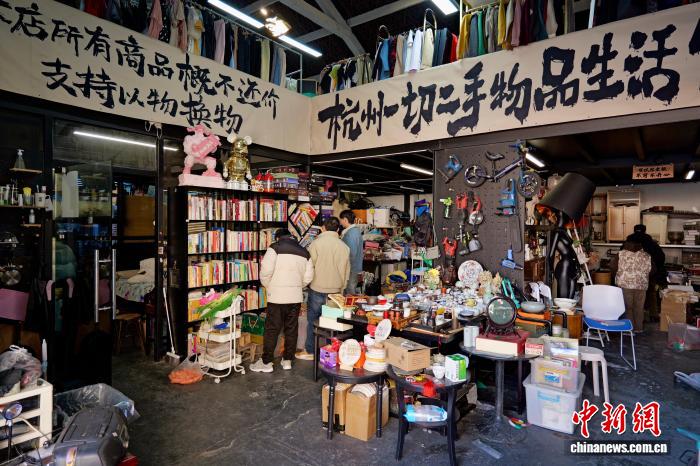
Core Insights - The rise of second-hand goods stores in Hangzhou reflects a growing interest in the circular economy among young people, who prioritize the uniqueness and utility of items over their monetary value [1][4] - Hangzhou has been recognized as one of the "20 zero waste cities" globally, emphasizing its commitment to sustainable urban development and the promotion of green initiatives [1][4] - The circular economy is not only about resource conservation but also about creating social connections and trust among individuals through the exchange of goods [2][4] Group 1 - The concept of a "zero waste city" has gained traction in Hangzhou, with over 3,200 "zero waste cells" established, showcasing various initiatives like art installations made from waste and community markets for repurposing items [1] - The transformation of old objects into valuable community assets is exemplified by the "Three Mouth Sisters" workshop in Lin'an, which utilizes thousands of old items to create spaces that foster local culture and tourism [2] - The social aspect of the circular economy is highlighted in second-hand stores in Hangzhou, where people engage in barter and share stories, fulfilling emotional needs often overlooked in a fast-paced consumer culture [2] Group 2 - The circular economy is seen as a solution to alleviate anxiety caused by overconsumption in urban areas while extending the lifecycle of products and reducing resource depletion [4] - Recent government policies, such as the "Solid Waste Comprehensive Management Action Plan," aim to enhance waste management and promote a green transition in economic and social development [4] - The shift towards reusing old items is portrayed as a lifestyle choice that is increasingly accepted and embraced by society, contributing to environmental sustainability and resilience [4]

新消费2025:十大关键词,一个新江湖
3 6 Ke· 2026-01-04 02:36
Core Insights - The article highlights significant changes in the consumer market in 2025, emphasizing the emergence of new consumption patterns and the evolution of various sectors within the industry [2]. Instant Retail - Instant retail is recognized as the "explosion year" in 2025, expanding beyond food delivery to encompass a wide range of products [3]. - Major players like JD.com and Alibaba have entered the market, leading to intense competition and a subsidy war among platforms [4]. - The industry is shifting towards a more sustainable model, focusing on long-term ecological coexistence rather than short-term gains [4]. Emotional Consumption - Emotional consumption has become a key trend, driven by the desire for psychological comfort and social recognition among consumers [5]. - The market for emotional consumption in China reached 2.3 trillion yuan in 2024, with projections to exceed 4.5 trillion yuan by 2029 [5]. - Various segments, including healing products and immersive experiences, are gaining popularity, reflecting a shift in consumer preferences [6]. Reverse Tourism - There is a notable increase in tourism orders in county-level areas, with local entrepreneurs capitalizing on unique cultural experiences [7]. - The focus has shifted from traditional sightseeing to immersive local experiences, appealing to younger demographics [7]. Consumption Downward - Lower-tier cities are experiencing a surge in consumer activity, with significant growth in orders during events like Double 11 [8]. - Brands are increasingly targeting these markets, with local players gaining traction through culturally resonant products [8]. Hard Discounts - The hard discount retail sector is expanding, challenging the perception that low prices equate to low quality [11]. - Major internet companies are driving this trend, with new store formats and streamlined supply chains enhancing efficiency [11]. Light Health - Health-conscious products are becoming popular among younger consumers, with a focus on convenience and effectiveness [13]. - The market is evolving to include innovative health products that cater to the busy lifestyles of young professionals [14]. Circular Economy - The circular economy is gaining traction, with a shift in consumer attitudes towards second-hand goods and sustainability [16]. - Platforms like Xianyu and Zhuanzhuan are adapting their strategies to enhance trust and user experience in the second-hand market [17]. Pet Economy - The pet economy is experiencing rapid growth, with a market size exceeding 811.4 billion yuan and a 25.4% annual growth rate [18]. - There is a diversification of products and services catering to pet owners, reflecting a shift towards more personalized and premium offerings [18]. Value Export - Chinese brands are increasingly focusing on global markets, leveraging cultural resonance and operational efficiency to build brand loyalty [19]. - The strategy of value export is reshaping perceptions of "Made in China" and driving foreign trade growth [19]. Prepared Dishes - The prepared dishes industry is moving towards standardization and innovation, addressing consumer trust issues through transparency [20]. - Technological advancements in preservation and quality control are enhancing product offerings in this sector [20].
服务型制造绘就海南新蓝图 自贸港探索双循环产业融合新路径
Zheng Quan Shi Bao Wang· 2025-12-30 14:07
Core Viewpoint - The seventh Service-Oriented Manufacturing Conference held in Hainan emphasizes the theme of cultivating new productive forces and global cooperation, aligning with the critical phase of Hainan's free trade port construction [1] Group 1: Manufacturing Transformation - China's manufacturing industry remains the largest globally, but transformation and upgrading are essential for maintaining competitiveness, especially in the context of global manufacturing competition [2] - The integration of manufacturing and service industries is crucial for China's industrial upgrade, as the current proportion of the service industry in GDP is significantly lower than that of the United States [2] Group 2: Global Manufacturing Landscape - The global manufacturing landscape is undergoing significant changes, with rising trade protectionism and a shift towards self-sufficiency, which presents both challenges and opportunities for China's manufacturing exports [3] - The trend of integrating products with services through technology can mitigate the impact of traditional trade barriers and open new avenues for cooperation [3] Group 3: Free Trade Port Positioning - Hainan's free trade port aims to explore new business models that integrate manufacturing and services, moving away from traditional processing and trade [4] - The policies in Hainan, such as zero tariffs and value-added processing, are designed to attract manufacturing and service integration, positioning the region as a key hub in the global supply chain [4] Group 4: Practical Pathways - Hainan is focusing on leveraging its advantages to promote the deep integration of service-oriented manufacturing and free trade port development, particularly in sectors like new energy and materials [6] - The region aims to establish a model of "R&D and key processing in Hainan + large-scale manufacturing in the mainland + global market," enhancing its industrial foundation [6] Group 5: Future Development Goals - The "14th Five-Year Plan" period is seen as a critical window for Hainan's free trade port and China's high-quality manufacturing development, emphasizing the need for a collaborative and empowering mechanism [7] - Key actions include institutional innovation, strengthening ties with the mainland's industrial system, and addressing areas where the mainland cannot operate effectively [7]
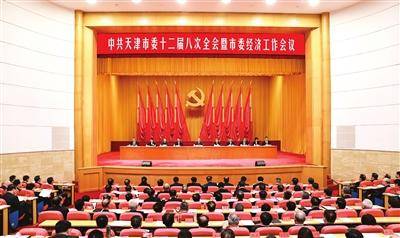
中共天津市委十二届八次全会暨市委经济工作会议举行
Sou Hu Cai Jing· 2025-12-30 04:54
Core Viewpoint - The Tianjin Municipal Committee's recent meeting emphasized the importance of aligning with the central government's economic strategies and highlighted the need for high-quality development in the upcoming year [3][4][5]. Group 1: Economic Work and Development Goals - The meeting recognized the significance of Xi Jinping's speech at the Central Economic Work Conference, which provided a comprehensive summary of the current economic situation and outlined the tasks for the next year [3]. - The overall requirement for 2026 is to focus on economic construction and high-quality development, implementing the new development philosophy and ensuring stability while seeking progress [6][11]. - The meeting stressed the importance of enhancing regional integration and promoting coordinated development in the Beijing-Tianjin-Hebei area [7]. Group 2: Key Actions and Strategies - The meeting outlined ten key actions for high-quality development, including advancing technological innovation, revitalizing industries, and improving urban infrastructure [4][6]. - Emphasis was placed on stimulating effective demand through consumer spending and investment, while also stabilizing the real estate market [8]. - The need for comprehensive reforms and high-level openness was highlighted, including deepening state-owned enterprise reforms and optimizing the business environment [8]. Group 3: Social and Environmental Considerations - The meeting underscored the importance of environmental protection and pollution prevention, aiming to enhance ecological restoration and develop green technologies [9]. - It was noted that improving people's livelihoods and ensuring social stability are critical, with plans to increase income and provide better public services [9][10]. - The meeting called for a focus on safety and security, emphasizing the need for effective governance and disaster prevention measures [10]. Group 4: Implementation and Accountability - The meeting stressed the importance of strong leadership and accountability in implementing the discussed strategies, ensuring that all levels of government work collaboratively towards common goals [10][11]. - There is a call for continuous improvement in professional capabilities and a commitment to addressing challenges effectively [11]. - The meeting concluded with a rallying call for unity and determination to achieve the economic and social development goals for the coming year [11].
报告称未来催化材料设计将迈入“自动驾驶”时代
Xin Lang Cai Jing· 2025-12-20 03:36
Group 1 - The report highlights that the deep application of artificial intelligence (AI) technology is transforming catalyst research and development from a traditional trial-and-error model to a data and AI-driven approach, leading to a future where catalyst material design enters an "autonomous driving" era [1] - The three key areas of circular economy, new energy materials, and sustainable fuels are closely interconnected and mutually reinforcing, with AI playing an increasingly important role in this process [1] - Significant breakthroughs in photovoltaic materials technology, such as perovskite, are expected to reshape the core competitiveness of the industry, while all-solid-state batteries are advancing from laboratory to pilot stages, indicating broad application prospects [1] Group 2 - New energy materials are a fundamental variable determining the development of the new energy industry, involving a long industrial chain and supply chain linkage, which will deeply impact the development of sustainable fuels and the circular economy [2] - The "New Energy Technology 50 Enterprises" list shows that several companies exhibit high foresight in their business models, such as constructing next-generation lithium battery material platforms through a pathway of "technology patenting - productization of patents - scenario application - scaling of scenarios" [2] - Chinese new energy companies have developed significant competitive advantages through continuous technological innovation and breakthroughs, enhancing energy utilization efficiency and promoting the construction of a new energy system and optimization of energy structure [2]
毕马威发布第二届“新能源科技50企业”榜单
Zheng Quan Ri Bao Wang· 2025-12-19 13:43
Core Viewpoint - KPMG's second "Top 50 New Energy Technology Companies" list highlights the competitive advantages of Chinese new energy enterprises, emphasizing their role in enhancing energy efficiency and promoting a new energy system [1] Group 1: Evaluation Criteria - The selection process evaluated companies based on six dimensions: innovation in technology and business models, valuation and market recognition, financial health, recognition by energy industry associations, dissemination of energy innovation and transformative technologies, and foresight in industry development [1] - The evaluation involved months of application screening, field research, and expert reviews to identify leading outstanding companies [1] Group 2: Industry Insights - Many companies on the list demonstrate high foresight in their business models, establishing proprietary technological barriers in their respective segments [2] - The selected companies play a crucial role in transforming the energy structure, improving the efficiency of new energy consumption, and assisting in achieving carbon neutrality goals through material innovation, system integration, and digital empowerment [2] Group 3: Sector Coverage - The listed companies span key sectors including new energy materials (solar, energy storage, wind, nuclear), sustainable fuels (methanol, aviation fuel, hydrogen), and circular economy, showcasing the breadth and depth of China's new energy industry [1]
听,高质量发展新脉动丨深化改革激发发展新动力
Xin Hua Wang· 2025-12-18 10:03
Group 1 - The core viewpoint emphasizes the necessity of comprehensive deepening of reforms and innovation as fundamental driving forces for economic and social development during the "14th Five-Year Plan" period [1] - The Central Economic Work Conference highlighted the importance of combining policy support with reform and innovation, focusing on enhancing the momentum for high-quality development as a key task for 2026 [1] Group 2 - Continuous reform and opening-up have significantly contributed to China's economic achievements, with a 30% reduction in the negative list for the market during the "14th Five-Year Plan" period and the introduction of the Private Economy Promotion Law to invigorate the private sector [2] - The breadth and depth of reforms are expanding, providing institutional guarantees and strong momentum for economic and social development [2] Group 3 - The National Development and Reform Commission is focusing on enhancing the effectiveness of comprehensive reforms and encouraging local pilot programs, promoting 88 innovative measures across four batches for nationwide replication [6] - The establishment of a unified national market is crucial for strengthening domestic circulation, with plans to formulate regulations for the unified market and improve supporting laws for the private economy [12] Group 4 - The rapid development of technology and innovation in China is attributed to a series of reform measures, fostering confidence in the private economy and encouraging investment in research and development [13][15] - The ongoing reforms aim to release development momentum from a deeper level, aligning with the high-quality development goals set forth in recent party meetings [15]

万物新生上涨3.45%,报5.4美元/股,总市值11.87亿美元
Jin Rong Jie· 2025-12-17 15:21
Group 1 - The core viewpoint of the article highlights the positive financial performance and market activity of Wanwu Xinxing (RERE), with a notable increase in stock price and significant revenue growth [1] - As of December 17, the stock opened at $5.4 per share, reflecting a 3.45% increase, with a total market capitalization of $1.187 billion [1] - Financial data indicates that by September 30, 2025, Wanwu Xinxing is projected to achieve total revenue of 14.794 billion RMB, representing a year-on-year growth of 28.88%, and a net profit attributable to shareholders of 206 million RMB, showing a remarkable increase of 340.45% [1] Group 2 - Wanwu Xinxing is registered in the Cayman Islands and operates primarily through its domestic subsidiary, Shanghai Wanwu Xinxing Environmental Technology Group Co., Ltd [1] - Established in 2011, the company positions itself as a "Internet + Environmental Protection" circular economy enterprise, focusing on sustainability and social responsibility [1] - The company operates four main business lines: Aihuishou, Pajitang, Paipai, and overseas business AHS Device, all aimed at maximizing the utility of idle resources [1]

万物新生上涨2.85%,报5.41美元/股,总市值11.89亿美元
Jin Rong Jie· 2025-12-15 15:15
Core Viewpoint - The company Wanwu Xingsheng (RERE) has shown significant financial growth, with a notable increase in revenue and net profit, reflecting its strong position in the "Internet + Environmental Protection" sector [1]. Financial Performance - As of September 30, 2025, Wanwu Xingsheng reported total revenue of 14.794 billion RMB, representing a year-on-year growth of 28.88% [1]. - The company's net profit attributable to shareholders reached 206 million RMB, marking a substantial year-on-year increase of 340.45% [1]. Company Overview - Wanwu Xingsheng is a Cayman Islands-registered holding company, primarily operating through its domestic subsidiary, Shanghai Wanwu Xingsheng Environmental Technology Group Co., Ltd. [1]. - Established in 2011, the company positions itself as a circular economy enterprise focused on "Internet + Environmental Protection" [1]. - The company operates four main business lines: Aihui Recycling, Pai Jitang, Paipai, and overseas business AHS Device [1]. - Wanwu Xingsheng aims to integrate social responsibility into its business practices, striving to become a model enterprise for ESG (Environmental, Social, and Governance) [1].
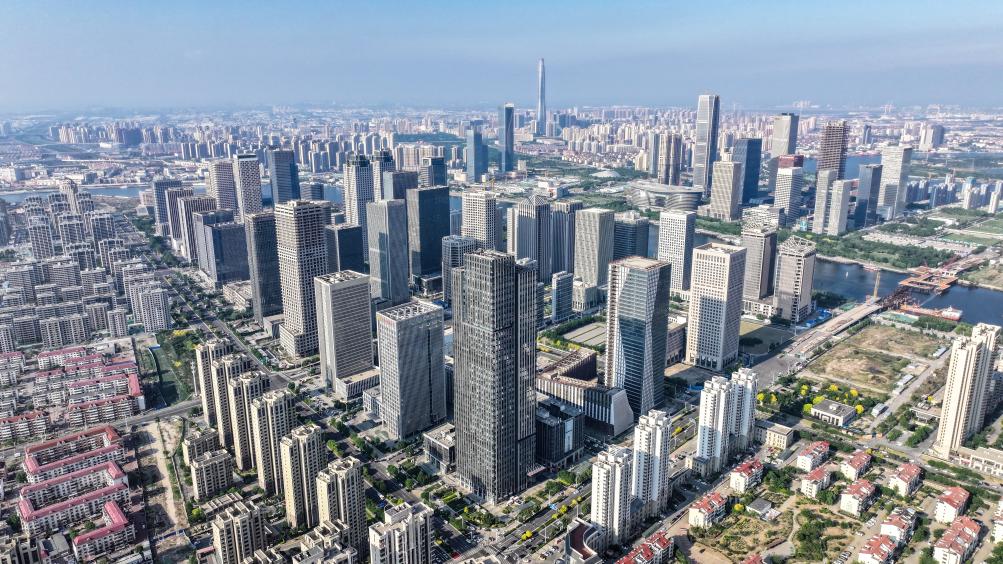
省级“十五五”规划建议密集出炉,天津有何“与众不同”?
Zhong Guo Xin Wen Wang· 2025-12-08 12:11
Core Viewpoint - The article discusses Tianjin's unique approach in its "14th Five-Year Plan" as it aims to establish itself as a modern socialist metropolis while focusing on specific industrial layouts and open measures to find its unique positioning in the new round of regional competition [1] Group 1: Regional Collaboration - Tianjin's "15th Five-Year Plan" emphasizes the strategic importance of the Beijing-Tianjin-Hebei collaborative development, aiming for deep functional integration rather than passive acceptance [2] - The plan includes specific platforms for innovation and collaboration, such as the Tianjin Binhai-Zhongguancun Science Park and the Tianjin-Jingjin Cooperation Demonstration Zone, promoting a shared benefits and collaborative growth model [2] Group 2: Advanced Manufacturing - The plan outlines a "6+6" strategy for advanced manufacturing, identifying six pillar industries: information technology, biomedicine, new energy, new materials, aerospace, and circular economy [3] - Additionally, it targets six new growth points in future industries, including biomanufacturing and hydrogen energy, reflecting Tianjin's ambition to transition from traditional heavy industries to a modern, high-tech industrial system [3] Group 3: Financial Innovation - Tianjin aims to differentiate itself in financial reforms by establishing itself as a national hub for commercial factoring and a center for aircraft and ship leasing [4] - The plan highlights the integration of finance with the entire industrial chain, promoting a collaborative approach to financial services [5] Group 4: Port Development - The port's role in Tianjin's strategy is evolving from merely a throughput focus to enhancing its capabilities and intelligence, aiming to become a world-class smart green hub port [6] - The plan emphasizes the integration of port, logistics, trade, and industry, positioning Tianjin as a strategic node in domestic and international circulation [6] Group 5: Green Development - Tianjin is tasked with a national mission to develop a resource recycling platform and promote green low-carbon circular development [7] - The plan aims to establish a circular economy industrial cluster and a "waste-free city," positioning Tianjin as a leader in resource recycling and green development in northern China [7] Group 6: Overall Strategy - The "15th Five-Year Plan" represents not just growth in metrics but a redefinition of Tianjin's development approach, focusing on practical and distinctive strategies to meet future challenges [8] - The plan is seen as a critical period for Tianjin to establish itself as a modern socialist metropolis and contribute to China's modernization narrative [8]