
未来能源

Search documents
下一个五年,湘鄂赣“中三省”准备怎么干?
Di Yi Cai Jing· 2025-12-05 06:12
Group 1: Core Perspectives - The central theme of the news is the strategic focus of the "Central Three Provinces" (Hunan, Hubei, Jiangxi) on expanding domestic demand, building a technological innovation hub, and serving as a model for regional coordinated development during the 14th Five-Year Plan period [1] Group 2: Economic Development Strategies - Hubei aims to accelerate consumption expansion by innovating consumption models and increasing the supply of quality goods, with a target of driving over 176 billion yuan in consumption through initiatives like trade-in programs [2] - Hunan emphasizes the integration of consumer welfare and investment, aiming to enhance the consumer market and support the development of regional consumption centers [3] - Jiangxi plans to actively create new demand and supply by leveraging its ecological and cultural resources to develop immersive consumption experiences [3] Group 3: Technological Innovation - All three provinces recognize technology as the primary productive force, with Hubei aiming to increase the number of high-tech enterprises to 35,000 and technology transaction volume to over 600 billion yuan by 2025 [4] - Hunan is focused on establishing itself as a competitive technological innovation hub, encouraging investment in fundamental research and breakthroughs in key technologies [5] - Jiangxi aims to build a nationally influential industrial technology innovation center, concentrating research efforts on areas like rare earth materials and modern agriculture [6] Group 4: Regional Coordination and Development - The news highlights the importance of the Yangtze River Middle Urban Agglomeration, with Hubei supporting the development of regional centers like Wuhan and Xiangyang to enhance economic collaboration [7] - Hunan plans to optimize its economic layout and promote coordinated regional development through new urbanization strategies [8] - Jiangxi is set to improve its regional coordination mechanisms to facilitate efficient resource flow and high-quality county-level economic development [8]
视频|李迅雷:“十五五”最大亮点是“科技自立自强” 点名六大未来产业
Xin Lang Cai Jing· 2025-12-02 06:42
Core Insights - The 2025 Analyst Conference highlighted the importance of accelerating technological self-reliance as a key focus of the "14th Five-Year Plan" [1] Industry Opportunities - Future industries such as manufacturing, information technology, materials, energy, space, and health are expected to present significant development opportunities for companies [1]
第十四届中国创新创业大赛颠覆性技术创新大赛(未来能源领域赛)将在江西共青城开赛
Xin Hua Cai Jing· 2025-11-30 07:53
Core Viewpoint - The development of future industries is a strategic choice to lead technological progress, drive industrial upgrades, and cultivate new productive forces, with future energy identified as one of the six key areas for innovation and development [1]. Group 1: Future Industry Development - Future industries are characterized by significant strategic, leading, disruptive, and uncertain features, making their development crucial for technological advancement [1]. - The Ministry of Industry and Information Technology and six other departments have jointly issued implementation opinions to promote innovation in future industries, emphasizing future energy as a priority area [1]. Group 2: Innovation and Competition - The 14th China Innovation and Entrepreneurship Competition, focusing on disruptive technology in the future energy sector, will take place from December 1 to 3 in Jiujiang, aiming to discover asymmetric and alternative technological paths [1]. - The competition is organized by the Torch High Technology Industry Development Center of the Ministry of Industry and Information Technology and the Jiangxi Provincial Department of Science and Technology, with local government support [1]. Group 3: Regional Development and Research Institutions - Jiujiang's Qiongcheng City is recognized as a frontier for technological innovation, actively exploring new models that combine competitions with talent attraction and incubation systems [2]. - The establishment of high-level research institutions, such as the Nanchang University Qiongcheng Light-Hydrogen Storage Technology Research Institute, exemplifies collaborative innovation in green energy solutions [2]. - The competition adopts an "open selection" method to gather projects with disruptive technology potential, reflecting a strong national response and the emergence of innovative projects [2].

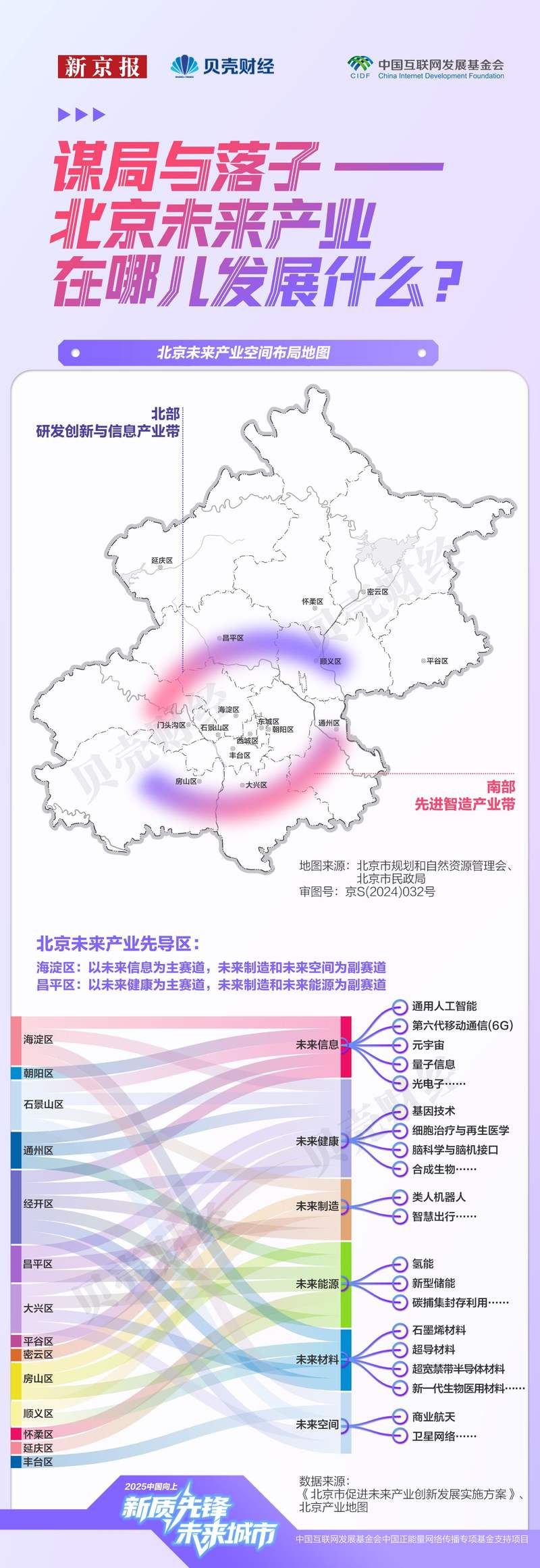
双区引领 多极支撑 北京未来产业布局全景
Xin Jing Bao· 2025-11-28 10:14
Core Insights - Beijing is positioning itself as a leader in future industries, focusing on sectors like 6G and embodied intelligence, aiming to become a global benchmark for digital economy by the end of the 14th Five-Year Plan [1] - The city has integrated future industries into its "2441" high-precision industrial system and has outlined a comprehensive policy framework to promote disruptive technologies [1][2] Group 1: Future Industry Development - Beijing has established a "2+N" spatial layout, with Haidian District focusing on general artificial intelligence and quantum information, while the Economic Development Zone is developing a high-level autonomous driving demonstration area [2] - The city is accelerating the creation of future industry pilot zones in Haidian and Changping Districts, aiming to integrate innovation, industry, finance, and talent [2] Group 2: Sector-Specific Focus - Key sectors include future information, health, manufacturing, energy, materials, and space, with specific districts assigned to lead in these areas [4][5] - The city is fostering advancements in hydrogen energy, new energy storage, and synthetic biology, among other fields, to drive technological innovation [2][5]

从“汽车城”到“未来城” 上海嘉定跑出“四个嘉速度”
Zhong Guo Fa Zhan Wang· 2025-10-28 07:28
Core Viewpoint - The article highlights the significant economic and developmental progress of Jiading District, Shanghai, emphasizing its transition from an "automobile city" to a "future city" with a focus on high-quality development and innovation-driven growth [1][2]. Economic Development - Jiading District's GDP has surpassed 300 billion yuan for the first time, showcasing strong economic momentum [2]. - The production value per unit of construction land has increased by 20 percentage points compared to the end of the 13th Five-Year Plan, indicating improved land utilization efficiency [2]. - Fixed asset investment during the 14th Five-Year Plan has exceeded 300 billion yuan, surpassing the initial target of 250 billion yuan, reflecting active regional investment [2]. Industrial Innovation - Jiading is focusing on innovation-driven development, with strategic emerging industries accounting for a larger share of industrial output, increasing by 13.4 percentage points compared to the end of the 13th Five-Year Plan [3]. - The annual growth rate of strategic emerging industries is 13.8%, supported by the rise of three major industrial clusters: "new four modernizations" in automobiles, integrated circuits, and biomedicine [3]. - The district is also investing in future industries such as low-altitude economy and intelligent technology, demonstrating a long-term strategic vision [3]. Urban Development - Jiading has become a leading area for population influx in Shanghai, driven by its modern urban development strategy [4]. - The district is advancing major projects like the Hongqiao International Open Hub and the Lingang Jiading Technology City, enhancing urban functionality and cultural integration [4]. - Jiading is actively participating in the Yangtze River Delta integration, collaborating with neighboring cities to create a regional innovation core [4]. Quality of Life - The district prioritizes improving residents' quality of life, with per capita disposable income growing faster than the economic growth rate by 2.4 percentage points [5]. - Significant investments in education and healthcare have been made, including the establishment of 40 high-quality schools and three top-tier hospitals [5]. - Environmental improvements are evident, with a forest coverage rate of 17.44% and high public satisfaction regarding ecological conditions [5]. Governance and Community Engagement - Jiading is enhancing its governance model through integrated party leadership and community engagement, establishing 143 regional party organizations [6]. - The district has developed a three-tier grid governance system to improve resource allocation and service delivery [6]. - The establishment of "I Jia·Neighbor Centers" aims to enhance community cohesion and governance efficiency [6].
前沿科技成长趋势强劲 科创板首批三季报亮眼
Zhong Guo Jing Ying Bao· 2025-10-19 10:17
Core Viewpoint - The recent quarterly reports from various companies listed on the Sci-Tech Innovation Board (STAR Market) show strong performance, particularly in emerging industries such as AI computing chips and optical communication, indicating the board's role in fostering strategic emerging and future industries [1] Group 1: AI Computing Chip Industry - The domestic AI chip design ecosystem is becoming increasingly robust, with companies like Haiguang Information and Cambricon Technologies showing significant financial improvements, contributing to the foundational construction of China's AI industry [2][3] - Haiguang Information reported a total revenue of 9.49 billion yuan for the first three quarters, a year-on-year increase of 54.65%, and a net profit of 1.96 billion yuan, up 28.56% [2] - Cambricon Technologies achieved a remarkable revenue of 4.607 billion yuan, a year-on-year increase of 2300%, and a net profit of 1.605 billion yuan, up 321.49% [3] Group 2: Optical Communication Industry - Optical communication is identified as a key infrastructure for future information industries, with companies like Shijia Photonics and Tengjing Technology showing impressive growth [4] - Shijia Photonics reported a revenue of 1.56 billion yuan for the first three quarters, a year-on-year increase of 113.96%, and a net profit of 299 million yuan, up 727.74% [4] - Tengjing Technology achieved a revenue of 425 million yuan, a year-on-year increase of 28.11%, and a net profit of 64 million yuan, up 15.00% [4] Group 3: Future Technology and Energy Materials - Companies are strategically positioning themselves in frontier technologies, with notable performances in quantum technology and future energy sectors [5][6] - GuoDun Quantum reported a revenue of 190 million yuan, a year-on-year increase of 90.27%, and a net loss of 26 million yuan, a reduction of 51.98% [5] - Rongbai Technology announced advancements in solid-state battery materials, achieving ten-ton level shipments of high-nickel and ultra-high-nickel solid-state cathode materials, with production expected to commence in mid-2026 [6]




释放融资需求超7亿元,“投成都”未来产业投资联盟首场活动举行
Sou Hu Cai Jing· 2025-09-26 12:50
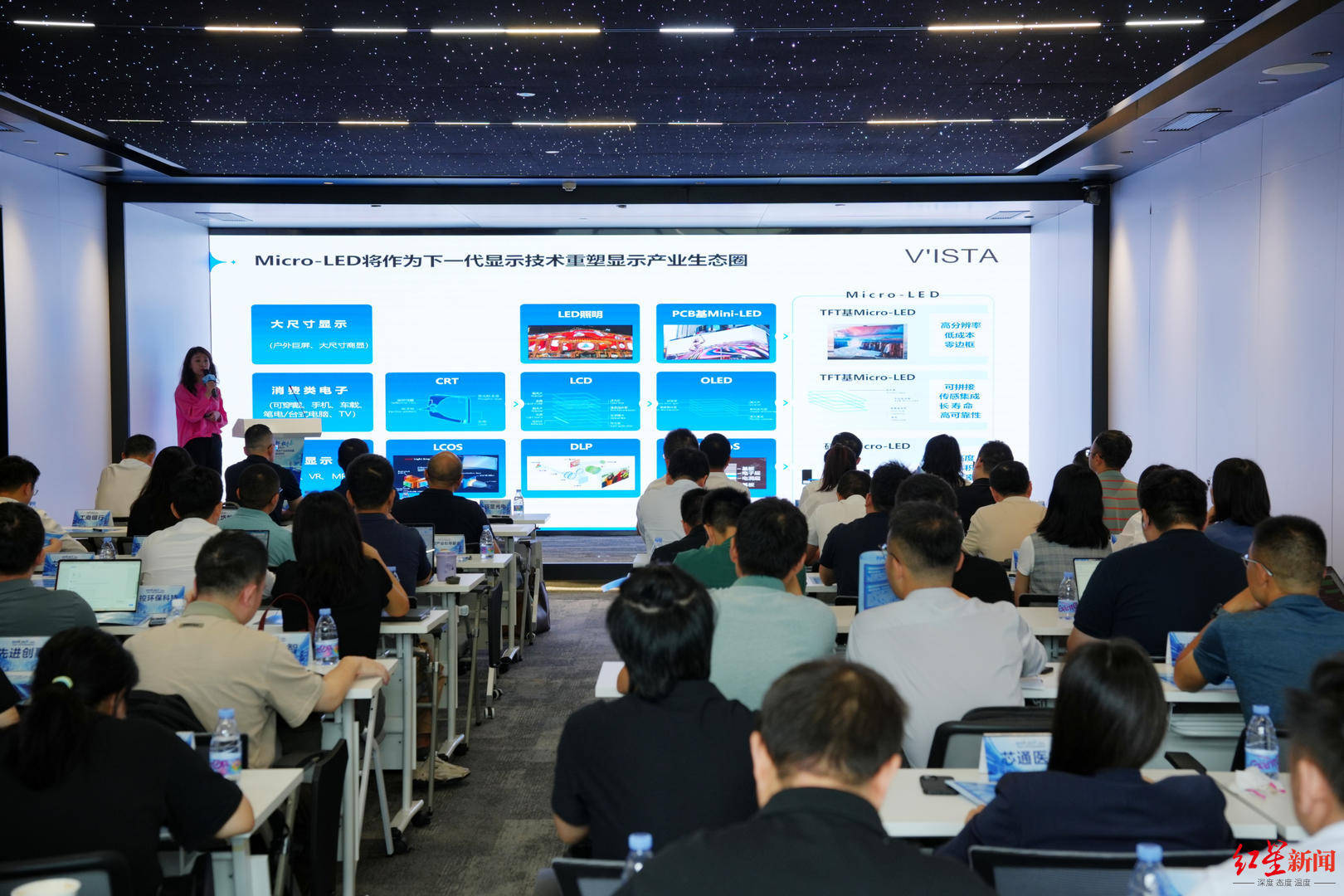
Core Insights - The "Invest Chengdu" Future Industry Investment Alliance held its first financing roadshow event, showcasing five high-quality companies from future industries with a total financing demand exceeding 700 million yuan [2][5] Group 1: Event Overview - The event took place on September 26 at the Chengdu Private Economy Development Promotion Center, focusing on future industries such as future energy, satellite communication, new displays, high-end equipment, and biotechnology [2][3] - The Chengdu government aims to strengthen the "Invest Chengdu" brand and establish a "tropical rainforest" fund ecosystem to support these industries [2] Group 2: Company Highlights - Chengdu Chenxian Optoelectronics Co., Ltd. presented its Micro-LED production line with a technology transfer yield of 99.995%, seeking 500 to 1,000 million yuan for production line construction and R&D [4] - Sichuan Rongxin New Energy Power System Co., Ltd. showcased its leading technology in high-power fuel cell hybrid systems, with applications in rail and road transportation [4] Group 3: Investment Engagement - Notable investment institutions such as Hillhouse Capital and Dongfang Fuhai participated, engaging in discussions on technology maturity, application scenarios, and market potential [5] - The event facilitated precise matching between investors and projects, with a total financing demand of over 700 million yuan reported [5] Group 4: Government Support and Future Plans - Chengdu's government has launched the "Tomorrow Star" initiative to support innovative companies with significant market potential and disruptive technologies [6] - The future industry fund aims to provide comprehensive capital services throughout the lifecycle of enterprises, focusing on seed, startup, and growth stages [10][11]
瞭望 | 未来产业新使命
Xin Hua She· 2025-08-25 08:42
Core Insights - The future industry in China is projected to reach a value of approximately 11.7 trillion yuan in 2024, with estimates of 13.4 trillion yuan in 2025 and 15.5 trillion yuan in 2026, reflecting a compound annual growth rate of 15% [1][2] - Future industries are defined as emerging sectors driven by cutting-edge technologies, characterized by significant disruption and uncertainty [2][8] - The Chinese government aims to foster an environment that encourages innovation and tolerates failure, enhancing the autonomy and funding rights of research institutions to stimulate creativity [1][16] Industry Overview - Future industries encompass six key areas: future manufacturing, future information, future materials, future energy, future space, and future health [1] - The development of future industries is seen as a strategic pivot for technological advancement and industrial upgrading in China [1][8] Market Projections - The commercial space sector in China is expected to exceed 2.7 trillion yuan by 2025 and reach 3.3 trillion yuan by 2026 [5] - The satellite internet market is projected to reach 45 billion yuan by 2025, with a total of nearly 16,000 satellites planned [6] Technological Advancements - Breakthroughs in key technologies such as atomic-level manufacturing, hydrogen energy, and quantum information are driving the growth of future industries [5][6] - The atomic-level manufacturing sector is anticipated to achieve sales of 80 billion yuan in equipment and 20 billion yuan in related materials by 2024, with the potential to exceed 100 billion yuan within five years [5] Regional Development - Major regions like Beijing-Tianjin-Hebei, the Yangtze River Delta, and the Guangdong-Hong Kong-Macau Greater Bay Area are emerging as innovation hubs for future industries [7] - The Yangtze Economic Belt is exploring collaborative innovation models to enhance development in commercial aerospace and green energy [7] Characteristics of Future Industries - Future industries exhibit four notable characteristics: strategic significance, leading-edge technology, disruptive potential, and inherent uncertainty [8][9] - The development of future industries is influenced by the interplay of supply and demand, with technological breakthroughs creating new market needs [9] Challenges and Recommendations - Key challenges include strengthening the technological foundation, enhancing systemic planning, ensuring long-term investment, and improving regulatory frameworks [10][11] - Recommendations for fostering future industries include establishing a supportive capital investment mechanism, enhancing collaboration across the industry chain, and promoting flexible funding models [12][13][18]
2027年副中心绿色企业将超300家
Bei Jing Qing Nian Bao· 2025-06-03 18:11
Core Viewpoint - Beijing's urban sub-center aims to become an international benchmark for green economy development by focusing on ten green industries and implementing eight major tasks to promote the scale and specialization of green industries by 2027 [1][2]. Group 1: Green Industry Development - The urban sub-center plans to exceed 300 green enterprises and establish one green industry cluster by 2027, enhancing green innovation capabilities and increasing the number of effective green technology patents by approximately 20% annually [2][3]. - The focus will be on developing specialized green industries such as carbon professional services, ESG services, green finance, and synthetic biology manufacturing, while also consolidating existing green industries like renewable energy and smart connected vehicles [3][4]. Group 2: Infrastructure and Investment - The first green industry cluster, the Beijing Green Technology Innovation Service Industrial Park, is under construction and will utilize the old Beijing Optical Instrument Factory site, aiming for completion by the end of 2027 [4][5]. - The park will feature a 100% renewable energy supply system and is expected to reduce annual CO2 emissions by 1,000 tons through advanced energy management systems [4][5]. Group 3: Strategic Initiatives - Key tasks include establishing the Beijing International Green Technology Concept Verification Center, enhancing the role of local industry funds in supporting green economy initiatives, and leveraging the urban sub-center's position as a leading green finance hub [4][5].