
未来制造

Search documents
持续提升“五个中心”能级,上海拿出了施工图
第一财经· 2026-02-04 06:35
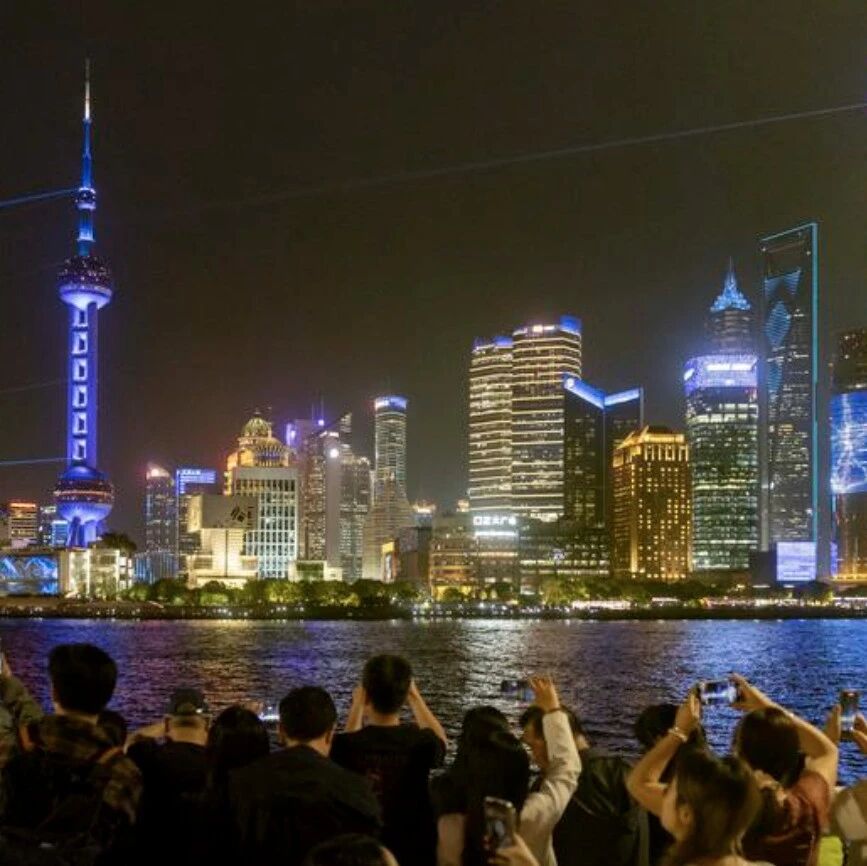
Core Viewpoint - Shanghai aims to achieve a GDP growth rate of around 5% for 2025, with a focus on enhancing its status as an international economic, financial, trade, shipping, and technological innovation center [3][5][12]. Group 1: Economic Goals and Projections - The main expected economic targets for Shanghai in 2025 include a GDP growth of approximately 5%, a 2% increase in local public budget revenue, and R&D expenditure reaching 4.6% of GDP [3][12]. - The "15th Five-Year Plan" outlines an average annual GDP growth target of around 5%, with potential growth levels estimated between 4.6% and 5.2% [3][12]. Group 2: Development of the "Five Centers" - The report emphasizes the continuous enhancement of the "Five Centers," which include international economic, financial, trade, shipping, and technological innovation centers [5][7]. - Specific initiatives include supporting industries such as smart connected vehicles, marine economy, low-altitude economy, aerospace, and satellite internet [5][11]. Group 3: New Quality Productivity - The focus is on integrating technological and industrial innovation to foster new quality productivity, including accelerating the application of major technological achievements and promoting intelligent, green, and integrated industrial development [9][10]. - Shanghai's R&D expenditure as a percentage of GDP reached approximately 4.5% in 2025, with significant growth in key industries like integrated circuits, biomedicine, and artificial intelligence [9][10]. Group 4: Modern Industrial System - The "2+3+6+6" modern industrial system aims to establish a world-class high-end industrial cluster, with a focus on traditional industry transformation and the development of three leading industries: integrated circuits, biomedicine, and artificial intelligence [10][13]. - By 2030, the plan targets that the total output value of strategic emerging industries will account for over 50% of the total industrial output value [12][13]. Group 5: Future Industry Layout - The report highlights the importance of forward-looking layouts in future industries, including quantum technology, brain-computer interfaces, and bio-manufacturing, to enhance Shanghai's competitive edge [14][12]. - The establishment of a reasonable investment mechanism for manufacturing and the promotion of collaboration between industry, academia, and research in emerging fields are emphasized [14][13].

天津:“十五五”将构建“6+X”未来产业发展矩阵
Xin Lang Cai Jing· 2026-01-30 12:26
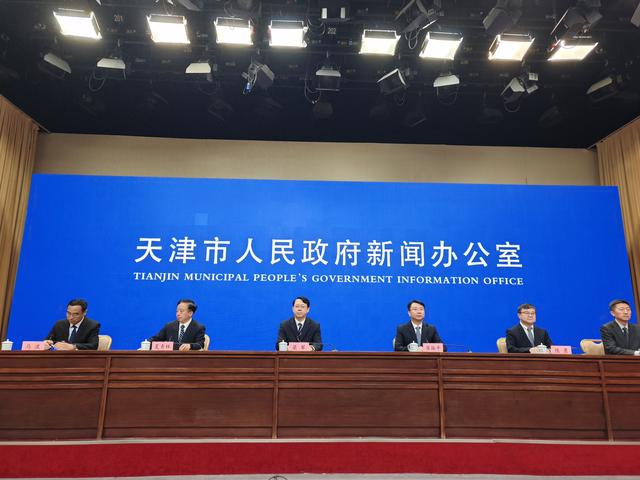
Core Viewpoint - Tianjin's government is focusing on developing future industries aligned with national strategic needs and global technological frontiers, emphasizing six key areas for growth [3][4]. Group 1: Future Industry Focus - The six key areas for future industry development include future manufacturing, future information, life sciences, new energy, future materials, and aerospace/deep-sea technologies [3]. - Specific tracks for development will include biomanufacturing, brain-computer interfaces, embodied intelligence, hydrogen energy, and new energy storage [3]. Group 2: Strategic Considerations - The strategy will be guided by three main aspects: enhancing political alignment with national strategies, identifying local industry strengths, and understanding development patterns [4]. - The focus will be on integrating technological and industrial innovation, leveraging Tianjin's resources and advantages to plan new industry tracks [4]. Group 3: Implementation and Innovation - Tianjin aims to drive innovation through collaboration in the Beijing-Tianjin-Hebei region, with a focus on artificial intelligence and original technology supply [5]. - The city plans to establish future industry pilot zones and clusters to support the development of a high-level advanced manufacturing research and development base [5].
视频|李迅雷:“十五五”最大亮点是“科技自立自强” 点名六大未来产业
Xin Lang Cai Jing· 2025-12-02 06:42
Core Insights - The 2025 Analyst Conference highlighted the importance of accelerating technological self-reliance as a key focus of the "14th Five-Year Plan" [1] Industry Opportunities - Future industries such as manufacturing, information technology, materials, energy, space, and health are expected to present significant development opportunities for companies [1]
双区引领 多极支撑 北京未来产业布局全景
Xin Jing Bao· 2025-11-28 10:14
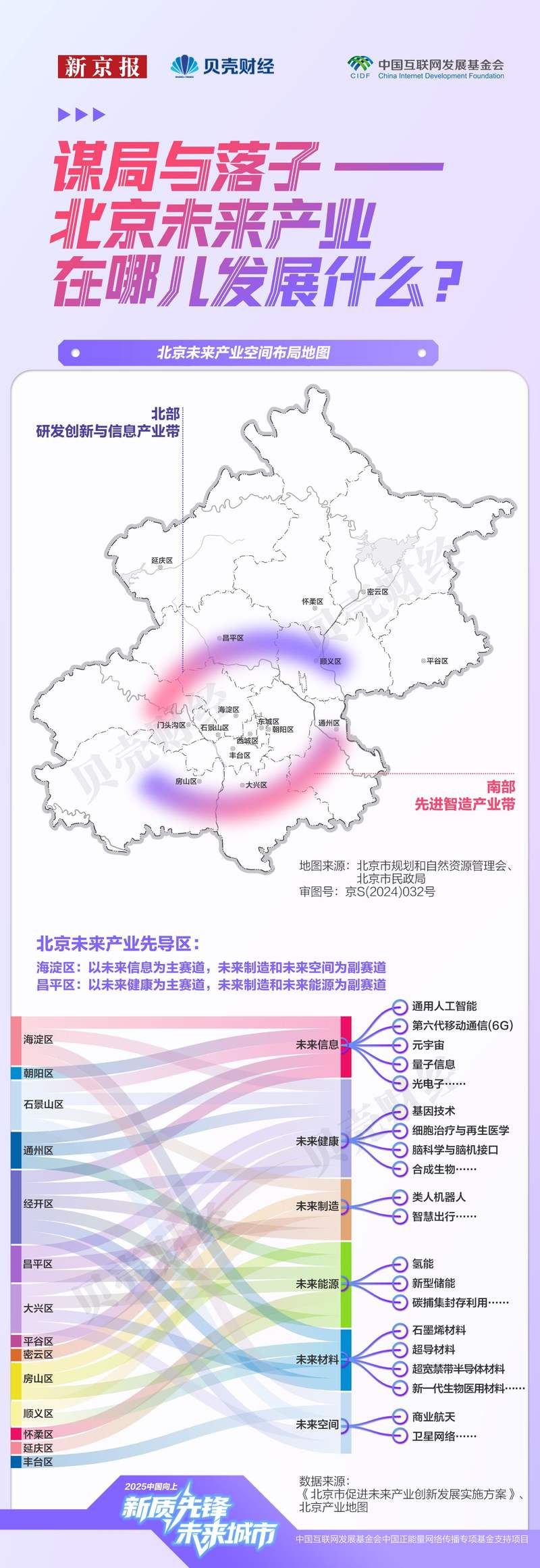
Core Insights - Beijing is positioning itself as a leader in future industries, focusing on sectors like 6G and embodied intelligence, aiming to become a global benchmark for digital economy by the end of the 14th Five-Year Plan [1] - The city has integrated future industries into its "2441" high-precision industrial system and has outlined a comprehensive policy framework to promote disruptive technologies [1][2] Group 1: Future Industry Development - Beijing has established a "2+N" spatial layout, with Haidian District focusing on general artificial intelligence and quantum information, while the Economic Development Zone is developing a high-level autonomous driving demonstration area [2] - The city is accelerating the creation of future industry pilot zones in Haidian and Changping Districts, aiming to integrate innovation, industry, finance, and talent [2] Group 2: Sector-Specific Focus - Key sectors include future information, health, manufacturing, energy, materials, and space, with specific districts assigned to lead in these areas [4][5] - The city is fostering advancements in hydrogen energy, new energy storage, and synthetic biology, among other fields, to drive technological innovation [2][5]
瞭望 | 未来产业新使命
Xin Hua She· 2025-08-25 08:42
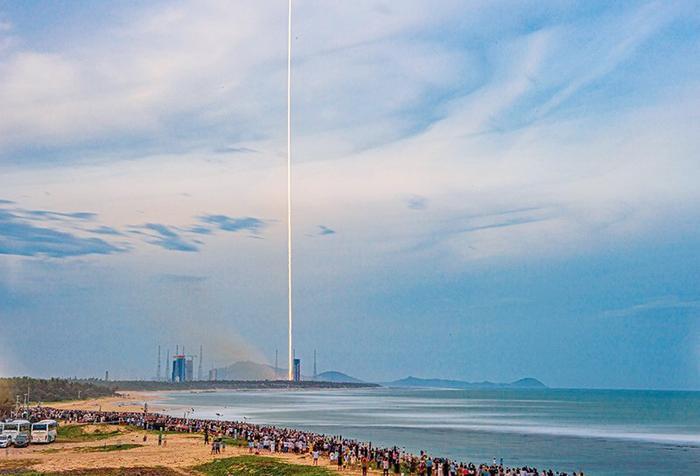
Core Insights - The future industry in China is projected to reach a value of approximately 11.7 trillion yuan in 2024, with estimates of 13.4 trillion yuan in 2025 and 15.5 trillion yuan in 2026, reflecting a compound annual growth rate of 15% [1][2] - Future industries are defined as emerging sectors driven by cutting-edge technologies, characterized by significant disruption and uncertainty [2][8] - The Chinese government aims to foster an environment that encourages innovation and tolerates failure, enhancing the autonomy and funding rights of research institutions to stimulate creativity [1][16] Industry Overview - Future industries encompass six key areas: future manufacturing, future information, future materials, future energy, future space, and future health [1] - The development of future industries is seen as a strategic pivot for technological advancement and industrial upgrading in China [1][8] Market Projections - The commercial space sector in China is expected to exceed 2.7 trillion yuan by 2025 and reach 3.3 trillion yuan by 2026 [5] - The satellite internet market is projected to reach 45 billion yuan by 2025, with a total of nearly 16,000 satellites planned [6] Technological Advancements - Breakthroughs in key technologies such as atomic-level manufacturing, hydrogen energy, and quantum information are driving the growth of future industries [5][6] - The atomic-level manufacturing sector is anticipated to achieve sales of 80 billion yuan in equipment and 20 billion yuan in related materials by 2024, with the potential to exceed 100 billion yuan within five years [5] Regional Development - Major regions like Beijing-Tianjin-Hebei, the Yangtze River Delta, and the Guangdong-Hong Kong-Macau Greater Bay Area are emerging as innovation hubs for future industries [7] - The Yangtze Economic Belt is exploring collaborative innovation models to enhance development in commercial aerospace and green energy [7] Characteristics of Future Industries - Future industries exhibit four notable characteristics: strategic significance, leading-edge technology, disruptive potential, and inherent uncertainty [8][9] - The development of future industries is influenced by the interplay of supply and demand, with technological breakthroughs creating new market needs [9] Challenges and Recommendations - Key challenges include strengthening the technological foundation, enhancing systemic planning, ensuring long-term investment, and improving regulatory frameworks [10][11] - Recommendations for fostering future industries include establishing a supportive capital investment mechanism, enhancing collaboration across the industry chain, and promoting flexible funding models [12][13][18]
存续期20年,高容亏100%!陕西省科技创新母基金管理办法(试行)公布
FOFWEEKLY· 2025-08-18 10:06
Core Viewpoint - The article discusses the implementation of the "Management Measures for the Shaanxi Province Science and Technology Innovation Mother Fund (Trial)" aimed at promoting technology innovation in the region through government-led investment strategies [1] Group 1: Fund Structure and Investment Strategy - The Science and Technology Innovation Mother Fund has a duration of 20 years, with at least 80% of its investments directed towards venture capital sub-funds, and a minimum of 30% allocated to seed and angel sub-funds [2] - Direct investments in major science and technology projects determined by the provincial government are capped at 5% of the total subscribed capital of the mother fund, with remaining funds allocated flexibly to industry sub-funds or direct investment projects [2] - The mother fund's investment in venture capital sub-funds generally does not exceed 50% of the total scale of the sub-fund, with seed and angel sub-funds capped at 60% [2] Group 2: Management and Fee Structure - The management fee for the mother fund is calculated at 1% per year based on the actual paid-in capital for the investment in sub-funds, and similarly for direct investments [3] - 80% of the management fee is a basic fee, while 20% is determined based on performance evaluation results [3] Group 3: Sub-fund Duration and Focus - The duration of sub-funds is limited to a maximum of 15 years, with extensions subject to approval by the provincial government [4] - Sub-funds focusing on early-stage projects must allocate at least 70% of their scale to such investments [5] Group 4: Investment Criteria for Seed and Angel Projects - Seed projects must meet specific criteria, including being within 5 years of establishment and having sales revenue not exceeding 50 million RMB and fewer than 100 employees [6] - Angel projects must also meet criteria, including being within 8 years of establishment and having sales revenue not exceeding 100 million RMB and fewer than 200 employees [7] Group 5: Risk Tolerance and Loss Absorption - The mother fund establishes a mechanism for due diligence exemption, allowing for a maximum loss tolerance of 70% for seed and angel sub-funds, 50% for venture capital sub-funds, and 30% for industry sub-funds [7]

菏泽前瞻布局七大未来产业
Qi Lu Wan Bao· 2025-07-23 14:46
Core Viewpoint - Heze City is focusing on developing future industries as a strategic choice to drive technological progress and industrial upgrading, aiming to achieve the goal of "breaking through Heze and surpassing others" [1] Group 1: Development Goals - The "Implementation Opinions" set a two-step development goal: short-term (by 2030) to establish around 30 major technology innovation platforms, break through over 50 key technologies, and form more than 30 landmark innovative products; long-term (by 2035) to build an ecosystem suitable for the growth of future industries [2] Group 2: Key Future Industries - Seven key future industries are prioritized for development: - "Future Materials" to support high-end manufacturing by breaking traditional material performance limits - "Hydrogen and Energy Storage" to address energy security and dual carbon goals - "Synthetic Biology" to reconstruct the biological manufacturing system for green and low-carbon transformation - "Artificial Intelligence" to empower intelligent upgrades across various industries - "Intelligent Robotics" to assist in the intelligent transformation of manufacturing - "Future Manufacturing" integrating digital twins and flexible manufacturing technologies - "Low-altitude Economy" to expand land space utilization and cultivate new growth poles [2] Group 3: Implementation Tasks - Eight key tasks are outlined to ensure effective policy implementation: - Improve government service efficiency and optimize approval processes - Establish a comprehensive mechanism for talent recruitment and retention - Promote industrial clustering by mapping industrial chains and building specialized industrial parks - Encourage innovation by forming innovation consortia - Establish a future industry fund to empower financial support - Promote cross-regional innovation cooperation - Build platforms such as laboratories and pilot bases - Foster a culture that encourages innovation and tolerates failure [3] Group 4: Local Adaptation and Future Steps - Heze's "Implementation Opinions" emphasize localized strategies and phased cultivation, aligning with provincial goals while leveraging local resources for innovative development [3] - The introduction of these opinions marks a new phase in Heze's future industry development, aiming to accelerate the construction of a modern industrial system that integrates traditional, emerging, and future industries [3][4] - The city will enhance departmental collaboration to expedite the cultivation of future industries and ensure the effective implementation of policies [4]
武汉支持科技创新,政府投资基金允许100%亏损
Chang Jiang Ri Bao· 2025-06-20 02:23
Core Viewpoint - Wuhan city is implementing a series of initiatives to accelerate the development of a nationally influential technology innovation center, focusing on capital cultivation and establishing a fault-tolerant mechanism for investments [1][2]. Group 1: Investment Initiatives - The city has established two government industry funds, Wuhan Fund and Jiangcheng Fund, targeting five key industries including optoelectronic information, new energy, and intelligent connected vehicles, as well as emerging industries like commercial aerospace and artificial intelligence [1]. - The goal is to create a fund cluster worth 300 billion to 500 billion yuan by attracting social capital [1]. Group 2: Investment Risk Management - The government investment funds will allow for a maximum loss of 100% for individual projects under seed and angel investments, with tolerances set at 80% and 60% for seed and angel funds respectively [2]. - A mechanism is in place to exempt government investment funds from liability if investments do not meet expectations due to force majeure [2]. Group 3: Fund Structure and Duration - The participation ratio of government investment funds in seed and angel funds has been increased to over 50%, with a maximum fund duration of 15 years [1]. - The total amount of government investment funds for establishing seed and angel funds or directly investing in technology innovation projects should not be less than 20% of the newly added investment amount for the year [1].
《北京归国留学人员蓝皮书》发布
Ke Ji Ri Bao· 2025-03-31 01:10
Group 1 - The "Beijing Returned Overseas Students Blue Book" was released, presenting trends in talent mobility and innovation effectiveness among returnees in Beijing [1] - As of 2024, the estimated number of returned overseas students in Beijing is 1.2285 million, with over 76% holding master's or doctoral degrees [1] - More than 60% of returned students studied in the United States and the United Kingdom, primarily working in science and technology, economics, and education [1] Group 2 - 78% of returned overseas students are employed in Beijing, while 14.2% are engaged in innovation and entrepreneurship [1] - Among those employed, 60% are in emerging industries such as artificial intelligence, healthcare, and smart vehicles [1] - Over 80% of those in innovation and entrepreneurship are contributing to new productivity and emerging industries, focusing on technological and business model innovation [1] Group 3 - In 2024, 32.2% of founders or co-founders of 115 unicorn companies in Beijing have overseas study experience, with a focus on hard technology sectors [2] - A significant number of returned overseas students are key contributors in universities and research institutions in Beijing, leading to breakthroughs in technology innovation [2] - Among the Chinese Academy of Sciences members working in Beijing, 75% have overseas study experience, while 47% of the Chinese Academy of Engineering members also have such backgrounds [2]