
水果种植与加工

Search documents
科技小院助推保亭红毛丹全产业链升级
Hai Nan Ri Bao· 2026-01-07 01:12
科技小院助推保亭红毛丹全产业链升级 把"实验室"搬到田间 让"红宝石"更加闪亮 海南日报全媒体记者 黄婷 连日来,在保亭黎族苗族自治县多家果园,一批批红艳饱满的红毛丹相继被采摘。随着春节前枝头 尾果日渐成熟,这场属于"热带果王"的丰收季也即将圆满落幕。 丰收的背后,是一个蓬勃壮大的特色产业:种植面积从2022年的3.9万亩跃升至2025年的5万余亩, 年产值突破5.8亿元,直接带动超6600户农民增收,使保亭稳居全国规模最大、产业链最完整的红毛丹 主产区。 这份沉甸甸的收获,凝聚着科技的坚实力量:海南保亭红毛丹科技小院的师生们将"实验室"搬到地 头,成功破解果实保鲜期短等关键难题,将技术输送到万亩果园。 如今,这颗"红宝石"已成为保亭闪亮的农业"金字招牌"。科技赋能,为这片热土铺就一条产业富民 之路。 破局 科技攻坚解决种植保鲜难题 保亭地处北纬18°黄金热带线,红毛丹气候品质出众,但产业曾长期陷于"叫好不叫座"的困境:品 种单一、病虫害频发、保鲜期短、加工技术缺乏。果农的辛勤汗水,常常因技术瓶颈而难以转化为实实 在在的收益。 转机始于2023年。当年,随着海南保亭红毛丹科技小院挂牌成立,由海南大学教授张伟敏 ...
从提篮叫卖到“链”动四海:礼县苹果成富民“多棱镜”
Zhong Guo Xin Wen Wang· 2025-12-30 08:55
Core Viewpoint - The apple industry in Lixian County, Gansu, has transformed into a vital economic driver, leveraging technology and modern logistics to enhance production and sales, ultimately benefiting local farmers and contributing to rural revitalization [1][7]. Group 1: Industry Development - Lixian County has established apples as its leading industry since 2015, with significant government support leading to the construction of new cold storage facilities [3]. - The annual sales of apples from local cooperatives have reached millions of pounds, with products being sold both locally and internationally [3]. - The introduction of advanced agricultural techniques has significantly improved fruit quality and farmer incomes [4][6]. Group 2: Technological Integration - The apple production process has evolved with the adoption of technology, including precision grading systems in smart sorting workshops that assess apples based on size, color, sugar content, and internal defects [5][8]. - The use of e-commerce and a robust logistics network has allowed farmers to sell directly from their farms, eliminating traditional market challenges [4]. Group 3: Economic Impact - The cooperative model has fostered collaboration among farmers, enhancing product quality and market access, with projected sales for some cooperatives expected to exceed 2 million yuan [4]. - The apple industry has created a comprehensive value chain, transforming small-scale farming into a recognized industry, thus redefining the role of traditional farmers into modern agricultural entrepreneurs [7].

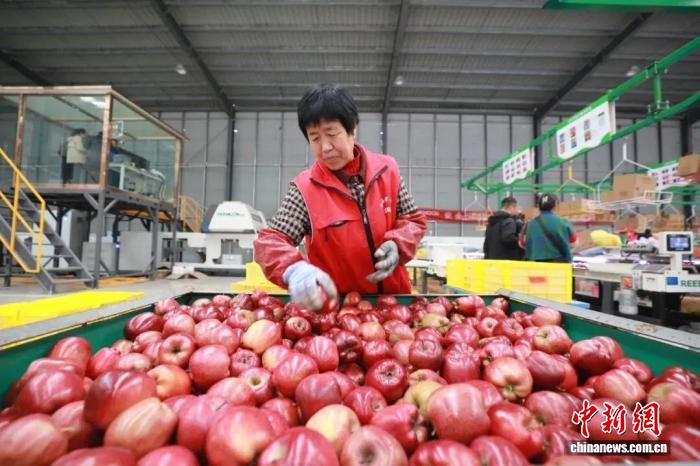
畅通出海通道 拓展国际市场——重庆潼南力促柠檬香飘四海
Xin Hua Wang· 2025-12-27 12:03
Core Insights - Chongqing's Tongnan District is enhancing its lemon industry by establishing a complete industrial chain, which includes seedling cultivation, standardized planting, and deep processing, benefiting over 100,000 farming households with stable income growth [1][2] - The district has successfully exported lemons to over 30 countries and regions, with an export value exceeding 190 million yuan from January to November this year, marking a year-on-year increase of 21.8% [1][2] Group 1 - The logistics improvements have significantly reduced transportation time and costs, with lemon shipments to Vietnam now taking only 2 days instead of 6, saving 200 yuan per ton [1][2] - The local government has collaborated with logistics companies to create tailored cross-border logistics solutions, including a green channel for customs inspections, providing 24/7 appointment services [2] - The district is actively expanding its international market presence, having achieved over 8 million yuan in intended cooperation amounts from overseas exhibitions in the first ten months of the year, adding new export markets like Azerbaijan and Uzbekistan [2] Group 2 - Efforts to enhance lemon quality include the establishment of a seedling breeding center that supplies nearly 600,000 non-toxic seedlings annually, ensuring traceability [2] - Standardized production techniques and the promotion of integrated water and fertilizer management, along with green pest control technologies, are being implemented to ensure high-quality lemons [2] - Future plans include the construction of high-standard export registration bases and overseas warehouses to advance the lemon industry towards higher-end and international markets, contributing to rural revitalization and high-quality agricultural development [2]
苹果市场周报-20251226
Rui Da Qi Huo· 2025-12-26 08:58
Report Summary 1. Report Industry Investment Rating - Not provided in the content. 2. Core View - This week, the price of the Apple Futures 2605 contract increased with a weekly gain of about 0.52%. Apple产区 has seen a slight increase in the number of buyers, but the transaction of fruit farmers' goods is limited. The in - warehouse packaging and shipping have increased. As of December 24, 2025, the cold - storage inventory of apples in the main production areas in China was 7.4404 billion tons, a decrease of 89,400 tons from last week, with a slower de - stocking speed than the same period last year. The sales area has seen an increase in arrivals. Driven by festivals such as the Winter Solstice and Christmas, the sales have improved slightly compared to the previous period, but there is still pressure on digestion. The short - term price will mainly fluctuate. Future trading should focus on fruit prices and consumption. [4][6] 3. Summary by Relevant Catalogs 3.1. Week - to - Week Summary - The price of the Apple Futures 2605 contract increased this week, with a weekly gain of about 0.52%. The number of buyers in apple production areas increased slightly, but the transaction of fruit farmers' goods was limited. The cold - storage inventory decreased, but the de - stocking speed was slower than last year. The sales in the sales area improved slightly. The short - term price will mainly fluctuate. Future trading should focus on fruit prices and consumption. [4][6] 3.2. Futures and Spot Markets - **Futures Market**: The price of the Apple Futures 2605 contract increased this week, with a weekly gain of about 0.52%. As of the end of this week, the net position of the top 20 in apple futures was 4,848 lots, and the number of apple futures warehouse receipts was 0. [6][13] - **Spot Market**: As of December 26, 2025, the mainstream price of fruit farmers' goods of Shandong Yantai Qixia paper - bagged Red Fuji apples above 80 and of the first - and second - grade was 4.0 yuan per catty; the price of Shandong Yiyuan paper - bagged Fuji apples above 75 was 2.60 yuan per catty. [16] 3.3. Industry Situation and Options - **Supply Side**: As of December 24, 2025, the cold - storage inventory of apples in the main production areas in China was 7.4404 billion tons, a decrease of 89,400 tons from last week, with a slower de - stocking speed than the same period last year. The storage capacity ratio in Shandong was 52.98%, a decrease of 0.43% from last week, and that in Shaanxi was 56.84%, a decrease of 0.58% from last week. [24] - **Demand Side**: - As of December 25, the average daily number of early - morning arrivals at major apple wholesale markets in Guangdong increased. The profit of 80 first - and second - grade apple storage merchants was suspended (represented by 0). - As of December 19, 2025, the average wholesale price of all apple varieties was 9.30 yuan per kilogram, a week - on - week decrease of 0.07 yuan per kilogram; the wholesale price of Fuji apples was 9.30 yuan per kilogram, a week - on - week increase of 0.17 yuan per kilogram. - As of December 19, 2025, the weekly average wholesale price of 5 kinds of fruits was 7.61 yuan per kilogram, a week - on - week increase of 0.17 yuan per kilogram. - In October 2025, China's apple export volume was 80,000 tons, a month - on - month increase of 14.29%, and the export value was 779.12 million US dollars, a month - on - month increase of 12.62%. [26][31][35][39] - **Options Market**: Information about the implied volatility of at - the - money apple options this week is provided, but specific data is not described in text. [40] 3.4. Futures - Stock Correlation - A graph of the price - earnings ratio of Honghui Fruit & Vegetable is presented, but specific analysis is not provided. [42]


从200元跌到8元!蓝莓价格大跳水的背后,藏着这些免税秘密
Sou Hu Cai Jing· 2025-12-24 20:10
Core Viewpoint - The recent price drop of blueberries in the market highlights the impact of tax policies on the agricultural industry, particularly the distinction between primary agricultural products and processed goods, which affects profit distribution across the supply chain [1][5]. Group 1: Price Dynamics - Blueberry prices have plummeted from a peak of 300 yuan per kilogram to as low as 8 yuan per kilogram, representing a decrease of over 30 times [1]. - The current market allows blueberries to be sold at low prices due to a 13% value-added tax exemption for unprocessed fruits, benefiting consumers directly [2][5]. Group 2: Tax Policy Implications - Agricultural producers can sell primary agricultural products without incurring value-added tax, which is crucial for maintaining low prices in the market [2]. - Once blueberries are processed into products like jams or juices, they fall under a different tax category and are subject to a 13% value-added tax, significantly increasing costs for processors [5][9]. Group 3: Compliance and Value Creation - The distinction between primary and processed products necessitates a robust compliance system, as seen in the traceability measures for agricultural products [6][9]. - The future of the blueberry industry may hinge on the ability to navigate tax policies effectively, with a shift from price competition to value competition through deep processing [8][9].
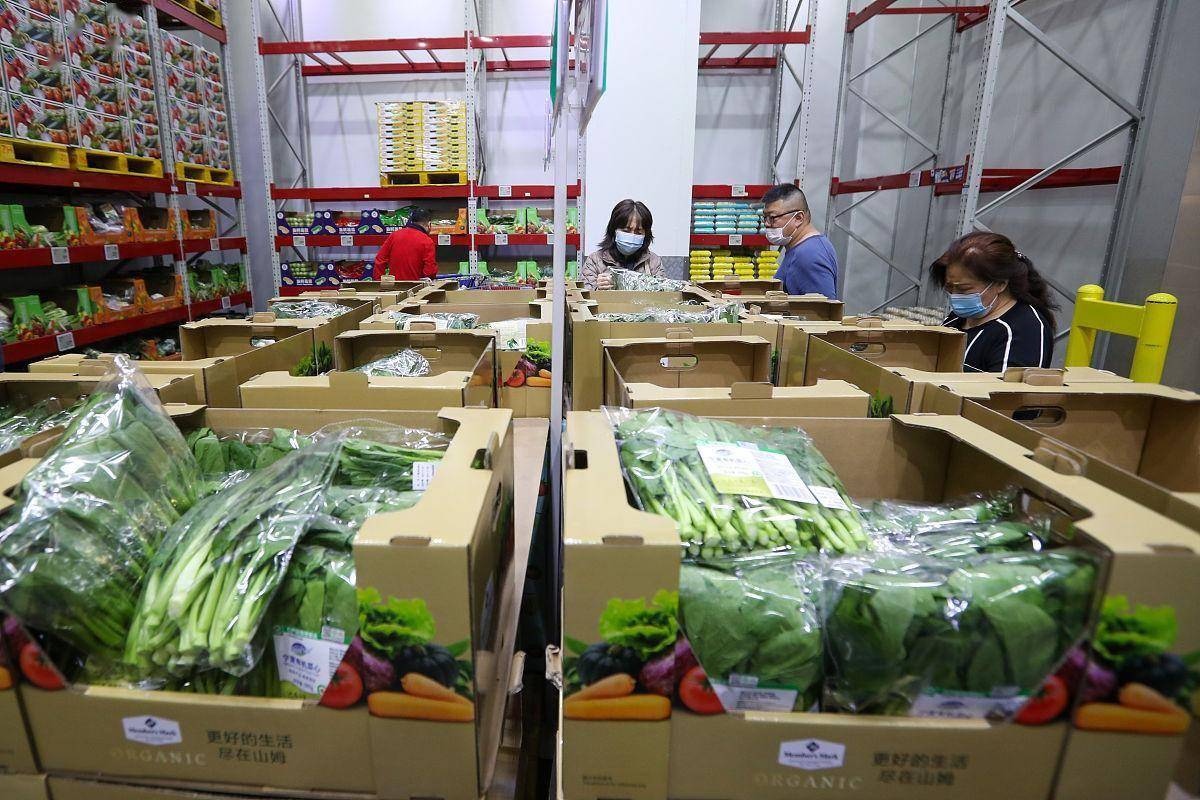
《云浮市郁南无核黄皮产业促进条例》将于2026年1月1日施行
Nan Fang Nong Cun Bao· 2025-12-24 12:33
Core Viewpoint - The "Yunan Wuhuangpi Industry Promotion Regulations" will be implemented on January 1, 2026, marking a new phase of legal, standardized, and high-quality development for the Yunan Wuhuangpi industry [4][10]. Group 1: Industry Development - The Yunan Wuhuangpi industry has shown significant development, with a planting area of 197,000 acres, accounting for approximately three-quarters of the global total [9][10]. - The industry has achieved an annual output value exceeding 8 billion yuan [10]. - The development strategy focuses on industrialization, scale, standardization, branding, and integration of the three industries [8]. Group 2: Legislative Framework - The regulations were approved after over a year of legislative work, reflecting public opinion and collective wisdom [11]. - The regulations aim to improve management responsibilities, enhance planning guidance, standardize planting and processing activities, strengthen brand building, and explore cultural resources [13]. Group 3: Implementation and Coordination - The Yunan County government will focus on policy support, market expansion, and brand enhancement to drive comprehensive growth in the industry [25]. - The Yunan Agricultural and Rural Bureau will play a key role in planning, service, and supervision to ensure high-quality development of the Yunan Wuhuangpi industry [20][21]. - The market supervision department will focus on standard leadership, brand protection, regulatory services, and industry empowerment to maintain the quality of Yunan Wuhuangpi [28][29]. Group 4: Future Goals - The city aims to fully implement the regulations as a central task, emphasizing legal, standardized, and high-quality development [30][32]. - The goal is to transform the regulations from paper into practical measures that will serve as a "protective shield" and "accelerator" for the industry [32].

【经济日报】黑龙江省桦南县乡村振兴发展服务中心副主任武雯雯:紫苏香里说变迁
Xin Lang Cai Jing· 2025-12-21 11:28
Core Viewpoint - The articles highlight the successful transformation of rural areas in China, particularly focusing on poverty alleviation and the development of local industries, such as the purple perilla industry in Huannan County, which has become a significant economic driver for the region [11][12]. Group 1: Poverty Alleviation Efforts - Huannan County has established a dynamic monitoring mechanism to prevent poverty, promoting an "one-click reporting" app and conducting regular assessments to ensure timely assistance for those in need [12]. - The average income of the county's poverty-stricken population has increased from 12,123 yuan in 2021 to 16,849 yuan in 2024, demonstrating effective economic growth and stability [12]. - The county has implemented a "base + farmer" and "order + farmer" model, leading to a significant increase in purple perilla cultivation, which now occupies 100,000 acres, accounting for one-third of the national total [12]. Group 2: Economic Development and Industry Growth - The establishment of seven leading enterprises in the purple perilla industry has created a complete industrial chain, benefiting 70 poverty-stricken households and 20 villages with an annual income increase of nearly 800,000 yuan [12]. - The county has seen a rise in educational support, with over 30,000 students receiving assistance, ensuring that no eligible child drops out of school [12]. - Infrastructure improvements, such as rural roads and water supply systems, have reached 100% coverage in 192 administrative villages, enhancing the quality of life for residents [12][13]. Group 3: Cultural and Community Development - Community initiatives, including the establishment of cultural squares and libraries, have enriched rural life and fostered a sense of community [12]. - The county has been recognized for its efforts in rural revitalization, achieving an A-class rating in city-level assessments for three consecutive years, and branding itself as "China's Purple Perilla Town" [13].
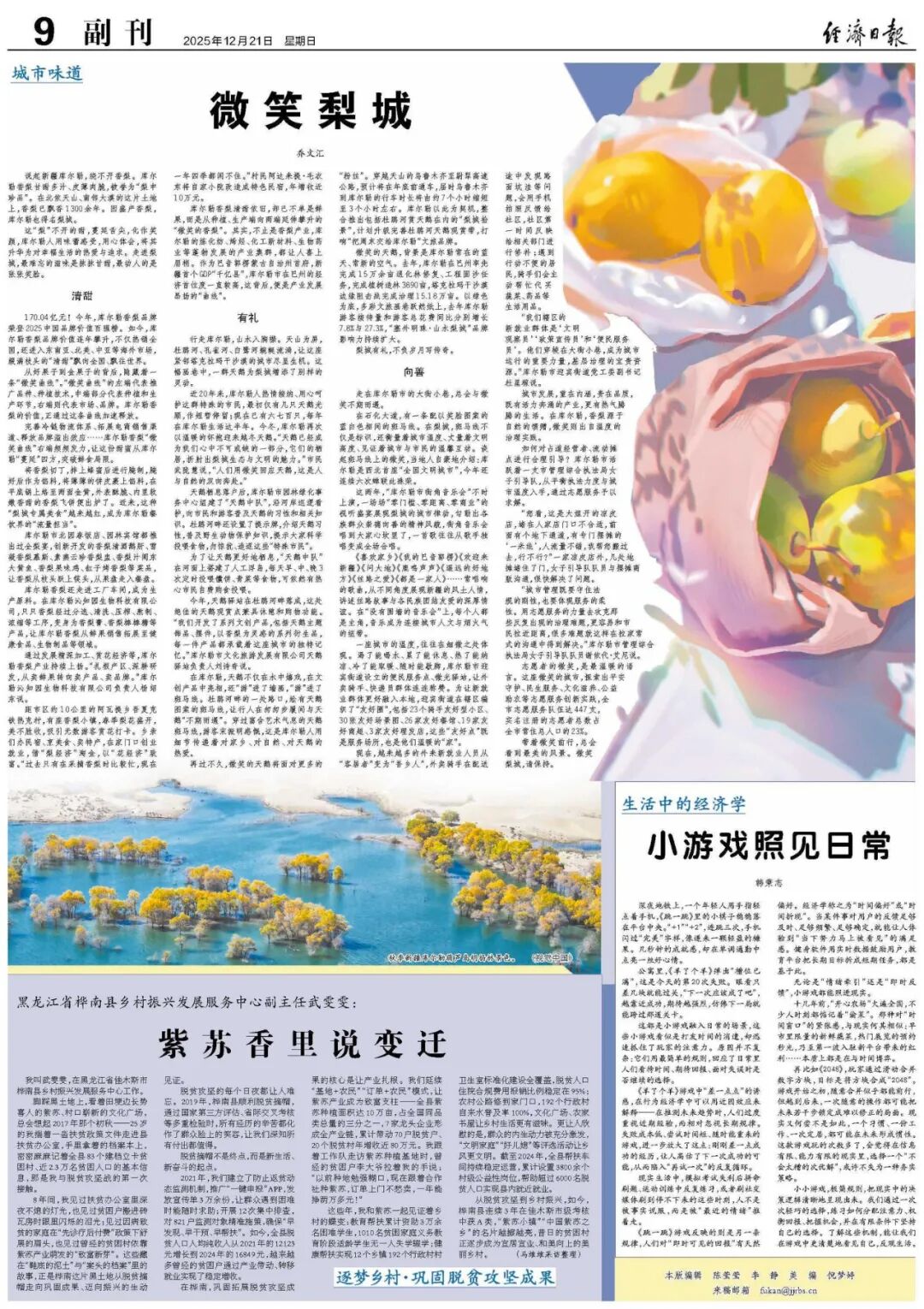
甘肃有苹果,不再深闺藏
Zhong Guo Xin Wen Wang· 2025-12-18 23:25
Core Insights - Gansu apples are gaining recognition for their quality and comprehensive industry chain, with exports reaching 430 million yuan in the first ten months of the year, covering 14 countries and regions [1] - The region's favorable climate and soil conditions contribute to the superior quality of Gansu apples, which are characterized by their attractive appearance, crisp taste, and rich nutrition [2] - Technological advancements in sorting and packaging have enhanced the quality control of Gansu apples, allowing for efficient processing and distribution [3] - The apple industry in Gansu is evolving from fresh fruit to a broader range of products, including dried apples, apple juice, and high-value items like apple vinegar and cosmetics [3] - The establishment of a unified regional brand, "Guanwei," has improved the market competitiveness of Gansu apples, promoting both domestic and international sales [5] Group 1 - Gansu apples have achieved an export value of 430 million yuan, with concentrated apple juice exports at 390 million yuan [1] - The optimal growing conditions in Gansu, including suitable altitude and soil quality, contribute to the high quality of apples produced [2] - The use of advanced technology in sorting and packaging has significantly improved the quality assurance processes for Gansu apples [3] Group 2 - The Gansu apple industry is diversifying its product offerings, moving into areas such as apple distillates and high-value processed goods [3] - The "Guanwei" brand has been instrumental in consolidating Gansu's apple resources, enhancing its market presence both domestically and internationally [5] - The apple industry in Gansu has a rich history of innovation and adaptation, with local farmers increasingly adopting modern agricultural practices and e-commerce strategies [4]
烟台“十四五”实施两轮“苹果革命”,改造老旧果园近140万亩
Qi Lu Wan Bao· 2025-12-17 06:41
Core Viewpoint - Yantai City is focusing on high-quality development of the apple industry during the "14th Five-Year Plan" period, with significant investments and initiatives aimed at enhancing production and promoting new apple varieties [1][2][3]. Investment and Development - Over 900 million yuan has been invested in subsidies for the entire apple industry chain, with nearly 1.4 million acres of old orchards being renovated and 18 modern orchards of over 1,000 acres established [1]. - The establishment of 400 high-standard modern demonstration orchards has been achieved, significantly improving the industry's foundation [1]. Breeding and Variety Promotion - A total of 92 new apple varieties have been registered, accounting for one-quarter of the national total, with the establishment of six provincial-level scientific innovation platforms [2]. - The "Yanfeng" series of apples has been promoted over an area exceeding 8 million acres, representing more than one-quarter of the national apple planting area [2]. Technological and Soil Upgrades - The introduction of bag-free apple technology has reduced costs by 800 yuan per acre, with over 20,000 acres of bag-free apple bases established [3]. - The average organic matter content in soil has increased to 2.4%, with 135 ecological orchards covering 39,000 acres created [3]. Industry Growth and Economic Impact - There are now 27 billion-yuan-level enterprises in the apple industry, with leading processing companies generating annual revenues of 11 billion yuan [4]. - The apple industry chain contributes approximately 20% of the total agricultural output value in Yantai, with 1.7 million farmers engaged in production and processing [6]. Future Projections - The fresh apple output value is projected to reach 34 billion yuan in 2024, contributing to about 90% of the income for farmers in the main production areas [6].

2025年中国梨产业发展历程、市场政策、产业链图谱、供需现状、进出口贸易、竞争格局及发展趋势研判:产销“双旺”[图]
Chan Ye Xin Xi Wang· 2025-12-16 01:56
Core Viewpoint - The pear industry in China is experiencing significant growth driven by increasing health awareness among consumers and diverse applications of pears in various food products, with demand projected to reach 20.36 million tons in 2024, a 5.0% increase year-on-year [1][7]. Overview - Pears belong to the Rosaceae family and are one of the most cultivated fruits in China, which is a major origin of pear species with a rich genetic resource. Systematic breeding efforts began in the modern era, leading to the development of around 50 new varieties by 1994, with recent advancements in breeding techniques combining traditional and biotechnological methods [2][3]. Development History - The development of the pear industry in China can be divided into six key stages, from early domestication to modern industrialization, with current trends focusing on quality improvement, brand development, and integration of the entire industry chain [3]. Policy Support - The Chinese government has implemented various policies to support agricultural development, including initiatives aimed at rural revitalization, e-commerce growth, and smart agriculture, creating a favorable environment for the pear industry [4]. Industry Chain - The pear industry chain in China is comprehensive, covering upstream planting, midstream processing, and downstream sales. The processing sector is still developing, with significant potential for increasing the deep processing rate of pears [6]. Current Development Status - Pear cultivation is widespread in China, contributing to agricultural economic growth and rural income. The total pear production is expected to reach 20.99 million tons in 2024, with Hebei province being the largest contributor at 19.71% [5][6]. Market Demand - The demand for pears is on the rise, with a projected consumption of 20.36 million tons in 2024, reflecting a 5.0% year-on-year increase. The per capita demand is expected to reach 14.45 kg, a 5.1% increase [1][7]. Export Situation - In 2025, China's fresh pear exports reached 562,300 tons, with an average export price of $0.88 per kilogram, totaling approximately $49.6 million. Major export destinations include Indonesia, Vietnam, and the United States [8]. Competitive Landscape - The pear industry in China is characterized by a fragmented market with a predominance of small and medium-sized enterprises. Over 90% of registered pear-related companies have a capital of less than 2 million yuan [9]. Key Companies - Honghui Fruit and Vegetable Co., Ltd. focuses on integrated operations in the fruit and vegetable sector, achieving a revenue of 470 million yuan in the first half of 2025, with fruit business accounting for 76.19% of total revenue [9][10]. - Botou Panglong Fruit Co., Ltd. specializes in pear cultivation and processing, with a strong emphasis on quality control and has received several accolades for its agricultural practices [10][11]. Future Trends - The pear industry is expected to shift towards deeper processing and innovation, exploring new product categories and enhancing the value of existing products. Sustainability will also become a key focus, with practices such as organic farming and eco-friendly packaging gaining importance [12].
