
生物医药制造

Search documents
资讯日报:美国初申失业金人数创逾三年新低,11月企业裁员人数下降-20251205
Guoxin Securities Hongkong· 2025-12-05 06:53
Market Overview - The Hang Seng Index closed at 25,936, up 0.68% for the day and 29.29% year-to-date[3] - The S&P 500 Index closed at 6,857, up 0.11% for the day and 16.59% year-to-date[3] - The Nikkei 225 Index rose 2.33%, marking a three-week closing high[12] Employment and Economic Indicators - Initial jobless claims in the U.S. hit a three-year low, indicating a strong labor market[11] - November layoffs announced by U.S. employers decreased, yet remain the highest for the same period since 2022[11] Sector Performance - Large tech stocks showed mixed results; Meta rose 3.43% while Apple fell 1.21%[12] - Semiconductor stocks performed well, with global semiconductor equipment sales increasing by 11% year-on-year to $33.66 billion in Q3 2025[9] Investment Trends - The robotics sector gained attention, with major companies like Fanuc and Yaskawa Electric seeing significant stock price increases of 12.98% and 11.37%, respectively[12] - AI-related stocks, particularly in cloud computing and energy storage, experienced substantial gains, with Fluence Energy rising 17.58%[12] Market Sentiment - The market is anticipating the upcoming U.S. PCE inflation data, expected to show a slight increase from August, continuing to exceed the Federal Reserve's 2% target for 55 consecutive months[9]
周口临港开发区:内河航运扬帆起,向海图强谱新篇
He Nan Ri Bao· 2025-11-26 03:24
Core Viewpoint - The Zhoukou Lingang Development Zone has transformed from a small inland port to a national logistics hub, handling over 85% of the province's container throughput, showcasing the remarkable development of inland areas striving for maritime connectivity [1][2]. Group 1: Hub Capability Enhancement - Zhoukou was selected as a national logistics hub construction site in 2025, being the only city in Henan to achieve this status [2]. - The number of container shipping routes has increased from 5 in 2020 to 43 currently, representing an increase of nearly 8 times [2]. - Container throughput surged from 8,064 TEUs in 2020 to 163,000 TEUs in 2024, a growth of over 19 times [2]. Group 2: Infrastructure Development - The first phase of the small collection operation area project has a planned investment of 3.98 billion yuan, with 2.84 billion yuan already invested [3]. - The construction of a dedicated railway line for collection and distribution is underway, enhancing the last-mile connectivity of multimodal transport [4]. Group 3: Industrial Cluster Development - The Zhoukou Lingang Development Zone is fostering port-preferred industries, with significant progress in the biopharmaceutical sector, including the establishment of the Zhoukou Biochemical Park [6]. - The Yihai Kerry Food Industry Park, with a total investment of 14.7 billion yuan, is expected to generate an annual output value of 30 billion yuan [7]. - The development of the manufacturing sector is evident with the establishment of several industrial parks and the introduction of key enterprises like Tianzi Aluminum [7][8]. Group 4: Innovation and Reform - The development zone is actively pursuing innovation, with 82 innovative SMEs and 12 provincial-level specialized enterprises established [11]. - The implementation of the "Six Best" business environment reforms has improved tax processing efficiency, ranking first in the city [13]. - The "Ten Thousand People Help Ten Thousand Enterprises" initiative has resolved 32 enterprise issues, increasing service coverage by 43.8% [14]. Group 5: Future Outlook - The development plan for 2025-2035 aims for differentiated, specialized, and clustered growth in the port industry, targeting an industry scale exceeding one trillion yuan by 2030 [16]. - Zhoukou Port is expected to evolve from a logistics channel to a value chain organizer, integrating trade, finance, and data into a modern shipping service system [17].
港股午评:恒指涨1.42%、科指涨1.65%,科技股回暖,军工、汽车及生物医药股走高,芯片及航空股低迷
Sou Hu Cai Jing· 2025-11-24 04:28
Market Overview - The Hong Kong stock market showed strong performance with the Hang Seng Index rising by 1.42% to 25,578.88 points, the Hang Seng Tech Index increasing by 1.65% to 5,484.46 points, and the National Enterprises Index up by 1.22% to 9,028.24 points [1] - Major technology stocks experienced gains, with Alibaba up 4.13%, Tencent up 2.13%, JD.com up 1.45%, and NetEase up 5.67% [1] - The defense sector saw active trading, with China Shipbuilding Industry Corporation rising nearly 7% and AVIC Industry Company up over 3% [1] - Biopharmaceutical stocks also rose, with Hengrui Medicine up over 6% and 3SBio up over 5% [1] - Automotive stocks surged, led by GAC Group which increased by over 13% [1] - Semiconductor stocks declined, with Hua Hong Semiconductor down over 9% and SMIC down over 5% [1] - The "three barrels of oil" collectively fell, with CNOOC down over 2% and PetroChina down over 1% [1] - Airline stocks were weak due to the cancellation of all flights on 12 Japan-China routes [1] Company News - Huimai Technology reported Q3 revenue of $532 million, a year-on-year increase of 27.6%, with adjusted EBITDA reaching $47.05 million, up 37.3% [2] - Changjiang Garment announced a mid-term revenue of HKD 85.593 million, a 13.67% increase, but reported a loss of HKD 53.314 million, widening by 67.8% year-on-year [2] - Virginie expects a comprehensive profit increase of no less than 100% for the six months ending September 30, 2025 [3] - Maple Leaf Education anticipates a net profit of no less than RMB 300 million for the fiscal year ending August 31, 2025 [4] - Nanshu Holdings reported revenue of approximately HKD 2.8305 billion for the six months ending September 30, 2025, a 1.6% increase, with a net profit of HKD 336 million, up 12.7% [4] - Yongyi International expects a significant reduction in mid-term net loss to no more than HKD 110 million [5] - China Aluminum announced a total cash or asset capital increase of HKD 906 million for Yunnan Aluminum Foil [6] - Hisense Home Appliances subscribed to insurance financial products worth HKD 1.738 billion [7] Stock Buybacks - Tencent repurchased 1.042 million shares for HKD 636 million at prices between HKD 606.5 and HKD 614.5 [9] - Xiaomi repurchased 8 million shares for HKD 303 million at prices between HKD 37.64 and HKD 38.04 [10] - China Feihe repurchased 12.3 million shares for HKD 51.404 million at prices between HKD 4.14 and HKD 4.2 [11] - Techtronic Industries repurchased 500,000 shares for HKD 43.0814 million at prices between HKD 85.2 and HKD 87.25 [12] - COSCO Shipping Holdings repurchased 3 million shares for HKD 40.5895 million at prices between HKD 13.43 and HKD 13.63 [13] - Sinopec repurchased 825,000 shares for HKD 36.7777 million at prices between HKD 4.42 and HKD 4.56 [14]
达安基因间接控股股东拟变更为广药集团
Zheng Quan Shi Bao Wang· 2025-11-17 14:16
Core Viewpoint - The acquisition framework agreement between Guangzhou Jin Kong Group, Guangzhou Health Industry Investment, and Guangzhou Pharmaceutical Group regarding the control of Da An Gene is a significant development, indicating a potential shift in ownership dynamics while maintaining the current controlling structure under the Guangzhou Municipal Government [1][2]. Group 1: Acquisition Details - Guangzhou Pharmaceutical Group intends to acquire 100% equity of Guang Yong Technology held by Guangzhou Jin Kong Group, indirectly controlling 233 million shares of Da An Gene [1]. - The agreement includes the transfer of approximately 70.17 million shares each from Guangzhou Jin Kong Group and Guangzhou Health Industry Investment, totaling around 140.34 million shares [1]. - Post-transaction, Guangzhou Pharmaceutical Group will control approximately 374 million shares, representing 26.63% of Da An Gene's total equity, while Guangzhou Jin Kong Group will retain 5% through Guangzhou Health Industry Investment [1][2]. Group 2: Financial Implications - The share transfer price is set at 6.47 yuan per share, amounting to a total consideration of approximately 908 million yuan [2]. - Da An Gene reported a revenue of 503.5 million yuan for the first three quarters of 2025, reflecting a year-on-year decline of 14.81%, with a net loss of 141.5 million yuan, an increase in loss of 71.85% compared to the previous year [3]. Group 3: Market Position - As of November 17, Da An Gene's stock price was 6.9 yuan per share, with a total market capitalization of 9.684 billion yuan [4].

手握新“王牌”,江苏“黑马”三天两度部署
3 6 Ke· 2025-11-12 03:33
Core Insights - The city of Taizhou is focusing on leveraging the momentum from its recent championship win in the "Su Super" football league to boost local economic development and enhance its city image [1][2][3] Group 1: Championship Impact - Taizhou's football team achieved an unexpected victory in the "Su Super," marking the most significant breakthrough in the city's nearly 30-year history, generating substantial attention and traffic for the city [1] - The local government aims to transform the championship's "flow" into lasting economic "retention" and growth, emphasizing the need to evolve from a single victory to broader urban development [1][2] Group 2: Strategic Initiatives - The city is actively working on integrating sports with other sectors such as culture, health, and tourism to foster new business models and enhance overall development [2] - Taizhou is investing in transportation infrastructure, with plans to become a regional transportation hub in the Yangtze River Delta, including significant railway projects with a planned investment of 71.2 billion yuan [3] - Recent investment promotion activities have resulted in the signing of 16 major projects at the China International Import Expo, with a total planned investment of 75.1 billion yuan across various industries [3]
2024年河北吸纳京津技术合同成交额突破千亿
Bei Jing Ri Bao Ke Hu Duan· 2025-11-08 10:17
Group 1: Core Insights - Hebei Province has absorbed a total of 265.9 billion yuan in technology contract transactions from Beijing and Tianjin from 2021 to 2024, with an average annual growth rate of 45.5%, reaching 75.53 billion yuan in 2024 [1] - The "14th Five-Year Plan" period focuses on the core positioning of "Beijing-Tianjin R&D, Hebei Transformation," with a steady increase in technology contract transactions [1] - The innovation atmosphere in Xiong'an New Area is highlighted, with local companies leveraging AI to upgrade traditional industries, particularly in the garment sector [3][4] Group 2: Industry Developments - Xiong'an New Area is becoming a testing ground for traditional industry upgrades, with companies developing AI systems that significantly improve efficiency and reduce costs in garment production [3] - The Hebei government is implementing special policies to support high-quality development in key industries, with over 200 companies now established in the Xiong'an Zhongguancun Science Park [5] - The Cangzhou Biopharmaceutical Industrial Park has seen a successful migration of industries from Beijing, with 66 companies now established, including 48 from Beijing and Tianjin, with total project investments exceeding 22.8 billion yuan [5][6] Group 3: Technology Transfer and Innovation - Hebei is actively attracting high-quality technology transfer institutions from Beijing and Tianjin, facilitating the flow of innovative technologies to meet local industrial needs [7] - The establishment of 15 pilot platforms for technology trials aims to bridge the gap between laboratory results and industrial products, successfully incubating 37 technology-based companies [8] - The focus on enhancing the efficiency and proportion of technology transfer within the region is set to drive the next phase of development in the "Beijing-Tianjin R&D, Hebei Transformation" model [8]

打造航空物流创新标杆
Su Zhou Ri Bao· 2025-11-04 00:03
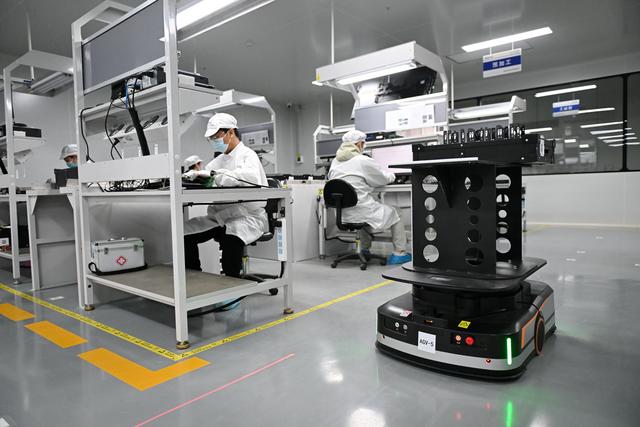
Core Insights - The successful launch of the Shanghai Airport-Suzhou Pre-Station marks a significant breakthrough in logistics for Suzhou, a major foreign trade city with an annual import and export value exceeding 2.6 trillion yuan [1][2] - The pre-station allows for "zero time difference" exports, enabling local companies to complete customs clearance and security checks without needing to transport goods to Shanghai [1][4] - The pre-station has already processed 295 export transactions, weighing 178.3 tons and valued at 11.84 million USD, serving 46 companies and exporting to 30 countries and regions [1] Logistics Efficiency - The pre-station reduces logistics time by 12 to 24 hours and lowers ground costs by 10% to 30% compared to traditional air freight processes [2][4] - Previously, the entire process from factory to airport took at least two to three days; now, it can be completed in one day at the pre-station [2][7] - The integration of a cross-regional intelligent supervision platform allows for "one-time inspection, two-location recognition," significantly improving efficiency [5][6] Technological Innovations - The pre-station employs advanced technologies such as real-time monitoring systems, GPS tracking, and AI-assisted inspection processes to enhance security and efficiency [6][8] - The use of "smart locks" and a dedicated fiber optic line connecting to Shanghai Airport's internal network ensures real-time data sharing and monitoring [5][6] Industry Impact - The pre-station is particularly beneficial for high-value sectors like biopharmaceuticals and integrated circuits, which require stringent temperature control and timely delivery [3][9] - Companies like Yikang Bio and Shengyi Technology have reported significant cost savings and reduced product loss due to the improved logistics processes [7][8] - The collaboration between Suzhou and Shanghai enhances the overall efficiency of the Yangtze River Delta's supply chain, fostering a more competitive environment for local businesses [9]
新加坡三季度增速回落复苏态势延续
Jing Ji Ri Bao· 2025-10-31 22:10
Economic Overview - Singapore's economy grew by 2.9% year-on-year in Q3 2025, a decrease from the revised 4.4% growth in Q2, but still above market expectations of 2% [1] - The quarterly seasonally adjusted growth was 1.3%, slightly lower than Q2's 1.5%, indicating a continued recovery trend [1] Sector Performance - Manufacturing sector growth was nearly stagnant in Q3, significantly down from 5.5% in Q2, primarily due to declines in biomedical manufacturing and general manufacturing output [1] - However, the manufacturing sector showed a positive change with a 6.1% quarter-on-quarter growth in Q3, indicating adaptation to market changes [1] Construction Industry - The construction industry experienced a 3.1% year-on-year growth in Q3, a significant slowdown compared to Q2 [2] - Despite growth from public and private sector construction, the industry faced short-term pressure with a 1.2% quarter-on-quarter contraction in Q3 [2] Services Sector - The services sector showed mixed performance, with wholesale and retail trade, and transportation and warehousing growing by 2.5% year-on-year, down from 4.9% in Q2 [2] - Core service sectors such as information and communication, finance and insurance, and professional services maintained robust growth at 4.4%, consistent with Q2's performance [2] Other Services - Other service sectors, including accommodation and food services, real estate, and administrative support, grew by 4.1% year-on-year, stable compared to Q2 [3] - The recovery of international tourist numbers significantly boosted the accommodation sector, supported by stable domestic consumption [3] Economic Outlook - Despite the resilience shown in Q3, global economic uncertainties remain a significant risk factor [3] - The Monetary Authority of Singapore decided to maintain the nominal effective exchange rate policy to balance potential inflation risks with economic growth uncertainties [3] - Long-term economic growth in Singapore will continue to be influenced by global economic conditions, trade tensions, and policy adjustments in major economies [3]
投资两家企业同日上市,武创投、武汉基金迎双喜
Sou Hu Cai Jing· 2025-10-29 10:53
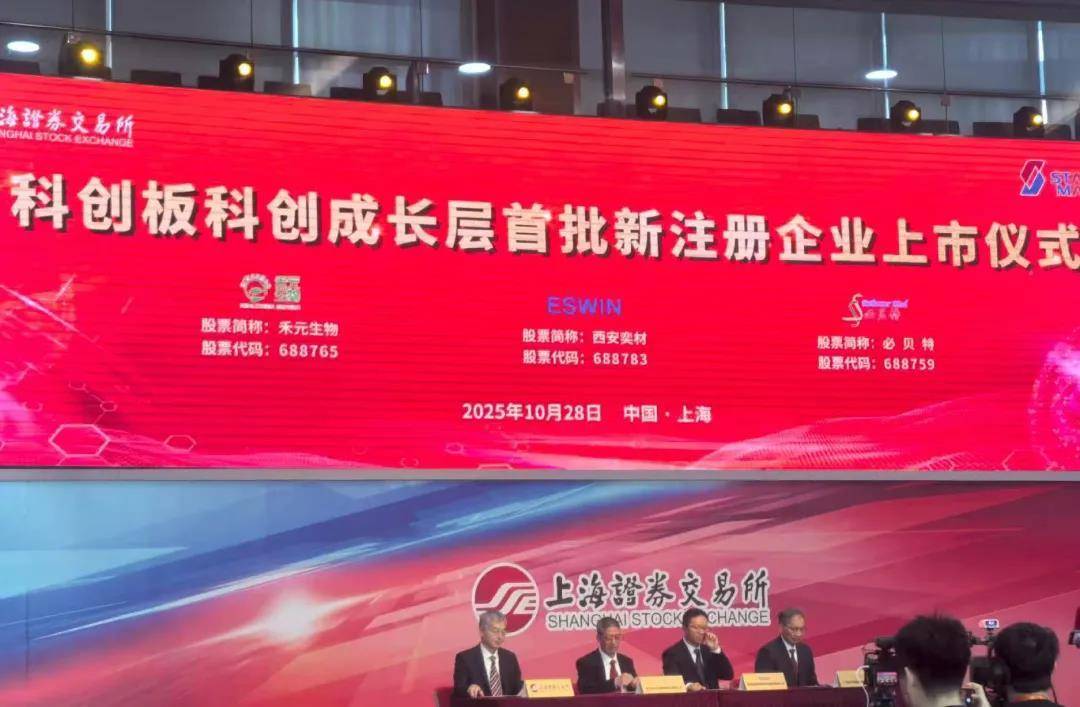
Core Insights - Two companies, He Yuan Bio and Xi'an Yicai, successfully listed on the Shanghai Stock Exchange's Sci-Tech Innovation Board, marking a significant achievement for Wu Chuang Investment and Wuhan Fund [1] Company Summaries - He Yuan Bio is the world's first innovative biopharmaceutical company to achieve "rice-based blood production," utilizing plant bioreactor technology to extract recombinant human serum albumin from rice endosperm cells, aiming to revolutionize the global albumin drug industry [3] - Xi'an Yicai is a leading company in the domestic 12-inch semiconductor silicon wafer sector, recognized for its differentiated technology and intellectual property, achieving significant product quality recognition from major chip manufacturers [3] Investment Activities - Wu Chuang Investment and Wuhan Fund have actively explored primary and secondary market investments, successfully supporting He Yuan Bio through multiple rounds of investment and participating in Xi'an Yicai's funding alongside deep collaboration with Yiswei Group [4] - The listing of He Yuan Bio and Xi'an Yicai represents the 86th and 87th companies that Wu Chuang Investment and Wuhan Fund have supported to go public, reflecting their commitment to supporting technological innovation in Wuhan [4] Future Plans - Wu Chuang Investment and Wuhan Fund plan to continue increasing support for cutting-edge technology fields such as new-generation information technology, artificial intelligence, and biotechnology, aiming to accelerate the transformation of scientific achievements into new industries and economic growth [4]
海南产经新观察:兴产业,儋州打造海南高质量发展“第三极”
Zhong Guo Xin Wen Wang· 2025-10-24 02:47
Core Viewpoint - Danzhou is striving to become the "third pole" of high-quality development in Hainan, leveraging its strategic position as a center for industry, port, and city integration within the Hainan Free Trade Port [1]. Group 1: Economic Development Initiatives - Danzhou has signed 102 industrial projects this year, with fixed asset investments amounting to approximately 38.3 billion yuan [1]. - During the recent 2025 China Industrial Transfer Development Docking event, Danzhou secured 10 landmark projects, enhancing its economic development momentum [1]. Group 2: Industry-Specific Developments - In the petrochemical and new materials sector, Danzhou has successfully attracted several projects to the Yangpu Chemical Park, including a 2 million-ton asphalt project and a 100,000-ton/year POE new materials project [3]. - The city is focusing on building a complete offshore wind power and equipment manufacturing industry chain, supported by its port advantages to target the Southeast Asian renewable energy market [4]. - Danzhou has established the first digital processing trade zone in the country, with significant projects like the Runze International Information Port Smart Computing Center attracting major digital trade enterprises [5]. - In the health food sector, Danzhou is leveraging tax incentives to attract various health food companies, enhancing its local food industry [5]. - The biopharmaceutical industry is also being developed, with a special plan in place to establish a core base for pharmaceutical raw materials, attracting several pharmaceutical projects [5]. Group 3: Strategic Focus - Danzhou aims to continue attracting high-quality projects that align with the policies of the Hainan Free Trade Port and support the development of strategic emerging industries such as new energy, new materials, digital economy, and biomedicine [6].
