私募投资

Search documents
量化私募锐天投资否认欠税:公司在国家税务系统中无任何欠税记录
Xin Lang Cai Jing· 2026-01-15 14:19
Core Viewpoint - Shanghai Ruitian Investment Management Co., Ltd., a quantitative private equity firm, has confirmed that it has no tax arrears as of January 14, 2026, supported by an official "No Tax Arrears Certificate" issued by the local tax authority [1] Group 1 - The company has received a formal certificate from the Shanghai Chongming District Taxation Bureau, indicating that there are no tax arrears in the national tax system [1] - The certificate explicitly states that "no tax arrears have been found in the tax collection and management information system" [1] - The company emphasizes its commitment to compliance with national laws and regulations, operating with integrity and paying taxes in accordance with the law [1]
上海杏泽旗下产品投资实控人婆婆公司 被中基协警告
Xi Niu Cai Jing· 2026-01-09 03:44
Group 1 - The China Securities Investment Fund Association (CSRC) issued a disciplinary decision against Shanghai Xingze Investment Management Co., Ltd. on December 31, 2025 [2] - Shanghai Xingze was found to have violated regulations by failing to fully disclose significant information affecting investor interests and inadequately fulfilling the obligation to confirm qualified investors [3] - The fund "Shanghai Xingze Xinghe Venture Capital Center (Limited Partnership)" was established in March 2017, and in January 2018, it was revealed that certain shareholders had invested in a technology company, but critical relationships were not disclosed [3][4] Group 2 - Shanghai Xingze did not disclose that its actual controller and legal representative, Liu Wenyi, is married to a committee member, which is a significant relationship affecting investment decisions [4] - There were also issues with some investors not meeting the minimum net asset requirement of 10 million yuan, violating regulations [4] - The CSRC emphasized that the familial relationship between Liu Wenyi and the technology company's shareholders should have been fully disclosed, and the defense provided by Shanghai Xingze regarding public knowledge of the relationship was insufficient [4][5]


四个关键词:私募眼中的2026
Shang Hai Zheng Quan Bao· 2026-01-05 18:28
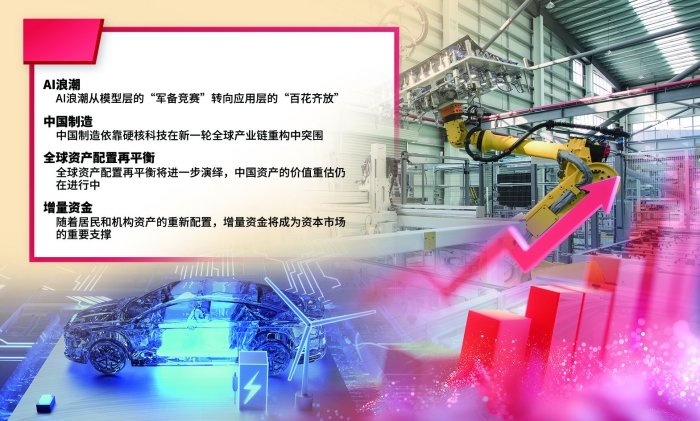
Group 1: Core Insights - Private equity firms are focusing on long-term growth logic for 2026, with a consensus emerging around the AI wave transitioning from a "arms race" at the model level to a "blooming" application level [2] - The restructuring of global supply chains is benefiting Chinese manufacturing, which is leveraging hard technology to break through in this new environment [2] - The rebalancing of global asset allocation is expected to continue, with a reassessment of the value of Chinese assets ongoing [2] Group 2: AI Wave - AI remains a critical area for investment, with firms like Jinglin Asset emphasizing that companies lacking AI capabilities may be marginalized [3] - The AI sector, particularly in areas like autonomous driving and AI healthcare, is anticipated to present significant long-term opportunities in 2026 [3][4] - The proliferation of AI smartphones and AI glasses is expected, although challenges such as user privacy and technical issues need to be addressed [4] Group 3: Chinese Manufacturing - Chinese manufacturing is a key investment focus for private equity in 2026, with firms like Dushuquan highlighting the competitive edge of Chinese manufacturers in the global market [5] - The export performance of Chinese manufacturing in 2025 exceeded market expectations, indicating strong competitiveness in various sectors [5] - The potential for Chinese manufacturers to apply domestic management experience abroad is seen as a long-term growth strategy [5] Group 4: Global Asset Allocation Rebalancing - There is a noticeable shift among international institutional investors towards increasing allocations to Chinese assets, driven by a recognition of China's competitive strengths [6] - The Chinese stock market is transitioning from a cautious investment perception to one viewed as having strategic allocation value [6] Group 5: Incremental Capital - The reallocation of assets by residents and institutions is expected to support structural market trends in 2026, with high-net-worth individuals and insurance funds leading this shift [7] - A significant amount of long-term deposits accumulated since 2022 is expected to flow into the stock market through various channels, providing substantial incremental capital [7] - The demand for equity asset allocation is recovering, supported by a low-interest-rate environment, which is likely to enhance market liquidity [7]
四川双马20260105
2026-01-05 15:42
Summary of Sichuan Shuangma Conference Call Company Overview - Sichuan Shuangma has transformed from a single cement enterprise to a dual-main business company focusing on equity investment and biomedicine, continuously divesting cement assets and actively entering the biomedicine sector through acquisitions like Shenzhen Jianyuan and participation in the acquisition of Wuxi Shengji [2][5]. Core Business Structure - The company's main business structure is divided into three parts: private equity investment (approximately 30% of revenue), biomedicine (approximately 28%), and cement/building materials (approximately 42%) by 2025. The profit contribution from private equity investment is expected to reach around 90%, while the remaining profit will mainly come from biomedicine, with the cement business being flat or slightly loss-making [3]. Financial Projections - Revenue projections for 2025, 2026, and 2027 are expected to be CNY 1.455 billion, CNY 1.802 billion, and CNY 2.587 billion, representing year-on-year growth of 35.37%, 23.85%, and 43.58% respectively. Net profit attributable to the parent company is projected to be CNY 491 million, CNY 1.132 billion, and CNY 1.475 billion, with growth rates of 58.32%, 131.03%, and 30.32% respectively [2][9]. Investment and Growth Strategy - The company has a strong focus on biomedicine as its second main business, with significant acquisitions aimed at accelerating its presence in the sector. The acquisition of Shenzhen Jianyuan for CNY 1.6 billion and participation in the acquisition of Wuxi Shengji are key steps in this strategy [5][8]. Market Perception and Valuation - The market perceives uncertainty regarding the company's equity investment business, particularly due to the low current contribution of the biomedicine sector to overall revenue and profit. Concerns include potential declines in management fee income as the first batch of funds enters the exit phase and the uncertain scale and timing of excess return realizations [2][6]. Value Reassessment Opportunities - There is a belief that Sichuan Shuangma has opportunities for value reassessment due to the high certainty of cash returns from its equity investment business. IDG Capital's strong investment management capabilities and the successful IPOs of several hard-tech projects are expected to provide substantial cash returns, estimated at CNY 10.4 billion from two managed funds [7][9]. Historical Context and Strategic Shift - The entry of IDG in 2016 marked a significant shift for Sichuan Shuangma, transitioning from a cement-focused company to one that also manages equity funds. The company has been divesting outdated cement assets since 2017, with only one cement plant remaining as of 2024 [4]. Conclusion - Sichuan Shuangma's strategic focus on biomedicine and equity investment, combined with strong projected financial growth and potential for value reassessment, positions the company favorably for future performance despite current market uncertainties [2][7].

研报掘金丨浙商证券:首予四川双马“买入”评级,科技投资+医药制造一体两翼
Ge Long Hui A P P· 2026-01-04 07:32
Group 1 - The core viewpoint of the report is that Sichuan Shuangma Technology is positioned for significant growth in the investment and pharmaceutical manufacturing sectors, indicating a potential rise for the technology leader [1] Group 2 - In the private equity investment management business, the company estimates a conservative valuation based on future fund exits, projecting a total cash return of 10.4 billion yuan from the management of funds such as Hexie Jinyu and Hexie Jinhong over the next 2-3 years, assuming a total investment return of 3 times [1] Group 3 - For the biopharmaceutical business, comparable companies include ST Nuotai, Shengnuo Biotech, and Hanyu Pharmaceutical, with average valuation multiples projected at 25x, 21x, and 17x for the years 2025-2027 [1] - The estimated price-to-earnings (PE) ratios for the company are projected to be 39x, 17x, and 13x for the years 2025-2027, based on the closing price on December 31, 2025 [1] - The report initiates coverage with a "Buy" rating for the company [1]

上市公司买私募基金被骗?圣元环保大牛市6000万理财一周亏近70%,实控人紧急承诺兜底
市值风云· 2025-12-30 10:11
Core Viewpoint - The article highlights the increasing number of companies facing serious issues such as information disclosure violations, legal actions, and significant investment losses as the year ends, urging investors to remain vigilant [3][7]. Group 1: Company Issues - Shengyuan Environmental Protection announced a significant loss from a private equity fund investment, with a net value drop from 0.9215 to 0.2596 within a week, indicating a nearly 70% loss [8]. - The private equity fund's net value showed a cumulative decline of 74.04%, raising concerns about the fund's management and potential fraudulent activities [9]. - The company’s financial report indicates that the investment in this private equity fund accounted for 80% of its total trading financial assets, highlighting a risky concentration in a single investment [9]. Group 2: Financial Data - As of September 30, 2025, the trading financial assets were valued at approximately 76.20 million, which drastically decreased to about 4.95 million by December 31, 2024, reflecting a 1440.13% change due to increased investment in financial products [10]. - Other financial metrics showed significant changes, such as prepayments increasing by 87.85% and other receivables rising by 204.05%, indicating a shift in the company's financial management [10]. Group 3: Market Sentiment and Warnings - The article warns investors about the risks associated with small-cap stocks, emphasizing the potential for unexpected risks and information asymmetry that can lead to substantial losses [16]. - It also highlights the mixed quality of the private equity industry, advising investors to exercise caution and diligence in their investment decisions [16].


东方明珠拟出资5000万元参与设立专项投资基金
Zhi Tong Cai Jing· 2025-12-26 12:38
Core Viewpoint - Dongfang Mingzhu (600637.SH) announced the establishment of the Yangtze River Delta Digital Cultural Industry Private Investment Fund with a total fund size of 10 billion yuan, focusing on AI technology and cultural integration [1] Group 1: Fund Details - The fund is set to have a total scale of 10 billion yuan, with an initial target subscription amount of 3.003 billion yuan [1] - Dongfang Mingzhu plans to contribute 50 million yuan as a limited partner, with an initial investment of 25 million yuan [1] Group 2: Investment Focus - The investment fund will primarily focus on core digital cultural technology industries driven by artificial intelligence (AI) and the integration of "AI+" and "Culture+" [1]

震荡市里,谁在悄悄跑赢?—CTA策略的配置价值再现
私募排排网· 2025-12-26 00:00
Core Viewpoint - The equity market has shifted to a high volatility and weak trend oscillation pattern since the third quarter, leading to reduced profitability for investors, highlighting the increased value of CTA strategies that can participate in multiple assets and directions [2] Market Environment - The recent trend characteristics of the equity market are weakening, with major indices like the Shanghai Composite and CSI 300 showing increased volatility since September, indicating a lack of consistent upward movement [8] - The commodity market is experiencing significant differentiation, with certain commodities like gold, silver, lithium carbonate, and copper showing clear upward trends despite overall limited gains in commodity indices [10][11] CTA Strategy Performance - Historical data indicates that CTA strategies provide stable and independent returns across various market environments, particularly excelling in years when equity and commodity performances are weak [16][19] - In years of strong equity performance, such as 2017, 2019, and 2020, CTA strategies performed well but were not the top performers, serving as a complementary strategy to equity assets [17][18] CTA Strategy Characteristics - In 2025, CTA strategies are expected to operate in an environment characterized by trends and volatility, with potential for structural trends in the commodity market due to global liquidity conditions and geopolitical factors [23] - The correlation of CTA strategies with equity indices is relatively low, indicating their role as stabilizers in asset allocation, providing positive contributions without significantly increasing portfolio correlation [22]
上海张江高科技园区开发股份有限公司 关于参与设立的上海元界智能科技股权投资基金合伙企业 (有限合伙)的变更公告
Zhong Guo Zheng Quan Bao - Zhong Zheng Wang· 2025-12-24 06:16
Group 1 - The company, Shanghai Zhangjiang Hi-Tech Park Development Co., Ltd., has partnered with SAIC Motor Corporation and Hengxu Capital to establish the "Yuanjie Fund" with a total investment of RMB 7.2 billion, aimed at high-end smart electric vehicle projects [1][2] - The company holds a 25% stake in the Yuanjie Fund, contributing RMB 1.8 billion, while SAIC Motor holds 74.986% with an investment of RMB 5.399 billion [1] - The Yuanjie Fund has signed an investment agreement with Zhiji Motor Technology Co., Ltd., committing to invest RMB 7.2 billion, which corresponds to the registered capital of Zhiji Motor [2] Group 2 - SAIC Motor plans to simplify its shareholding structure in Zhiji Motor by directly holding shares instead of through the Yuanjie Fund, resulting in a distribution of RMB 5.399 billion in registered capital to SAIC Motor [3] - Following this change, the Yuanjie Fund's total investment will decrease from RMB 7.2 billion to RMB 1.801 billion, and Hengxu Capital will transfer its entire stake to a designated company [3][4] - The Yuanjie Fund will continue to operate as a limited partnership with a focus on equity investment, with a duration of nine years, including three years for investment and four years for management exit [4][6] Group 3 - The company will see an increase of RMB 1 million in its investment in Zhiji Motor following the adjustments to the Yuanjie Fund, with no significant impact on its financial or operational status [7] - The management of the Yuanjie Fund will be entrusted to Shanghai Zhangjiang Haokai Venture Capital Co., Ltd., which will oversee investment decisions and due diligence processes [6]


长飞光纤光缆(06869)子公司拟参与设立投资基金
智通财经网· 2025-12-19 12:35
Core Viewpoint - Changfei Fiber Optics (06869) is engaging in a partnership with several investment firms to subscribe to the Shanghai M&A Fund Phase III, aiming to enhance its market position through strategic investments in key industries supported by national policies [1][2]. Group 1: Investment Details - Changfei Capital and Changxin Bochuang plan to sign a partnership agreement for the Shanghai M&A Fund Phase III, with a total committed capital of RMB 830 million [1]. - Changfei Capital intends to invest RMB 60 million, representing 7.23% of the total fund, while Changxin Bochuang plans to invest RMB 40 million, accounting for 4.82% of the total fund [1]. Group 2: Investment Focus - The Shanghai M&A Fund Phase III primarily targets mergers and acquisitions in high-end manufacturing, integrated circuits, new materials, new energy, and information technology sectors, which are supported by national policies [2]. - The investment aims to leverage the resources and advantages of professional investment institutions to broaden investment channels and strengthen the company's market position [2].