虚拟现实

Search documents
米哈游双公司港股上市!揭秘游戏巨头的资本版图,青岛学到什么?
Sou Hu Cai Jing· 2026-01-16 14:37
Group 1 - The core focus of the article is on miHoYo's strategic investments and its dual role as both an investor and a client in the gaming and technology sectors [2][3] - miHoYo holds 7.34% of MiniMax, an AI company that provides technology for intelligent NPCs and scene generation in games, showcasing its investment and client relationship [5] - miHoYo also owns 11.86% of Suplay, which sells merchandise related to miHoYo's IP, indicating a strategy of leveraging investments to enhance its own product distribution [5][7] Group 2 - miHoYo has expanded its investment portfolio beyond gaming, venturing into AI, XR, nuclear fusion, and brain-computer interfaces, reflecting a significant shift in its business model [7][9] - The company was founded in 2011 by Cai Haoyu and has grown to become the highest-grossing game company globally (excluding the Chinese market) by 2021, with a valuation of 1.75 trillion [9][12] - The article highlights the collaboration between miHoYo and Qingdao through the "Qingdao Tongge Phase I" fund, which focuses on investing in hard technology sectors like integrated circuits and virtual reality [12][14] Group 3 - Qingdao's VR industry has lagged behind other cities, despite its historical prominence, with only one company making it to the top 50 VR companies in 2025 [14][16] - The article suggests that Qingdao can learn from miHoYo's success by fostering professional investment institutions and attracting talent to enhance its industrial development [16][20] - It emphasizes the importance of aligning investment strategies with emerging sectors and ensuring a robust supply chain to retain businesses [22][24]


曾经盛极一时的VR、元宇宙,现在怎么样了?
Feng Huang Wang· 2026-01-15 10:47
Core Insights - Meta has conducted a new round of layoffs, affecting over 1,000 employees, primarily in the Reality Labs department responsible for VR/AR hardware and metaverse projects [1][2][4] - The company is shifting its focus from the ambitious metaverse vision to more practical applications like AI smart glasses, indicating a strategic retreat from its previous investments in immersive digital environments [2][4][12] - The metaverse, once seen as the future of interaction, is now viewed as a failed concept, with significant financial losses reported in Meta's metaverse initiatives [3][7][11] Company Strategy - Meta's layoffs represent a significant strategic withdrawal from the metaverse vision that CEO Mark Zuckerberg has promoted since 2014, with plans to cut about 10% of the Reality Labs workforce, which consists of approximately 15,000 employees [4][12] - The company has invested heavily in the metaverse, with losses exceeding $60 billion since 2020, and Reality Labs alone has accumulated losses of over $70 billion since 2021 [7][12] - The focus is now on developing AI technologies and products, with plans to produce over 10 million AI glasses by 2026, reflecting a shift in priorities towards more immediate technological advancements [14][16] Industry Trends - The concept of the metaverse is being redefined, with Gartner predicting that by 2026, 30% of organizations will be ready with products and services for the metaverse [14] - The competition is shifting from VR to mixed reality (MR) and lightweight AI glasses, with major companies like Meta and ByteDance entering the market with new products [14][15] - The industry is witnessing a consolidation of efforts towards AI integration, with Meta establishing a new department called "Meta Computing" to enhance its infrastructure and capabilities in AI [16][17]

Meta元宇宙部门狂裁千人:一醒来就收到邮件,刚入职也未能幸免
猿大侠· 2026-01-15 04:11
Core Viewpoint - Meta is significantly downsizing its metaverse operations by cutting over 1,000 jobs in the Reality Labs division, marking a strategic shift towards AI and wearable technology [2][6][31]. Group 1: Job Cuts and Resource Reallocation - Meta is laying off approximately 10% of its Reality Labs employees, which translates to over 1,000 positions being eliminated [6]. - The resources saved from these layoffs will be redirected towards emerging fields such as AI hardware and wearable devices [4][31]. - The layoffs were unexpected for many employees, including those who had recently joined the company [7][9]. Group 2: Changes in VR Strategy - Meta has closed three notable VR game studios, indicating a fundamental shift in its VR content strategy [12]. - The VR fitness app Supernatural will halt new content development, focusing only on maintaining existing operations [13]. - The company will pivot from heavy in-house content development to relying on third-party developers and partners, aiming to reduce costs and market risks [13]. Group 3: Financial Context and Strategic Shift - Reality Labs has incurred cumulative losses exceeding $70 billion since 2021, prompting the need for financial restructuring [20]. - The unexpected market success of Ray-Ban Meta smart glasses has influenced the reallocation of resources towards more profitable ventures [21]. - The competitive landscape has changed, with other companies like Microsoft and Disney scaling back their metaverse initiatives, leaving Meta to bear the market education costs alone [26]. Group 4: Focus on AI and Infrastructure - Meta is shifting its focus from the metaverse to AI, with AGI being identified as a core future goal [31]. - A new department called "Meta Computing" has been established to oversee the company's infrastructure development [31]. - The integration of generative AI technology into existing applications aims to enhance advertising efficiency and provide stable cash flow for future investments [32]. Group 5: Hardware and User Interaction Changes - The positioning of hardware has fundamentally changed, with smart glasses being redefined as AI assistants [34]. - Meta is moving away from traditional VR interactions to a new standard based on visual recognition and voice commands [35]. - The goal is to create a wearable AI assistant that users can interact with naturally, without manual input [36].

放弃元宇宙?Meta大幅削减VR业务岗位,全力转向AI
Zheng Quan Shi Bao Wang· 2026-01-14 13:14
Core Viewpoint - Meta's ambitious shift from Facebook to Meta, focusing on the Metaverse, has resulted in significant financial losses and layoffs, prompting a strategic pivot towards artificial intelligence (AI) and wearable technology, particularly smart glasses [1][4][6]. Group 1: VR Business and Layoffs - Meta has initiated layoffs affecting over 1,000 employees in its Reality Labs department, marking a significant reduction in its Metaverse ambitions and a shift towards AI [2][4]. - The layoffs include the closure of several VR content development studios, such as Armature Studio and Twisted Pixel, as part of a resource reallocation strategy [2][3]. - Horizon Worlds, Meta's virtual social network, has struggled with low user engagement, prompting the company to focus on mobile experiences and attract developers from successful platforms like Roblox [3][4]. Group 2: Financial Performance and Strategic Shift - Since late 2020, Reality Labs has incurred over $70 billion in losses, with a recent quarterly revenue of $470 million against a loss of $4.4 billion [4][6]. - Meta's strategic pivot towards AI is driven by the underperformance of its VR business and the rapid growth of mobile gaming, leading to a reassessment of its business direction [4][6]. Group 3: Investment in AI - Meta plans to invest significantly in AI, with a capital expenditure increase to $70-72 billion for 2025 and expectations for further expansion in 2026 [7]. - The company has made substantial acquisitions, including a $14.3 billion purchase of Scale AI, to bolster its AI capabilities [6][7]. - Despite heavy investments, Meta's AI models have not yet achieved competitive performance compared to industry leaders like Google and OpenAI, leading to internal disputes regarding the AI strategy [7][8]. Group 4: Smart Glasses as a Highlight - Meta's smart glasses, developed in partnership with Essilor Luxottica, have gained significant market traction, with a projected production capacity increase to 20 million units by the end of 2026 [8][9]. - The smart glasses feature advanced functionalities such as navigation, real-time translation, and video calls, positioning them as a key product in Meta's portfolio [8][9]. - Meta holds a dominant market share of approximately 73% in the smart glasses segment, with expectations for substantial growth in the coming years [8].
今年北京石景山力争数字经济核心产业收入达2200亿元
Zhong Guo Xin Wen Wang· 2026-01-13 10:23
Core Viewpoint - Beijing's Shijingshan District aims to strengthen its digital economy and modern finance sectors, targeting a core industry revenue of 220 billion yuan in the digital economy by 2026 [1][2] Group 1: Digital Economy Development - The district plans to establish the first phase of the Super Intelligent Computing AI Innovation Demonstration Park and accelerate the construction of a data foundation system [1] - The core revenue of the digital economy is expected to grow by 18% [2] - The district's unique industry clusters, including AI, sci-fi games, industrial internet, and virtual reality, are projected to generate over 84 billion yuan in total revenue [2] Group 2: Talent and Innovation - The district will focus on attracting technology leaders and innovation teams, enhancing the integration of education, technology, and talent development [1] - Plans include the establishment of at least 20 AI innovation laboratories and the construction of a national primary and secondary school science education experimental area [1] - Collaboration with institutions like Harbin Institute of Technology and Tsinghua University will be pursued to strengthen research and innovation [1] Group 3: Industrial Infrastructure - The district will develop six specialized parks, including an AI industry cluster and a sci-fi game industry cluster, to enhance its modern industrial system [1] - The layout of industrial functional areas will be optimized, expanding from the Shougang Park [1] - The district aims to build the largest humanoid robot data training center in the country, with future industries expected to achieve 8 billion yuan in revenue [2]
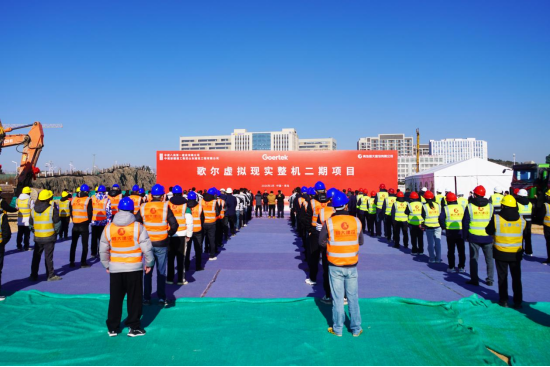
计划总投资16亿元,歌尔虚拟现实整机二期项目开工
Qi Lu Wan Bao· 2026-01-09 06:27
Group 1 - The project for the second phase of Goer’s virtual reality complete machine officially commenced on January 8, with a total investment of 1.6 billion yuan and an expected completion date in 2027 [1][3] - The project will cover a total construction area of 228,000 square meters and will include three factories and an administrative center, aimed at producing virtual reality complete machines, AI smart glasses, and core components [3][5] - Upon reaching full production by 2030, the project is expected to generate an annual output value exceeding 10 billion yuan and tax revenue of over 150 million yuan [3][5] Group 2 - This initiative follows the first phase of the virtual reality complete machine and optical module projects, marking another significant industrial layout for Goer in Laoshan [3][7] - The first phase of the project involved a total investment of 6 billion yuan, covering an area of 214 acres and a planned construction area of 350,000 square meters, with production expected to commence in 2027 [7] - The collaboration between China State Construction Engineering Corporation and Goer represents a deepening strategic partnership in the fields of virtual reality and smart hardware, contributing to Goer’s competitive positioning in the global VR industry [5]

潍坊马上红: 产业骏马齐奔腾,潍坊双向赋能启新程
Xin Lang Cai Jing· 2026-01-02 02:41
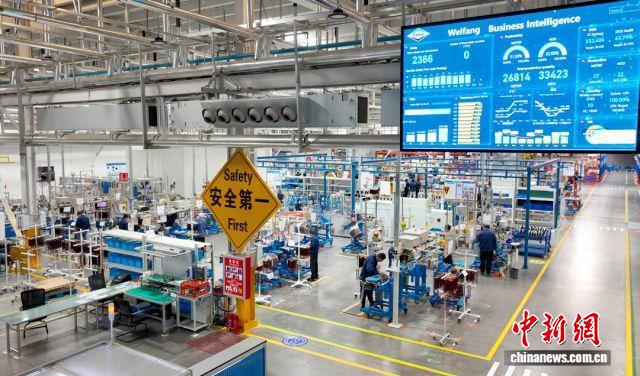
Core Viewpoint - Weifang is poised to become a trillion-yuan city during the "15th Five-Year Plan" period, aiming to establish itself as a significant economic growth hub in northern China and a model for the integration of modern agriculture and advanced manufacturing [1][12]. Group 1: Economic Development Goals - Weifang aims to enter the ranks of trillion-yuan cities and become a regional sub-center city during the "15th Five-Year Plan" [1]. - The city is focusing on becoming a national model for the integration of modern agriculture and advanced manufacturing [1][12]. Group 2: Advanced Manufacturing Growth - Weifang's high-tech output in its high-tech zone reached 90.9%, with R&D investment accounting for 7.4% of GDP [5]. - The city has established four trillion-yuan industrial clusters in power equipment, new-generation information technology, food industry, and high-end chemicals [5]. - Weifang has been recognized as a top 100 park for high-quality development and advanced manufacturing [5]. Group 3: Agricultural Innovation - Weifang has developed advanced agricultural technologies, including AI systems for real-time monitoring and optimization of crop growth [9]. - The city has achieved a significant reduction in reliance on imported vegetable seeds, moving from 70% dependence to 70% self-research [10]. - Weifang is recognized as a national model city for modern facility agriculture, with a focus on technological innovation in agriculture [10]. Group 4: Talent and Innovation Ecosystem - The city has established long-term cooperation mechanisms with numerous research institutions and universities, enhancing the talent pool in high-tech sectors [6]. - Weifang has 2,239 high-tech enterprises and 4,036 technology-based SMEs, with high-tech industries accounting for 61.39% of the city's output [6]. Group 5: Future Development Plans - The city plans to accelerate project construction and improve the business environment, focusing on rural revitalization, urban renewal, and marine economy [11]. - Weifang aims to strengthen its position as a national agricultural modernization model and a city of advanced manufacturing during the "15th Five-Year Plan" [12][13].

探访潍坊综合保税区:链接全球 蓄势赋能
Zhong Guo Xin Wen Wang· 2025-12-31 06:29
Core Viewpoint - Weifang Comprehensive Bonded Zone aims to become a trillion-level city and a significant economic growth pole in northern Shandong, focusing on high-level openness and high-quality development [1]. Group 1: Industrial Support - The Weifang Comprehensive Bonded Zone is positioned as an "open-type industrial agglomeration area," focusing on core industries such as virtual reality, intelligent manufacturing of automotive equipment, new materials, and bonded processing of imported grain and oil [2]. - The high-tech industry accounts for over 90% of the output value in the bonded zone, with a notable transformation from "single champions" to "industrial clusters" [3]. Group 2: Cross-Border Trade - The bonded zone employs a "cross-border e-commerce + industrial belt" model, creating a full-chain platform for incubation, rapid customs clearance, and exhibition sales, enhancing the "cross-border e-commerce looks at bonded" brand [4]. - The TIR "China-Russia" international road transport customs clearance business was successfully implemented, with TIR business import and export value accounting for over 70% of Weifang's total [4]. Group 3: Logistics and Consumption - The international logistics channels have fostered diverse cross-border consumption new formats, with over 10,000 imported products showcased in the "Weifang Imported Goods Purchase" exhibition center [6]. - The bonded zone has established a comprehensive service center for enterprises, streamlining 296 service items for foreign trade enterprises, significantly reducing processing times [7][10]. Group 4: Open Environment - The bonded zone is committed to building a multi-dimensional open channel system, enhancing the efficiency of customs clearance through innovative mechanisms and integrated service models [11]. - The implementation of smart supervision and pre-inspection has improved the efficiency of customs clearance, allowing goods to be dispatched on the same day, saving 1-3 days for overseas consumers [11].
浙江科技创新:从“小龙叙事”走向“万马奔腾”
Zhong Guo Xin Wen Wang· 2025-12-28 15:20
Core Insights - Zhejiang province is experiencing a significant transformation in its technology innovation narrative, highlighted by the emergence of the "Hangzhou Six Little Dragons" and a focus on nurturing more tech-driven enterprises [1][3] Group 1: Technology Innovation and Growth - The "Hangzhou Six Little Dragons" have gained recognition, with three of these companies initiating their listing processes, showcasing a new growth trajectory for Chinese tech firms amid a technological revolution [1][2] - In the AR industry, Lingban Technology's Rokid Glasses sold 40,000 units within five days of pre-sale, doubling the sales of AI glasses in China for the first half of the year [2] - Zhejiang's AI core industry generated revenues of 494.4 billion yuan, reflecting a 22% year-on-year growth, with R&D expenses increasing by 14% [2] Group 2: Policy and Support Mechanisms - The Zhejiang government is actively fostering an environment for tech innovation by implementing various support measures, including a "sailing action" for 96 selected tech enterprises, providing policy support and expert guidance [3][4] - The province is promoting collaborative models such as "use first, transfer later" and "open licensing" to accelerate the commercialization of patents [3] - A new insurance scheme for technology transfer costs has been introduced, providing financial support for startups in the AI sector [5] Group 3: Future Development Plans - Zhejiang aims to cultivate a gradient system of quality enterprises, from small tech firms to world-class companies, as part of its 2025-2027 action plan [5][6] - The province's goal is to increase total innovation investment to over 800 billion yuan by 2026, with a research and development intensity target of 3.35% [6] - The emphasis on creating a favorable innovation ecosystem is expected to enhance Zhejiang's competitiveness and attract more talent and investment [4][6]
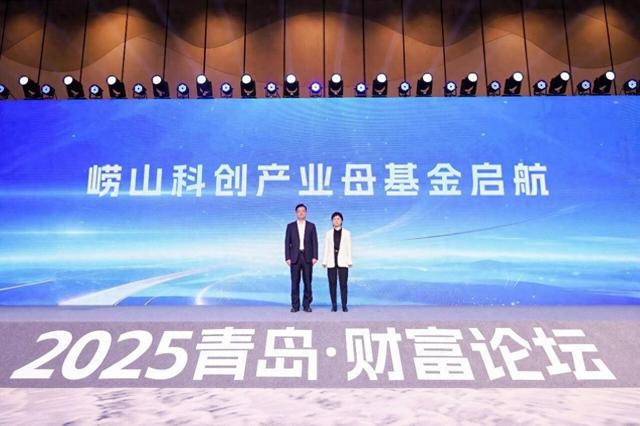
崂山组建科创产业母基金,护航“科创大走廊”建设和科创产业发展
Xin Lang Cai Jing· 2025-12-28 08:05
Group 1 - The establishment of the Laoshan Science and Technology Innovation Industry Fund, with a scale of 3 billion yuan, aims to invest in sectors such as virtual reality, artificial intelligence, marine biomedicine, intelligent manufacturing, and industrial internet [2] - The fund will adopt a "mother fund + market-oriented sub-fund group" model to stimulate social capital participation and build a stable, controllable long-term capital pool for nurturing quality projects [2] - Laoshan District is recognized as a hub for high-tech enterprises, housing 920 high-tech companies and 28 national-level specialized "little giant" enterprises, with emerging industries like virtual reality and artificial intelligence rapidly developing [4] Group 2 - The financial sector in Laoshan is robust, with over 1,500 financial and quasi-financial enterprises in the Jinjialing Financial District, a loan scale of 660 billion yuan, and wealth management products totaling 2.2 trillion yuan [4] - The district has established a "technology-industry-finance" interaction model, providing comprehensive financial services for cutting-edge sectors like lithium battery recycling and lidar technology [8] - The government and market work in tandem to optimize resource allocation, promoting a win-win scenario for finance and technology through risk-sharing and benefit-sharing [8]