量子技术

Search documents
国盾量子董事长离世 合肥警方通报“已排除案件”
2 1 Shi Ji Jing Ji Bao Dao· 2025-12-18 15:51
12月18日晚间,国盾量子(688027)公告,公司董事长吕品不幸逝世。 特此公告。 公告表示,吕品于2025年5月起担任公司董事长,并担任战略与投资委员会主任委员、薪酬与考核委员会委员。 公告称,截至本公告披露日,吕品不持有公司股票,亦不存在应当履行而未履行的股份锁定承诺。 公告还称,吕品的离世不会导致公司董事会成员人数低于法定人数,不会影响公司董事会的正常运作。公司经营 管理团队正常履职,公司将根据有关法律法规和《公司章程》的规定,尽快完成董事补选及董事长选举的相关工 作,并及时履行信息披露义务。 证券简称:国盾量子 证券代码:688027 公告编号:2025-074 科大国盾量子技术股份有限公司 关于公司董事长逝世的公告 本公司董事会及全体董事保证本公告内容不存在任何虚假记载、误导性陈述 或者重大遗漏,并对其内容的真实性、准确性和完整性承担法律责任。 科大国盾量子技术股份有限公司(以下简称"公司")董事会沉痛公告,公 司董事长吕品先生不幸逝世。 吕品先生于 2025年5月起担任公司董事长,并担任战略与投资委员会主任 委员、薪酬与考核委员会委员。公司及公司董事会对吕品先生的逝世表示沉痛哀 悼并向其家属表达 ...


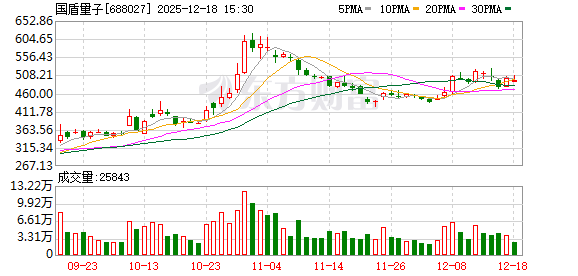
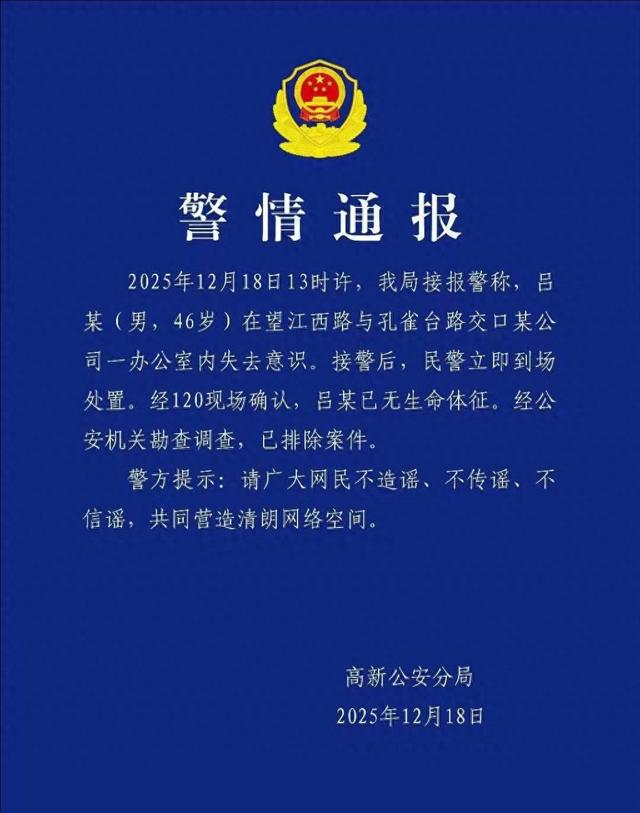
国盾量子董事长逝世,合肥警方通报:经勘查调查,已排除案件
Xin Lang Cai Jing· 2025-12-18 14:48
12月18日晚间,科大国盾量子技术股份有限公司(688027)公告,公司董事长吕品不幸逝世。 12月18日晚间,合肥高新公安分局发布警情通报。通报称:2025年12月18日13时许,我局接报警称,吕 某(男,46岁)在望江西路与孔雀台路交口某公司一办公室内失去意识。接警后,民警立即到场处置。经 120现场确认,吕某已无生命体征。经公安机关勘查调查,已排除案件。 对此,国盾量子办公楼所在园区中安创谷科技园的工作人员对智通财经记者确认,当天下午确实园区内 发生了事件。 智通财经记者 秦盛 据公开资料显示,吕品1979年生,2025年5月任国盾量子董事长;历任中国电信集团有限公司市场部副 总经理,中国电信股份有限公司市场部副总经理,中国电信股份有限公司安徽分公司副总经理、党委委 员,中国电信集团有限公司安徽分公司副总经理;现任中电信量子信息科技集团有限公司董事长、党委 书记,中电信量子科技有限公司董事长。 截至发稿,国盾量子方面尚未对记者就此事作出回应。 ...
2025年我国牵头制定国际标准275项
中国能源报· 2025-12-16 11:36
Group 1 - The core viewpoint of the article highlights China's leadership in setting international standards, with a target of establishing 275 standards by 2025 and proposing 459 new international standard proposals [1] - In the fourth quarter alone, China has led the release of 38 international standards in key areas such as 5G, semiconductors, new energy, and aerospace [1] - Additionally, there are 60 new proposals aimed at cutting-edge technologies like quantum technology and AI [1] Group 2 - The State Administration for Market Regulation will initiate a "National Standard Construction Special Action for Artificial Intelligence" in collaboration with relevant departments [1]

国家市场监督管理总局将启动“人工智能百项国家标准建设专项行动”
Zheng Quan Ri Bao Wang· 2025-12-16 11:25
Core Viewpoint - The National Market Supervision Administration (NMSA) is focusing on enhancing the regulatory environment and responding to public expectations through a series of new regulations and standards aimed at various sectors, including finance, food safety, and technology [1][2]. Group 1: Regulatory Developments - The NMSA has introduced the "Credit Repair Management Measures" to establish a more scientific credit repair mechanism [1]. - A "Guideline for Enforcement of Commercial Bank Charging Behavior" has been released to standardize bank fees and reduce financing costs for enterprises [1]. - The NMSA has published 38 international standards related to key sectors such as 5G, semiconductors, new energy, and aerospace in the fourth quarter alone [1]. Group 2: Upcoming Regulations - New regulations, including the "Live E-commerce Supervision Management Measures" and "Network Trading Platform Rules Supervision Management Measures," are set to be introduced to regulate the platform economy [2]. - Two new systems, "Supervision Management Measures for Food Commissioned Production" and "Supervision Management Regulations for Food Safety Responsibilities of Chain Enterprises," will be released to strengthen food safety [2]. - The NMSA plans to announce revised "Prohibition of Monopoly Agreement Regulations" and introduce "Regulations to Stop Abuse of Administrative Power to Exclude or Restrict Competition" to create a fairer and more transparent business environment [2].
2025年我国牵头制定国际标准275项
Xin Hua She· 2025-12-16 11:11
Core Viewpoint - China is leading the development of international standards, with a total of 275 standards set to be established by 2025, alongside 459 new proposals for international standards [1] Group 1: International Standards Development - In the fourth quarter of this year, China has published 38 international standards in key sectors such as 5G, semiconductors, new energy, and aerospace [1] - A total of 60 new proposals have been made in cutting-edge areas like quantum technology and artificial intelligence [1] Group 2: National Standards Initiatives - The State Administration for Market Regulation will collaborate with relevant departments to launch a "Special Action for the Construction of 100 National Standards for Artificial Intelligence" [1]
覆盖多个前沿领域!2025年我国牵头制定国际标准275项
Yang Shi Xin Wen· 2025-12-16 09:35
仅第四季度,在5G、半导体、新能源、航空航天等领域,我国主导发布的国际标准就有38项;面向量 子技术、AI等前沿方向,提出新提案60项。另外,近期市场监管总局将会同有关部门启动"人工智能百 项国家标准建设专项行动"。 今天(16日),记者从市场监管总局解到,2025年我国牵头制定国际标准275项,新提国际标准提案459 项。 (文章来源:央视新闻) ...
英国与德国合作推进量子技术研发
Zhong Guo Xin Wen Wang· 2025-12-05 12:53
Group 1 - The UK and Germany announced a collaboration to advance quantum technology research, investing £14 million (approximately 132 million RMB) to unlock its potential in healthcare, computing, and cybersecurity [1] - The funding will be allocated to establish a UK-Germany quantum research joint fund and support the application photonics center of the Fraunhofer Institute in Glasgow, aiming to commercialize quantum technology [1] - The UK National Physical Laboratory and the German Federal Institute of Physics and Technology signed a memorandum to jointly participate in global quantum technology standardization [1] Group 2 - The UK government has invested over £1 billion (approximately 9.4 billion RMB) since 2014 to transition quantum technology from basic research to industrialization, creating a comprehensive innovation ecosystem [2] - The UK has the densest cluster of quantum technology companies in Europe, with cities like London, Oxford, Cambridge, and Glasgow forming industrial hubs, particularly with Glasgow emerging as a key base for the commercialization of quantum technology [2] - Quantum technology is projected to contribute £11 billion (approximately 103.7 billion RMB) to the UK's GDP by 2045 and create over 100,000 jobs [1]
赵伟:日本宽财政,市场忽视了什么
Di Yi Cai Jing· 2025-12-03 03:16
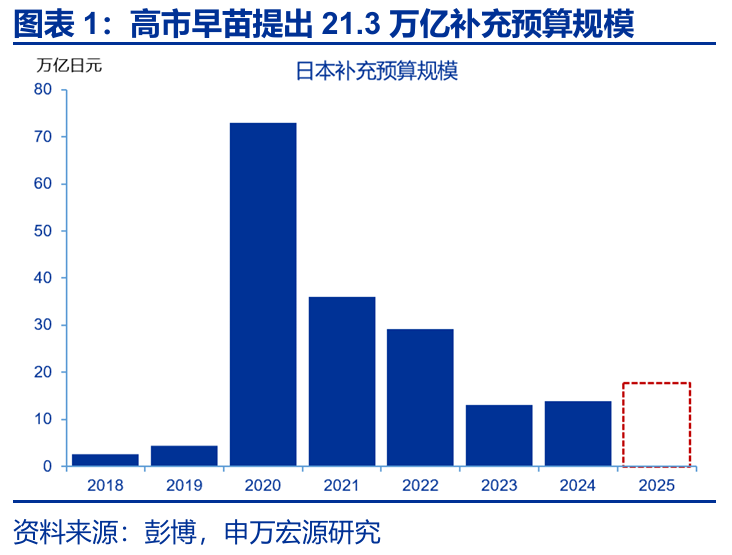
Core Viewpoint - Japan's combination of expansive fiscal policy and tight monetary policy may lead to risks of a reversal in carry trades, necessitating vigilance regarding the Bank of Japan's hawkish stance and the Federal Reserve's dovish periods [1] Group 1: Economic Stimulus Plan - The Japanese government has introduced an economic stimulus plan totaling 21.3 trillion yen (approximately 135 billion USD), slightly above market expectations but lower than 2022 levels [1] - The stimulus plan focuses on three main areas: 11.7 trillion yen (55%) for inflation subsidies and livelihood support, 7.2 trillion yen (34%) for strategic industry investments, and 1.7 trillion yen (8%) for defense and diplomacy [4] - The fiscal stimulus may increase Japan's deficit ratio to 3% by 2026, with Japan's deficit expected to expand by 1.77 percentage points, compared to 1 percentage point for the U.S. and 0.84 percentage points for Germany [4] Group 2: Impact on GDP and Inflation - The fiscal stimulus is projected to boost Japan's GDP growth rate by 0.5 percentage points in 2026, although the impact is expected to be lower than that of the U.S. and Germany [5] - Japan's fiscal multiplier is low at 0.27, compared to an average of 0.8 for developed economies, which contributes to the lower effectiveness of the stimulus [5] - The stimulus may temporarily lower overall inflation but could increase core inflation pressures due to rising demand [6][7] Group 3: Monetary Policy and Carry Trade Risks - The combination of fiscal expansion and cautious monetary tightening may increase the risk of a reversal in carry trades, as the narrowing U.S.-Japan interest rate differential diminishes the profitability of such trades [10][11] - The 2-year U.S.-Japan interest rate differential has decreased from 3.7% at the beginning of the year to 2.5%, heightening the risk of carry trade reversals [11] - The potential for increased volatility in the currency and bond markets may trigger risks of carry trade unwinding, particularly during periods of policy mismatch between the Bank of Japan and the Federal Reserve [11]
热点思考 | 日本宽财政,市场忽视了什么?(申万宏观·赵伟团队)
赵伟宏观探索· 2025-12-01 16:05
Core Viewpoint - The article discusses the economic stimulus plan introduced by Prime Minister Kishi Sanae, which is expected to weaken the yen and increase inflationary pressures in Japan. The combination of expansive fiscal policy and tight monetary policy may lead to risks of a reversal in carry trade, necessitating caution regarding the divergence in monetary policies between the Bank of Japan and the Federal Reserve [2][8]. Group 1: Economic Stimulus Plan - Kishi Sanae's economic stimulus plan amounts to 21.3 trillion yen (approximately 135 billion USD), slightly exceeding market expectations of 17 trillion yen. The fiscal deficit rate for Japan is projected to rise significantly in 2026 [3][9]. - The stimulus plan focuses on three main areas: 55% for inflation subsidies and social welfare (11.7 trillion yen), 34% for strategic industry investments (7.2 trillion yen), and 8% for defense and diplomacy (1.7 trillion yen) [3][15]. Group 2: Impact on GDP and Inflation - The expansive fiscal policy may raise Japan's GDP growth by 0.5 percentage points in 2026, which is lower than the contributions expected from the US (0.6 points) and Germany (0.63 points). The fiscal deficit rate is expected to increase by 1.77 percentage points in Japan, compared to 1.0 points in the US and 0.84 points in Germany [4][23]. - While the inflation subsidies may temporarily lower the overall CPI growth by 0.7 percentage points in early 2026, they could simultaneously increase core inflation pressures in the medium term due to rising real incomes and a weaker yen [4][29]. Group 3: Risks of Carry Trade Reversal - The combination of high inflation and a weak yen makes it difficult for Kishi's expansive fiscal policy to coexist with the Bank of Japan's loose monetary policy. Recent hawkish signals from the Bank of Japan suggest a potential shift towards interest rate hikes [5][35]. - The divergence between the yen and US dollar interest rates, with the yen reaching a low of 157.9 against the dollar while the US-Japan 2-year interest rate spread narrows to around 2.5%, indicates that the market has priced in risks associated with Japan's fiscal expansion [5][41]. - The current conditions suggest a potential for a reversal in carry trade, although the impact may be milder compared to August 2024. Factors such as net short positions in the yen, the degree of divergence between exchange rates and interest rates, volatility, and triggering conditions should be monitored [5][47].
日本要将人工智能?尖端机器人、核聚变、量子、半导体?通信、生物?医疗保健、太空等6个领域指定为国家战略技术
Ge Long Hui· 2025-11-25 05:50
Core Points - The Japanese government is designating critical technologies for economic security as "national strategic technologies" [1] - This initiative includes six key areas: artificial intelligence, advanced robotics, quantum technology, semiconductors and communications, biotechnology and healthcare, nuclear fusion, and space [1] - The aim is to promote investment in these competitive technology sectors by providing extensive support from startup to practical application, including research budget allocation and tax incentives [1]