太空

Search documents
主题策略周报 20260308:外乱内稳,周期趋势加强-20260308
Orient Securities· 2026-03-08 15:26
Group 1 - The core viewpoint indicates that external disturbances lead to internal stability, and the overall market will continue to experience fluctuations, with a strengthened performance in mid-cap blue-chip stocks and a focus on resource sovereignty [7][10]. - The assessment of the domestic market's impact is manageable, and the oscillating situation remains unchanged, as the recent Middle Eastern events serve as a short-term stress test without altering the mid-term market dynamics [11][12]. - Global risk evaluation is on the rise, reinforcing existing trends, while short-term risk appetite is expected to decline but will likely recover in the mid-term as uncertainties resolve [11][12]. Group 2 - In terms of industry comparison, the short-term events are believed to have a limited negative impact on previously favored sectors, instead reinforcing existing trends, with continued optimism for cyclical sectors such as non-ferrous metals, chemicals, transportation, agriculture, coal, and natural gas [12]. - The theme of investment prioritizes resource sovereignty, emphasizing that strategic resource assets are being re-evaluated under the new geopolitical order, shifting demand from traditional economic cycles to "manufacturing upgrades" and "strategic security" [3][12]. - The technology manufacturing sector is closely following developments in AI and space, with a focus on domestic computing power advancements and the emerging space industry, which is expected to see significant growth due to increased satellite networking demands [4][13][14].
科技日报:SpaceX申请部署百万颗卫星意欲何为
Ke Ji Ri Bao· 2026-02-04 01:24
Core Viewpoint - SpaceX has applied to launch up to 1 million satellites to create a data center network around the Earth, aiming to support advanced AI models and applications, which significantly exceeds its current Starlink constellation [1] Group 1: SpaceX's Application Implications - SpaceX's application to the FCC is a move to secure frequency and orbital resource allocation in the U.S. market, initiating a competitive "land grab" in the aerospace sector [2] - The company is facing a projected cash flow gap of $30 billion to $50 billion in the coming years and is preparing for an IPO, attempting to inflate its valuation to $1.5 trillion despite current annual revenues being around $10 billion [2] - The application for such a large satellite constellation appears to be more aligned with financial maneuvering rather than practical engineering capabilities, serving to boost the company's market expectations [2] Group 2: Potential Impact of Approval - If approved, SpaceX will also need to apply for international frequency and orbital resource allocation through the International Telecommunication Union (ITU), similar to previous applications made for its Starlink satellites [3] - The increasing number of satellite applications, including SpaceX's, could severely strain the ITU's international coordination and allocation mechanisms, as countries are submitting massive numbers of satellite requests [4] Group 3: China's Response - Should SpaceX receive FCC authorization, it may limit competition for U.S. market players, but it will not directly impact China's aerospace sector, which is already excluded from the U.S. market [4] - China's aerospace capabilities are currently ranked second globally, with advancements in certain areas surpassing those of the U.S., necessitating a focus on international resource coordination and adherence to its own development strategy [4]
SpaceX申请部署百万颗卫星,意欲何为?
Xin Lang Cai Jing· 2026-02-03 10:28
Core Viewpoint - SpaceX has applied to launch up to 1 million satellites to create a data center network around the Earth, aiming to support advanced AI models and applications [1][3]. Group 1: SpaceX's Intentions - SpaceX's application to the FCC is aimed at securing frequency and orbital resource allocation in the U.S. market, indicating a competitive "land grab" in the aerospace sector [3]. - The application process involves public disclosure and potential opposition from other companies, with the FCC ultimately deciding on authorization [3]. Group 2: Potential Impacts of Approval - If approved, SpaceX will need to apply for international authorization through the ITU, which could exacerbate the competition for frequency and orbital resources globally [5][6]. - The increasing number of satellite applications from various countries could undermine the ITU's international coordination and resource allocation mechanisms [6]. Group 3: China's Response - SpaceX's potential FCC authorization may limit competition in the U.S. market, but it does not directly impact China's aerospace sector, which is already excluded from the U.S. market [7]. - China has a strong aerospace capability, ranking second globally, and should focus on its own development while monitoring international resource allocation dynamics [7].


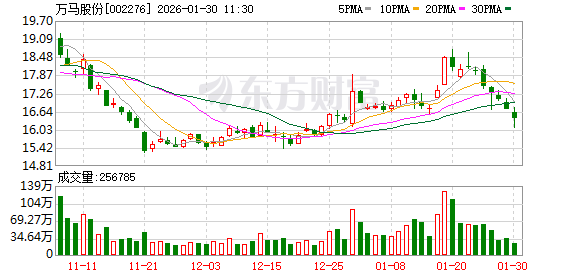
万马股份:公司航空导线等部分产品符合机载和航天设备要求,应用于航空及地面装备等
Mei Ri Jing Ji Xin Wen· 2026-01-30 04:08
Group 1 - The company has aerospace wire products that meet the requirements for airborne and space equipment, indicating a potential for application in aerospace and ground equipment [2] - The aerospace-related business is still in the market development phase and currently contributes a small portion to the company's overall revenue [2] - The company has acknowledged the high technical requirements for cable products in space and satellite internet scenarios, including radiation resistance, low outgassing rates, and extreme temperature tolerance [2]

一图看懂 | 马斯克开年开局落子,太空、AI、机器人都有大动作
Xin Lang Cai Jing· 2026-01-22 10:59
Group 1 - The article emphasizes the importance of using authoritative and professional analysis reports from Jin Qilin analysts for stock trading, highlighting their timely and comprehensive nature [1] Group 2 - The source of the information is Zhitong Finance, indicating a focus on financial news and analysis [1]

城堡证券:早期资本流入+反弹范围扩大 “一月效应”有望为美股全面上涨筑牢基础
Zhi Tong Cai Jing· 2026-01-07 02:51
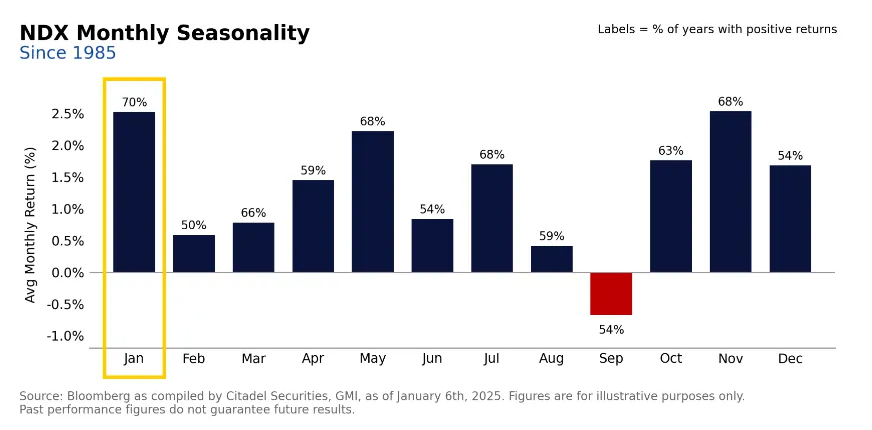
Core Viewpoint - The "January Effect" appears particularly strong this year, with early capital inflows and an expanding market rebound laying the foundation for a broad rise in U.S. stocks [1] Group 1: Market Dynamics - The balance in money markets has reached a record high of $7.6 trillion, supporting the theory that U.S. stocks tend to rise more easily in January compared to other months [1] - Since 1985, the Nasdaq 100 index has risen in about 70% of years in January, with an average increase of 2.5%, and nearly 6% in years when it ultimately closes higher [3] - Market volatility remains suppressed despite a series of catalyst events this month, with capital flows shifting from crowded trades to a broader market [3] Group 2: Retail and Institutional Participation - Retail activity remains robust, with retail traders accounting for approximately 60% of total client volume at options clearinghouses, indicating their significant influence on market outcomes [3] - Retail investors have generated over $20 billion in profits through options trading in 2025 and are entering January with new disposable funds, particularly in themes like quantum computing, robotics, and space [3] - Institutional clients are also increasing their exposure to risk assets, with recent options flows favoring sectors such as energy, utilities, real estate, and materials [4] Group 3: Market Structure and Future Outlook - The current positioning reflects a shift towards lagging sectors to diversify away from over-concentration in index leaders, indicating a healthier market structure [4] - Cross-asset correlations are converging to a one-year low, providing greater space for specific returns [4] - While a normalization of asset allocation and volatility repricing may lead to some "healthy digestion adjustments" in February, any pullback could be viewed as an opportunity to reallocate to risk assets at more attractive levels [4]
年终盘点|美股年度牛股出炉!AI热度不减,核电、太空概念强势爆发
Sou Hu Cai Jing· 2025-12-31 10:19
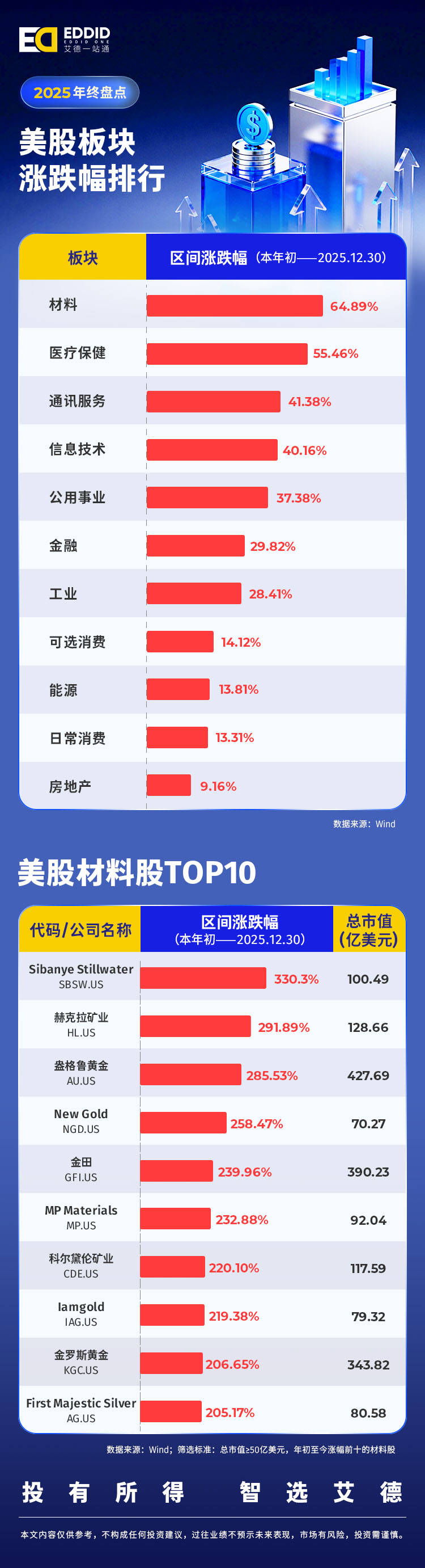
Core Insights - The U.S. stock market experienced a strong performance in 2025, with the S&P 500, NASDAQ, and Dow Jones all achieving double-digit gains for the third consecutive year, closing with increases of 17.25%, 21.28%, and 13.69% respectively [1] - The market was influenced by fluctuating tariff policies and the Federal Reserve's interest rate cuts, leading to a significant rebound in the AI sector and a robust end-of-year rally [1] Sector Performance - All 11 sectors of the U.S. stock market recorded positive growth, with the materials sector leading at a remarkable increase of 64.89%, followed by healthcare at over 55% and communication services at 41.38% [1] - The precious metals and base metals sectors had a standout year, with gold, silver, and copper prices surging, making them core investment choices globally [5] - The top-performing materials stocks included Sibanye Stillwater (SBSW.US) with a 330.3% increase, Hecla Mining (HL.US) at 291.89%, and AngloGold (AU.US) at 285.53% [4][5] AI Sector Developments - The AI narrative remained a focal point, with significant advancements such as OpenAI's Sora and Google's Gemini 3 model driving market interest and stock performance [6][7] - Major tech companies like Google (GOOGL.US) and NVIDIA (NVDA.US) saw substantial gains, with Google rising over 66% and NVIDIA nearly 40% [7] - AI-related stocks in data storage and power supply also performed exceptionally well, with companies like SanDisk (SNDK.US) and Western Digital (WDC.US) achieving increases of 578% and 300% respectively [8][7] Nuclear Energy Sector - The nuclear energy sector gained attention due to new U.S. government policies aimed at increasing nuclear power generation, leading to significant stock price increases for companies like Centrus Energy (LEU.US) and Oklo Inc (OKLO.US), which rose over 230% [10][12] - The government's initiatives included reducing project approval times and prioritizing small modular reactor (SMR) technology, aiming to triple nuclear energy output in the next 25 years [9][10] Space Sector Growth - The space sector saw a surge in interest, particularly after the U.S. government signed an executive order to establish dominance in space, leading to significant stock price increases for companies like Planet Labs (PL.US) and AST SpaceMobile (ASTS.US), which rose nearly 400% and 238.72% respectively [15][13] - The market's enthusiasm for space-related investments was reflected in the performance of various companies, with EchoStar (SATS.US) also achieving a 374% increase [15][13] 2026 Market Outlook - Analysts predict continued growth for the U.S. stock market in 2026, with target levels for the S&P 500 ranging from 7100 to 8100 points, supported by the Federal Reserve's policies and advancements in AI technology [16] - Sectors expected to perform well include non-essential consumer goods, healthcare, finance, and industrials, with a focus on financial stocks as the economy rebounds [16]
SpaceX 8000億估值背後的真相!馬斯克要把AI搬上太空? #SpaceX #ElonMusk #AI #Tesla #星艦 #黑科技
大鱼聊电动· 2025-12-08 09:48
SpaceX 估值 8000 億? 別被這個 數字騙了 馬斯克真正 在佈的局 比這恐怖 一萬倍! 他剛剛在 X 上 暗示了一件 最重要的大事 這不是造火箭 而是要把 AI 運算中心 直接搬到 太空去! 聽起來很瘋狂? 但你想想 現在 AI 最缺什麼? 不是晶片 是電! 地球上的電網 根本餵不飽 AI 這個吞金獸 但在太空 太陽 24 小時 不落山 那是無限的 免費能源! 老馬算了一筆帳 只要每年發射 100 萬噸衛星 就能在太空新增 100 吉瓦的算力 SpaceX 送貨 Tesla造電池 和太陽能板 xAI負責 吃掉算力 然後用激光 把算力 傳回地球 這哪裡是 做生意? 這是在 壟斷人類 未來的 「大腦」! 這盤棋 你看懂了嗎?. ...

日本要将人工智能?尖端机器人、核聚变、量子、半导体?通信、生物?医疗保健、太空等6个领域指定为国家战略技术
Ge Long Hui· 2025-11-25 05:50
Core Points - The Japanese government is designating critical technologies for economic security as "national strategic technologies" [1] - This initiative includes six key areas: artificial intelligence, advanced robotics, quantum technology, semiconductors and communications, biotechnology and healthcare, nuclear fusion, and space [1] - The aim is to promote investment in these competitive technology sectors by providing extensive support from startup to practical application, including research budget allocation and tax incentives [1]

馬斯克沒告訴你!他正複製150年前的財富劇本!#馬斯克 #SpaceX #星艦 #Starship #歷史 #商業模式 #全球化 #財富 #科技
大鱼聊电动· 2025-09-01 06:52
Industry Trend & Technological Disruption - The report draws a parallel between Elon Musk's SpaceX Starship and the 19th-century revolution in ocean transport, suggesting a similar disruptive impact on space travel [1] - The core argument is that Starship's potential to reduce space launch costs by 99% mirrors the impact of steam engines and steel ships on transatlantic shipping costs, which decreased by over 90% [1] - The analysis posits that just as reduced shipping costs facilitated globalization, Starship aims to unlock the potential of space exploration and development [1] Cost Reduction & Market Access - The document highlights the prohibitive cost of space launch as a barrier, comparing it to the high cost of transatlantic shipping before the advent of steam and steel ships [1] - It emphasizes that Starship's drastic cost reduction is not incremental but a "destructive" cut of 99%, potentially opening up new possibilities in space [1] Historical Analogy & Future Implications - The report uses the historical example of the 19th-century transportation revolution to frame Musk's endeavors, suggesting a replication of a proven wealth creation model [1] - It implies that Starship's success could lead to a similar "flattening" effect, this time not on Earth but in space, opening up new frontiers for human activity [1]