
AI芯片

Search documents
17家公司同日递表港股IPO
21世纪经济报道· 2026-02-02 14:24
Core Viewpoint - The Hong Kong capital market has kicked off 2026 with a vibrant listing wave, reflecting strong confidence in China's new economy sectors from global capital [2][9]. Group 1: Listing Activity - In January 2026, a total of 139 companies submitted listing applications to the Hong Kong Stock Exchange, with 17 companies applying on January 30 alone [1][4]. - Two companies, Aixin Yuanzhi and Guo'en Technology, successfully passed the listing hearing in January [1]. - Thirteen companies, including Mingming Hen Mang and Longqi Technology, completed their listings on the Hong Kong Stock Exchange in January [1][7]. Group 2: Sector Highlights - The listing applications cover various sectors, including new energy, semiconductors, AI, robotics, consumer goods, and biomedicine [4][9]. - Notably, Xinwangda, a leading global consumer lithium battery manufacturer, submitted its application on January 30, aiming to accelerate its global expansion [4]. - EVE Energy, another new energy leader, also submitted its application, with plans to use the raised funds for its overseas production base in Hungary [5]. Group 3: Financial Performance - Xinwangda reported a revenue of 13.89 billion yuan for its consumer battery business in the first half of 2025, with a year-on-year growth of 5.2% and a gross margin of 19.63% [4]. - EVE Energy's planned investment for its new energy storage battery project in Malaysia is capped at 8.654 billion yuan, with an expected annual production capacity of 48 GWh [5]. Group 4: Market Trends - The AI sector is also active, with Aixin Yuanzhi, a unicorn in edge AI chips, set to list on February 10, 2026, and is expected to be a significant IPO in the AI wave [6][9]. - The market has shown strong performance from newly listed companies, with significant first-day gains, such as MiniMax's 109% increase on its debut [7]. Group 5: Future Outlook - Predictions indicate that around 160 new stocks will be listed on the Hong Kong Stock Exchange in 2026, with a total fundraising target of at least 300 billion HKD (approximately 38 billion USD) [8][11]. - The recent reforms in the Hong Kong Stock Exchange have facilitated the listing of companies in high-tech sectors, enhancing the attractiveness of the market to international investors [10][11].



当VC开始"团购"项目:揭秘2025年最拥挤的13轮融资,谁在为高估值买单?
3 6 Ke· 2026-02-02 13:08
Core Insights - In 2025, China's primary market witnessed a unique "queueing up" phenomenon, with numerous hard tech companies attracting multiple investors in single rounds of financing, indicating a shift in investment strategies towards collective participation rather than individual dominance [1][13] Group 1: Investment Trends - A total of 13 projects in 2025 had over 15 investors in single financing rounds, covering strategic sectors such as AI chips, commercial aerospace, robotics, semiconductors, and biomedicine [1][2] - Notable companies include Mu Xi Co., Ltd. (C round, nearly 50 investors), Qingwei Intelligent (C round, 24 investors), and the Hainan Commercial Aerospace Innovation Center (angel round, nearly 30 investors) [2][3] Group 2: Mu Xi Co., Ltd. Case Study - Mu Xi Co., Ltd. completed a record financing round in February 2025, raising over 7.2 billion yuan with nearly 50 investment institutions participating, marking it as the most participated equity transaction in the primary market for the year [3][4] - The investor lineup included state-owned institutions, market-oriented VC/PE firms, and industrial capital, showcasing a diverse range of market participants [4][5] - The motivation behind the investment was driven by the urgency for domestic AI computing power alternatives due to restrictions on high-end chips from Nvidia, positioning Mu Xi as a key player in the domestic GPU market [5][6] Group 3: Hainan Commercial Aerospace Innovation Center - The Hainan Commercial Aerospace Innovation Center was established in July 2025 with nearly 30 industry chain companies participating, marking a precedent for competitors in the aerospace sector to collaborate [7][9] - The motivations for participation included leveraging Hainan's favorable launch conditions and tax policies, establishing technology standard alliances, and securing future launch window resources [8][9] Group 4: Qingwei Intelligent Financing - Qingwei Intelligent completed a 2 billion yuan C round financing in December 2025, with 24 institutions participating, setting a record for the largest single financing in the domestic AI chip sector in recent years [10][11] - The investment was characterized by a leading role from state-owned platforms and collaboration with market-oriented institutions, emphasizing the strategic importance of the company’s reconfigurable computing architecture [11][12] Group 5: Market Dynamics and Challenges - The phenomenon of multiple investors in single financing rounds reflects structural changes in the primary market, driven by a scarcity of high-quality projects and a surplus of capital [13][14] - The need for risk-sharing mechanisms in hard tech projects, which require significant investment and have long development cycles, has led to a trend of group investments to mitigate individual risks [15][16] - The influence of state-owned capital and the trend of pre-IPO speculation, as seen in Mu Xi's dramatic stock performance, highlight the potential for valuation bubbles and exit pressures in the primary market [17]
公募基金重仓股格局生变 AI科技成长股受青睐
Jin Rong Shi Bao· 2026-01-30 02:03
近期披露完毕的2025年公募基金四季报显示,中际旭创(300308)、宁德时代(300750)、新易盛 (300502)、紫金矿业(601899)、寒武纪-U、立讯精密(002475)、贵州茅台(600519)、东山精 密(002384)、美的集团(000333)、中国平安(601318)成为主动基金的前十大重仓股。 纵观过去的公募基金重仓股名单,不难发现市场的热点赛道在不断变化。2024年三季度前,贵州茅台长 期稳坐公募基金重仓股第一的"宝座"。之后,随着新能源产业的崛起,宁德时代取代了贵州茅台,并连 续4个季度成为公募基金第一重仓股。直到现在,AI行业兴起,中际旭创成为基金重仓股。可以预见的 是,以AI算力基础设施、AI芯片、AI应用等领域为代表的AI相关产业链将继续成为未来一段时间内市 场关注的焦点。但与此同时,在科技成长风格持续主导的背景下,投资者需要关注相关行业短期估值水 平和业绩增长情况,避免过度追高。 从重仓股排行可以看出,主动权益类公募基金的持仓结构发生了明显变化,AI等科技成长股成为"重点 关注对象"。事实上,科技行业上市公司比重增加不仅体现在公募基金前10大重仓股上,也体现在整体 的持仓变 ...




2026年度策略:锚定AI未来,共启科技新篇
GOLDEN SUN SECURITIES· 2026-01-30 00:50
Group 1: Financial Technology - In 2026, global liquidity is expected to remain reasonably ample, with the domestic monetary policy maintaining a moderately loose tone[14] - The digital RMB 2.0 will officially implement on January 1, 2026, transitioning from M0 to M1 currency attributes[18] - The CIPS network expansion will be a key focus starting February 1, 2026, as new rules for the RMB cross-border payment system come into effect[20] Group 2: AI Applications - The AI application landscape is shifting towards commercial monetization, with a focus on achieving breakeven after initial explosive growth[24] - C-end applications are dominated by major tech giants, making it difficult for smaller firms to survive in the market[40] - B-end applications are seeing some achieving unit economics (UE) breakeven, particularly in sectors with high product-market fit (PMF) like robotaxi[45] Group 3: AI Computing Power - Global demand for AI computing power is on the rise, with domestic internet companies being the largest consumers of intelligent computing servers[3] - Domestic chip manufacturers are making significant breakthroughs, with companies like Huawei and Cambricon showing strong growth potential[3] - The shift towards scale-up supernode architectures is expected to accelerate, enhancing overall system performance[3] Group 4: AI Energy - The AIDC power supply paradigm is evolving towards 800V HVDC systems, driven by the need for higher power density and efficiency[4] - Nuclear fusion is being explored as a long-term energy solution, with significant advancements expected within the next five years[7]






公募基金重仓股格局生变
Jin Rong Shi Bao· 2026-01-30 00:49
寒武纪-U是一家AI芯片公司,专注于云端和边缘计算的人工智能芯片研发。作为国内AI芯片领域 的领先企业,其股价此前曾一举超过贵州茅台成为A股"股王"。早在2024年四季度,寒武纪-U就跻身基 金重仓股第8位,之后除了在2025年三季度掉出前20名外,一直在10名左右徘徊。在AI应用的快速发展 带动下,寒武纪-U在2025年四季度一举升至基金重仓股第5位。 从重仓股排行可以看出,主动权益类公募基金的持仓结构发生了明显变化,AI等科技成长股成 为"重点关注对象"。事实上,科技行业上市公司比重增加不仅体现在公募基金前10大重仓股上,也体现 在整体的持仓变化上。Wind数据显示,公募基金2025年四季度对科技行业上市公司的持仓已经从2024 年一季度的25%上升到40%。与此同时,新能源、消费、金融行业的占比有所下降。这一变化反映了市 场对科技行业特别是AI行业发展的高度关注。 近期披露完毕的2025年公募基金四季报显示,中际旭创、宁德时代、新易盛、紫金矿业、寒武纪- U、立讯精密、贵州茅台、东山精密、美的集团、中国平安成为主动基金的前十大重仓股。 在人工智能(AI)产业的投资浪潮下,科技成长风格成为主导。其中,中际 ...

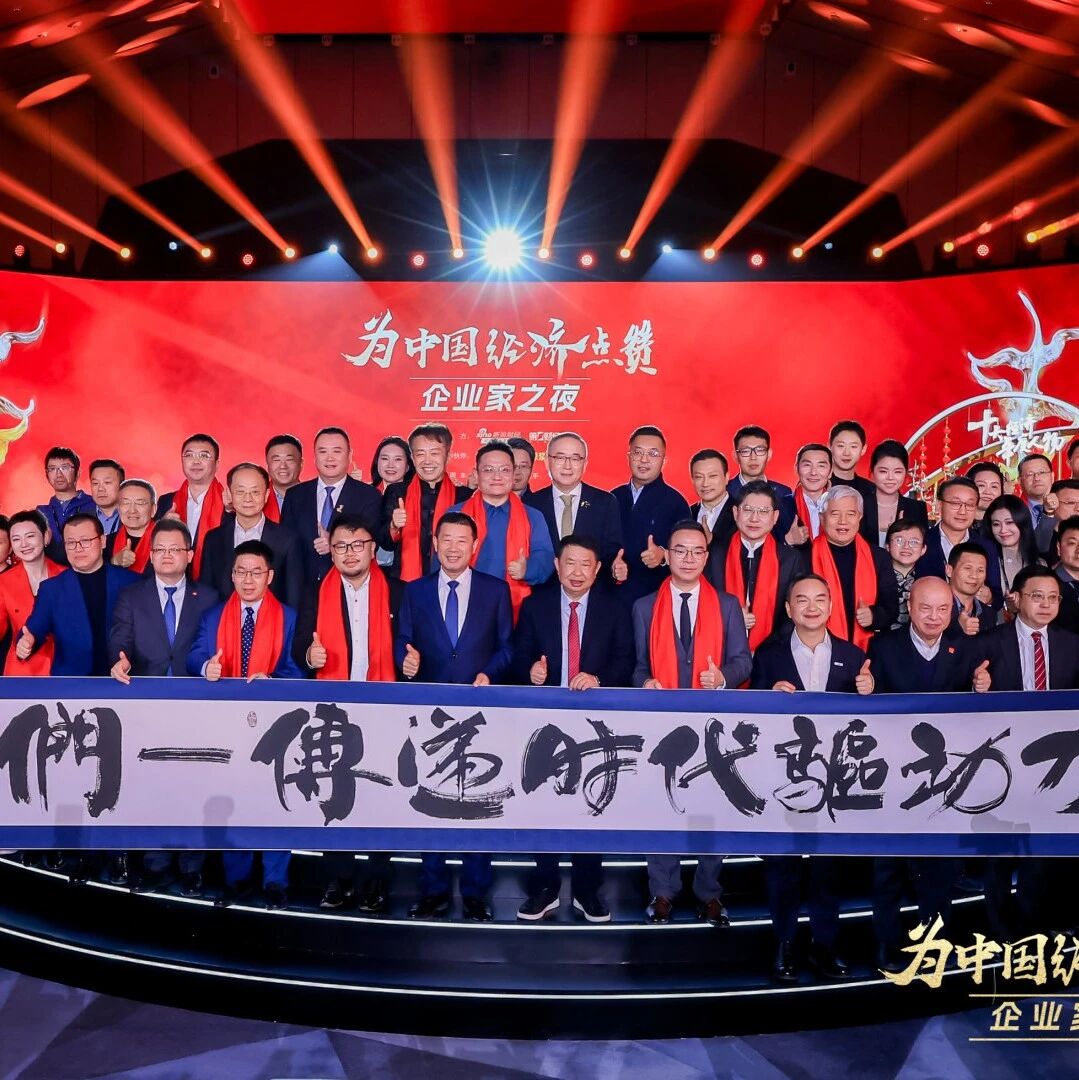
陈景河现场落泪,卢迈呼吁关注农村养育,韩璧丞展示仿生手抓哑铃……上百位企业家共话中国经济新动能
新浪财经· 2026-01-29 16:00
Core Viewpoint - The event "Praise for China's Economy - Entrepreneur Night" highlighted the achievements and future prospects of various companies and entrepreneurs, emphasizing the importance of innovation and resilience in driving economic growth. Group 1: Mining Industry - Chen Jinghe, founder of Zijin Mining, expressed confidence in the company's future, stating that their complete technical capabilities and strong exploration abilities position them favorably against Western companies [6]. - Zijin Mining's overseas gold segment is set to be spun off and listed in Hong Kong by the end of September 2025, with the gold segment currently valued at over 580 billion RMB in the market [6]. - Chen emphasized that the company's growth potential is significantly underestimated, asserting that it is difficult not to profit from Zijin's promising trajectory [6]. Group 2: Child Development Initiatives - Lu Mai, former vice chairman of the China Development Research Foundation, called for attention to rural child development, particularly for children aged 0 to 3, highlighting a funding gap of 30 million RMB needed for initiatives [12]. - He emphasized the urgency of addressing the lack of support for rural children, stating that without immediate action, the future is concerning [12]. Group 3: Dairy Industry - Cold Youbin, chairman of China Feihe, reiterated the company's commitment to producing high-quality infant formula that closely resembles breast milk, focusing on thorough research and fresh ingredients [16]. - Feihe has achieved 100% self-sufficiency in 11 core raw materials and established five large-scale production lines to ensure quality control [18]. Group 4: Biotechnology and Assistive Technology - Han Bicheng, CEO of Zhejiang Qiangnao Technology, aims to use advanced technology to help individuals with disabilities regain mobility through brain-machine interface technology [23]. - The company showcased a bionic hand that can be controlled intuitively, demonstrating its potential to significantly improve the lives of disabled individuals [25]. Group 5: AI and Technology - Liu Debing, chairman of Zhiyuan, stated that the company's goal is to enable machines to think like humans, reflecting a long-term vision in the pursuit of artificial general intelligence (AGI) [29]. - The company aims to reach the ultimate level of intelligence in its exploration of AGI [29]. Group 6: Autonomous Vehicles - Peng Jun, CEO of Pony.ai, expressed the vision of making transportation safer and more efficient through autonomous driving technology, with aspirations for widespread adoption [35]. - The company demonstrated its latest autonomous vehicle during the event, showcasing its capabilities in real-world scenarios [37]. Group 7: Aviation and Transportation - Zhao Deli, founder of Huitian, announced that the company is the largest flying car R&D firm in Asia, with plans to start mass production by the end of 2025 and has already received 7,000 orders [51]. - The company aims to lead the low-altitude economy and flying car market, leveraging China's industrial and supply chain advantages [51]. Group 8: Real Estate and Lifestyle - Ma Yin, founder of Anaya, emphasized the importance of creating spaces that foster community and aesthetic appreciation, focusing on quality of life rather than just economic metrics [60]. - He expressed a commitment to addressing deeper societal issues through his projects, aiming to enhance the human experience [60]. Group 9: Semiconductor Industry - Representatives from the "China Chip Infrastructure" group highlighted the significance of AI chips as the cornerstone of modern technology and digital economy, with a focus on building a self-sufficient computing foundation by 2025 [66]. - The group aims to support rapid development in emerging fields such as artificial intelligence and high-performance computing [66]. Group 10: Entertainment and Media - Du Hua, founder of Lehua Entertainment, discussed the company's transformation into a comprehensive entity that integrates robotics and AI into its operations, aiming to enhance emotional value for consumers [72]. - The company is exploring new business models that combine entertainment with technological innovation [72].

A股重要信息回顾:2026年春运全社会跨区域人员流动量预计达95亿人次创历史新高,春节假期全国高速公路对七座及以下小型客车免收车辆通行费
Jin Rong Jie· 2026-01-29 08:51
Company News - Tesla announced the gradual discontinuation of Model X and Model S, with plans to launch a new sports car in April and introduce a third-generation humanoid robot this quarter. The company plans to invest a record over $20 billion in capital expenditures this year for Cybercab, humanoid robots, and other areas [1][1][1] - SK Hynix is projected to achieve an operating profit of 47.21 trillion Korean won in the 2025 fiscal year, surpassing Samsung Electronics to become the new profit leader in the global memory chip industry. Employee year-end bonuses are expected to reach approximately 690,000 RMB, with a focus on deepening HBM4 business to capture market leadership [1][1][1] - Alibaba's Pingtouge officially announced the launch of its self-developed high-end AI chip "Zhenwu 810E," which has been deployed in multiple ten-thousand-card clusters on Alibaba Cloud, achieving a full-stack layout from large models, cloud services to chips [1][1][1] - Porsche China announced a reduction in the number of dealerships to 80 by 2026, down nearly 30% from 114 in 2025. This channel optimization has led to dissatisfaction among some car owners regarding maintenance packages due to store closures, resulting in a crisis of brand trust [1][1][1] - Muyuan Foods disclosed its Hong Kong stock issuance plans, with a maximum issuance price of 39 HKD per share. The public offering in Hong Kong started on January 29 and is expected to end on February 3, aiming to raise over 10 billion HKD for global expansion and technology research and development [1][1][1] - Mingyang Smart Energy released a performance forecast for 2025, expecting a year-on-year increase in net profit attributable to shareholders of 131.14% to 188.92% for the period from January to December 2025 [1][1][1] - Efort Intelligent Equipment decided to optimize the pricing of certain industrial robot products starting February 1, 2026, with price adjustments ranging from 5% to 12% [1][1][1]
A股收评:成交额3.28万亿元!三大指数集体下跌,贵金属、生物疫苗股逆市大涨
Ge Long Hui· 2026-01-26 07:11
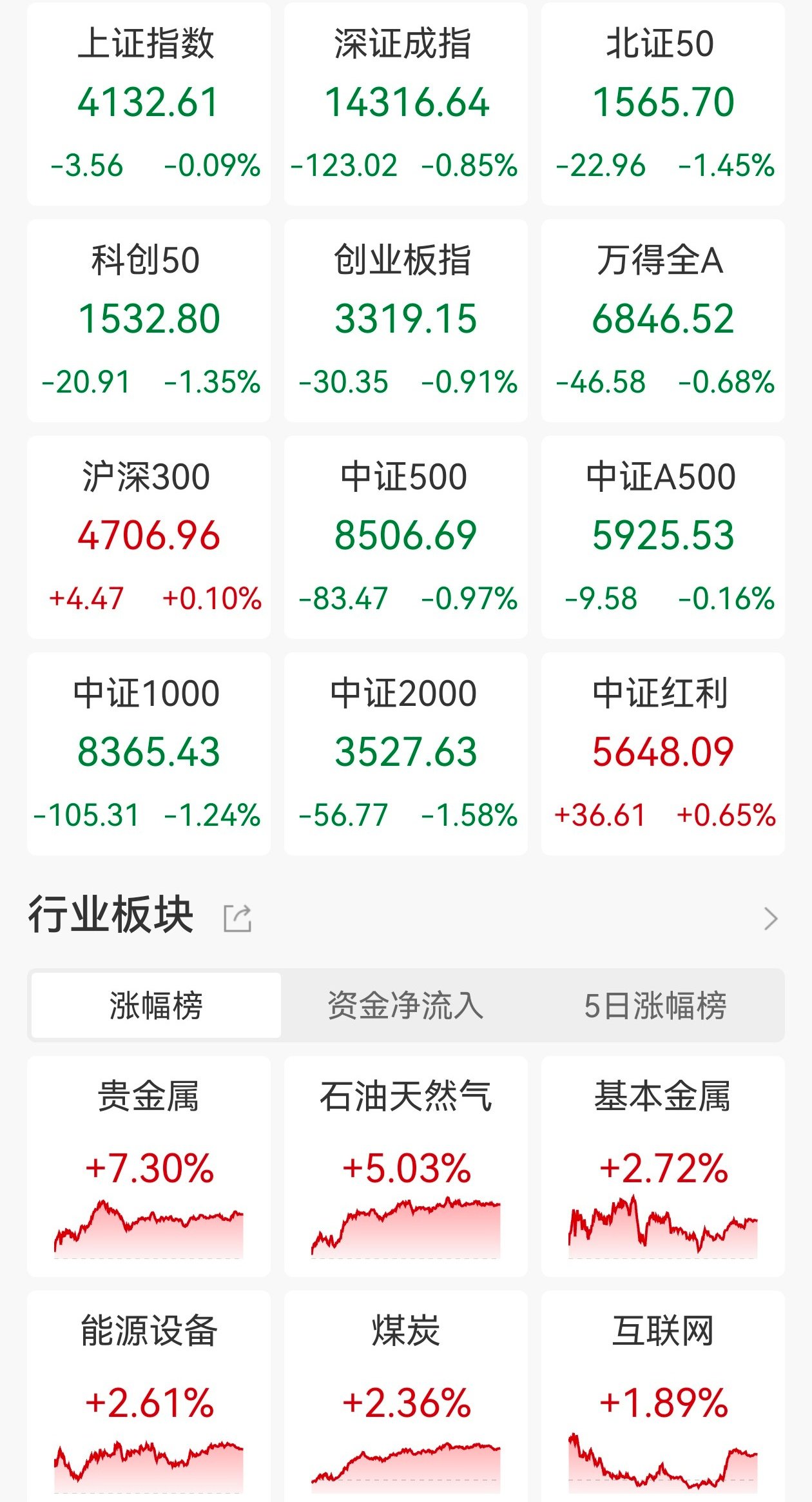
Market Overview - The three major A-share indices collectively declined, with the Shanghai Composite Index down 0.09% to 4132 points, the Shenzhen Component Index down 0.85%, and the ChiNext Index down 0.91% [1] - The total market turnover reached 3.28 trillion yuan, an increase of 162.5 billion yuan compared to the previous trading day, with over 3700 stocks declining [1] Sector Performance - Precious metals and gold concepts surged, with multiple stocks such as Xiaocheng Technology, Western Gold, and Hunan Silver hitting the daily limit [1] - The outbreak of the Nipah virus in India led to a rise in the biopharmaceutical sector, with stocks like Cap Bio also hitting the daily limit [1] - The non-ferrous metals sector saw gains, with stocks like Xingye Silver and Tin also reaching the daily limit [1] - The oil, insurance, and influenza sectors performed well, showing significant gains [1] - Conversely, the commercial aerospace and satellite internet sectors experienced a sharp decline, with stocks like China Satellite and Aerospace Development hitting the daily limit [1] - The 6G concept sector fell, with Yaguang Technology dropping over 13% [1] - The military industry sector also declined, with stocks like Chaojie Co. falling over 10% [1] - Sectors such as LiDAR, AI chips, and humanoid robots faced significant losses [1] Fund Inflow and Performance - The top sectors by net fund inflow included oil and gas (+7.30%), precious metals (+5.03%), and basic materials (+2.72%) [2] - Other sectors showing positive performance included coal (+2.61%), energy equipment (+2.36%), and the internet sector (+1.89%) [2]
科技产业链显现多元化机会 傅鹏博、李晓星四季报调仓路径分化明显
Zhong Guo Jing Ji Wang· 2026-01-26 00:37
Core Insights - The article highlights the contrasting investment strategies of two prominent fund managers, Fu Pengbo and Li Xiaoxing, as they adjust their portfolios in response to market conditions and their investment philosophies [1][2][3]. Group 1: Fu Pengbo's Strategy - Fu Pengbo significantly reduced holdings in major stocks like CATL and Tencent, decreasing positions by 23% and 18% respectively, while increasing investments in hard tech companies such as Maiwei and Cambrian [1][2]. - The total assets under management for Fu's fund reached 31.2 billion yuan, maintaining a high stock position of 92% [1]. - Fu's rationale centers on the belief that the global tech competition will focus on critical manufacturing sectors with core technological barriers, suggesting a shift from platform companies to manufacturing firms [2][3]. Group 2: Li Xiaoxing's Strategy - In contrast, Li Xiaoxing increased his stakes in internet platform companies, raising Tencent's position from 1.8 billion yuan to 2.6 billion yuan, and Alibaba by 35% to 1.9 billion yuan [3]. - Li's fund size is 28.5 billion yuan, and he believes that the internet sector is undervalued due to regulatory pressures and economic expectations, predicting a recovery in 2026 [3]. - His strategy reflects a dual focus on consumer and technology sectors, with significant investments in companies like Yili [3]. Group 3: Market Implications - The divergence in strategies between the two fund managers illustrates a broader trend in the public fund industry, where funds focusing on electronics outperformed those in computing sectors [4]. - The article suggests that the technology sector presents diverse opportunities across various stages of the supply chain, from semiconductor equipment to AI chips and platform applications [5]. - It emphasizes the importance of selecting investments based on valuation and growth potential, while also noting the liquidity constraints faced by larger funds [5][6].

通信行业周报:重视边际变化:卫星和国产AI链-20260125
KAIYUAN SECURITIES· 2026-01-25 03:12
通信 业 2026 年 01 月 25 日 投资评级:看好(维持) 行业走势图 数据来源:聚源 -26% 0% 26% 53% 79% 106% 2025-01 2025-05 2025-09 通信 沪深300 相关研究报告 《重视硅光和 CPO 链投资机会—行 业点评报告》-2026.1.21 《台积电和谷歌表现亮眼,重视硅光 链和谷歌链—行业周报》-2026.1.18 《光、液冷、国内 AIDC 迎新变化— 行业周报》-2026.1.11 重视边际变化:卫星和国产 AI 链 蒋颖(分析师) 陈光毅(联系人) 雷星宇(联系人) jiangying@kysec.cn 证书编号:S0790523120003 chenguangyi@kysec.cn 证书编号:S0790124020006 leixingyu@kysec.cn 证书编号:S0790124040002 海内外太空建设加速,重视商业航天和卫星链 2026 年 1 月 22 日,蓝箭航天空间科技股份有限公司(简称"蓝箭航天")科 创板 IPO 审核状态变更为"已问询" ,此次 IPO 公司拟募资 75 亿元,用于可 重复使用火箭产能提升项目、可重复使用 ...