
信托

Search documents
低利率时代信托业机遇大于挑战
Xin Lang Cai Jing· 2025-12-30 03:55
Group 1 - The low interest rate environment is beneficial for the development of capital markets, providing stable investment returns for investors. The rich supply of products and deepening market reforms have effectively translated into investor satisfaction, with the weighted average annualized return of all equity and mixed public funds performing well over the past year [2][10] - Current asset-side returns are under pressure, and various asset management institutions need to build comparative advantages through differentiated operations. The core of trust business differentiation lies in the business cycle of asset management trusts and asset service trusts. Since the regulatory "three-category" transformation began in 2023, asset service trusts have reshaped the fundamental functions of trusts, fully leveraging the advantages of the trust system in property independence, risk isolation, flexible structure, and inheritance distribution [2][10] - Under the low interest rate environment, the demand for wealth inheritance and security among residents is gradually being released. The scale of assets that residents can inherit is expected to reach 20 trillion yuan, with a continuous increase in wealth inheritance demand. The trust industry provides diversified asset allocation solutions through patient service and long-term companionship, achieving multi-asset cross-cycle allocation and truly practicing the buy-side investment advisory concept [2][10] - Financial technology is continuously expanding the boundaries of production possibilities in the asset management industry. Only by optimizing and integrating data models and decision-making chains in investment, operation, risk control, and compliance through AI and information technology can the asset management capabilities with Chinese characteristics be effectively enhanced [2][10] Group 2 - The Shanghai Financial Regulatory Bureau and other authorities have issued an action plan to promote the comprehensive pilot work of the intellectual property financial ecosystem in Shanghai, aiming to establish a convenient, efficient, and well-structured intellectual property financial ecosystem by the end of 2027 [3][11] - The action plan optimizes the development of intellectual property financial products and enhances the quality of comprehensive services. It guides financial institutions to provide integrated intellectual property financial services tailored to the characteristics of enterprises' intellectual property. It encourages trust companies to engage in innovative businesses such as intellectual property trusts, achieving efficient management of intellectual property security and conversion benefits [4][12] - To enhance the activity of intellectual property transactions, the plan emphasizes leveraging the functions of the Shanghai Intellectual Property Trading Center and the Shanghai Technology Trading Center in areas such as value assessment, pricing, transfer transactions, and asset disposal, while exploring feasible paths for intellectual property registration under trusts and wealth management products [4][13]
江苏国信12月29日获融资买入4078.50万元,融资余额3.69亿元
Xin Lang Cai Jing· 2025-12-30 01:34
Core Viewpoint - Jiangsu Guoxin experienced a decline of 2.96% in stock price on December 29, with a trading volume of 250 million yuan, indicating a potential market reaction to recent financial performance and trading activities [1] Financing Summary - On December 29, Jiangsu Guoxin had a financing buy amount of 40.785 million yuan and a financing repayment of 35.7531 million yuan, resulting in a net financing buy of 5.0319 million yuan [1] - The total financing and securities lending balance reached 370 million yuan, with the financing balance of 369 million yuan accounting for 1.30% of the circulating market value, which is above the 90th percentile of the past year [1] - The company repaid 700 shares in securities lending and sold 4,600 shares, with a selling amount of 34,600 yuan, while the securities lending balance was 1.0504 million yuan, below the 50th percentile of the past year [1] Business Performance - As of September 30, Jiangsu Guoxin reported a total of 33,700 shareholders, an increase of 19.12% from the previous period, while the average circulating shares per person decreased by 16.05% to 112,002 shares [2] - For the period from January to September 2025, the company achieved an operating income of 25.494 billion yuan, a year-on-year decrease of 6.84%, while the net profit attributable to shareholders increased by 10.52% to 3.228 billion yuan [2] Dividend Information - Since its A-share listing, Jiangsu Guoxin has distributed a total of 1.955 billion yuan in dividends, with 1.133 billion yuan distributed over the past three years [3] Institutional Holdings - As of September 30, 2025, the top ten circulating shareholders included the Southern CSI 500 ETF, holding 10.9555 million shares, a decrease of 210,100 shares from the previous period, while Hong Kong Central Clearing Limited entered as a new shareholder with 8.9342 million shares [3]

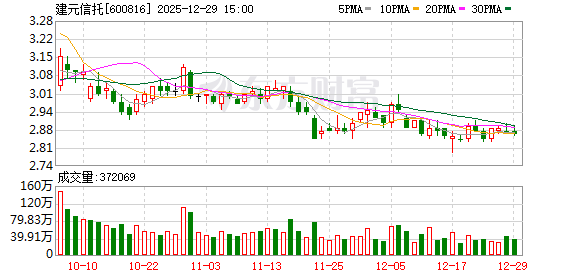
建元信托:第九届董事会第三十次会议决议公告
Zheng Quan Ri Bao· 2025-12-29 13:35
Group 1 - The core announcement from Jianyuan Trust indicates that the company’s ninth board of directors held its 30th meeting, where multiple resolutions were approved [2] - The resolutions include the formulation and simultaneous repeal of certain company policies, as well as amendments to existing company regulations [2] - The meeting reflects the company's ongoing governance and regulatory compliance efforts [2]


新规强化全周期披露责任,吹散银行理财“信息迷雾”
Di Yi Cai Jing Zi Xun· 2025-12-29 12:48
Core Viewpoint - The recent issuance of the "Measures for the Management of Information Disclosure of Asset Management Products by Banking and Insurance Institutions" aims to address long-standing issues in the wealth management sector, such as distorted yield displays and non-transparent valuation methods, by standardizing information disclosure practices [1][2][6]. Group 1: Regulatory Framework - The new regulations establish a unified standard for information disclosure across three types of asset management products: asset management trusts, bank wealth management products, and insurance asset management products [2][6]. - The regulations emphasize the importance of protecting investors' rights to information and choice, which is a fundamental obligation of asset management institutions [2][6]. - The measures require clear disclosure of performance benchmarks, including the rationale for their selection and calculation methods, while explicitly stating that performance benchmarks are not expected yields [2][3]. Group 2: Disclosure Requirements - The regulations enhance periodic disclosure requirements, mandating accurate reporting of product net values, performance, and investment asset conditions, while introducing a mechanism for transparent disclosure of underlying asset structures [3][4]. - Specific rules for cash management products prohibit the display of annualized returns for products that have been established for less than seven days, aiming to curb misleading marketing practices [3][4]. - The regulations also require that all parties involved in the asset management process, including product managers and sales institutions, share responsibility for ensuring the accuracy and completeness of disclosed information [4][6]. Group 3: Industry Impact - The new rules are expected to elevate the quality of information disclosure, potentially becoming a key competitive differentiator for asset management institutions [4][6]. - The introduction of a "dual-channel" disclosure principle aims to simplify investor access to information, thereby enhancing transparency and consistency across different disclosure platforms [4][6]. - The regulations are anticipated to drive asset management companies towards greater professionalism and specialization by mandating the disclosure of investment strategies, portfolio structures, and performance benchmarks [5][6]. Group 4: Future Outlook - The regulations will take effect on September 1, 2026, allowing an eight-month transition period for banking and insurance institutions to adapt [6]. - The increased compliance requirements may raise operational costs for asset management firms, necessitating a comprehensive review and upgrade of their disclosure systems and product documentation [6][7]. - Long-term, the standardization of information disclosure is expected to reshape the competitive landscape of the asset management industry, with a focus on transparency and professional management becoming essential for maintaining a competitive edge [6][7].
国投资本:12月29日召开董事会会议
Mei Ri Jing Ji Xin Wen· 2025-12-29 10:59
每经AI快讯,国投资本(SH 600061,收盘价:7.64元)12月29日晚间发布公告称,公司九届三十三次 董事会会议于2025年12月29日以通讯表决方式召开。会议审议了《国投资本股份有限公司关于修订公司 治理主体决策权责清单的议案》等文件。 每经头条(nbdtoutiao)——绕开光刻机"卡脖子",中国新型芯片问世!专访北大孙仲:支撑AI训练和 具身智能,可在28纳米及以上成熟工艺量产 (记者 王晓波) 2024年1至12月份,国投资本的营业收入构成为:证券行业占比71.62%,其他业务占比9.9%,信托行业 占比9.33%,基金行业占比9.16%。 截至发稿,国投资本市值为489亿元。 ...

“债权家族信托”:是创新,还是噱头?
Xin Lang Cai Jing· 2025-12-29 09:13
文章来源:用益研究 01 债权,如委托人对家族企业的债权,作为一种资产装入家族信托,和资金、股权、不动产装入家族信托 一样,都是正常的操作,此种"债权家族信托和一般家族信托并无差异,并无特别需要关注之处。 这几年不断看到有自媒体宣传债权家族信托的独特优点,有点不解。昨天,看到一篇博文,讲到债权家 族信托有两种可以化解"家企不分风险"的方式,帮助财富人士实现资产隔离之功能: "一是将委托人持有的存量债权转移至信托名下,使债权脱离个人或家庭资产负债表; 二是由家族信托以资金向家族企业发放合规贷款,形成明确的债权债务关系。" 下面对此做简要分析。 02 关于第一点,该文举例: · 某制造业家族的实操案例印证了这一点:该家族将8000万元企业债权装入家族信托后,企业后续因市 场波动陷入诉讼,法院最终认定信托财产独立于企业债务,成功保全了家族核心财富。 这是非常令人不解的。 该家族将其持有家族企业股权转入家族信托,是可以操作,因为家族企业股权是家族的资产; 但家族企业债权是企业的资产而非家族的资产,如何委托人如何将其装入家族信托?根据公司法,公司 能否把自己的资产(债权资产)以非交易的方式转移给别人? ——这不恰恰正是 ...
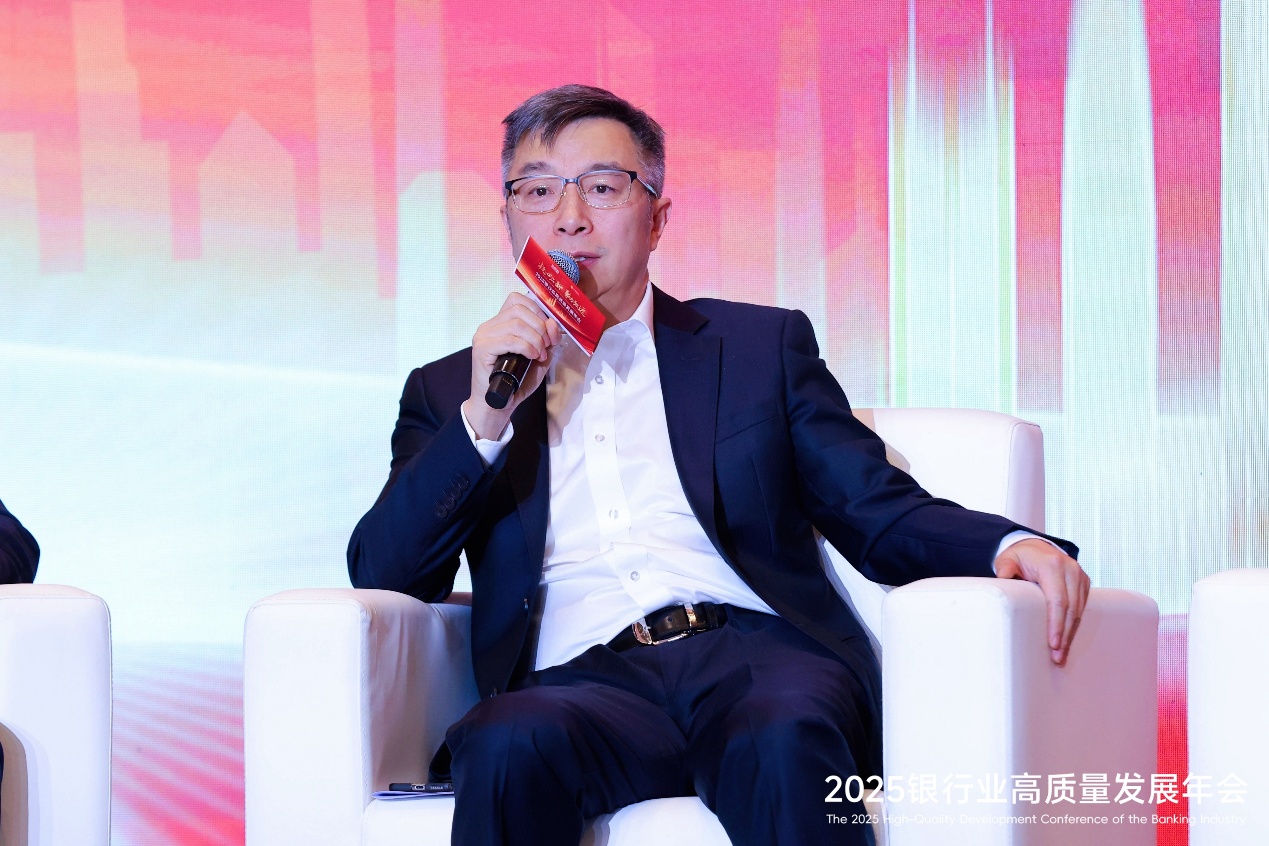
国民信托董事长肖鹰:放低身段 走信托特色错位发展之路
Jin Rong Jie· 2025-12-29 08:14
12月26日,由金融界主办、宁波银行支持、清华大学经济管理学院中国金融研究中心提供学术支持的"启航·2025银行业高质量发展年会"在北京成功举办。 本次年会以"凝心启新,聚力致远"为主题,汇聚监管专家、学界精英、行业领袖及科技企业代表,围绕服务实体经济、数字化转型、AI+金融创新、风险防 控等议题展开深度讨论,为银行业高质量发展建言献策。 国民信托董事长肖鹰在年会上,就信托行业如何在"十五五"期间构建独特商业模式、走出特色错位经营之路,分享了深刻见解。他明确指出,信托的核心优 势源于其法律制度安排,风险隔离、财产独立的制度安排,以及法律架构是信托的核心竞争力,从这个角度来讲,信托的本质是做服务,而不是单纯销售金 融产品。 "一味销售短期产品、提供流动性服务,并非信托行业的应有之义。"肖鹰强调,这种模式不仅长期来看会损害消费者权益,更会模糊信托的行业边界,对信 托行业自身发展造成伤害。基于此,他结合国民信托实践,从两个维度详解了信托机构的错位发展路径。 在业务定位错位方面,肖鹰表示,信托作为天然的法律安排,可聚焦三大领域。 责任编辑:山上 其一,深耕资本市场长期投资。依托财产独立性优势,将委托资金用于真正的长期 ...
卫濛濛:信托业以特色化转型助力“十五五”高质量发展新征程
Xin Lang Cai Jing· 2025-12-29 05:56
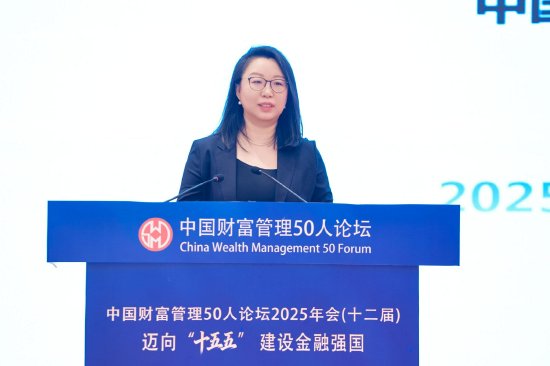
Core Viewpoint - The China Wealth Management 50 Forum 2025 Annual Meeting emphasizes the theme of "Building a Financial Power during the 14th Five-Year Plan" and discusses the restructuring and capability leap of the asset management industry under the new journey of the 14th Five-Year Plan [1][5]. Group 1: Industry Positioning and Development - The trust industry needs to solidify its differentiated development positioning under regulatory guidance and continuously enhance professional capabilities to complement various asset management institutions and jointly serve the modernization of China [3][7]. - The trust industry should further establish a differentiated development positioning based on the top-level design of the national 14th Five-Year Plan and the guiding opinions on strengthening regulation and preventing risks to promote high-quality development [3][7]. Group 2: Functional and Service Expansion - The trust industry should adhere to its institutional origins, focusing on the role of trustees to leverage core functions such as asset independence and risk isolation [3][7]. - It is essential to extend financial service functions to provide diversified trust services for resident wealth management, enterprise development, and key national areas within the "three classifications" framework [3][7]. - The industry should enhance social service functions by reinforcing the inclusive value of trusts in areas such as public welfare, social governance, and people's well-being [3][7]. Group 3: Strategic Focus and Professional Capability - The trust industry must focus on major national strategies and fully engage in five key areas: technology finance, green finance, inclusive finance, pension finance, and digital finance [3][7]. - Professional capability is highlighted as the core support for transformation and development, with trust companies enhancing customer-centric wealth service capabilities and asset service capabilities throughout the entire business lifecycle [3][7]. Group 4: Commitment to High-Quality Development - The trust industry aims to leverage its institutional advantages and pursue a differentiated and specialized transformation path to contribute more trust wisdom and strength to the high-quality development of the national economy [4][8].
中粮信托书写“十四五”高质量发展答卷
Jing Ji Guan Cha Wang· 2025-12-29 04:19
Core Viewpoint - The "14th Five-Year Plan" period is crucial for the financial industry in China to deepen supply-side structural reforms, return to its roots, and serve the real economy, with the trust industry playing a significant role in supporting the real economy while undergoing transformation pressures [1] Group 1: Business Transformation - The company adheres to the principle of "returning to the source" and has shifted its business model from traditional paths to asset management, asset services, and public welfare, focusing on three main tasks: serving the real economy, preventing financial risks, and deepening financial reforms [2] - By the end of 2025, the company's trust management asset scale is expected to reach 600 billion yuan, with over 120 billion yuan in asset management aligned with transformation directions and 2,400 family service trusts established [2] Group 2: Integration with the Real Economy - The company leverages its unique industry background from COFCO Group to integrate trust services with real industry needs, exemplified by projects like "Sweet Loan" and "Silage Loan" that support agricultural financing [3] - The company has served the real economy with a cumulative scale of nearly 100 billion yuan over five years, enhancing asset liquidity through innovative financial tools and supply chain finance [3] Group 3: Risk Management - The company prioritizes risk management as a lifeline, embedding risk control throughout the business process and evolving its risk management system to be comprehensive and intelligent [4] - The company has maintained a AAA credit rating for three consecutive years, reflecting its strong reputation and effective risk management practices [4] Group 4: Future Competitiveness - The company views technology and talent as dual drivers for long-term development, focusing on digital transformation and creating a robust talent development system [5] - By 2025, the company's digital framework is expected to support the management of assets worth trillions, with a young and professional team driving the transformation [5] Group 5: Social Responsibility - The company actively engages in social contributions through charitable trusts, with a cumulative scale of 170 million yuan during the "14th Five-Year Plan" period, supporting rural revitalization and education [6] - The company emphasizes its commitment to "finance for the people," providing family trusts to protect wealth and promote spiritual inheritance [6]
陕西四家公司荣获2025年度“金骏马”奖
Zheng Quan Ri Bao Wang· 2025-12-29 04:18
Core Viewpoint - The "2025 Securities Market Annual Conference" was successfully held in Beijing, focusing on the theme of "Reform and Innovation in Capital Markets" to discuss the paths for deepening reforms and future innovations in the context of high-quality development [1] Group 1: Event Overview - The conference gathered key figures including industry association leaders, economists, and executives from listed companies and financial institutions [1] - The event featured the "2025 Golden Horse Award Ceremony," recognizing outstanding contributions to the healthy development of the capital market [1] Group 2: Awards and Recognitions - A total of 11 significant awards were presented, covering various dimensions such as listed companies, financial institutions, and professional teams [1] - Four companies from Shaanxi province received awards: - China Aviation Engine Group Co., Ltd. won the "2025 Golden Horse Industry Leading Enterprise" award - Shaanxi Light Optical Materials Co., Ltd. received the "2025 Golden Horse Most Breakthrough Innovation Enterprise" award - Shaanxi International Trust Co., Ltd. was honored as the "2025 Golden Horse Excellent Service Entity" - Xu Zirai, Deputy General Manager and Secretary of the Board of Shaanxi Energy Investment Co., Ltd., won the "2025 Golden Horse Gold Medal Secretary" award [1]
