
造船业

Search documents
特朗普果然被耍?中国邻国终于强硬一回,说好的3500亿不给美国了
Sou Hu Cai Jing· 2025-09-29 14:48
Core Viewpoint - The article discusses the failed promise of a $350 billion investment from South Korea to the U.S., highlighting the disparity between the expectations set by the Trump administration and the financial realities faced by South Korea [1][3][20]. Group 1: Investment Agreement Background - In July, the U.S. and South Korea reached an agreement where the U.S. would reduce tariffs from 25% to 15%, and South Korea would create a $350 billion investment fund, primarily funded through loans and equity investments, not cash [5][11]. - The U.S. later demanded the $350 billion as an upfront payment, which South Korea deemed unrealistic and unsustainable given its foreign reserves [7][11][13]. Group 2: Financial Implications for South Korea - South Korea's total foreign reserves amount to $416.3 billion, meaning the requested $350 billion would consume 84% of these reserves, jeopardizing its economic stability [11][15]. - The total direct investment by South Korean companies globally over the past five years is only $348.9 billion, indicating that the U.S. demand exceeds South Korea's recent investment capabilities [13][15]. Group 3: Political and Economic Consequences - South Korean President Lee Jae-myung warned that complying with U.S. demands could lead to a financial crisis similar to that of 1997, which had severe repercussions for the country's economy [15][22]. - The upcoming APEC summit in October is critical, as both nations must negotiate terms that balance U.S. demands for cash with South Korea's need for economic stability [20][27]. Group 4: Negotiation Dynamics - South Korea's negotiation team has shifted to a more assertive stance, proposing that investments be primarily in the form of loans and ensuring that projects are profitable [17][20]. - The article emphasizes that international relations are driven by power dynamics, and South Korea's firm position reflects its need to protect its economic interests against U.S. pressure [24][25].


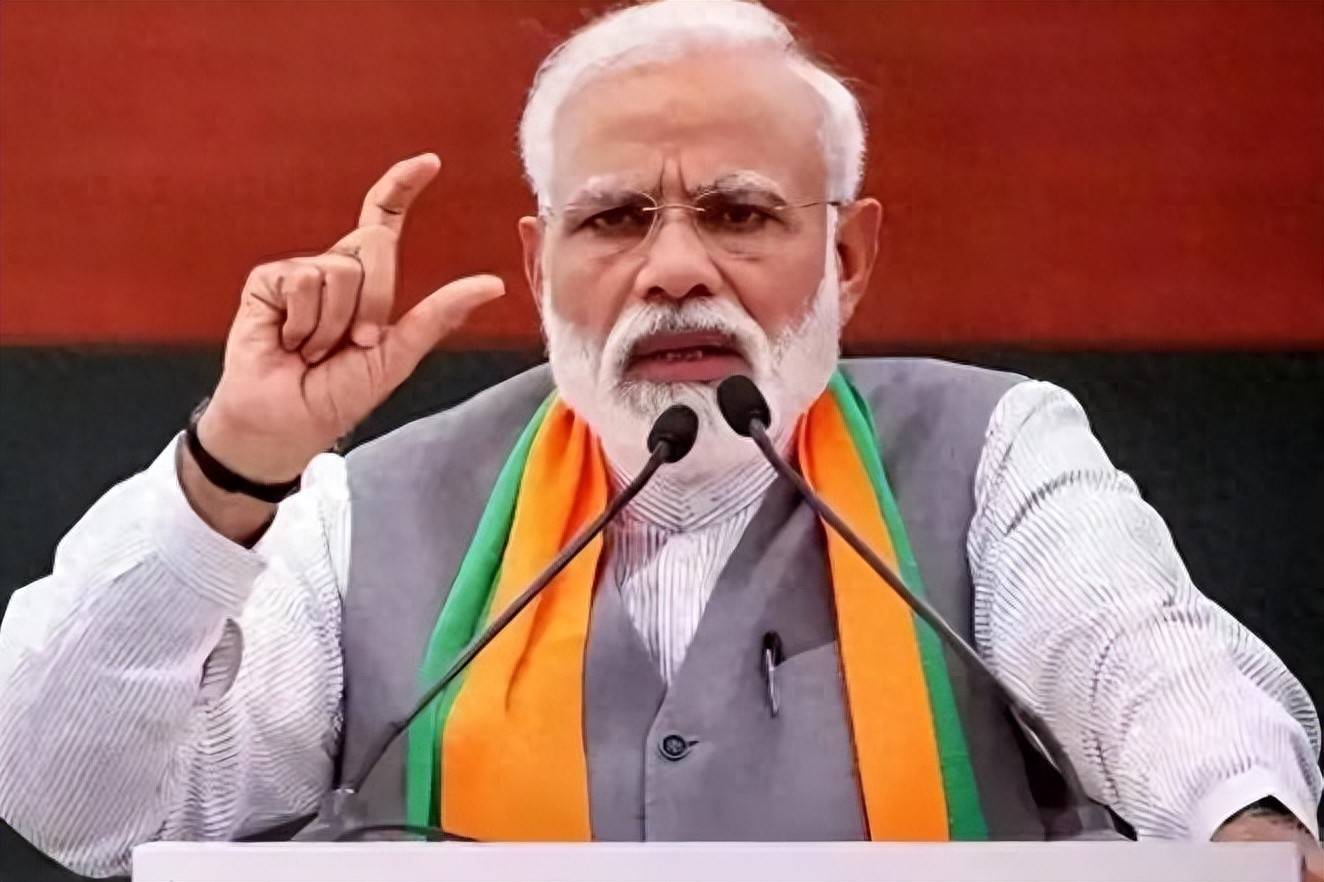
中国有的,印度也得有?莫迪追加7000亿,印度:要动摇中日韩地位
Sou Hu Cai Jing· 2025-09-29 11:36
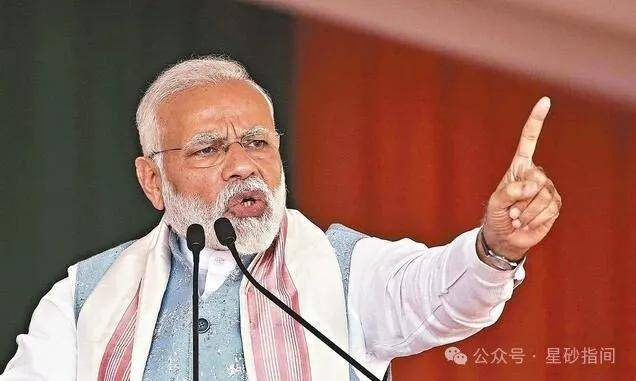
Core Viewpoint - The Indian government, led by Prime Minister Modi, has announced a significant investment of approximately 700 billion rupees to revitalize the shipbuilding industry, aiming to challenge the dominance of China, South Korea, and Japan in this sector. However, the effectiveness of this initiative is questioned due to India's historical struggles in manufacturing and the underlying structural issues within the industry [3][12][20]. Investment and Policy - The recent investment is part of a broader strategy to boost the manufacturing sector, which has seen a decline in its contribution to GDP from 17% to 15% over the past five years, contrary to the government's goal of increasing it to 25% [3][20]. - The Modi administration previously launched a "Production-Linked Incentive Scheme" to attract businesses, but the results have been disappointing, particularly in mobile manufacturing, where production capacity fell short by 40% [3][7]. Structural Challenges - India's shipbuilding industry has seen its global market share plummet from 40% in the 1970s to just 5% today, primarily due to a lack of technology, inadequate infrastructure, and unstable policies [7][12][20]. - The World Bank's logistics performance index ranks Indian ports at 58th globally, indicating significant inefficiencies compared to competitors like China and Vietnam [5][12]. Talent and Innovation - The country faces a talent drain, with over 2,000 shipbuilding engineers leaving for South Korea and Japan annually, which hampers domestic technological advancement [14][20]. - India's research and development spending is only 0.7% of GDP, significantly lower than China's 2.4%, limiting the country's ability to innovate and develop its manufacturing capabilities [7][12]. Trade and External Factors - Recent U.S. trade policies, including a 50% tariff on solar panels imported from India, have added pressure on the Indian economy, particularly in the IT sector, which relies heavily on exports [9][10]. - The political and diplomatic stance of India often complicates its trade relationships, making it challenging to establish a robust export-oriented economy [10][20]. Industry Ecosystem - The shipbuilding sector suffers from a lack of supporting industries, with essential components like steel and electronics primarily imported, undermining the goal of self-sufficiency [10][12]. - The aging infrastructure, with 60% of port cranes outdated, further complicates the logistics of shipbuilding, making it difficult to meet production demands efficiently [14][20]. Conclusion - While the investment in the shipbuilding industry reflects Modi's ambition to enhance India's manufacturing capabilities, the success of this initiative hinges on addressing deep-rooted structural issues, including policy stability, infrastructure development, and talent retention [20][21].
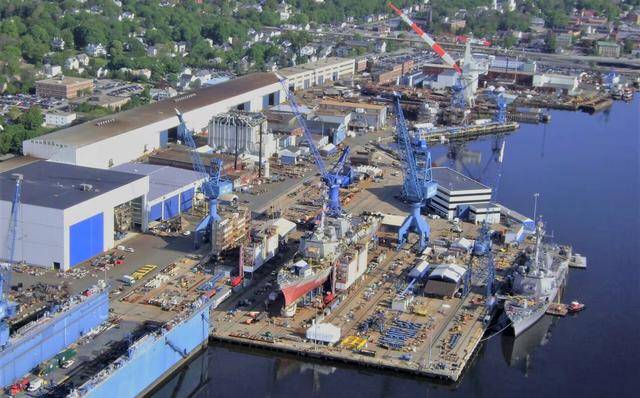
中国动真格反制,美国又一行业遭受重创,美军核航母生产或将停摆
Sou Hu Cai Jing· 2025-09-29 11:24
Group 1 - As of 2025, China holds a dominant position in the global shipbuilding industry with a 53% share of global orders, while the U.S. accounts for only 0.5% [1][3] - China's shipbuilding industry is rapidly advancing in high-tech vessel categories, including liquefied natural gas carriers and ultra-large container ships, supported by a complete domestic supply chain [3][5] - The average delivery time for a large cargo ship in China is 20 months, compared to 30 months or more in the U.S., highlighting China's efficiency in production [5] Group 2 - China's advantages in shipbuilding costs stem from lower prices for steel, labor, and financing, with steel prices significantly lower than those in Japan and South Korea [5][9] - The U.S. shipbuilding industry faces challenges due to a shortage of skilled labor, with average annual salaries for welders reaching $75,000, limiting production capacity [7][9] - The U.S. shipbuilding sector is primarily focused on military vessels, which has resulted in a lack of competitiveness in the commercial ship market, with only 0.5% of global orders for civilian vessels [9][11] Group 3 - The Jones Act in the U.S. mandates that all vessels engaged in domestic trade must be built in U.S. shipyards, which protects domestic demand but reduces global competitiveness [9][11] - The U.S. shipbuilding supply chain is heavily reliant on imports for high-precision equipment and steel, increasing costs and delivery times [9][11] - Efforts by the Trump administration to revitalize the U.S. shipbuilding industry through international partnerships and investments have not addressed the fundamental issues of high costs and inefficiencies [11]
跨国联合研发!氨‒氢燃料电池动力油船设计出炉
Sou Hu Cai Jing· 2025-09-29 05:55
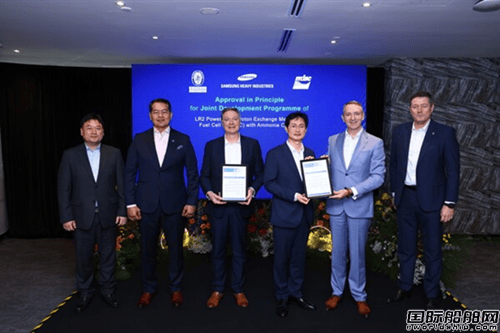
Group 1 - Samsung Heavy Industries (SHI) has received the Approval in Principle (AiP) certificate from Bureau Veritas (BV) for its ammonia-hydrogen fuel cell-powered crude oil tanker, marking a significant achievement in the eco-friendly shipping market [2] - The ammonia-hydrogen fuel cell developed by SHI utilizes cracking technology to decompose ammonia into hydrogen and nitrogen, providing a clean and efficient energy source with low noise [2] - The 115,000-ton ammonia-hydrogen fuel cell tanker features solid polymer electrolyte fuel cells (PEMFC) that can start quickly and offer excellent durability [2] Group 2 - SHI has successfully localized core equipment by collaborating with domestic companies, with PANASIA developing the cracking equipment and Vinssen manufacturing the fuel cells [3] - Malaysian International Shipping Corporation (MISC) and BV are also involved in the project, with MISC providing operational data to support economic evaluations and enhance technology reliability [3] - SHI aims to accelerate the commercialization of this type of vessel through global collaboration, reinforcing its technological advantage in the eco-friendly shipping market [3] Group 3 - SHI is committed to advancing ship fuel cell technology ahead of competitors and accumulating core technologies [4] - The company has previously received AiP certificates for solid oxide fuel cell (SOFC) powered crude oil tankers and LNG vessels, demonstrating its ongoing innovation in the sector [4] - In June 2024, SHI's design for an ammonia fuel cell-powered very large ammonia carrier (VLAC) received AiP certification from Lloyd's Register (LR) [4]
中国造船凭什么让国际船东“追着”下单?意大利船东称已超越日韩
Sou Hu Cai Jing· 2025-09-29 04:22
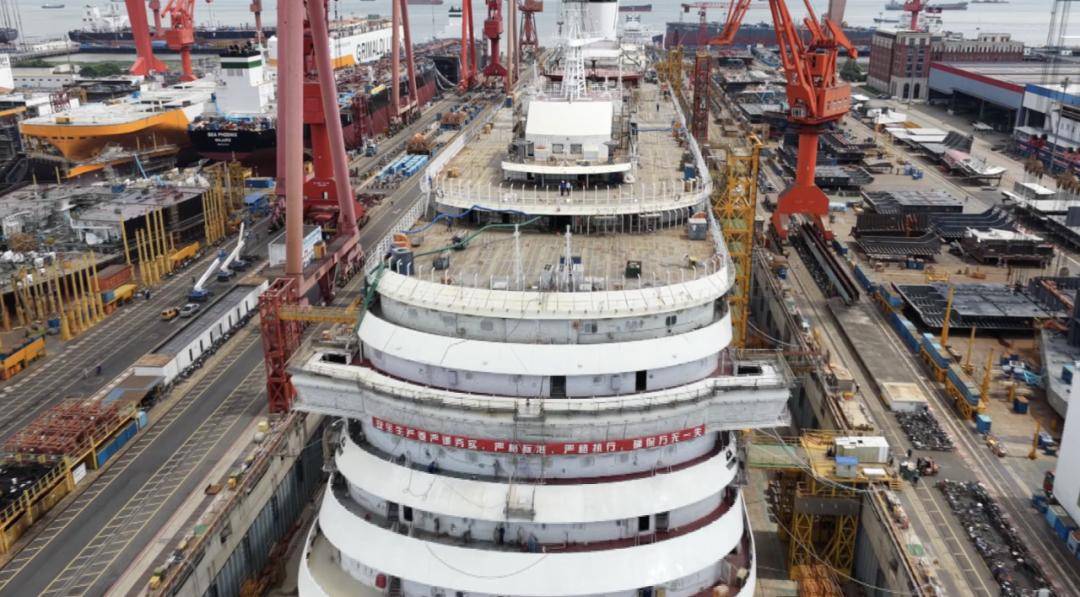
Core Insights - The article highlights the rapid advancements and achievements of China's shipbuilding industry, particularly at the Waigaoqiao Shipbuilding Factory, showcasing its ability to produce large vessels efficiently and competitively on a global scale [1][20]. Group 1: Shipbuilding Efficiency - The Waigaoqiao Shipbuilding Factory can complete the construction of a 10,000-ton vessel in just over 80 days, with the hull taking only 22 days to form [5][20]. - The construction process is meticulously managed, with each phase compared to a well-orchestrated symphony, ensuring strict adherence to timelines and quality standards [5][7]. Group 2: International Market Presence - Established in 1999, the Waigaoqiao Shipbuilding Factory has evolved into a significant international shipbuilding hub, with 90% of its orders coming from overseas clients [9]. - The factory has successfully built a reputation for quality and speed, leading international shipowners to prefer Chinese manufacturing over traditional shipbuilding nations like Japan and South Korea [20]. Group 3: High-End Cruise Ship Manufacturing - The factory is making strides in the high-end cruise ship sector, previously dominated by Italian and German shipyards, with plans to develop a complete cruise ship industry chain within 5 to 10 years [10][12]. - The construction of the second cruise ship, Aida Huacheng, has seen improvements in efficiency, reducing the build time by four months compared to the first ship [14]. Group 4: Technological Advancements - The use of advanced technologies such as laser cutting and intelligent welding has significantly enhanced the shipbuilding capabilities in China, allowing for the construction of larger vessels [16]. - The factory is currently developing an 11,800-car PCTC (Pure Car and Truck Carrier), which is expected to set new records in shipbuilding efficiency [19].
今治造船与住友重机械工业合作建造船体
日经中文网· 2025-09-28 03:28
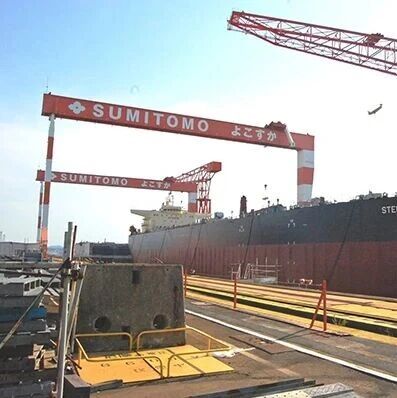
Core Viewpoint - The ongoing US-China tensions have led to the suspension of shipbuilding orders originally intended for China, creating opportunities for Japanese manufacturers like Imabari Shipbuilding and Sumitomo Heavy Industries to collaborate on new projects [1][5]. Group 1: Collaboration and Orders - Imabari Shipbuilding, with the assistance of Marubeni Corporation, will commission Sumitomo Heavy Industries' subsidiary, Sumitomo Heavy Industries Marine Engineering, to construct the hulls of two large oil tankers for Greek shipowners [1][3]. - The first tanker is expected to be completed in 2027, while the second is projected for completion in 2028 [3]. Group 2: Market Conditions and Strategic Decisions - Sumitomo Heavy Industries had initially planned to cease commercial shipbuilding by 2026, but due to deteriorating market conditions, it will temporarily continue shipbuilding at its Kanagawa shipyard [1][5]. - The shipyard was originally intended to transition to producing offshore wind power equipment, but rising construction costs have made the operating environment for offshore wind power challenging [5]. Group 3: Global Shipbuilding Demand - There is a strong global demand for shipbuilding, driven by the need to replace existing vessels and the recovery of the shipping market post-COVID-19 [5]. - Chinese manufacturers hold 70% of global new orders due to lower construction costs, but increased restrictions from the Trump administration have led shipping companies to reduce orders from Chinese firms [5]. Group 4: Challenges for Japanese Companies - Japanese shipbuilders are facing challenges related to insufficient construction capacity, with outstanding orders equivalent to approximately three years of production [6].
利比里亚首艘半工业化玻璃钢渔船启航 渔业现代化迈出历史性一步
Shang Wu Bu Wang Zhan· 2025-09-27 17:12
Core Insights - The delivery of Liberia's first semi-industrial fiberglass fishing vessel, "Sea King," marks a historic breakthrough in the country's fisheries sector [1] - The vessel was designed and built by SeaPride, an Omani marine engineering company, and funded through the World Bank's Liberia Sustainable Fisheries Management Project (LSMFP) [1] - This collaboration signifies advancements in Oman's shipbuilding industry and opens new avenues for international cooperation between Liberia and Oman [1] Industry Impact - The "Sea King" symbolizes Liberia's commitment to sustainable fisheries management and modernization [1] - The introduction of this modern fishing vessel is expected to significantly enhance Liberia's semi-industrial fishing capacity, increase the catch of high-value fish species, and boost supply to domestic and international markets [1] - The initiative is anticipated to create new job opportunities and economic growth, thereby improving the livelihoods of fishermen and enhancing national food security [1]
印度把问题归咎于外国,莫迪高喊自强口号,印度制造业却在空心化
Sou Hu Cai Jing· 2025-09-26 17:50
Group 1 - The core issue for India is its heavy reliance on foreign imports for essential goods, including oil, vehicle parts, and pharmaceuticals, which undermines its aspirations to become a strong nation [3][5][10] - India's manufacturing sector is significantly underdeveloped, with the country unable to produce even basic components like screws, highlighting a gap in its industrial capabilities compared to China [5][10] - The Indian government faces challenges in establishing manufacturing facilities due to bureaucratic inefficiencies, land disputes, and environmental legal issues, leading to delays in project completion [7][8] Group 2 - The Indian government's narrative of self-reliance is contradicted by the reality of its dependence on foreign technology for critical sectors like shipbuilding and semiconductor production [3][10] - There is a lack of effective talent retention in India, as many skilled professionals prefer to work abroad due to poor infrastructure and bureaucratic hurdles at home [5][8] - The current strategic direction of India's development is criticized for being unrealistic and overly focused on IT and services, neglecting the foundational importance of manufacturing [8][10]
美国造船业绞索已套上中国企业脖子:一场关乎全球海运的生死博弈
Sou Hu Cai Jing· 2025-09-26 09:43
Core Viewpoint - The U.S. has implemented a new policy targeting China's shipbuilding industry, imposing additional service fees on Chinese-built ships entering U.S. ports, aiming to curb China's dominance in shipbuilding and support its own shipyards [2][3]. Group 1: U.S. Policy and Its Implications - The U.S. Trade Representative's office announced a policy on February 21, 2025, requiring additional fees for Chinese-built ships, starting from October 14, with fees set at $50 per ton for Chinese ships and $18 per ton or $120 per container for non-Chinese ships [2]. - The policy stems from a Section 301 investigation initiated on April 17, 2024, which highlighted China's subsidies and market practices, leading to significant cost increases for Chinese ships entering U.S. ports [3]. - The average cost for a large Chinese-built ship could double, resulting in an increase of $200 per TEU (Twenty-foot Equivalent Unit) for shipping costs, which poses challenges for global trade [3]. Group 2: China's Shipbuilding Industry Performance - China's shipbuilding industry has been performing exceptionally well, with a completion rate of 55.7% of global shipbuilding, 74.1% of new orders, and 63.1% of hand-held orders as of January 16, 2024 [5]. - China leads in 14 out of 18 major ship types, including bulk carriers, oil tankers, and container ships, and has captured over 70% of global orders for green ships in the first three quarters of 2024 [5]. Group 3: Impact on Global Shipping and Competitors - Following the U.S. policy announcement, Chinese ship orders plummeted, with Norwegian and European shipping giants redirecting 30% of their orders to South Korean shipyards, which are now benefiting from the situation [6]. - South Korean shipyards, such as Hyundai Heavy Industries and Samsung Heavy Industries, have introduced "zero-risk compensation clauses" to attract clients and have seen a 25% increase in order tonnage by July [6]. - The global shipping chain has been disrupted, leading to increased shipping costs for high-value goods and a significant drop in shipping stocks on Wall Street [9]. Group 4: China's Countermeasures - In response to the U.S. policy, China has initiated reciprocal measures, including additional fees on Boeing aircraft entering Chinese ports and antitrust investigations into Qualcomm, impacting U.S. companies heavily reliant on the Chinese market [11]. - Chinese shipyards are upgrading their equipment and improving efficiency to capture markets in Southeast Asia and India, maintaining their leading position in global orders [11]. Group 5: Long-term Industry Dynamics - The ongoing trade conflict represents a struggle for global maritime influence, with shipping accounting for over 90% of world trade, and future trends leaning towards green transformation and digitalization [12]. - Despite U.S. efforts to regain its shipbuilding industry, analysts suggest that China's market share will remain above 60%, as the resilience of its industrial chain and international cooperation will enable it to adapt [12][14].
295米LNG巨轮交付 中国造船业在高端船舶建造领域取得新突破
Yang Guang Wang· 2025-09-25 03:48
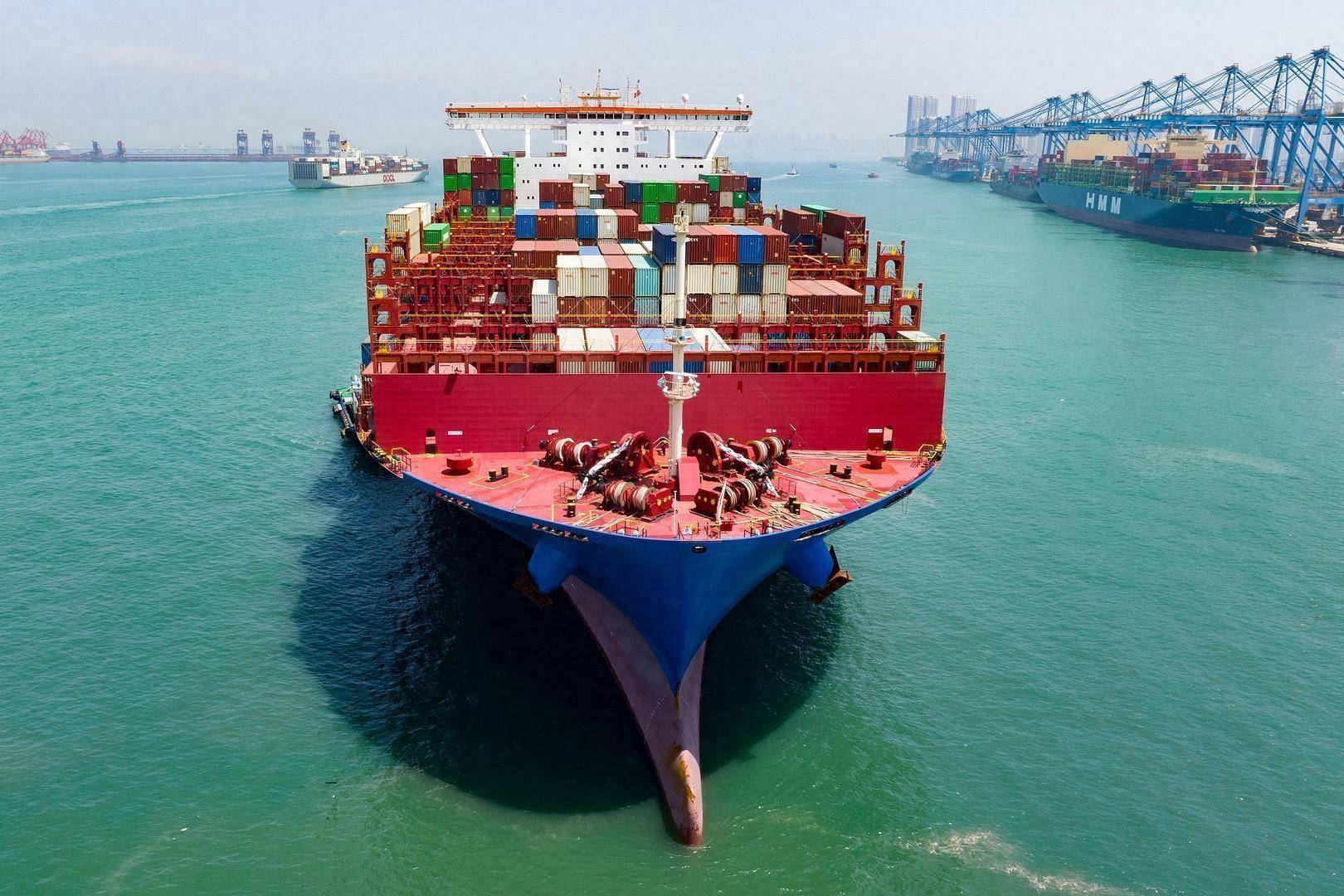
Core Insights - China's self-designed and built 175,000 cubic meter LNG carrier was officially delivered, enhancing the country's capabilities in high-value shipbuilding [1] - The LNG carrier can meet the gas demand of Dalian city for one and a half months when fully loaded, and is capable of docking at most large LNG terminals globally [1] - The successful construction of this LNG carrier marks a significant achievement for Dalian Shipbuilding, which has entered this complex shipbuilding sector and achieved "first ship meets standards, delivery leads" [1] Industry Developments - Dalian Shipbuilding has optimized production processes and innovated construction techniques, achieving standardized and efficient LNG shipbuilding, reaching world-class levels [1] - The company currently holds orders for 17 LNG carriers, with 13 already under construction, establishing a leading capacity advantage in batch orders and production [1] - Dalian Shipbuilding, alongside two top shipyards in Shanghai, has significantly improved China's market share in LNG carrier construction, transitioning from a rudimentary stage to a more advanced collaborative phase [2]