休闲零食

Search documents
食品饮料行业周报:稳步经营,把握结构性机会-2025-03-11
Shanghai Securities· 2025-03-11 05:15
Investment Rating - The report maintains an "Accumulate" rating for the food and beverage industry [1] Core Views - The food and beverage sector is expected to gradually recover, with companies like Luzhou Laojiao and Wuliangye showing strong growth potential [3][4] - The report highlights structural opportunities within the industry, particularly in high-end and real estate liquor segments [16] Summary by Sections Weekly Insights and Investment Recommendations - Luzhou Laojiao's market scale reached a new high, with expectations for steady growth in 2024 [21] - Wuliangye announced a 2025 investment plan of 2.586 billion yuan across 19 projects, focusing on ecological brewing and smart logistics [22] - Jinshiyuan aims to expand its market share in the 100-500 yuan price range while maintaining operational quality [23] - Red Flower Liquor introduced a new promotional campaign to enhance consumer engagement [24] - Guizhou Zhenjiu launched a limited edition product to celebrate its 50th anniversary, emphasizing premium quality [25] Market Performance Review - The SW Food and Beverage Index rose by 0.74%, underperforming the CSI 300 by 0.65 percentage points [34] - The white liquor sector saw a 1.53% increase, while other liquor categories also performed positively [34] Industry Important Data Tracking - The report provides insights into the white liquor sector, noting a production decline of 7.6% year-on-year in December 2024 [47] - The beer sector experienced a 12.2% year-on-year increase in production in December 2024 [49] Investment Suggestions - Recommendations include focusing on high-demand segments and structural opportunities in white liquor, with specific companies highlighted such as Luzhou Laojiao and Jinshiyuan [16] - For beer, companies like Qingdao Beer and Chongqing Beer are suggested due to their clear product optimization trends [16] - In soft drinks, East Peng Beverage is noted for its steady national expansion [16] - The report also emphasizes the potential in frozen food and snack sectors, recommending companies like Anjixin and Qianwei Central Kitchen [16]
雀巢全吞徐福记
36氪· 2025-03-05 23:59
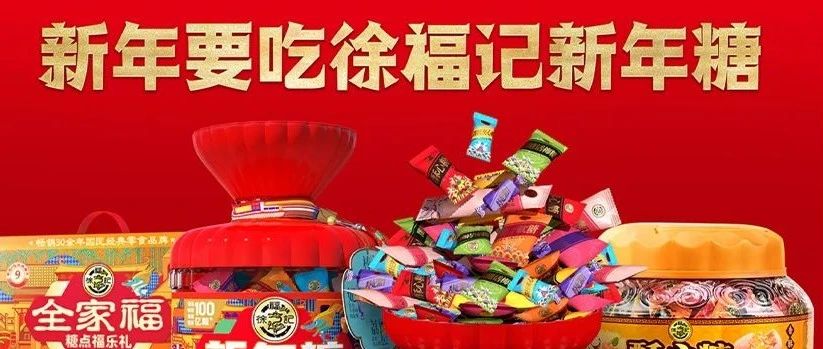
Core Viewpoint - Nestlé has acquired Xu Fu Ji, marking another domestic brand moving into foreign ownership, which reflects ongoing trends in the Chinese candy market [2][3]. Group 1: Historical Context - The control of Xu Fu Ji was relinquished by the Xu family 14 years ago, with Nestlé acquiring 60% of the company for $1.7 billion, positioning itself in the largest candy enterprise in China [4]. - The Xu family, originally from Taiwan, established Xu Fu Ji and expanded into mainland China in the 1990s, successfully capturing the high-end candy market with their New Year candy products [6][7]. Group 2: Market Dynamics - The Chinese candy market, despite a shrinking trend, remains significant, valued at nearly 100 billion yuan, attracting interest from major players like Mars and PepsiCo [4]. - The market has seen a decline in festive candy consumption, dropping from 50% to 30% over the past decade, with the overall candy market size decreasing from 90 billion yuan in 2017 to 85 billion yuan in 2023 [9][10]. Group 3: Company Evolution - Xu Fu Ji has transitioned from a traditional candy company to a broader snack enterprise, introducing products like sugar-free chocolate and aiming for over 10 billion yuan in sales by 2027 [10]. - The company has been recognized for its growth potential within Nestlé's portfolio, contributing 16.1% to Nestlé's sales in the Greater China region [7][13]. Group 4: Leadership Changes - Following Nestlé's initial investment, the Xu family gradually stepped back from management, with professional managers taking over leadership roles to adapt to market changes [12][13]. - The recent acquisition of the remaining 40% stake by Nestlé signifies the complete transition of Xu Fu Ji into the Nestlé ecosystem, with the Xu family's influence now fully removed [11][13].

良品铺子再换帅,零食巨头急需突围?
虎嗅APP· 2025-03-04 13:32
Core Viewpoint - The article discusses the significant leadership change at the snack brand Liangpinpuzi, highlighting the resignation of Chairman and CEO Yang Yinfeng and the appointment of Cheng Hong as the new chairman and acting CEO. The company faces challenges in achieving its performance goals, with declining revenues and profits, attributed to pricing strategies and market competition [1][3][5]. Company Overview - Liangpinpuzi announced a major personnel change after 16 months, with Yang Yinfeng resigning for personal reasons and Cheng Hong taking over [1][2]. - Yang Yinfeng's tenure as chairman lasted less than two years, during which he aimed to balance profit and pricing but struggled to achieve desired results [2][3]. Financial Performance - For the first half of 2024, Liangpinpuzi reported revenues of 3.886 billion yuan, a year-on-year decrease of 2.52%. The net profit, excluding non-recurring items, plummeted by 93.97% to only 7.46 million yuan, with cash flow net amount down 90.81% [3]. - The company anticipates a loss of 25 million to 40 million yuan for the full year 2024, with net profit projected to be between -70 million and -50 million yuan [3]. Strategic Adjustments - Liangpinpuzi's losses are attributed to a strategy of "lower prices without compromising quality," which involved price reductions on certain products and adjustments in product structure, negatively impacting gross margins [3][4]. - The company implemented its largest price cut in 17 years shortly after Yang's appointment, aiming to enhance market share and supply chain efficiency, but this led to a continuous decline in gross margins [4]. Leadership Transition - Cheng Hong, the new chairman, has a background in researching Liangpinpuzi's "high-quality development model" and has been involved in strategic assessments of the company's operations [5]. - Analysts believe Cheng's leadership will focus on product innovation, digital operations, and brand value reconstruction to better connect with younger consumers [5]. Industry Context - The snack industry is undergoing a transformation towards quality competition, with consumers increasingly demanding healthier and innovative products. The traditional price-driven growth model is becoming less effective [11]. - Liangpinpuzi's management change is seen as a response to the need for specialized governance and strategic focus to navigate industry fragmentation and enhance competitive positioning through quality-driven differentiation [11]. Future Opportunities - Analysts suggest that Liangpinpuzi should focus on "demand segmentation and scenario innovation" to identify growth points, particularly in health-oriented snacks and enhancing consumer experience through community engagement and differentiated marketing strategies [12]. - The company has potential opportunities in the mid-to-high-end snack market, but it must prioritize product development and innovation to remain competitive [12].


食品饮料行业周报:地产数据回暖,行业基本面有望逐步改善
Tebon Securities· 2025-03-04 05:23
Investment Rating - The report maintains an "Outperform" rating for the food and beverage industry [2] Core Views - The food and beverage industry is expected to gradually improve due to signs of recovery in real estate data and supportive policies [5][8] - The report highlights three main investment themes for 2025: focusing on industry leaders with strong fundamentals, companies that may benefit from demand recovery, and those undergoing management improvements [5][8] Summary by Sections Weekly Insights - The liquor sector saw a 1.64% increase, outperforming the CSI 300 index by 3.86% during the week of February 24-28, 2025 [5][8] - Key stocks such as Jinse Yuan (+12.12%) and Zhenjiu Lidu (+8.37%) led the gains [5][8] Market Performance - The food and beverage sector outperformed the CSI 300 index by 3.99 percentage points, with a weekly increase of 1.77% compared to a 2.22% decline in the index [15] - Various sub-sectors showed positive trends, including snacks (+4.30%) and meat products (+3.52%) [16] Key Data Tracking - As of February 28, 2025, the overall valuation of the food and beverage sector was 20.25x (PE-TTM), significantly higher than the CSI 300's 12.55x [20] - The liquor segment's valuation was noted at 19.50x, while snacks and health products were at 32.11x [20] Company Announcements - Jinse Yuan reported a significant increase in sales, with a 72% growth in its V3 product line [47] - Other companies like Salted Fish and Anqi Yeast also made notable announcements regarding their performance and future projects [43]
雀巢13年后再出手,拟全资控股糖果龙头徐福记 创始人家族逐渐退居幕后
Zheng Quan Shi Bao Wang· 2025-03-03 05:53
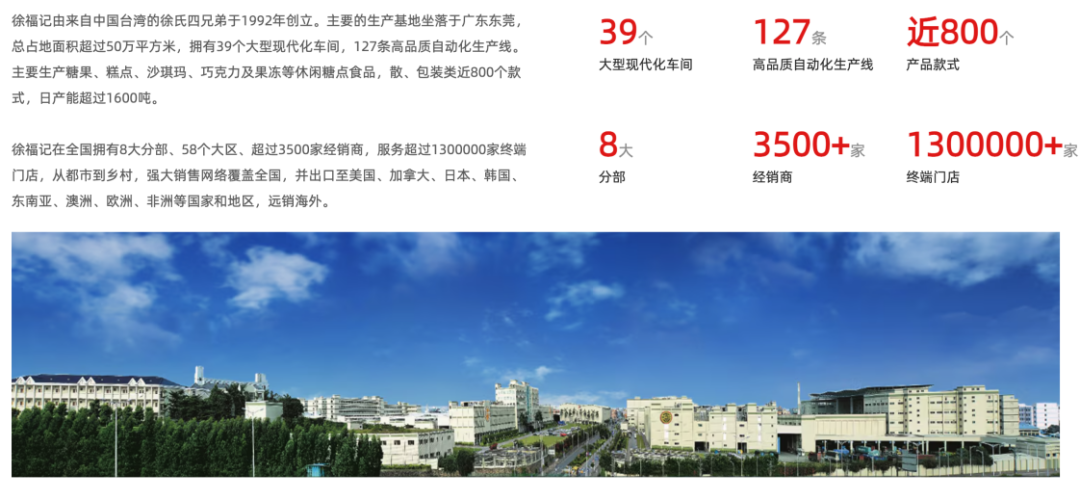
Core Insights - Nestlé is acquiring the remaining 40% stake in Xu Fu Ji, achieving full ownership after previously acquiring 60% in 2011 for $1.7 billion, indicating a strategic move in the evolving Chinese candy market [1][4] Company Overview - Xu Fu Ji, founded in 1992, has transformed from a leading candy brand to a diversified product line including pastries, chocolates, and jellies, with over 3,500 distributors and 130,000 retail outlets [2][3] - The company has 39 modern production facilities and 127 high-quality automated production lines, showcasing its operational scale [2] Market Position - Xu Fu Ji holds the top market share in bulk candy, chocolate, and pastries, with over 30% market share in bulk candy and chocolate, and second place in bulk jelly [3] - The company has experienced an average annual growth rate of 8% in production value over the past three years, with double-digit growth expected in 2024 [3][4] Financial Performance - In 2024, Nestlé's sales in Greater China reached approximately 50 billion Swiss francs, with a 2.1% organic growth rate, significantly driven by the candy business [4][5] - The candy segment accounted for 16.1% of total sales in Greater China and 9.2% globally, indicating substantial growth potential [5] Strategic Direction - Nestlé aims to enhance its candy business by focusing on high-growth categories and integrating its products and technologies with Xu Fu Ji, leveraging global R&D capabilities [6][7] - The acquisition aligns with Nestlé's strategy to invest in growth-driving factors and expand market share, particularly in the snack and candy sectors [6][7]

食品饮料行业周报:具备经营韧性,板块有望逐步修复
Shanghai Securities· 2025-03-03 03:03
Investment Rating - The report maintains an "Overweight" rating for the food and beverage industry [1] Core Viewpoints - The food and beverage sector is expected to gradually recover, supported by resilient operations and structural opportunities within the industry [4][16] Summary by Sections Industry Overview - In 2024, Anhui's large-scale liquor enterprises achieved revenue of 37.58 billion yuan, a year-on-year increase of 9.2%, with total profits reaching 12.77 billion yuan, up 13.2% [4][21] - The liquor industry in Lüliang aims for a revenue target exceeding 70 billion yuan in 2025, with a focus on enhancing production capacity and quality [4][22] - The Sichuan liquor group targets a revenue of 40 billion yuan in 2025, emphasizing innovation and brand development [5][22] - Xishui aims for a liquor output value exceeding 30 billion yuan in 2025, continuing to strengthen its position as a major liquor production base [6][23] Key Company Performances - Qiaqia Food reported a revenue of 7.131 billion yuan in 2024, a growth of 4.79%, driven by high-end products [7][24] - Budweiser Asia Pacific's 2024 revenue was approximately 45.31 billion yuan, a decrease of 7.0%, with a notable decline in the Chinese market [10][25] - Dongpeng Beverage launched a new product "Fruit Tea" aimed at the lower-tier market, reflecting a growing demand for cost-effective, large-packaged beverages [11][26] Investment Recommendations - For liquor, focus on companies like Luzhou Laojiao, Jiuzi Liquor, and others that cater to both high-end and real estate segments [16][30] - In the beer sector, consider Qingdao Beer and Chongqing Beer for their product optimization and market expansion strategies [16][30] - For soft drinks, Dongpeng Beverage and Bai Run Co. are recommended for their national expansion and clear product matrix [16][30] - In the frozen food segment, companies like Anji Food and Qianwei Central Kitchen are highlighted for their potential growth [16][31] - For snacks, attention is drawn to Salted Fish and Qiaqia Food for their channel expansion and performance recovery [16][31]
食品饮料板块投资机会全解析
雪球· 2025-02-28 09:12
Group 1: Baijiu Industry - The current PE-TTM for the baijiu sector is 19.31 times, which is at the 6.18% percentile over the past decade, indicating significant safety margins [1] - High-end baijiu brands like Kweichow Moutai and Wuliangye are expected to maintain market share through "price protection and volume control" strategies, with projected net profit growth rates of 13.3% and 12.7% for 2024 respectively [1] - Regional leaders such as Shanxi Fenjiu and Jinshiyuan are benefiting from channel penetration and the recovery of banquet scenarios, with sales growth expected to exceed 30% during the 2025 Spring Festival [1] Group 2: Consumer Goods - The beer sector continues to see high-end trends, with Qingdao Beer achieving an ASP of 4200 yuan per thousand liters and Yanjing Beer having over 25% revenue contribution from its U8 flagship product [3] - Functional beverages like Dongpeng Beverage, which holds a 31% market share, are rapidly expanding into coffee and energy tea, with a projected revenue growth of 45% year-on-year by Q4 2024 [4] - Health drinks such as Xiangpiaopiao's zero-sugar freeze-dried fruit tea have seen online sales double, with a projected PE of only 20 times in 2025 [5] Group 3: Snacks and Prepared Foods - Online sales for snack brands like Three Squirrels have surged, with a 200% year-on-year increase in GMV through Douyin, while Yanjinpuzi's quail egg product has annual sales of 1 billion [7] - The prepared food sector is benefiting from B-end restaurant recovery and C-end penetration, with companies like Anjifood seeing 30% of their revenue from prepared foods after acquiring Frozen Food Mr. [8] Group 4: Seasoning and Baking Supply Chain - Leading seasoning brands like Haitian Flavoring have reduced channel inventory to 2.5 months, while Qianhe Flavoring has over 50% revenue from zero-additive soy sauce, benefiting from restaurant recovery and household consumption upgrades [10] - Yeast leader Angel Yeast is experiencing over 25% growth in overseas revenue due to capacity release and cost reductions [11] - Innovations in raw materials are seen in companies like Lihai Foods, which has a 60% year-on-year increase in cream revenue, and Huirong Technology, with 30% of its plant-based cream revenue coming from exports [12] Group 5: New Tea Beverage Supply Chain - The IPO of Mixue Ice City has a significant impact, with a frozen capital of 1.77 trillion HKD, benefiting related A-share companies in the supply chain [14] - Companies like Anjifood and Xianle Health are positioned as suppliers of jam and frozen fruits, while Yudong Technology and Hexing Packaging are focusing on eco-friendly solutions and cost advantages in packaging materials [15][16] - The global expansion plan of Mixue, with 46,000 stores, could lead to a 30%+ increase in orders for supply chain companies [17] Group 6: Policies and Industry Trends - The Chinese government's "restore and expand consumption" policy is expected to result in over 300 billion yuan in consumer subsidies by 2025, directly benefiting the food and beverage sector [18] - Retail sales are projected to grow by 3.5% year-on-year in 2024, with health food categories (low-sugar/low-fat) expected to exceed 20% growth [19] - Valuation shifts are evident, with many sub-sectors like seasoning having a PE of 28 times compared to a historical average of 40 times, alongside noticeable foreign capital inflows [19]