
太阳能

Search documents
斯凯蒙太阳能上涨2.59%,报0.867美元/股,总市值2340.36万美元
Jin Rong Jie· 2025-12-16 15:19
Core Viewpoint - SkyMoon Solar (PN) has shown a modest increase in stock price, reflecting market interest despite a decline in net profit, indicating potential challenges ahead for the company [1]. Financial Performance - As of March 31, 2025, SkyMoon Solar reported total revenue of $24.1763 million, representing a year-over-year growth of 7.53% [1]. - The company experienced a net profit of -$65,800, which is a significant decrease of 117.41% compared to the previous year [1]. Company Overview - SkyMoon Solar Group Limited is a foreign holding company registered in the Cayman Islands, primarily operated by its domestic subsidiaries [1]. - The company designs, develops, manufactures, and sells solar photovoltaic products and solar system solutions through its wholly-owned subsidiaries, including Ningbo SkyMoon and Zhejiang Punait [1]. - Additionally, SkyMoon Solar provides high-performance computing (HPC) products through its subsidiaries Ningbo Dcloud Information and Zhejiang SkyMoon [1].

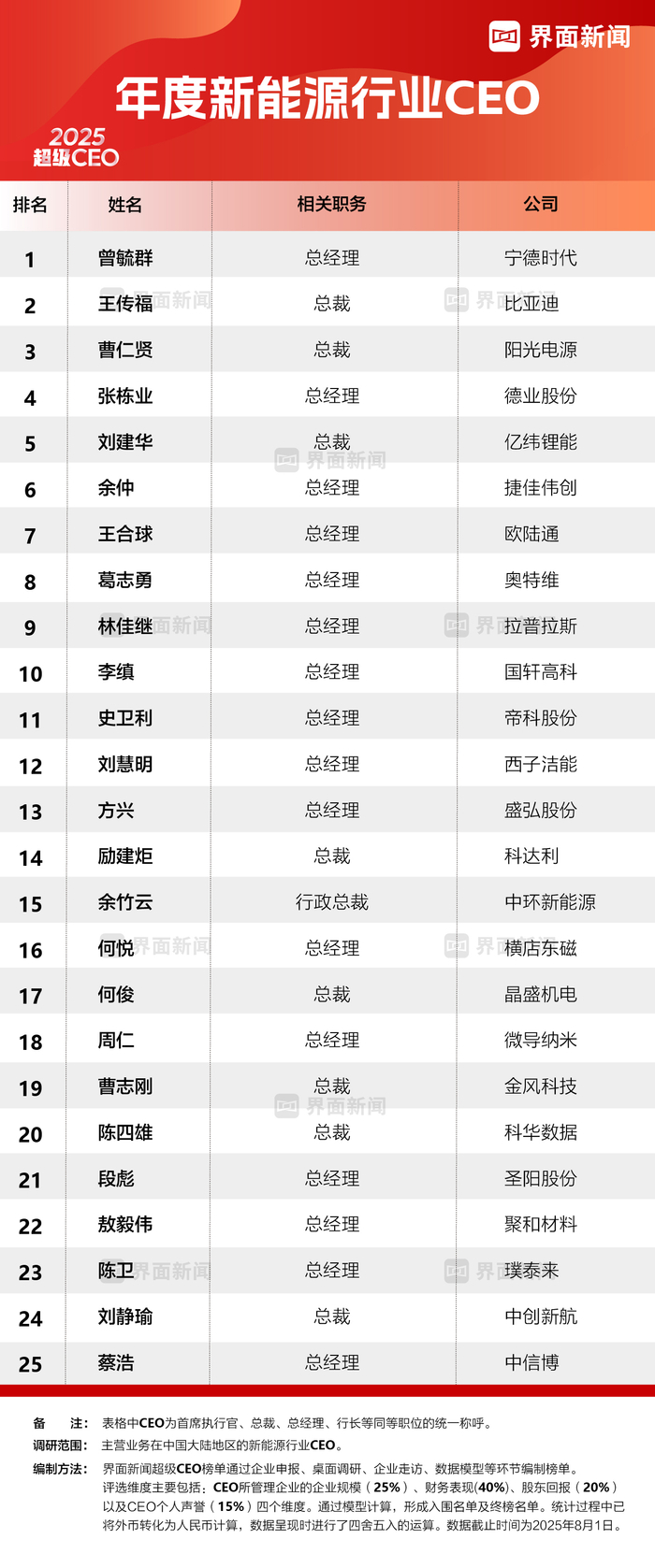
界面新闻2025年度新能源行业CEO榜单发布:宁德时代曾毓群蝉联榜首
Xin Lang Cai Jing· 2025-12-16 08:09
Core Insights - The article highlights the continuous growth and development of the renewable energy sector in China, emphasizing the significant contributions of various energy sources such as solar, wind, and lithium batteries to the country's carbon neutrality goals [1][6]. Renewable Energy Growth - China's renewable energy sector is on track to meet its carbon peak and carbon neutrality goals, with renewable energy accounting for nearly 60% of the total installed capacity as of June 2023 [1]. - In the first half of 2023, the newly installed renewable energy capacity reached 268 million kilowatts, a year-on-year increase of 99.3%, representing 91.5% of the total new installations [1]. - Renewable energy generation accounted for approximately 39.7% of the total electricity generation in the first half of 2023, with a total generation of 1,799.3 billion kilowatt-hours, marking a 15.6% increase year-on-year [2]. Policy and Market Trends - By 2025, the renewable energy sector is expected to undergo a policy shift focusing on quality and efficiency rather than just expansion, aiming to enhance energy security and promote a green transition [2]. - The solar industry is set to see a significant increase in new installations, with an expected 27.8 million kilowatts added in 2024, a 28% year-on-year growth [3]. Wind Energy Development - Wind energy is crucial for optimizing China's energy structure, with plans to accelerate the construction of large wind power bases and promote offshore wind development [4]. - In 2024, the newly installed wind power capacity is projected to reach 79.82 million kilowatts, a 6% increase, with total installed capacity expected to reach 521 million kilowatts by the end of the year [4]. Lithium Battery Industry - The lithium-ion battery industry is experiencing rapid growth, with a total output expected to exceed 1.2 trillion yuan in 2024, and production reaching 1,170 GWh, a year-on-year increase of over 24% [5]. - The export volume of lithium batteries is projected to reach 3.91 billion units in 2024, setting a new historical record [5]. CEO Performance and Company Insights - The article presents the 2024 Super CEO list, highlighting the performance of CEOs in the renewable energy sector, with a median revenue growth of 14.44% and a net profit growth of 18.25% among the listed companies [9]. - Notable CEOs include Zeng Yuqun from CATL, who led the company to achieve a revenue of 362.01 billion yuan in 2024, despite a 9.7% year-on-year decline, while net profit increased by 15.01% [15]. - The CEO of Sungrow, Cao Renxian, reported a revenue of 77.86 billion yuan in 2024, with a net profit increase of 16.92% [16]. - Jin Feng Technology's CEO, Cao Zhigang, achieved a revenue of approximately 56.70 billion yuan in 2024, with a net profit growth of 39.78% [17].





2025年10月中国太阳能电池出口数量和出口金额分别为12.83亿个和22.58亿美元
Chan Ye Xin Xi Wang· 2025-12-16 03:27
Core Insights - The report by Zhiyan Consulting highlights the competitive landscape and investment recommendations for the solar cell industry in China from 2026 to 2032 [1] Export Data - In October 2025, China's solar cell exports reached 1.283 billion units, marking a year-on-year increase of 73.1% [1] - The export value for the same period was $2.258 billion, reflecting a year-on-year growth of 4.4% [1] Company Profile - Zhiyan Consulting is recognized as a leading industry consulting firm in China, specializing in in-depth industry research reports, business plans, feasibility studies, and customized services [1] - The company has over a decade of experience in the industry research field, providing comprehensive industry solutions to empower investment decisions [1]

爱旭股份回应在德国被诉专利侵权
Bei Jing Ri Bao Ke Hu Duan· 2025-12-16 01:35
Core Viewpoint - Aiko Solar denies allegations of patent infringement made by Maxeon Solar in a lawsuit filed in Germany, asserting that their ABC products do not violate the EP2297789 patent [1] Group 1: Company Response - Aiko Solar has issued a statement regarding the lawsuit, emphasizing that they have verified through their intellectual property team and European legal partners that their ABC products fundamentally differ from the EP2297789 patent [1] - The company plans to actively respond to the lawsuit and collaborate closely with global partners to defend their rights [1] - Aiko Solar commits to providing timely updates on the progress of the lawsuit [1] Group 2: Legal Context - The lawsuit was filed by Maxeon Solar in the Munich District Court, alleging infringement of the EP2297789 patent [1] - The EP2297789 patent is related to a patent (EP2297788) that was previously rejected by a Dutch court in a temporary injunction request by Maxeon Solar [1]

晶科能源上涨2.05%,报26.165美元/股,总市值13.51亿美元
Jin Rong Jie· 2025-12-16 01:05
Core Viewpoint - JinkoSolar (JKS) has experienced a stock price increase of 2.05% on December 16, with a current share price of $26.165 and a total market capitalization of $1.351 billion, despite facing significant declines in revenue and net profit for the fiscal year ending March 31, 2025 [1]. Financial Performance - As of March 31, 2025, JinkoSolar reported total revenue of 13.844 billion RMB, representing a year-over-year decrease of 39.93% [1]. - The company recorded a net profit attributable to shareholders of -1.319 billion RMB, reflecting a substantial year-over-year decline of 316.42% [1]. Upcoming Events - JinkoSolar is scheduled to disclose its fiscal year 2025 interim report on September 26, with the actual release date subject to company announcement [1]. Company Overview - JinkoSolar Holding Co., Ltd. (NYSE: JKS) provides solar products, solutions, and technical services to ground-mounted, commercial, and residential customers across various countries, including China, the USA, Japan, Germany, the UK, Chile, South Africa, India, Mexico, Brazil, UAE, Italy, Spain, France, Belgium, and others [1]. - The company has a vertically integrated production capacity, with approximately 9 GW of silicon ingot and wafer capacity, 5 GW of cell capacity, and 9 GW of module capacity as of June 30, 2018 [1].


不存在侵权!爱旭股份回应在德国被诉专利侵权
Bei Jing Ri Bao Ke Hu Duan· 2025-12-15 15:30
Core Viewpoint - Aiko Solar has issued a statement regarding a new patent infringement lawsuit filed by Maxeon Solar in a Munich court, claiming that Aiko's ABC products infringe on its EP2297789 patent, which is related to a previously rejected request for a temporary injunction in the Netherlands [1] Group 1 - Aiko Solar is aware of the lawsuit and has confirmed through its intellectual property team and European legal partners that its ABC products fundamentally differ from Maxeon's EP2297789 patent technology, indicating no infringement [1] - The company plans to actively respond to the lawsuit and collaborate closely with global partners to defend its legitimate rights [1]
斯凯蒙太阳能上涨6.85%,报0.807美元/股,总市值2178.09万美元
Jin Rong Jie· 2025-12-15 15:16
Group 1 - The core viewpoint of the article highlights the performance of SkyMoon Solar, which saw a stock price increase of 6.85% on December 15, reaching $0.807 per share, with a total market capitalization of $21.78 million [1] - As of March 31, 2025, SkyMoon Solar reported total revenue of $24.18 million, reflecting a year-on-year growth of 7.53% [1] - The company experienced a net profit attributable to shareholders of -$6.58 thousand, which represents a significant decline of 117.41% compared to the previous year [1] Group 2 - SkyMoon Solar Group Limited is a foreign holding company registered in the Cayman Islands, primarily operated by its domestic subsidiary, SkyMoon Solar Group Co., Ltd [1] - The company designs, develops, manufactures, and sells solar photovoltaic products and solar system solutions through its wholly-owned subsidiaries, including Ningbo SkyMoon and Zhejiang Punait [1] - Additionally, SkyMoon Solar Group provides high-performance computing (HPC) products through its indirect wholly-owned subsidiaries, Ningbo Dcloud Information and Zhejiang SkyMoon [1]
特朗普带美国重走“大清老路”,给14亿中国人看了出好戏
Sou Hu Cai Jing· 2025-12-15 08:55
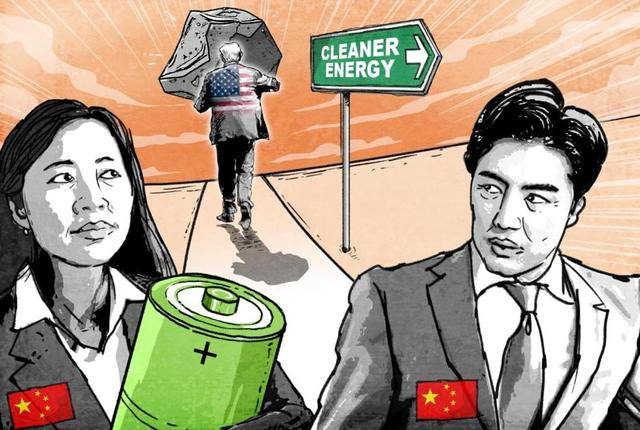
Core Viewpoint - The article critiques the U.S. government's shift away from clean energy policies under the Trump administration, likening it to a historical regression that could jeopardize the country's energy future and global standing in clean technology [1][3][20]. Energy Policy Shift - The Trump administration has publicly reversed the previous encouragement of clean energy, announcing a significant investment in coal and terminating tax incentives for electric vehicles and renewable energy sources [3][5]. - The approval process for wind and solar projects has been centralized at the federal level, leading to delays and increased bureaucratic hurdles for new projects [5][12]. Stability and Supply Concerns - The shift in energy policy raises concerns about the stability of electricity supply, with reports indicating potential severe shortages and increased frequency of power outages in extreme weather conditions [7][9]. - The administration attributes rising electricity prices to renewable energy sources, despite evidence suggesting that clean energy could enhance supply capacity [7][9]. Industry and Global Position - U.S. clean energy companies face challenges due to increased tariffs and barriers, which hinder their competitiveness and long-term planning [9][11]. - The U.S. withdrawal from the green transition could diminish its influence in global energy markets, allowing countries like China to fill the void and advance their own clean energy initiatives [11][20]. Internal Resistance and State-Level Actions - Despite federal policy changes, several states, particularly those leading in energy transition, continue to pursue their own clean energy projects, indicating a disconnect between federal and state-level policies [12][14]. - There is notable dissent within the Republican Party regarding the energy policy, with some members advocating for the continuation of wind energy projects due to their economic benefits [14][16]. Market Dynamics and Future Implications - The declining costs of wind and solar energy mean that many projects can remain profitable without government subsidies, suggesting that market forces may continue to drive clean energy development despite federal opposition [14][16]. - The article emphasizes that the U.S. is at risk of falling behind in the global energy transition, as its policy reversals create uncertainty for businesses and investors [18][20].
广发宏观:有效需求不足凸显,政策加力空间打开
GF SECURITIES· 2025-12-15 08:30
Economic Overview - Effective demand remains significantly insufficient, with industrial added value in November increasing by 4.8% year-on-year, slightly down from 4.9% in the previous period[3] - Retail sales growth has notably slowed to 1.3% year-on-year, down from 2.9% previously[3] - Fixed asset investment year-on-year remains stable at approximately -11%, consistent with the previous value of -11.2%[5] Sector Performance - High-tech industry added value rose by 8.4% year-on-year, up from 7.2% previously[4] - Exports showed resilience with a year-on-year growth of 5.9%, recovering from a decline of 1.1%[3] - Real estate sales area decreased by 17.1% year-on-year, an improvement from a 18.6% decline previously, while sales revenue fell by 24.7%, worsening from a 24.1% decline[5] Investment Trends - Fixed asset investment in November decreased by 11.1% year-on-year, with manufacturing investment down by 4.5% and real estate investment down by 30.1%[5] - The construction area for new projects fell by 27.6% year-on-year, while the area under construction dropped by 40%[5] - The total investment in fixed assets for the first 11 months of the year showed a year-on-year decline of 2.6%, with non-real estate fixed asset investment increasing by 0.8%[5] Policy Implications - The central economic work conference highlighted the need to address the "strong supply and weak demand" contradiction and to stimulate investment and consumption[7] - The potential for policy measures to strengthen demand has opened up following the release of November's economic data[7]
马斯克:建造核聚变反应堆“愚蠢至极”
Xin Lang Cai Jing· 2025-12-15 08:15
Core Viewpoint - Elon Musk publicly criticized nuclear fusion power, stating that building small nuclear fusion reactors on Earth is economically foolish, as the sun itself is a massive, free nuclear fusion reactor capable of meeting all energy needs in the solar system [1][6]. Group 1: Solar Energy Advocacy - Musk has previously predicted that solar energy will become the most important energy source for human civilization [3][8]. - In a 2023 podcast, Musk mentioned that a solar panel measuring 100 miles by 100 miles could meet the entire electricity demand of the United States [3][8]. - Musk's latest plan involves deploying 100 GW of solar-powered AI satellites annually, which would equate to about a quarter of the total electricity consumption of the U.S. [3][8]. Group 2: Space Energy Solutions - Musk emphasized that as computing clusters grow, the demand for power and cooling will exceed what ground infrastructure can support [3][8]. - To achieve a sustained computing capacity of 200 GW to 300 GW, large and expensive power plants would need to be built, as a typical nuclear power plant generates about 1 GW [3][8]. - In space, continuous solar energy can be utilized without the need for batteries, as sunlight is always available, and solar panels would be cheaper due to the absence of glass or frames, with cooling achieved through radiation [3][8]. Group 3: Tesla's Solar Business - Tesla's solar business is undergoing a revival, with the company announcing the production of new solar panels at its Buffalo, New York factory, with the first products expected to be delivered in Q1 2026 [4][9]. - Last year, Tesla's solar installation volume hit a low point, leading the company to stop publicly reporting related data [4][9].
