科研

Search documents
黑龙江发布成果转化改革攻坚方案
Ke Ji Ri Bao· 2025-07-08 02:07
Core Viewpoint - The Heilongjiang Province has launched a reform plan aimed at transforming the technology transfer system in universities and research institutions, with a goal to empower researchers and enhance the commercialization of scientific achievements [2][3] Group 1: Reform Measures - The plan includes seven breakthrough reform measures targeting the core issues of technology transfer, addressing the long-standing challenges of reluctance and inability to commercialize research outcomes [2] - A "one-stop" service system will be established to simplify the internal approval processes for technology transfer, significantly shortening the path from laboratory to market [2] - The introduction of a professional sequence for technology managers in the title evaluation system aims to alleviate career development bottlenecks for technology transfer personnel [2] Group 2: Empowerment and Incentives - The plan fully implements the reform of granting ownership of work-related scientific achievements to researchers, shifting from a model of "results first, then consider transfer" to "empowerment first, then integrated promotion of creation and transfer" [3] - It encourages universities and research institutions to license technology to enterprises on a "pay after use" basis, utilizing flexible payment methods such as "zero threshold fees + phased payments + revenue sharing" [3] Group 3: Evaluation and Impact - A technology transfer index evaluation system will be established to assess the effectiveness of the reforms, based on indicators such as technology contract transaction volume and the number of newly established enterprises [3] - This index will serve as a driving force for institutions to enhance their technology transfer efficiency, promoting a culture that values successful commercialization [3]

地层“气候日记”揭示5600万年前地球如何变暖
Ke Ji Ri Bao· 2025-07-08 00:54
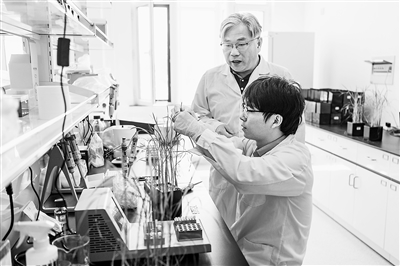
Core Insights - The research reveals a significant global warming event that occurred 56 million years ago, known as the Paleocene-Eocene Thermal Maximum (PETM), which was triggered by a rapid release of carbon dioxide [1][2] - The study highlights a precursor event, a carbon isotope negative anomaly (POE), which served as a warning signal before the PETM, indicating a complex relationship between these two events [1][2] Group 1: Research Findings - The research team utilized sedimentary layers from the Kuzi Gongsu profile in Xinjiang, China, to analyze historical climate data, confirming the synchronous nature of the POE on a global scale [2] - The POE event lasted a shorter duration with a minor carbon isotope negative shift of approximately 1‰ to 2‰, leading to slight warming, shallow marine acidification, and changes in microbial communities [2] - During the POE, the carbon emission rate was about 1 billion tons per year, comparable to the fossil fuel emissions of the 1960s, resulting in a 40% increase in atmospheric CO2 concentration over a century to a millennium [2] Group 2: Implications for Current Climate - The historical analysis serves as a natural experiment demonstrating the consequences of rapid carbon release, with a warning that current human activities are accelerating CO2 emissions at an even faster rate [3] - The research emphasizes the urgency of reducing carbon emissions before reaching a critical threshold that could lead to catastrophic climate events similar to the PETM [3]
“反内卷”系列专题之二:居民如何“反内卷”?
Shenwan Hongyuan Securities· 2025-07-07 08:45
Group 1: Work Hours and Consumer Behavior - Since 2018, China's average weekly working hours have increased to 48.3 hours, which is 21 minutes more per day compared to 2018[3] - The time residents spend on purchasing goods and services has decreased from 80 minutes per day to 43 minutes per day[3] - The most significant "involution" is observed in the manufacturing and productive service sectors, while real estate and life service industries have seen a reduction in working hours[3][4] Group 2: Employment Trends Among Age Groups - The most pronounced "involution" trend is among young people, with an average increase of over 4 hours in weekly working hours over the past five years[4] - For the age group 25-34, weekly working hours increased from 46.7 hours in 2018 to 50.8 hours in 2023[4] - In contrast, individuals aged 55 and above have seen a decrease in working hours by 2.3 hours during the same period[4] Group 3: Policy Recommendations and Economic Rebalancing - Current policies encourage flexible work arrangements and paid leave to address "involution," but these measures primarily target symptoms rather than root causes[5] - The imbalance in employment distribution between manufacturing and service sectors is identified as a core issue, with tariffs potentially facilitating a shift from manufacturing to services[5] - The life service sector has the capacity to absorb labor from the manufacturing sector, as it has seen a 7 percentage point increase in employment share over the past two decades[5][6] Group 4: Service Sector Growth and Consumer Demand - The life service sector's wage growth (18.1%) has outpaced that of manufacturing (10.7%) and productive services (12.4%), indicating a labor shortage in the service sector[6] - There is a significant gap of approximately 1.5 trillion yuan in service employment compared to value-added, suggesting a need for more jobs in this sector[6] - As urbanization increases and GDP per capita rises, service consumption is expected to grow, with a projected annual increase of 0.6% in service consumption share as urbanization reaches 70%[6][7]
热点思考 | 居民如何“反内卷”?(申万宏观·赵伟团队)
申万宏源宏观· 2025-07-07 08:27
Group 1 - The phenomenon of "involution" is most pronounced among young people, with average weekly working hours increasing by over 4 hours in the past five years. The average weekly working hours for employees aged 25-34 rose from 46.7 hours in 2018 to 50.8 hours in 2023 [3][28] - The average daily working time in China increased by 21 minutes from 2018 to 2023, reaching 48.3 hours per week, while the time spent on purchasing goods and services dropped from 80 minutes per day to 43 minutes per day [2][9] - The "involution" trend is particularly evident in the manufacturing and productive service sectors, while the real estate and life service sectors have seen a decrease in working hours [2][21] Group 2 - Current policies to combat "involution" focus on encouraging flexible work arrangements and paid leave, but these measures primarily address symptoms rather than the root causes of prolonged working hours [4][35] - The root cause of "involution" is the uneven distribution of employment across industries, with excessive employment in manufacturing leading to "involution" and insufficient employment in the service sector [4][48] - There is a significant employment gap in the life service sector, with a potential to absorb more jobs, as the wage growth in this sector (18.1%) outpaces that of manufacturing (10.7%) [5][61] Group 3 - The long-term direction for combating "involution" involves aligning supply structures with changing demand structures, particularly as consumer demand trends towards services [6][85] - Global experiences indicate that as GDP per capita reaches between $10,000 and $30,000 and urbanization rates hit 70%, the proportion of service consumption in total consumption increases by approximately 0.6% annually [6][86] - The aging population is expected to drive service consumption, with each 1% increase in the aging rate correlating with a 1.3% increase in service consumption share [6][93]
全省完成省重点实验室优化重整 四川省重点实验室达128家
Si Chuan Ri Bao· 2025-07-06 01:19
Group 1 - The core viewpoint of the news is that Sichuan Province has completed the optimization and restructuring of its key laboratories, with 121 laboratories entering the new sequence, resulting in a total of 128 key laboratories in the province [1][2] - The optimization process involved resource integration, with some laboratories merging into new entities, such as the merger of the Sichuan Provincial Key Laboratory for Tea Resource Utilization and Quality Testing [2] - The restructuring aims to align research directions with industry development needs, as seen in the renaming and focus shift of the High-Field Magnetic Resonance Brain Imaging Laboratory to Brain-Machine Interface and Brain-Like Intelligence Laboratory [2] Group 2 - The Sichuan Provincial Science and Technology Department plans to manage the construction and operation of key laboratories, develop management policies, and conduct regular evaluations for dynamic adjustments based on performance [3] - Each laboratory is required to set clear development goals and create a three-year research task list, focusing on research objectives, innovation output, and talent development [3] - The restructuring is part of a broader initiative to enhance the province's scientific frontier and emerging industry technology innovation capabilities, addressing issues such as insufficient alignment with development needs and management mechanisms [1][3]
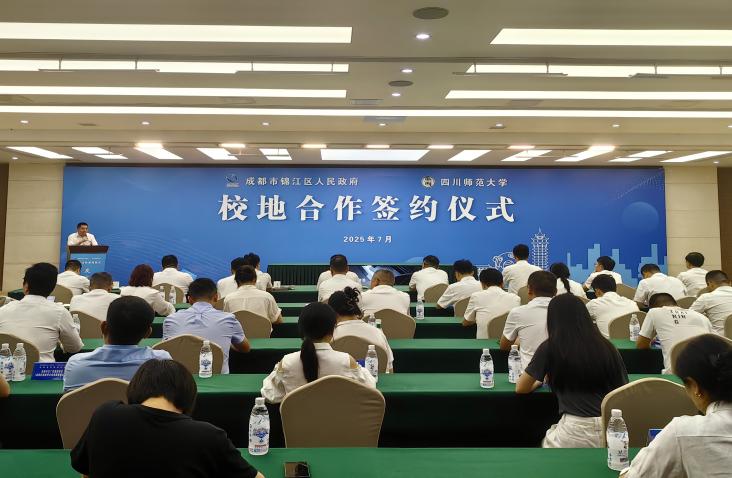
锦江区与四川师范大学举行校地合作签约仪式 深化多领域合作共促发展
Zhong Guo Jing Ji Wang· 2025-07-04 09:38
Core Viewpoint - The collaboration between Jinjiang District and Sichuan Normal University aims to enhance regional development through the integration of education, technology, and industry, focusing on the "first-release economy" and new consumption industries [3][4]. Group 1: Collaboration Details - A cooperation agreement was signed between Jinjiang District and Sichuan Normal University, emphasizing resource sharing, complementary advantages, collaborative innovation, and mutual benefits [4]. - The agreement includes the establishment of a joint consultation mechanism, project linkage, and information sharing to promote 20 intended cooperation projects, including brain-computer interfaces and open-source Hongmeng [4][6]. Group 2: Economic and Educational Impact - Jinjiang District is actively implementing the directives from the 20th National Congress regarding the promotion of the first-release economy, aiming to transform traditional industries and develop emerging sectors [3]. - The partnership will focus on organized research, talent cultivation, and the integration of education and industry to support the development of new productive forces in Jinjiang District [3][6]. Group 3: Previous Initiatives - In February 2023, Jinjiang District and Sichuan Normal University established the first-release economy research institute, which integrates academic and industry resources to innovate and explore practical applications of the first-release economy [6]. - The research institute has developed a theoretical framework and evaluation system for the first-release economy, enhancing digital consumption and creating industry benchmarks [6].
重温初心 矢志奋斗
Ren Min Ri Bao· 2025-07-01 01:10
Group 1 - The book "Voices of a Hundred Academicians Joining the Party" highlights the dedication and patriotic spirit of scientists in China, showcasing their commitment to serving the nation through their work in various scientific fields [2][3] - It features personal stories and application letters from over a hundred academicians, illustrating their unwavering faith in the Communist Party and their relentless pursuit of scientific excellence for national development [3][4] - The narratives reflect the historical journey of China's scientific achievements under the leadership of the Communist Party, emphasizing the connection between the scientists' work and the nation's progress [3][4] Group 2 - The compilation involved extensive research, gathering archival materials from over 50 research institutes and more than 10 major scientific enterprises, highlighting the enduring legacy of these scientists [4] - In the context of unprecedented global changes, the role of technological innovation is increasingly vital, and the stories of these scientists serve to inspire future generations to pursue patriotic and innovative endeavors [4]

近200km世界级科学片区 ,它来了!
Nan Fang Du Shi Bao· 2025-06-29 05:46
Group 1: Core Developments - The establishment of the Greater Bay Area Comprehensive National Science Center's pilot zone scientific alliance aims to enhance innovation resource sharing and collaboration between Shenzhen and Dongguan [1][5] - A new main passage will be constructed connecting Guangming Science City to Songshan Lake Science City, featuring dual 8-lane roads and a total length of approximately 13 kilometers, with a traffic capacity of 9,000 vehicles per hour [3] - The alliance will focus on three major directions: information, materials, and life sciences, with significant technological innovation projects being developed in both science cities [4] Group 2: Infrastructure and Connectivity - The integration of urban rail systems will be advanced, including the connection of Shenzhen Metro Line 6 to Dongguan Line 1 and the northern extension of Shenzhen Metro Line 13 to Dongguan Line 5, with a designed capacity of approximately 35,000 passengers per hour [3] - Guangming District has seen a significant increase in residential transactions, with a 127% year-on-year growth in new and second-hand residential sales from January 1 to May 28, 2025 [7] - The population of Guangming has doubled from 496,400 in 2013 to an estimated 1,159,000 by the end of 2023, indicating a strong trend of people moving to the area [7][8]
山东省科技大会侧记|下好科技创新“先手棋”
Xin Hua Wang· 2025-06-28 02:09
Group 1 - The Shandong Provincial Science and Technology Awards ceremony highlighted the importance of scientific innovation and recognized contributors from various sectors including universities, research institutions, hospitals, and enterprises [1][4] - Shandong has implemented policies to enhance basic research, including the establishment of "basic research special zones" to attract innovative resources and support researchers [2] - The province aims to create a national regional science and technology innovation center, focusing on major scientific projects and technologies to support national strategic needs [2] Group 2 - Wanhu Chemical, a leading company in China's chemical industry, is focusing on technological innovation to drive the development of high-end chemical materials and synthetic biology [3] - The provincial government is promoting market-oriented approaches to deepen collaboration between industry, academia, and research institutions, aiming to accelerate the transformation of scientific achievements into practical applications [3] - In the health sector, significant advancements have been made, including the establishment of a comprehensive medical and prevention system that enhances the treatment capabilities for infectious skin diseases [3][4] Group 3 - Qingdao has introduced various measures to foster a first-class innovation ecosystem, including policies to attract talent and support technology transfer [4] - The recognition of scientific workers at the awards ceremony reflects Shandong's commitment to advancing science and technology for national development [4]
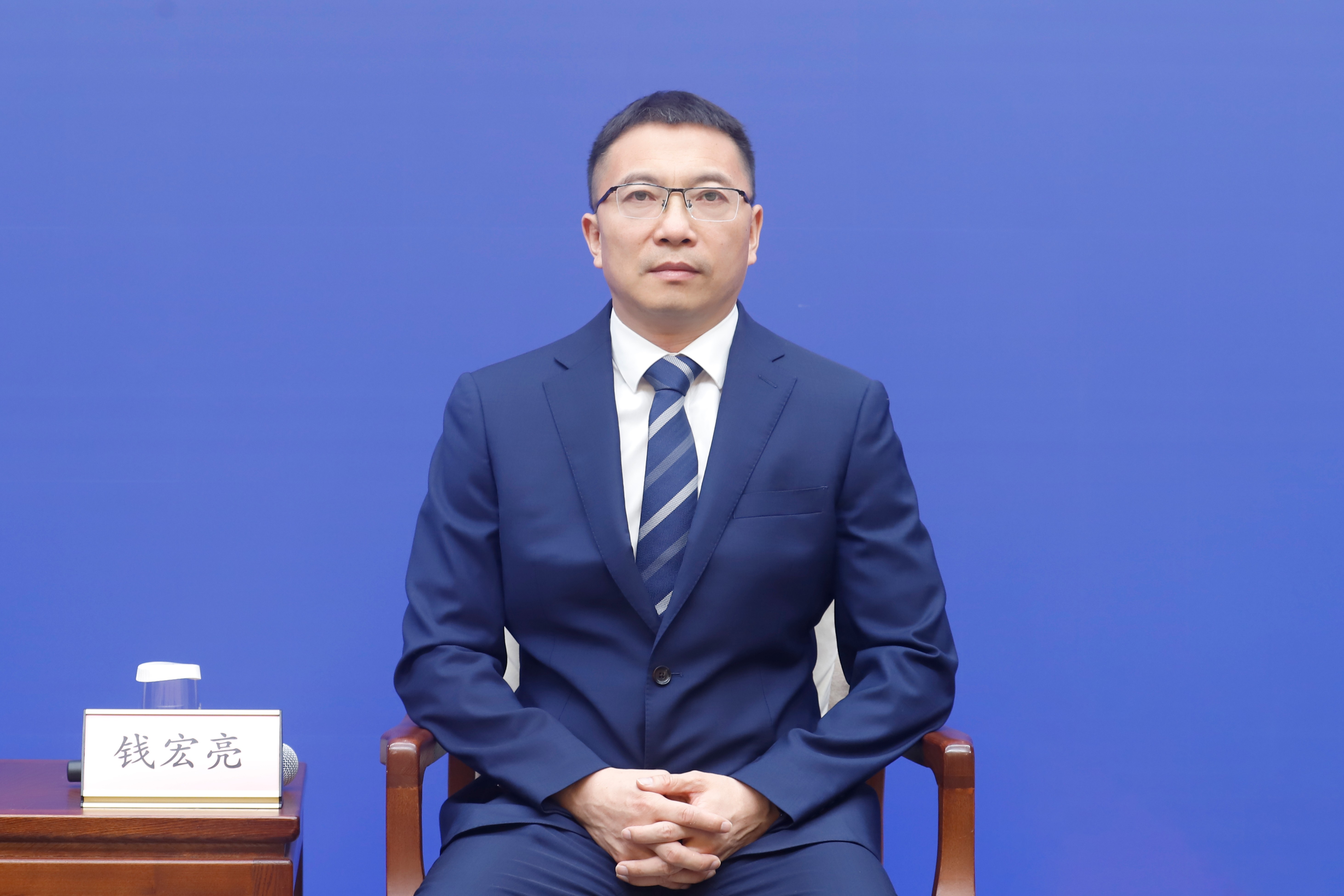
哈工大钱宏亮:八年攻关“中国天眼”,拓展创新服务国计民生
Qi Lu Wan Bao· 2025-06-27 02:13
Group 1 - The core viewpoint emphasizes the role of technology workers in serving national strategies and public needs, showcasing innovation in various fields such as deep space exploration and marine engineering [1][4]. - The FAST project, led by a team under the guidance of Qian Hongliang, faced significant technical challenges, including the construction of a 500-meter aperture telescope, which was successfully completed after eight years of research and development [3][4]. - The team has expanded its research focus to include deep-sea aquaculture and high-speed rail safety, contributing to over 30 research projects and publishing more than 100 papers, along with 25 authorized patents [4][5]. Group 2 - Qian Hongliang emphasizes the importance of a four-point cultivation system for innovative talent, which includes political literacy, innovative ability, international vision, and humanistic spirit [5][6]. - He advises young scientists to maintain a clear direction aligned with national strategic needs, cultivate individuality through critical thinking, and work collaboratively within teams to achieve significant outcomes [6]. - The integration of personal innovation with national demands is highlighted as a key factor for technology workers to realize their value and contribute to the construction of a technology-driven province [6].