AI医疗

Search documents
AI 医疗板块9月5日涨1.53%,药石科技领涨,主力资金净流入5649.25万元
Sou Hu Cai Jing· 2025-09-05 09:28
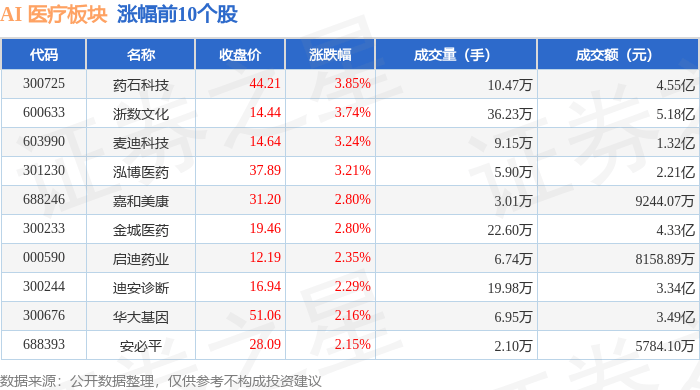
Market Performance - On September 5, the AI medical sector rose by 1.53%, with Yaoshi Technology leading the gains [1] - The Shanghai Composite Index closed at 3812.51, up 1.24%, while the Shenzhen Component Index closed at 12590.56, up 3.89% [1] Stock Performance - The top-performing stocks in the AI medical sector included: - Yaoshi Technology (300725) with a closing price of 44.21, up 3.85% [1] - ZheShu Culture (600633) with a closing price of 14.44, up 3.74% [1] - MaiDi Technology (603990) with a closing price of 14.64, up 3.24% [1] - Other notable stocks included Hongbo Pharmaceutical (301230) at 37.89, up 3.21%, and Jiahe Meikang (688246) at 31.20, up 2.80% [1] Capital Flow - The AI medical sector saw a net inflow of 56.49 million yuan from institutional investors, while retail investors experienced a net outflow of 50.12 million yuan [2] - The capital flow for specific stocks showed: - Meinian Health (002044) had a net inflow of 39.11 million yuan from institutional investors [3] - MaiDi Technology (603990) had a net inflow of 19.26 million yuan from institutional investors [3] - ZheShu Culture (600633) had a net inflow of 5.19 million yuan from institutional investors [3]


AI医疗,迎来DeepSeek时刻了吗?
3 6 Ke· 2025-09-05 08:46
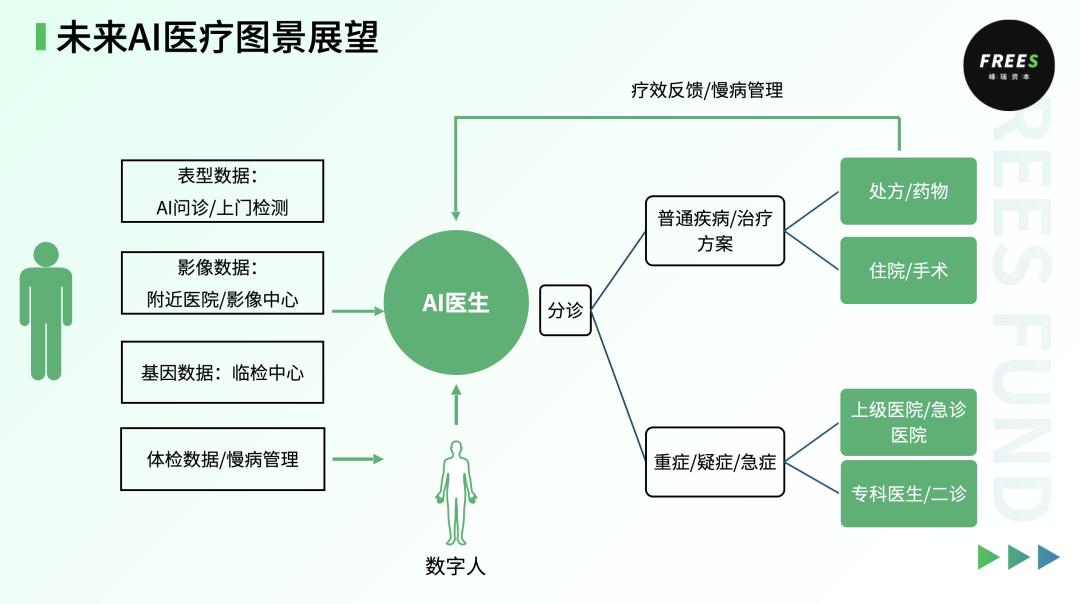
Core Insights - The Chinese government is promoting the "AI+" initiative to enhance healthcare services through AI applications in diagnosis, health management, and insurance services, aiming to significantly improve the efficiency of grassroots healthcare [1] - Major tech companies like Ant Group, JD, Huawei, and ByteDance are entering the AI healthcare sector, focusing on core areas such as consultations, medication, and health management [1] - The AI healthcare market in China is projected to grow from 8.8 billion yuan in 2023 to 315.7 billion yuan by 2033, with a compound annual growth rate of 43.1% [1] - Globally, the AI healthcare market is expected to exceed $491 billion by 2032 [1] Group 1: AI Healthcare Potential - AI has the potential to become a "super entry point" in healthcare by integrating various services and managing family health needs, leveraging the high digitalization of the healthcare industry [4] - The introduction of AI could help address the core issue of insufficient quality healthcare providers, particularly in grassroots settings, by acting as a "smart doctor" to enhance diagnosis and management [2][12] - AI healthcare could reshape the existing medical system by systematically increasing the supply of doctors and improving the capabilities of grassroots healthcare providers [12][16] Group 2: Challenges in the Healthcare System - The global healthcare system faces challenges such as insufficient supply, resource imbalance, and high costs, with no country having a perfect model [5][6] - In China, despite reforms aimed at improving equity in healthcare access, the shortage of quality healthcare resources remains a significant issue [7][8] - Internet healthcare has struggled to address the core supply issues, often remaining on the periphery of the healthcare system without solving the fundamental problem of limited access to quality doctors [10][11] Group 3: AI Healthcare Development Conditions - Current advancements in AI technology, particularly in language models, have improved the potential for AI to assist in medical diagnosis and treatment [15] - The accumulation of high-quality healthcare data over the past two decades in China provides a solid foundation for the development of AI healthcare solutions [15] - AI is better positioned to serve as a replacement for general practitioners in grassroots settings rather than challenging specialized clinical roles [16] Group 4: Future Outlook for AI Healthcare - If widely adopted, AI could transform patient interactions with healthcare, enabling online consultations, automated data analysis, and efficient triage processes [19][20] - AI's integration into healthcare could lead to systematic data accumulation, improved medication practices, and potential changes in insurance and payment models [21][22][24] - Regulatory challenges remain a significant barrier to the widespread implementation of AI in healthcare, particularly concerning accountability and the legal implications of AI decision-making [25][26]

数据交易破冰,政策催化千亿价值释放,一脉阳光凭“基座模型+数据资产”筑护城河
Tai Mei Ti A P P· 2025-09-03 00:35
Core Insights - The implementation of the "AI+" initiative is expected to accelerate both policy benefits and commercial monetization in the AI healthcare sector, with the market size projected to grow from 97.3 billion yuan in 2023 to 159.8 billion yuan by 2028, reflecting a compound annual growth rate of 10.5% [1] - The company Yimai Sunshine (02522) has developed a replicable profit model through "AI foundational model research and data governance," positioning itself as a leader in the AI healthcare space [1][2] Group 1: AI Model Development - The "Yinghe Miyan®" foundational model developed by Yimai Sunshine aligns with the policy directive to enhance foundational capabilities in AI, focusing on theoretical research and model architecture innovation [2] - This model has achieved a generalized capability covering over 200 common diseases and 12 imaging modalities, significantly reducing deployment costs for grassroots hospitals by 40% [2][3] - The upcoming launch of the chest CT AI diagnostic product (AIR) in October 2025 aims to enhance service penetration and revenue potential by enabling multi-disease detection from a single scan [2] Group 2: Clinical Value Transformation - The "Yinghe Miyan®" model facilitates a shift from rigid AI outputs to human-machine collaboration, improving efficiency in complex scenarios and reducing task completion times [3] - This efficiency boost is expected to enhance collaboration with grassroots hospitals, aligning with the policy goal of empowering primary healthcare [3] Group 3: Data Assetization - The policy emphasizes the construction of high-quality datasets and exploring revenue-sharing from data, which addresses industry challenges related to data quality and privacy [4] - Yimai Sunshine has established the largest medical imaging database in China, ensuring high-quality data for AI training through standardized collection and quality control [5] Group 4: Commercialization of Data Assets - Yimai Sunshine has pioneered a compliant data circulation and revenue cycle, successfully listing its "CT chest lesion annotation data" on the Shanghai Data Exchange [6][7] - The company has developed a clear path for monetizing data assets, transforming high-quality imaging data into tradable digital assets, thus diversifying revenue streams beyond traditional medical service fees [7] Group 5: Cross-Industry Integration - The integration of AI and healthcare is driven by mutual reinforcement, with Yimai Sunshine focusing on defining AI development based on clinical needs and involving medical professionals in product design [8][9] - This approach addresses the challenges of AI implementation in clinical settings and enhances the capabilities of grassroots healthcare services, creating a positive feedback loop between technology and medical practice [8][9] Group 6: Strategic Framework - The synergy of data as a resource, foundational models as engines, and clinical integration as a guiding principle forms the core competitive advantage of Yimai Sunshine, offering a sustainable value creation pathway for the industry [9]
政策东风下AI+医疗的趋势机遇与企业布局方向
Sou Hu Cai Jing· 2025-09-02 05:49
Core Insights - The article emphasizes the significant role of AI in transforming the healthcare industry, driven by government policies and technological advancements [1][2][14] - It outlines the three core trends in AI+ healthcare: intelligent reconstruction of full disease management, expansion of full lifecycle health services, and the centrality of data capabilities [3][4][6][14] Group 1: AI+ Healthcare Trends - The "full domain integration" trend is driven by policies that aim for deep integration of AI across six key areas by 2027, with over 70% application penetration of new intelligent terminals and systems [2] - The "intelligent reconstruction" of full disease management aims to transition from fragmented services to continuous and proactive care, enhancing patient experience and reducing costs [3] - The "boundary expansion" of full lifecycle health services focuses on proactive health management and precision services for special groups, leveraging AI for real-time monitoring and public health efficiency [4][5] Group 2: Data as a Core Competitiveness - The article highlights the importance of high-quality data in AI healthcare, shifting from quantity accumulation to quality enhancement, with a focus on compliance and efficient data circulation [6][7] - Companies that can accumulate and govern data effectively will become key players in the AI+ healthcare sector, as data capabilities directly influence market competitiveness [7] Group 3: Strategic Recommendations for Companies - Companies are advised to focus on core technologies, developing specialized AI models and optimizing computational resources to enhance accuracy and reliability in medical applications [9] - Emphasis is placed on creating vertical solutions tailored to specific medical scenarios, ensuring a comprehensive approach from screening to follow-up care [10] - Building compliant data capabilities through partnerships and participation in public data initiatives is crucial for enhancing model performance and reducing development costs [11] - Companies should foster cross-domain collaboration to create an ecosystem that integrates clinical needs with technological advancements, ensuring product relevance and credibility [12] - Addressing the talent gap by cultivating interdisciplinary professionals in medicine and AI is essential for driving innovation in the sector [13]

中康控股(02361.HK)的三大预期差:业绩、AI辨识度与生态价值
Xin Lang Cai Jing· 2025-08-30 02:21
Core Viewpoint - The recent policy from the State Council to promote AI in healthcare significantly boosts the AI medical industry, indicating a favorable environment for companies like Zhongkang Holdings [1][10]. Group 1: Company Performance - Zhongkang Holdings reported a revenue of 150 million yuan in the first half of the year, a decrease of 7.3% year-on-year, and a net profit of 24.5 million yuan, down 42.1% year-on-year [3]. - The company is undergoing a strategic "deep squat," focusing on building a comprehensive intelligent system in the healthcare sector, which requires substantial upfront investment [3]. - R&D expenses increased by approximately 14.4% year-on-year, indicating a commitment to enhancing computing infrastructure and expanding high-level R&D talent [3]. Group 2: Market Perception and Valuation - Zhongkang Holdings has a market capitalization of only 1.5 billion HKD and a price-to-sales ratio of 3.4, suggesting significant undervaluation [4]. - The market has not fully recognized the company's deep and forward-looking investments in AI, leading to a discrepancy in expected growth potential [5]. Group 3: AI Integration and Business Model - The company integrates AI into its core operations, providing a one-stop AI-driven solution for various clients in the life sciences sector [5]. - Zhongkang has developed advanced AI models and platforms, including the Zhuomuniao medical model and Tian Gong No.1 commercial model, which enhance its service offerings [5][6]. Group 4: Ecosystem and Growth Potential - The company is building a robust "ecological flywheel" effect, where data, models, scenarios, and users interact to create significant value [6][9]. - The accumulation of healthcare data through partnerships allows Zhongkang to train precise AI models, enhancing service efficiency and attracting more users [7]. - The potential for exponential growth exists as the ecological flywheel accelerates, driven by the increasing demand for intelligent solutions in the healthcare sector [9][10].
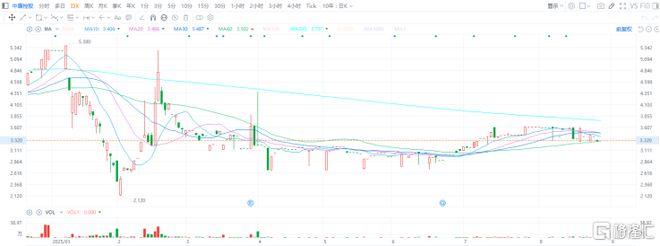
西部证券晨会纪要-20250829
Western Securities· 2025-08-29 01:55
Group 1: Zhujiang Beer (002461.SZ) - Zhujiang Beer is the leading regional beer brand in Guangdong Province, with a strong market foundation and high consumer recognition. The flagship product, 97 Pure Draft, is leading product upgrades and capturing market share from competitors [6][7]. - The company has experienced continuous revenue and profit growth, with a CAGR of 7.8% in revenue and 9.2% in net profit from 2020 to 2024. The proportion of high-end products has increased significantly from 49.1% in 2019 to 70.8% in 2024 [6][7]. - The new management team, including a newly appointed chairman and general manager, is expected to drive further growth and innovation. The company has a solid reserve of high-end products and aims to expand its market presence outside Guangdong [7]. Group 2: Hanshuo Technology (301275.SZ) - Hanshuo Technology's revenue for the first half of 2025 was 1.974 billion yuan, a year-on-year decrease of 7%, with a net profit of 222 million yuan, down 42% year-on-year. The company is focusing on the North American market, which shows significant growth potential [16][17]. - The global demand for retail digitalization continues to grow, with electronic shelf label (ESL) module shipments reaching 248 million units in the first half of 2025, a 56% increase year-on-year. The demand from major retailers like Walmart is expected to drive further digital upgrades in the retail sector [16][17]. - The company has established a comprehensive business system centered on electronic shelf label systems and SaaS cloud platform services, with international operations in over 70 countries [17]. Group 3: Guoci Materials (300285.SZ) - Guoci Materials reported a revenue of 2.154 billion yuan in the first half of 2025, a year-on-year increase of 10.29%, with a net profit of 332 million yuan, up 0.38% year-on-year. The company is experiencing growth in electronic materials and new energy materials [18][19]. - The company’s six major business segments are developing synergistically, with a projected net profit of 774 million yuan, 886 million yuan, and 1.058 billion yuan for 2025-2027, respectively [19][20]. - The company is focusing on strategic investments and acquisitions to enhance its capabilities in clinical materials and digital equipment, particularly in the biomedical materials sector [20]. Group 4: Yuhua Software (300339.SZ) - Yuhua Software achieved a revenue of 1.747 billion yuan in the first half of 2025, a year-on-year increase of 10.55%, while the net profit decreased by 29.43% to 60 million yuan. The company is actively promoting its innovative business [22][23]. - The company’s gross margin was 23.72%, down 2.36 percentage points year-on-year, but it has optimized its expense ratios, leading to improved operational efficiency [23][24]. - The revenue from innovative business segments reached approximately 368 million yuan, accounting for 21.07% of total revenue, indicating a growing contribution from new business areas [24]. Group 5: New Dairy Industry (002946.SZ) - New Dairy Industry reported a revenue of 5.526 billion yuan in the first half of 2025, with a net profit of 397 million yuan, reflecting a year-on-year increase of 33.8%. The company’s low-temperature strategy is showing significant results [48][49]. - The direct-to-consumer (DTC) model has driven growth, with revenue from this channel increasing by 23% to 3.39 billion yuan, representing 66.3% of total revenue [48][49]. - The company is focusing on core markets and has achieved stable growth in key regions, with a notable increase in high-end fresh milk sales [48][49].




国金证券:AI医疗商业化加速落地 有望助力行业提质增效
智通财经网· 2025-08-28 02:19
Core Insights - The investment value in AI healthcare will focus on companies that integrate advanced technologies with specific clinical scenarios and can quantify product value in terms of improving diagnostic efficiency, optimizing patient outcomes, and reducing healthcare costs [1] Industry Development - The AI healthcare industry in China is transitioning through three stages: informatization (before 2014), internetization (2014-2020), and smartization (2021-present), driven by technological iterations that deepen the integration of AI and healthcare [1] - The market size of AI healthcare has expanded from 2.7 billion yuan in 2019 to 10.7 billion yuan in 2023, with its share of the AI industry increasing from 6.4% to 8.6%, and is expected to reach 97.6 billion yuan by 2028, accounting for 15.4% of the AI industry [1] - AI applications in healthcare must go through four progressive stages: demand validation, model development, performance testing, and commercialization exploration, with significant differences in maturity across various fields [1] Pain Points and Technological Innovation - The healthcare industry faces challenges such as an aging population, resource misallocation, and increasing pressure on medical insurance funds, which drive the need for technological innovation [2] - The complexity of diseases and inefficiencies in hospital operations further restrict the quality of healthcare services, highlighting the value of AI technology in addressing these issues [2] - Breakthroughs in large model technology have increased market acceptance of medical AI, with applications in clinical decision support systems (CDSS) enhancing diagnostic accuracy and efficiency [2] Case Study: IBM Watson - IBM Watson serves as an early application case in AI healthcare, demonstrating the clinical demand for AI tools despite facing challenges in technology and commercialization [3] - Initial successes included building a product matrix through natural language processing and machine learning, but limitations arose from system closure, insufficient data training, and complex clinical adaptation [3] - The commercial model struggled due to high costs and unclear quantification of clinical value, underscoring the need for companies with technological barriers, application capabilities, and clear commercialization paths in the domestic AI healthcare sector [3]

国金证券:AI医疗已进入商业化加速期
Zheng Quan Shi Bao Wang· 2025-08-28 00:24
Core Viewpoint - The investment value in AI-assisted diagnostics will focus on companies that can deeply integrate advanced technologies with specific clinical scenarios and clearly quantify their product value [1] Group 1: Market Trends - AI healthcare has entered a phase of accelerated commercialization, indicating a shift towards practical applications and market readiness [1] - Companies with technological barriers, application capabilities, and clear commercialization paths are expected to achieve rapid scale expansion and significant improvements in profitability [1] Group 2: Investment Focus - Future investments will prioritize firms that leverage large model capabilities and data assets to enhance diagnostic efficiency, optimize patient outcomes, and reduce healthcare costs [1]
国金证券:双重驱动AI医疗行业发展 持续看好兼具技术壁垒、落地应用能力以及明确商业化路径的公司
Zhi Tong Cai Jing· 2025-08-27 23:43
Core Insights - The investment value in AI healthcare will focus on companies that can deeply integrate advanced technologies with specific clinical scenarios and clearly quantify their product value [1][2][4] - The AI healthcare industry in China is transitioning through three stages: informatization (before 2014), internetization (2014-2020), and smartization (2021-present), driven by technological iterations [2][3] - The market size of AI healthcare has expanded from 2.7 billion yuan in 2019 to 10.7 billion yuan in 2023, with projections to reach 97.6 billion yuan by 2028, indicating a growing penetration rate [2][3] Industry Development - The demand for AI in healthcare is driven by the aging population and the increasing need for medical services, alongside the concentration of quality medical resources in top hospitals [3] - The challenges in the healthcare sector include high complexity of diseases, misdiagnosis risks, and inefficient hospital operations, which AI technologies can help address [3] - AI technologies, particularly breakthroughs in large model capabilities, are enhancing the acceptance of AI in healthcare and improving diagnostic accuracy and efficiency [3][4] Market Dynamics - The application maturity of AI Clinical Decision Support Systems (CDSS) is high, with significant market potential due to strong data integration capabilities and high technical adaptability [2][3] - The early exploration of IBM Watson in AI healthcare serves as a case study, highlighting the clinical demand for AI tools despite its eventual commercial challenges [4]
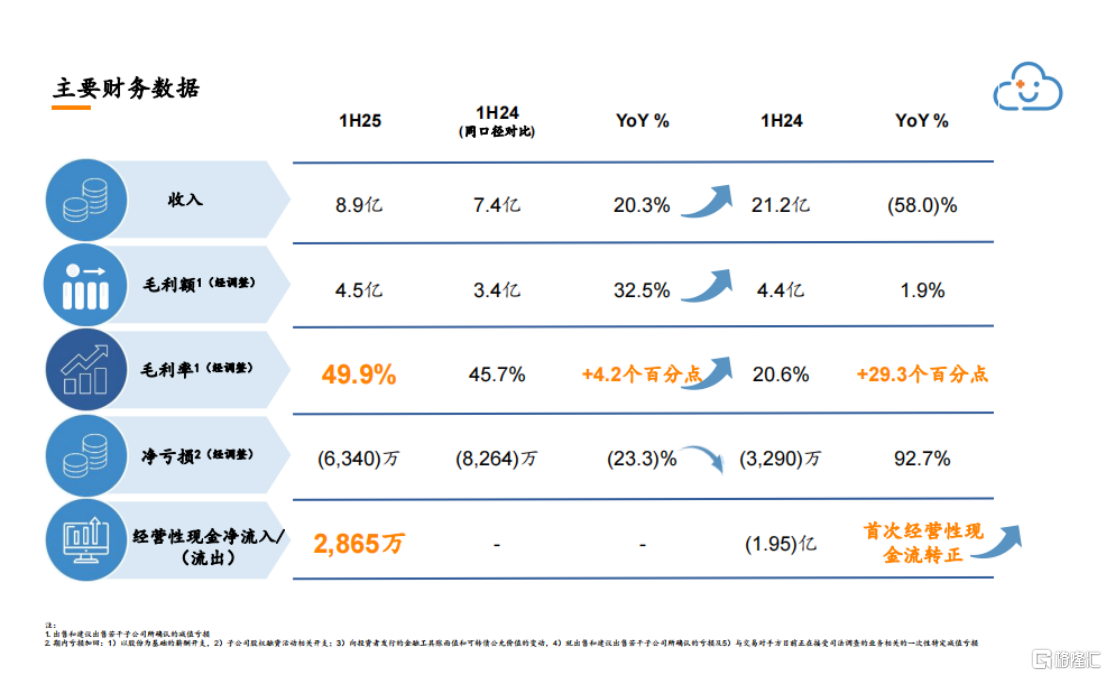
经营性现金流首次转正!智云健康(9955.HK)AI赋能P2M转型初显成效
Ge Long Hui· 2025-08-27 13:52
Core Viewpoint - The AI healthcare sector is gaining significant market attention, surpassing the previously popular innovative drug sector, driven by institutional fund reallocations towards AI medical stocks as they show potential for growth and recovery [1][2]. Financial Performance - Zhiyun Health reported a substantial improvement in profitability in its mid-2025 financial report, with a revenue of 889 million yuan, reflecting a year-on-year increase of 20.3% when adjusted for comparable periods [5][6]. - The adjusted gross margin reached 49.9%, up 4.2 percentage points year-on-year, indicating a significant enhancement in the company's core business profitability [5][6]. - The company achieved its first positive operating cash flow of 28.65 million yuan, marking a shift towards a positive operational cycle [8]. Strategic Transformation - Zhiyun Health's strategic shift towards AI-enabled high-value sectors is showing results, with a focus on subscription solutions and P2M (Patient to Industry) solutions, which now account for 77.5% of gross profit [6][9]. - The company has successfully implemented a dual-architecture strategy centered on "AI SaaS + P2M," enhancing operational efficiency across various healthcare scenarios [9][12]. Market Position and Growth Potential - The company has established a strong presence in both hospital and pharmacy sectors, with its SaaS solutions covering 2,774 hospitals and nearly 27,000 pharmacies, translating to significant service volume and market leadership [12][13]. - The P2M solution revenue reached 260 million yuan, a year-on-year increase of 142.1%, driven by the growth of proprietary products and strategic partnerships with pharmaceutical companies [13][25]. Industry Trends and Policy Support - The AI healthcare sector is experiencing a favorable policy environment, with recent government initiatives promoting the integration of AI in healthcare, which aligns with Zhiyun Health's strategic focus [21][22]. - The demand for AI in clinical settings is increasing, with nearly half of doctors in primary and secondary hospitals having used AI clinical decision support systems, indicating a shift towards AI as a necessary tool in healthcare [23][25]. Long-term Vision - Zhiyun Health aims to leverage its accumulated healthcare data for monetization, creating a comprehensive ecosystem that connects all stakeholders in the healthcare process, thus enhancing its long-term growth potential [25][26].