
跨境电商

Search documents
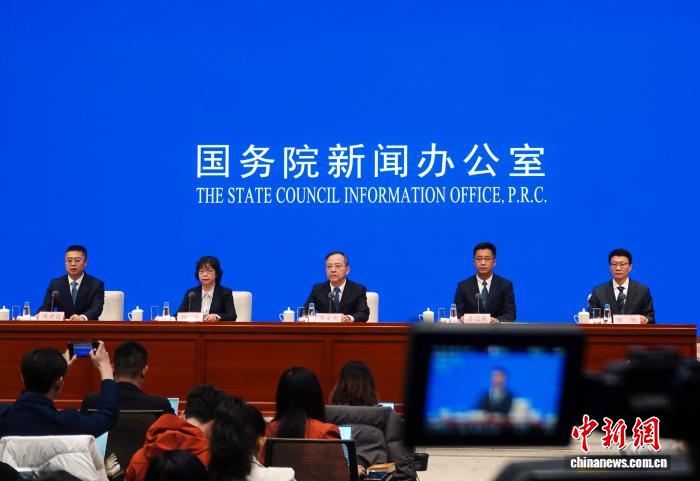
国家知识产权局:已构建起“国内+海外”双向联动维权指导网络
Zhong Guo Xin Wen Wang· 2026-01-23 12:49
Core Viewpoint - The National Intellectual Property Administration (NIPA) has established a dual-directional protection network for intellectual property rights, both domestically and overseas, to assist Chinese enterprises in addressing foreign intellectual property disputes by 2025 [1][3]. Group 1: Establishment of Protection Network - By the end of 2025, NIPA will have set up 99 overseas intellectual property dispute response guidance platforms across 30 provinces in China, along with 6 industry-specific platforms in key sectors such as automotive and photovoltaics [1][3]. - NIPA has laid out overseas work platforms in 11 countries, creating a comprehensive "domestic + overseas" dual-directional protection network [1][3]. Group 2: Legal and Advisory Support - The implementation of the "Regulations on the Handling of Foreign-related Intellectual Property Disputes" provides a clear legal pathway for enterprises to protect their rights in complex international environments [3]. - In 2025, NIPA provided over 4,800 guidance and consulting services to enterprises regarding cross-border e-commerce intellectual property disputes and overseas trademark squatting, recovering losses amounting to 2.75 billion RMB [3][4]. Group 3: Information Services and Talent Development - NIPA has upgraded its overseas intellectual property information service platform, which now includes 1,470 laws and regulations from 189 countries and regions, along with various country-specific guides and protection instructions [3]. - Collaborative training programs with the Ministry of Justice and partnerships with Tsinghua University and Peking University aim to enhance the training of high-end talent in foreign-related intellectual property [4]. Group 4: Support for Private Enterprises - In 2025, over 170,000 private enterprises were pre-registered at national-level intellectual property protection centers, accounting for over 80% of all registered innovation entities [5]. - NIPA aims to strengthen the protection of private enterprises' intellectual property rights, enhance dispute resolution channels, and improve the efficiency of rights protection for private enterprises [4][5].

从“规模扩张”转向“质量提升”,跨境电商步入关键一跃
第一财经· 2026-01-23 12:47
Core Viewpoint - The article emphasizes the transformation of China's cross-border e-commerce from a focus on scale expansion driven by traffic to a quality enhancement approach that prioritizes compliance and innovation, as highlighted in the "14th Five-Year Plan" [3][4]. Group 1: Industry Growth and Trends - In 2025, China's cross-border e-commerce imports and exports are projected to reach 27.5 trillion yuan, representing a 69.7% increase compared to 2020 [3]. - Cross-border e-commerce is becoming a significant driver of new growth in foreign trade, promoting domestic industrial upgrades and facilitating a dual circulation of domestic and international markets [3][4]. - Traditional e-commerce categories are expanding, with cross-border platforms emerging as new sales channels for products like automobiles, AI glasses, and robots [4]. Group 2: Challenges Facing the Industry - The cross-border e-commerce sector is facing multiple challenges, including increased policy risks in markets like the U.S. and EU, rising compliance costs due to protectionism, and internal issues such as fragmentation and intense competition [4][5]. - There is a notable shortage of talent, difficulties in financing, and an underdeveloped overseas service support system within the industry [4]. Group 3: Strategic Recommendations and Future Directions - The core of the transformation in cross-border e-commerce lies in "orderly development," driven by policy guidance and compliance construction, suggesting that businesses should shift from passive compliance to proactive planning [4][5]. - Future development will focus on compliance, digitalization, branding, and sustainability, with an emphasis on cultivating cross-border e-commerce talent and enhancing digital and intelligent transformation [5]. - The industry is expected to move towards brand upgrades, moving away from low-price competition to high-value brand exports, while optimizing domestic supply chains through mergers, restructuring, and digital upgrades [5].
浙江永强(002489.SZ):部分子公司股权拟转让
Ge Long Hui A P P· 2026-01-23 11:45
Core Viewpoint - Zhejiang Yongqiang (002489.SZ) has signed an investment cooperation agreement with Aoki (Shenzhen) Cross-Border Business Co., Ltd. (02519.HK) to jointly invest in a new company focused on cross-border e-commerce [1] Group 1: Investment Details - The company will invest 2.5 million RMB to hold a 25% stake in Shenzhen Aoqi Technology Co., Ltd. [1] - Aoki will also invest 2.5 million RMB to increase its stake in Ningbo Lanyi Kuowei Network Technology Co., Ltd. to 25% [1] Group 2: Share Transfer Agreement - The company will transfer its 25% stake in Aoqi Technology to Aoki for 615,035.39 RMB [1] - Aoki will transfer its 25% stake in Lanyi Kuowei to Yongqiang International Trade Co., Ltd. for the same amount of 615,035.39 RMB [1] - The management is authorized to handle all necessary legal documents and business registration changes related to the share transfers [1]

从“规模扩张”转向“质量提升”,跨境电商步入关键一跃|“十五五”产业前瞻
Di Yi Cai Jing· 2026-01-23 11:26
Core Insights - The introduction of the "14th Five-Year Plan" marks a transition for China's cross-border e-commerce from a focus on scale expansion driven by traffic dividends to an emphasis on quality improvement and compliance [1] - The plan aims to expand high-level opening up, promote trade innovation, and support the development of new business models like cross-border e-commerce [1] Group 1: Industry Growth and Trends - By 2025, China's cross-border e-commerce imports and exports are projected to reach 2.75 trillion yuan, representing a 69.7% increase from 2020 [1] - Cross-border e-commerce is playing a significant role in driving new growth in foreign trade, promoting domestic industrial upgrades, and balancing regional economies [1] - Platforms like Temu and Alibaba International Station are rapidly expanding overseas, with Temu achieving significant market scale in most countries within three years [2] Group 2: Challenges and Strategic Shifts - The cross-border e-commerce industry faces multiple challenges, including increased policy risks in markets like the US and EU, rising compliance costs, and issues of fragmentation and intense competition [4] - The industry is encouraged to shift from passive compliance to proactive strategies, including establishing sound financial and tax systems and enhancing management efficiency [4] - The focus is on cultivating cross-border e-commerce talent, digital transformation for merchants, and improving the ecological service systems of platforms [4] Group 3: Future Opportunities - The transition in cross-border e-commerce is seen as an opportunity for brand upgrades, moving away from low-price competition to high-value brand exports [5] - The optimization of domestic supply chains through mergers, restructuring, or digital upgrades is expected to enhance international supply chain control [5] - The industry is anticipated to evolve from "traffic operation" to "data empowerment," leveraging platform data for market analysis and product design [5]

刚刚,TikTok 美国合资方案落地!跨境电商迎来变局
Sou Hu Cai Jing· 2026-01-23 10:13
2026 年 1 月 23 日,TikTok 官宣成立美国数据安全合资公司,字节跳动持股 19.9% 仍为最大单一股东, 美国籍董事占多数席位,这一动作迅速搅动跨境电商圈! 跨境人需把握窗口期,加速推进本土化布局,搭建本土履约体系,沉淀私域流量,才能在这场变局中站 稳脚跟! 合资公司主导数据合规与算法本土化,对卖家而言挑战与机遇并存。短期来看,流量逻辑生变,自然曝 光红利减弱,广告定向精准度下降,合规成本也随之上升,卖家需适配美国标准认证、本土仓发货等要 求。 但长期利好更值得关注:政策风险解除,TikTok Shop 美国站合法化运营,2025 年销售额预计同比激增 108%。相较于受关税冲击的其他平台,TikTok 以内容 + 电商的差异化优势,吸引大量卖家入局,新卖 家还能享 6000 美元补贴。 ...

商社行业2026年度策略:内需以新谋变,出海绽放全球
GOLDEN SUN SECURITIES· 2026-01-23 09:20
Core Insights - The report emphasizes the structural opportunities in both domestic demand and overseas expansion for 2026, particularly focusing on new services and new retail sectors [2][24] - It highlights the positive resonance between policy and fundamentals, suggesting that leading companies in the commercial sector are likely to benefit from policy stimuli and improve their fundamentals [2][4] Domestic Demand - The report identifies new services and new retail as the main lines for domestic demand, with a focus on the marginal changes in the fundamentals of related sub-sectors [2][5] - Specific sub-sectors showing price increase potential include: - **Hotels**: Strong leisure demand and optimized supply structure, with prices expected to remain stable or slightly increase. Recommended companies include Huazhu Group, Jinjiang Hotels, and Shoulv Hotels [2][3] - **Duty-Free**: With the opening of Hainan, the sector is stabilizing, and China Duty Free is highlighted as a key player [2][3] - **Gold and Jewelry**: The report notes a high volatility in gold prices but anticipates improved terminal sales. Recommended companies include Chow Tai Fook and Lao Puhuang [2][3] - **Mother and Baby**: Leading companies are expected to maintain steady growth, supported by favorable policies. Recommended companies include Kidswant and Aiyingshi [2][3] Sub-Sectors Driven by Volume Growth - The report suggests focusing on the Consumer Price Index (CPI) for sectors primarily driven by volume growth: - **Supermarkets**: CPI increases are beneficial for same-store sales, with a shift in focus from store adjustments to supply chain reforms. Recommended companies include Yonghui Superstores and Jiajiayue [3][5] - **Tourism**: The report highlights the potential for expansion and asset integration in the tourism sector, recommending companies like Jiuhua Tourism and Changbai Mountain [3][5] - **Dining**: Emphasizes refined operations and incentives for leading companies, with recommendations including Yum China and Haidilao [3][5] - **Tea Drinks**: The report notes that delivery subsidies may impact pricing, with store openings expected to drive growth. Recommended companies include Mixue and Gu Ming [3][5] Overseas Expansion - The report indicates that leading companies with high barriers to entry are expected to continue showing strong performance in overseas markets, with a focus on brand building and diversified destinations [4][24] - Recommended companies for overseas expansion include: - **Small Commodity City** and **Miniso**: Both are noted for their strong performance and brand development [4][24] - **Anker Innovations** and **Sumida**: Highlighted for their competitive advantages in specific segments [4][24] Investment Recommendations - The report suggests that for 2026, investors should focus on sectors benefiting from policy support and those with strong performance certainty in overseas markets [5][24] - It emphasizes the importance of monitoring the recovery of volume in certain sectors while maintaining a cautious approach to pricing stability [5][24]





海南,下一个区域物流枢纽港?
Cai Jing Wang· 2026-01-23 09:17
Core Insights - Hainan Free Trade Port has the potential to become a regional economic hub, leveraging "zero tariff" policies and its unique geographical position between China and Southeast Asia to facilitate the free flow of goods, capital, and services [2][3] Policy and Economic Impact - Since the full closure of Hainan Free Trade Port on December 18, 2025, the "zero tariff" product list expanded from over 1,900 to approximately 6,600 items, covering 74% of all product tax categories, an increase of nearly 53 percentage points [1] - The implementation of "zero tariff" policies is expected to stimulate new logistics routes and attract overseas raw materials and high-end equipment to Hainan [1][3] Industry Development - The aircraft maintenance industry has emerged as a high-value sector in Hainan, with "zero tariff" policies significantly reducing maintenance costs by 10% to 15%, attracting both domestic and international airlines [3][5] - Hainan's aircraft maintenance base has completed nearly 2,400 maintenance projects over three years, with foreign revenue increasing from 38 million yuan in 2023 to 152 million yuan in 2024, a growth of approximately four times [3][4] Cross-Border E-Commerce - Cross-border e-commerce has seen significant growth post-closure, with exports reaching approximately 12.51 billion yuan from January to September 2025 [8] - Hainan's geographical advantages position it as a core hub for connecting mainland China with Southeast Asian markets, with plans to establish a cross-border e-commerce logistics channel [8][9] Logistics and Infrastructure - Hainan aims to develop modern logistics as a key industry, with policies set to enhance the capabilities of its logistics hubs, including the Haikou and Sanya airports [10][11] - The province plans to increase its international passenger routes to 80 by 2026 and aims for a cargo throughput of 68 million tons at the Yangpu Port [11] Future Outlook - Hainan is working towards creating a comprehensive service system for cross-border e-commerce, with expectations of annual growth of 20% in import and export scales by 2030 [9][14] - The province is also focusing on developing a full industrial chain in aircraft maintenance, aiming to establish a significant presence in the Asia-Pacific region by 2028 [5][14]
亚马逊宋晓俊:深圳跨境新卖家GMV超预期增长
2 1 Shi Ji Jing Ji Bao Dao· 2026-01-23 08:37
近日,深圳外贸交出亮眼答卷——2025年全年进出口总额达4.55万亿元人民币,同比增长1.4%。规模再 创历史新高,继续位居内地城市首位,出口实现"33连冠"。进出口规模连续6年保持正增长,占全国进 出口总额的10%;占广东全省比重达48%,对全省增长贡献率达15.5%。 作为出海标杆门户,深圳在数年前就吸引了全球跨境电商巨头亚马逊的注意。2024年11月,亚马逊在深 圳前海启用了亚太区创新中心,用于连接创新资源与卖家需求。据了解,这是亚马逊全球开店业务在中 国最早布局的市场之一,也是其华南区域中心。 近日,亚马逊中国副总裁、全球开店中国新卖家拓展及新兴市场业务负责人宋晓俊在采访中表示,2025 年,深圳新卖家的GMV和增速均"超出预期"。她指出,这一轮增长主要由两大动力推动:一是AI等技 术显著降低跨境创业门槛,使"一人公司"成为可能;二是深圳智能硬件、AI赋能产品等产业新红利开始 释放。 21世纪经济报道记者 深圳报道 更值得关注的是,AI正在改变行业的人效结构。过去一个成熟的跨境电商团队可能需要十几个人,但 在亚马逊,我们已经看到有卖家用AI工具实现了"一人公司"的运营模式。不是说完全不需要人,而是人 ...

国家知识产权局:织密海外维权网络 筑牢企业“出海”知识产权防线
Zhong Guo Jing Ji Wang· 2026-01-23 06:58
Core Viewpoint - Intellectual property (IP) protection is essential for international trade, and foreign-related IP disputes have become a significant issue for Chinese enterprises as they engage more in global trade [1][2]. Group 1: Legal Framework - The implementation of the "Regulations on the Handling of Foreign-related Intellectual Property Disputes" marks a new milestone in legal protection, providing a clear legal pathway for enterprises to safeguard their rights in complex international environments [1]. Group 2: Rights Protection Guidance - By the end of 2025, the National Intellectual Property Administration (NIPA) plans to establish 99 overseas IP dispute response guidance platforms across 30 provinces, with six industry-specific platforms for key sectors like automotive and photovoltaics, and overseas platforms in 11 countries, creating a dual-channel guidance network [2]. - In 2025, NIPA aims to provide over 4,800 guidance and consulting services related to cross-border e-commerce IP disputes and overseas trademark registrations, recovering losses amounting to 2.75 billion yuan [2]. Group 3: Information Services - The NIPA is enhancing the national overseas IP information service platform, which now includes 1,470 laws and regulations from 189 countries and regions, along with a series of country-specific guides and rights protection instructions for one-stop access [2]. Group 4: Talent Development - The NIPA is increasing efforts to train foreign-related IP lawyers, collaborating with the Ministry of Justice for specialized training and establishing international IP colleges with Tsinghua University and Peking University to cultivate high-end talent in foreign-related IP [2]. Group 5: Future Initiatives - In the current year, the NIPA plans to intensify efforts in foreign-related IP protection, improve inter-departmental coordination, and enhance the dispute response guidance network, focusing on key industries and cross-border e-commerce for timely risk warnings and precise guidance [3].
截至去年底,我国已设立99个海外知识产权纠纷应对指导工作平台
Xin Jing Bao· 2026-01-23 05:28
Core Viewpoint - The increasing participation of Chinese enterprises in global trade has led to a rise in foreign-related intellectual property disputes, prompting the National Intellectual Property Administration to enhance protection efforts and provide comprehensive guidance for enterprises [1][2]. Group 1: Measures and Initiatives - By the end of 2025, 99 overseas intellectual property dispute response guidance platforms will be established across 30 provinces in China, with six industry-specific platforms set up for key sectors such as automotive and photovoltaics [1]. - A dual-channel guidance network will be created, linking domestic and overseas efforts, with overseas platforms established in 11 countries [1]. - Nearly 2,000 experts are involved in the guidance work, providing over 4,800 consultations and recovering losses amounting to 2.75 billion yuan in 2025 [1]. Group 2: Future Plans - In 2023, the National Intellectual Property Administration will intensify efforts in foreign-related intellectual property protection, improve inter-departmental coordination, and enhance the dispute response guidance network [2]. - Timely risk warnings and precise response guidance will be provided for key industries and cross-border e-commerce [2]. - The selection of experts with international legal perspectives and practical experience will be prioritized to address complex disputes involving standard essential patents and trade secrets [2].