军工制造

Search documents
又现牛股,盘中暴涨近180%!
Zheng Quan Shi Bao· 2025-06-26 09:47
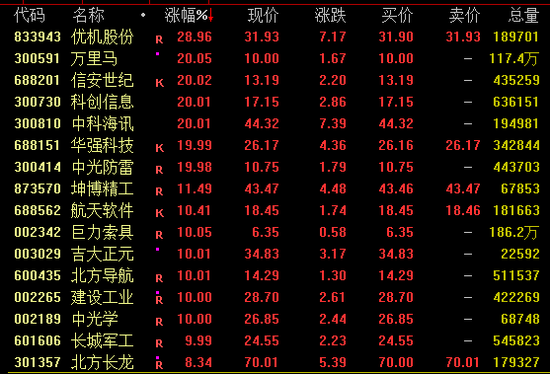
Market Overview - A-shares experienced a decline in the afternoon, with all three major indices closing lower; the Shanghai Composite Index fell by 0.22% to 3448.45 points, the Shenzhen Component dropped by 0.48% to 10343.48 points, and the ChiNext Index decreased by 0.66% to 2114.43 points [1] - The total trading volume in the Shanghai and Shenzhen markets reached 16,235 billion yuan [1] Sector Performance - The insurance and brokerage sectors dragged down the market, while the banking sector saw gains, with banks like Jiangsu Bank and Hangzhou Bank reaching historical highs [1] - The oil sector rebounded, with Junyou Co. hitting the daily limit, and the tourism and catering sectors also saw significant increases, with Tianmuhu and Qujiang Cultural Tourism both hitting the daily limit [1] - The military industry sector was notably strong, with stocks like Youji Co. rising nearly 29% and several others hitting the daily limit [3][4] Digital Currency Sector - The digital currency sector was active, with stocks like Xin'an Century and Kexin Information both hitting the daily limit [7] - The Hong Kong government announced a new policy framework to develop the digital asset sector, aiming to position Hong Kong as a global innovation center for digital assets [7][8] Tourism Sector - The tourism and catering sectors showed strong performance, with stocks like Tianmuhu and Qujiang Cultural Tourism reaching their daily limits, and Junting Hotel rising nearly 8% [8][9] - The "cooling economy" trend is driving summer tourism, with increased consumer demand for various services and products related to summer activities [9][10]





又现牛股,盘中暴涨近180%!
证券时报· 2025-06-26 09:32
Market Overview - The three major stock indices experienced strong fluctuations in the morning but fell in the afternoon, with the Shanghai Composite Index down 0.22% to 3448.45 points, the Shenzhen Component down 0.48% to 10343.48 points, and the ChiNext Index down 0.66% to 2114.43 points. The total trading volume in the Shanghai and Shenzhen markets was 162.35 billion [1] Military Industry - The military sector showed strong performance, with stocks like Youji Co. rising nearly 29%, and several others including Wanlima, Ketech Information, and Zhongke Haixun hitting the daily limit of 20% [3][4] - The military parade scheduled for September 3 is expected to showcase China's defense capabilities and may enhance military trade opportunities, transitioning from "cost-effective alternatives" to "technology benchmarks" [5] Digital Currency - The digital currency sector was active, with stocks like Xin'an Century and Ketech Information reaching the daily limit of 20% [7][9] - Hong Kong's government announced a policy to develop the digital asset sector, aiming to make Hong Kong a global innovation center for digital assets, which may boost the market for stablecoins and related services [10] Tourism and Hospitality - The tourism and hospitality sectors saw significant gains, with stocks like Tianmuhu and Qujiang Cultural Tourism hitting the daily limit, and Junting Hotel rising nearly 8% [13] - The "cooling economy" trend is driving summer tourism, with increased consumer demand for various services, indicating a potential boost in the tourism industry's performance [14]





晨枫:欧洲好像醒了,又想要装睡
Guan Cha Zhe Wang· 2025-06-26 01:14
Core Points - The article discusses the shift in U.S. foreign policy under President Trump, indicating a long-term move away from Atlanticism and European alliances towards a focus on the Asia-Pacific region [1][2] - It highlights the challenges Europe faces in re-establishing its own defense capabilities amid a perceived abandonment by the U.S. and the need for increased military spending [4][7] - The article emphasizes the fragmentation of European military capabilities and the reliance on U.S. military technology, which complicates Europe's efforts to independently rearm [12][13] Group 1: U.S. Policy Shift - The U.S. is moving away from Europe, prioritizing the Asia-Pacific region and sacrificing Atlanticism as a result of strategic contraction [1][2] - This shift is not merely a temporary phenomenon tied to Trump's presidency but reflects a long-term trend that will persist regardless of which party is in power [1] Group 2: European Defense Challenges - Europe is attempting to bolster its own defense capabilities, with NATO countries aiming to increase defense spending from 2% to 3% of GDP and enhance military equipment by 30% over the next 5-10 years [7][10] - The European Union has proposed an €800 billion "rearmament plan," with €650 billion coming from member states and €150 billion from a new EU fund [10] Group 3: Military Capability Fragmentation - European NATO countries have a total military strength of around 1.5 million personnel, but much of this is non-combat support, leading to concerns about actual combat readiness [4][6] - The reliance on U.S. military equipment is increasing, with European NATO countries' arms imports rising by 105% from five years ago, 64% of which come from the U.S. [6][12] - European military industries are struggling to meet the demand for advanced military technology, particularly in areas like combat aircraft and naval systems, which are heavily reliant on U.S. technology [12][13]
美联储重磅发声!
证券时报· 2025-06-25 15:26
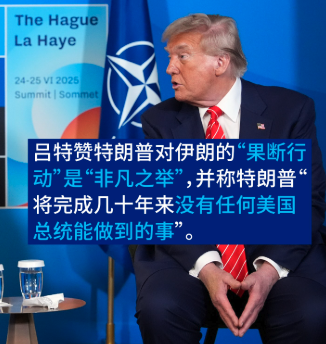
Group 1: NATO Defense Spending - NATO has agreed to increase its defense spending target from 2% to 5% of GDP by 2035, marking the most decisive move in over a decade [4][6] - The commitment includes a minimum of 3.5% of GDP dedicated to "pure" defense, with the remainder allocated to security and related infrastructure [6] - European defense stocks have performed exceptionally well, with Rheinmetall's stock rising 248% and Exail Technologies SA increasing by 444% over the past year [6] Group 2: US Defense Stocks - US defense stocks have also shown strong performance, with Raytheon Technologies up 23% and Palantir soaring 90% year-to-date [7] - Despite the positive market sentiment, Goldman Sachs noted significant net selling in European defense stocks ahead of the NATO meeting [7] Group 3: Stablecoin Developments - The European Commission plans to introduce new regulations for the rapidly growing stablecoin market, despite warnings from the European Central Bank about potential risks to banking stability [9] - Mastercard is deepening its collaboration with fintech company Fiserv to integrate its new FIUSD token into its products, aiming to enhance the adoption and practicality of stablecoins [9] - Circle Internet, the first public stablecoin company, has seen its stock decline over 5% recently, following a significant increase of over 700% since its listing [9] Group 4: Federal Reserve Insights - Federal Reserve Chairman Jerome Powell is set to testify in the Senate, with investors keen on any hints regarding the Fed's monetary policy direction [11] - Powell indicated a cautious stance on interest rates, suggesting that lower-than-expected inflation or a weak job market could lead to earlier rate cuts [11] - The Fed is also considering a proposal to relax bank leverage rules, which could facilitate trading in the US Treasury market [12]

11.55亿主力资金净流入,兵装重组概念涨8.60%
Zheng Quan Shi Bao Wang· 2025-06-25 10:35
Group 1 - The core viewpoint of the news is that the military equipment restructuring concept has seen a significant increase of 8.60%, leading the concept sector in terms of growth [1][2] - Within the military equipment restructuring concept, seven stocks experienced gains, with notable performances from Zhongguang Optical, Hunan Tianyan, and Changcheng Military Industry, which hit the daily limit [1][2] - The main inflow of funds into the military equipment restructuring concept amounted to 1.155 billion yuan, with major stocks receiving substantial net inflows, particularly Construction Industry, which attracted 397 million yuan [2][3] Group 2 - The top three stocks in terms of net inflow ratio were Zhongguang Optical, Construction Industry, and Hunan Tianyan, with net inflow ratios of 31.29%, 25.28%, and 12.74% respectively [3] - The daily trading performance of key stocks in the military equipment restructuring concept included Construction Industry rising by 9.99%, Changcheng Military Industry by 10.00%, and Hunan Tianyan by 10.00% [3] - The overall market performance showed that the military equipment restructuring concept was the only sector with a positive return, while other sectors like combustible ice and internet insurance experienced declines [2]




A股沸腾!大涨原因,找到了!
Zhong Guo Ji Jin Bao· 2025-06-25 08:04
【导读】国泰君安国际,一支穿云箭,千军万马来相见 兄弟姐妹们啊,今天市场沸腾了,相信你们都挣到钱了吧! 全线大涨 6月25日,市场全天放量大涨,沪指创出年内新高,创业板指涨超3%。截至收盘,沪指涨1.03%,深成指涨1.72%,创业板指涨3.11%。 两市共3919只个股上涨,80只个股涨停,1284只个股下跌。 | 880005 涨跌家数 | | | --- | --- | | 其中 涨停 | 80 | | 涨幅 > 7% | 135 | | 涨幅 5-7% | 124 | | 涨幅 3-5% | 330 | | 涨幅 0-3% | 3330 | | 跌幅 0-3% | 1171 | | 跌幅 3-5% | 63 | | 跌幅 5-7% | 29 | | 跌幅 > 7% | 21 | | 其中 跌停 | 6 | | 上涨家数 | 3919 | | 下跌家数 | 1284 | | 平盘停牌 | 217 | | 总品种数 | 5420 | | 总成交额 | 16395.06亿 | | 总成交量 | 124713.4万 | | 涨家增减 | 1209 | | 涨家增幅 | 44.61% | | 指数量比 | 1. ...





A股沸腾!大涨原因,找到了!
中国基金报· 2025-06-25 07:53
Core Viewpoint - The market experienced a significant surge on June 25, with the Shanghai Composite Index reaching a new high for the year, driven by strong performance in the financial sector and positive regulatory developments in virtual asset trading [1][7]. Market Performance - On June 25, the Shanghai Composite Index rose by 1.03%, the Shenzhen Component Index increased by 1.72%, and the ChiNext Index surged by 3.11% [1]. - A total of 3,919 stocks rose, with 80 hitting the daily limit up, while 1,284 stocks declined [2]. - The total trading volume reached 16,395.06 billion, with a total of 5,420 stocks traded [2]. Sector Highlights - The financial sector saw a broad rally, with stocks like Tianfeng Securities, Guosheng Financial Holdings, and Xiangcai Shares hitting the daily limit up [2]. - Major banks, including Agricultural Bank of China, Bank of China, and Industrial and Commercial Bank of China, continued to set historical highs [2]. - The military industry sector also showed strength, with multiple stocks like Changcheng Military Industry and Star Technology experiencing significant gains [5]. Regulatory Developments - Guotai Junan International became the first Chinese broker in Hong Kong to offer comprehensive virtual asset trading services, leading to a surge in its stock price by approximately 150% [7]. - Following the license upgrade, clients can trade cryptocurrencies and stablecoins directly on the Guotai Junan International platform [8]. - The Chinese government released 19 measures to support consumption, enhancing the financial ecosystem and consumer spending [8]. Market Sentiment - The ceasefire in the Middle East has positively influenced market sentiment, reducing concerns over broader conflicts and U.S. involvement [9].

大涨!牛市旗手大爆发,有券商单日暴涨100%!千亿资金涌入!股民:券商不演了,牛回速归....
雪球· 2025-06-25 07:47
Group 1: Market Overview - The three major indices collectively rose, with the Shanghai Composite Index up 1.03%, Shenzhen Component Index up 1.72%, and ChiNext Index up 3.11% [1] - The total market turnover reached 16,394 billion, an increase of 1,915 billion compared to the previous day, with over 3,900 stocks rising [1] Group 2: Brokerage Sector Performance - The brokerage sector has seen three consecutive days of gains, with a significant inflow of 100 billion today, resulting in an overall increase of 4.54% in the sector [2][4] - Notable stocks such as Guosen Securities and Xiangcai Securities have hit the daily limit, while others like Dongfang Caifu and Guotai Junan also experienced gains [4] Group 3: Policy Support for Financial Sector - Recent guidelines from multiple financial regulatory bodies aim to bolster macroeconomic foundations and stabilize consumer expectations, emphasizing the use of various monetary policy tools to maintain liquidity and lower financing costs [4] - The guidelines also focus on enhancing the capital market's function in coordinating investment and financing, promoting the entry of long-term funds into the market [4] Group 4: Financial Sector Outlook - CITIC Securities reports that the financial sub-industry benefits from favorable macro and industrial policies, a low-interest-rate environment, and the emergence of core competitiveness among top financial institutions [5] - The report suggests that two types of companies will benefit: high-quality index-weighted stocks and growth stocks expected to outperform industry benchmarks within three years [5] Group 5: Hong Kong Brokerage Developments - Guotai Junan International has received approval from the Hong Kong Securities and Futures Commission to upgrade its existing securities trading license to provide virtual asset trading services, allowing clients to trade cryptocurrencies and stablecoins directly [7] Group 6: Alcohol Industry Insights - The price of Feitian Moutai has dropped, with the wholesale reference price for 2025 Feitian Moutai original box down by 85 yuan to 1,830 yuan per bottle, and the scattered bottle price down by 70 yuan to 1,780 yuan [9] - Despite initial declines, the liquor sector saw a slight recovery, closing up 0.18% as market sentiment improved due to the brokerage sector's performance [9] Group 7: Military Industry Trends - The military sector experienced a significant rise, with multiple stocks hitting the daily limit, including Changcheng Military Industry, which has seen five consecutive days of gains [12] - Research indicates that the military industry is entering a new development phase with the upcoming "14th Five-Year Plan" and increased public interest due to commemorative events related to historical victories [14]

【帮主郑重收评】沪指创年内新高!大金融爆发背后暗藏这些玄机
Sou Hu Cai Jing· 2025-06-25 07:47
Market Overview - The market experienced a significant rise, with the Shanghai Composite Index reaching 3455 points, marking a new high for the year, while the ChiNext Index surged over 3% [1] - Over 3800 stocks closed in the green, indicating a positive shift in market sentiment [5] Financial Sector - The financial sector saw a collective surge, particularly in brokerage stocks such as Guosheng Financial Holdings, Tianfeng Securities, and Xiangcai Securities, which hit the daily limit [3] - The rise is attributed to increasing expectations for policy easing and the relatively low valuations of brokerage firms, with potential catalysts from ongoing capital market reforms like the deepening of the registration system and the expansion of the Beijing Stock Exchange [3] - Caution is advised for short-term trading, while long-term investors should focus on leading firms with strong investment banking capabilities and wealth management advantages [3] Military Industry - The military sector remained active, with stocks like Guorui Technology and Beifang Changlong hitting the daily limit [3] - The sector benefits from strong performance and policy support, with many military enterprises reporting full order books, particularly in aerospace and missile equipment [3] - Long-term investments should focus on leading companies with core technologies and stable orders, avoiding short-term speculative trades [3] Software Development - The software development sector was also lively, with stocks like Guiding Compass reaching the daily limit [4] - This sector is linked to the financial industry, driven by the demand for financial IT and data security as part of digital transformation [4] - Companies that effectively combine technology with practical applications are seen as having significant future potential, but investors should prioritize firms with tangible projects and cash flow [4] Other Sectors - The oil and gas, pharmaceutical, and shipping sectors faced declines, with stocks like Zhun Oil Shares hitting the daily limit down [4] - The oil and gas sector is affected by recent volatility in international oil prices, while the pharmaceutical sector is still adjusting to the impacts of centralized procurement [4] - The shipping sector is experiencing a withdrawal of funds due to expectations around freight rates and seasonal demand [4] Investment Strategy - The market's upward movement suggests a search for undervalued and high-growth sectors, particularly in financials and military industries [5] - Long-term investors are encouraged to remain calm and avoid chasing short-term speculative stocks, focusing instead on sectors with clear policy benefits and strong mid-year performance forecasts, such as semiconductor equipment, energy storage, and high-end liquor [5]
突然爆了!雷军官宣!
中国基金报· 2025-06-25 04:34
Core Viewpoint - The article highlights significant market movements driven by the announcement of Xiaomi's AI glasses and a surge in Chinese financial leasing stocks, indicating potential investment opportunities in technology and finance sectors [2][11]. Group 1: Market Overview - The People's Bank of China conducted a reverse repurchase operation of 365.3 billion yuan at a rate of 1.4%, resulting in a net liquidity injection of 209 billion yuan [2]. - The Shanghai Interbank Offered Rate (Shibor) saw an increase, with the overnight rate rising by 0.3 basis points to 1.37% and the 7-day rate increasing by 13.2 basis points to 1.629% [2]. - The A-share market experienced a positive trend, with the Shanghai Composite Index rising by 0.28%, the Shenzhen Component Index increasing by 0.64%, and the ChiNext Index up by 1.34% [2][3]. Group 2: Sector Performance - Financial stocks showed strong performance, with several stocks hitting the daily limit, and major banks reaching historical highs [3]. - The military industry stocks also surged, with over ten stocks hitting the daily limit, while oil and gas stocks continued to decline [3]. Group 3: AI Glasses Announcement - Xiaomi announced the launch of its AI glasses, which support first-person perspective recording for various activities, set to be unveiled on June 26 [5]. - The expected shipment for the new AI glasses is projected to exceed 300,000 units, with the global market for consumer-grade AI+AR glasses gaining traction [6]. - Following the announcement, AI glasses-related stocks experienced significant price increases, with companies like Good Up and Zhongguangxue hitting their daily limits [7][9]. Group 4: Financial Leasing Surge - Chinese financial leasing stocks saw a dramatic increase, with one stock rising by over 600% at one point, attributed to a takeover bid by Cai Wensheng, the founder of Meitu [12]. - The takeover bid is set at 0.38 HKD per share, representing a 13.43% premium over the last closing price before suspension, with an estimated total investment of approximately 85.74 million HKD [12]. - Cai Wensheng aims to transform the group into an asset management platform focusing on investments in technology incubation, AI, Web3, and digital financial products [13].