
农产品

Search documents
俄媒:美国最高法院驳回美高层的全面关税政策,但这并不能改变既有的关税讹诈
Sou Hu Cai Jing· 2026-02-21 06:41
Core Viewpoint - The U.S. Supreme Court recently rejected the comprehensive tariff policy of the U.S. administration with a 6-3 vote, which limits its trade dominance but does not completely eliminate its ability to exert pressure through other means [1] Group 1: Legal and Trade Implications - The ruling does not resolve the core conflicts surrounding tariff disputes, as the U.S. administration can still utilize tools like the Trade Act Amendment 301 and national security clauses for "coercive" negotiations with trade partners [1] - The decision reflects a power imbalance, where the U.S. administration's attempts to reshape global trade order face strong resistance from the judicial system and specific interest groups [3] Group 2: Potential Retaliatory Actions - Following the judicial setback, the U.S. administration is predicted to retaliate against the EU by increasing tariffs on key sectors such as automobiles and agricultural products, or using energy supply as leverage [5] - There are warnings from EU member states regarding the energy crisis and inflation pressures, indicating that extreme measures from the U.S. could lead to a new economic shock in Europe, with some countries potentially facing recession risks [5] Group 3: Broader Context of Trade Relations - The ongoing trade power struggle highlights structural contradictions within Western governance models, where judicial independence becomes a tool in political conflicts and alliances are reduced to mere calculations of interest [10] - The typical characteristics of U.S. internal conflicts may signal a period of turbulence and adjustment for the transatlantic alliance [10]

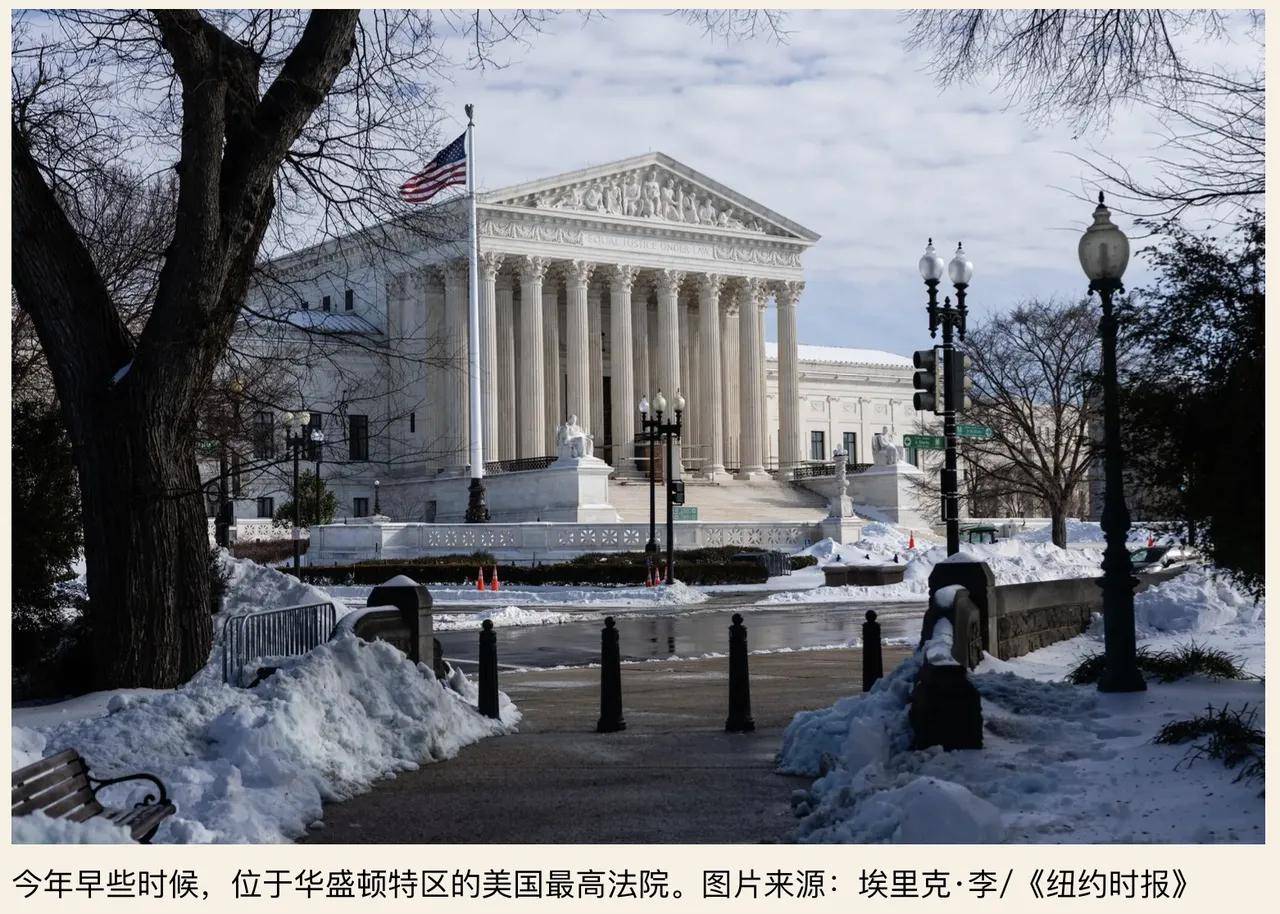
“特朗普关税被裁定违法,中国还怎么可能再买美国大豆?”
Xin Lang Cai Jing· 2026-02-21 05:57
Core Viewpoint - The U.S. Supreme Court's ruling against Trump's tariff policy raises concerns in the U.S. agricultural sector, particularly regarding the future of soybean exports to China, which has been a significant market for American farmers [1][4]. Group 1: Tariff Policy and Market Impact - The Supreme Court ruled that Trump's large-scale tariff policy lacked legal authorization, leading to uncertainty about future trade relations with China [4]. - Analysts express doubt that China will continue to purchase U.S. soybeans without the pressure of tariffs, especially as Brazilian soybeans are currently cheaper [1][4]. - Following the ruling, soybean futures in the U.S. experienced a slight decline, indicating market apprehension about the future of U.S. soybean exports [1]. Group 2: China's Soybean Import Dynamics - China, the world's largest soybean importer, has historically been a major buyer of U.S. soybeans, accounting for over 60% of global soybean trade [1]. - Despite fulfilling a previous commitment to purchase 12 million tons of U.S. soybeans, China has significantly increased its purchases from Brazil, which is expected to have a large soybean harvest [4]. - Analysts note that without tariffs, U.S. soybeans will struggle to compete with Brazilian prices, potentially affecting future trade volumes [4]. Group 3: Agricultural Sector Challenges - U.S. farmers are facing their fourth consecutive year of low profits or losses, despite government subsidies reaching historical highs [5]. - The U.S. Department of Agriculture plans to provide $11 billion in transitional subsidies to farmers, partly due to export market challenges [5]. - The uncertainty surrounding tariff policies complicates the outlook for U.S. agriculture, as farmers and market participants await further developments [5]. Group 4: Future Projections - A Goldman Sachs report indicates that China's reliance on soybean imports is expected to decrease significantly over the next decade, from 90% to below 30% [5]. - This shift suggests a long-term trend towards greater self-sufficiency in food production for China, impacting global agricultural trade dynamics [5].

最大的“支柱”被折断,特朗普政府的下一步怎么走?
Xin Lang Cai Jing· 2026-02-21 04:22
Group 1 - The U.S. Supreme Court ruled that the global tariffs imposed by the Trump administration under the International Emergency Economic Powers Act (IEEPA) lack legal basis, rendering most tariffs invalid [2][22] - This ruling significantly impacts Trump's economic agenda, particularly his tariff policy, which was a key component of his administration's trade strategy [12][31] - The decision forces the White House to shift from aggressive administrative measures to more traditional and procedural trade paths, which are slower and more susceptible to litigation [2][22] Group 2 - The ruling clarifies that the IEEPA, originally intended for sanctions, cannot be used as a "universal key" for imposing global tariffs [25][26] - The majority opinion emphasized that the Constitution assigns the power to levy taxes, including tariffs, to Congress, and any delegation of this power must be explicit [26][28] - The court's decision is seen as a limitation on presidential power, indicating that significant economic policies affecting the national economy cannot be enacted through vague legal provisions [33][34] Group 3 - Following the ruling, Trump announced plans to impose a new 10% global tariff using a different legal framework, the Trade Act of 1974, which has specific time and procedural limitations [35][36] - The administration is expected to rely more on established trade tools like Section 232 and Section 301 to impose tariffs, which, while legally clearer, involve more complex procedures [35][36] - The ruling may lead to new investigations and potential trade conflicts as the administration seeks to maintain pressure on trade partners [38]
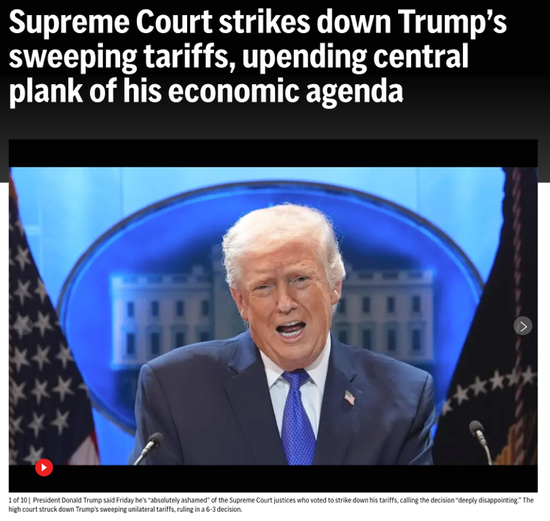
白宫:新关税豁免商品包括某些农产品、药品及药品原料、某些电子产品。
Xin Lang Cai Jing· 2026-02-21 00:25
Group 1 - The core point of the article is that the White House has announced new tariff exemptions for certain agricultural products, pharmaceuticals and pharmaceutical ingredients, and certain electronic products [1] Group 2 - The announcement may impact the agricultural sector positively by reducing costs for farmers and producers of exempted products [1] - Pharmaceutical companies could benefit from reduced tariffs on raw materials, potentially lowering production costs and increasing profit margins [1] - The electronics industry may see a boost as certain products are exempted from tariffs, which could enhance competitiveness in the market [1]

印尼 — 美国贸易协定要点一览
Xin Lang Cai Jing· 2026-02-20 11:36
Core Points - Indonesia and the United States have finalized a trade agreement that reduces U.S. tariffs on Indonesian exports from 32% to 19% [1][15] - The agreement aims to address non-tariff barriers that have disadvantaged U.S. exports [1][15] Tariff Reductions and Exemptions - Over 1,800 Indonesian products, including palm oil, coffee, and cocoa, will receive tariff exemptions [2][16] - Indonesia will eliminate tariffs on over 99% of U.S. products entering Indonesia, and both countries have agreed to remove non-tariff barriers [3][17] Key Minerals - Indonesia will lift restrictions on exports of industrial goods, including critical minerals, and enhance cooperation with U.S. companies in mining and processing [4][18] - The agreement ensures that foreign investment facilities will not face capacity overproduction and will be treated equally in terms of taxes and regulations [4][18] Procurement and Investment - Indonesia plans to import goods and services from the U.S. with a total value of up to $38.4 billion, including approximately $15 billion in energy products and $4.5 billion in agricultural products [5][19] - Indonesia is required to import specific agricultural products annually, including beef, certain fruits, rice, and ethanol [6][20] - Indonesia aims to attract at least $10 billion in direct investment from the U.S. for projects in engineering, procurement, construction, and energy development [7][21] Investment Facilitation - The agreement prohibits Indonesia from imposing restrictions on U.S. investors' equity in local companies through mining divestment requirements [8][22] - U.S. investors will be exempt from a regulation requiring natural resource exporters to retain earnings in Indonesia for a certain period, which will be reviewed within 12 months of the agreement's effectiveness [8][22] Digital Trade - Indonesia must communicate with the U.S. before signing any new digital trade agreements that could harm U.S. interests [9][24] - Indonesia is prohibited from imposing discriminatory digital service taxes on U.S. companies and cannot require U.S. digital service providers to support local news agencies through paid licensing or data sharing [10][24] - The country cannot mandate data localization for U.S. digital service providers, although regulatory authorities may access information stored abroad for oversight purposes [11][24] Bioethanol Usage - Indonesia is required to ensure that by 2028, the blending ratio of bioethanol in transportation fuels reaches a maximum of 5% [12][25] - The blending ratio is expected to increase to 10% by 2030, with a goal of reaching up to 20% when conditions allow [23][25] - Indonesia must not implement measures that obstruct U.S. bioethanol imports [25] National Security Coordination - The U.S. must notify Indonesia of any trade restrictions imposed on third countries for economic or national security reasons, and Indonesia will take equivalent measures to align with U.S. policies [13][25] - Indonesia agrees to take action against third-country companies operating within its territory that harm U.S. trade interests [13][25] - Indonesia will establish rules to combat transshipment activities aimed at evading U.S. tariffs [14][25]
美国与印尼达成贸易协议 将对印尼征收19%关税
Yang Shi Xin Wen· 2026-02-20 02:22
Core Viewpoint - The Trump administration has finalized a reciprocal trade agreement with Indonesia aimed at expanding U.S. market access for goods across manufacturing, agriculture, and the digital economy [1] Group 1: Trade Agreement Details - Indonesia will eliminate tariffs on over 99% of U.S. export products [1] - The agreement includes approximately $33 billion in commercial cooperation arrangements, comprising about $15 billion in U.S. energy procurement, around $13.5 billion in aviation and related product procurement, and over $4.5 billion in U.S. agricultural product procurement [1] - The U.S. will maintain a reciprocal tariff rate of 19% on Indonesia, with certain specific products subject to zero tariffs [1] Group 2: Trade Deficit and Implementation - In 2025, the U.S. is projected to have a trade deficit of $23.7 billion with Indonesia [1] - The agreement is expected to officially take effect after both parties complete their domestic procedures in the coming weeks [1]
全球秩序重构下的“慢牛”与配置主线 | 策马点金
Qi Huo Ri Bao· 2026-02-17 23:45
Core Viewpoint - The global financial market is at a critical juncture, with the long-term debt cycle under pressure and a restructuring of global order and reserve assets expected to influence market trends in 2026 [1][2]. Macro Context - The current global economy is at the tail end of a long-term debt cycle, with government debt as a percentage of GDP at historically high levels and diminishing marginal effects of traditional monetary policy [2][3]. - The international monetary system dominated by the US dollar faces challenges, with international trade shifting from globalization to regionalization and increased protectionism of key technologies and resources [2]. Commodity Market Outlook - The downward pressure on the commodity market is expected to ease, with prices gradually rising, although sector differentiation will continue [2][4]. - Gold is anticipated to maintain a strong oscillating pattern due to ongoing diversified purchases by central banks and geopolitical uncertainties [4]. - Copper and aluminum are seen as leading indicators of structural market trends, driven by demand from infrastructure upgrades related to electric grids and new energy vehicles [4]. - The oversupply pressure in the oil market is gradually being digested, with OPEC's production increase slowing down, which may push oil prices higher [4]. Agricultural Products - Agricultural prices are likely to continue a pattern of oscillation, with current prices at low levels and cost support gradually emerging [5]. A-Share Market - The A-share market is expected to exhibit a "low volatility, slow bull" characteristic in 2026, with opportunities arising from three main lines: upstream resource companies benefiting from fiscal expansion, companies achieving breakthroughs in key technologies, and undervalued defensive sectors [6][8]. Investment Strategy - The asset allocation strategy for 2026 should focus on flexibility and structure, moving from traditional balanced approaches to more aggressive strategies [10]. - Long-term opportunities in the commodity market, particularly in gold, copper, and aluminum, are highlighted as core investment options [10]. Differentiated Investment Strategies - Conservative investors should focus on high-grade bonds, deposits, and money market funds, with limited exposure to equities and commodities [12]. - Moderate investors are advised to balance their portfolios with a tilt towards equities, while aggressive investors should increase their allocations to stocks and commodities [12].

219:211!中方表态不到24小时,美国会通过决议,特朗普遭背刺
Sou Hu Cai Jing· 2026-02-17 07:53
Core Viewpoint - The U.S. House of Representatives passed a resolution challenging the Trump administration's tariffs on Canadian goods, marking a rare congressional check on executive power, especially with six Republican members breaking party lines to support the measure [1][3][10]. Group 1: Tariff Impact - Trump's tariffs, initiated in early 2025, included a 25% additional tariff on most Canadian goods and a 10% tariff on energy products, leading to a 15% decline in Canadian exports to the U.S. and an average annual increase of $1,500 in costs for American consumers [5][10]. - The tariffs resulted in a 20% reduction in trade volume between the U.S. and Canada, with Midwestern farmers losing significant export opportunities due to market closures [5][9]. Group 2: Political Dynamics - Six Republican lawmakers expressed deep concerns over the economic negative impacts of Trump's tariff policy, indicating a fracture within the Republican Party [3][10]. - Trump's threats against dissenting Republican members highlight internal party divisions and dissatisfaction with his trade policies [3][10][11]. Group 3: International Relations - Canadian Prime Minister Justin Trudeau's early 2026 visit to China aimed to enhance cooperation in energy and technology, which Trump perceived as a challenge to U.S. global dominance [7][9]. - Following the House resolution, Chinese investments in Canada, particularly in electric vehicle components and high-tech sectors, are expected to increase, indicating a shift in supply chain dynamics [11][12]. Group 4: Future Implications - The House's action signals a potential shift in congressional oversight of trade policies, with future emergency measures likely facing increased scrutiny [11][12]. - Economic reports suggest that removing tariffs could lower U.S. inflation by 0.5 percentage points, but Trump's opposition to such proposals indicates ongoing trade tensions [12].
东南亚市场的“岭南年味”,看广货撑起的海外春节
Nan Fang Nong Cun Bao· 2026-02-17 01:35
Core Viewpoint - The article highlights the significant role of Guangdong agricultural products in the Southeast Asian market during the Lunar New Year, showcasing a strong cultural connection and increasing export volumes, particularly in festive goods [7][35][66]. Group 1: Market Performance - Guangdong agricultural product exports to Southeast Asia increased by 18% year-on-year before the Lunar New Year, with items like citrus fruits, traditional dishes, and preserved meats gaining popularity [7][8]. - In 2025, the total export value of Guangdong agricultural products reached 360.13 billion RMB, accounting for 16.2% of the national total, maintaining its leading position in China [35]. - The export of year oranges from Chen Village in Foshan reached nearly 200,000 plants annually, with a significant portion sent to Singapore, Malaysia, and Vietnam [12][38]. Group 2: Cultural Significance - The deep historical and cultural ties between Guangdong and Southeast Asia contribute to the strong demand for Guangdong products during the Lunar New Year, as the region has a long history of trade and migration [31][33]. - Guangdong products have transcended their commodity status, becoming emotional and cultural connectors for overseas Chinese communities, allowing them to celebrate traditional customs abroad [53][66]. Group 3: Product Highlights - Fresh fruits, particularly the Yunnan sugar oranges, have seen a surge in exports, with daily shipments of at least 25 tons to Singapore, showcasing efficient logistics [18][19]. - Pre-packaged dishes from Guangdong, such as the traditional "Poon Choi" and various preserved meats, are becoming staples for overseas Chinese during the festive season, with the export value of pre-packaged dishes reaching 31.7 billion RMB in 2024 [22][23]. Group 4: Logistics and Support - The successful export of Guangdong products is supported by robust logistics networks and advanced cultivation techniques, ensuring timely delivery and quality [41][44]. - Policy support and trade facilitation measures at both national and local levels have created a comprehensive support system for Guangdong agricultural products entering the Southeast Asian market [50][51].

新春走基层·建设宜居宜业和美乡村|东阿拉村,集市人气旺
Ren Min Ri Bao· 2026-02-16 07:16
Core Insights - The village of Dongala has transformed from a poor area to a prosperous one, now known as "Rich Dongala" due to improved economic conditions and increased consumer spending [1] - The local market has become a hub for both villagers and city dwellers, indicating a rise in the village's consumption capacity [1] - The return of young people to the village has diversified the local business landscape, with new establishments like barbecue shops contributing to the economy [2] Group 1 - The village's collective income is projected to reach 760,000 yuan by 2025, with an average income of 34,000 yuan per villager [1] - The village has seen a net return of 90 residents, enhancing its vitality [1] - The local market has daily sales of 15,000 yuan during the festive season, showcasing the growth in both online and offline sales [2] Group 2 - The establishment of a "Secretary's Livestreaming Room" has enabled local agricultural products to be sold online, generating over 200,000 yuan in sales [2] - The variety of local businesses has increased, with new barbecue shops opening and employing local residents [2] - Specialty agricultural products such as rice, hazelnuts, and mushrooms are now reaching broader markets, attracting tourists to experience rural life [2]