电动汽车

Search documents
2025年广东高技术产品出口同比增长15%
Zhong Guo Xin Wen Wang· 2026-01-19 09:34
Core Insights - Guangdong's high-tech product exports are projected to reach 1.14 trillion yuan by 2025, marking a 15% year-on-year increase and surpassing the trillion yuan milestone for the first time [1] - Key high-tech products driving this growth include lithium batteries, measuring instruments, medical devices, machine tools, 3D printers, and automotive parts, which account for approximately 30% of the national export share in these categories [1] - The province's bonded logistics imports and exports are expected to reach 1.93 trillion yuan in 2025, reflecting a 9.1% year-on-year growth, which is 4.7 percentage points higher than the overall foreign trade growth rate [1] Group 1 - The construction of comprehensive bonded zones in Guangdong has made significant progress, with imports and exports projected at 945.57 billion yuan in 2025, a 9.5% increase year-on-year, exceeding the provincial foreign trade growth rate by 5.1 percentage points [2] - The Guangdong Free Trade Zone is expected to see imports and exports of 815.25 billion yuan in 2025, representing a 13.3% year-on-year growth, which is 8.9 percentage points higher than the overall foreign trade growth rate [2] - The Hengqin area of the Guangdong Free Trade Zone is accelerating the integration of the Guangdong-Macao industry, focusing on "four new" industries, with a year-on-year growth of 150% in imports and exports [2] Group 2 - Guangdong's foreign trade imports have maintained a year-on-year growth for 13 consecutive months, with a projected growth of 7.9% in 2025, ranking first among major foreign trade provinces in the country [2] - The large-scale market potential continues to be released, providing a source of vitality for the high-quality development of Guangdong's foreign trade and offering global opportunities to share the Guangdong market [2] - Despite the complex and severe external environment with increasing uncertainties, the fundamental strengths, advantages, and potential of Guangdong's foreign trade remain unchanged [2]
【快讯】每日快讯(2026年1月19日)
乘联分会· 2026-01-19 09:07
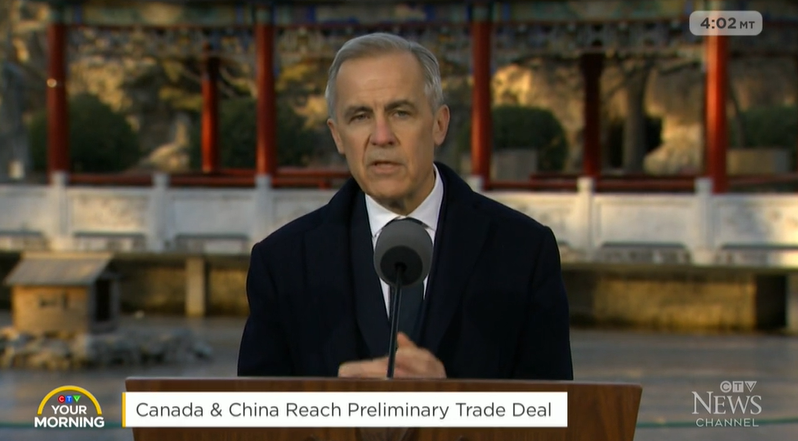
Domestic News - Canada will import 49,000 electric vehicles from China, reducing tariffs from 100% to 6.1%, with a long-term goal of having over 50% of imported vehicles priced below 35,000 CAD (approximately 180,000 RMB) within five years [3] - In December, China's total retail sales of consumer goods reached 45,136 billion RMB, a year-on-year increase of 0.9%, with retail sales excluding automobiles growing by 1.7% [4] - Shanghai's 14th Five-Year Plan emphasizes the development of smart connected new energy vehicles through soft-hard collaboration and digital intelligence [5] - Hebei province plans to enhance electric vehicle charging infrastructure, aiming to build 1,200 high-power charging stations by 2027 [6] - Chery held its 2026 AI conference, showcasing advancements in AI technology across various vehicle models [7] - Li Auto's 2025 driving assistance report indicates a user base of 1.505 million, with a total mileage of 6 billion kilometers [8] - Lynk & Co's 30,000th vehicle rolled off the production line, with plans to expand into Latin America and the Middle East [9] - BYD opened its first brand center in Tanzania, introducing multiple electric vehicle models [10] International News - Indonesia's new car sales increased by nearly 18% year-on-year in December 2025, reaching 94,100 units, driven by incentives for electric vehicle imports [12] - Israel approved a ride-hailing bill allowing Uber and Lyft to operate, aimed at reducing taxi fares [13] - Germany plans to introduce subsidies of up to $7,000 for electric vehicle purchases to boost the market [14] - Maruti Suzuki will invest $3.9 billion to build a new factory in Gujarat, India, increasing production capacity by up to 1 million vehicles annually [15] Commercial Vehicles - Times Qi Ji and Ping An Leasing signed a strategic cooperation agreement to promote 5,000 electric heavy trucks [17] - The UK government announced a substantial subsidy program for electric trucks, with a total budget of £318 million [18] - Iveco and PlusAI are testing autonomous trucks in Spain, equipping them with SAE Level 4 technology [19] - A proposal was made in Jinan to establish regulations for the operation of unmanned delivery vehicles [20]


路透:加拿大恢复进口中国产电动汽车 特斯拉有望抢先获益
Feng Huang Wang· 2026-01-19 09:01
Group 1: Core Insights - Tesla is expected to benefit from Canada's cancellation of a 100% additional tax on Chinese electric vehicles, as the company has already established a sales network and started exporting cars from its Shanghai Gigafactory to Canada [1][2] - Canada will provide an annual quota of 49,000 units for Chinese electric vehicles, which will enjoy a 6.1% most-favored-nation tariff rate, with the quota potentially increasing to 70,000 units over five years [1] - The agreement stipulates that half of the quota is reserved for vehicles priced below CAD 35,000 (approximately USD 25,000), which does not include any Tesla models [1] Group 2: Competitive Advantage - Tesla has a first-mover advantage in exporting vehicles to Canada, having modified its Shanghai factory to produce the Model Y specifically for the Canadian market [2] - The number of cars imported from China to Vancouver surged by 460% in 2023, reaching 44,356 units, largely due to Tesla's exports [2] - Tesla has established a network of 39 stores in Canada, while competitors like BYD and NIO have yet to set up local sales channels, giving Tesla a significant advantage in marketing and distribution [4] Group 3: Market Opportunities - The new agreement may provide a buffer for Chinese brands, allowing them to explore entry-level vehicle markets in Canada, particularly appealing to the large Chinese-Canadian community [5] - Canadian officials are interested in exploring joint ventures with Chinese companies to leverage technology for local electric vehicle production [6]

事涉中国电动汽车,加拿大表态了
Zhong Guo Qi Che Bao Wang· 2026-01-19 08:56
Group 1 - Canada will allow up to 49,000 Chinese electric vehicles annually at a Most Favored Nation (MFN) tariff rate of 6.1%, increasing to 70,000 by the fifth year [1][3] - The agreement aims to boost Chinese investment in Canadian manufacturing and create new jobs in the Canadian automotive sector [3] - Over 50% of the imported vehicles will be affordable models priced below CAD 35,000 (approximately RMB 176,000), providing more options for Canadian consumers [3] Group 2 - In 2023, Canada imported electric vehicles worth CAD 2.2 billion from China, a significant increase from less than CAD 100 million in 2022, primarily driven by Tesla's Model Y [5] - The Canadian automotive market sees annual vehicle purchases of approximately 1.8 million, with the new Chinese EV quota representing a small percentage of this market [5][6] - Ontario Premier Doug Ford expressed strong opposition to the removal of tariffs on Chinese electric vehicles, although he is open to Chinese automakers investing in local manufacturing [6]
访华第三天,加拿大总理作出决定,取消对华关税,美方发出杂音
Sou Hu Cai Jing· 2026-01-19 08:35
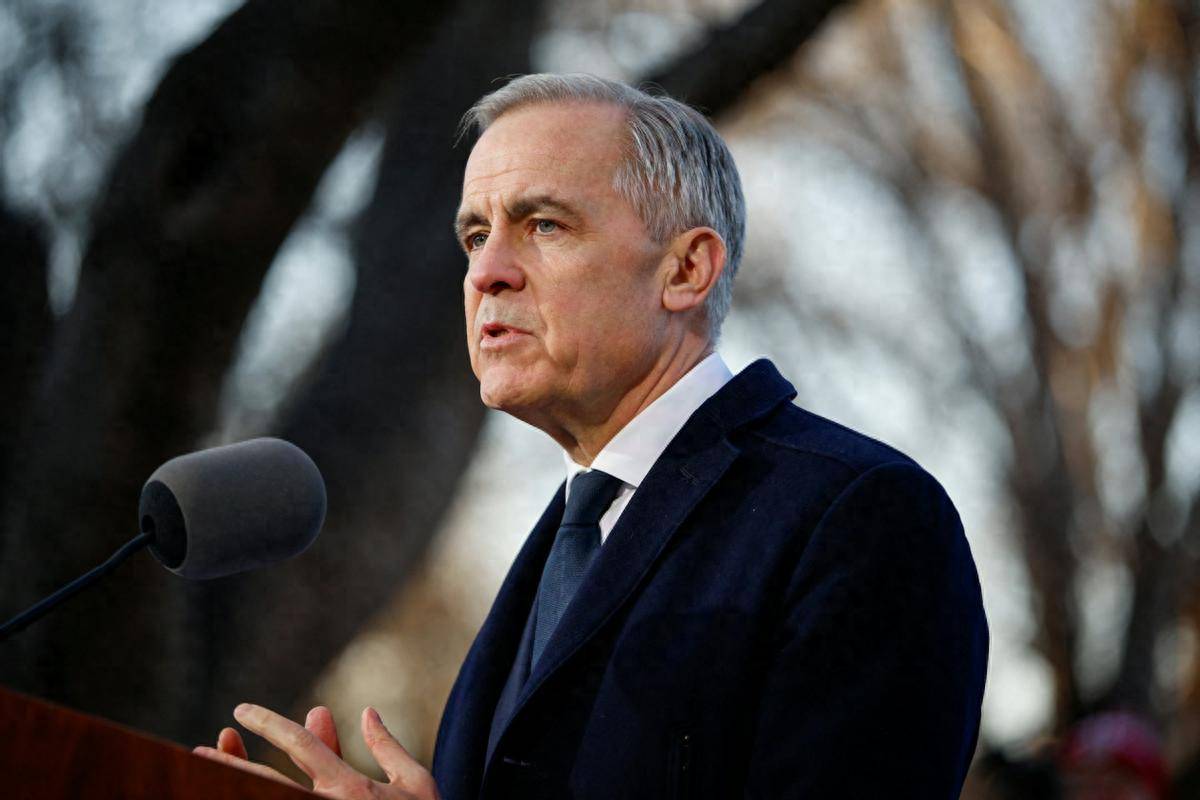
Group 1 - Canada will no longer impose a 100% additional tariff on electric vehicles from China, instead applying a 6.1% most-favored-nation tariff on a limited number of imported vehicles, signaling a restoration of trade relations with China [1][3] - The new quota system aims to maximize bilateral cooperation and significantly reduce car purchase costs for Canadian citizens, while also encouraging substantial Chinese investment in Canada's automotive industry over the next three years [3][5] - Canadian farmers are expected to benefit from reduced tariffs on canola seeds, which will drop to approximately 15% by March 2026, and other agricultural products will no longer be subject to Chinese countermeasures starting in March [3][5] Group 2 - The visit of Canadian Prime Minister Carney to China is viewed as a crucial step in recalibrating Canada-China relations, with the signing of the "China-Canada Economic and Trade Cooperation Roadmap" providing a framework for future cooperation [5] - The U.S. has expressed concerns regarding Canada's decision to reduce tariffs on Chinese electric vehicles, indicating potential strategic implications for North American security and economic stability [5][7] - Many countries globally are moving towards diversifying their partnerships to mitigate risks, with China emerging as a significant partner due to its large and stable market and commitment to mutually beneficial cooperation [7]
波兰正考虑禁止中国电动汽车进入军事基地?外交部回应
Huan Qiu Wang· 2026-01-19 08:11
对此,发言人郭嘉昆表示,"我们注意到相关的报道。中方一贯认为,应该避免泛化国家安全的概念。" 对此,发言人郭嘉昆表示,"我们注意到相关的报道。中方一贯认为,应该避免泛化国家安全的概念。" 【环球时报-环球网报道 记者李萌】在1月19日外交部例行记者会上,有记者提问,波兰媒体报道称, 波兰军队正考虑禁止中国电动汽车进入军事基地,理由是存在收集敏感数据的风险。中方对此有何评 论? 【环球时报-环球网报道 记者李萌】在1月19日外交部例行记者会上,有记者提问,波兰媒体报道称, 波兰军队正考虑禁止中国电动汽车进入军事基地,理由是存在收集敏感数据的风险。中方对此有何评 论? ...
帮主郑重:马斯克豪赌25万亿,特斯拉“忘掉造车”是神话还是陷阱?
Sou Hu Cai Jing· 2026-01-19 08:11
Core Viewpoint - Elon Musk's statement about Tesla potentially being remembered for its robots rather than cars signifies a strategic shift towards robotics, indicating a transformative vision for the company [1]. Group 1: Strategic Shift - Tesla's mission has evolved from "accelerating the world's transition to sustainable energy" to "accelerating the world's transition to sustainable abundance," with a focus on its humanoid robot, Optimus [3]. - Musk predicts that approximately 80% of Tesla's future value will come from Optimus, which is central to his ambitious compensation plan that includes delivering 1 million robots by 2035 and increasing the company's market value to $8.6 trillion [3]. Group 2: Technological Foundation - Tesla's confidence in achieving its ambitious goals stems from a decade of building a robust technological foundation in the smart electric vehicle sector [4]. - The company has accumulated over 45 billion miles of driving data, which supports the development of its AI systems necessary for robotics [4]. - Tesla aims to keep the cost of Optimus between $20,000 to $30,000, significantly lower than competitors, by leveraging its existing supply chain and engineering capabilities [4]. - A clear roadmap is in place, with the third-generation Optimus V3 expected to launch in Q1 2026, aiming for an annual production of 1 million units within five years [4]. Group 3: Challenges and Realities - Tesla faces significant challenges in achieving its production goals, with the initial target of 5,000 units by 2025 already deemed unattainable, as only a few hundred units have been produced for testing [5]. - Technical hurdles remain, particularly in developing a dexterous hand, understanding the environment with AI, and scaling production capabilities [5]. - The financial burden of extensive robot development may strain Tesla's core automotive business, especially as vehicle deliveries decline and profits are pressured [5]. Group 4: Industry and Investment Implications - Tesla's entry into the humanoid robot market is reshaping the industry landscape, accelerating commercialization and attracting significant capital and talent [6]. - If successful, Tesla's mass production of robots could revolutionize the entire supply chain, impacting components like motors and sensors, with related companies already seeing increased attention in the capital markets [6]. - Investors are encouraged to adopt a long-term perspective, focusing on technological milestones rather than immediate profitability [7]. - Caution is advised as Tesla's stock price reflects high expectations, and the transition from producing "hundreds" to "millions" of units presents substantial challenges [8]. Conclusion - Tesla's transformation represents a high-stakes test of its engineering capabilities and a challenge to achieve advanced AI in robotics, with 2026 being a critical year for evaluating progress [9].

波兰称考虑禁止中国电动汽车进入其军事基地,外交部回应:应该避免泛化国家安全的概念
Ge Long Hui· 2026-01-19 07:59
格隆汇1月19日|据北京日报,外交部发言人郭嘉昆主持例行记者会。波兰通讯社记者提问,波兰媒体 报道称,波兰军队正考虑禁止中国电动汽车进入军事基地,理由是存在收集敏感数据的风险。中方对此 有何评论?"我们注意到相关的报道。中方一贯认为,应该避免泛化国家安全的概念。"郭嘉昆回应。 ...
波兰拟禁止中国电动汽车进入军事基地,中方回应
Zhong Guo Ji Jin Bao· 2026-01-19 07:57
Group 1 - The Polish military is considering a ban on Chinese electric vehicles from entering military bases due to concerns over data collection risks [1] - The Chinese government emphasizes the need to avoid generalizing the concept of national security [1]
波兰正考虑禁止中国电动汽车进入军事基地?外交部回应
中国能源报· 2026-01-19 07:57
出品 | 中国能源报(c n e n e rg y) 在1月19日外交部例行记者会上,有记者提问,波兰媒体报道称,波兰军队正考虑禁止中 国电动汽车进入军事基地,理由是存在收集敏感数据的风险。中方对此有何评论? 对此,发言人郭嘉昆表示,"我们注意到相关的报道。中方一贯认为,应该避免泛化国家 安全的概念。" 责编丨李慧颖 来源:环球时报-环球网 End 欢迎分享给你的朋友! ...