中加经贸合作

Search documents
中国调整对原产于加拿大的部分进口商品加征关税措施
Xin Lang Cai Jing· 2026-02-27 11:12
Core Viewpoint - The Chinese government has announced adjustments to tariffs on certain imported goods from Canada, effective from March 1, 2026, to December 31, 2026, aimed at enhancing bilateral trade relations between China and Canada [1] Group 1: Tariff Adjustments - The announcement includes the removal of the 100% tariff on oilseed meal and peas imported from Canada [1] - The 25% tariff on lobsters and crabs from Canada will also not be imposed [1] Group 2: Bilateral Trade Relations - The adjustments are intended to deepen economic and trade cooperation between China and Canada [1] - The measures are expected to promote a healthy, stable, and sustainable development of China-Canada trade relations [1]
国务院关税税则委员会公告
Xin Jing Bao· 2026-02-27 09:19
Core Viewpoint - The Chinese government has announced a temporary adjustment to tariffs on certain Canadian imports, which is expected to enhance economic and trade cooperation between China and Canada, promoting a healthy, stable, and sustainable development of bilateral trade relations [1] Tariff Adjustments - From March 1, 2026, to December 31, 2026, the additional tariffs on certain Canadian products will be lifted, specifically the 100% tariff on canola meal and the 25% tariff on lobster and crab [1] Legal Framework - The adjustments are made in accordance with the relevant laws and regulations of China, including the Customs Law and the Foreign Trade Law, as well as basic principles of international law [1]
国务院关税税则委:调整对原产于加拿大的部分进口商品加征关税措施
Xin Lang Cai Jing· 2026-02-27 09:08
Core Viewpoint - The State Council Tariff Commission of China announced adjustments to the additional tariffs on certain imported goods from Canada, effective from March 1, 2026, to December 31, 2026, which aims to enhance China-Canada economic and trade cooperation and promote a healthy, stable, and sustainable development of bilateral trade relations [1]. Group 1: Tariff Adjustments - The announcement specifies that there will be no additional tariffs on canola meal and peas, which were previously subject to a 100% tariff [1]. - The additional tariffs on lobsters and crabs from Canada, which were set at 25%, will also not be imposed [1]. Group 2: Economic Implications - The adjustments are seen as a move to deepen economic and trade cooperation between China and Canada [1]. - The changes are expected to contribute positively to the stability and sustainability of China-Canada trade relations [1].
配额内取消100%进口附加税 中加向电动汽车双赢迈进
Zhong Guo Qi Che Bao Wang· 2026-01-28 01:15
Group 1: Trade Agreement and Economic Cooperation - Canadian Prime Minister Carney's visit to China resulted in a broad consensus on deepening economic cooperation, leading to the signing of the "China-Canada Economic and Trade Cooperation Roadmap" [2] - The agreement includes a tariff quota for Chinese electric vehicles (EVs), allowing 49,000 units annually at a 6.1% most-favored-nation tariff rate, with potential increases to 70,000 units over five years [2][3] - In exchange, China is expected to reduce the comprehensive tariff on Canadian canola seeds to approximately 15% starting March 1, 2026 [2] Group 2: Impact on Electric Vehicle Market - The agreement is seen as a breakthrough for electric vehicle trade, with the quota representing less than 3% of Canada's new car market sales [2] - In 2023, Canada imported electric vehicles worth CAD 2.2 billion from China, primarily Tesla's Model Y, a significant increase from less than CAD 100 million in 2022 [3] - The imposition of a 100% additional tax on Chinese EVs starting October 1, 2024, led to a sharp decline in imports, prompting retaliatory measures from China on Canadian agricultural products [3] Group 3: Beneficiaries of the Agreement - Tesla is expected to benefit significantly from the new quota, potentially resuming exports from its Shanghai factory to Canada [4][5] - Other brands like Geely's Lotus and BYD may also see advantages, particularly with the introduction of affordable models under the agreement [5][6] - The agreement stipulates that over 50% of imported vehicles must be priced below CAD 35,000, which could favor Chinese manufacturers like BYD [6] Group 4: Investment Opportunities - The tariff adjustments are anticipated to encourage increased Chinese investment in Canadian manufacturing, particularly in the electric vehicle sector [7] - Carney emphasized the need for collaboration between Canada and China to build a competitive local electric vehicle industry, leveraging China's strengths in battery technology [7][8] - Canadian officials are actively engaging with Chinese automakers to promote local production and investment, with plans to release an automotive industry strategy in February [8]



中加深化经贸合作 加方人士看好合作前景
Yang Shi Xin Wen Ke Hu Duan· 2026-01-26 00:21
Group 1 - The core viewpoint of the article is that during Canadian Prime Minister Carney's visit to China, both countries reached a broad consensus on deepening economic and trade cooperation, signing the "China-Canada Economic and Trade Cooperation Roadmap" [1] - Canadian economists believe that this agreement will have positive effects for both countries, with China benefiting from high-quality agricultural products from Canada, which is particularly important for producers in Western Canada [3] - The Canada-China Trade Council stated that the economic cooperation arrangements will bring new development opportunities for businesses in both countries and further deepen bilateral investment relations in key areas [5] Group 2 - The Executive Director and COO of the Canada-China Trade Council emphasized that the "China-Canada Economic and Trade Cooperation Roadmap" is creating opportunities, particularly for attracting Chinese automotive manufacturers to invest in Canada, which will create jobs rather than pressure Canadian workers [7] - The bilateral investment relationship is deemed equally important, especially in priority development areas identified by both governments, encouraging the business community to focus on and strengthen these bilateral relations [7]
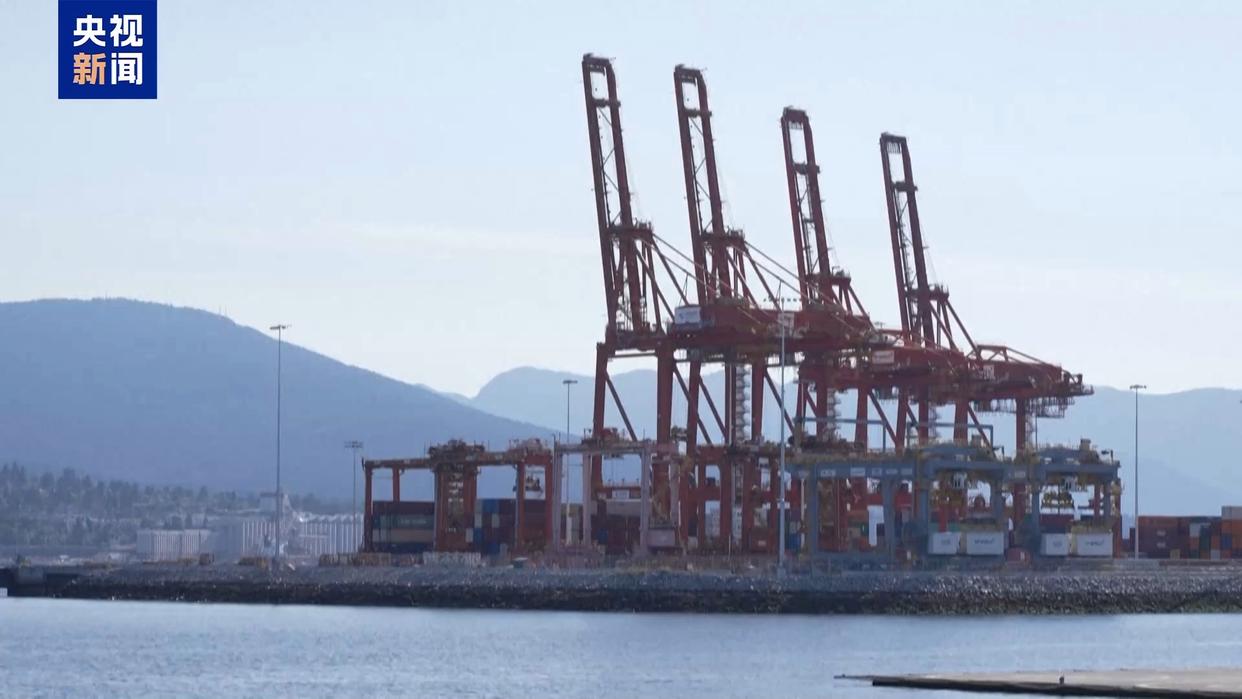
加拿大总理访华期间,中加达成哪些经贸合作协议?商务部回应
Nan Fang Du Shi Bao· 2026-01-22 11:05
Group 1 - The core viewpoint of the news is the recent economic and trade cooperation agreement between China and Canada, which includes a preliminary joint arrangement addressing bilateral trade issues, particularly in electric vehicles and canola seeds [1][2] - During Canadian Prime Minister Carney's visit to China from January 14 to 17, an agreement was reached to allow Canada to grant China an annual quota of 49,000 electric vehicles, which will benefit from a 6.1% most-favored-nation tariff rate, eliminating the previous 100% additional tax [1] - The quota for electric vehicles is set to increase annually by a certain percentage, indicating a positive step towards expanding China's electric vehicle market in Canada [1] Group 2 - The signing of the "China-Canada Economic and Trade Cooperation Roadmap" on January 15 represents a significant milestone in bilateral relations, marking the first high-level cooperation document in the history of China-Canada trade [2] - The roadmap outlines cooperation in eight areas, including economic and trade committees, agricultural and food security, green and sustainable trade, e-commerce, and financial cooperation, proposing 28 specific initiatives [2] - The cooperation plan encompasses both traditional sectors like energy and agriculture, as well as new fields such as advanced manufacturing and clean energy, suggesting that China-Canada economic cooperation is poised for rapid development [2]
中国—加拿大经贸合作路线图
Shang Wu Bu Wang Zhan· 2026-01-20 01:51
Core Viewpoint - China and Canada have reached a consensus on key economic and trade issues during Prime Minister Carney's visit to China in January 2026, aiming to establish a healthy, stable, and sustainable economic relationship under a new strategic partnership framework. Group 1: Strengthening Economic and Trade Cooperation - Both parties commit to enhancing the Economic and Trade Joint Committee, led by the Ministry of Commerce of China and the Department of Foreign Affairs, Trade and Development of Canada, as the main channel for promoting economic cooperation and resolving trade disputes [2] - The Economic and Trade Joint Committee will be elevated to a ministerial-level mechanism, meeting at least once a year and holding additional meetings as needed [2] - Both sides will effectively utilize working groups that report directly to the Economic and Trade Joint Committee [3] Group 2: Promoting Bilateral Economic Relations - Both parties reaffirm the importance of working within the framework of WTO rules and addressing challenges through cooperation and constructive dialogue, while striving to avoid unilateral measures in the future [5] - There is a commitment to encourage contact between relevant departments, business associations, and enterprises to promote bilateral trade and investment activities [5] - Both sides will support enhanced communication and cooperation in the field of small and medium-sized enterprises [6] Group 3: Agricultural and Food Cooperation - Both parties will maintain open communication channels to resolve outstanding agricultural trade issues [11] - They welcome the renewal of the memorandum of understanding on food safety and animal and plant health cooperation, committing to in-depth exchanges on food safety and technical cooperation [11] - Coordination to restart the China-Canada Agricultural Joint Committee is also promised [11] Group 4: Green and Sustainable Trade - Both parties commit to promoting sustainable trade and investment, including trade in green products [12] - They welcome the signing of a memorandum of understanding on cooperation in modern wood structure construction [12] Group 5: E-commerce Cooperation - Both sides will explore opportunities to strengthen dialogue in the e-commerce sector, including potential memorandums of understanding [13] - China welcomes Canada as the guest country at the sixth China International Consumer Products Expo [13] Group 6: Facilitating Personnel Exchanges - Both parties will promote the facilitation of personnel exchanges, business activities, and tourism cooperation under acceptable conditions [14] - They welcome the recent increase in direct flights and commit to discussions on gradually increasing direct flights within the framework of the aviation transport agreement [14] Group 7: Economic and Financial Cooperation - A China-Canada Financial Working Group will be established to enhance bilateral cooperation on financial policies, market stability, and global financial governance [15] Group 8: Multilateral and Regional Economic Cooperation - Both parties reaffirm their support for a rules-based multilateral trading system centered on the WTO and commit to collaboration in areas of mutual interest [16] - They will work together through the Asia-Pacific Economic Cooperation to promote trade investment and sustainable growth [16] - Canada appreciates China's efforts to join the Comprehensive and Progressive Agreement for Trans-Pacific Partnership [16]
事涉中国电动汽车,加拿大表态了
Zhong Guo Qi Che Bao Wang· 2026-01-19 08:56
Group 1 - Canada will allow up to 49,000 Chinese electric vehicles annually at a Most Favored Nation (MFN) tariff rate of 6.1%, increasing to 70,000 by the fifth year [1][3] - The agreement aims to boost Chinese investment in Canadian manufacturing and create new jobs in the Canadian automotive sector [3] - Over 50% of the imported vehicles will be affordable models priced below CAD 35,000 (approximately RMB 176,000), providing more options for Canadian consumers [3] Group 2 - In 2023, Canada imported electric vehicles worth CAD 2.2 billion from China, a significant increase from less than CAD 100 million in 2022, primarily driven by Tesla's Model Y [5] - The Canadian automotive market sees annual vehicle purchases of approximately 1.8 million, with the new Chinese EV quota representing a small percentage of this market [5][6] - Ontario Premier Doug Ford expressed strong opposition to the removal of tariffs on Chinese electric vehicles, although he is open to Chinese automakers investing in local manufacturing [6]
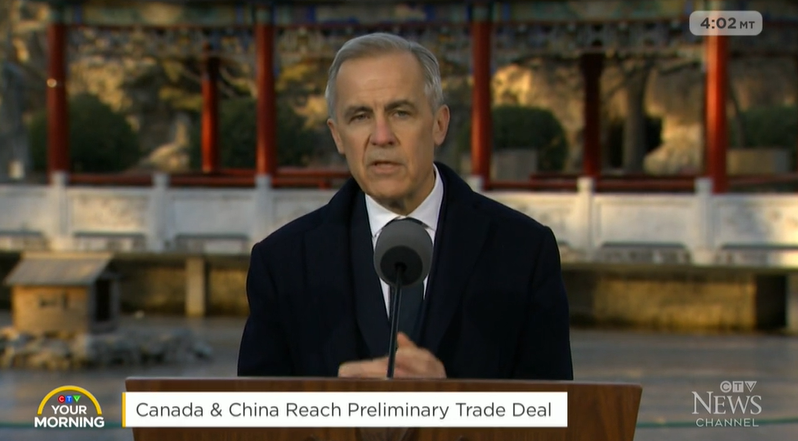
视频丨加拿大萨斯喀彻温省省长:同中国就贸易问题达成的共识“意义重大”
Yang Shi Xin Wen Ke Hu Duan· 2026-01-18 07:50
Group 1 - Canadian Prime Minister Carney's visit to China marks the first official visit by a Canadian Prime Minister in eight years, focusing on deepening economic and trade cooperation between Canada and China [1] - A comprehensive consensus was reached, resulting in the signing of the "China-Canada Economic and Trade Cooperation Roadmap," which outlines preliminary arrangements for addressing bilateral trade issues [1] - Canada will make positive adjustments regarding unilateral measures on Chinese electric vehicles and steel and aluminum products, while China will adjust anti-dumping measures on Canadian canola and certain agricultural products [1] Group 2 - Saskatchewan Premier Scott Moe emphasized the significance of the agreement, stating it will enable the flow of billions of dollars worth of agricultural products, including canola, legumes, and seafood, which were previously restricted from export to Canada’s second-largest trading partner [3] - The agreement not only restores bilateral trade between Canada and China but also creates more trade opportunities for Canada with other countries in Asia, enhancing Canada's overall economic prospects [3]
中加合作突然提速!卡尼:“双方将有更多旅游往来”
Xin Lang Cai Jing· 2026-01-17 09:29
Group 1 - The core point of the article highlights the significant shift in Canada's policy towards China, emphasizing a strategic recalibration of bilateral relations amid uncertainties with the United States [1][8] - Canada and China signed a cooperation agreement that includes collaboration in program production, project planning, and joint events to promote healthy and sustainable bilateral relations [1][3] - During the visit, Canadian Prime Minister Carney announced that Canada aims to attract more Chinese tourists, particularly in light of the upcoming World Cup in June-July 2026 [3][4] Group 2 - The resumption of group tours for Chinese citizens to Canada is expected to enhance tourism exchanges and mutual understanding between the two countries [4][7] - As of October 2025, the number of flights between China and Canada increased significantly, with a total of 319 flights, representing a growth of over 2.5 times year-on-year [4][5] - The Canadian tourism sector is preparing to welcome more Chinese tourists by enhancing product offerings, increasing flight accessibility, and deepening industry cooperation [7][8]