
期货交易

Search documents
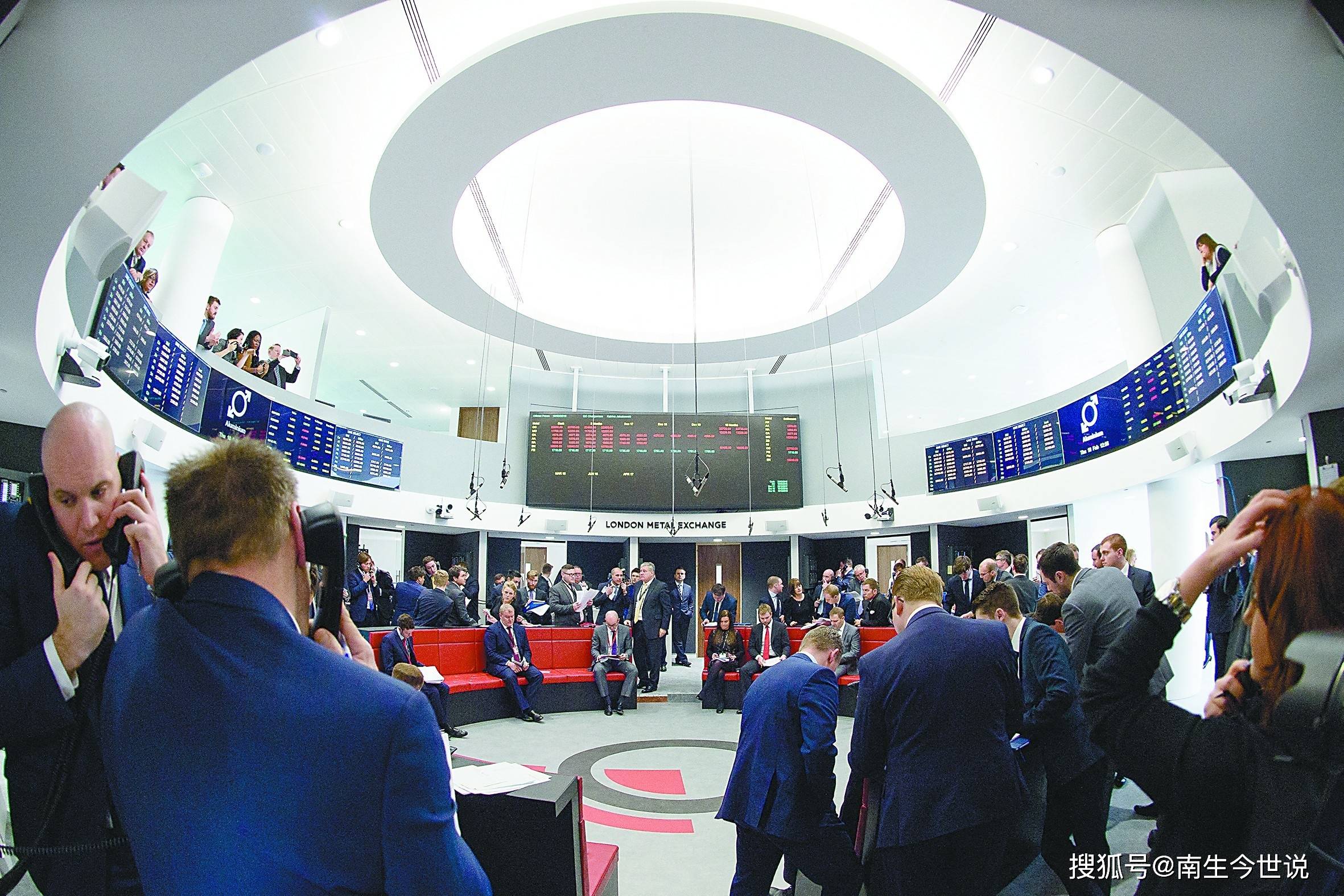
金融独裁!只认美元,暂停人民币、欧元、英镑等货币金属期权交易
Sou Hu Cai Jing· 2025-11-11 20:15
Core Viewpoint - The London Metal Exchange (LME) has announced the suspension of all non-USD denominated metal options trading, including currencies like RMB, Euro, Yen, and GBP, effectively making USD the sole currency for trading basic metals contracts [1][3][4] Group 1: Announcement Details - The LME's decision will take effect from November 10, marking a significant shift in its trading operations [3] - The exchange claims that the decision is based on low trading volumes for non-USD contracts, stating that maintaining these contracts has become costlier than the benefits [3][4] Group 2: Market Dynamics - Despite the LME's rationale, the use of RMB in global metal trading has seen a remarkable increase, nearly tripling in recent years [4] - A significant portion of metal long-term contracts in the Middle East (38%) and Africa (32%) are now being settled in RMB, indicating a shift towards non-USD currencies [6] Group 3: Implications for Global Finance - Analysts suggest that the LME's move is not merely a business consolidation but a strategic effort to suppress the internationalization of the RMB and maintain USD dominance [6][9] - The decision is viewed as counterproductive, potentially accelerating the diversification of the international monetary system and encouraging the development of alternative financial infrastructures [7][12] Group 4: Emerging Trends - The Shanghai Futures Exchange is increasingly becoming a key player, with growing trading volumes in copper futures and enhanced pricing power in RMB [10] - A "RMB closed loop" is emerging, where oil-producing countries in the Middle East sell oil for RMB and then use those earnings to purchase Chinese goods, creating a trade cycle outside the LME's USD framework [10] Group 5: Future Outlook - The LME's ban may drive countries excluded from the USD system to seek alternative trading platforms, presenting significant growth opportunities for regional exchanges like the Shanghai Futures Exchange [10][11] - The current situation reflects a strong determination to maintain the USD's position while highlighting the ongoing adjustments in the international financial order [11][12]

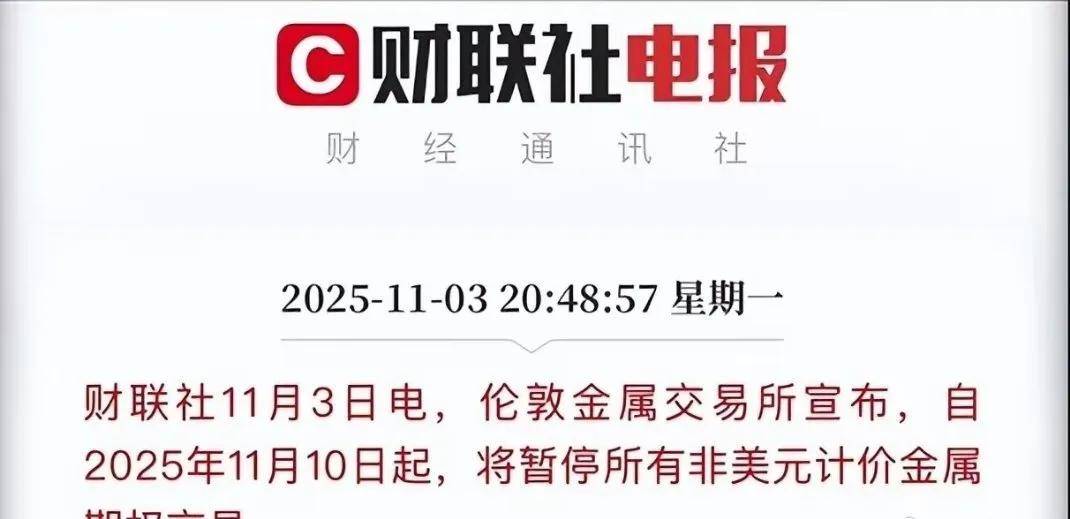
突发!周一,人民币将正式退出伦敦金属交易所的期货合约交易
Sou Hu Cai Jing· 2025-11-10 05:11
Group 1 - The core viewpoint is that the suspension of RMB futures trading on the London Metal Exchange is part of a strategic move to undermine the RMB's pricing power, coinciding with the U.S. government's upcoming quantitative easing policy and the formation of a key minerals alliance among ten countries [1][3][7] Group 2 - The U.S. economy is facing significant challenges, including government shutdowns affecting over 30 million people, large-scale layoffs in Wall Street and Silicon Valley, and liquidity issues in bank margin accounts, making quantitative easing a potential solution to reverse the situation [3][5] - The London Metal Exchange's sudden announcement to halt RMB and other non-USD currency futures trading cites "insufficient liquidity and low trading activity," despite data showing that RMB-denominated copper futures had an average daily trading volume of 357,000 contracts in 2024, increasing to 482,000 contracts in the first half of 2025, indicating that the liquidity claim is questionable [5][7] Group 3 - The U.S. aims to leverage quantitative easing to raise global metal prices and eliminate the RMB pricing system from the market, thereby reinforcing the dollar's dominance in key mineral pricing [7] - To counter this situation, it is crucial for major global buyers to reduce reliance on a single currency and actively promote a diversified currency settlement system, enhancing cooperation with other economies in key mineral sectors and exploring new pricing mechanisms [7]
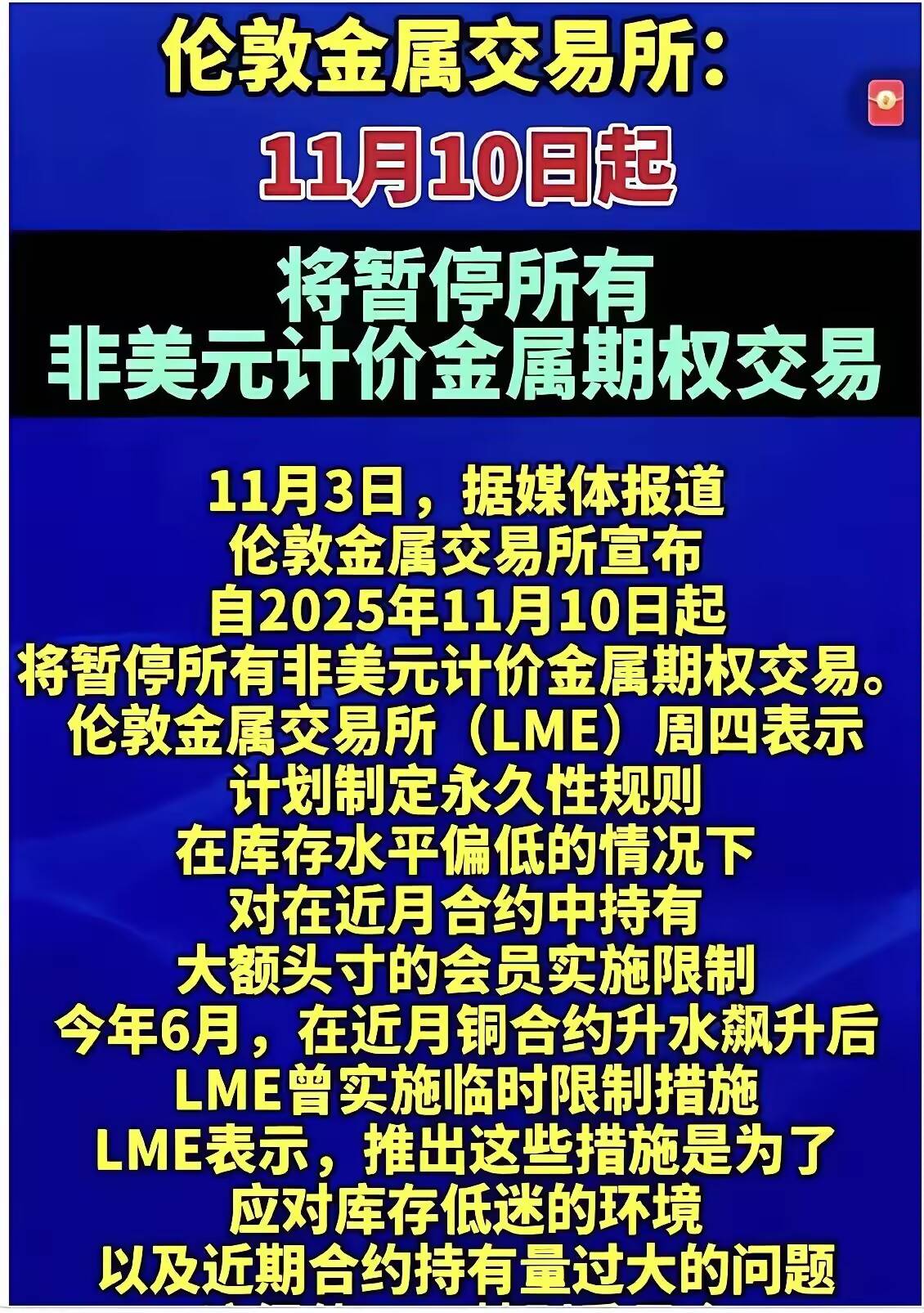
伦敦金属交易所突然停交易,美元慌了?人民币悄悄上位!
Sou Hu Cai Jing· 2025-11-09 08:42
Core Viewpoint - The London Metal Exchange (LME) is taking measures to restrict non-USD metal options trading starting November 10, 2025, due to concerns over the increasing influence of other currencies, particularly the Chinese yuan, in global commodity transactions [1][3]. Group 1: Market Stability and Regulatory Actions - The LME's decision to halt non-USD trading is framed as a move to stabilize the market, but it is widely understood to be a reaction to the growing use of the yuan in commodity pricing and settlement [3][4]. - The LME's actions are reminiscent of past market disruptions, such as the nickel market crisis caused by sanctions on Russia, which led to a temporary trading suspension and regulatory penalties [3]. Group 2: Impact of Currency on Commodity Trading - By 2024, 14.2% of global commodity transactions are expected to be settled in yuan, indicating a significant shift away from USD dominance [3]. - The LME's measures are seen as an attempt to maintain the USD's leading position in the face of increasing yuan adoption by global traders and manufacturers [3][4]. Group 3: Comparison with Other Exchanges - Other exchanges, such as the Shanghai Futures Exchange, Singapore SGX, and Dubai DXB, have adopted more flexible approaches, allowing the market to self-regulate rather than imposing strict trading restrictions [4]. - The LME's rigid approach is criticized as being out of touch with market dynamics, contrasting with the more adaptive strategies employed by other exchanges during past market fluctuations [4].
LME:自11月10日起将暂停交易不活跃的非美元期权合约的交易
Zhi Tong Cai Jing· 2025-11-07 12:21
Core Viewpoint - LME will suspend trading of inactive non-USD options contracts starting November 10 as part of its options reform roadmap announced in early October [1] Group 1: Options Reform - The suspension targets non-USD options contracts that have shown no trading volume over the past few years [1] - The options reform roadmap includes automation of expiration processes, conversion of American options to European options, and electronic options quoted in premiums [1]
美扩大关键矿产清单沪金震荡蓄势!
Jin Tou Wang· 2025-11-07 03:06
Group 1 - The U.S. government has added uranium, copper, and silver to its list of critical minerals, indicating an expansion of commodities deemed essential for the economy and national security [3] - The updated list from the U.S. Geological Survey also includes metallurgical coal, potash, rhenium, silicon, and lead, replacing the 2022 version [3] - This list will inform the Section 232 investigation announced by the Trump administration in April, which may lead to tariffs and trade restrictions on critical minerals and their derivatives [3] Group 2 - The U.S. government shutdown has entered its 37th day, with many federal employees facing unpaid status, and military personnel receiving only partial pay [3] - Senator John Kennedy has indicated that the shutdown may continue for some time and plans to propose a bill to suspend congressional salaries during the shutdown [3] Group 3 - Gold futures are currently trading at 918.68 yuan per gram, with a slight increase of 0.44%, reaching a high of 922.84 yuan and a low of 912.00 yuan [1] - Key resistance levels for gold futures are identified between 927 yuan and 1020 yuan per gram, while important support levels are between 896 yuan and 960 yuan per gram [4]
现货黄金涨约1.3%,上探4000美元整数位心理关口
Sou Hu Cai Jing· 2025-11-05 22:08
Core Viewpoint - The article highlights the fluctuations in gold and silver prices, with gold rebounding by 1.28% to $3982.32 per ounce, while silver saw a rise of 1.93% to $48.0704 per ounce, indicating a volatile market influenced by economic reports [1]. Price Movements - Spot gold experienced a rebound of 1.28%, reaching $3982.32 per ounce, before slightly declining to a daily low of $3929.93, followed by a sustained upward trend [1]. - COMEX gold futures increased by 0.81%, settling at $3992.60 per ounce [1]. - Spot silver rose by 1.93%, priced at $48.0704 per ounce, while COMEX silver futures gained 1.38%, reaching $47.945 per ounce [1]. - COMEX copper futures also saw an increase of 0.84%, priced at $4.99 [1]. Economic Indicators - The ADP employment report and the ISM non-manufacturing index did not significantly impact market volatility, suggesting that other factors may be influencing the current price movements in precious metals [1].
郑商所10月处理异常交易行为15起
Qi Huo Ri Bao· 2025-11-05 16:03
Core Viewpoint - In October, Zhengzhou Commodity Exchange (ZCE) identified and processed 15 cases of abnormal trading behavior, indicating increased regulatory scrutiny in the market [1] Summary by Categories Abnormal Trading Behavior - ZCE processed a total of 15 cases of abnormal trading behavior in October, which included 12 instances of self-dealing and 3 cases of frequent order cancellations [1] Regulatory Actions - ZCE has issued regulatory warnings to clients who met the criteria for abnormal trading behavior through their member units, reflecting a proactive approach to market regulation [1]
ICE农产品期货主合约多下跌 原糖期货跌3%
Mei Ri Jing Ji Xin Wen· 2025-11-04 23:56
Core Viewpoint - The Intercontinental Exchange (ICE) agricultural futures saw a majority of contracts decline, indicating a bearish trend in the agricultural commodities market [1] Group 1: Price Movements - Raw sugar futures fell by 3.00%, closing at 14.21 cents per pound [1] - Cotton futures decreased by 0.81%, ending at 65.15 cents per pound [1] - Cocoa futures experienced a slight increase of 0.41%, reaching $6,586.00 per ton [1] - Coffee futures dropped by 0.25%, closing at 405.65 cents per pound [1]

郑商所调整2026年2月硅铁、尿素品种集中注销日期
Zheng Quan Shi Bao Wang· 2025-11-04 10:11
Core Viewpoint - The Zhengzhou Commodity Exchange has announced an adjustment to the cancellation date for silicon iron and urea products in February 2026 due to insufficient trading days [1] Group 1 - The cancellation date for silicon iron and urea products in February 2026 will now be set to the last trading day of that month [1] - This decision is based on the 2026 holiday schedule, which results in fewer than 15 trading days in February [1] - Future occurrences of similar situations will follow this announcement without further notice [1]
金价起落之间:有人梭哈 有人“卧倒”
Zhong Guo Zheng Quan Bao· 2025-11-01 00:15
Core Viewpoint - The recent fluctuations in gold prices are seen as a technical correction rather than a trend reversal, with analysts maintaining a long-term optimistic outlook on gold as a valuable asset in uncertain macroeconomic conditions [1][3][9]. Market Performance - Since 2025, international gold prices have consistently broken historical highs, leading to a surge in gold bar sales in China, with consumption reaching 264.24 tons in the first half of the year, a 23.69% increase year-on-year [2]. - As of October 31, the London gold spot price hovered around $4,000 per ounce, down approximately 8% from its monthly peak [3]. - The Chicago Mercantile Exchange reported that the gold futures market in October exhibited healthier performance compared to previous periods, with significant trading activity and new positions being established despite volatility [6][7]. Investor Behavior - Retail investors are increasingly returning to the gold market, with trading volumes for micro gold contracts and one-ounce futures contracts more than doubling [7]. - The current market dynamics show a rare phenomenon where both the stock market and gold prices are rising simultaneously, attracting diverse market participants [7]. Economic Factors - Analysts attribute the recent gold price adjustments to several factors, including a rapid previous increase in prices, rising dollar rates, and easing geopolitical tensions [3][4]. - The Federal Reserve's recent policy decisions, including a 25 basis point rate cut, have influenced market sentiment, although a hawkish tone from the Fed has tempered expectations for ongoing monetary easing [4][5]. Long-term Outlook - Analysts believe that while short-term risks exist, the long-term outlook for gold remains positive, with the potential for gold to serve as a hedge against inflation and economic uncertainty [9][10]. - The role of gold in asset allocation is evolving, with it increasingly seen as a substitute for sovereign debt in risk management strategies [8][10].
