
酒业

Search documents
金价频创历史新高黄金股走势强劲 澳交所黄金股IPO受热捧 女富豪莱因哈特大幅押注稀土股 投资价值迅速飙升
Sou Hu Cai Jing· 2025-10-14 10:31
Group 1: Gold Market Insights - The gold market is experiencing a significant bullish trend, with gold futures surpassing $4,100 per ounce, driven by inflation, interest rate cuts, geopolitical uncertainties, and market risk aversion [4][5] - In the ASX, 8 out of the top 10 companies with the highest annual growth are related to gold mining and exploration, indicating strong market interest in gold stocks [5] - Recent IPOs of gold mining companies in Australia have seen substantial oversubscription, reflecting high investor enthusiasm for gold stocks [6][7] Group 2: Rare Earth Investments - Gina Rinehart has significantly increased her investment in rare earth stocks, with her investment rising from AUD 800 million to AUD 3.4 billion over six months, benefiting from the surge in rare earth stock prices [9] - Rinehart's holdings in Lynas Rare Earths have increased by over AUD 500 million in value in the past seven weeks, reaching nearly AUD 1.7 billion [9] - Arafura Rare Earths, another company supported by Rinehart, saw its stock price rise by 25%, reaching a two-year high [9] Group 3: Employment Rankings - Seventeen Australian companies made it to the 2025 Forbes "World's Best Employers" list, an increase from 14 the previous year, with Atlassian ranking as the top employer in Australia [11][12] Group 4: Treasury Wine Estates Performance - Treasury Wine Estates has canceled its profit guidance for the 2026 fiscal year due to weak sales of Penfolds wine in China, leading to a 15.04% drop in its stock price [14][15] - The company has paused its AUD 200 million stock buyback plan, having only completed 15% of the buyback as of September 30 [15][17] Group 5: Australian Mining and Trade Relations - Australia is leveraging its key mineral resources in trade negotiations with the U.S. amid escalating trade tensions with China, which controls a significant portion of the global rare earth supply [18][19] - The Australian government is investing AUD 7 billion to encourage investment in refining and processing facilities for critical minerals, aiming to strengthen its position in global supply chains [19]


珍酒李渡再涨超5% 汤向阳接棒公司CEO 全面负责核心品牌业务
Zhi Tong Cai Jing· 2025-10-14 02:41
Core Viewpoint - The stock of Zhenjiu Lidu (06979) has increased by over 5%, currently trading at HKD 9.33 with a transaction volume of HKD 41.78 million, following the announcement of a leadership change within the company [1] Group 1: Leadership Changes - Former CEO Yan Tao has stepped down and will now serve as Executive Director and Vice Chairman of the Board, assisting Group Chairman Wu Xiangdong and Xiangjiao Liquor Industry [1] - The new CEO is Tang Xiangyang, who has been with the group since 1989 and has over 30 years of experience in the Chinese liquor industry [1] Group 2: Product Launch and Performance - Zhenjiu Lidu's latest flagship product "Dazhen" has been officially launched, with a reported revenue of HKD 370 million and over 2,800 national alliance merchants signed [1] - Huaxin Securities noted that the introduction of "Dazhen" is expected to create a third growth curve for Zhenjiu, positioning it alongside the Zhen 15 and Zhen 30 series due to its high quality and cost-effectiveness [1]
港股异动 | 珍酒李渡(06979)再涨超5% 汤向阳接棒公司CEO 全面负责核心品牌业务
智通财经网· 2025-10-14 02:38
Core Viewpoint - The stock of Zhenjiu Lidu (06979) has increased by over 5%, reaching HKD 9.33, with a trading volume of HKD 41.78 million, following the announcement of a leadership change within the company [1] Company Updates - Former CEO Yan Tao has stepped down and will now serve as Executive Director and Vice Chairman of the Board, assisting Group Chairman Wu Xiangdong and Xiangjiao Liquor Industry in operations [1] - The new CEO is Tang Xiangyang, who has been with the group since 1989 and has over 30 years of experience in the Chinese liquor industry [1] Product Launch - Zhenjiu Lidu has launched its latest flagship product "Dazhen," which has already generated a revenue of RMB 370 million and has signed over 2,800 alliance merchants nationwide [1] - The new product is positioned to complement the existing Zhen 15 and Zhen 30 series, with a high quality-to-price ratio expected to create a third growth curve for Zhenjiu [1]
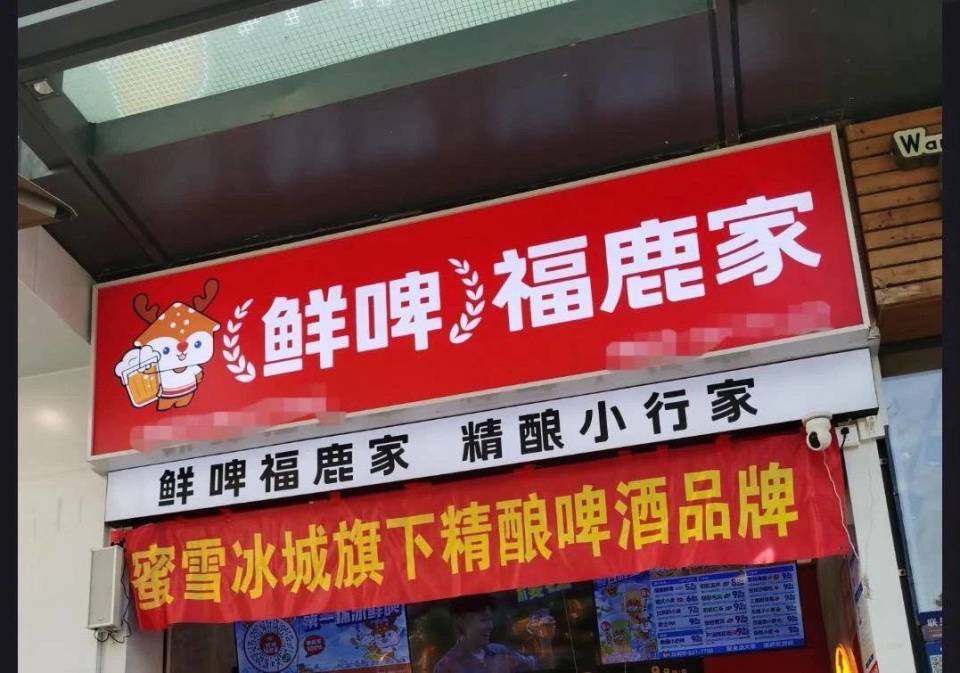
茶酒融合催生“微醺”新赛道,新茶饮品牌争饮“昼夜”经济
Qi Lu Wan Bao· 2025-10-14 02:35
Core Insights - The emergence of a new "tipsy" trend in the domestic consumption market is driven by the blending of daytime tea drinks and nighttime alcoholic beverages, with brands like Cha Baidao and Tea Yan Yue Se leading the charge into this crossover market [2][4] Group 1: Market Trends - The return of Cha Baidao's classic liquor milk tea has achieved impressive sales, with nearly 120,000 cups sold on the first day, indicating strong consumer interest in tea-alcohol fusion products [3][4] - The market for craft beer is rapidly growing, with projections suggesting it will exceed 100 billion yuan by 2025, providing an attractive crossover opportunity for tea brands [4] Group 2: Consumer Preferences - Younger consumers are increasingly favoring light, low-alcohol beverages, which aligns well with the offerings of new tea drinks, creating a synergy between the two markets [4][5] - The pricing strategy for these new products is aimed at being accessible, with most items priced between 15 to 25 yuan, lowering the barrier for consumers to try these innovative drinks [3] Group 3: Business Strategies - The success of the "tea + alcohol" model requires a shift from mere product mixing to deeper scene-based operations, enhancing user engagement through community-focused experiences [5] - Brands are encouraged to innovate continuously and ensure product quality to transform this trend from a temporary market phenomenon into a sustainable business model [5]
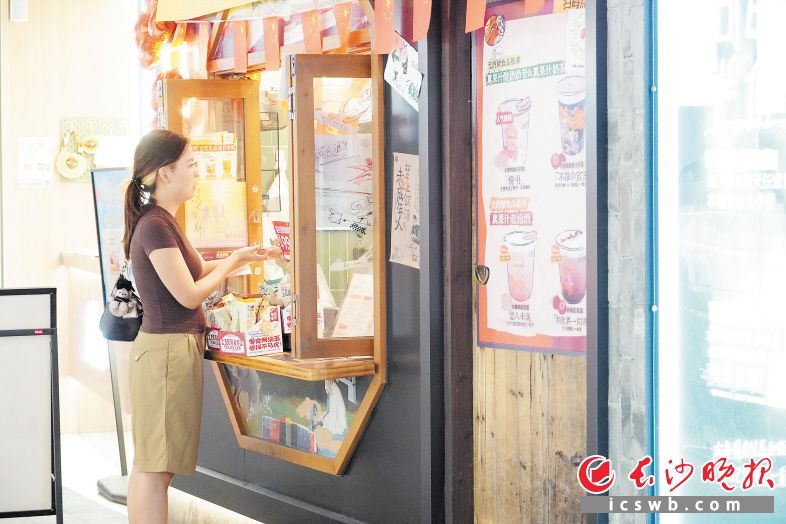
当茶遇见酒,能调出什么新口味|经济观察
Chang Sha Wan Bao· 2025-10-13 23:40
Core Insights - The fusion of tea and alcohol is becoming a popular trend among urban consumers, with brands like Cha Baidao and Mixue Group exploring this "micro-drunk economy" by introducing alcoholic beverages into their offerings [2][6][10] Industry Trends - The new tea beverage market is transitioning from a blue ocean to a red ocean, with the market size expected to exceed 350 billion yuan by 2024, while the top five brands hold nearly 40% market share [6] - The craft beer market in China is projected to grow from 20 billion yuan in 2020 to 80 billion yuan by 2024, with a compound annual growth rate exceeding 30% [6] - Traditional alcohol brands are recognizing the need to attract younger consumers, with a focus on lightweight, portable beverages that align with the preferences of the 85-94 age group [6][10] Consumer Behavior - The combination of tea and alcohol is appealing to consumers, with products like "Drunken Step on the Road" and various fruit-infused alcoholic teas gaining traction [4][5] - The price range for these new alcoholic tea products is generally between 15 to 25 yuan, making them accessible to a broader audience [7] Market Opportunities - The integration of alcohol into tea beverages represents an opportunity for both new tea brands and traditional alcohol companies to expand their consumer base and explore new growth avenues [6][10] - Brands are encouraged to create engaging consumption scenarios and emotional connections with consumers to enhance brand loyalty and market presence [9][10]
36年“老兵”接棒!珍酒李渡CEO变更
Shen Zhen Shang Bao· 2025-10-13 23:28
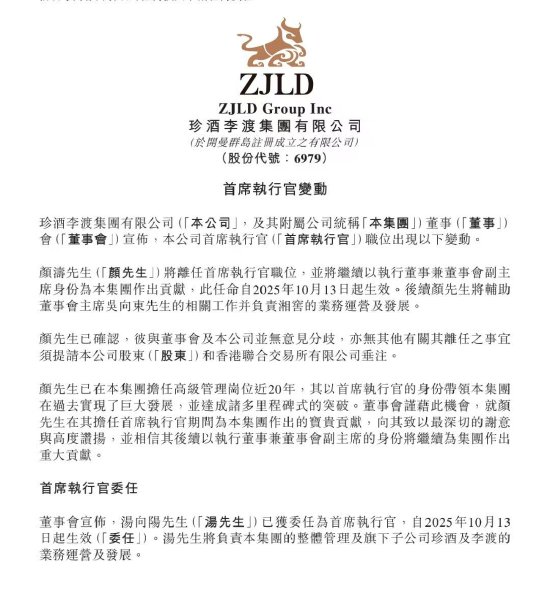
Core Viewpoint - The company announced a leadership change with the departure of CEO Yan Tao and the appointment of Tang Xiangyang as the new CEO, effective October 13, 2025, indicating a strategic shift in management to enhance operational development and growth [1][2]. Group 1: Leadership Changes - Yan Tao will step down as CEO but will continue to serve as an executive director and vice chairman, contributing to the group from October 13, 2025 [1]. - Tang Xiangyang, aged 57, has been appointed as the new CEO, effective the same date, and will oversee the overall management and business operations of the group and its subsidiaries [1]. - Tang Xiangyang has extensive experience in the industry, having joined the group in 1989 and held various senior management positions, including General Manager of Jiangxi Lidu Liquor Co., Ltd. since 2014 [1][2]. Group 2: Compensation and Qualifications - Tang Xiangyang's employment contract stipulates a three-year term starting October 13, 2025, with an annual salary and discretionary bonus totaling RMB 5 million [2]. - He holds multiple authoritative qualifications in the Chinese liquor industry, including being a certified national judge and senior brewer, showcasing his expertise in production, sales management, and brand development [2]. Group 3: Financial Performance - For the first half of the year, the company reported revenues of RMB 2.497 billion, a decrease of 39.6% compared to the same period in 2024 [2]. - The profit attributable to equity shareholders was RMB 575 million, down 23.5% year-on-year, while adjusted net profit fell by 39.8% to RMB 613 million [2]. - The decline in performance is attributed to ongoing macroeconomic uncertainties affecting business activities, banquets, and gifting scenarios, prompting the company to adjust its growth strategy for long-term stability [3].
汤向阳任珍酒李渡CEO,全面负责核心品牌业务
Xin Lang Cai Jing· 2025-10-13 09:50
Core Viewpoint - The announcement of leadership changes at Zhenjiu Lidu Group indicates a strategic shift in management, with a focus on enhancing operational efficiency and brand development in the Chinese liquor industry [2]. Group 1: Leadership Changes - Former CEO Yan Tao has stepped down and will now serve as Executive Director and Vice Chairman of the Board, assisting Chairman Wu Xiangdong and Xiangjiao Liquor Industry in operations [2]. - The new CEO, Tang Xiangyang, has been appointed and will oversee core brand operations including Zhenjiu and Lidu [2]. - Tang Xiangyang, aged 57, has over 30 years of experience in the Chinese liquor industry, having joined the group in 1989 and held various key positions [2]. Group 2: Experience and Background - Tang Xiangyang's career includes roles in production management, marketing, brand building, and strategic planning, highlighting his comprehensive expertise in the industry [2].
美国宣布将对中方加征100%关税!刚刚,商务部回应:对于关税战,中方不愿打,但也不怕打
Sou Hu Cai Jing· 2025-10-12 04:50
Group 1 - China has implemented export controls on rare earth materials, citing the importance of these materials in military applications and the need to maintain global peace and regional stability [2][3] - The export controls are not a ban; applications that meet regulations will be approved, and China aims to facilitate compliant trade through various measures [3] - The Chinese government has assessed the potential impact of these measures on supply chains and believes the effects will be limited [2][3] Group 2 - In response to China's export controls, the U.S. announced a 100% tariff on related items and export controls on key software, which China views as a double standard [3][4] - The U.S. has expanded its export control list significantly, with over 3,000 items compared to China's list of just over 900, which China argues disrupts international trade order [3][4] - China has expressed strong opposition to the U.S. actions, emphasizing the need for dialogue and cooperation to resolve trade disputes [4][5] Group 3 - The U.S. plans to impose port fees on Chinese vessels starting October 14, which China claims violates WTO rules and the U.S.-China maritime agreement [4][5] - China's countermeasures against the U.S. port fees are described as necessary defensive actions to protect its industries and ensure fair competition in international shipping [5]
文旅商深度融合的“酒城”方案
Mei Ri Jing Ji Xin Wen· 2025-10-12 03:35
Core Insights - During the National Day and Mid-Autumn Festival holiday, Luzhou emerged as a surprising tourism destination, with a 45% increase in travel orders compared to last year [1] - From October 1 to 8, Luzhou's major commercial areas attracted 9.35 million visitors, generating a consumption of 649 million yuan, a year-on-year increase of 37.6% [1] - The surge in tourism and consumption was driven by various cultural and sports events, including a music festival and a local football match [1][3] Tourism and Events - Luzhou hosted multiple events that significantly boosted local tourism, including a music concert by the local band "San Tiao Che," which attracted over 52,000 attendees and generated more than 15 million yuan in surrounding consumption [1][6] - The Luzhou Wine Festival and Galaxy Left Bank Music Festival saw participation from 150,000 young music fans, with over 88% of attendees coming from outside the city [1][6] - The local football match on October 8 attracted 14,000 fans, further contributing to the city's vibrant atmosphere during the holiday [1] Cultural and Economic Transformation - Luzhou is transitioning from being known primarily as a "wine city" to a more diversified cultural and tourism hub, integrating music, sports, and commerce [3][4] - The city has actively pursued the integration of cultural, tourism, and commercial sectors to enhance its brand and attract younger demographics [3][9] - Luzhou's government has shown proactive engagement in addressing visitor concerns, achieving a high problem resolution rate during the events [10] Young Consumer Engagement - The city is focusing on appealing to younger consumers by modernizing its cultural offerings, such as the introduction of music festivals that resonate with the youth [9][13] - Luzhou's music festival featured a "micro-drunk" experience area, showcasing local liquor brands and innovative products aimed at younger audiences [13][15] - The city is also enhancing its nightlife and cultural experiences through themed street renovations that attract young visitors [15][16] Future Developments - Luzhou is set to establish the Sichuan China Baijiu Museum, which aims to be a world-class industry museum, further embedding the city in the narrative of Chinese liquor culture [19][21] - The city is developing a new cultural district named "Wine Festival," which will serve as a hub for cultural and commercial activities, reinforcing its status as a regional center [21][22] - Luzhou's strategy includes promoting low-alcohol and experiential products to connect with younger consumers and enhance the local liquor industry's appeal [22]

承德县添尝递酒酒坊(个体工商户)成立 注册资本1万人民币
Sou Hu Cai Jing· 2025-10-11 23:48
天眼查App显示,近日,承德县添尝递酒酒坊(个体工商户)成立,法定代表人为侯云刚,注册资本1 万人民币,经营范围为许可项目:食品销售;酒类经营。(依法须经批准的项目,经相关部门批准后方 可开展经营活动,具体经营项目以相关部门批准文件或许可证件为准)一般项目:日用百货销售;农副 产品销售。(除依法须经批准的项目外,凭营业执照依法自主开展经营活动)。 ...