
量子科技

Search documents
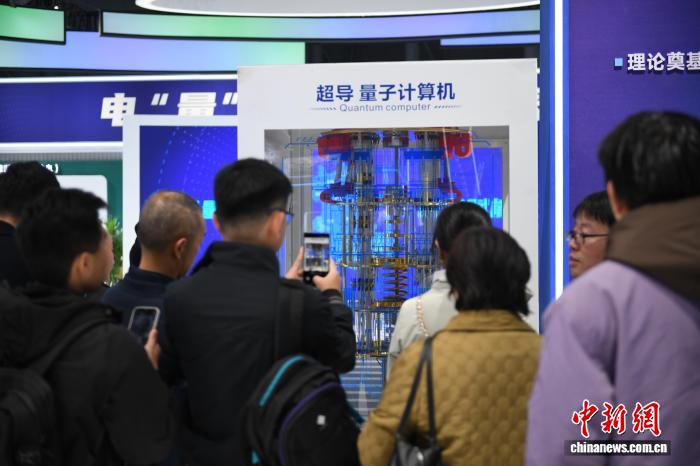
2025量子科技和产业大会开幕 多项重大成果正式发布
Zheng Quan Shi Bao Wang· 2025-11-20 07:57
Group 1 - The 2025 Quantum Technology and Industry Conference opened in Hefei, Anhui, focusing on the integration of quantum technology innovation and industrial development [1] - The conference featured 117 participating companies, a 120% increase from the previous year, showcasing the robust growth of China's quantum technology industry [1] - Major achievements in quantum technology were highlighted, including advancements in superconducting quantum computing and quantum communication [2] Group 2 - The National High-tech Zone Quantum Industry Collaborative Innovation Network was established by nine high-tech zones to enhance the integration of industry, academia, and research in quantum technology [3] - The conference emphasized China's leadership in global quantum communication development, with the launch of a standardization technology alliance for quantum password infrastructure [3] - Financial support for quantum projects was reinforced through the signing of cooperation memorandums by various financial institutions and the establishment of a venture capital fund by China Telecom [4]
2025量子科技和产业大会开幕 多项重大成果发布
Zhong Guo Xin Wen Wang· 2025-11-20 07:48
Core Insights - The 2025 Quantum Technology and Industry Conference opened in Hefei, Anhui, showcasing significant advancements in quantum technology and industry [1][3] Group 1: Major Achievements in Quantum Technology - In superconducting quantum computing, the "Zu Chongzhi III" set a new record for "quantum computing superiority" [3] - In photonic quantum computing, multi-bit continuous variable quantum entanglement was achieved on a photonic quantum chip for the first time [3] - In quantum communication, a record was set for intercontinental quantum key distribution over 12,900 kilometers [3] - In quantum precision measurement, the search detection limits for new physics were enhanced by 17 orders of magnitude [3] Group 2: Industry Projects and Collaborations - China Telecom Group announced the world's largest scale, interoperable, and widely applicable quantum security infrastructure [3] - State Grid Corporation of China launched a series of quantum encryption products aimed at distributed renewable energy [3] - Keda National Shield Quantum Technology Co., Ltd. and China Telecom Quantum Information Technology Group Co., Ltd. jointly released a superconducting quantum computing system solution designed for a thousand-bit scale [3] Group 3: Financial Support and Industry Development - The conference included two rounds of financial support project signing ceremonies to inject development capital into the quantum technology industry [4] - Anhui initiated the "Thousand Scenarios" action for quantum information and released an action plan for quantum industry applications [4] - The conference theme was "Centennial Quantum, Intelligent Future," with a record participation of 117 exhibiting companies, marking new highs in personnel scale, company numbers, and exhibition size [4]

展望“十五五” | 专访黄群慧:既要重视AI赋能千行百业,也要考量其对就业的替代效应和带来的收入极化
Mei Ri Jing Ji Xin Wen· 2025-11-20 07:04
Core Viewpoint - The "15th Five-Year Plan" emphasizes the construction of a modern industrial system, reflecting a strategic shift in China's economic development focus, particularly in response to current domestic and international challenges [2][3][4]. Group 1: Modern Industrial System - The prioritization of "building a modern industrial system" signifies a shift towards strengthening the real economy, which is essential for sustainable growth and resilience against external shocks [4][7]. - The plan aims to transform traditional industries, which currently account for about 80% of the economy, into new growth drivers, potentially creating a market worth trillions [4][8]. - The integration of technological innovation with industrial development is crucial, as it ensures that breakthroughs in technology can be effectively applied within the industrial framework [3][8]. Group 2: Future Industries - The plan outlines six key future industries: quantum technology, biomanufacturing, hydrogen energy, nuclear fusion, brain-computer interfaces, and sixth-generation mobile communications, chosen for their potential to drive economic growth and strategic importance [11][19]. - These industries are expected to contribute significantly to China's high-tech sector, with the goal of achieving a "doubling" of high-tech industries over the next decade [18][19]. - The selection of these industries considers their original innovation potential, market prospects, and alignment with national security needs [11][19]. Group 3: Policy and Investment Strategies - The government is advised to adopt a differentiated approach to funding and policy support for traditional, strategic emerging, and future industries, ensuring that resources are allocated effectively without neglecting any sector [9][10]. - The establishment of a guiding fund for future industries is recommended to attract private investment while managing risks associated with high uncertainty in these sectors [22][23]. - The focus on nurturing "unicorn" and "gazelle" companies is essential for fostering innovation and ensuring a dynamic ecosystem that supports both large enterprises and startups [24][23]. Group 4: Technological Innovation and Social Impact - The plan highlights the importance of integrating social considerations into technological innovation, particularly regarding the impact of artificial intelligence on employment and income distribution [31][37]. - A balanced approach is necessary to ensure that technological advancements do not exacerbate social inequalities, aligning with the broader goals of shared prosperity and sustainable development [37][38]. - The governance of artificial intelligence must evolve through interdisciplinary collaboration to address its societal implications effectively [38].

未来产业的现在进行时
Ren Min Ri Bao· 2025-11-20 01:05
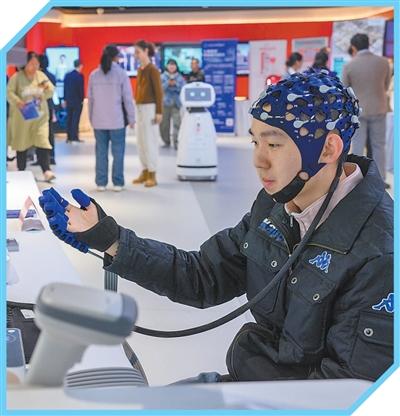
Quantum Technology - China has established the world's largest quantum communication network, comprising 8 core sites and 159 access stations [4] - The third-generation superconducting quantum computer "Benyuan Wukong" is set to officially operate in January 2024, with over 80% domestic components [9] - "Benyuan Wukong" has been accessed over 37 million times by users from 163 countries, completing 740,000 quantum computing tasks across various fields [11] Biological Manufacturing - Biological manufacturing combines traditional fermentation and synthetic biology, opening new industrial spaces [12] - China holds over 70% of global biological fermentation capacity, leading in the production of amino acids and organic acids [12] - Challenges include the need for core strains and key enzymes, as well as the development of a robust biological information database [13] Nuclear Fusion Energy - Controlled nuclear fusion, known as "artificial sun," is advancing with significant breakthroughs in technology [14][15] - The "China Circulation No. 3" has achieved record ion and electron temperatures of 120 million and 160 million degrees Celsius, respectively [15] - By 2027, "China Circulation No. 3" is expected to conduct burning plasma experiments, moving towards commercial fusion power generation by mid-century [15] Brain-Computer Interface - Brain-computer interface technology is expanding into various fields, including medical rehabilitation and consumer electronics [17][18] - The industry is supported by a collaborative ecosystem involving research, industry, and policy frameworks [18] - Key focus areas include core technology development, innovation ecosystem enhancement, and ethical regulatory frameworks [18] Humanoid Robotics - Humanoid robots are evolving rapidly, with advancements in joint modules and motion control [19][20] - The Shenzhen area is developing a "embodied intelligence port," fostering a complete industrial chain from R&D to application [20] - The local government has introduced action plans to promote technological innovation and industry development in humanoid robotics [20] 6G Technology - 6G technology aims to enhance connectivity and integrate various technologies, supporting the development of a smart society [21][22] - It is expected to achieve 10 to 100 times the speed and reliability of 5G, covering all domains of connectivity [21] - China is advancing in 6G research and aims for commercial implementation by 2030 [22]
从实验室到产业链的量子“跃迁”之路
Xin Hua Wang· 2025-11-20 00:40
Core Viewpoint - The province prioritizes the development of quantum technology as a key component of its economic and social growth, aiming to lead the nation in this field [1][2]. Group 1: Quantum Technology Development - The province has hosted the Quantum Conference for five consecutive years since 2021, establishing it as a significant event in the domestic quantum field [1][4]. - The "Tianyan-287" superconducting quantum computer, equipped with 105 data qubits and 182 coupling qubits, has been launched, demonstrating a processing speed 450 million times faster than the fastest supercomputer for specific problems [1]. - The quantum computer achieves breakthroughs in three areas: "fully domestic," "AI empowerment," and "super fusion," utilizing entirely domestic hardware and components [1]. Group 2: Industry Growth and Innovation - The province has over 100 quantum industry chain enterprises, leading the nation [2]. - Significant technological achievements include the "Nine Chapters" and "Zu Chongzhi" quantum computers, with ongoing support for key technologies like high-performance low-noise single-photon detectors [2]. - The establishment of the Anhui Quantum Industry Pilot Zone focuses on innovation, incubation, industry clustering, and talent community development [3]. Group 3: Ecosystem and Financial Support - A 400,000 square meter Quantum Future Industry Science Park has been established to foster a favorable industrial ecosystem [4]. - The province emphasizes financial support for quantum technology, integrating it into a systematic development framework [4].

创新潮涌 京华蝶变
Bei Jing Ri Bao Ke Hu Duan· 2025-11-19 21:38
Core Insights - Beijing is experiencing a significant transformation driven by innovation, particularly in artificial intelligence and robotics, positioning itself as a global leader in these fields [2][3][4] Innovation and Achievements - The city has seen the emergence of over 2,000 AI innovation teams, contributing to nearly one-third of the national AI model registrations [3] - Major innovations include the world's first fully electric humanoid robot and significant advancements in various high-tech fields such as quantum information and regenerative medicine [4][5] - Beijing has produced 431 highly cited scientists, maintaining its position as the top global innovation city for two consecutive years [4] Policy and Economic Development - The Beijing Municipal Committee has approved a new five-year plan focusing on enhancing innovation capabilities and developing new productive forces [5] - The city is implementing reforms to facilitate the commercialization of scientific research, including a "pay after use" model for technology transfer, benefiting over 440 projects [6][7] - Beijing aims to establish 1,000 cooperation platforms and incubate 3,000 tech companies by 2027 through a new action plan [10] Industrial Growth and Future Prospects - The city is evolving into a hub for future industries, with significant investments in commercial aerospace, quantum technology, and artificial intelligence, among others [9][10] - Beijing's technology contract transaction volume with the surrounding regions has doubled from 34.7 billion to 84.37 billion yuan from 2020 to 2024 [7] - The city is fostering a robust ecosystem for innovation, with daily establishment of 300 tech companies and a leading number of high-value invention patents per capita [7][10]

长城基金赵凤飞:量子科技未来怎么看?
Xin Lang Ji Jin· 2025-11-19 08:06
Core Insights - Quantum technology is transitioning from laboratory research to commercial applications, with significant advancements made by global tech giants and Chinese prototypes like "Zu Chongzhi" and "Jiu Zhang" [1] - The Chinese government has identified quantum technology as a key future industry in its 14th Five-Year Plan, aiming to foster its development as a new economic growth point [1] Industry Development - The quantum technology market in China is projected to reach $9.758 billion by 2029, with a compound annual growth rate (CAGR) of 37.45% from 2024 to 2029 [3] - The industry is currently in a critical transition phase, moving from "0 to 1" to "1 to N," indicating a mix of differentiation and localized breakthroughs [3] Bottlenecks in Industrialization - The main bottlenecks for quantum technology industrialization are technological maturity and supply chain support, particularly in quantum bit stability and error correction efficiency [5] - Key breakthroughs are needed in core technologies like quantum bit stability and the domestic production of essential equipment to ensure the technology's successful application [5] Commercialization Prospects - Quantum communication is expected to be the first area to achieve large-scale commercialization in China, supported by early investments and infrastructure development by major telecom operators [6] - Quantum computing is anticipated to have significant potential in sectors such as biomedicine, new materials development, and logistics optimization, where classical computers struggle with large-scale optimization problems [6] Supply Chain and Domestic Production - There is a strong demand for domestic alternatives for upstream core components and critical equipment, driven by cost reduction and the need for technological independence from Western suppliers [7] Market Sentiment and Investment Evaluation - The recent surge in quantum technology stocks is attributed to technological advancements and policy support, although it is primarily driven by short-term trading sentiment [8] - For evaluating the investment value of quantum technology companies that are still in the R&D phase, the price-to-sales (PS) ratio can be a useful metric, alongside assessments of the company's research team, product positioning, and regional policy support [9]
全球瞭望丨阿根廷媒体:中国是阿根廷关键贸易伙伴
Xin Hua She· 2025-11-19 07:36
Core Insights - China is a key trade partner for Argentina, with significant opportunities arising from this relationship [1] Trade Relations - China is Argentina's second-largest trading partner, importing key products such as soybeans and beef [1] - The emphasis on technological independence and food security in China presents opportunities for Argentina, a major global food producer [1] Technological Advancements - China's advancements in artificial intelligence are notable, with examples including efficient management of container cranes and automated production lines [1] - The "14th Five-Year Plan" in China highlights key areas of focus such as quantum technology, biomanufacturing, and sixth-generation mobile communications [1] Market Dynamics - Argentine visitors to China observe that Chinese products are of high quality and competitively priced, with excellent customer service [1] - The rapid delivery of customized products, such as tailored suits within 24 hours, reflects the efficiency of Chinese businesses [1]
阿根廷媒体:中国是阿根廷关键贸易伙伴
Xin Hua She· 2025-11-19 07:24
Core Insights - China is a key trade partner for Argentina, with significant opportunities arising from this relationship [1] Trade Relations - China is Argentina's second-largest trading partner, importing key products such as soybeans and beef [1] - The focus on technological independence and food security in China presents opportunities for Argentina, a major global food producer [1] Technological Advancements - China's advancements in artificial intelligence are notable, with applications in logistics and manufacturing, enhancing operational efficiency [1] - The "14th Five-Year Plan" in China emphasizes key areas such as quantum technology, biomanufacturing, and sixth-generation mobile communications [1] Market Dynamics - Argentine visitors to China observe that Chinese products are of high quality and competitively priced, with excellent customer service [1] - The rapid delivery services in China, such as custom suits delivered within 24 hours, highlight the efficiency of Chinese businesses [1]