
炼油

Search documents
乌克兰猛袭俄罗斯油脉,特朗普立即下令美军协助,克里米亚限油
Sou Hu Cai Jing· 2025-10-05 08:29
Core Insights - Russia, an energy-exporting nation, is facing a significant fuel supply crisis due to attacks on its oil refineries, leading to a loss of nearly 40% of its refining capacity, which is critical for its economy [1][5] - The Russian government is increasing oil imports from Belarus and considering waiving tariffs on gasoline from China, South Korea, and Singapore to mitigate the supply shortage [3][5] - Ukraine is strategically targeting Russian energy facilities to disrupt funding for military operations, indicating a shift in the conflict dynamics [5][7] Group 1: Impact on Oil Supply - Attacks on Russian refineries have resulted in approximately 40% of refining capacity being non-operational, severely impacting domestic fuel availability [1] - The monthly gasoline demand in Russia is around 2 million tons, with a current shortfall of approximately 400,000 tons, leading to closures of 1-2 gas stations out of every 50 [1][3] - In Crimea, fuel restrictions have been implemented, limiting vehicles to a maximum of 5 gallons (approximately 19 liters) [3] Group 2: Government Response - The Russian government is increasing oil imports from Belarus, with a reported 36% increase since July and a 168% month-on-month rise in September [3] - Plans to enhance the use of alternative fuel sources, including ethanol and other chemicals, are being considered to maximize fuel availability [3] - Export bans on gasoline and diesel have been extended until the end of the year, further tightening the logistics chain [3] Group 3: Strategic Military Implications - Ukraine is focusing on increasing the production of long-range drones to target Russian energy facilities, which are seen as critical to undermining Russia's military funding [5] - The U.S. has escalated its support by providing Ukraine with detailed coordinates for targeting Russian energy infrastructure, marking a significant shift in military assistance [7] - This strategic targeting of energy resources may pose a more significant challenge for Russia than direct military confrontations [7]

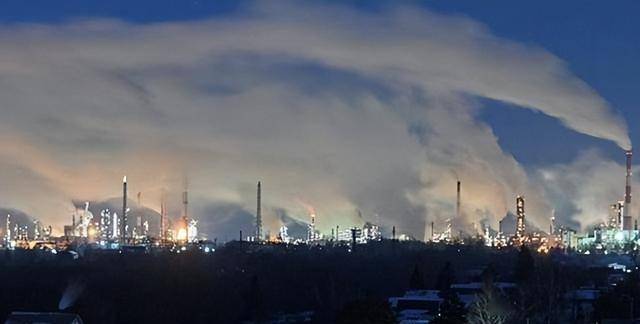
乌克兰狂袭俄罗斯油脉,特朗普下令美军协助,克里米亚“限油”
Sou Hu Cai Jing· 2025-10-05 03:21
Core Insights - Ukraine's recent strategy focuses on targeting Russian oil refineries, leading to nearly 40% of refining capacity being idle, significantly impacting the Russian economy [1][3]. Group 1: Impact on Russian Oil Industry - Approximately 40% of Russia's refining capacity is currently idle due to Ukrainian drone attacks, which are difficult to repair due to Western sanctions [3]. - The Russian fuel market is facing a monthly gasoline demand shortfall of about 20%, equating to a shortage of 400,000 tons out of a total monthly demand of 2 million tons [3]. - As a result of reduced gasoline production by around 20%, 1-2 out of every 50 gas stations in Russia have stopped selling gasoline, with severe restrictions in Crimea [3][6]. Group 2: Changes in Fuel Imports - Since July, Moscow has increased gasoline imports from ally Belarus by 36% compared to the same period last year, with September imports surging by 168% [4]. - The Russian Energy Minister Novak has proposed increasing gasoline purchases from Belarus and eliminating import tariffs on gasoline from China, South Korea, and Singapore [4]. Group 3: Government Response and Future Plans - The Russian government has extended the ban on gasoline and diesel exports until the end of the year, affecting at least 10 regions, particularly in Crimea [6]. - Ukrainian President Zelensky has indicated plans to ramp up the production of long-range drones to continue targeting Russian energy infrastructure, stating that the most effective sanction is to set Russian refineries ablaze [6]. - Former President Trump has authorized the Pentagon to assist Ukraine in using long-range missiles to strike deep within Russian territory, marking a significant escalation in support for Ukraine [8].
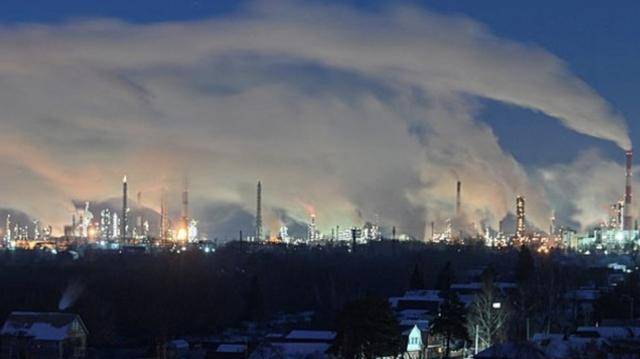
突发!俄罗斯遭袭,最大炼油企业之一爆炸起火,集团军指挥所被击中!泽连斯基新动作,特朗普考虑给乌射程覆盖莫斯科的导弹,普京回应
Mei Ri Jing Ji Xin Wen· 2025-10-04 15:03
Group 1 - Russian President Putin emphasized the importance of confidence in response to Trump's "paper tiger" comment regarding Russia [1] - Ukrainian President Zelensky sought security guarantees and urged the EU to implement the 19th round of sanctions against Russia during meetings with European leaders [1][7][8] - The U.S. is reportedly considering providing Ukraine with long-range "Tomahawk" cruise missiles capable of reaching Moscow, as well as intelligence support for strikes on Russian energy facilities [9][11][12] Group 2 - Ukrainian armed forces conducted strikes on significant Russian oil facilities, including the Kirishi oil refinery, which has an annual refining capacity of 18.4 million tons [3] - Reports indicated that a passenger train in Ukraine was attacked by Russian forces, resulting in approximately 30 injuries [4][5] - Putin stated that if NATO had not approached Russia's borders, the conflict in Ukraine could have been avoided, and he criticized the West's attempts to exclude Russia from the international system [12][14]

乌称袭击俄多处军事与能源设施
中国能源报· 2025-10-04 09:35
Group 1 - The Ukrainian armed forces conducted a strike on the Kirishi oil refinery in Russia's Leningrad region, resulting in explosions and fires [3] - The Kirishi refinery is one of the largest in Russia, with an annual refining capacity of 18.4 million tons of crude oil [3] - Additional military actions included the destruction of a small missile boat and a radar station, as well as a transport vehicle for the Iskander tactical missile system [3]

哈马斯回应特朗普:同意释放所有人质,移交加沙地带管理权;法案再被否决,美国政府继续停摆;台风“麦德姆”即将登陆华南沿海丨每经早参
Mei Ri Jing Ji Xin Wen· 2025-10-03 23:39
Group 1: Hamas and Trump's Proposal - Hamas has submitted a response to Trump's "20-point plan," expressing willingness to negotiate through mediators for a ceasefire in Gaza and the complete withdrawal of Israel from the region [1][7] - The organization agrees to release all Israeli hostages and hand over the remains of deceased individuals, contingent upon meeting necessary exchange conditions [1][7] - Hamas is open to transferring governance of Gaza to an independent Palestinian authority and will participate in discussions regarding the future of Gaza and the inherent rights of the Palestinian people [1][7] Group 2: U.S. Government Shutdown - The U.S. Senate voted on a temporary funding bill proposed by Democrats, which failed with 46 votes in favor and 52 against, leading to a continued government shutdown [3][7] - A subsequent temporary funding bill proposed by Republicans also did not receive enough votes to pass [3][7] - The National Nuclear Security Administration (NNSA) has only enough funding to operate for about eight more days before entering emergency shutdown procedures due to the ongoing government shutdown [7] Group 3: Market Performance - U.S. stock indices showed mixed results, with the Dow Jones increasing by 0.51%, while the Nasdaq decreased by 0.28% [3] - International precious metals futures saw a general increase, with COMEX gold futures rising by 1.14% to $3912.10 per ounce, and COMEX silver futures increasing by 3.45% to $47.97 per ounce [3] - Crude oil prices also saw slight increases, with WTI crude oil rising by 0.35% to $60.69 per barrel, while Brent crude oil increased by 0.42% to $64.38 per barrel [3] Group 4: Trade Relations with Mexico - The Chinese Ministry of Commerce has expressed strong opposition to Mexico's recent anti-dumping investigations against Chinese products, including float glass and PVC-coated fabrics [4] - China is closely monitoring the situation and has initiated a trade and investment barrier investigation in response to Mexico's proposed increase in import tariffs [4] Group 5: Corporate News - Xiaomi has addressed concerns regarding a viral video of a car allegedly driving itself, confirming that the incident was due to a user-initiated parking command and not a vehicle malfunction [9] - OpenAI has publicly defended its employees against harassment tactics from Elon Musk, emphasizing its commitment to protecting staff and their rights [11] - Boeing is facing significant financial implications due to the delayed delivery of its 777X aircraft, with reports indicating a postponement from 2026 to early 2027 [13]




释放人质!哈马斯提交对特朗普“20点计划”回应;原油全周重挫7%;小米回应“汽车突然自己开走”丨每经早参
Mei Ri Jing Ji Xin Wen· 2025-10-03 23:25
Market Overview - US stock indices closed mixed, with the Dow Jones up 0.51%, the Nasdaq down 0.28%, and the S&P 500 up 0.01% [4] - Major tech stocks mostly declined, with AMD down nearly 3%, Meta down over 2%, and Tesla down over 1% [4] - The Nasdaq China Golden Dragon Index fell 1.15%, with most Chinese concept stocks declining, including a drop of over 4% for Global Data and nearly 4% for Li Auto [4] - International precious metals futures generally rose, with COMEX gold futures up 1.14% to $3912.10 per ounce, and COMEX silver futures up 3.45% to $47.97 per ounce [4] Oil Market - WTI crude oil main contract rose 0.35% to $60.69 per barrel, with a weekly decline of 7.65% [5] - Brent crude oil main contract increased by 0.42% to $64.38 per barrel, with a weekly decline of 6.99% [5] Trade Relations - The Chinese Ministry of Commerce responded to Mexico's recent anti-dumping investigations against Chinese products, emphasizing opposition to protectionist actions and the importance of adhering to WTO rules [6] - China has initiated an investigation into Mexico's proposed increase in import tariffs and other trade restrictions [6] Company News - Xiaomi addressed a viral video claiming a Xiaomi car drove away on its own, stating that the incident was due to a misunderstanding related to a parking assist command from a user's phone [12] - OpenAI responded to Elon Musk's legal actions, asserting its commitment to protecting employee rights and rejecting any intimidation tactics [14] - Boeing is expected to delay the delivery of its 777X aircraft again, potentially resulting in losses of billions of dollars [16] - Chevron's refinery in California experienced an explosion, with no reported injuries, highlighting safety concerns in the refining industry [17] - Apple removed an app that tracked U.S. immigration enforcement personnel, emphasizing its commitment to user privacy and safety [19]

道指标普续收新高,科技板块走弱纳指回落,中概股多数收低
Feng Huang Wang· 2025-10-03 23:21
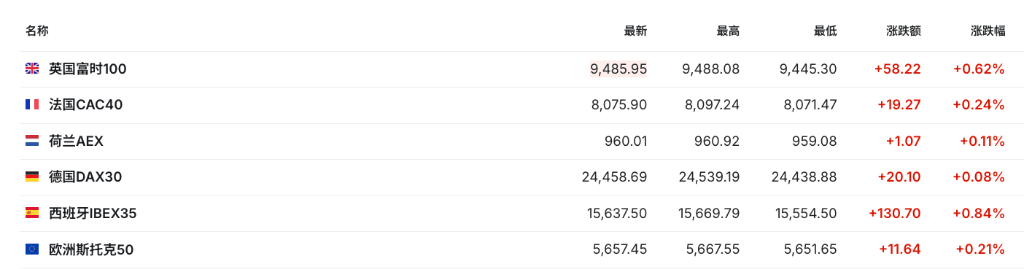
Market Performance - On October 3rd, U.S. stock indices showed mixed results, with the Dow Jones and S&P 500 reaching new highs, closing at 46,758.28 (+0.51%) and 6,715.79 (+0.01%) respectively, while the Nasdaq Composite fell to 22,780.51 (-0.28%) [1][2] - Among the 30 Dow components, 22 stocks rose, with notable gains from UnitedHealth, Travelers, Caterpillar, Johnson & Johnson, Goldman Sachs, and Visa, all increasing by over 1% [2] - The Russell 2000 index also hit a record high, rising 0.72% on the day and 1.72% for the week [2] Economic Indicators - The U.S. Senate rejected a bipartisan temporary funding bill, leading to a government shutdown, which halted nearly all economic activities and delayed the release of the September non-farm payroll report [4] - Market expectations for a 25 basis point rate cut by the Federal Reserve in October are nearly 95%, as indicated by the CME FedWatch Tool [4] Company News - Berkshire Hathaway has amended its corporate bylaws to separate the roles of Chairman and CEO [10] - Tesla has commenced sales of its Cybertruck in Qatar, following earlier operations in Saudi Arabia [11] - A Chevron refinery in El Segundo, California, experienced a sudden explosion, affecting over 16% of the state's refining capacity and supplying a significant portion of fuel to Southern California [12] Sector Performance - The coal sector saw significant gains, with Peabody Energy rising by 9.18%, while cryptocurrency mining companies also performed well, with Bitdeer Technologies up 10.28% [7] - Solid-state and lithium battery-related stocks mostly rose, with Plug Power increasing by 34.63% and American Lithium by 31.78% [8] Chinese Stocks - The Nasdaq Golden Dragon China Index fell by 1.15%, but gained 2.58% over the week, with most popular Chinese stocks declining, including a 4.16% drop for Global Data and a 3.99% drop for Li Auto [9]




重磅非农就业缺席,三大美股指仍齐创新高,ISM数据打压科技股,原油全周重挫
Sou Hu Cai Jing· 2025-10-03 16:03
Group 1 - The U.S. stock market indices reached new highs, with the S&P 500 set to achieve its longest winning streak since late July, driven by strong performances in the tech sector and AI investments [1][9] - Hitachi announced a memorandum of understanding with OpenAI to collaborate on AI infrastructure, resulting in a 10.3% increase in Hitachi's stock price [1] - Nvidia's stock initially rose nearly 0.8% but later experienced a slight decline following the release of the ISM services index, which fell to 50, marking a new low since 2020 [1][9] Group 2 - Pharmaceutical stocks rebounded, with Johnson & Johnson's rating upgraded to "outperform" by Wells Fargo, leading to a rise of over 2% in its stock price [2] - The healthcare and utilities sectors saw gains of at least 1%, contributing to the overall rise in the S&P 500 [2] - The California governor's office reported a fire at Chevron's El Segundo refinery, impacting oil prices, which rose over 1% but are expected to see significant weekly declines [2] Group 3 - The Stoxx Europe 600 index rose by 0.4%, reaching a historical high, driven by optimism regarding the Federal Reserve's interest rate cuts and strong inflows into the AI sector [5][8] - European steel stocks outperformed the market following an upgrade in ratings due to news of the EU's plan to increase steel import tariffs to 50% [6] Group 4 - Copper prices surged to a yearly high of $10,577 per ton, driven by supply concerns following a significant accident at Freeport-McMoRan's Grasberg copper mine in Indonesia [12]
雪佛龙加州炼油厂发生大火,占加州总炼油产能的16%以上;投资者呼吁否决马斯克1万亿美元薪酬方案【美股盘前】
Mei Ri Jing Ji Xin Wen· 2025-10-03 11:05
Group 1 - Chevron's refinery in California experienced a fire, impacting over 16% of the state's refining capacity and supplying more than 40% of aviation fuel and over 20% of automotive fuel in Southern California [2] - Tesla reported a record quarterly delivery of 497,099 vehicles in Q3, exceeding analyst expectations and marking a 7.4% year-over-year increase, leading to a 1.56% rise in its stock price [3] Group 2 - Ark Invest, led by Cathie Wood, increased its holdings in Alibaba and Baidu, purchasing 14,453 shares of Alibaba valued at approximately $2.74 million and 45,478 shares of Baidu valued at about $6.4 million [4] - BlackRock's Global Infrastructure Partners (GIP) is in talks to acquire Aligned Data Centers for a valuation of $40 billion, contributing to a 0.17% increase in BlackRock's stock [5] Group 3 - Berkshire Hathaway announced a $9.7 billion acquisition of OxyChem, the chemical business of Occidental Petroleum, marking its largest deal in three years, with $6.5 billion allocated for debt repayment [6] - Investors are calling for the rejection of Elon Musk's $1 trillion compensation plan and a restructuring of Tesla's board, as stated in an open letter from a group representing several large public pension funds [7] Group 4 - Boeing's 777X first flight has been delayed to 2027, potentially incurring non-cash accounting costs between $2.5 billion and $4 billion, with Lufthansa adjusting its fleet plans accordingly [8]
俄罗斯油荒告急!无人机炸毁15%产能,副总理急抛免税猛药
Sou Hu Cai Jing· 2025-10-03 09:25
Core Viewpoint - The Russian government is considering a series of regulatory measures to address the rising wholesale gasoline prices and supply shortages in the domestic fuel market, including the removal of import tariffs and temporary easing of restrictions on certain chemical additives [1][2]. Group 1: Regulatory Measures - Deputy Prime Minister Alexander Novak has submitted proposals to Prime Minister Mikhail Mishustin, which require official confirmation for implementation [2]. - The proposed measures include the removal of a 5% import tariff on gasoline from China, South Korea, and Singapore, and the activation of a domestic "damping" subsidy mechanism to lower domestic gasoline processing costs below international market prices [2][4]. - These measures are expected to increase domestic gasoline supply by 350,000 tons and diesel by 100,000 tons monthly, equating to an additional 15,000 tons of refined oil daily [2]. Group 2: Supply Chain Challenges - Experts note that high shipping costs from East Asian countries and the distance of central Russia from ports may diminish the effectiveness of the tariff exemption for the central region [3]. - The ongoing conflict has led to damage at major refineries, with at least four facilities affected, resulting in a daily gasoline production decrease of approximately 80,000 tons, which is 15% of national capacity [2]. Group 3: Domestic Production Enhancements - Novak proposed temporarily lifting the ban on the use of the chemical additive methylamine (MMA) to improve the octane rating of low-grade gasoline, allowing refineries to process more low-quality crude oil into standard 92-octane gasoline [4]. - Additional measures include increasing fuel imports from Belarus from 45,000 tons per month to 300,000 tons, allowing up to 5% ethanol in gasoline, and raising the aromatic content limit in gasoline from 35% to 40% [4]. Group 4: Previous Measures and Market Response - This is not the first time the Russian government has implemented fuel market regulations; a ban on gasoline exports was extended to the end of 2025, and diesel transport is subject to quota management [6]. - Market reactions indicate that previous export restrictions have had limited effectiveness, as domestic refining capacity remains compromised, leading to continued fuel shortages in some regions [6]. Group 5: Structural Issues - Analysts believe that the new measures are primarily emergency responses that may alleviate market pressure in the short term but do not address deeper structural issues in the Russian fuel industry, such as aging refining facilities and slow technological upgrades [8]. - The specific implementation timeline for these proposals remains uncertain, with no comments from the Prime Minister's or Deputy Prime Minister's offices [8]. Group 6: Regional Trade Agreements - The Eurasian Economic Commission announced a suspension of fuel import tariffs in the Eurasian Economic Union from October 10, 2026, to June 30, 2027, aligning with Russia's domestic measures to stabilize fuel supply among member countries [9].
