
生物医药

Search documents
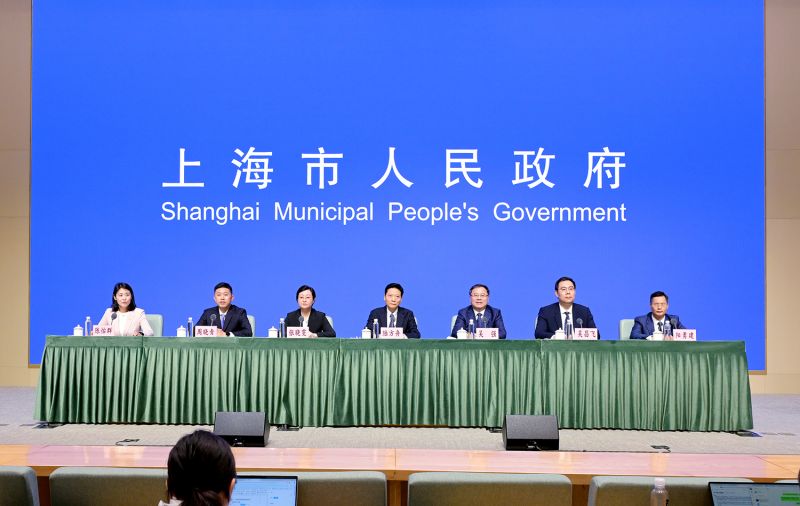
上海闵行“十四五”答卷:GDP突破4000亿元,打造有“高度”有“温度”之城
Zhong Guo Fa Zhan Wang· 2026-02-24 09:18
Core Insights - The article highlights the achievements of Minhang District during the "14th Five-Year Plan" period, showcasing its high-quality development and improved living standards [4][16]. Economic Performance - Minhang District's GDP surpassed 400 billion yuan, with total fiscal revenue exceeding 90 billion yuan, ranking second in Shanghai [4]. - By 2024, the GDP is projected to reach 411.9 billion yuan, reflecting a 60.6% increase from the end of the "13th Five-Year Plan" [7]. Industrial Upgrading - The district is focusing on upgrading its traditional manufacturing sector and building a modern industrial system [6]. - The tertiary sector's contribution to GDP is expected to rise to 73.5%, with strategic emerging industries accounting for 52.6% of the total industrial output [7]. Open Economy - Minhang is leveraging the national strategy of the Hongqiao International Open Hub, with nearly 28,000 enterprises established in the area [8]. - Tax revenue is projected to reach 10.9 billion yuan in 2024, a 120% increase from the end of the "13th Five-Year Plan" [8]. Innovation and Technology - The district is enhancing its innovation capabilities, with 39 national-level research platforms established [12]. - Minhang has produced 13 national science and technology awards and 210 municipal awards since the beginning of the "14th Five-Year Plan" [12]. Quality of Life - Minhang is committed to improving livability, having completed 550,000 square meters of housing renovations and built 240,000 square meters of "Beautiful Home" projects [13]. - The district has established 17,552 elderly care beds and 110 community service centers [14]. Future Outlook - The district aims to become an international open hub, a technology innovation center, and a model for urban living in the "15th Five-Year Plan" [15].

国际罕见病日将至 专家:应对罕见病挑战需要多方力量共同托举
Xin Lang Cai Jing· 2026-02-24 09:04
Core Viewpoint - The ultimate goal is to help rare disease patients reintegrate into society through collective efforts, highlighting that rare diseases are not just medical issues but also significant social and livelihood concerns [1] Group 1: Rare Disease Treatment and Research - The development of drugs for rare diseases requires a deep understanding of the disease's causes and mechanisms, as effective treatment cannot occur without this foundational research [1] - Enzyme replacement therapy is a primary method for treating Gaucher disease, but it is costly and requires lifelong treatment to prevent severe health consequences [2] - Early and continuous treatment is crucial for saving lives and protecting the health of rare disease patients [2] Group 2: Social Support and Funding Mechanisms - The Shanghai Rare Disease Prevention Foundation has been actively promoting public awareness and legislative research to support rare disease patients [1] - Despite existing support mechanisms, there is a need for a coordinated approach to provide stable funding and support for rare disease patients [3] - Establishing a rare disease special fund is essential for providing systematic support and integrating various existing healthcare resources [3] Group 3: Legislative Developments - The implementation of the Shanghai Medical Security Regulations in March 2025 encourages social participation in the diagnosis, research, and medication security for rare diseases [3] - Legislative research is being conducted to ensure patient-centered protections throughout the entire lifecycle of care, from prevention to treatment [3] - A pragmatic approach of "fund first, legislation later" is proposed to establish a special fund that can inform future legislative efforts [4][5] Group 4: Ecosystem Development - A dual-driven model is suggested to create a favorable ecosystem for rare disease treatment, involving both direct support policies and incentives for private sector participation [5] - The collaboration of government and various stakeholders is seen as essential for addressing the complex issues surrounding rare diseases [5]
放大招!广东金融发布黄金十二条:支持企业产业链整合兼并
Nan Fang Du Shi Bao· 2026-02-24 08:46
Core Insights - The Guangdong Provincial High-Quality Development Conference held on February 24, 2026, focuses on the collaborative development of manufacturing and service industries, emphasizing the importance of integrating industrial chains through a financial support action plan [2][3] Group 1: Reasons for Integration - Guangdong is facing dual challenges in industrial development, including external pressures from global supply chain restructuring and internal demands for digital transformation of traditional industries [3] - The need for high-quality economic development in China necessitates Guangdong to enhance the resilience and security of its industrial supply chains, prompting a faster pace of industrial upgrades through integration [3] Group 2: Objectives of the Action Plan - The ultimate goal of the action plan is to build world-class industrial clusters by creating a comprehensive financial support system that directs funds to key areas of industrial chain integration [3][5] - The plan outlines a clear strategy for industry selection, focusing on consolidating traditional industries like electronic information and green petrochemicals, while also developing emerging sectors such as new energy vehicles and biomedicine [3][5] Group 3: Implementation Framework - The action plan identifies four core integration entities: leading enterprises, publicly listed companies, state-owned enterprises with new assessment directives, and technology firms with core competencies [5] - It emphasizes broadening direct financing channels, including supporting more companies to go public and encouraging the issuance of innovative bonds [5] - A complete fund system is proposed, attracting social capital through government-led funds to invest in critical technology sectors [5] Group 4: Cross-Border Integration Initiatives - Guangdong leverages the unique advantages of the Guangdong-Hong Kong-Macao Greater Bay Area by proposing cross-border integration measures, such as establishing cross-border funds and optimizing pilot mechanisms [6] Group 5: Support and Risk Management - To ensure the action plan's successful implementation, a collaborative service system will be established, including a resource-matching information-sharing platform and a professional service alliance for mergers and acquisitions [7] - The plan mandates that all integration activities must comply with legal frameworks to mitigate financial risks and safeguard state-owned assets [7] - Future efforts will focus on promoting the plan's execution, enhancing communication platforms, showcasing successful examples, and improving the financial ecosystem [7]

之江生物:战略增持三优生物,深化“诊断+治疗”全产业链布局
Cai Jing Wang· 2026-02-24 08:27
Core Viewpoint - Zhijiang Biotech has completed a strategic increase in its stake in Sanyou Biopharmaceutical Co., Ltd., emphasizing the importance of technological complementarity and industrial synergy in the biopharmaceutical sector [1] Group 1: Company Actions - The strategic increase in stake aims to further integrate advantageous resources and solidify Zhijiang Biotech's position in the full industry chain of precision medicine, focusing on "diagnosis + treatment" [1] - The financing round also attracted interest from Shenzhen Yanghe Investment Pharmaceutical Industry Investment Co., Ltd., a professional investment platform under Zhuhai Gree Group, which participated in the strategic investment in Sanyou Biopharmaceutical [1]


广东金融与科技再组新“CP”!为何首提“三大工程”
Nan Fang Du Shi Bao· 2026-02-24 08:20
Core Viewpoint - The Guangdong Province's "Work Plan for Promoting Financial Services for the Construction of a Strong Technology Province" aims to establish a modern financial matrix system aligned with technological innovation by the end of 2027, focusing on enhancing financial support for technology-driven enterprises and industries [2][3]. Group 1: Overall Goals and Framework - The "Work Plan" includes three main components: overall goals, enhanced financial support for technology-driven development, and key tasks, comprising a total of 15 items [2]. - By the end of 2027, the plan aims for technology-related loans to rank among the highest in the nation, with growth rates exceeding the average loan growth rate, and a significant increase in intellectual property pledge financing [2]. Group 2: Key Focus Areas - The plan emphasizes three key areas: key regions, key industries, and key enterprises [3]. - In key regions, the focus is on the Greater Bay Area, leveraging platforms like Hengqin, Qianhai, Nansha, and He Tao to enhance financial services for regional development [3]. - Key industries targeted include integrated circuits, new energy vehicles, low-altitude economy, biomedicine, and artificial intelligence, among others [3]. Group 3: Financial Support Mechanisms - The "Work Plan" introduces three major projects to support the construction of a strong technology province, including the "Technology Financial Strong Foundation Project" [4][5]. - The financial matrix will utilize various tools such as government loans, credit policies, and specialized loans for strategic emerging industries [5]. - The plan also aims to create a fund relay system to support technology enterprises at different growth stages, including venture capital and private equity [6]. Group 4: Risk Management and Insurance - The "Technology Financial Ecosystem Project" aims to establish a risk compensation mechanism for technology loans, providing financial interest subsidies for eligible manufacturing and high-tech enterprises [7]. - It also seeks to develop a comprehensive insurance product system covering the entire lifecycle of technology enterprises [8]. Group 5: Talent Development and Policy Framework - The plan proposes the establishment of a "Technology-Industry-Finance" composite talent system to support the construction of a strong technology province [10]. - It emphasizes the need for coordinated efforts among various departments to enhance financial services for technological innovation [10].
美联储降息预期下修,恒生科技指数ETF、恒生互联网ETF开年走低
Sou Hu Cai Jing· 2026-02-24 06:41
Group 1 - The Hang Seng Technology Index ETF (513180.SH) and the Hang Seng Internet ETF (513330.SH) have started the year on a downward trend, with major stocks like Alibaba, Tencent, and Xiaomi facing adjustments [1] - Following the Chinese New Year holiday, the market has shown weak performance due to revised expectations for interest rate cuts by the Federal Reserve, which is particularly impactful for the Hong Kong stock market sensitive to external liquidity [1] - The Federal Reserve's January meeting minutes revealed significant divergence among officials regarding future policy outlook, leading to a market perception that the pace of interest rate cuts may slow down in the short term [1] Group 2 - The initial jobless claims in the U.S. indicate that the employment market remains resilient, which is a key focus for the Federal Reserve during the interest rate cut cycle, resulting in reduced expectations for rate cuts [1] - The December PCE data released on February 20 exceeded expectations, reinforcing the view that the Federal Reserve may pause interest rate cuts, with market expectations for a June rate cut dropping to 45.6% and postponing the cut to July [1] - The Zhang Xia team from China Merchants Securities commented that while short-term expectations for Federal Reserve policy may fluctuate, the most significant phase of liquidity shock has passed, and once rate cut expectations stabilize, the Hong Kong market will benefit significantly [1] Group 3 - Investment tools focusing on Hong Kong technology-related ETFs include the Hang Seng Technology Index ETF (513180.SH), the Hang Seng Internet ETF (513330.SH), and the Hong Kong Stock Connect Technology ETF (159101.SZ) [2] - The Hang Seng Internet ETF (513330.SH) targets major internet companies in Hong Kong such as Alibaba, Baidu, Tencent, and NetEase, while the Hong Kong Stock Connect Technology ETF (159101.SZ) also includes leading innovative pharmaceutical companies [2] - These ETFs are listed on mainland stock exchanges and support T+0 intra-day trading, providing A-share investors with low-threshold access without the need for cross-border accounts or currency exchange [2]



百奥赛图股价跌5%,鹏华基金旗下1只基金重仓,持有230.7万股浮亏损失872.06万元
Xin Lang Ji Jin· 2026-02-24 05:18
Group 1 - The core point of the news is that BaiO Saite's stock price dropped by 5% to 71.82 yuan per share, with a trading volume of 1.32 billion yuan and a turnover rate of 5.00%, resulting in a total market capitalization of 32.096 billion yuan [1] - BaiO Saite (Beijing) Pharmaceutical Technology Co., Ltd. is primarily engaged in antibody drug research and preclinical research services, with operations divided into five segments, including gene editing services, preclinical pharmacology and efficacy evaluation, model animal sales, antibody development, and innovative drug development focusing on oncology and autoimmune diseases [1] Group 2 - According to data from the top ten holdings of funds, Penghua Fund holds BaiO Saite in its portfolio, specifically in the Penghua New Emerging Industries Mixed A Fund (206009), which held 2.307 million shares, accounting for 3.77% of the fund's net value, ranking as the tenth largest holding [2] - The Penghua New Emerging Industries Mixed A Fund has a total scale of 3.215 billion yuan, with a year-to-date return of 9.29% and a one-year return of 49.94%, ranking 1661 out of 8994 and 1568 out of 8199 respectively [2]
韶关市委书记陈少荣:举全市之力打造华南“算力之城”
Nan Fang Nong Cun Bao· 2026-02-24 05:01
Core Viewpoint - Shaoguan aims to become the "Computing Power City" of South China, focusing on high-quality development through industrial growth, urban enhancement, and county-level revitalization [1][4][10]. Group 1: Industrial Development - Shaoguan will leverage industrial growth as a breakthrough, aiming to establish a strong foundation for high-quality development [14]. - The city plans to create a significant computing power cluster to support the Greater Bay Area's artificial intelligence initiatives, with major projects from Tencent, Alibaba, and others [15][16]. - By May, five major computing clusters are expected to be operational, with a total investment of 168.03 billion yuan and signed orders of 647.2 terawatts [17]. Group 2: Urban Development - The city will implement 100 major industrial and infrastructure projects with a total investment exceeding 181 billion yuan, aiming for 21.4 billion yuan in investment this year [25]. - Shaoguan High-tech Zone is targeted for national-level recognition, with a focus on modern transportation systems and enhancing the airport's cargo capabilities [27][28]. - The urban strategy includes transforming the city from mere expansion to functional enhancement, driving overall high-quality development [29]. Group 3: County-Level Revitalization - The county-level strategy includes a focus on "one county, one main industry" to boost industrial output by over 8% [31]. - The agricultural sector will be strengthened through initiatives like the "Ten Industries, Thousand Billion" program, aiming to enhance agricultural exports and rural enterprises [32]. - Efforts will be made to convert ecological value into economic benefits, particularly through tourism development in key scenic areas [35].

2025年南京民营经济发展“大数据”出炉
Nan Jing Ri Bao· 2026-02-24 03:02
Group 1: Policy and Economic Development - The introduction of the "Private Economy Promotion Law" in 2025 aims to stimulate the potential of private enterprises in Nanjing, with policies like the "2025 Work Points for High-Quality Development of Private Economy" being established to support their growth [1] - Nanjing's private enterprises have shown significant growth, with over 90% of the 5,351 high-tech enterprise applications coming from private companies [2] Group 2: Technological Innovation - Nanjing's private enterprises have made breakthroughs in key technologies, contributing to industrial upgrades, with the "Ningke Loan" program providing over 270 billion yuan in technology loans [2] - In the field of humanoid robotics, Inks Intelligent Technology has become a leading player, achieving an annual output of over 100,000 joint modules [3] - Future Brain Technology has developed the X-Brain Ocean spatial sound rendering system, enhancing the auditory experience during performances [3] Group 3: Biotechnology and Medical Innovations - The establishment of the regional technology transfer center has facilitated the registration of equity rights for Nanjing Jingji Biotechnology, marking a significant step in patent commercialization [4] - The center provides financial support and technical guidance, allowing companies like Jingji to focus on clinical challenges without financial constraints [5] Group 4: Foreign Trade and Market Expansion - In 2025, Nanjing's private enterprises accounted for 2,219.6 billion yuan in import and export volume, representing 41.3% of the city's total, highlighting their role as a stabilizing force in foreign trade [6] - Companies like Jicui Intelligent Manufacturing have seen significant growth in overseas sales, with orders for cleaning robots reaching 800 units [7] Group 5: Emerging Enterprises and Market Trends - Nanjing has seen the emergence of new private enterprises, with five new listings expected by 2025, and over 70% of specialized and innovative enterprises being private [10] - Companies like Vili Zhibo Biotechnology have gained recognition for their innovative treatments, while Nanjing Xuankai Network Technology is capitalizing on the growing market for AI-driven media [11][12]
【科技日报】我科学家开发出T细胞改造新方法
Ke Ji Ri Bao· 2026-02-24 02:27
Group 1 - The research team from the Chinese Academy of Sciences has developed a method called "histidine scanning" to enhance the sensitivity of T-cell receptors (TCRs) in identifying and eliminating cancer cells [1][2] - The study reveals that histidine can accurately locate the "key button" sites on TCRs responsible for recognizing cancer cells, thereby strengthening the interaction between TCRs and pMHC antigen molecules [1] - Enhanced TCRs significantly improve T-cell activation and their ability to capture cancer cells, preventing cancer cells from escaping detection [1][2] Group 2 - The method does not rely on the three-dimensional structural information of TCRs, allowing for simultaneous modification of multiple "key buttons" to boost TCRs' ability to target cancer cells [2] - Modified T-cells exhibit higher activation levels and killing power, while accurately distinguishing between cancerous and healthy cells [2] - The research shows significant efficacy in animal models, providing a new approach for developing next-generation cancer immunotherapies [2]