宠物

Search documents
天猫宠物行业双11成交占全网三分之二,市场份额稳居首位
Zhong Guo Jing Ji Wang· 2025-11-08 04:48
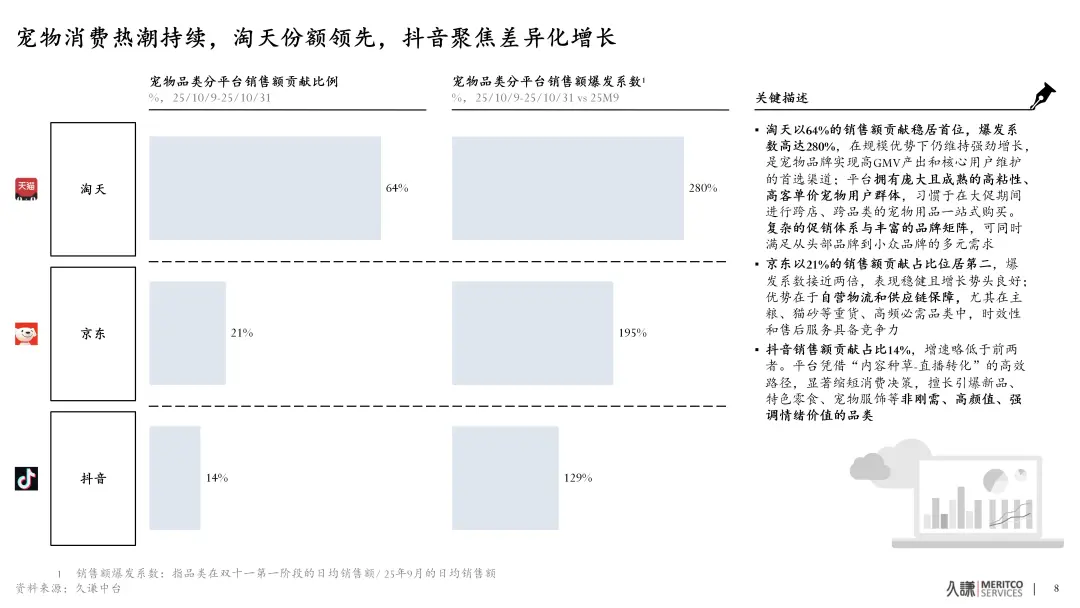
Core Insights - The pet consumption market is experiencing significant growth, with Tmall leading in sales during the Double 11 shopping festival, contributing 64% of total sales and achieving an explosive growth coefficient of 280% [1][3]. Group 1: Market Performance - Tmall's pet industry has maintained double-digit growth despite its scale advantage, with pre-sale amounts surpassing last year's total within just half an hour of the Double 11 pre-sale launch [3]. - In the first hour of sales, 18 brands, including Friskies and Royal Canin, each exceeded 10 million in sales, while 587 brands saw year-on-year growth [3]. - Domestic pet food brand Xianlang broke the 100 million sales mark within four hours of opening sales, indicating Tmall's position as the preferred channel for brand scaling [3]. Group 2: Domestic Brand Growth - Domestic brands accounted for 68% of the pet brands that achieved over 10 million in sales on Tmall during the Double 11 event [3]. - Brands like Maifudi and Toptrees saw significant sales increases, with Maifudi's sales growing over 90% and Toptrees' cat food sales soaring by 170% [3]. - Even in traditionally dominated segments by imported brands, domestic products like Blue's cat food emerged as top sellers, showcasing the success of domestic brands in innovation and meeting consumer demand [3]. Group 3: Cross-Industry Integration - The trend of "cross-industry integration" is creating new growth opportunities, with brands like Adidas and Xiaomi entering the pet apparel and smart drinking fountain markets, respectively [4]. - Tmall's pet product sales growth coefficient is approaching that of the apparel category, indicating a shift away from niche markets [4]. - Tmall is becoming a core testing ground for brands exploring cross-category growth in the context of the rising "it economy" [4]. Group 4: User Demographics and Ecosystem - Since its upgrade to a primary category in 2021, Tmall's pet sector has seen continuous high growth, doubling in size and surpassing 100 million annual purchasing users [9]. - Over 30% of new customers in the pet category are young, indicating a growing, high-engagement user base [9]. - The pet industry is entering a "platform ecosystem competition" phase, with Tmall's extensive user base supporting both short-term and long-term growth through comprehensive category offerings and data insights [9].


猫双11宠物行业市占率达64%,“它经济”迎来国货黄金时代
Sou Hu Wang· 2025-11-08 03:49
Core Insights - The pet consumption market is experiencing significant growth, with Tmall leading in sales during the Double Eleven shopping festival, contributing 64% of total sales and achieving a high explosion coefficient of 280% [1][3] - Tmall's pet industry has maintained double-digit growth despite its scale advantage, with pre-sale amounts surpassing last year's total within just half an hour [3] - Domestic brands are increasingly dominating the pet consumption landscape, accounting for 68% of the brands that achieved over 10 million in sales on Tmall during the event [3] Group 1 - Tmall's pet industry has shown remarkable growth, with 18 brands achieving over 10 million in sales within the first hour of the Double Eleven event [3] - The trend of domestic brand replacement is evident, with brands like 麦富迪 and Toptrees showing significant sales increases of over 90% and 170% respectively [3] - The pet consumption market is witnessing cross-industry integration, with brands like Adidas and Xiaomi entering the pet apparel and smart drinking fountain markets, respectively [4] Group 2 - Since its upgrade to a primary category in 2021, Tmall's pet sector has experienced continuous high growth, doubling in scale and surpassing 100 million annual purchasing users [6] - The pet industry is entering a "platform ecosystem competition" phase, with Tmall's user base supporting both short-term and long-term growth through diverse consumer insights [6] - The rise of the "it economy" is expected to further solidify Tmall's leading position in the pet industry [6]
第八届进博会|中国宠物市场强劲增长 进博会首设宠物主题展区
Zhong Guo Xin Wen Wang· 2025-11-08 01:21
Core Insights - The Chinese pet market is expected to show strong growth, with a projected market size exceeding 811.4 billion RMB by 2025, driven by changing family structures and consumer attitudes towards pets [1][2] - The pet economy is becoming a significant growth area in consumer spending, with a focus on pet food, eco-friendly cat litter, health care, and shared products for pets and owners [1] - The market for urban pet dogs and cats has already surpassed 300 billion RMB in 2024, with expectations to exceed 400 billion RMB by 2027 [1] Industry Trends - The role of pets is shifting from "functional companions" to "family members," leading to growth in pet food, medical services, and technology sectors [1] - The primary pet owners are increasingly younger and more educated, with over 60% being born in the 1990s and 2000s, seeking high cost-performance and functional products [1] - Government policies aimed at boosting consumption and industry regulations are providing strong support for the pet economy's growth [1] Market Dynamics - Pet food remains the largest market segment, serving as a core driver of the pet economy, while pet medical services, supplies, and other services are also experiencing rapid growth [2] - The market is characterized by intense competition, with a continuous rise in the number of newly registered enterprises, fostering the development of competitive domestic brands [2] - Eight key trends are identified, including accelerated supply chain restructuring and domestic substitution, with companies leveraging smart technology and precise marketing to gain recognition [2]
年度盛典将启!“媒体+”领航,大湾区抢占宠物经济新高地
Nan Fang Nong Cun Bao· 2025-11-07 23:33
Core Insights - The pet industry in the Greater Bay Area is poised for significant growth, driven by innovative business models and a strong emotional bond between pets and their owners [2][12][13]. Group 1: Industry Growth and Trends - The pet population in China is expected to reach 430 million by 2024, with the market size surpassing 300 billion yuan and projected to exceed 811.4 billion yuan by 2025 [11][12]. - The consumer attitude towards pets is shifting from traditional ownership to a more intimate and equal emotional connection, leading to increased spending on pet care [14][15]. - The Greater Bay Area is experiencing rapid development in the pet industry, with a strong demand for pet food, products, and services, as well as a growing number of innovative companies entering the market [18][19]. Group 2: Market Opportunities - The smart pet products market is projected to exceed 10.2 billion yuan in 2024, accounting for 20% of the pet products market, indicating a shift towards intelligent, healthy, and personalized pet care solutions [26][27]. - The pet insurance market in China is still in its early stages, with a penetration rate of less than 1%, suggesting significant growth potential as pet owners adopt more refined care practices [30][31]. Group 3: Strategic Initiatives - The first Greater Bay Area Pet Industry Annual Convention aims to create a comprehensive industry ecosystem through collaboration among government, research, enterprises, and associations [33]. - The convention will showcase technological advancements, sign innovative projects, and gather leading companies to enhance the global market presence of the pet industry [54][55]. - Emphasis on innovation and transformation is crucial for the future of the pet industry in the Greater Bay Area, focusing on R&D investment, industry collaboration, and policy advantages to drive technological upgrades [49][50].

从“囤货”到“淘新”,双11进口消费风向开始变了
Jing Ji Guan Cha Bao· 2025-11-07 14:01
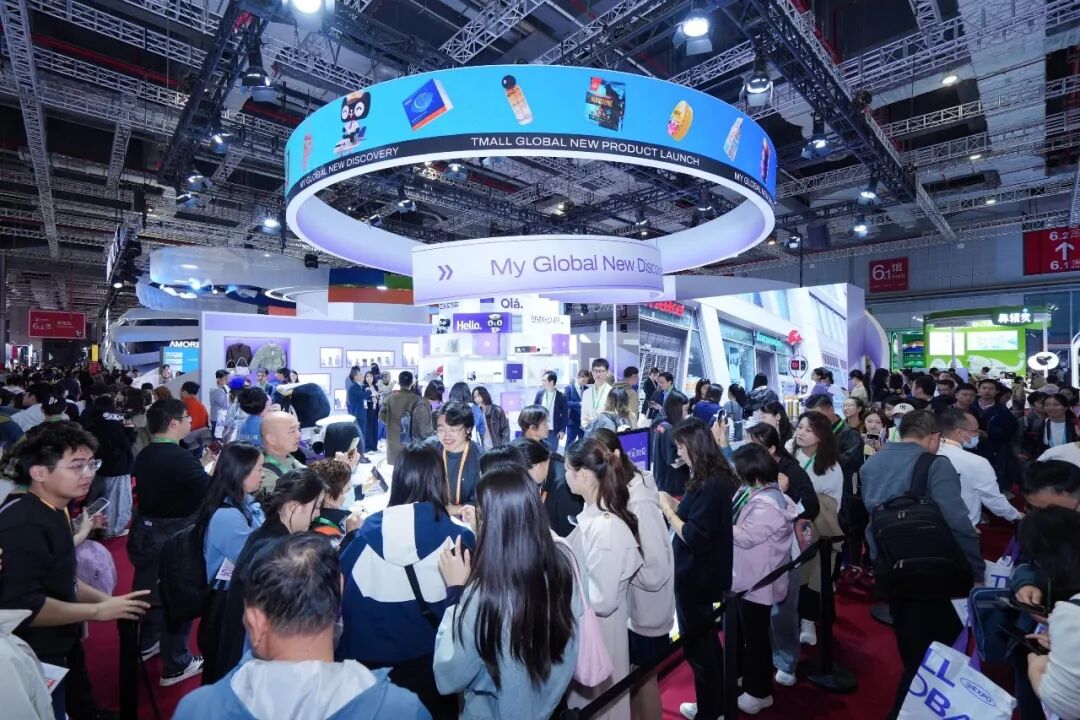
Core Insights - The article highlights the acceleration of import consumption upgrades in China, particularly during the "Double 11" shopping festival and the China International Import Expo, indicating a shift from bulk discount purchases to a focus on quality and specialized experiences [2][3]. Group 1: Import Consumption Trends - Import consumption is showing strong resilience and vitality, with 927 imported brands doubling their sales compared to last year, and 9 brands surpassing 100 million in sales [2]. - Consumers are moving from "stockpiling" to "trying new" products, with a willingness to pay for niche brands and specialized functions, indicating a shift in purchasing behavior [3][9]. - The demand for high-quality products is increasing, with significant growth in categories like oral anti-aging products, which saw a sales increase of 353% during "Double 11" [3][4]. Group 2: Consumer Behavior Changes - Consumers are becoming more knowledgeable about product ingredients and formulations, leading to a demand for scientifically-backed content from brands [4]. - The beauty and personal care sector is witnessing a rise in niche products, with scalp care products growing by 98% and specific brands like Gotukola and MY.ORGANIC achieving over 400% growth [4][10]. - The trend of "scientific nutrition" is emerging in the pet care market, with brands like VERSELE-LAGA seeing success due to a shift in consumer awareness [6]. Group 3: Market Dynamics and Brand Strategies - The integration of the China International Import Expo with "Double 11" has created a rapid "new product access chain," allowing over 100 global new products to launch simultaneously [7]. - Brands are required to establish a streamlined process for research, compliance, and market entry, enhancing operational efficiency [7][8]. - The shift from price competition to value consumption is evident, with 57% of consumers willing to pay for emotional value, reflecting a deeper market transformation [9][10]. Group 4: Future Growth Potential - The Chinese market is seen as a rapid growth engine for global brands, with the ability to turn innovative products into popular items within weeks [10]. - As "quality," "professionalism," and "individuality" become core themes in import consumption, the next growth curve for global brands is quietly unfolding in China [10].
从“囤货”到“淘新”,双11进口消费风向开始变了
经济观察报· 2025-11-07 13:58
Core Insights - The article highlights the acceleration of import consumption upgrades during the "Double 11" shopping festival and the China International Import Expo, indicating a shift from bulk discount purchases to a focus on quality and specialized experiences [1][2][17] Import Consumption Trends - Import consumption is showing strong resilience, with data from Tmall International indicating that 927 imported brands saw a year-on-year sales increase, with 9 brands exceeding 100 million yuan and 44 products surpassing 10 million yuan in sales [2] - Consumers are moving from "stockpiling" to "trying new products," with a willingness to pay for niche brands and specialized functions, emphasizing quality, ingredients, and experiences over price [5][16] Market Segmentation and Consumer Behavior - The rise of niche markets is reshaping consumer logic, with younger consumers driving growth in health and beauty sectors, particularly in oral anti-aging products, which saw a sales increase of 353% during "Double 11" [5][9] - The demand for personalized and scientifically-backed products is increasing, as consumers become more knowledgeable about ingredients and formulations [6][7] Supply Chain and Market Efficiency - The integration of smart supply chains and overseas warehouses has enabled a rapid launch of over 100 global new products during the "Double 11" following their debut at the Import Expo [12][13] - Tmall International is providing comprehensive support for new brands, addressing challenges related to entry, costs, and channels, which has led to significant sales growth for brands like Maxigenes [13][17] Shift from Price Competition to Value Consumption - The import market is transitioning from price wars to value-driven consumption, with 57% of consumers willing to pay for emotional value, reflecting a shift towards emotional and experiential purchasing [16] - The focus is moving from practicality to emotional value, with consumers increasingly seeking unique experiences and specialized brands [16][17]

中消协发布三季度消费投诉情况分析 八类消费投诉热点需注意
Xin Hua Wang· 2025-11-07 12:33
Core Insights - The China Consumer Association reported a total of 536,761 consumer complaints in Q3 2025, marking a year-on-year increase of 7.9% [1] - Complaints related to false advertising, safety issues, and contract problems have seen a significant rise compared to Q3 2024 [1] Group 1: Complaint Trends - The main complaint issues identified include shortcomings in overseas travel platforms, particularly in service delivery and customer support [2] - The rise in complaints about automatic renewal services is attributed to hidden terms, lack of fee reminders, and difficulties in cancellation [3] - There has been a notable increase in complaints regarding power banks, particularly concerning safety certifications and misleading product specifications [3] Group 2: Specific Issues in Travel and Services - Consumers face challenges with travel platforms that fail to assist in refund requests when hotels refuse to cooperate, leading to dissatisfaction [2] - Information on travel platforms is often outdated, resulting in consumers arriving at hotels that are no longer operational or have changed names [2] - The discrepancy between advertised and actual hotel conditions has led to increased consumer frustration [2] Group 3: Automatic Renewal and Product Complaints - Automatic renewal complaints are rising due to the obscured presentation of renewal terms and inadequate notification before charges are made [3] - Consumers report difficulties in canceling subscriptions due to hidden options and unresponsive customer service [3] - Complaints about power banks include issues with non-compliance to safety standards and exaggerated product claims, particularly from smaller brands [3]
中消协:潮玩经济升温 商品质量和售后服务问题引关注
Zhong Guo Xin Wen Wang· 2025-11-07 10:38
Group 1 - The rapid development of the trendy toy economy has led to increased consumer complaints regarding product quality and after-sales service [1] - In the third quarter of 2025, consumer associations in China received 536,761 complaints, a year-on-year increase of 7.9%, resolving 274,427 cases and recovering economic losses of 236 million RMB [1] - Issues with refund policies on trendy toy platforms have been highlighted, where consumers face refusals for refunds even when products have not been shipped or are defective [1] Group 2 - The rise of smart driving technology has become a competitive focus for automotive manufacturers, but there are concerns about the limitations and risks associated with these features [2] - Complaints regarding exaggerated performance claims by some automotive manufacturers and lack of transparency in driving data have been reported [2] - Other complaint hotspots include deceptive marketing in weight loss products, frequent disputes in pet consumption, ongoing issues with automatic renewals, and a surge in complaints related to power bank returns [2]
进博会首设“它”专属展区 毕马威解读宠物经济
Zheng Quan Ri Bao Wang· 2025-11-07 10:04
Core Insights - The 8th China International Import Expo (CIIE) has opened in Shanghai, showcasing the growing demand for high-quality and diversified lifestyles in the Chinese market, particularly through the newly established pet-themed exhibition area [1] - The pet economy is identified as a significant growth driver in the consumer sector, reflecting the modern lifestyle concept of pets as important family members [1][2] - KPMG's report highlights the transformation of the hotel industry towards quality service, adapting to new consumer demands, including pet-friendly accommodations [2] Industry Overview - The pet economy's growth is closely linked to rising consumer spending levels, with a shift from material to spiritual needs as living standards improve [2] - The urban pet market in China is projected to exceed 300 billion yuan in 2024 and is expected to surpass 400 billion yuan by 2027, indicating robust growth [2] - The role of pets is evolving from "functional companions" to "family members," driving growth in food, medical, service, and technology sectors [2][3] Market Dynamics - The pet market in China is anticipated to exceed 811.4 billion yuan by 2025, with pet food being the largest segment and a core driver of the pet economy [3] - The primary demographic of pet owners is becoming younger and more educated, with individuals born in the 1990s and 2000s accounting for over 60% of the market share, emphasizing a shift towards quality over quantity in consumption [2] - Government policies aimed at boosting consumption and industry regulations are providing strong support for the prosperity of the pet economy [2]
宠物经济板块11月7日跌0.4%,青木科技领跌,主力资金净流入4085.91万元
Sou Hu Cai Jing· 2025-11-07 09:05
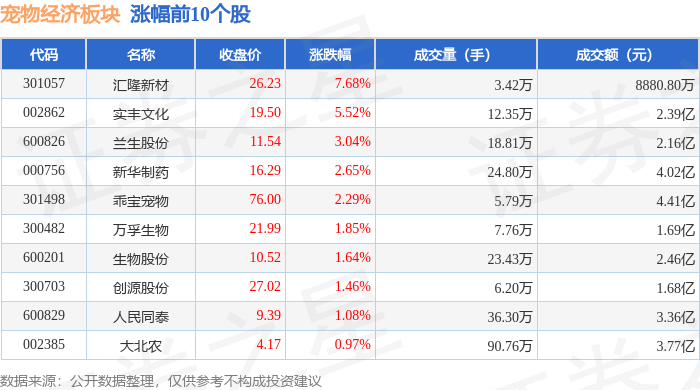
Market Overview - The pet economy sector experienced a decline of 0.4% on November 7, with Qingmu Technology leading the drop [1] - The Shanghai Composite Index closed at 3997.56, down 0.25%, while the Shenzhen Component Index closed at 13404.06, down 0.36% [1] Stock Performance - Notable gainers in the pet economy sector included: - Huilong New Materials (301057) with a closing price of 26.23, up 7.68% [1] - Shifeng Culture (002862) at 19.50, up 5.52% [1] - Lansheng Co. (600826) at 11.54, up 3.04% [1] - Other companies with positive performance included: - Xinhua Pharmaceutical (000756) at 16.29, up 2.65% [1] - Guai Bao Pet (301498) at 76.00, up 2.29% [1] Capital Flow - The pet economy sector saw a net inflow of 40.86 million yuan from institutional investors, while retail investors experienced a net outflow of 73.58 million yuan [2] - The main stocks with significant capital flow included: - Lansheng Co. (600826) with a net inflow of 36.59 million yuan from institutional investors [3] - Shifeng Culture (002862) with a net inflow of 36.44 million yuan from institutional investors [3] - Xinhua Pharmaceutical (000756) with a net inflow of 29.32 million yuan from institutional investors [3]