
非银行金融

Search documents
每日复盘-20250624
Guoyuan Securities· 2025-06-24 12:45
Market Performance - On June 24, 2025, the market saw a significant increase, with the ChiNext Index leading the gains, rising by 2.30%[2] - The Shanghai Composite Index rose by 1.15%, while the Shenzhen Component Index increased by 1.68%[2] - Total market turnover reached 14,142.73 billion yuan, an increase of 2,918.16 billion yuan from the previous trading day[2] Sector and Style Analysis - All 30 sectors in the CITIC first-level industry index experienced gains, with the top performers being: Comprehensive (3.32%), Non-Bank Financials (2.70%), and Automotive (2.59%)[19] - The style performance ranked as follows: Growth > Financial > Cyclical > Consumer > Stable[19] - Fund-heavy stocks outperformed the CSI All Share Index[19] Capital Flow - On June 24, 2025, the net inflow of main funds was 177.00 billion yuan, with large orders contributing 155.11 billion yuan and small orders seeing a continuous outflow of 25.73 billion yuan[23] - Major ETFs such as the Huatai-PB CSI 300 ETF and the China Southern CSI 500 ETF saw significant increases in trading volume, with changes of +19.07 billion yuan and +11.32 billion yuan respectively[28] Global Market Trends - Major Asia-Pacific indices closed higher, with the Hang Seng Index up 2.06% and the Nikkei 225 Index up 1.14%[31] - In contrast, European indices saw declines, with the DAX down 0.35% and the FTSE 100 down 0.19%[32] - U.S. markets showed positive performance, with the Dow Jones Industrial Average rising by 0.89%[32]
藏格矿业: 关于对紫金矿业集团财务有限公司的风险评估报告
Zheng Quan Zhi Xing· 2025-06-23 04:17
Core Viewpoint - The company has conducted a thorough risk assessment of Zijin Mining Group Finance Co., Ltd., confirming its compliance with regulations and sound financial performance [2][6][7] Group 1: Basic Information of the Financial Company - The financial company is named Zijin Mining Group Finance Co., Ltd., with a registered capital of 1,003.146 million yuan [2] - The ownership structure includes Zijin Mining Group Co., Ltd. holding 96% and Industrial International Trust Co., Ltd. holding 4% [2] Group 2: Risk Management and Internal Control - The financial company has established a robust organizational structure for risk management, including a board of directors and various committees for oversight [3][4] - A comprehensive risk management and assessment system is in place, with specific procedures for identifying, measuring, and managing risks [3][4] Group 3: Operational and Regulatory Indicators - As of December 31, 2024, the financial company reported total assets of 1.776 billion yuan, with operating income of 314 million yuan and net profit of 180 million yuan [5][6] - All regulatory indicators, including a capital adequacy ratio of 15.51% and a liquidity ratio of 42.37%, meet the required standards [6] Group 4: Business Engagement with the Financial Company - As of June 20, 2025, the company has not engaged in any business transactions with the financial company [6] Group 5: Risk Assessment Opinion - The company concludes that the financial company operates within legal frameworks, has a complete risk management system, and maintains good creditworthiness [6][7]


量化周报:市场整体风险较低-20250622
Minsheng Securities· 2025-06-22 11:58
Quantitative Models and Construction - **Model Name**: Three-dimensional Timing Framework **Construction Idea**: The model integrates liquidity, divergence, and prosperity indicators to assess market timing and risk levels[7][14][16] **Construction Process**: 1. **Liquidity Index**: Tracks market liquidity trends[22] 2. **Divergence Index**: Measures market disagreement levels[20] 3. **Prosperity Index**: Evaluates industrial prosperity trends[26] 4. Combines these three dimensions to form a comprehensive timing framework[14] **Evaluation**: Demonstrates stable performance in identifying market timing opportunities[16] - **Model Name**: Financing-Active Large Order Flow Intersection Strategy **Construction Idea**: Combines financing and large order flows to identify industries with strong capital inflows[34][40] **Construction Process**: 1. **Financing Flow Factor**: Neutralizes market capitalization and calculates the net financing buy-sell difference over a 50-day average[40] 2. **Active Large Order Flow Factor**: Neutralizes transaction volume and ranks net inflows over the past year, using a 10-day average[40] 3. Filters extreme industries and integrates both factors to enhance stability[40] **Evaluation**: Achieves stable annualized excess returns with reduced drawdowns compared to other strategies[40] Quantitative Models Backtesting Results - **Three-dimensional Timing Framework**: Historical performance shows stable risk assessment and timing capabilities[16] - **Financing-Active Large Order Flow Intersection Strategy**: - Annualized excess return: 13.5% - IR: 1.7[40] - Weekly absolute return: -1.6% - Weekly excess return: -0.1%[40] Quantitative Factors and Construction - **Factor Name**: Valuation Factors **Construction Idea**: Focuses on valuation metrics such as earnings yield and book-to-market ratios[46][47] **Construction Process**: 1. **Earnings Yield (ep_fy3)**: $ ep\_fy3 = \frac{1}{PE\_FY3} $ 2. **Book-to-Market Ratio (bp)**: $ bp = \frac{Shareholder\_Equity}{Market\_Value} $ 3. Neutralizes industry and market capitalization effects[46][48] **Evaluation**: Demonstrates strong performance across multiple timeframes and indices[46][48] - **Factor Name**: Growth Factors **Construction Idea**: Captures growth metrics such as revenue and profit growth rates[46][49] **Construction Process**: 1. **Revenue Growth (yoy_or)**: $ yoy\_or = \frac{Current\_Revenue - Previous\_Revenue}{Previous\_Revenue} $ 2. **Profit Growth (yoy_np)**: $ yoy\_np = \frac{Current\_Net\_Profit - Previous\_Net\_Profit}{Previous\_Net\_Profit} $ 3. Neutralizes industry and market capitalization effects[46][50] **Evaluation**: Performs better in large-cap indices and shows consistent excess returns[49][50] Quantitative Factors Backtesting Results - **Valuation Factors**: - Weekly excess return: 1.5%-2.18% - Monthly excess return: 1.46%-3.85%[48] - **Growth Factors**: - Weekly excess return: 1.52%-3.89% - Monthly excess return: 0.79%-3.02%[50] Quantitative Portfolios and Construction - **Portfolio Name**: Index Enhancement Portfolios **Construction Idea**: Adjusts factor selection based on research coverage to enhance index performance[51] **Construction Process**: 1. Divides stocks into high and low research coverage domains[51] 2. Applies suitable factors for each domain to optimize portfolio construction[51] **Evaluation**: Outperforms original index selection methods in terms of excess returns[51] Quantitative Portfolios Backtesting Results - **Index Enhancement Portfolios**: - **HS300**: - Weekly absolute return: -0.89% - Weekly excess return: 0.03% - Annualized excess return: 7.77%[52] - **CSI500**: - Weekly absolute return: 0.16% - Weekly excess return: 0.40% - Annualized excess return: 9.82%[52] - **CSI1000**: - Weekly absolute return: -0.58% - Weekly excess return: -0.74% - Annualized excess return: 9.26%[52]
金融资金面跟踪:量化周报(2025/06/16~2025/06/21):超额整体为正,市场成交量有所回落-20250621
Huachuang Securities· 2025-06-21 13:39
Investment Rating - The industry investment rating is "Recommended," indicating an expected increase in the industry index by more than 5% over the next 3-6 months compared to the benchmark index [17]. Core Insights - The overall excess returns for quantitative strategies are positive, with various strategies showing different average returns and excess returns over the week, month, and year-to-date [3]. - The average daily trading volume for major indices has decreased, with the Shanghai-Shenzhen 300 index showing a week-on-week decline of 15.2% [5]. - The top-performing sectors for the week include banking (+3.1%) and telecommunications services (+1.4%), while the worst-performing sectors include household goods (-6.2%) and textiles and apparel (-5.1%) [6]. Summary by Sections Quantitative Strategy Performance - The average returns for the 300 Enhanced Strategy are +0.1% weekly, +1.7% monthly, and +2.7% year-to-date, with excess returns of +0.2%, +0.8%, and +4.9% respectively [3]. - The 500 Enhanced Strategy shows average returns of +0% weekly, +2.8% monthly, and +7.8% year-to-date, with excess returns of +0.2%, +1.8%, and +10% respectively [3]. - The A500 Enhanced Strategy has average returns of 0% weekly, +1.6% monthly, and +6.6% year-to-date, with excess returns of +0% weekly, +1% monthly, and +9.2% year-to-date [3]. Sector Performance - The top three sectors year-to-date are banking (+13.9%), household goods (+11.6%), and non-ferrous metals (+8.7%), while the bottom three are coal (-11.9%), real estate (-11.4%), and consumer discretionary retail (-9.9%) [6]. - The monthly performance shows oil and petrochemicals leading with +5.9%, followed by banking (+5.7%) and hardware equipment (+3.3%), while household goods lagged at -11.4% [6]. Trading Volume Analysis - The average daily trading volume for the Shanghai-Shenzhen 300 index is 229.2 billion CNY for the week, 226.7 billion CNY for the month, and 289.9 billion CNY year-to-date, reflecting a week-on-week decline of 15.2% [5]. - The average daily trading volume for the CSI 500 index is 156.7 billion CNY weekly, 155.3 billion CNY monthly, and 207.7 billion CNY year-to-date, with a week-on-week decline of 12.7% [5].
中证港股通非银行金融主题指数下跌2.62%,前十大权重包含ESR等
Jin Rong Jie· 2025-06-19 12:03
Core Viewpoint - The China Securities Index for non-bank financial themes has shown a decline in the short term but has experienced significant growth year-to-date, indicating a mixed performance in the financial sector [1][2]. Group 1: Index Performance - The CSI Non-Bank Financial Theme Index fell by 2.62% to 3445.53 points, with a trading volume of 18.869 billion yuan [1]. - Over the past month, the index has increased by 8.98%, and over the last three months, it has risen by 6.39%, with a year-to-date increase of 21.74% [1]. Group 2: Index Composition - The index comprises up to 50 listed companies that meet the non-bank financial theme criteria, reflecting the overall performance of this sector within the Hong Kong Stock Connect [1]. - The top ten weighted companies in the index include China Ping An (14.86%), AIA Group (14.77%), Hong Kong Exchanges and Clearing (14.3%), China Life (8.75%), China Pacific Insurance (6.66%), and others [1]. Group 3: Industry Representation - The index exclusively represents the financial sector, with a 100% allocation to financial companies [2]. - The index samples are adjusted biannually, with changes implemented on the next trading day following the second Friday of June and December [2].





现实世界资产(RWA):与稳定币形成正循环、重塑企业跨境融资
Haitong Securities International· 2025-06-16 13:17
Investment Rating - The report does not explicitly provide an investment rating for the industry. Core Insights - The development of Real World Assets (RWA) is accelerating, supported by the regulatory framework for stablecoins, which enhances the liquidity and efficiency of asset financing [3][29]. - The Hong Kong Monetary Authority (HKMA) launched the Ensemble Project Sandbox in August 2024 to promote tokenization experiments for traditional securities and RWAs, indicating a significant step towards modernizing financing methods [28][29]. - The market value of RWAs has reached $23.9 billion, reflecting a growth of over 51% from $15.8 billion at the beginning of the year, showcasing increasing interest in RWAs as a new investment tool [10]. Summary by Sections Definition and Scale of RWA - RWA refers to the tokenization of real-world assets such as real estate, gold, and financial assets, allowing these assets to be split, traded, and circulated across borders [10][26]. - The advantages of RWA include increased asset liquidity, lower investment thresholds, reduced financing costs, improved financing efficiency, and enhanced asset transparency [10][26]. Comparison with Stablecoins - Stablecoins are blockchain-based digital currencies pegged to fiat currencies or commodities, focusing on maintaining stable value, while RWAs focus on tokenizing real-world assets [12][14]. - Stablecoins serve as a stable and trustworthy tool for purchasing RWAs, facilitating international transactions and enhancing liquidity in the RWA market [15][27]. Regulatory Framework and Projects - The HKMA's Ensemble Project Sandbox supports institutions in tokenization experiments, covering themes such as fixed income, liquidity management, green finance, and trade finance [28][29]. - Major cross-border RWA financing projects include Longshine Group's charging station project, GCL Energy Technology's photovoltaic project, and Xunying Travel's battery swapping project, with financing amounts ranging from CNY 100 million to over CNY 200 million [29][30]. Advantages of RWA Financing - RWA financing addresses traditional asset financing challenges by enabling the digitization and tokenization of assets, thus improving liquidity and reducing costs [10][9]. - The flexibility of RWA financing allows enterprises to customize transaction structures according to market demands, enhancing the likelihood of successful fundraising [9][10].

惠誉评级:充足的国内流动性降低亚太新兴市场非银行金融机构的再融资风险。
news flash· 2025-06-16 07:44
Group 1 - The core viewpoint of the article is that sufficient domestic liquidity is reducing refinancing risks for non-bank financial institutions in emerging markets in the Asia-Pacific region [1] Group 2 - The article highlights that the availability of domestic liquidity is a key factor in stabilizing the financial environment for these institutions [1] - It notes that this liquidity support is crucial for maintaining investor confidence and ensuring smooth operations within the sector [1] - The report suggests that the current economic conditions are favorable for non-bank financial institutions, allowing them to navigate refinancing challenges more effectively [1]
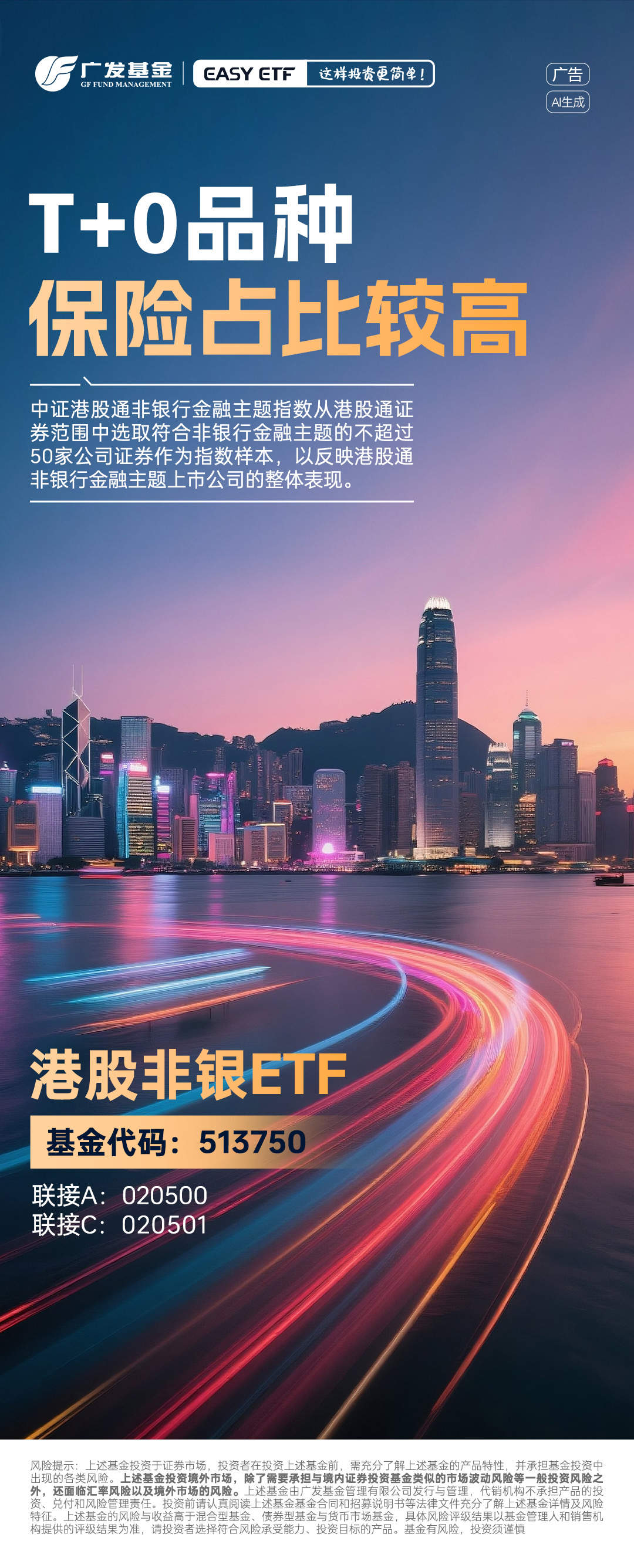
资金连续18个交易日抢筹!“稀缺品种”港股非银ETF(513750) 规模突破26亿再创新高
Mei Ri Jing Ji Xin Wen· 2025-06-16 02:43
Group 1 - The Hong Kong non-bank ETF (513750) has seen continuous net inflows for 18 consecutive trading days, reaching a new high of 2.64 billion yuan as of June 15, 2023, with shares increasing to 1.858 billion [1] - This ETF is the first and only one tracking the CSI Hong Kong Stock Connect Non-Bank Financial Theme Index (931024), focusing on the "insurance + brokerage" sectors, with a weight of 65.1% in the insurance industry and 32.5% in quality brokerage firms [1][2] - The index has a low price-to-earnings ratio of 8.52, placing it in the 17.93% percentile over the past decade, indicating a valuation below 82% of the time, combined with a dividend yield of 3.22%, showcasing a rare "low valuation + high dividend" characteristic [2] Group 2 - The investment outlook suggests focusing on two main areas: the potential for value re-evaluation in the insurance sector due to reduced liability costs and the expected performance boost in brokerages driven by ADT growth, particularly in the Hong Kong Stock Exchange [2]

量化市场追踪周报:资金流情绪相对偏弱,建议在配置上偏向防守-20250615
Xinda Securities· 2025-06-15 10:04
The provided content does not include any quantitative models or factors, nor does it provide details about their construction, evaluation, or backtesting results. The document primarily focuses on market trends, fund flows, ETF performance, and fund issuance data. Therefore, there are no relevant quantitative models or factors to summarize based on the given content.



规模再创新高!全市场唯一港股非银ETF(513750)连续16天净流入,交投活跃
Xin Lang Cai Jing· 2025-06-12 06:50
Group 1 - The China Securities Hong Kong Stock Connect Non-Bank Financial Theme Index (931024) experienced a decline of 0.56% as of June 12, 2025, with mixed performance among constituent stocks [1] - The Hong Kong Non-Bank ETF (513750) recorded a turnover of 27.29% and a trading volume of 659 million yuan, indicating active market participation [1] - The Hong Kong Non-Bank ETF reached a new high in size at 2.4 billion yuan and in shares at 1.672 billion, both since its inception [1] Group 2 - The top ten weighted stocks in the China Securities Hong Kong Stock Connect Non-Bank Financial Theme Index accounted for 82.79%, with Hong Kong Exchanges and Clearing (00388) being the largest at over 16% [2] - The brokerage sector is expected to see continued growth in self-operated income, supported by performance improvements, mergers, and refinancing, which may enhance net asset scale and ROE [2] - The current favorable policies aimed at stabilizing growth and boosting the capital market are expected to positively influence the securities sector's outlook [2] Group 3 - The Hong Kong Non-Bank ETF (513750) is the first and only ETF tracking the Hong Kong Non-Bank Index, with over 70% of its composition in insurance stocks [3] - The ETF selects up to 50 listed companies that meet the non-bank financial theme criteria from the Hong Kong Stock Connect securities range [3]