
外卖

Search documents
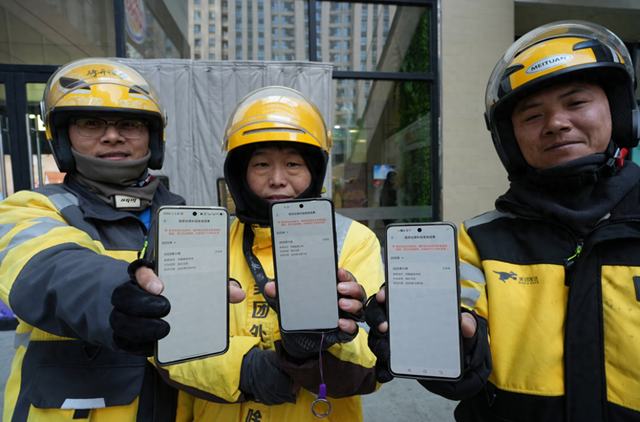
美团京东给骑手快递员安家,快递员称小哥之家房租比市场低50%
Di Yi Cai Jing· 2025-12-12 12:13
Group 1 - JD has launched "JD Brother Home," providing affordable housing for delivery personnel, with rent at least 50% lower than market prices [1] - As of December 12, JD has offered 28,000 housing units to frontline employees and plans to invest 22 billion over the next five years to provide 150,000 units [1] - The initiative aims to improve living conditions for delivery workers, ensuring stability and comfort in their housing [1] Group 2 - Meituan announced a 10 billion investment over the next five years to establish a comprehensive support system for delivery riders [2] - The "Rider Apartment" program is being piloted in cities like Beijing, Shenzhen, and Chongqing, with the first batch of housing expected to meet the needs of over 600 riders [2] - Meituan will cover utilities and internet costs for riders living in these apartments, with plans to expand the project to more cities nationwide next year [2]


美团、京东放大招:给骑手快递员“安家”,背后有这些考量
Di Yi Cai Jing· 2025-12-12 11:29
Core Insights - The initiatives by Meituan and JD.com to provide housing are strategic choices aimed at stabilizing core human resources and enhancing fulfillment capabilities amid intense competition [1][5] - The housing programs are seen as a response to the needs of gig economy workers, addressing their living conditions and contributing to their sense of belonging [2][3] Group 1: JD.com Initiatives - JD.com has announced the provision of 28,000 housing units for frontline employees, with plans to invest 22 billion over the next five years to offer 150,000 "JD Home" units through various methods including leasing and self-construction [2] - The housing provided by JD.com is reported to be at least 50% lower than market rates, significantly improving the living conditions for delivery personnel [2] Group 2: Meituan Initiatives - Meituan plans to invest 10 billion over the next five years to build a comprehensive rider support system, including the launch of "Rider Apartments" in cities like Beijing, Shenzhen, and Chongqing [3] - The "Rider Apartments" offer affordable living options, with a reported monthly rent of 700 yuan for a single room, which includes utilities covered by Meituan [3] Group 3: Industry Implications - The housing initiatives by both companies are viewed as a form of "welfare innovation" that enhances the stability of core operational resources, directly impacting service quality and market competitiveness [5] - This competitive "welfare race" is expected to drive the industry towards quality improvement and create a more sustainable ecosystem for gig economy workers [5]


安神:新规推动外卖品质化但商家承压,主流模式未变
Sou Hu Cai Jing· 2025-12-12 07:43
Core Insights - The new regulations in the food delivery industry are leading to a significant adjustment period, impacting both consumers and merchants, with a focus on creating a healthier and more sustainable delivery ecosystem [2] - The dialogue emphasizes the need for platforms to optimize algorithms and fulfill responsibilities while merchants face challenges in adapting to the new rules [5][12] - The long-term benefits of the regulations are expected to favor honest businesses, promoting a competitive environment based on quality rather than just low prices [5][14] Group 1: Industry Challenges - Merchants are experiencing confusion and uncertainty regarding the future direction of food delivery, platform subsidy policies, and the execution of national regulations [4] - The perception of increased delivery fees among consumers is largely subjective, as most delivery costs are still borne by merchants [6] - The overall business environment for restaurants, both dine-in and delivery, is under pressure, leading to a sense of difficulty and adjustment among merchants [7] Group 2: Regulatory Impact - The new regulations are designed to create a more transparent and fair competitive environment, benefiting legitimate businesses while targeting unlicensed and low-quality operations [9] - The regulations also emphasize the importance of protecting rider rights, although their implementation may affect delivery efficiency and income [12] - The entry barriers for new players in the market have significantly increased due to higher compliance costs and the need for complex merchant services and rider management [13] Group 3: Future Directions - The competition in the food delivery market is expected to shift from price wars to a focus on quality, with merchants needing to offer better ingredients and transparent processes to attract customers [14] - A healthier and ideal food delivery ecosystem should involve mutual benefits for consumers, merchants, riders, and platforms, with a focus on transparency, fair competition, and social responsibility [15]

骑手有了“不闯红灯奖”,正向激励措施正是发展的结果
Nan Fang Du Shi Bao· 2025-12-12 00:45
Core Viewpoint - Meituan has launched a new safety incentive program for delivery riders to encourage compliance with traffic regulations, starting from December 2, with a total incentive pool of 100 million yuan [1] Group 1: Incentive Program Details - The program includes a "No Red Light Violation Award" and aims to reward riders who complete a certain number of orders without violating traffic rules, benefiting over 440,000 riders so far [1] - The initiative is expected to reward millions of rider instances, promoting safer delivery practices across nearly 200 cities [1] Group 2: Shift in Management Approach - The traditional penalty system for late deliveries has been replaced by a points system, where riders can earn points for timely deliveries and avoid income penalties if they stay within a certain threshold of late orders [1] - Other platforms, such as Ele.me and JD, are following suit by implementing similar service point systems to manage delivery performance without imposing fines [1] Group 3: Behavioral Insights - The combination of positive incentives and the new service point system aims to create a culture of safety among riders, encouraging them to adhere to traffic laws without the pressure of rushing [3] - This shift from punitive measures to positive reinforcement is seen as a way to activate desired behaviors and foster a long-term commitment to safety within the delivery industry [3] Group 4: Broader Implications - The "No Red Light Violation Award" signifies a move towards more standardized practices in the delivery industry, reflecting a broader trend of improving worker income and management practices [3]
平台补一半!外卖骑手养老保险补贴今天到账了
Bei Jing Ri Bao Ke Hu Duan· 2025-12-11 13:17
Core Viewpoint - The article discusses Meituan's newly launched social insurance subsidy program for delivery riders, which aims to alleviate their financial burdens and encourage them to contribute to their pension plans [1][5]. Group 1: Subsidy Program Details - Meituan has initiated a social insurance subsidy program for all delivery riders, with the first batch of riders in Beijing receiving their pension subsidies [1][3]. - The subsidy amounts to 50% of the riders' self-contributed pension insurance, with riders like Yang Jinlian receiving 383.1 yuan, which is half of her monthly contribution [3][5]. - The program is designed to be accessible, allowing riders to choose to contribute based on their personal needs, either at their hometown or work location [5]. Group 2: Impact on Riders - The subsidy has encouraged riders to enroll in social insurance, with many expressing that it reduces their financial pressure and makes long-term employment in delivery more feasible [3][5]. - Riders like Li Caiyuan have started contributing to social insurance due to the subsidy, indicating a shift in their perception of delivery work as a viable long-term career [3][5]. - The program has already seen over 40 riders at one station registering for social insurance since the announcement of the subsidy [3][5]. Group 3: Broader Implications - The program is seen as a scalable and flexible model for integrating gig economy workers into formal social security systems, providing a replicable framework for other flexible employment groups [5]. - Meituan plans to further enhance the welfare model for riders, which includes basic and advanced protections along with lifestyle benefits [5].
新华视评·关注新就业群体丨化解灵活就业者“青春饭”焦虑需要储备“未来粮”
Xin Hua Wang· 2025-12-11 10:39
Core Viewpoint - The new employment forms represented by express delivery, takeout, and ride-hailing have become significant reservoirs of employment, but the high intensity and fluidity of these jobs lead to skill accumulation gaps, making it difficult for workers to transfer skills across platforms and find clear growth pathways [1] Group 1: Employment Characteristics - The characteristics of high intensity and high mobility in new employment forms result in a common anxiety among workers, where they feel unable to transition or advance in their careers [1] Group 2: Skills and Career Development - The rapid development of the digital economy should not come at the cost of workers' youth; there is a need for both resilient "deliverers" and continuously evolving "professionals" [1] - Making skills a "hard currency" in career development is essential to break the cycle of short-term employment and ensure that flexible jobs serve as a "refueling station" for talent growth [1]
刘强东砸35亿在香港买楼,京东彻底起飞
Xin Lang Cai Jing· 2025-12-10 12:02
Core Insights - Both Alibaba and JD.com are significantly increasing their investments in Hong Kong, indicating confidence in the market and proactive positioning for a new business cycle [19][21]. Group 1: Investment Activities - Alibaba and Ant Group announced an investment of 7.2 billion HKD to acquire a multi-story office building in Hong Kong's Causeway Bay, marking the largest office transaction in Hong Kong since 2021 [20][21]. - JD.com acquired part of the China Construction Bank Tower in Central Hong Kong for approximately 3.473 billion HKD, further intensifying the competition between the two companies [22][24]. Group 2: Strategic Focus - JD.com aims to continuously invest in supply chain, retail, logistics, and technology development to better integrate into the Hong Kong market [24]. - The acquisition of the China Construction Bank Tower is seen as a critical step in JD.com's global expansion strategy, moving beyond merely securing office space [24][30]. Group 3: Long-term Vision - JD.com has been gradually establishing its presence in Hong Kong since 2015, with significant developments in logistics and e-commerce operations [25]. - The company is also focusing on technological innovation, as evidenced by its collaboration with Hong Kong University to establish a joint laboratory for AI applications in supply chain management [26][30]. Group 4: Market Trends - The competitive landscape of the internet industry is shifting, with companies needing to integrate supply chain, technology, and localization capabilities to create value [35][36]. - The saturation of user growth and traffic in the domestic market is pushing companies to seek opportunities abroad, with Hong Kong serving as a strategic entry point for international expansion [38][40].

刘强东,花34.73亿港元在香港买楼
财联社· 2025-12-10 10:56
Group 1 - JD.com is accelerating its expansion into the Hong Kong market, acquiring a 50% stake in a 27-story office building for approximately HKD 34.73 billion, with the intention of self-use and enhancing its supply chain capabilities in the region [1] - The company has seen significant growth during the Double Eleven shopping festival, outperforming competitors, with overseas expansion contributing to increased sales, particularly in Hong Kong where transaction volume grew by 104% year-on-year during the 618 shopping event [2][3] - JD.com is diversifying its operations in Hong Kong, having established logistics and e-commerce branches since 2015, and recently acquiring local supermarket chain Jia Bao, as well as entering the insurance market with a new brokerage license [2][3] Group 2 - The acquisition by JD.com signals a trend of mainland Chinese companies entering the Hong Kong market, potentially transforming Hong Kong into a testing ground for mainland supply chain exports [3] - Other major Chinese internet companies, such as Alibaba and Ant Group, are also making significant investments in Hong Kong, with Alibaba and Ant Group spending approximately HKD 7.2 billion on a new headquarters [4] - Competitors like Xiaohongshu and Meituan are also expanding in Hong Kong, with Xiaohongshu opening its first office outside mainland China and Meituan's delivery service KeeTa achieving a 44% market share in just one year [5][6]

“新国标”出台,外卖平台当回归理性竞争
Zhong Guo Jing Ji Wang· 2025-12-10 05:22
Core Viewpoint - The newly implemented national standard for food delivery platforms aims to address current industry pain points and establish a framework for service management, promoting rational competition and protecting merchant interests [1][2]. Group 1: Industry Overview - The online food delivery user base in China has reached 545 million, accounting for approximately 50% of the total internet users [1]. - In 2023, food delivery platforms have engaged in aggressive promotional activities, such as "hundred billion subsidies" and "large coupons," to capture market share, leading to record-high order volumes [1]. Group 2: Challenges in the Industry - Despite the short-term benefits of subsidies for consumers, these practices disrupt market order and harm merchant interests, revealing issues such as declining food quality and insufficient protection for delivery personnel [1]. - The industry faces complex challenges, including potential cost shifting by platforms and compliance difficulties for small and medium-sized merchants [1]. Group 3: New National Standard - The new standard prohibits platforms from shifting promotional costs to merchants and sets clear guidelines for handling merchant complaints, including a response time of 3 hours and a review completion within 4 days [2]. - The implementation of the standard is crucial for ensuring accountability among platforms and improving service quality, with an emphasis on enhancing platform algorithms and marketing strategies for merchants [2]. Group 4: Future Outlook - The food delivery industry is expected to transition towards rational competition and healthier development, fostering a collaborative relationship among platforms, merchants, delivery personnel, and consumers [2]. - The emphasis on strengthening core capabilities is essential for achieving sustainable growth across the industry [2].
外卖吃出异物、超时严重?教你快速投诉并获得赔偿的正确方法
Xin Lang Cai Jing· 2025-12-10 02:40
最近几年,外卖已经成为许多人日常生活中不可或缺的一部分。据统计,我国外卖用户规模已超过5亿 人,每天产生数千万份订单。然而,随着外卖市场的快速发展,消费者权益受侵害的情况也屡见不鲜: 食品安全问题、送餐超时、漏餐少餐、虚假宣传、退费难……面对这些问题,很多消费者只会选择在平 台上给差评,却不知道还有更有效的维权途径。 一、平台内部投诉渠道:第一道防线 当遇到外卖问题时,首先应该利用平台内部投诉机制。这是最直接、最快速的解决途径。 1. 各大外卖平台的官方客服 饿了么、美团等主流外卖平台都设有24小时客服热线和在线客服通道。消费者可以通过APP内 的"我的-客服中心"或直接拨打客服电话反映问题。平台内部投诉的优势在于处理速度相对较快, 特别是针对送餐超时、餐品洒漏、退款申请等问题,平台通常有标准化的处理流程。 2. 商家评价与投诉系统 除了直接联系客服,平台内的评价系统也是重要的反馈渠道。详细描述问题并附上照片证据,不 仅能让商家看到问题,也能为其他消费者提供参考。大部分平台还设有"食品安全问题举报"专项 通道,针对吃到异物、食物变质等严重问题。 二、行政监管渠道:最具权威性的保障 当平台内部投诉无法解决问题, ...