私募

Search documents
11.17犀牛财经早报:年内新发基金规模突破万亿元大关 苹果CEO库克或于明年卸任
Xi Niu Cai Jing· 2025-11-17 05:40
Group 1 - The total scale of newly established funds in China has exceeded 1 trillion yuan this year, with 1,377 new funds established as of November 16, totaling 9,959.77 billion yuan [1] - Among the newly established funds, 996 are equity funds, accounting for a total issuance scale of 5,173.38 billion yuan, significantly surpassing the entire year of 2024 [1] - Bond ETFs have seen a strong inflow, with 53 bond ETFs established this year, increasing from 1,799.87 billion yuan at the end of last year to 7,054.23 billion yuan [1] Group 2 - Private equity funds have distributed over 15 billion yuan in dividends this year, significantly exceeding the same period last year, with stock strategies being the main contributors [1] - The sales fee reform in the public fund industry has begun, prompting many third-party sales institutions to adjust their strategies and focus on enhancing customer experience and service capabilities [2] - The gold market is experiencing new trends, with high prices leading to increased consumer interest in lightweight gold products and gold bars [2] Group 3 - The public REITs market is facing challenges, with new listings experiencing immediate price drops and a decline in investor enthusiasm due to market corrections [3] - The price of lithium iron phosphate has rebounded by approximately 10% since October, driven by strong demand from automakers and battery manufacturers [4] - The humanoid robot industry is entering a phase of commercial viability, with heterogeneous robots being integrated into various practical applications [4] Group 4 - Apple CEO Tim Cook may resign as early as next year, with hardware engineering senior vice president, John Ternus, being considered as a potential successor [5] - Xiaomi's CEO Lei Jun has publicly addressed concerns regarding the safety design of Xiaomi's vehicles, emphasizing that aesthetics do not compromise safety [5] - Major management changes are occurring at GAC Group, with Feng Xingya stepping down as general manager and He Xianqing taking over [7] Group 5 - Meihe Holdings announced that its chairman has been placed under investigation, leading to the appointment of a new acting chairman [6] - Tianfu Communication plans to sell 850,000 shares at a significant discount, representing 1.09% of the company's total shares [7] - Zhangjiajie Tourism Group has signed agreements with investors for a restructuring plan, with 8 companies acquiring a total of 3.25 billion shares [8]
百亿量化私募“上新”节奏有变化,谁在努力超车、谁在放慢步调?
Xin Lang Cai Jing· 2025-11-17 02:28
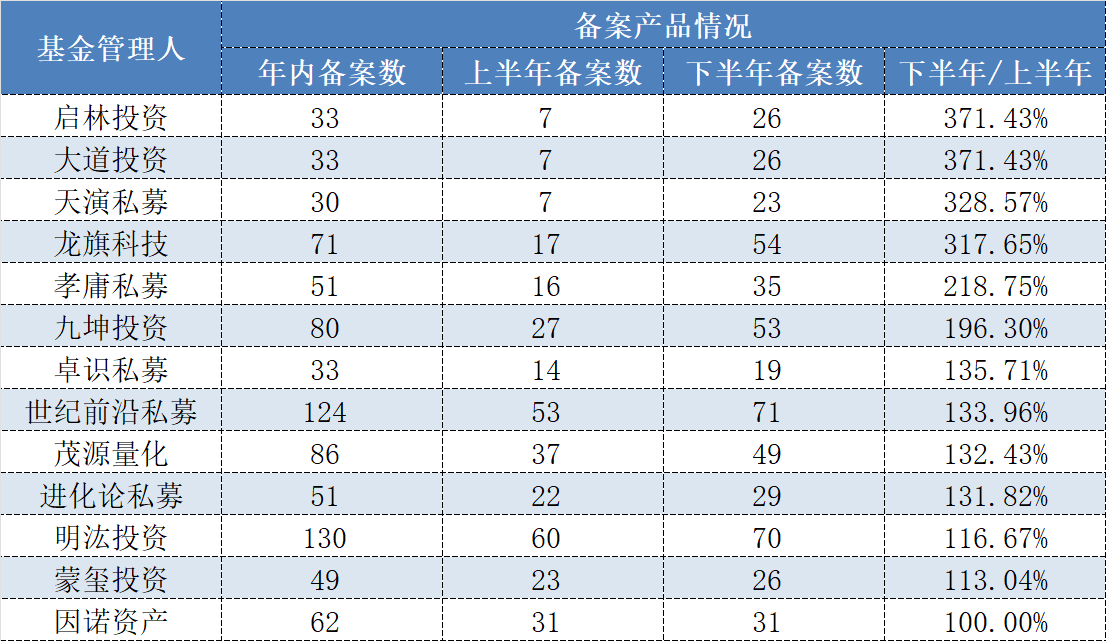
智通财经记者 | 龙力 今年以来,量化私募迎来产品发行"大年",头部量化私募更是频繁"上新"。 Wind数据显示,截至11月15日,一共有39家私募今年以来备案的产品数量不少于30只,其中27家为百亿量化私募,占比接近七成。仅有的4家年内备案产品 数量超过100只的也均为百亿量化私募,分别是明汯投资、世纪前沿私募、黑翼资产和上海宽德私募,备案数量分别为130只、124只、124只和123只。 其中,除了龙旗科技以外,上述其他三家私募上半年均仅备案了7只产品,龙旗科技则是在已经备案了17只产品的基础上,下半年备案频率进一步提速。龙 旗科技年内还曾主动控制部分产品线的募资节奏,宣布自5月1日起龙旗量化择时策略产品暂停接受资金的申购和追加。 孝庸私募和九坤投资下半年以来备案的产品数量也已经分别达到上半年备案产品总数的2.19倍和1.96倍。 孝庸私募是一家年内新晋百亿私募,公开资料显示,公司成立于2016年1月,今年上半年管理规模大约为40亿元,近期已经突破100亿元大关。今年6月,孝 庸私募获得知名量化投资人士梁劼加盟,在此之前梁劼曾就职于世坤投资、卓识私募、平方和投资等多家知名量化机构,后于2023年11月创办 ...

当下,“稳钱”还有什么好的去处?
雪球· 2025-11-16 06:09
Core Viewpoint - The article discusses the current state of the A-share market, highlighting its unique behavior compared to the US stock market, and suggests investment strategies suitable for a cautious market environment [4][5][6][12]. Market Analysis - The US government shutdown news led to a rise in US stocks, while the A-share market remained relatively calm, with the Shanghai Composite Index experiencing slight declines [4][5][6]. - Since the Shanghai Composite Index reached 4000 points, the market has been in a state of consolidation, indicating a short-term pressure point at this level [7][8]. - Nearing year-end, many investors are adopting a cautious approach, resulting in limited new capital entering the market [9]. - Although the trading volume remains around 2 trillion, it has decreased compared to the third quarter, reflecting a cooling market sentiment [10]. - The AI technology sector, which previously supported market growth, now requires time to digest emotions and valuations, leading to concerns about potential bubbles [12]. Investment Strategies - For investors seeking stability, the article recommends focusing on macro low-volatility strategies, which involve diversifying across stocks, bonds, and commodities to achieve a balanced performance independent of economic cycles [14]. - The low-correlation among various asset classes allows for complementary effects, enhancing returns while smoothing portfolio volatility, making it suitable for conservative investors [15]. - The article also introduces two additional strategies for stable investments: 1. **ABS Strategy**: This involves analyzing and purchasing Asset-Backed Securities (ABS) to achieve higher yields than traditional bonds, focusing on the quality of underlying assets [17]. 2. **Brokerage Fixed Income Asset Management Plans**: These plans offer better security and returns due to their backing by brokerages, strict internal controls, and high liquidity, making them suitable for short-term cash management [18]. Conclusion - The article emphasizes the importance of adopting a cautious investment approach, either through diversified strategies or maintaining high liquidity to seize market opportunities as they arise [19][20].

量化多头私募公司榜出炉!鸣石、平方和、蒙玺位居前3!
私募排排网· 2025-11-16 03:04
Core Viewpoint - The A-share market has shown a strong upward trend in 2023, with significant internal style differentiation, particularly between small and large-cap stocks, leading to varying performances among quantitative long strategies [2][3]. Group 1: Market Performance - As of the end of October 2023, the Shanghai Composite Index, Shenzhen Component Index, and ChiNext Index have increased by approximately 17.99%, 28.46%, and 48.84% respectively [2]. - In the first half of the year, small-cap stocks outperformed large-cap stocks, but a style switch occurred in late August, with the CSI 300 Index outperforming small-cap stocks in August and September [2]. Group 2: Quantitative Long Strategy Performance - Quantitative long strategy products faced negative excess returns in the months of August and September, marking the worst monthly performance of the year [2]. - However, since October, the excess returns of quantitative long strategies have begun to recover as institutional investors loosened their collective positions [2]. Group 3: Top Performing Private Equity Firms - For firms with over 10 billion in assets, the top three in terms of average excess returns for quantitative long products are Ming Shi Fund, Ping Fang He Investment, and Meng Xi Investment [3][4]. - Ming Shi Fund leads with four qualifying quantitative long products and a total product scale of approximately 5.62 billion, achieving an average excess return of ***% [4]. - Ping Fang He Investment and Meng Xi Investment follow, with their best-performing products achieving excess returns of ***% [5]. Group 4: Mid-Sized Private Equity Firms - In the 50-100 billion category, Bei Yang Quantitative topped the list with five qualifying products and an average excess return of ***% [7][8]. - The firm is noted for its AI-driven quantitative investment approach, led by a team with significant academic credentials [8][9]. Group 5: Smaller Private Equity Firms - In the 20-50 billion category, Han Rong Investment and Lu Xiu Investment ranked first and second, respectively, with average excess returns of ***% [10][11]. - Han Rong Investment focuses on short-cycle price-volume predictions, while Lu Xiu Investment employs a strategy of diversified holdings to achieve stable excess returns [11][12]. Group 6: Smallest Private Equity Firms - In the 0-20 billion category, Shanghai Zi Jie Private Equity ranked fourth, with three qualifying products and an average excess return of ***% [13][15]. - The firm primarily focuses on small-cap strategies, particularly targeting stocks that have experienced significant declines [15].
幻方、九坤、钧富等42家私募全部产品新高!但斌、王一平旗下“双十基金”创新高!
私募排排网· 2025-11-15 03:04
Core Insights - In October 2023, A-shares experienced a high-level fluctuation, with the Shanghai Composite Index slightly rising by 1.85%, while the Shenzhen Component and ChiNext Index fell by 1.1% and 1.56% respectively [2] - A total of 2,448 private equity products reached historical highs in net value, accounting for approximately 48.60% of private equity products established for over one year [2][3] - Among these products, 1,367 were non-quantitative, while 1,081 were quantitative [2] - The majority of products employed stock strategies, with 1,344 products (approximately 54.9%), followed by multi-asset strategies (397), futures and derivatives strategies (383), bond strategies (224), and combination fund products (100) [2] Product Types - Non-quantitative products accounted for 1,367, while quantitative products made up 1,081 [2] - Stock strategy products were the most prevalent, with 1,344 products, followed by multi-asset strategies (397), futures and derivatives strategies (383), bond strategies (224), and combination fund products (100) [2] Company Size - The largest number of products came from private equity firms with assets under 500 million, totaling 864 products (35% of the total) [3] - There were 430 products from firms with over 10 billion in assets [3] High-Performing Private Equity Firms - A total of 42 private equity firms had all their products reach historical highs in October, with 20 being subjective private equity firms, 14 quantitative, and 8 combining both strategies [4][5] - Among these, five firms with over 10 billion in assets included Ningbo Huanfang Quantitative, Century Frontier, Jiukun Investment, Qilin Investment, and Honghu Private Equity [5] Notable Products - The "Double Ten Fund" category, which includes products established for over 10 years with annualized returns exceeding 10%, had 18 products, with 13 being subjective long products [9] - Notable high-performing products included those from Beijing Xiyue Private Equity, which topped the subjective long product category, and Jiukun Investment, which had 18 products with significant returns [19][27] Strategy Performance - In the futures and derivatives strategy category, 197 products reached historical highs, with the top five products coming from Yizu Investment and Chiying Private Equity [20] - The multi-asset strategy category had 245 products, with the top performers being from Lu Yuan Private Equity and Hai Sheng Fund [24][27]

“星耀领航计划”走进禅龙资产 解码从固定收益向科创转型的发展之路
Zhong Guo Zheng Quan Bao· 2025-11-15 02:51
Core Viewpoint - The "China Galaxy Securities · China Securities Journal Private Equity Industry Starry Navigation Plan" aims to empower private equity firms that excel in professional capabilities, technological innovation, and compliance governance, fostering an efficient industry ecosystem that connects technology, capital, and the real economy [1] Group 1: Strategic Transformation Driven by Technology - Zenlong Asset, established in 2014, initially gained recognition in fixed income investment and has since expanded into stock and quantitative strategies, managing approximately 7.5 billion yuan [2] - The firm focuses on hard technology sectors such as semiconductors, high-end manufacturing, and AI, with a systematic approach to technology investment through dedicated funds and strategies [2] - The transition to quantitative strategies is driven by the team's technological background and aligns with national economic transformation and policy support for the tech manufacturing sector [2] Group 2: Integration of Social Responsibility - Zenlong Asset incorporates social responsibility into its business model, creating a unique "investment-empowerment-feedback" closed-loop system [3] - The firm enhances the efficiency of capital use for tech companies through financial investment and deep technical collaboration, exploring partnerships with AI firms for model optimization and data application [3] - The company has proactively engaged in educational equity and mental health initiatives, establishing programs that provide professional training for teachers in under-resourced areas and psychological support for students [4] Group 3: Future Outlook and Collaboration - Zenlong Asset anticipates significant advancements in investment strategies through collaboration with AI technology firms, enhancing the intelligence of quantitative models and data processing [5] - The firm is expanding its collaboration with brokerage institutions, recognizing their role in supporting the scalable development of quantitative strategies [6] - The company aims for its quantitative and stock products to constitute over 50% of its total scale within three years, reinforcing its influence in the technology finance sector [6]
解码从固定收益向科创转型的发展路径!“星耀领航计划”走进禅龙资产
Zhong Guo Zheng Quan Bao· 2025-11-15 00:31
Core Insights - The article discusses the strategic transformation of Zenlong Asset, a private equity firm, from fixed income investments to technology-driven and quantitative investment strategies, highlighting its commitment to social responsibility [1][2][3]. Group 1: Strategic Transformation - Zenlong Asset was established in 2014 and initially gained recognition in the private equity sector through fixed income investments, being rated among the top 100 bond trading institutions on the Shanghai Stock Exchange for two consecutive years [2]. - The firm began building its stock and quantitative teams in 2021, indicating a proactive approach to transitioning towards technology and innovation investments [2]. - Zenlong Asset currently manages approximately 7.5 billion yuan, with a product line that includes bonds, stocks, and quantitative composite strategies, focusing on sectors such as semiconductors, high-end manufacturing, and AI [2]. Group 2: Social Responsibility - Zenlong Asset integrates social responsibility into its corporate DNA, creating a unique "investment-empowerment-feedback" closed-loop model [3]. - The firm supports the growth of technology enterprises not only through financial investments but also by providing resources and technical interactions, enhancing the efficiency of fund utilization [3]. - Zenlong Asset has been involved in educational initiatives and mental health projects, such as the "Looking Up to the Stars Education Public Welfare Fund," which aims to promote educational equity and mental health support in schools [4]. Group 3: Future Outlook - The firm anticipates significant advancements in AI and quantitative strategies, aiming to enhance investment strategy intelligence through collaborations with technology companies [5]. - Zenlong Asset is expanding its collaboration with brokerage firms, recognizing their role in supporting the scalability of quantitative strategies through improved systems and tools [6]. - The company expects that within the next three years, its quantitative composite strategies and stock products will account for over 50% of its total managed assets, reinforcing its focus on technology finance [6].
“星耀领航计划”走进禅龙资产
Zhong Guo Zheng Quan Bao· 2025-11-14 20:12
Core Insights - The article discusses the strategic transformation of Zenlong Asset, a private equity firm, from fixed income investments to technology-driven and innovative investment strategies, emphasizing its commitment to social responsibility [1][2]. Group 1: Strategic Transformation - Zenlong Asset was established in 2014 and initially gained recognition in the private equity sector through fixed income investments, being rated among the top bond trading institutions for two consecutive years [2]. - The firm began building its stock and quantitative teams in 2021, indicating a proactive approach to transitioning towards technology and innovation [2]. - Zenlong Asset currently manages approximately 7.5 billion yuan, with a product line that includes bonds, stocks, and quantitative strategies, focusing on sectors like semiconductors, high-end manufacturing, and AI [2]. Group 2: Social Responsibility - Zenlong Asset integrates social responsibility into its business model, creating a unique "investment-empowerment-feedback" loop [3]. - The firm supports the growth of technology companies not only through financial investments but also by enhancing operational efficiency through specialized fund management [3]. - Zenlong Asset has initiated educational and mental health projects, such as the "Looking Up to the Stars Education Public Welfare Fund," aimed at promoting educational equity and mental health support in schools [4]. Group 3: Future Outlook - The firm anticipates significant advancements in AI and quantitative strategies, aiming for a 50% share of its total assets to be allocated to these areas within the next three years [6]. - Zenlong Asset views collaboration with brokerage firms as crucial for the scalable development of quantitative strategies, highlighting the importance of technological support [6]. - The "Starry Navigation Plan" is expected to foster a positive industry ecosystem by promoting private equity's role in supporting technological innovation and social responsibility [6].
私募股票迎业绩爆发期!远信、喜世润、禧悦等夺冠!幻方、复胜上榜!
私募排排网· 2025-11-14 10:00
Core Viewpoint - The A-share market has experienced a slow bull market this year, leading to a significant increase in market activity and a remarkable performance of private equity stock strategies, with an average return of 35.05% from January to October among 1218 private equity firms, compared to a 17.94% increase in the CSI 300 index [2][3]. Group 1: Performance by Company Size - Among private equity firms with over 100 billion in assets, the average return for stock strategy products is 36.33%, with a total scale of approximately 950.98 billion yuan [3][4]. - The top three private equity firms in the over 100 billion category are Yuanxin Investment, Lingjun Investment, and Fusheng Asset [5][6]. - In the 50-100 billion category, the average return is 34.31%, with the top three firms being Xishirun Investment, Tongben Investment, and Ruiyang Investment [9][10]. - For the 20-50 billion category, the average return is 39.95%, with Beijing Xiyue Private Equity, Qiantou Investment, and Nengjing Investment Holding leading the rankings [14][15]. - In the 10-20 billion category, the average return is 33.59%, with the top three being Liangli Private Equity, Jingyan Private Equity, and Beiheng Fund [19][20]. - The 5-10 billion category shows an average return of 37.32%, with Fuyuan Capital, Shanghai Hengsui Asset, and Zhongying Investment at the top [24][25]. - For the 0-5 billion category, the average return is 33.86%, with Longhuixiang Investment, Mojv Asset, and Shanghai Yixin Private Equity leading [30][31]. Group 2: Notable Firms and Strategies - Yuanxin Investment, with 5 stock strategy products, has achieved a remarkable average return, with one of its funds managed by Wang Aoye performing exceptionally well [7]. - Ningbo Huansheng Quantitative, with 11 stock strategy products, has also shown strong performance, particularly with its fund managed by Xu Jin [8]. - Xishirun Investment's strong performance is attributed to its focus on gold investments, with its fund manager Guo Xin having extensive experience in gold price research [13]. - Beijing Xiyue Private Equity has seen its management scale increase significantly due to strong performance, adhering to a value investment philosophy based on in-depth research [18]. - Fuyuan Capital has shifted its focus to resource-related investments, anticipating a market adjustment in technology stocks [29].

牛市不飘,熊市不慌!这家低频量化私募如何赚取纯Alpha? | 私募深观察
私募排排网· 2025-11-14 00:00
Core Viewpoint - Qianshuo Investment focuses on quantitative low-frequency strategies, aiming for Pure Alpha returns without exposure to style or industry biases, and has received positive feedback from institutional investors due to its strong performance and rigorous risk control [7][11]. Company Overview - Qianshuo Investment Management Co., Ltd. was established in August 2014 and obtained its private fund manager license on January 29, 2019, with a registration number of P1069502. As of the end of October 2025, the company’s management scale has exceeded 7 billion yuan [5][9]. Performance Metrics - As of October 2025, Qianshuo Investment's average product return reached ***%. The management scale surpassed 7 billion yuan, with over 80% of the capital coming from licensed financial institutions [3][9][12]. Development History - The company became a member of the Asset Management Association of China in November 2021 and received the "3+3" investment advisory qualification in July 2022. By June 2025, its management scale had already exceeded 5 billion yuan [9][10]. Core Strategies and Products - Qianshuo Investment has been dedicated to the low-frequency Alpha sector for over 13 years, emphasizing high-quality signals and strict risk control. The main product lines include index enhancement strategies and long-short equity strategies, with a consistent underlying strategy model [11][20]. Research and Risk Control - The research core is led by Huang Hui, who has extensive experience in quantitative research and trading. The company has gradually incorporated more complex models and machine learning techniques into its research as data availability has improved [16][17]. The risk control measures are stringent, with style factors controlled within 0.3 standard deviations and industry deviations within 2% [18][20]. Competitive Advantages - Qianshuo Investment maintains a stable shareholding structure, with Huang Hui holding 76% of the shares. The company has a strong focus on talent development, with a research team composed entirely of graduates from top universities, ensuring high retention rates and expertise [24][25]. Future Development Plans - The company plans to continue focusing on low-frequency Pure Alpha strategies, with significant investments in data and infrastructure to support research needs. In 2025, it will promote a senior researcher to fund manager and hire an experienced PM to enhance its investment capabilities [28][29].