
保险业

Search documents
金融之力 破瘠成沃
Jin Rong Shi Bao· 2026-01-07 01:46
Core Viewpoint - The article highlights the transformation of rural assets in Guangxi through financial innovation and technology, addressing the challenges faced by the agricultural sector and promoting sustainable development in rural areas [1][11][21]. Group 1: Challenges in Rural Development - Rural areas in Guangxi face multiple challenges, including asset dormancy and industry shackles, which hinder development [4]. - The lack of standardized valuation systems for livestock and other agricultural assets makes it difficult for farmers to secure loans from traditional banks [5]. - Natural and market risks, such as flooding and price volatility, further exacerbate the vulnerability of agricultural production [6][8]. Group 2: Financial Innovations and Solutions - Financial institutions are innovating by developing policy insurance for local agricultural products, such as the "富硒星油藤" brand, which has secured insurance coverage of 4.1592 million yuan for 1,040 acres [3]. - The introduction of property rights certificates for aquaculture has allowed farmers to convert their rights into collateral, facilitating access to credit [11][12]. - Advanced technologies, such as AI facial recognition for livestock, have improved the efficiency of insurance and loan processes, enabling better risk management [12]. Group 3: Collaborative Financial Ecosystem - A collaborative model involving insurance, credit, and government support has been established to address financing challenges in the agricultural sector [12][21]. - The implementation of tailored financial products, such as marine carbon sink loans and index insurance for aquaculture, has been initiated to support specific agricultural needs [15][21]. - The establishment of e-commerce platforms and training programs for local farmers aims to enhance market access and sales of agricultural products [16][18]. Group 4: Systematic Policy Support - The People's Bank of China has implemented policies to provide financial resources to the agricultural sector, including fiscal subsidies and risk compensation mechanisms [19]. - The promotion of digital credit profiles for farmers has facilitated access to unsecured loans, significantly increasing loan amounts for agricultural projects [20]. - The establishment of a financial service command center for the sugar industry has led to the development of specialized financing models that support the entire supply chain [21].



省内首单!南京无人机运货有了“保驾险”
Nan Jing Ri Bao· 2026-01-07 00:17
Core Insights - The article discusses an innovative "insurance + meteorology + risk reduction" model launched in Nanjing to enhance the safety of drone cargo transport across the Yangtze River, addressing challenges posed by adverse weather conditions [1][2]. Group 1: Innovation in Insurance - The new insurance product, referred to as "保驾险," allows for compensation based on third-party verification from the flight service center, alleviating concerns about drone loss in adverse weather [2]. - Each drone is valued at approximately 150,000 yuan, and the insurance covers accidental damage and loss, as well as third-party liability for injuries and property damage [2]. Group 2: Market Context and Growth - The low-altitude logistics market in China is projected to exceed 120 billion yuan, indicating significant growth potential in this sector [1]. - The development of new transportation tools like drones and eVTOLs is increasingly prevalent in logistics and emergency scenarios along the Yangtze River [1]. Group 3: Technological Integration - The model leverages high-precision meteorological monitoring equipment to provide real-time data on wind conditions and visibility, enabling proactive risk management through flight diversion suggestions and contingency plans [2]. - This approach signifies a shift in insurance services from post-incident claims to proactive risk reduction and intervention [2]. Group 4: Industry Reception and Future Prospects - Industry professionals in Nanjing have positively acknowledged this innovative practice, viewing it as a breakthrough in low-altitude economic risk management and a significant step for the insurance sector to embrace high technology [3]. - There is potential for this model to be expanded to urban air traffic and emergency rescue scenarios in the future [3].
险资踏足并购基金案例正在增多 未来会变得更加重要
Zheng Quan Shi Bao Wang· 2026-01-06 23:21
Group 1 - The core viewpoint of the article highlights the increasing involvement of insurance capital in the active mergers and acquisitions (M&A) fund sector, exemplified by China Life Asset's investment in the Shanghai Chip Alliance Private Equity Fund [1] - Currently, the main contributors (LPs) to M&A funds in China are state-owned enterprises and industrial capital, while the scale of insurance capital investment remains relatively small and its strategies are still under observation [1] - Industry insiders anticipate that for long-term capital like insurance funds, M&A funds will become increasingly important assets in the future [1]
耐心资本助力产业体系再升级 险资踏足并购基金又添新例
Zheng Quan Shi Bao· 2026-01-06 18:15
Group 1 - The core viewpoint of the articles highlights the increasing involvement of insurance capital in the mergers and acquisitions (M&A) fund sector, with notable examples such as China Life Asset Management's investment in the Shanghai Chip Integration Fund [1][2] - The investment by China Life Asset Management, amounting to approximately 500 million yuan, aims to support the integration of the integrated circuit industry, particularly focusing on the critical EDA software sector [2] - Other insurance institutions, such as China Pacific Insurance and Ping An Life, are also establishing their own M&A funds, indicating a growing trend among insurance companies to explore this investment avenue [3][4] Group 2 - The M&A market is becoming increasingly active, driven by policy support and market demand, particularly following the release of the "Six Guidelines for Mergers and Acquisitions" by the China Securities Regulatory Commission in 2024 [4] - A report indicates that the structure of China's equity investment market is undergoing significant changes, with a shift towards M&A investments as a core focus for future development [4][6] - The report also notes that while insurance capital currently plays a limited role in M&A funds, it is expected to become a more significant player in the future, optimizing asset allocation for long-term investors [5][6][7]


1753家上市公司已投保!A股董责险渗透率突破三成,民企成主力军
Hua Xia Shi Bao· 2026-01-06 13:36
Core Insights - The Chinese D&O insurance market for listed companies is experiencing a significant turning point due to a "zero tolerance" regulatory attitude and real compensation cases [2][7] Group 1: Market Growth and Penetration - By the end of 2025, a total of 1,753 A-share listed companies had announced D&O insurance plans, a 16% increase from 1,509 in the previous year, achieving an overall penetration rate of 32% [2][3] - In 2025, 643 A-share listed companies disclosed D&O insurance purchases, a 19% increase from 541 in 2024, continuing a rapid growth trend since 2020 [3] - The penetration rate for D&O insurance among companies listed on the Shenzhen Stock Exchange reached 44%, the highest among all sectors, while the Shanghai Stock Exchange and Sci-Tech Innovation Board had rates of 37% and 34%, respectively [3] Group 2: Industry and Regional Distribution - The manufacturing sector led the number of newly insured companies in 2025, particularly in "computer, communication, and other electronic equipment manufacturing," "specialized equipment manufacturing," and "software and information technology services" [4] - The real estate, wholesale, and electricity industries have D&O insurance penetration rates exceeding 60%, significantly above the market average, driven by increased litigation risks post-2020 [5] - The Guangdong, Beijing, Jiangsu, Shanghai, and Zhejiang provinces were the top five regions for new D&O insurance purchases in 2025, indicating a market expansion beyond core economic areas [5] Group 3: Insurance Rate Trends - The average D&O insurance rate in the A-share market has shown a downward trend, decreasing from approximately 0.6% in 2022 to below 0.5% by the fourth quarter of 2025 [6] - The decline in rates is attributed to an increase in the number of insurance companies offering D&O insurance, leading to rapid market capacity expansion [6] Group 4: Regulatory and Legal Environment - The number of companies facing regulatory actions for violations has increased, with 146 companies being investigated for disclosure violations in 2023, marking a new high [7] - Over the past five years, 366 companies that purchased D&O insurance received warning letters, and 173 were investigated, indicating a growing need for risk management [7] - Investor lawsuits have also increased, with 68 cases involving claims exceeding 100 million yuan in the past decade, highlighting the rising stakes for companies [8] Group 5: Emerging Risks and Recommendations - New risks related to data security and technology governance are emerging, with potential regulatory penalties and civil lawsuits increasing for tech companies [9] - The report suggests that companies yet to purchase D&O insurance should take advantage of the current low rate environment to secure favorable insurance costs [9]

超30%!A股董责险渗透率创新高,渐成上市公司“标配”
Sou Hu Cai Jing· 2026-01-06 13:11
Group 1 - The penetration rate of D&O insurance among A-share listed companies is expected to reach 32% by the end of 2025, an increase of 4 percentage points year-on-year [1][2] - In 2025, 643 A-share listed companies announced their plans to purchase D&O insurance, a 19% increase from the previous year, with 256 companies disclosing their plans for the first time [2][3] - The rise in D&O insurance penetration is attributed to increased regulatory scrutiny and a growing awareness among investors regarding their rights, leading to a significant rise in civil compensation lawsuits [3][4] Group 2 - The average D&O insurance premium rate has shown a downward trend since 2023, dropping to below 5‰ by the fourth quarter of 2025, influenced by increased market capacity and competitive pressures [6][7] - Companies are advised to consider purchasing D&O insurance policies with coverage of at least 100 million RMB to mitigate rising investor claim risks [6][7] - The demand for D&O insurance is closely linked to the litigation risks faced by companies, particularly in industries such as real estate, wholesale, and electricity, where penetration rates exceed 60% [3][4]
央行明确今年七大重点工作
Sou Hu Cai Jing· 2026-01-06 13:07
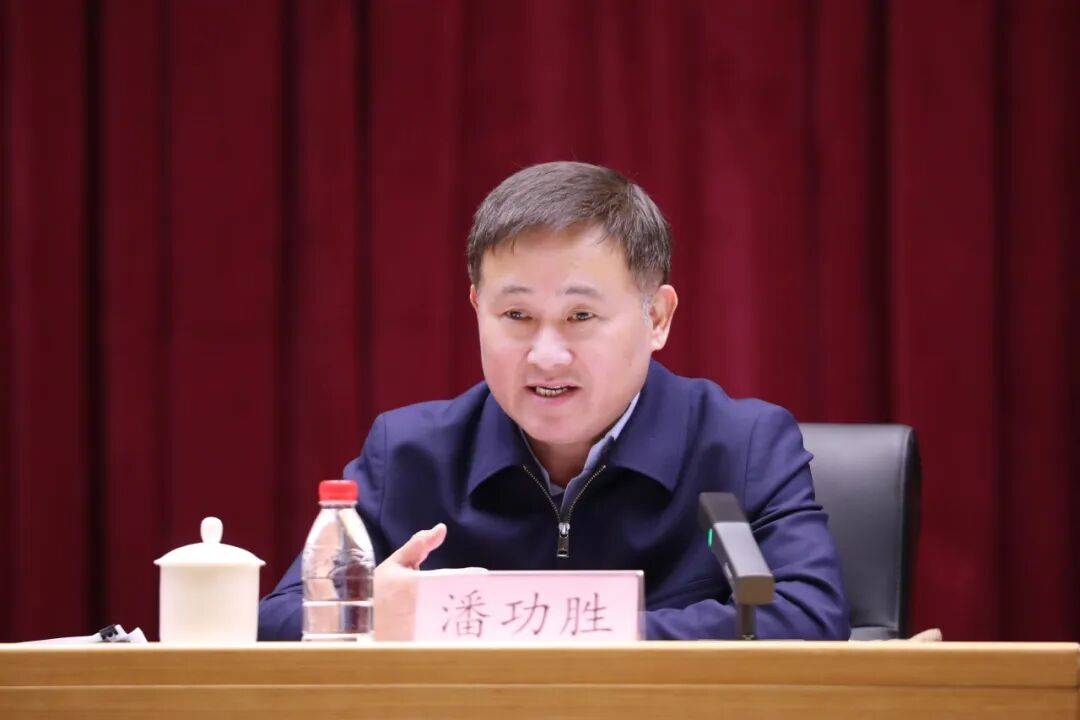
2026年中国人民银行工作会议召开 要点速览: ——继续实施好适度宽松的货币政策。灵活高效运用降准降息等多种货币政策工具,保持流动性充裕,保持社会融资条件相对宽松,引导金融总量合理增 长、信贷投放均衡。 ——完善结构性货币政策工具体系;高质量建设和发展债券市场"科技板"。 ——建立在特定情景下向非银机构提供流动性的机制性安排,发挥好两项支持资本市场的货币政策工具作用。 ——加强对银行间债券市场、货币市场、外汇市场、票据市场、黄金市场及有关衍生品的监督管理。 ——进一步提升金融管理和服务能力。稳妥实施好一次性个人信用修复政策。 ——强化虚拟货币监管,持续打击相关违法犯罪活动;深化科技管理与创新应用;稳步发展数字人民币。 2026年中国人民银行工作会议1月5日-6日召开。会议以习近平新时代中国特色社会主义思想为指导,深入学习贯彻党的二十届四中全会和中央经济工作会 议精神,总结2025年工作,分析当前形势,研究中国人民银行"十五五"改革发展规划,部署2026年工作。中国人民银行党委书记、行长潘功胜出席会议并 讲话,朱鹤新、曲吉山、宣昌能、陆磊、陶玲、邹澜出席会议。 六是金融高水平开放稳步拓展。完善准入前国民待遇加负 ...
预定利率新周期,保险业谋变
Xin Lang Cai Jing· 2026-01-06 08:47
Core Viewpoint - The insurance industry is facing dual challenges of declining asset-side returns and rigid liability-side costs, prompting a fundamental transformation in operational logic as it enters a new cycle of predetermined interest rate adjustments to 2.0% by 2025 [3][22]. Group 1: Industry Challenges and Transformations - The insurance industry is undergoing a structural transformation due to the continuous decline in asset-side returns and the inflexible nature of liability-side costs, which is not merely a cyclical issue but a systemic challenge [3][22]. - The transition path involves reducing liability-side costs and enhancing investment-side returns, moving away from high-interest customer acquisition models towards floating yield products like dividend insurance [3][22]. - The "reporting and operation integration" policy and strict inspections are reshaping the channel ecosystem, pushing the sales model towards value orientation and leading the market into a new phase of high-quality development [3][22]. Group 2: Investment Strategies and Market Trends - As the capital market recovers, insurance capital's enthusiasm for equity investments has significantly increased, with a total investment in stocks and securities funds reaching 5.59 trillion yuan, accounting for over 14% of total fund utilization, marking a historical high [4][23]. - Experts suggest increasing equity allocation to enhance long-term returns, as domestic long-term capital allocation in equity has traditionally been low compared to international standards [4][23]. - The insurance industry is shifting towards a "low guarantee + high floating" product design, with dividend insurance and investment-linked insurance expected to gain significant market share [12][30]. Group 3: Regulatory Changes and Asset-Liability Management - The National Financial Regulatory Administration has emphasized the importance of enhancing asset-liability management capabilities within the insurance industry, which is crucial for the health of the industry and company operations [5][24]. - A new draft regulation on asset-liability management is set to be implemented by December 2025, aiming to strengthen regulatory oversight and improve the overall risk management capabilities of insurance companies [6][38]. - The insurance industry is expected to maintain a stable predetermined interest rate of 2.0% in 2026, with a focus on reducing short-term yield speculation and returning to the essence of risk protection [35][39]. Group 4: Future Outlook and Market Dynamics - The continuous decline in the predetermined interest rate research value reflects the dual pressures of the market interest rate environment and the insurance industry's asset-liability management [7][26]. - The insurance market is witnessing a significant shift towards dividend insurance, which now accounts for over one-third of the market share, indicating a profound restructuring of the industry's underlying logic [31][32]. - The long-term asset duration gap remains a challenge, with the average liability duration for life insurance at 16.3 years, necessitating a focus on overseas asset allocation to bridge this gap [33][34].


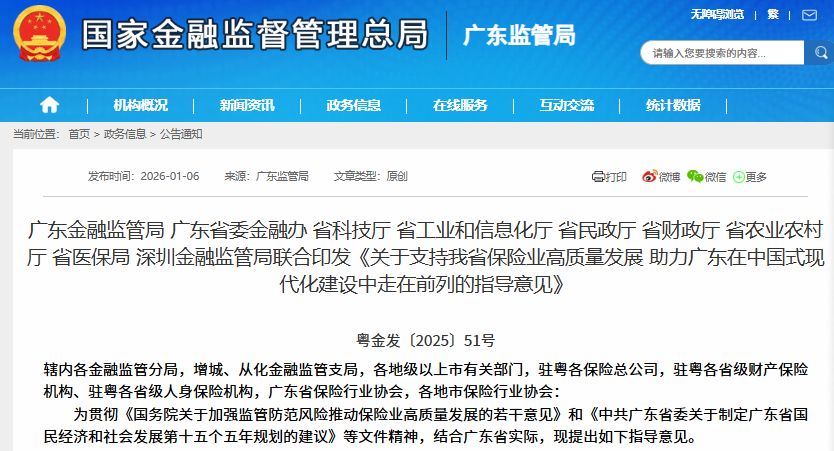
广东发布指导意见,探索智能驾驶责任保险
Huan Qiu Wang· 2026-01-06 07:33
Core Viewpoint - The Guangdong Financial Regulatory Bureau has issued guidelines to support the high-quality development of the insurance industry, aiming to enhance its role in economic security and social stability while promoting the province's financial strength [1][4]. Group 1: Insurance Industry Development - The guidelines emphasize the transition of the insurance industry from merely pursuing business scale to focusing on risk protection, stability of expectations, and institutional support [1]. - Guangdong's financial sector has shown robust growth, with the total assets of the banking and insurance industries exceeding 44 trillion yuan, accounting for 8.78% of the national total, with an annual growth rate of over 8% [1]. Group 2: Technological Innovation Support - A comprehensive technology insurance system will be established, focusing on key areas such as R&D losses, equipment losses, patent protection, and cybersecurity [2]. - The guidelines support insurance for major technological equipment and new materials, as well as expanding insurance products in the biomedicine sector, covering risks from R&D to international expansion [2]. Group 3: Investment Strategies - The guidelines highlight the long-term investment advantages of insurance funds, encouraging insurance companies to establish private equity funds in Guangdong and invest in sectors like integrated circuits, AI, low-altitude economy, and biomedicine [3]. - A mechanism for regular investment and financing connections for insurance funds entering Guangdong will be established to support key projects and technological innovations [3]. Group 4: Regional Financial Integration - The guidelines promote the participation of qualified Hong Kong and Macau insurance institutions in Guangdong's insurance market, facilitating product pricing alignment and developing insurance products tailored to the Guangdong-Hong Kong-Macau Greater Bay Area [3]. - The advancement of the "cross-border insurance" initiative will explore new pathways for high-level openness in the national insurance industry, contributing to the establishment of a financial ecosystem aligned with international standards in the Greater Bay Area [4].
光大期货金融期货日报-20260106
Guang Da Qi Huo· 2026-01-06 06:19
光大期货金融期货日报 光大期货金融期货日报(2026 年 01 月 06 日) 一、研究观点 | 品种 | 点评 市场全天震荡走强,沪指重返 4000 点上方,创业板指涨近 3%。中证 A500 | 观点 | | --- | --- | --- | | | 指数涨逾 2%,创 2022 年 1 月以来新高。个股涨多跌少,沪深京三市超 4100 股飘红,今日成交 2.57 万亿。截止收盘沪指涨 1.38%,深成指涨 2.24%,创 | | | | 业板指涨 2.85%。我们认为,1 月指数继续在中枢内震荡的概率较高,指数 | | | | 级别冲破中枢向上的条件可能还未成熟。春季躁动行情需要一定的条件,对 | | | 股指 | 小盘指数而言,需要政策边际放宽流动性;对大盘而言,需要通胀预期的持 | 震荡 | | | 续改善。当下上述条件并不突出。从盘面来看,三组逻辑背离可能支撑上述 | | | | 观点:(1)价格持续上涨但成交量未明显增加;(2)融资余额上涨但指数隐 | | | | 含波动率回落;(3)A500ETF 大幅申购但 IF 净空头增加。上述逻辑背离表 | | | | 明市场可能并未对指数向上突破做好 ...