影视

Search documents
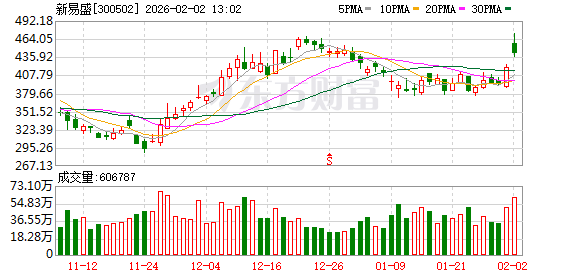
300502 成交额A股第一
Shang Hai Zheng Quan Bao· 2026-02-02 05:01
2月2日早盘,A股市场震荡调整。截至午间收盘,上证指数跌1.32%,深证成指跌1.41%,创业板指跌1.18%,科创综指跌2.28%。沪深北三市半日成交 16569亿元,新易盛(300502)成交额达275.32亿元,位居A股第一。 早盘,电网设备概念逆势走强,板块内多只个股涨停。截至午间收盘,电科院、双杰电气以20%幅度涨停,安靠智电、通光线缆涨超10%,森源电气、保 变电气、广电电气等多只个股涨停。 | 双杰电气 | 15.56 | 19.97% | 2.59 | | --- | --- | --- | --- | | 300444 | | | | | 电科院 | 9.68 | 19.95% | 1.61 | | 300215 | | | | | 安靠智电 | 47.74 | 17.82% | 7.22 | | 300617 | | | | | 红相股份 | 15.48 | 11.53% | 1.60 | | 300427 | | | | | 灿能电力 | 25.52 | 10.38% | 2.40 | | 920299 融 | | | | | 森源电气 | 7.54 | 10.07% | 0.69 | ...


A股午评 | 三大指数半日均跌超1% 电网设备股逆势爆发 三大电信运营商集体下挫
智通财经网· 2026-02-02 03:45
2月2日,市场早间震荡调整,三大指数盘中均跌超1%。截至午间收盘,上证指数跌1.32%,深证成指跌 1.41%,创业板指跌1.18%。沪深两市半日成交额1.64万亿,较上个交易日缩量2904亿。盘面上热点快速 轮动,全市场3500只个股下跌。 盘面上,电网设备股逆势爆发,双杰电气、三变科技、杭电股份等多股涨停;白酒股拉升走高,皇台酒 业涨停,水井坊涨超7%;影视股早盘走强,横店影视封板;光模块概念反复活跃,通鼎互联涨停;商 业航天概念表现活跃,西部材料涨停。 点评:消息面上,1月30日,国际贵金属市场出现崩盘式跳水,现货黄金盘中最高跌超12%,最终收跌 9.52%,报4865美元/盎司;现货白银盘中一度暴跌36%,最终收跌26.9%,报84.7美元/盎司。卓创资讯 贵金属分析师黄加奇表示,短期来看,贵金属价格或将继续波动震荡。 跌幅方面,在国际贵金属市场剧烈动荡之际,A股有色金属再现跌停潮,白银有色、湖南白银等三十余 股跌停;油气股低开低走,山东墨龙、中曼石油等跌停;农药、化工股震荡下行,中泰化学、鲁西化工 跌停;半导体产业链走弱,普冉股份、明微电子跌超10%,闻泰科技跌停;三大电信运营商集体下挫, 中国移动 ...
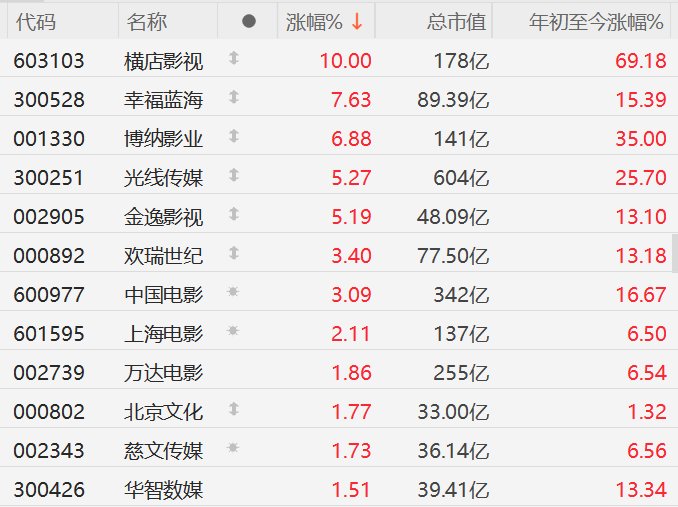
A股异动丨春节档火热开局,影视股逆势上涨,横店影视3连板,幸福蓝海涨超7%
Ge Long Hui A P P· 2026-02-02 02:12
Core Viewpoint - The A-share market for film and television stocks is experiencing a counter-trend rise, indicating a recovery in the market, with significant increases in stock prices for various companies [1] Group 1: Market Performance - The national annual box office has surpassed 2 billion yuan as of February 1, 2026, reflecting a strong start to the Spring Festival season [1] - Six new domestic films, including "Flying Life 3" and "Silent Awakening," are scheduled for release during the Spring Festival, covering multiple genres [1] - In 2025, the national box office reached 51.832 billion yuan, a year-on-year increase of 21.95%, with domestic films accounting for 79.67% of the total [1] Group 2: Stock Performance - Hengdian Film's stock rose by 10%, with a total market value of 17.8 billion yuan and a year-to-date increase of 69.18% [2] - Happiness Blue Sea's stock increased by 7.63%, with a market value of 8.939 billion yuan and a year-to-date increase of 15.39% [2] - Bona Film's stock rose by 6.88%, with a market value of 14.1 billion yuan and a year-to-date increase of 35% [2] - Other notable increases include Light Media (5.27%, 60.4 billion yuan), Jinyi Film (5.19%, 4.809 billion yuan), and Huayi Brothers (3.4%, 7.75 billion yuan) [2]



春节档火热开局,影视股逆势上涨,横店影视3连板,幸福蓝海涨超7%
Ge Long Hui· 2026-02-02 02:08
Core Viewpoint - The A-share market for the film industry is experiencing a counter-trend rise, with several key stocks showing significant gains, indicating a recovery in the market driven by strong box office performance and upcoming film releases [1][2]. Group 1: Stock Performance - Hengdian Film surged to its daily limit, increasing by 10% with a total market value of 17.8 billion [2] - Happiness Blue Sea rose by over 7%, with a market capitalization of 26.67 billion [2] - Bona Film increased by over 6%, with a market value of 14.1 billion [2] - Light Media and Jinyi Film both saw gains of over 5%, with market values of 60.4 billion and 4.809 billion respectively [2] - Other notable increases include Huanrui Century (3.4%), China Film (3.09%), and Shanghai Film (2.11%) [2] Group 2: Box Office Data - As of February 1, 2026, the national annual box office has surpassed 2 billion, reflecting a strong start to the year [1] - In 2025, the total box office reached 51.832 billion, marking a year-on-year growth of 21.95%, with domestic films accounting for 79.67% of the total [1] - There were 51 films that surpassed 100 million in box office revenue, and the total number of screens reached 93,187 [1] - The upcoming Spring Festival releases include six domestic films, indicating a diverse offering for the holiday season [1]
永杉锂业1月30日获融资买入2648.52万元,融资余额2.36亿元
Xin Lang Cai Jing· 2026-02-02 01:45
Group 1 - On January 30, Yongshan Lithium Industry experienced a decline of 5.61% with a trading volume of 336 million yuan [1] - The financing data for Yongshan Lithium on the same day showed a buying amount of 26.4852 million yuan and a repayment of 25.9270 million yuan, resulting in a net buying of 558,000 yuan [1] - As of January 30, the total margin balance for Yongshan Lithium was 237 million yuan, with the financing balance accounting for 4.16% of the circulating market value, indicating a high level compared to the past year [1] Group 2 - As of September 30, the number of shareholders for Yongshan Lithium reached 47,800, an increase of 7.58% from the previous period [2] - For the period from January to September 2025, Yongshan Lithium reported an operating income of 3.932 billion yuan, a year-on-year decrease of 17.02%, and a net profit attributable to shareholders of -163 million yuan, a significant decrease of 421.90% [2] - Since its A-share listing, Yongshan Lithium has distributed a total of 282 million yuan in dividends, with 207 million yuan distributed over the past three years [2]

影视板块延续强势 横店影视3连板
Mei Ri Jing Ji Xin Wen· 2026-02-02 01:44
每经AI快讯,2月2日,影视板块延续强势,横店影视(603103)3连板,博纳影业(001330)涨停,金 逸影视(002905)、欢瑞世纪(000892)、幸福蓝海(300528)、中国电影(600977)跟涨。 ...


行业点评报告:Moltbook、元宝、Genie3出圈,继续布局AI社交、游戏、营销
KAIYUAN SECURITIES· 2026-02-02 01:41
Investment Rating - The industry investment rating is "Positive" (maintained) [1] Core Insights - The report highlights the rapid development of AI applications in social media, gaming, and marketing, with significant growth potential in user engagement and monetization opportunities [3][4] - The emergence of AI social platforms like Moltbook and Tencent's Yuanbao indicates a shift towards more interactive AI-driven social experiences, which could lead to increased user traffic and revenue generation through various channels [3] - The gaming sector is expected to benefit from advancements in AI tools, such as Genie3 and Taptap Maker, which lower the barriers for game development and enhance content diversity [4] Industry Data Overview - The report notes that "Fashion Department City" ranked first in the iOS free game chart in mainland China, while "Honor of Kings" topped the iOS revenue chart [10] - The film "Zootopia 2" achieved the highest box office revenue for the week, with a total of 4.453 billion yuan [20] - The gaming sector saw a high volume of game approvals in January, with "Supernatural Action Group" achieving over 10 million daily active users [23] Industry News Summary - Major AI models are entering a phase of intensive updates, with significant advancements in AI social, gaming, and film sectors [23] - Alibaba's Qwen3-Max-Thinking model has been released, boasting over a trillion parameters and achieving performance comparable to leading international models [24] - OpenAI launched Prism, a workspace designed for researchers, integrating various tools for collaborative scientific writing [25] - Kimi's K2.5 model supports visual understanding and code capabilities, enhancing user interaction with AI [26]






传媒互联网行业周报(2026.1.26-2026.2.1):谷歌Project Genie上线,元宝10亿红包活动开启-20260202
Hua Yuan Zheng Quan· 2026-02-02 00:45
Investment Rating - Investment rating: Positive (maintained) [5] Core Insights - The report highlights the ongoing development and opportunities in the media and internet sectors, particularly focusing on AI applications and their integration into various platforms [7][8][12] - The gaming sector is expected to see significant growth with new product launches and high user engagement, particularly during the holiday season [6][9] - The film and television industry is poised for growth with new policies promoting content creation and distribution, alongside anticipated successful releases [9][51] Summary by Relevant Sections Gaming Sector - The upcoming limited test for the game "异环" is set to begin on February 4, with significant user engagement expected from major titles like "三角洲行动" and "超自然行动组" [6] - Major gaming companies are advised to be monitored for their exploration of AI integration, which could lead to a reevaluation of their market value [6] Internet Sector - The report emphasizes the importance of AI Agent technology and the competitive landscape for AI applications, suggesting that major companies like Tencent and Alibaba will continue to leverage their platform advantages [8] - The ongoing adjustments in organizational structures within leading internet companies are seen as strategically valuable for long-term growth [8] Film and Television Sector - The film "飞驰人生 3" is officially scheduled for release during the 2026 Spring Festival, with recommendations to monitor related production and distribution companies [9] - The television industry is expected to benefit from new government initiatives aimed at enhancing content supply, with a focus on long-form video platforms and production companies [9] Company Performance - Perfect World anticipates a net profit of between 720 million and 760 million, while Century Huatong expects a significant revenue increase of approximately 68% year-on-year [11][39] - Jiubang Technology forecasts a net profit increase of 79% to 97% for 2025, reflecting strong operational performance [41] Market Overview - The media sector showed a slight increase of 0.21% in the week of January 26 to January 30, 2026, ranking 10th among all industries [15] - The report notes that the approval of 177 domestic online games in January 2026 indicates a positive regulatory environment for the gaming industry [33]
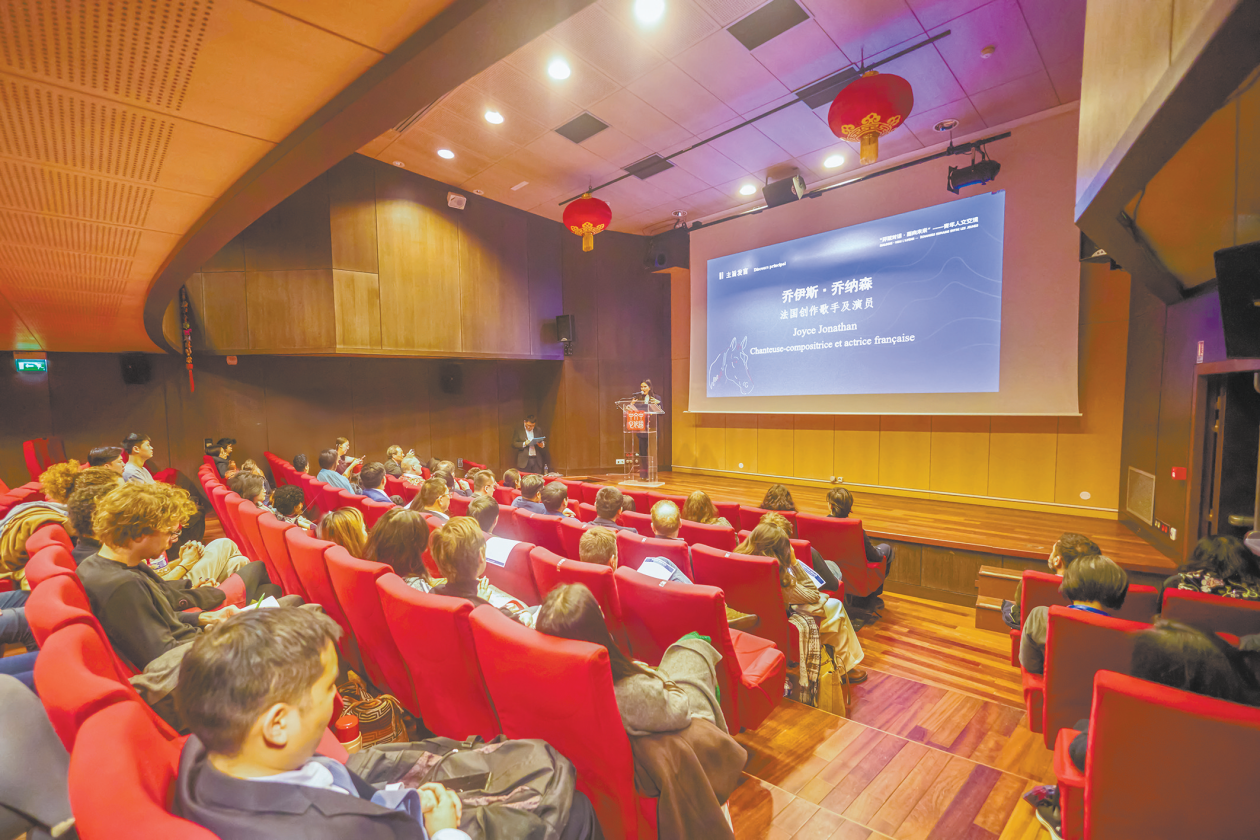
光影为媒共话青年未来,相知相鉴共促文化交流,“环球对话·面向未来”青年人文交流行动在法国举行
Huan Qiu Shi Bao· 2026-02-01 22:54
在主旨演讲环节,来自中法两国的嘉宾从文化机构实践、教育合作、艺术创作及影视产业等不同维度,分享了对中法人文交流的观察与思考。巴黎中国文化 中心主任王萌表示,通过文化交流,青年一代能够更直观地理解彼此的文化传统与价值理念,在交流中寻找共性、在差异中学会尊重,这正是文化互鉴的现 实意义所在。法国联合制作制片人协会发起人、主席尼古拉·德尚身着中国东北大花袄亮相现场,分享了其近期参与吉林纪录片节、内蒙古合拍电影项目以 及中法电影学生交流计划的经历,生动展现了中法电影合作在创作、产业与青年培养层面的多元拓展。 作为东西方文明的重要代表,中法两国文化底蕴深厚,既各具特色,也长期相互欣赏。自1964年建交以来,双方在持续互动中逐步形成多层次的人文交流格 局,人文合作始终是中法关系的重要组成部分。在中法建交迈入第62年之际,由环球时报社主办、巴黎中国文化中心和英中电影合作研发中心支持的"环球 对话·面向未来"青年人文交流行动,以影视交流为切入点,通过主旨演讲、影片赏析及映后座谈等多种形式,探讨在多元文化背景下增进理解、拓展互鉴的 现实路径,为中法青年交流搭建对话平台。 环球时报社副总编辑白龙代表主办方致辞时表示,中法两国领导 ...
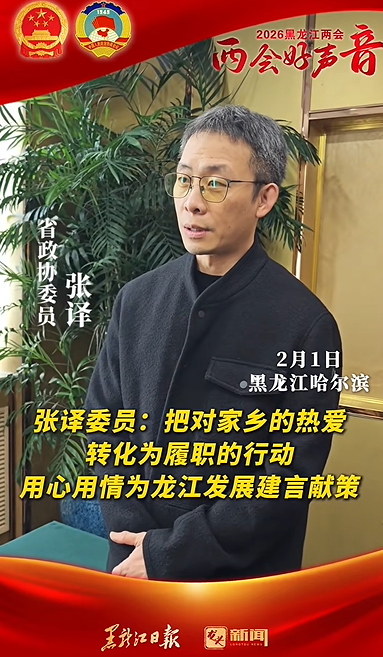
黑龙江省政协委员张译:希望吸引更多影视作品到龙江取景拍摄
Xin Lang Cai Jing· 2026-02-01 16:12
近日,演员宋佳、张译以黑龙江省政协委员身份参加今年黑龙江省两会的消息引起关注。 据"黑龙江日报"微信公众号2月1日晚间消息,"从哈尔滨的大街小巷长大,当兵、做演员的人生经历, 让我有了更多观察生活、感受家乡的机会。"省政协委员张译说,他塑造过众多龙江籍角色,了解过黑 土地上奋斗拼搏的先辈故事,这些经历让他对家乡的情感愈发浓厚,对龙江的认知愈发深刻,也让他对 政协委员这一身份充满期盼。 张译表示,将立足演员的职业视角,把对家乡的热爱转化为履职的行动,用心用情为龙江发展建言献 策。 稍早前,1月30日,黑龙江省政协十三届四次会议在哈尔滨开幕,演员张译首次以省政协委员身份参 会。他在会议期间表示,希望借此机会重新梳理家乡资源,着力推动剧集、电影等影视项目助力各个行 业发展,形成良性循环。 张译说,每年回到家乡发现家乡有大变化,老百姓生活幸福指数提升,作为家乡人特别感到骄傲。"我 现在走到哪里,会主动去告诉大家,我是黑龙江人,我是哈尔滨人,欢迎大家来到我们这里来做客。" 张译,原名张毅,1978年2月17日出生于黑龙江省哈尔滨市,男演员。2025年,获评一级演员(正高级 职称)。 张译曾凭借《我和我的祖国》(2023 ...