
种业

Search documents
种业有了智慧“中国芯”
Jing Ji Ri Bao· 2025-12-29 00:10
Group 1 - The core achievement of the "Seed Special" is the development of innovative seed varieties, such as the hybrid silver crucian carp, which addresses consumer concerns about fish bones [1] - The "Seed Special" aims to establish a self-reliant and leading scientific system in seed technology, focusing on higher yield, better nutrition, water conservation, and disaster resistance [1] - The initiative was launched in November 2019 to address strategic needs for food security in China, focusing on breeding key crops like rice and wheat [1] Group 2 - The "Zhongke Fa" series of rice has become a star variety, with "Zhongke Fa 5" yielding over 20% more than local varieties in Northeast China and achieving a yield of over 600 kg per mu in saline-alkali land [2] - The "Zhongke Fa Early Jing 1" variety has advanced the market availability of high-quality new japonica rice by 2 to 3 months in southern double-cropping rice areas [2] - The initiative has successfully created 37 leading varieties, promoting new crop varieties across 14.48 million mu, resulting in significant social and economic benefits [2] Group 3 - The successful implementation of the "Seed Special" is a practical example of addressing national needs and leveraging a new type of national system to enhance agricultural technology [3]
百年谢氏家族财富3753亿再登全球最富榜 深耕中国40余年“正大系”冲击首家A股IPO
Chang Jiang Shang Bao· 2025-12-28 23:18
Core Insights - The Charoen Pokphand Group, led by the Thai billionaire Chearavanont family, has been recognized as one of the 25 wealthiest families globally, with a wealth of 375.3 billion yuan [2] - The group has diversified its operations across multiple sectors, including agriculture, retail, telecommunications, finance, real estate, and pharmaceuticals, with a projected revenue exceeding 700 billion yuan in 2024 [2][10] - The family has a strong commitment to the Chinese market, with over 200 billion yuan in revenue expected from China in 2024, and has been a significant player in the Chinese market for over 40 years [11][18] Company History - The origins of the Charoen Pokphand Group trace back to 1919 when Chee Yik Choo started a small seed shop in Thailand, which evolved into a comprehensive agricultural enterprise [3][4] - The company officially became Charoen Pokphand Group in 1953 under the leadership of Chee Yik Choo's son, Chearavanont, marking a shift from trade to a diversified agricultural business [4][5] - The second generation, led by Chearavanont, modernized the company and expanded it into a multinational corporation, entering the Fortune Global 500 in 1987 [6][7] Business Operations - The group operates in over 100 countries and employs more than 460,000 people globally, with a focus on three core sectors: agriculture, retail, and telecommunications [9] - In the financial sector, the group has made significant investments, including acquiring a major stake in China Ping An and a 20% stake in CITIC Group [14][15] - The pharmaceutical division, China Biopharmaceutical, has become a leading player in the Chinese market, with a market share of 60% for its antiviral drug and a revenue of over 3 billion yuan for another product [15][18] Future Prospects - The fourth generation of the Chearavanont family is now at the helm, with a focus on capital operations and technology, as evidenced by the planned IPO of Charoen Seed in 2025 [17][19] - The company is facing challenges in its core agricultural and pharmaceutical sectors, with declining revenues and market adjustments expected in 2024 [20] - The new generation's approach to capital operations raises questions about the future commitment to the agricultural roots of the business, which has historically been a key focus for the family [22]


广袤田野充满生机
Jing Ji Ri Bao· 2025-12-28 21:51
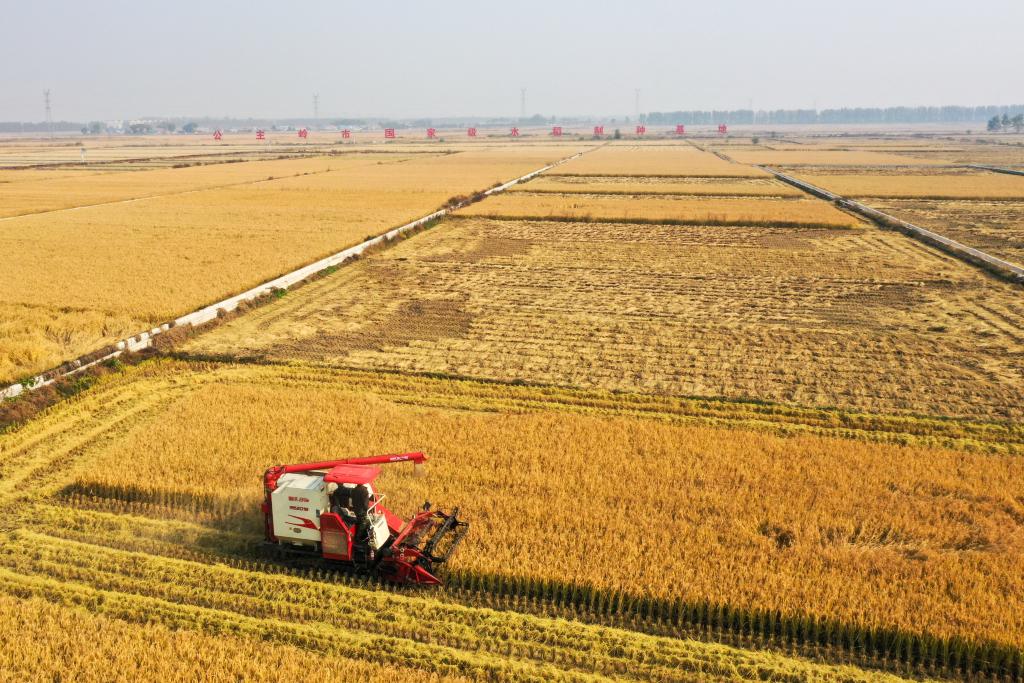
"十四五"时期,党中央把解决好"三农"问题作为全党工作的重中之重,深入实施乡村振兴战略,坚持农 业农村优先发展,出台了一系列强农惠农富农政策,推动农业农村发展取得历史性成就。5年来,我国 持续夯实粮食安全根基,有效巩固拓展脱贫攻坚成果,乡村活力不断释放,农业农村工作稳中有进,成 为经济社会发展的亮点。 粮食安全根基持续夯实 在贵州的苗寨,"村超"的激情呐喊点燃乡村的夜晚;在陕西的果园,红彤彤的苹果甜透老乡的心;在黑 龙江的沃野,无人收割机助力颗粒归仓。这些生动图景,共同见证了乡村新貌。农业强、农村美、农民 富的乡村振兴蓝图正加快变为现实。 无人机巡田、智能农机播种、卫星监测长势……在全国大豆种植面积最大的地级市——黑龙江省黑河 市,一场农业科技与粮食安全的双向奔赴正在上演。今年,黑河交出了一份令人振奋的成绩单:全市各 作物平均单产突破近年最高值,大豆高产地块实收亩均单产超600斤,全年粮食总产预计突破120亿斤。 全国来看,2025年粮食总产量14298亿斤,比2024年增加168亿斤,连续2年超过1.4万亿斤。国家统计局 农村司司长魏锋华说,国家着力健全粮食生产支持政策体系,启动实施中央统筹下的粮食产销区省 ...
“种子专项”已创制三十七个先导型品种——种业有了智慧“中国芯”
Jing Ji Ri Bao· 2025-12-28 21:50
Core Insights - The "Seed Precision Design and Creation" project by the Chinese Academy of Sciences has made significant advancements, particularly with the development of the hybrid silver crucian carp, which addresses consumer concerns about fish bones [1] - The project aims to establish a self-sufficient and leading seed science system to enhance agricultural productivity and food security in China [1][3] Group 1: Achievements in Crop Breeding - The "Zhongke Fa" series of rice, led by Li Jiayang, has become a "star variety," with "Zhongke Fa No. 5" yielding over 20% more than local premium varieties in Northeast China and achieving a yield of over 600 kg per mu in saline-alkali land [2] - In the southern double-cropping rice areas, "Zhongke Fa Early Jing No. 1" has achieved a breakthrough, allowing for the early market release of high-quality new rice by 2 to 3 months [2] - The project has developed a nitrogen-efficient gene that allows rice to maintain stable yields with a 20% to 30% reduction in nitrogen fertilizer, promoting green farming practices [2] Group 2: Disease Resistance and Economic Impact - The research team has identified the broad-spectrum disease resistance gene Pm24, leading to the development of the high-yield, disease-resistant wheat variety "Zhongke 166," which has been promoted over 1.5 million mu, significantly reducing pesticide use [2] - The core objective of the project is to achieve a 10% to 20% increase in yield, a 15% to 20% reduction in input, and a 15% to 20% reduction in losses for plant and animal varieties, with 37 leading varieties created and 14.48 million mu of new crop varieties promoted [2]
“云两优9801”荣获第六届国际米食味品鉴大会中国赛区籼稻组优胜奖
Xin Lang Cai Jing· 2025-12-28 08:06
未来,该团队将继续秉承"科学育种、品质为先"的理念,深化水稻食味品质研究,培育更多适应市场需 求、兼具优良口感与生态价值的稻种,为守护中国稻作文明、推动乡村振兴与农业可持续发展贡献云南 智慧与力量。 云南网记者 陈云芬 "云两优9801"作为云南省审定部标优质一级米品种,在严格的评审中脱颖而出,其食味品质获得评审专 家的一致好评。该品种在种植过程中贯彻绿色生态理念,符合大会对"绿色或有机生产方式"的参赛要 求,体现了云南高原水稻的独特风味与优良品质。 云南省农科院粮作所水稻种业科技创新团队长期致力于水稻品种的选育与改良工作,坚持以科技赋能农 业,推动稻作产业高质量发展。"云两优9801"先后通过云南省审定并获评部标优质一级米,此次再获国 际米食味大会优胜奖,不仅是对品种本身食味价值的双重肯定,也是对云南稻作科研与生产体系的积极 认可。 近日,由云南省农业科学院粮食作物研究所水稻种业科技创新团队自主选育的云南省审定部标优质一级 米籼稻品种"云两优9801",在"荣程杯"第六届国际米食味品鉴大会中国赛区总决赛中荣获籼稻组优胜 奖,展现了云南稻米在食味品质与品种创新方面的卓越实力。 "云两优9801"兼具优质、高产 ...
我国耐盐碱大豆研究取得明显进展
Xin Lang Cai Jing· 2025-12-28 08:05
Group 1 - The core viewpoint of the article emphasizes the importance of agricultural innovation for food security and improving people's quality of life, highlighting the collaboration between Zhongzhong Group and the Yanzhou Bay National Laboratory in areas such as biological breeding and research [1] - Zhongzhong Group has successfully transformed a batch of salt-alkali resistant soybean seed sources into industrial applications, providing new ideas for the development and utilization of saline-alkali land in China [1] - The next steps for Zhongzhong Group include deepening cooperation with the Yanzhou Bay National Laboratory, establishing an AI breeding joint laboratory, and advancing collaborative innovation in breeding and results transformation for staple crops like soybeans and corn [1] Group 2 - The conference also released the "2025 Blue Book on the Development of Modern Agricultural Crop Industry Chain," which systematically outlines the direction of China's seed industry development, international competition and cooperation, market trends, and dynamics of industry chain development [2] - The Blue Book proposes new models and recommendations for industry chain construction [2]
数览中国脉动丨科技赋能!“汗水农业”向“智慧农业”加速迈进
Xin Hua She· 2025-12-28 05:40
Group 1 - The core viewpoint emphasizes the importance of agricultural mechanization and intelligence as crucial supports for agricultural modernization, with a focus on accelerating the transition from "labor-intensive agriculture" to "smart agriculture" through technological empowerment in the entire food production chain [1] Group 2 - Current data indicates that China's agricultural machinery ownership exceeds 200 million units, with over 2.2 million units of Beidou terminal devices applied, total agricultural power exceeding 11 billion kilowatts, and a mechanization rate of over 75%, demonstrating the efficient service of agricultural machinery to production [2] Group 3 - The application of advanced technologies such as AI, IoT, and big data is increasingly prevalent in the agricultural sector, reflecting the robust development of the digital economy [4] Group 4 - Significant achievements have been made in reducing food waste during processing, with the grain processing loss rate reduced to 0.8% and transportation loss rate to 0.8‰, showcasing effective efforts in the food circulation sector [6] Group 5 - Since the 14th Five-Year Plan, China's agricultural technology innovation has reached a leading position globally, with significant improvements in the overall effectiveness of the agricultural technology innovation system and rapid breakthroughs in key core technologies [8]

银杏濒危?保护种质资源不止是保护种子
Ren Min Ri Bao· 2025-12-28 04:31
Group 1 - The core issue is the distinction between wild ginkgo, which is endangered, and landscape ginkgo, which lacks genetic diversity despite being common in cities [1] - Germplasm resources are crucial for agriculture, encompassing not just seeds but also various plant parts and genetic materials, highlighting their broader significance [1] - The importance of germplasm resources is underscored as they are foundational to agricultural innovation and food security [2] Group 2 - China is a major germplasm resource country but still faces challenges in precise identification and the development of breakthrough varieties [3] - Current phenotypic identification of germplasm resources in China is only 35%, with a target of 60% by 2030, indicating a significant gap [3] - The integration of artificial intelligence in breeding innovation is essential for enhancing the breeding system and accelerating the development of new varieties [3]
科创筑梦 豫见未来
He Nan Ri Bao· 2025-12-27 23:33
Group 1: Innovation in Agriculture - The establishment of the China Modern Agriculture Graduate School, led by the Chinese Academy of Agricultural Sciences and supported by Henan Agricultural University, aims to integrate agricultural education and research, breaking down barriers in training models [2][3] - The focus of research includes the regulation mechanisms of egg-laying traits in local chicken breeds, utilizing cutting-edge technologies such as big data analysis and gene editing to develop high-yield and high-quality chicken varieties [3][4] - The initiative emphasizes the importance of youth in addressing critical agricultural challenges, with a vision to enhance production performance and quality, ultimately benefiting local farmers [4] Group 2: Advancements in Traditional Medicine - The development of a precision massage robot by the Henan Academy of Traditional Chinese Medicine aims to enhance the efficiency of traditional medical practices, allowing doctors to treat more patients simultaneously [5][6] - This robot incorporates a "smart brain" that utilizes a traditional Chinese medicine meridian diagnostic model, providing integrated services from diagnosis to treatment [6] - The project is part of a broader initiative to improve grassroots healthcare services in Henan, making high-quality medical resources more accessible [5][6] Group 3: Catalysis and Industrial Upgrading - Research on tert-butyl phosphine catalysts has led to significant advancements in industrial applications, achieving a production yield of 95% for various derivatives, generating over 200 million yuan in sales for partner companies [7][8] - The self-sufficiency rate of domestic catalysts has increased to approximately 65%, with expectations to reach over 75% during the 14th Five-Year Plan period, highlighting the importance of catalyst development for national industrial security [8][9] - The focus on developing low-cost metal catalysts, such as iron and manganese, is seen as a promising avenue for reducing costs in large-scale applications across chemical, energy, and environmental sectors [9] Group 4: Return of Talent and Research Development - Zhang Tianxiang, who returned from Yale University to lead a research team at the Henan Provincial Academy of Medical Sciences, aims to discover new immune regulation mechanisms and treatment targets for tumors and autoimmune diseases [10][12] - The team has grown to 12 members, with plans to incorporate more overseas talent, reflecting a commitment to advancing medical research in Henan [12] - The integrated ecosystem of "medical education, research, and industry" at the academy facilitates faster translation of research findings into clinical applications, aligning with the goals of the 14th Five-Year Plan [12][13]
海南产经新观察:封关政策释红利 南繁种业迎新机遇
Zhong Guo Xin Wen Wang· 2025-12-27 01:40
Core Viewpoint - The Hainan Free Trade Port is successfully implementing its operations, providing significant policy benefits that create historic opportunities for the southern hybrid rice seed industry, with a projected output value exceeding 18 billion RMB by 2024 [1] Group 1: Industry Development - The South Hybrid Rice Seed Industry Development Conference held in Hainan gathered experts and representatives to discuss future prospects [1] - Hainan is recognized as a "breeding accelerator" for hybrid rice, leveraging its unique climatic advantages to shorten breeding cycles and accelerate variety updates [1] - The area for rice seed production in Dongfang City is expected to exceed 130,000 acres by 2025, ranking second nationally [1] Group 2: Strategic Recommendations - There is a need to deepen collaboration among research institutions and seed companies, focusing on mechanization, digitization, and quality control in the seed production process [2] - Strengthening intellectual property protection is essential to safeguard the rights of variety owners and lawful operators, fostering a secure environment for innovators and investors [2] - The Hainan Free Trade Port policy opens broader opportunities for the seed industry, encouraging stakeholders to align with these policies and enhance technological innovation platforms [2] Group 3: Initiatives and Agreements - The Hainan South Hybrid Seed Industry Technology Park was inaugurated to integrate resources and innovate models for sustainable development [3] - An academic committee was established to provide intellectual support for the seed industry in Dongfang City [3] - A collective signing of production contracts for hybrid rice seed production in 2026 amounted to 1.3 billion RMB [3]