
农产品种植

Search documents
南农晨读 | 好米好饭 花样新年
Nan Fang Nong Cun Bao· 2026-02-12 02:02
Group 1 - The Guangdong Digital Village History Museum has launched, featuring the first batch of 160 village history museums [4][6][7] - The launch event took place in Shunde District, Foshan, coinciding with the "Spring Festival Talks on Village History" theme activity, inviting locals to reconnect with their roots [5][8] - The initiative aims to revitalize village history and culture, enhancing community engagement and tourism [6][8] Group 2 - The "Good Rice Good Meal: Fashionable New Year" event in Chaoyang District, Shantou, introduced a development plan for high-quality Chaoyang rice, focusing on brand building and market expansion [28][30] - The plan includes ten actions leveraging media power to enhance the rice industry's development [30][31] - The event highlights the integration of agricultural modernization and community engagement in rural revitalization efforts [30][31] Group 3 - The concept of "rooted youth" in agricultural modernization emphasizes the importance of local youth in driving rural development [32][33] - The establishment of resource-sharing and collaborative mechanisms among neighboring villages is proposed to enhance rural economic strength and quality of development [34][36] - The initiative aims to create a high-quality development model for rural areas, fostering collective economic growth [36]


乐观情绪支撑美豆,国内双粕震荡为主
Zhong Xin Qi Huo· 2026-02-12 01:45
1. Report Industry Investment Rating No relevant information provided. 2. Core Views of the Report - The agricultural market shows a mixed trend, with different commodities having various outlooks such as oscillation, oscillation - weakening, and oscillation - strengthening [1][6][7]. - For different commodities: - Oils: Narrow - range oscillation, with multiple factors affecting supply and demand, and a suggestion to consider buying hedging strategies at low - callback levels [6]. - Protein meals: Domestic double meals oscillate mainly, with international factors supporting US soybeans and domestic factors affecting the market [1][7]. - Corn: Oscillates, with industry news and emotions affecting futures, and attention to post - holiday trading and inventory replenishment rhythms [8]. - Pigs: Oscillates weakly, with supply - demand being loose, and different trends in the short, medium, and long - term [9]. - Natural rubber: Oscillates, with attention to previous high resistance, and the market influenced by capital and fundamentals [11][12]. - Synthetic rubber: Oscillates upward following natural rubber, with the mid - term bullish logic remaining unchanged [13]. - Cotton: Oscillates strongly in the medium - long term, waiting for new driving forces in the short term [14]. - Sugar: Oscillates weakly in the medium - long term, with a downward driving force due to expected oversupply [16]. - Pulp: Oscillates, with weak supply - demand before the Spring Festival and expected improvement after the festival [17]. - Double - gum paper: Oscillates weakly, with the market in a low - level oscillation during the holiday [18]. - Logs: Oscillates, with the spot being stable and the market in a range - bound operation [20]. 3. Summary by Relevant Catalogs 3.1. Market Quotes and Views 3.1.1. Oils - **View**: Oils show narrow - range oscillation. The US Department of Agriculture's February report adjusted relevant data, and the market is affected by factors such as demand expectations, biodiesel policies, and export performance. It is recommended to pay attention to buying hedging strategies at low - callback levels [6]. - **Logic**: Futures are affected by capital emotions, and the industrial end has different supply - demand situations for different oils. For example, soybeans have relatively sufficient supply, and palm oil has inventory and export issues [6]. - **Outlook**: Soybean oil, palm oil, and rapeseed oil all oscillate [6]. 3.1.2. Protein Meals - **View**: Optimistic emotions support US soybeans, and domestic double meals oscillate mainly [1][7]. - **Logic**: Internationally, the USDA's February supply - demand report is bearish, but the market has optimistic export expectations and the US biodiesel plan boosts US soybean oil. Domestically, factors such as pre - holiday capital flight, logistics stagnation, and expected post - holiday cost reduction affect the market [1][7]. - **Outlook**: Both soybean meal and rapeseed meal oscillate [1][7]. 3.1.3. Corn - **View**: Industry news disturbs the market, and corn increases positions and rises [8]. - **Logic**: Futures are affected by industry news and emotions, while the spot market is gradually entering the holiday, with stable prices and low trading volume. Attention should be paid to factors such as grain sales progress, policy grain auctions, and wheat conditions [8]. - **Outlook**: Oscillation, with attention to post - holiday trading and inventory replenishment rhythms [8]. 3.1.4. Pigs - **View**: Supply - demand is loose, and spot prices continue to weaken [9]. - **Logic**: In terms of supply, there are different situations in the short, medium, and long - term; demand shows an increase in slaughter volume; inventory shows a continuous decrease in average pig weight. The price is expected to weaken in the short - term and is affected by different production capacities in different periods [9]. - **Outlook**: Oscillation - weakening, with a potential bottom - out and recovery in the second half of 2026 [9]. 3.1.5. Natural Rubber - **View**: Pay attention to previous high resistance [11][12]. - **Logic**: The rubber price runs strongly, mainly driven by capital emotions. The short - term support is effective, and the overall is in a bullish trend. The current trading logic is mainly affected by the macro - environment, with relatively weak fundamentals but good expectations [11][12]. - **Outlook**: Oscillation, with limited fundamental variables and increasing capital attention [12]. 3.1.6. Synthetic Rubber - **View**: Follow natural rubber to oscillate upward [13]. - **Logic**: The BR market follows natural rubber to rise slightly, and the mid - term core logic is the expectation of tight supply of butadiene in the first half of 2026. The raw material market is affected by factors such as export news and downstream demand [13]. - **Outlook**: Mid - term oscillation - strengthening, with a need for adjustment in the short - term due to rapid price increase [13]. 3.1.7. Cotton - **View**: Cotton price rebounds [14]. - **Logic**: Before the Spring Festival, the fundamentals have no obvious driving force, and the cotton price is expected to oscillate within a range. After the festival, with the arrival of the traditional peak season, the terminal demand may drive the price to rise. In the medium - long term, the supply - demand is expected to be in tight balance, and the planting area in Xinjiang may decrease [14]. - **Outlook**: Oscillation - strengthening, with a suggestion to buy on dips [14]. 3.1.8. Sugar - **View**: Sugar price oscillates weakly in the medium - long term [16]. - **Logic**: The global sugar market is expected to have oversupply in the 25/26 crushing season, with major producing countries expected to increase production. The supply increase puts pressure on the price [16]. - **Outlook**: Oscillation - weakening, with a suggestion to short on rebounds [16]. 3.1.9. Pulp - **View**: Spot prices are almost stagnant, and futures fluctuate independently [17]. - **Logic**: Before the Spring Festival, the supply - demand is weak, with low demand from the terminal and downstream. After the festival, the seasonal recovery of demand may bring marginal benefits. The valuation support has weakened, and the downward space is limited [17]. - **Outlook**: Oscillation, with weak supply - demand before the festival and expected improvement after the festival [17]. 3.1.10. Double - gum Paper - **View**: Factories enter the holiday, and the market maintains low - level oscillation [18]. - **Logic**: Before the Spring Festival, the trading in the double - gum paper market ends, with stable spot prices and low - level oscillation. The industry is affected by factors such as production line operation, downstream consumption, and market demand [18]. - **Outlook**: Oscillation - weakening, with the market expected to be stagnant during the holiday and attention to the post - holiday consumption recovery [18]. 3.1.11. Logs - **View**: Spot prices are stable, and the market operates within a range [20]. - **Logic**: Before the Spring Festival, the log market trading is basically stagnant, with stable spot prices and range - bound oscillation. The market is affected by factors such as news, valuation, supply, and delivery [20]. - **Outlook**: Oscillation, with the market having no new driving force in the short - term and maintaining range - bound operation [20]. 3.2. Commodity Index - On February 11, 2026, the comprehensive index, special index (including the commodity index, commodity 20 index, and industrial product index), and plate index (agricultural product index) of CITIC Futures all showed certain changes. For example, the comprehensive index increased by 0.32%, the commodity 20 index increased by 0.27%, the industrial product index increased by 0.41%, and the agricultural product index increased by 0.34% on that day [179][180].
美媒:中国如何在不依赖他国农产品的情况下养活14亿人口?
Xin Lang Cai Jing· 2026-02-12 01:01
Core Insights - The article discusses China's efforts to reduce dependence on foreign agricultural products to ensure food security for its 1.4 billion population [1][3] - It highlights advancements in agricultural technology and policy initiatives aimed at increasing domestic production [2] Group 1: Agricultural Independence - China aims to decrease reliance on imported soybeans by developing higher-protein corn varieties, targeting a reduction of soybean meal usage in livestock feed to 10% by 2030 [1] - The country has approximately 75% of the arable land of the U.S. but four times the population, necessitating increased productivity per acre [1] Group 2: Technological Advancements - Significant investments in agricultural R&D have been made, with public sector spending from 2019 to 2021 being about twice that of the U.S. [2] - By 2022, China began to industrialize first-generation biobreeding, resulting in a 10% increase in corn yield [2] - Projections indicate that China's corn imports will drop to 2.65 million tons by 2025, significantly lower than the nearly 30 million tons peak in 2022 and 2023 [2] Group 3: Infrastructure and Market Access - The integration of farms with the internet and high-speed rail has improved access for urban consumers, supported by government efforts to reduce rural poverty and enhance social stability [2] - E-commerce platforms are expanding into rural markets, and technology companies are establishing businesses around agricultural drones [2]


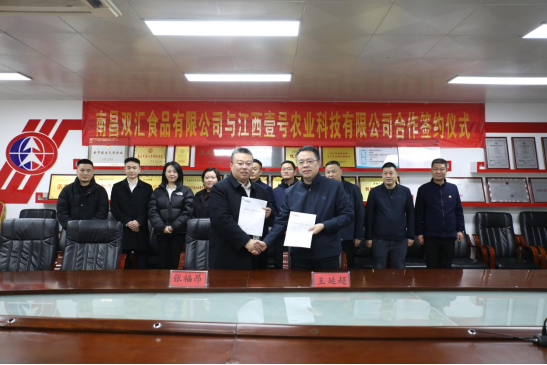
壹号农业与南昌双汇签署合作协议 共谋发展新篇
Zhong Guo Jin Rong Xin Xi Wang· 2026-02-11 12:36
Group 1 - The core viewpoint of the article is the strategic partnership between Jiangxi Yihua Agricultural Technology Co., Ltd. and Nanchang Shuanghui Food Co., Ltd. aimed at enhancing competitiveness in the fresh food market through complementary advantages and deep cooperation [1][6]. Group 2 - Jiangxi Yihua Agricultural Technology Co., Ltd. focuses on agricultural planting, food processing, and bulk trade supply chain, having developed into an integrated enterprise over 7 years. It operates over 20 agricultural markets in Jiangxi Province and has established a fresh supply chain system with its "Farm Small Circle Fresh Convenience Stores" [3][6]. - The Yihua Agricultural Tomato Industrial Park in Yongxiu County is a key facility, specializing in standardized tomato planting and producing various natural products such as dried tomatoes, tomato juice, and tomato chili sauce [3]. Group 3 - Nanchang Shuanghui Food Co., Ltd. is engaged in pig slaughtering, fresh meat processing, and sales, recognized as a national standardized demonstration plant and a leading agricultural enterprise in Jiangxi Province. Since its establishment in 2011, it has slaughtered nearly 10 million pigs and produced 950,000 tons of meat products, generating revenue of 32.5 billion yuan [4][6]. - The company employs advanced meat processing machinery and implements standardized management and information control to ensure product quality and safety [4]. Group 4 - The collaboration between Yihua Agricultural and Shuanghui aims to optimize the entire supply chain from farm to table, enhancing product standardization and added value, thereby improving competitiveness in the fresh food market and contributing to a more efficient, safe, and sustainable agricultural supply system [6].
从“一村独行”到“片区共兴”
Xin Lang Cai Jing· 2026-02-11 00:11
Core Viewpoint - The article discusses the innovative development model of "regional co-construction" in Huanjiang District, which integrates resources across villages to promote rural revitalization and economic growth through shared advantages and collaborative efforts [5][6][11]. Group 1: Regional Co-construction Model - Huanjiang District is implementing a new development model that breaks administrative boundaries and promotes cross-town cooperation, leading to resource sharing and complementary advantages among villages [5][6]. - The establishment of area-specific party committees has facilitated the integration of resources and improved connectivity, resulting in a coordinated development of cultural tourism and agriculture [6][7]. - The district has identified five major rural revitalization areas and 11 specialty industry areas, covering 120 administrative villages, ensuring structured collaboration and effective governance [6][7]. Group 2: Economic Impact and Resource Integration - The integration of resources has led to significant economic benefits, such as a 135% increase in annual rental income from tidal flats, demonstrating the effectiveness of the new management mechanisms [8][10]. - The establishment of a comprehensive rural revitalization center has enhanced product branding and market reach, with expectations of increasing e-commerce output by 20 million yuan [10]. - The development of a bamboo industry chain has created job opportunities for over 50 villagers, with collective annual income increases exceeding 200,000 yuan [10][11]. Group 3: Community Engagement and Support - The article highlights the role of community engagement in revitalization efforts, with local leaders facilitating partnerships between villages and external organizations, including educational institutions and businesses [12][13]. - The integration of various resources, including talent, funding, and technology, has created a new development pattern that supports sustainable rural growth [12][13]. - Collaborative projects between urban and rural areas have improved market access for agricultural products, enhancing the overall economic landscape of the region [13].

闪光的青春在基层绽放——“最美高校毕业生”群像素描
Zhong Guo Qing Nian Bao· 2026-02-10 22:47
Core Viewpoint - The article highlights the achievements of nine exemplary university graduates who have dedicated themselves to grassroots service, showcasing their contributions to community development and rural revitalization through various initiatives [1]. Group 1: Individual Contributions - Qiu Guimin, a graduate who returned to her hometown, founded a cooperative to promote local agricultural products, overcoming supply chain issues by implementing quality control measures and ecological farming practices, resulting in increased yields and local economic growth [2]. - Cao Lixin, a master's graduate in horticulture, chose to work in a remote agricultural center, where he applied his knowledge to improve local citrus farming, leading to the development of a new orange variety that significantly increased farmers' incomes [3]. - Wang Weixiao, a community leader, established a responsive governance system in a complex community, ensuring timely solutions to residents' issues and enhancing community engagement [5][6]. - Li Ping, a rural music teacher, has been dedicated to improving music education in his hometown, providing students with instruments and creating a music class to foster local talent [6][7]. - Jin Rui Rui, a representative of intangible cultural heritage, has empowered local women through embroidery training, significantly increasing their income and promoting cultural preservation [8]. - Zeng Zhengchao, a welding expert, has contributed to major engineering projects while mentoring younger workers, emphasizing the importance of skill transmission in the industry [9]. Group 2: Community Impact - The initiatives led by these graduates have resulted in tangible benefits for local communities, including increased agricultural productivity, enhanced educational opportunities, and improved livelihoods for marginalized groups [4][8]. - The collaborative efforts in community governance and skill development have fostered a sense of hope and resilience among residents, demonstrating the potential for grassroots movements to drive social change [4][5].
云南亮出年度“光彩答卷”
Xin Lang Cai Jing· 2026-02-10 20:03
Core Viewpoint - The Yunnan Provincial Guangcai Business Promotion Association's 2025 work report highlights the significant contributions of private enterprises to high-quality development and common prosperity in Yunnan, emphasizing their role in rural revitalization, public welfare, and economic growth [1][7]. Group 1: Political Guidance and Training - Yunnan Province is enhancing political leadership, evidenced by 65 agricultural entrepreneurs participating in training at Zhejiang University and over 300 individuals engaging in red education and rural revitalization demonstrations [2]. - Youth entrepreneurs are actively involved in rural revitalization projects, translating ideals into tangible development momentum [2]. Group 2: Rural Revitalization and Investment - Rural revitalization is identified as a primary focus, with 9,219 private enterprises engaging in 8,201 villages, implementing 8,595 projects, and investing 51.203 billion yuan, creating stable employment for 564,600 individuals [3]. - Systematic innovations include expanding leadership groups, developing replicable models, and creating specialized financial products to address land use and financing challenges [3]. Group 3: Employment and Community Support - Employment initiatives connect 7,318 private enterprises with over 90,000 job opportunities, significantly benefiting local communities, particularly in Menglian County, where a sugar industry upgrade project is expected to generate over 1 billion yuan in output and create jobs for over 300 ethnic minority individuals [4]. - The integration of private enterprise development with regional stability and community support is emphasized, showcasing a model for sustainable development [4]. Group 4: Philanthropy and Social Responsibility - The Yunnan Guangcai Foundation allocated 5.17 million yuan for 22 projects in 2025, demonstrating a commitment to modern philanthropy with a focus on transparency and accountability [5][6]. - The foundation's projects address diverse community needs, including education, healthcare, and environmental concerns, while maintaining a high standard of operational transparency [6]. Group 5: Future Directions - The Guangcai Association aims to deepen initiatives like "Ten Thousand Enterprises Revitalize Ten Thousand Villages" and enhance collaboration with other organizations to ensure alignment with Yunnan's high-quality development goals [6].
卫星遥感监测报告及南美天气分析
Hua Tai Qi Huo· 2026-02-10 01:02
Report Industry Investment Rating - No relevant information provided Core Viewpoints of the Report - The report assesses the growth, environmental indicators, and yield expectations of key agricultural products in the Southern Hemisphere, including Brazilian soybeans, corn, Argentine soybeans, and Southeast Asian palm oil, using satellite remote sensing, meteorological data, and deep - learning models [1] - Brazilian soybeans are expected to have a record - high yield, with an increased yield per unit area and total output. Brazilian corn's first - season yield accounts for 27%, and the second - season situation needs attention. Argentine soybeans' growth was not significantly affected by less precipitation in January, and the overall yield remains stable [2] - The growth of Southeast Asian palm oil shows regional differentiation. The growth of Brazilian soybeans and corn is generally good, and the overall development of Argentine soybeans is normal. With the decline of La Niña, the drought in southern Brazil and northern Argentina may be alleviated, but there may still be risks in the southern part of Buenos Aires, Argentina [2] Summary According to the Table of Contents Global Key Agricultural Products Yield Estimation Yield Estimation Varieties, Time Window, and Method - The monitored varieties are Brazilian soybeans, Brazilian corn, and Southeast Asian palm. The monitoring window is January, and the time period covers 20 years of current and historical data from 2005 - 2025 [6] - The monitoring uses data from satellite remote sensing, meteorological data, and on - the - spot observations, including 24 key indicators. A self - built yield model is constructed, which uses multi - spectral and hyperspectral remote - sensing data, combined with meteorological information and historical yield data, and is trained and optimized through a deep - learning model [7][12] Yield Estimation Results - Brazilian soybean yield per unit area is expected to reach 3.68 tons per hectare, and the total output is expected to exceed 1.8 billion tons, hitting a record high [2][13] - Brazilian first - season corn maintains a high yield per unit area, but the total yield accounts for only 27%, and the second - season situation needs to be monitored [2][13] - Argentine soybeans had less precipitation in January, but the growth was not significantly affected, and the overall yield is similar to the previous forecast [2][13] Global Key Agricultural Products Growth Monitoring Malay and Indonesian Palm Oil Producing Areas - In January 2026, the growth indicators of Malaysian and Indonesian palm oil producing areas showed regional differentiation. The Malay Peninsula had strong growth, while Sumatra was under pressure [2][20] - The temperature in each producing area was suitable, but the precipitation was generally low, and the soil moisture decreased, which may affect the subsequent growth [2][22] Brazilian Soybean Producing Areas - In January 2026, the growth indicators of Brazilian soybean producing areas were better than the average of the previous 20 years, and the overall growth was good [31] - The temperature in each producing area was within the suitable range, and the low temperature in the southern producing areas decreased slightly, which was conducive to the accumulation of dry matter in crops. Except for Minas Gerais, the precipitation in other producing areas decreased, and the soil moisture fluctuated synchronously with the precipitation, but it was still within the suitable range [33][39] Brazilian Corn Producing Areas - In January, the growth indicators of Brazilian first - season corn in most producing areas increased compared with the average of the previous 20 years. Only Piauí had weak growth, and Minas Gerais had a slight decline in LAI [40] - The temperature in each producing area was suitable, and the temperature in the southern producing areas generally decreased, which was suitable for the accumulation of dry matter in crops. Except for Minas Gerais, the precipitation in other producing areas decreased, and the soil moisture change was highly synchronized with the precipitation trend [44][46] Argentine Soybean Producing Areas - In January, the core indicators of Argentine soybean producing areas recovered to varying degrees compared with the weak state in the dry season of 2025, with the most significant recovery in Santiago del Estero [51] - The temperature in each producing area was within the suitable range, and the temperature was lower than that in 2025, which was more suitable for the accumulation of dry matter in soybeans. The precipitation in most producing areas was lower than the average, but it was higher than that in the dry season of 2025, and the drought situation was significantly alleviated [52][54] South American Weather Conditions South American Historical Weather Conditions - Since the end of October 2025, the Nino3.4 area has been in the La Niña mode, which has caused some precipitation shortages in southern Brazil and northern Argentina. The precipitation - shortage areas were concentrated in northern Argentina in January and southern Brazil in early February [62] South American Future Weather Trends - In the short term, there will be multiple precipitation processes in southern Brazil and northern Argentina in the next 14 days, which will greatly relieve the current drought. However, the southern part of Buenos Aires in Argentina may continue to be dry [65] - In the long term, the precipitation in South America is still differentiated. The central - northern part of Brazil is persistently dry, which is conducive to harvesting, while the central - northern part of Argentina and the southern part of Brazil will have abundant precipitation, and the crops have a large recovery space [69]
常态化帮扶探索新路径
Jing Ji Ri Bao· 2026-02-09 22:21
Core Viewpoint - The transition period from 2021 to 2025 has successfully completed its tasks, establishing a solid foundation for rural revitalization and preventing poverty through improved monitoring and support mechanisms [1] Group 1: Transition Period and Policy Implementation - The transition period has ended, and a stable mechanism for preventing poverty has been established, leading to significant progress in industry development, employment security, infrastructure, and public services in poverty-stricken areas [1] - The year 2026 marks the beginning of a new phase of regular assistance, with top-level design arrangements for precise assistance being explored [2] - The Ministry of Agriculture and Rural Affairs has issued implementation opinions to incorporate regular assistance into the rural revitalization strategy, maintaining stable financial support and resource allocation [3] Group 2: Policy Stability and Optimization - The focus of regular assistance policies post-transition is to maintain overall stability while adapting to the needs of precise assistance, ensuring a smooth transition [4] - The optimization of the assistance policy system during the 14th Five-Year Plan period should balance stability with necessary adjustments to meet urban-rural integration and economic structural changes [3][4] Group 3: Dynamic Monitoring and Risk Management - Effective monitoring and identification are crucial for precise assistance, as rural areas may still face risks of poverty due to various factors [5] - A case study from Hubei Province illustrates the importance of timely intervention and support for families at risk of falling back into poverty [5] - Hunan Province has implemented a "three-color management risk" mechanism to categorize assistance levels based on risk assessments [6] Group 4: Enhancing Internal Motivation and Employment Support - The focus of assistance is shifting from merely maintaining a safety net to empowering development and enhancing internal motivation among impoverished communities [8] - The establishment of local industries, such as the cultivation of berry tea, has proven effective in increasing income and providing employment opportunities [8] - Employment support measures for migrant workers and returnees are being enhanced, with initiatives like job matching services in local markets [9][10] Group 5: Long-term Development and Sustainability - The new phase of regular assistance emphasizes the importance of sustainable development and avoiding short-term, ineffective policies [10] - The goal is to create a virtuous cycle of stable employment, increased income, and active consumption in local economies [10]
节前市场资金谨慎豆类油脂震荡偏弱:豆类日报-20260209
Bao Cheng Qi Huo· 2026-02-09 12:19
1. Report Industry Investment Rating - No relevant information provided 2. Core Viewpoints - On February 9, the overall trend of beans and oils was oscillating weakly. The price of soybean No. 1 rose and then fell, fluctuating narrowly around the 10 - day moving average with little change in funds; the price of soybean No. 2 oscillated weakly, rising and then falling, pressured by the 5 - day moving average with little change in funds; the price of soybean meal oscillated strongly, pressured by the 20 - day, 30 - day, and 60 - day moving averages with little change in funds; the price of rapeseed meal oscillated weakly, pressured by the 5 - day moving average with little change in funds. The price of oils maintained an oscillation. The price of soybean oil oscillated mainly around the intersection of the 5 - day and 20 - day moving averages with little change in funds; the price of palm oil oscillated weakly, temporarily supported by the 20 - day moving average and pressured by the 5 - day moving average with little change in funds; the price of rapeseed oil oscillated weakly, pressured by the 5 - day and 60 - day moving averages and temporarily supported by the 20 - day moving average with little change in funds [3]. - The beans market is weak overseas and stable domestically. Before the Spring Festival, market trading is cautious. Brazil's new soybean harvest progress is faster than in previous years, and the export expectation in February is strong. The expectation of a bumper harvest is continuously strengthened, continuously squeezing the export space of US soybeans. The market focus has shifted to the upcoming USDA monthly supply - demand report. Analysts generally expect the report to slightly lower the US soybean year - end inventory but at the same time raise the Brazilian soybean production forecast. The global supply remains loose. In the domestic market, as the Spring Festival holiday approaches, most soybean crushing plants have shut down one after another, and the oil mill operating rate has significantly declined. Although the output of soybean meal has decreased, the pre - festival feed enterprise inventory has basically been completed, spot purchases have become lighter, and market trading has become lighter. Against the background of limited terminal demand and sufficient factory raw materials, the supply of soybean meal remains loose, mainly showing a weak oscillation [4]. - The oils market has a mix of long and short factors, showing an oscillatory adjustment. The core market focus is on the upcoming MPOB monthly report. Surveys show that Malaysia's palm oil inventory in January is expected to drop to around 2.91 million tons, which is expected to end the continuous inventory accumulation trend and provide potential support for the market. At the same time, the positive expectation of the US biodiesel policy continues to boost the price of US soybean oil and the global industrial demand prospects for oils. However, before the Spring Festival, the domestic market shows a characteristic of being strong overseas and weak domestically. The Spring Festival inventory preparation is basically over, spot trading has become light, and the willingness of funds to leave the market has increased, resulting in the performance of oils being significantly weaker than that of the overseas market. In the short term, as the long holiday approaches, the departure of funds may drag the pre - festival oils to continue the adjustment [4]. 3. Summary by Directory 3.1 Industry Dynamics - The USDA predicts that although government subsidies are close to a record level, accounting for nearly 29% of farmers' net income, the net income of US farms this year will still decline by 0.7%, indicating that US farmers are facing increasing economic pressure. In 2026, the net income of US farms will reach $153.4 billion, a decrease of 0.7% from the previous year. The inflation - adjusted net farm income will decrease by $4.1 billion or 2.6% year - on - year. Without government subsidies, the net farm income this year is $109.1 billion, a year - on - year decrease of nearly 12%. The USDA predicts that farmers' cash income will increase this year, soybean income will remain basically stable, and wheat income will decline. Due to the decline in egg and milk prices, livestock income is expected to decline, while beef cattle income will continue to increase [7]. - The Brazilian Grain Exporters Association (ANEC) estimates that the soybean export volume from January to February in Brazil may reach 14 million tons. However, affected by factors such as a stronger local currency, high freight rates, and oversupply, the amount of soybeans sold by Brazilian farmers to crushers or exporters is expected to account for only 34% - 38% of the expected output, lower than the historical level. Analysts expect Brazil to harvest a record 180 million tons of soybeans, about 10 million tons more than last year. By the end of February, Brazil's soybean export volume this year will reach 13.9 million tons, higher than 7.5 million tons in the same period last year. Low farmer sales may lead to a large amount of soybeans flooding the market later, causing logistics bottlenecks, pushing up freight rates, and resulting in greater price discounts [8]. - As of February 4, the sowing of soybeans in the 2025/26 season in Argentina has ended. However, the crop growth and moisture conditions have significantly deteriorated. Currently, 75% of the soybean crops are rated normal to good, 8.6% less than a week ago; 59% of the planting areas have suitable to optimal moisture conditions, 5.6% less than a week ago. More than 40% of the early - sown soybeans are in the critical reproductive growth stage, suffering from severe water shortages. The Rosario Grain Exchange (BCR) predicted on January 14, 2026, that the soybean output in Argentina in the 2025/26 season would be 47 million tons, the same as the earlier prediction and lower than 49.5 million tons in the 2024/25 season [9]. - A Brazilian private meteorological agency, Rural Clima, issued a weather warning that there will be heavy rainfall in the central - northern regions of Brazil in the next few days. With the return of rainfall, the drought risk in the southern Rio Grande do Sul state in the second half of February will be significantly reduced. In March, the northern regions of Brazil are expected to receive sufficient rainfall [10]. - The global weather report shows that in the next two weeks, the temperature in the US plains will be higher than normal, with more precipitation in the northern/southern plains, the west, and the north of the Midwest, and dry weather in other regions. In South America, the northern corn and soybean planting belts in the Argentine Pampas will be cool and mostly wet, other regions will be dry, and the central part of Brazil is expected to have more precipitation, which may be beneficial to crop growth. However, the harvest work is increasing, and the planting speed of second - season corn in February is accelerating. Overall, the soil moisture is still low. If the rainfall cannot continue to increase in the next two months, it may affect the upcoming corn crops. Long - term forecasts show that the rainfall in central Brazil will be lower than normal. Argentina may have several waves of showers next week, bringing much - needed rainfall. The temperature in the northern plains of the US will rise next week. There are several precipitation opportunities in the next few days, but the precipitation is not expected to be large [11]. 3.2 Spot Market Prices | Variety | Grade/Indicator | Price (Yuan/ton) | Change from the previous day (Yuan/ton) | | --- | --- | --- | --- | | Soybean (Dalian) | Imported second - class | 3950 | 0 | | Soybean (Average) | —— | 4072 | 0 | | Soybean Meal (Zhangjiagang) | ≥43% | 3080 | - 20 | | Soybean Meal (Average) | —— | 3154 | - 5 | | Soybean Oil (Zhangjiagang) | Fourth - grade | 8640 | + 20 | | Soybean Oil (Average) | —— | 8601 | + 20 | | Palm Oil (Guangdong) | 24 - degree | 9060 | - 20 | | Palm Oil (Average) | —— | 9086 | - 20 | | Rapeseed Oil (Zhangjiagang) | Imported fourth - grade | 9940 | 0 | | Rapeseed Oil (Average) | —— | 10046 | 0 | [13] 3.3 Oil Mill Pressing Profits | Location | Soybean | Soybean Meal | Soybean Oil | Profit | | --- | --- | --- | --- | --- | | Heilongjiang (Domestic) | 4100 | 3320 | 8610 | - 7.60 | | Dalian (Domestic) | 4160 | 3180 | 8420 | - 214.50 | | Dalian (Imported) | 3950 | 3180 | 8420 | 16.10 | | Tianjin (Domestic) | 4260 | 3160 | 8400 | - 334.20 | | Tianjin (Imported) | 3940 | 3160 | 8400 | 6.60 | | Shandong (Domestic) | 4400 | 3080 | 8450 | - 529.60 | | Qingdao (Imported) | 3920 | 3080 | 8420 | - 26.70 | | Zhangjiagang (Imported) | 3920 | 3080 | 8640 | - 26.70 | | Dongguan (Imported) | 3950 | 3060 | 8620 | - 56.70 | | Rizhao (Imported) | 3920 | 3020 | 8450 | - 26.70 | | Yantai (Imported) | 3920 | 3080 | 8450 | - 26.70 | | Zhanjiang (Imported) | 3950 | 3080 | 8620 | - 56.70 | | Fangcheng (Imported) | 3920 | 3100 | 8570 | - 56.70 | | Qinzhou (Imported) | 3950 | 3100 | 8570 | - 56.70 | | Lianyungang (Imported) | 3920 | 3100 | 8640 | - 26.70 | | Nanjing (Imported) | 3920 | 3080 | 8660 | - 26.70 | [14] 3.4 Related Charts - The report provides charts including soybean port inventory, soybean disk pressing profit, soybean oil port inventory, palm oil port inventory, soybean oil basis, and palm oil basis, with data sources from iFinD and the Baocheng Futures Research Institute [15][17][19][21][23][25]