
家具

Search documents
一季度《中国经济观察》发布:经济韧性与分化并存,政策蓄力构建再平衡
Sou Hu Cai Jing· 2026-02-12 09:18
Group 1 - The core viewpoint of the articles indicates that China's economy is projected to reach 140 trillion yuan in 2025, with a real GDP growth of 5.0%, meeting the initial target growth rate [2] - In 2025, the industrial production showed steady improvement, with the manufacturing value-added growing by 6.1% year-on-year, supported by strong export demand and domestic equipment renewal policies [5] - The retail sales of consumer goods in 2025 increased by 3.7% year-on-year, although the fourth quarter saw a decline of 1.8%, marking the first quarterly negative growth since 2023 [9] - Fixed asset investment in 2025 experienced a decline of 3.8%, marking the first annual negative growth since records began, with significant contractions in real estate and infrastructure investments [12] - Exports in 2025 grew by 5.5%, with a trade surplus reaching nearly 1.2 trillion USD, the highest on record, driven by high-end manufacturing categories like integrated circuits and new energy products [15] Group 2 - Looking ahead to 2026, the central economic work conference emphasizes higher quality requirements for economic growth, with macro policies expected to maintain a steady expansion [3] - The government plans to support domestic demand and optimize supply, with a focus on increasing investment in human capital and lowering financing barriers for private enterprises [3] - The manufacturing PMI for January 2026 was reported at 49.8%, indicating a contraction in manufacturing activity, primarily due to insufficient domestic demand recovery [18] - The non-manufacturing business activity index for January 2026 was at 49.4%, with the construction sector returning to contraction territory, influenced by adverse weather and the upcoming holiday [19] - Public fiscal revenue in 2025 saw a year-on-year decline of 1.7%, with expenditures also falling short of budgeted growth, reflecting a cautious fiscal environment [22]


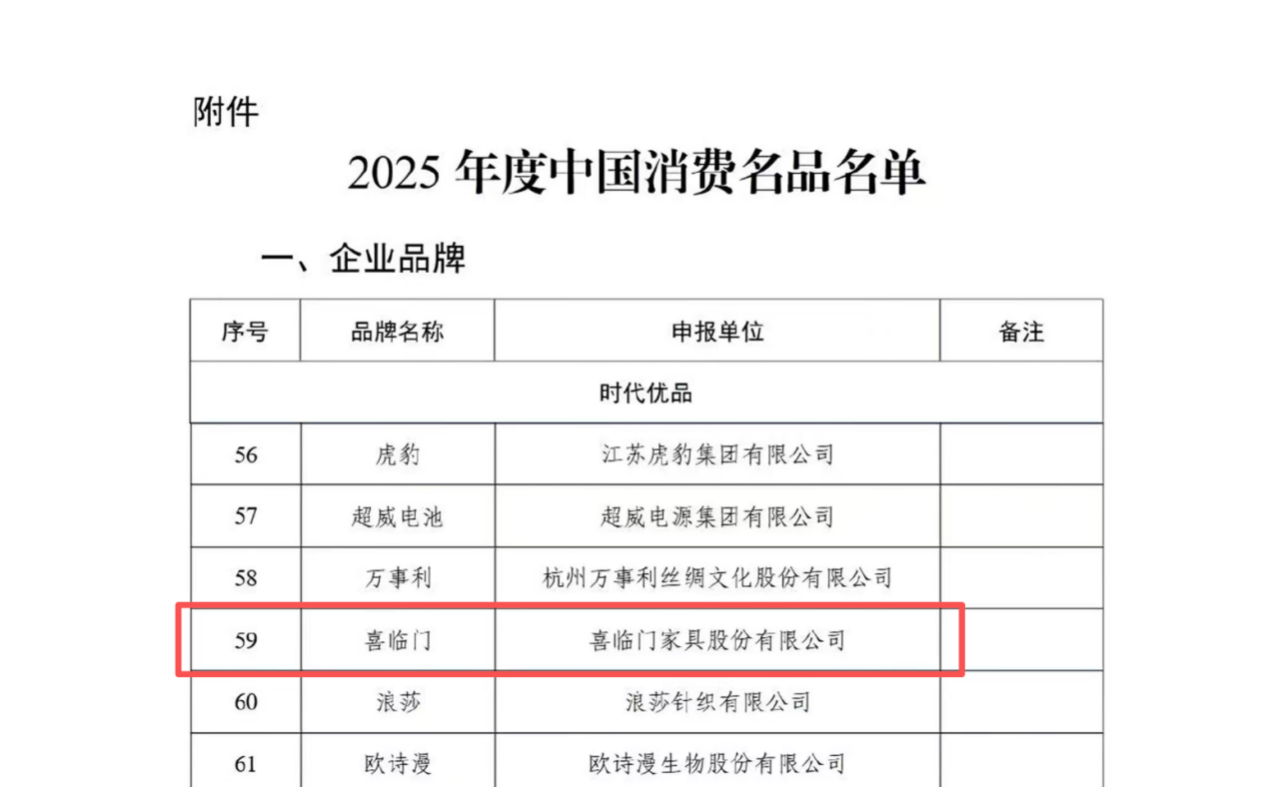
乳胶床垫品牌喜临门获评“时代优品” 以智慧睡眠创新领跑行业
Xin Lang Cai Jing· 2026-02-11 10:32
Core Viewpoint - The evaluation led by the Ministry of Industry and Information Technology aims to accelerate the establishment of a Chinese consumer brand system, promoting high-quality development in the consumer goods industry and enhancing domestic consumption and brand internationalization [3][6]. Group 1: Brand Evaluation - The brand evaluation is categorized into three dimensions: historical classics, era excellence, and trendy new brands, with a focus on product competitiveness and quality since the founding of New China [3][6]. - The brand "喜临门" (Xilinmen) has been recognized as an "Era Excellence" brand due to its strong product quality and reputation among consumers [3][6]. Group 2: Company Achievements - Xilinmen has accumulated significant achievements in research and standardization, holding over 2,500 valid patents and participating in the drafting of more than 50 international, national, and industry standards [3][6]. - The company has been awarded the title of "National Intellectual Property Advantage Enterprise" [3][6]. Group 3: New Product Launch - In 2024, Xilinmen launched a new smart sleep ecological brand "aise 宝褓," with its related products achieving L4 level certification for smart mattresses, making it the first brand in the industry to receive this highest level certification [3][6].

美国去年12月零售额不及预期
Jin Rong Jie· 2026-02-11 04:16
Core Insights - The U.S. retail sales for December 2025 are projected at $735 billion, showing no month-over-month growth, significantly below the market expectation of 0.4% and the previous month's growth of 0.6% [1] - Sales in categories such as automobiles, furniture, electronics, clothing, and health and personal care products experienced a month-over-month decline, while sales in building materials, gasoline, and food and beverages saw an increase [1] - Year-over-year, U.S. retail sales grew by 2.4% in December, which is lower than the consumer price index increase of 2.7%, indicating a real contraction in consumer spending [1] Economic Analysis - Heather Long, chief economist at Navy Federal Credit Union, noted that tariffs have severely impacted sales in automobiles, furniture, appliances, and clothing, leading to weak performance in these sectors [1] - Thomas Ryan, an economist at Capital Economics, predicts that January's consumer data may be weak due to extreme cold weather in some regions, and a significant slowdown in consumer growth is expected in the first quarter of 2026 [1]
中国已发布大宗消费品及服务消费国标210余项
Ren Min Ri Bao· 2026-02-10 22:54
Group 1 - The National Market Supervision Administration (NMSA) has initiated a three-year action plan to optimize the consumption environment, achieving significant progress with over 210 national standards for major consumer goods and service consumption released [1] - The NMSA emphasizes the importance of enhancing domestic consumption as a key driver for economic growth, aligning with the central economic work conference's focus on strengthening the domestic market [1] - The NMSA has established 19.325 million charging infrastructure units and 30,000 commercial logistics distribution points in rural areas, contributing to the development of a "15-minute convenient living circle" with 8,132 locations [1] Group 2 - The NMSA has launched the "Iron Fist" action to address consumer pain points, focusing on quality safety issues in children's toys, illegal modifications of electric bicycles, and trademark infringements in e-commerce, resulting in 72,000 cases being investigated [2] - A total of 823.6 million consumer products have been recalled, including 1.398 million power banks, to reduce consumer risks [2] - The NMSA has initiated a "cross-region return and exchange" initiative, with 214,000 offline stores participating, and improved consumer rights protection through revised complaint handling procedures [2]
你以为中国货消失了?美国关税倒逼全世界变成了中方的阳澄湖
Sou Hu Cai Jing· 2026-02-10 07:51
Group 1 - The article discusses the paradox of how a country with minimal industrial base, like Yemen, can produce missiles and drones, drawing parallels to the current state of the US-China trade war [1][3] - The US has imposed tariffs of up to 125% on Chinese goods, aiming to isolate China's economy, but this strategy has backfired, leading to increased global reliance on Chinese manufacturing [3][9] - In 2024, China's total trade with the US reached $688.2 billion, with exports to the US at $524.6 billion and imports from the US at $163.6 billion, highlighting China's significant influence on US trade [6][3] Group 2 - The article describes the "Yangcheng Lake" phenomenon, where despite apparent trade disruptions, Chinese manufacturing continues to infiltrate the US market through various indirect channels [11][18] - Companies are adapting by relocating parts of their production to other countries to circumvent high tariffs, allowing them to comply with US import regulations while still benefiting from Chinese manufacturing [11][18] - Vietnam, for instance, has become a key player in this dynamic, exporting $136.6 billion to the US while importing $13.1 billion from the US, heavily relying on Chinese materials for its exports [17][18] Group 3 - Trump's tariff strategy aimed to bring manufacturing back to the US and reduce trade deficits, but these goals are fundamentally flawed as the trade deficit is a result of US choices rather than external imposition [20][25] - The reliance on the dollar as a global currency allows the US to maintain trade deficits without immediate production costs, complicating the feasibility of Trump's manufacturing return strategy [25][27] - The article argues that the trend of "de-Americanization" is intensifying, with countries seeking alternatives to US economic dominance and increasingly depending on Chinese manufacturing [27][20] Group 4 - The conclusion emphasizes that control over manufacturing is essential for maintaining international competitiveness, contrasting the US's financial dominance with China's robust manufacturing capabilities [27]
广东省阳江市扎实推进重点工业产品质量监管工作
Xin Lang Cai Jing· 2026-02-10 04:36
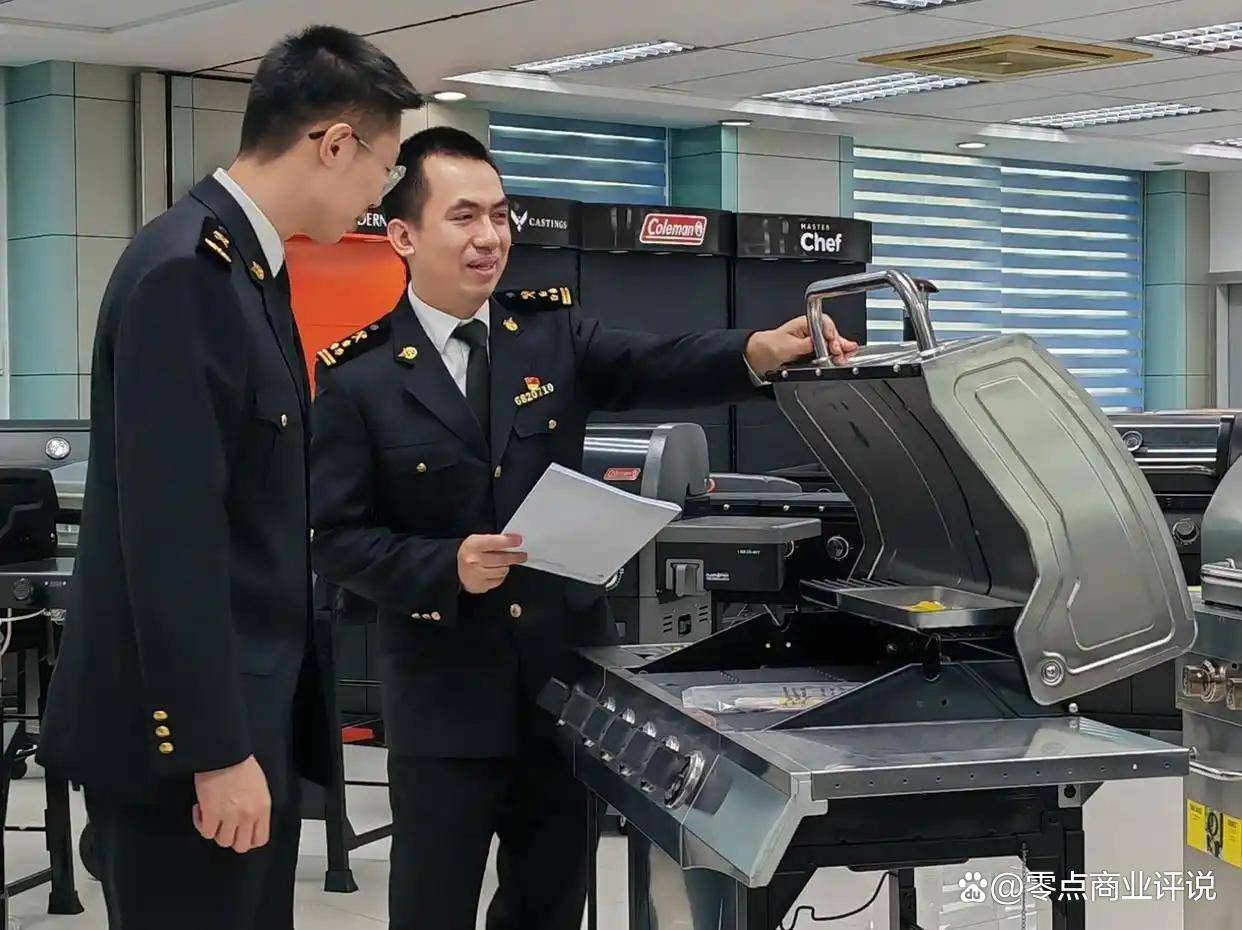
Group 1 - The core viewpoint emphasizes the proactive measures taken by the Yangjiang Market Supervision Bureau in Guangdong Province to enhance the quality and safety of key industrial products, focusing on consumer protection and risk management since 2025 [1] - The bureau has conducted inspections on 2,864 enterprises, addressing 75 quality hazards and handling 76 cases of quality violations, resulting in fines totaling 870,000 yuan [1] - A total of 998 key enterprises have been encouraged to appoint quality safety directors and establish a tiered responsibility management system to improve quality management at the source [1] Group 2 - The annual supervision and inspection plan has led to a 55.12% increase in product inspections, with 712 products checked and a coverage rate of 5.65%, identifying 21 non-compliant products [2] - A credit classification system has been established for 2,991 enterprises, with 2,951 rated as trustworthy (A-class), 36 as general (B-class), 3 as key regulatory (C-class), and 1 as particularly regulated (D-class) [2] - Targeted rectification measures have been implemented for high-risk products, with inspections conducted at 65 production enterprises and 950 retail units, resulting in 13 rectifications and 8 cases filed [2] Group 3 - Technical support has been provided to 850 enterprises, with 130 expert visits and training sessions held for over 1,500 participants to enhance quality management capabilities [3] - Public awareness campaigns have been conducted, distributing over 5,300 promotional materials and engaging with nearly 350 individuals to educate on consumer rights and quality issues [3] - Industry associations have been leveraged to promote quality ratings and credit evaluations, fostering collaboration to address common industry challenges [3]
AI床垫引爆睡眠经济:喜临门、慕思等上市公司加码布局,国标落地开启规范化新阶段
Cai Jing Wang· 2026-02-09 09:35
Group 1: Industry Overview - The sleep industry is undergoing a transformative breakthrough with the integration of artificial intelligence into traditional mattresses, creating innovative products that offer health management and smart interaction features [1] - The Chinese sleep economy has grown from 261.6 billion yuan in 2016 to 377.8 billion yuan in 2020, with an average annual growth rate of 9.6%, and is expected to exceed 1 trillion yuan by 2030 [3] - The acceptance of smart mattresses among consumers is still in its early stages, with features like adjustable firmness, heating, ventilation, and massage functions becoming key drivers for purchasing decisions [3] Group 2: Company Developments - Xilinmen's smart sleep ecosystem brand, aise Baobao series, has achieved sales in the tens of millions, establishing a strong competitive position and positive brand image in the market [1] - In 2025, Xilinmen reported a revenue of 6.196 billion yuan, a year-on-year increase of 3.68%, and a net profit of 399 million yuan, up 6.45% [3] - Xilinmen has invested over 1.2 billion yuan in research and development over the past decade, successfully launching the aise Baobao smart mattress series [4] Group 3: Technological Advancements - The AI smart mattress T11+ launched by Mousse Co. in March 2025 claims to improve average sleep onset speed by nearly 50%, reduce turning frequency by 14.6%, and increase sleep duration by 38% [1][7] - The industry is witnessing a shift towards smart and health-oriented innovations, with companies focusing on technology research and scenario-based services to build brand competitive barriers [7] Group 4: Regulatory Environment - The national standard for smart mattresses (GB/T 46272—2025) was officially released in August 2025 and will be implemented in March 2026, providing a unified standard for the intelligence, functionality, and safety of smart mattress products [2] Group 5: Market Expansion - Xiangxin Home is expanding its investment in smart furniture production, including a new project in Cambodia with an investment of 150 million yuan, aimed at enhancing production capacity to meet growing market demand [8][9] - The North American market for functional sofas is projected to grow from approximately 12.55 billion USD in 2020 to about 15 billion USD by 2024, with a compound annual growth rate of around 4.6% [8]
环球家居周报:2025年家具类投诉3.8万件,首个《适老家具设计指南》国家标准实施,慕思新代言人……
Huan Qiu Wang· 2026-02-09 06:07
Group 1: Policy and Market Support - The 2026 Central Document emphasizes support for rural consumption, particularly in smart home appliances and green building materials, aiming to modernize rural living and improve the environment [1] - Nine departments, including the Ministry of Commerce, issued a plan to encourage the exchange of old for new during the Spring Festival, increasing subsidies and supporting offline retail [2] Group 2: Consumer Complaints and Standards - In 2025, furniture-related complaints reached 37,985, marking a slight decrease of 0.04% year-on-year, amidst rising market issues due to deceptive practices by some merchants [3] - The first national standard for elderly furniture design was implemented, focusing on safety and usability for older adults [5] Group 3: Industry Performance and Data - Zhejiang's furniture industry reported an annual output value of 114.1 billion yuan in 2025, with a decline in overall production but a slight increase in wooden furniture output [6] - Guangdong's sales from the old-for-new program reached 264.2 billion yuan in 2025, accounting for 10% of the national total [6] Group 4: Brand and Market Developments - The "Foshan Furniture" collective trademark was launched to enhance brand recognition and quality standards in the furniture industry [7] - The establishment of a Paris office by the Nankang Furniture Association marks a strategic move to expand into the European market [8] - IKEA opened its first store in Dongguan, focusing on community engagement and offering over 3,000 products [13] Group 5: Corporate Actions and Changes - The announcement of Yi Yang Qian Xi as the global brand ambassador for DeRUCCI aims to enhance brand visibility and appeal to younger consumers [11] - A control change at True Love Home has been confirmed, with a significant share transfer to Guangzhou Tanji Yuanzheng Technology, potentially leading to new strategic directions [15]
美国工厂车间冷却,广东江门烧烤炉火正旺!全球产业链的冰火之歌
Sou Hu Cai Jing· 2026-02-08 02:12
Core Insights - The article highlights the contrasting scenarios in the U.S. manufacturing sector, with significant factory closures and job losses on one side, and the thriving barbecue grill manufacturing industry in Jiangmen, China, on the other, illustrating a profound shift in global supply chains [1][3][18] Group 1: U.S. Manufacturing Challenges - The U.S. manufacturing sector has lost over 200,000 jobs since 2023, with a net reduction of 63,000 jobs in 2025 alone, largely attributed to tariff policies disrupting supply chains and causing recession fears [5][6] - Iconic manufacturers like Howard Miller and Cleveland-Cliffs have announced permanent closures due to weak demand and low product prices, affecting hundreds of families [5][6] - Approximately 91% of U.S. manufacturers rely on imports for production, and tariffs have significantly increased the costs of essential raw materials like steel and aluminum, making U.S. products less competitive [9] Group 2: Global Supply Chain Dynamics - The article emphasizes that U.S. manufacturers are struggling to relocate production lines from China due to high costs and inefficiencies, with companies like Learning Resources facing millions in additional expenses [11] - Jiangmen, China, has emerged as a new hub for the global barbecue industry, benefiting from a well-established and efficient manufacturing ecosystem that allows for rapid production and innovation [13][18] - The shift in manufacturing is indicative of a broader economic trend where low-value, labor-intensive manufacturing is moving to regions with better resources and efficiency, while the U.S. focuses on high-tech, high-value industries [16][18]
中山好物亮相深圳 跨珠江消费同城化
2 1 Shi Ji Jing Ji Bao Dao· 2026-02-07 11:32
Core Insights - The event "Guanghuo Goes Global: Zhongshan Goods Enter Shenzhen" marks a shift in the approach to regional commerce, showcasing a wide range of products from Zhongshan in Shenzhen, including home appliances, furniture, and food [2] - The event facilitated the signing of 36 procurement and sales projects between enterprises from both cities, with a total value of 3 billion yuan [2] Group 1: Economic Impact - Zhongshan's tourism revenue reached 26.9 billion yuan in 2025, reflecting a year-on-year growth of 13.9%, with retail sales increasing by 3.4% [3] - The event featured over 100 agricultural specialty products from Zhongshan, including local delicacies that attract tourists from Shenzhen [3] Group 2: Product Offerings - The event included live demonstrations of local cuisine, such as freshly made pigeon and chrysanthemum sashimi, with significant sales reported [4] - Zhongshan showcased over 400 new products from more than 150 manufacturing companies, including innovative technology items like robots and smart home appliances [4] Group 3: Housing Opportunities - The event introduced housing options for Shenzhen residents, including rental and sale properties in Zhongshan, with significant price advantages compared to Shenzhen [5] - A three-bedroom apartment in Ma'anshan Island is offered at a monthly rent of 1,700 yuan, while similar properties in Shenzhen can cost up to 10,000 yuan [5] Group 4: Transportation and Integration - The opening of the Shenzhen-Zhongshan Bridge has significantly improved connectivity, with an average daily traffic of 89,000 vehicles and a 1.8-fold increase in cross-city truck traffic [7] - Public transport options have expanded, with over 30 bus routes facilitating easy access between the two cities [8] Group 5: Industrial and Innovation Collaboration - Zhongshan is actively transforming its industrial landscape, having repurposed over 53,000 acres of inefficient industrial land for modern industrial parks [9] - Collaborative initiatives have led to the establishment of the Huawei (Zhongshan) AI Promotion Center, fostering partnerships between 37 Shenzhen companies and Zhongshan's digital transformation efforts [9]