对冲基金

Search documents
另类投资简报 | 景顺加码私募市场布局;QRT将成中环IFC最大租户
彭博Bloomberg· 2026-01-22 06:05
Private Equity Market Review - The private equity market is experiencing significant activity, with traditional asset managers increasingly entering the alternative investment space through acquisitions and joint ventures [4][6]. - Invesco is expanding its private market strategy by partnering with LGT Capital Partners to create diversified alternative asset portfolios for U.S. retail and retirement clients, marking at least the second major collaboration since April [4]. - The acquisition of Golden Goose by HSG, valued at over €2.5 billion, indicates ongoing investor interest in European luxury brands despite industry pressures [4]. Hedge Fund Market Overview - The Bloomberg Hedge Fund Index recorded a preliminary increase of 0.9% last month, with the equity hedge fund index leading at an 18% increase year-to-date [4]. - Qube Research & Technologies Ltd. signed a significant lease for approximately 146,000 square feet in Hong Kong's Central Business District, indicating growth and expansion in the hedge fund sector [4]. - The performance of various hedge fund strategies as of December 31, 2025, shows equity hedge funds leading with a 1.19% return for the month and 18.16% year-to-date [5]. Market Dynamics - The private equity market is seeing a trend where traditional stock and bond managers are making substantial moves into alternative markets, enhancing the penetration of private assets into broader retail and long-term funding groups [4]. - The ongoing regulatory pressures in the South Korean private equity market are drawing attention, highlighting the challenges faced by firms operating in that region [6].


“1920s vs 2020s”!华尔街教父、欧央行行长与历史学家激辩:“AI、关税和地缘”把世界拖向“1930”?
Hua Er Jie Jian Wen· 2026-01-22 02:22
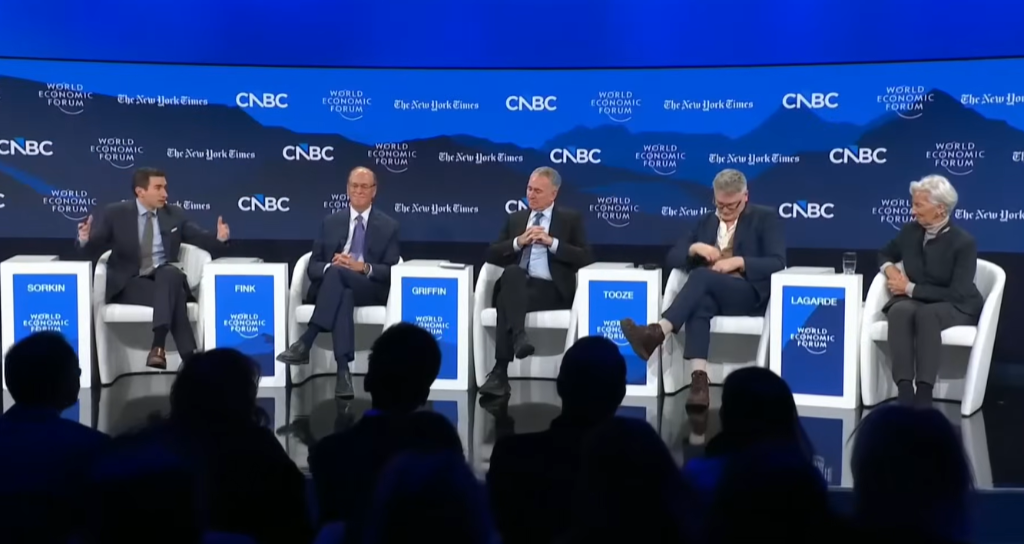
Group 1 - Global financial leaders warn that government fiscal irresponsibility and geopolitical fragmentation may negate the productivity gains from AI [3][4] - The discussion at the World Economic Forum highlighted the parallels between the current economic climate and the pre-Great Depression era, particularly in terms of technological advancements and political failures [4][7] - Ken Griffin emphasized that the core risk in 2026 is not from private capital markets but from reckless government spending, with U.S. national debt reaching $38 trillion [5][7] Group 2 - Adam Tooze pointed out that the current technological boom, driven by AI, mirrors the 1920s' electrification and mass production, but political failures could lead to economic collapse [4][7] - Christine Lagarde noted that global trade is under unprecedented pressure due to geopolitical fragmentation and tariffs, which could hinder the scale effects needed for AI [4][10] - The average tariff between the U.S. and Europe has surged from 2% to over 12%, with a potential rise to 15%, impacting inflation and economic growth [10][11] Group 3 - Larry Fink stated that AI is not a bubble but will lead to significant failures, creating a "K-shaped" economy where large firms benefit disproportionately [6][8] - The cost of developing cutting-edge AI models is around $1 billion, and U.S. capital expenditure on data centers is projected to reach $600 billion this year [8][10] - Lagarde warned that geopolitical divisions and protectionism could obstruct the data flow necessary for AI efficiency [8][10] Group 4 - The discussion highlighted the importance of central bank independence in managing fiscal policies and avoiding reliance on monetary solutions to address structural imbalances [12][33] - Lagarde emphasized that not all debt is equal, and productive investments will always find funding, while non-productive debt will face challenges [33][42] - The need for cooperation in managing AI's development and its implications for society was underscored, with concerns about energy consumption and social consequences [32][34]

对冲基金经理Ken Griffin批评特朗普对格陵兰岛的谋求
Xin Lang Cai Jing· 2026-01-21 11:34
"我无法理解的是,我们为什么要为一块被冰覆盖的岩石争斗,"这家美国对冲基金Citadel的创始人在达 沃斯对听众表示。 美国亿万富翁对冲基金经理Ken Griffin批评了特朗普试图获取格陵兰岛的行为,称美国"以一种我无法 理解也不认同的方式破坏了与欧洲盟友的关系"。 "美国有权根据自身需要在格陵兰岛建立军事基地,我们并不需要格陵兰岛本身,"他补充道。 这位对冲基金经理历来是共和党候选人的重要捐赠者,但在去年的总统选举中并未表态支持特朗普。 责任编辑:何云 美国亿万富翁对冲基金经理Ken Griffin批评了特朗普试图获取格陵兰岛的行为,称美国"以一种我无法 理解也不认同的方式破坏了与欧洲盟友的关系"。 "我无法理解的是,我们为什么要为一块被冰覆盖的岩石争斗,"这家美国对冲基金Citadel的创始人在达 沃斯对听众表示。 "美国有权根据自身需要在格陵兰岛建立军事基地,我们并不需要格陵兰岛本身,"他补充道。 这位对冲基金经理历来是共和党候选人的重要捐赠者,但在去年的总统选举中并未表态支持特朗普。 责任编辑:何云 ...
最赚钱对冲基金,要来A股了
华尔街见闻· 2026-01-21 10:37
Core Viewpoint - Citadel Advisors Singapore Pte. Limited, a subsidiary of Citadel, has received approval from the China Securities Regulatory Commission (CSRC) for Qualified Foreign Institutional Investor (QFII) status, marking a significant step in its strategy to re-enter the Chinese market, especially after a strong performance in the A-share market [3][22]. Group 1: Citadel's Performance and Strategy - Citadel has generated a total net profit of $83 billion (approximately 578.4 billion RMB) since its inception in 1990, making it the most profitable hedge fund in history [3][13]. - The flagship Wellington fund has achieved an average annual return of 19.2% since its inception, significantly outperforming the market average [5][9]. - Despite a challenging year in 2025 with a return of 10.2%, which is the worst since 2018, Citadel remains the second-best performing hedge fund globally [10][11]. Group 2: Expansion into the Chinese Market - Citadel's renewed focus on the Chinese market is driven by the potential for growth and the recent strong performance of the A-share market, which saw the Shanghai Composite Index rise for 17 consecutive trading days [3][14]. - The company plans to leverage its QFII status to access a broader range of investment opportunities in China, including the ability to participate in the STAR Market and engage in margin trading [24]. - Citadel's previous attempts to enter the Chinese market faced regulatory challenges, but recent developments indicate a more favorable environment for foreign investment [20][21]. Group 3: Market Context and Implications - The hedge fund industry in Asia, particularly in Singapore and Hong Kong, has seen significant growth, with Singapore's hedge fund assets increasing by 37% to reach 327 billion SGD (approximately 254 billion USD) by the end of 2024 [24]. - The influx of foreign capital, including Citadel's, is expected to enhance liquidity in the A-share market, benefiting overall market dynamics [25].

全球对冲基金之王诞生:他一年狂赚189亿美元
Sou Hu Cai Jing· 2026-01-21 10:11
在这个对冲基金的丰收之年,全球排名前20的对冲基金经理为投资者赚得1160亿美元,其中表现最出色的当属伦敦选股高手克里斯·霍恩 (Chris Hohn)。 英国对冲基金经理克里斯·霍恩对GE航空航天(GE Aerospace)、空中客车(Airbus)及赛峰集团(Safran)的投资,在2025年获得了丰厚回报。图片来 源:GETTY IMAGES "对冲基金管理资产规模创下历史峰值,股市与债市表现强劲,同时宏观交易机会大量涌现,多重因素共同促成了这一亮眼业绩。"索弗在一份新闻稿中表 示。 | 对冲基金 | 投资组合经理 | 成立以来 | 2025 GE | | --- | --- | --- | --- | | | | 净收益 | 净收益 | | | | (亿美元) | (亿美元) | | 城堡投资 | 肯·格里芬 | 904 | 74 | | (Citadel) | | | | | 德劭 | 多位 | 799 | 127 | | (D.E. Shaw) | | | | | 桥水基金 | 瑞·达利欧/多位 | 791 | 156 | | (Bridgewater) | | | | | 千禧管理 | 伊斯雷尔 ...
桥水中国2025年回报率达45%创五年最佳,资管规模600亿领跑外资私募
Xin Lang Cai Jing· 2026-01-21 07:55
炒股就看金麒麟分析师研报,权威,专业,及时,全面,助您挖掘潜力主题机会! 政策支撑创造有利环境 桥水表示,中国政府的支持性政策立场、外部风险缓解以及DeepSeek成功带来的乐观情绪提振了市场 信心,为其交易的资产创造了"非常有利"的环境。 来源:华尔街见闻 全球最大对冲基金桥水基金(Bridgewater Associates)表示今年仍看好中国股市,2025年其中国境内基 金回报率高达45%,大幅跑赢市场基准。创下至少五年来最佳表现。 在去年大幅上涨后,桥水认为中国股票"在一定程度上仍具吸引力",因企业盈利预期改善。该公司上海 私募基金管理公司在12月致投资者信中表示,对股票持"温和乐观"态度,无论是从绝对回报还是相对其 他资产而言。 据投资者信函,桥水境内全天候增强基金四季度上涨9.1%,将全年扣费前回报推升至44.5%。该基金跨 股票、债券和大宗商品进行分散配置。相比之下,基准沪深300指数上涨18%。 这一业绩为桥水全球创纪录的一年锦上添花,并延续了其在中国的强劲势头,帮助其吸引本土富裕投资 者,在规模达7万亿元人民币(1万亿美元)的中国对冲基金市场扩大对外资竞争对手的领先优势。 尽管包括贸易战在内 ...
桥水看好中国股票,其境内对冲基金2025年上涨45%
Hua Er Jie Jian Wen· 2026-01-21 07:07
Core Viewpoint - Bridgewater Associates is optimistic about Chinese stocks, projecting a 45% increase for its domestic hedge fund by 2025 [1] Group 1 - Bridgewater's positive outlook on Chinese equities indicates a strong belief in the potential growth of the Chinese market [1] - The forecasted 45% rise in the hedge fund's value suggests significant confidence in investment opportunities within China [1]
大空头伯里10亿美元做空AI双雄!美债遭抛、黄金破2500美元,贝莱德CEO发出严重警告,次贷危机或发生
Sou Hu Cai Jing· 2026-01-20 16:45
伯里的目光聚焦在英伟达的财务报表上。 他特别指出,英伟达高达334亿美元的应收账款和198亿美元的库存,是一个危险的信号。 他认为,这暗示着下游 需求可能被高估,存在"渠道填充"的现象。 部分AI芯片可能积压在分销商或客户的仓库里,而非真正被市场消化。 在伯里公开他的巨额空头押注后不到一个月,另一件震动华尔街的事件发生了。 2026年1月20日,国际知名做空机构Capitalwatch发布了一份针对纳斯达克 上市公司AppLovin Corporation的做空报告。 这份长达67页的报告指控,这家专注于AI广告解决方案的明星公司,其股东结构涉嫌系统性的合规风险和重大 金融风险。 报告指出,主要股东Hao Tang及其背后的资本网络,涉嫌将来自东南亚的非法资金注入美国资本市场。 更核心的指控是,AppLovin的经营数据是通过造假 得来的,并且涉嫌从事洗钱业务。 这家公司的股价曾在AI热潮中,从2023年的最低点9.41美元,飙升至745美元,涨幅超过80倍。 在Capitalwatch预告报告 发布后的三天里,AppLovin的股价累计下跌了15%。 做空报告的发布,在华尔街引发了一轮关于AI商业模式可持续 ...
桥水达利欧警告:特朗普政策可能引发“资本战”
Hua Er Jie Jian Wen· 2026-01-20 16:37
Group 1 - Ray Dalio, founder of Bridgewater Associates, warns that President Trump's policies may lead to a reduction in foreign investment in U.S. assets, potentially triggering a "capital war" [1] - Dalio emphasizes the importance of diversification in investment portfolios, recommending an allocation of 5% to 15% in gold as a key hedge against economic uncertainties [1] - On the same day as Dalio's speech, gold prices reached a historic high, surpassing $4,750, reflecting investor movement towards safe-haven assets amid escalating trade tensions [1] Group 2 - Deutsche Bank warns that Europe, as one of the largest holders of U.S. assets with over $8 trillion, could "weaponize" capital, escalating disputes beyond tariffs to a direct conflict affecting U.S. debt [2]
桥水大爆发,50年来最佳业绩!
Xin Lang Cai Jing· 2026-01-20 03:12
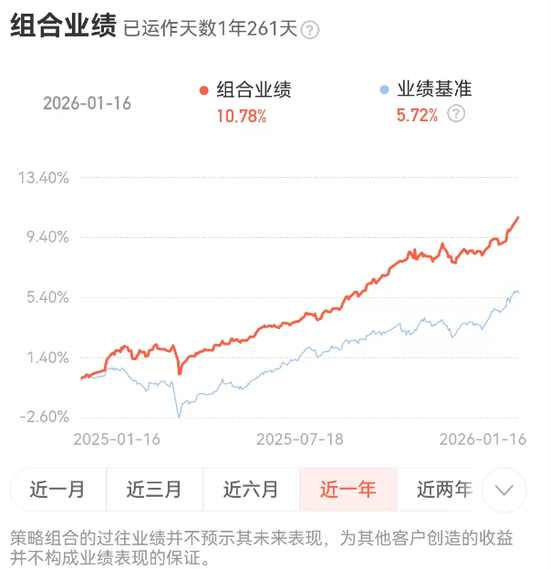
Group 1 - The core point of the article highlights the impressive performance of Bridgewater Associates, the world's largest hedge fund, which achieved record returns in 2025, breaking a trend of annual returns below 3% from 2012 to 2024 [1][18] - Bridgewater's All Weather strategy focuses on risk parity, balancing risk contributions rather than simply allocating funds evenly across different assets, which has led to strong performance in various market conditions [19][21] - Domestic alternatives to Bridgewater's strategy have emerged, with many private equity firms adopting risk parity models and achieving returns between 20% to 40% in 2025 [19][20] Group 2 - The China Europe Wealth Management's Multi-Asset All Weather strategy achieved a return of 10.78% over the past year, significantly outperforming its benchmark of 5.72%, with a maximum drawdown of only 1.94% and a Sharpe ratio of 3.77 [22] - The service offerings for high-net-worth clients include a comprehensive suite of products, featuring over 80 private equity products from more than 30 top managers, covering various mainstream strategies [25][26] - A dedicated remote advisory team of over 30 members, with an average of more than 8 years of experience, has provided personalized investment solutions and ongoing support to thousands of high-net-worth clients, achieving a customer satisfaction rate exceeding 90% [28][30] Group 3 - The investment strategy includes continuous tracking and personalized asset diagnosis reports, which help clients navigate market fluctuations and avoid irrational decisions during periods of volatility [30][33] - Recent events, such as the "Insight 2026" investment strategy conference, have facilitated direct communication between investors and fund managers, enhancing the understanding of market dynamics and investment strategies [32][33] - The overall service model aims to provide clients with a comprehensive investment experience, ensuring they are well-informed and supported throughout their investment journey [33]