数码和智能产品

Search documents
国家发改委:将统一“两新”补贴标准,落实全国统一大市场要求
Mei Ri Jing Ji Xin Wen· 2026-01-20 02:50
Group 1 - The National Development and Reform Commission (NDRC) will unify the subsidy standards for "two new" policies, which include vehicle scrapping and replacement, as well as the replacement of six categories of home appliances and four categories of digital and smart products [1] - This initiative aims to implement a nationwide unified market requirement, ensuring consistent subsidy standards across the country [1] - The announcement was made by Wang Shancheng, the Director of the Resource Conservation and Environmental Protection Department of the NDRC, during a press conference [1]
发改委:将统一“两新”补贴标准
Xin Hua Cai Jing· 2026-01-20 02:37
Core Viewpoint - The National Development and Reform Commission (NDRC) is set to unify subsidy standards for various sectors, including automotive and electronics, to promote a nationwide unified market [1] Group 1: Subsidy Standards - The NDRC will implement a unified subsidy standard for six categories of automotive scrappage and replacement, as well as for the trade-in of six categories of household appliances [1] - Additionally, the subsidy standard will apply to four categories of digital and smart products [1]
视频丨“新国补”政策落地 消费市场热力全开
Sou Hu Cai Jing· 2026-01-14 07:38
Group 1 - The core viewpoint of the articles highlights the positive impact of the new subsidy policies in China, particularly in Henan and Sichuan provinces, which have stimulated consumer spending in the automotive and electronics sectors [1][6][7] - The "National Subsidy" policy has shifted to a model where subsidies are calculated as a percentage of the new vehicle price, attracting consumer interest and leading to increased sales [2][6] - Various car manufacturers are offering additional promotions, such as tax rebates and extra subsidies for trade-ins, which complement the national policies and further boost market sales [2][6] Group 2 - In Sichuan, the new subsidy policy for home appliances and digital products has been implemented, allowing consumers to receive a 15% subsidy on eligible products, which has significantly increased market activity [7][13] - The focus of the subsidy policies is on promoting energy-efficient and smart products, with new categories like smart glasses and smartwatches appealing to younger consumers [9][13] - The implementation of these policies has not only benefited consumers but also encouraged retailers to upgrade their product offerings, enhancing the overall vitality of the consumer market [13]

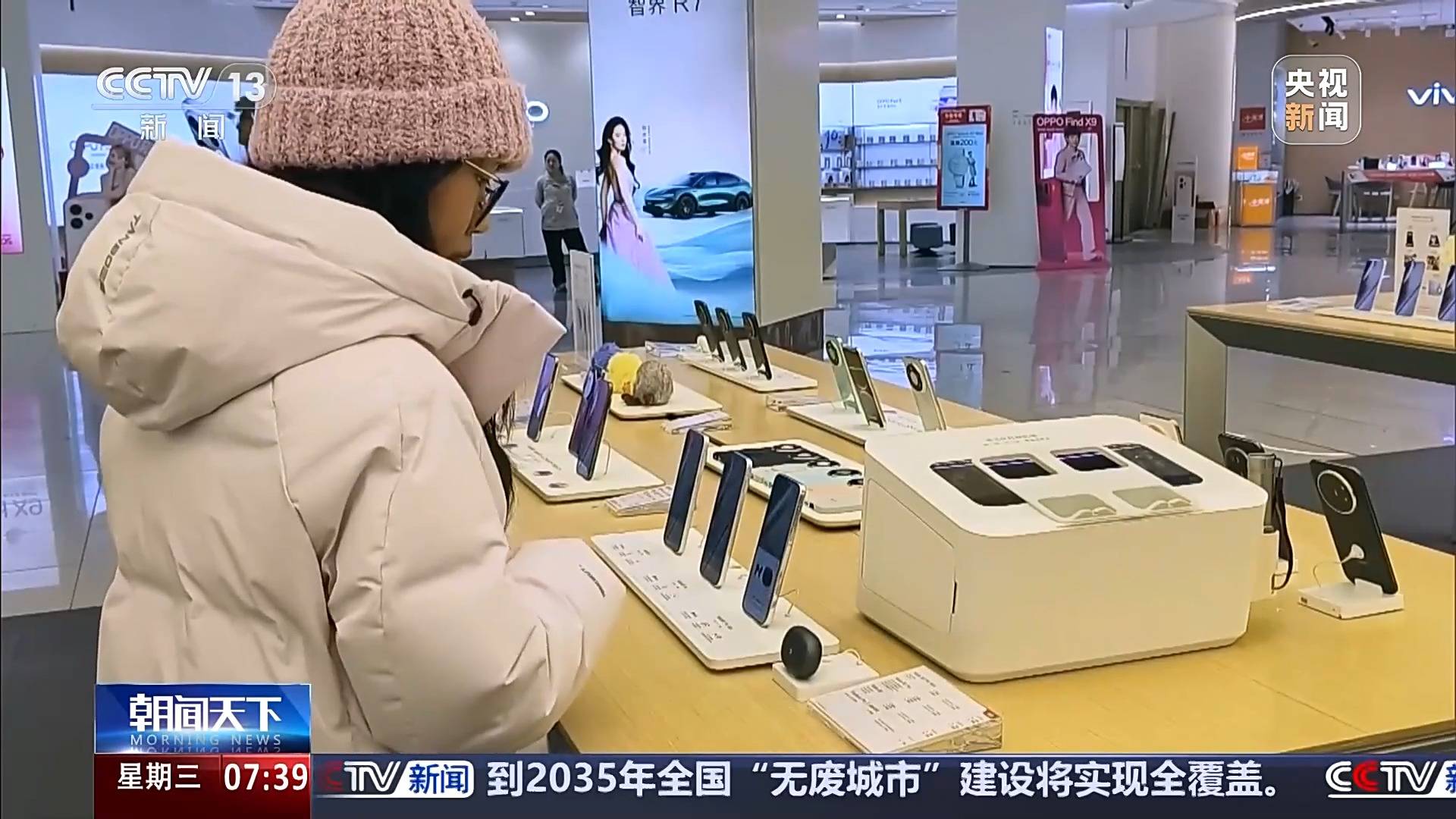
2026年云南省数码和智能产品购新补贴活动来了!
Xin Lang Cai Jing· 2026-01-11 20:19
Group 1 - The core announcement is about the 2026 Yunnan Province digital and smart product purchase subsidy program, detailing the consumer coupon collection methods and the first batch of participating merchants [1] - The program aims to implement large-scale equipment updates and promote the replacement of old consumer goods as per national directives [1] - Consumers can collect electronic coupons through three methods: store coupons, rural exclusive coupons, and e-commerce platform coupons [1] Group 2 - Coupons will be distributed on a first-come, first-served basis starting from January 10, 2026, with specific collection times for different types of coupons [2] - Each consumer can collect a maximum of two coupons per month for a single product, with a total limit of five coupons during the activity period [3] - The electronic coupons will be redeemed through a "payment reduction" method, where the government subsidy is automatically deducted from the total price at the point of sale [4] Group 3 - The subsidy standard allows for a 15% discount on the final sales price of eligible products, with a maximum subsidy of 500 yuan per item for products priced up to 6000 yuan [5] - The first batch of participating merchants includes 2,569 entities and 7,043 stores, with ongoing enrollment and dynamic adjustments planned [7] - Further details and updates will be provided through official channels, including the Yunnan Provincial Department of Commerce's website and app [7]
山西省2026年家电以旧换新、数码和智能产品购新补贴通告
Xin Lang Cai Jing· 2026-01-10 02:12
Core Points - The subsidy program for replacing old appliances and purchasing new digital and smart products in Shanxi Province will start on January 9, 2026 [1] - Consumers who purchased subsidized products in 2025 can continue to enjoy subsidies for similar products in 2026 [1] Appliance Subsidy Details - The subsidy applies to six categories of home appliances: refrigerators (including freezers), washing machines (including washer-dryer combos), televisions, air conditioners (including home central air conditioning and air source heat pumps), water heaters, and computers (including desktops and laptops, excluding self-assembled compatible machines) [1] - The subsidy standard is set at 15% of the final sales price after all discounts, with a maximum subsidy of 1500 yuan per appliance [1] Digital and Smart Product Subsidy Details - The subsidy also covers four categories of digital and smart products: mobile phones, tablets (including smart education tablets), smartwatches (and bands), and smart glasses (including AR/VR headsets), with a sales price limit of 6000 yuan per item [1] - Each consumer can receive a subsidy for one item per category during the policy execution period, with a maximum subsidy of 500 yuan per digital and smart product [1]
山西2026年家电以旧换新、数码和智能产品购新补贴政策来啦
Xin Lang Cai Jing· 2026-01-09 10:25
Group 1 - The core announcement is that Shanxi Province will launch a subsidy program for replacing old home appliances and purchasing new digital and smart products starting January 9, 2026 [1] - The subsidy standard is set at 15% of the final sales price after all discounts, with a maximum subsidy of 1,500 yuan for home appliances and 500 yuan for digital and smart products per item [1] - Subsidy qualifications will be issued weekly through the "Yunshanfu" platform, with specific time frames for both online and offline transactions [1] Group 2 - Each consumer is limited to one subsidy per category for six types of home appliances and four types of digital and smart products during the policy implementation period [1]
【图解】一图看懂2026“国补”计划
Yang Shi Xin Wen Ke Hu Duan· 2026-01-06 00:50
Group 1 - The government has initiated a new phase of special long-term treasury bonds, with the first batch of 62.5 billion yuan allocated to support a consumption upgrade program [1] - The focus is on enhancing the coverage of key consumer goods and promoting energy-saving and carbon reduction initiatives [2] - Subsidies will be concentrated on high-efficiency products, particularly in the automotive, digital, and smart home sectors [2] Group 2 - Consumers purchasing certain products, such as smart glasses, will receive a subsidy of 15% of the product price, capped at 500 yuan per item [3] - The subsidy applies to a range of household appliances that meet energy efficiency or water efficiency standards, with a maximum subsidy of 1500 yuan per item for eligible products [6] - The program encourages the replacement of old vehicles, with specific guidelines for subsidies on scrapped vehicles [6]

7部门联合发布提质增效实施2026年消费品以旧换新政策
蓝色柳林财税室· 2026-01-04 07:45
Core Viewpoint - The article outlines the implementation of a new policy for the recycling and upgrading of consumer goods in 2026, emphasizing the need for coordinated efforts among various departments and the establishment of a unified subsidy framework to enhance efficiency and effectiveness in the consumer market [2][8]. Group 1: Policy Implementation and Funding - The central government will continue to allocate long-term special bond funds to support the recycling policy, with local governments required to match funding proportionally [2]. - A unified subsidy standard will be established for four key areas: automobile scrapping and replacement, six categories of home appliances (refrigerators, washing machines, televisions, air conditioners, computers, water heaters), and four categories of digital and smart products (mobile phones, tablets, smart watches/bands, smart glasses) [2]. - Local governments must develop a balanced plan for the use and disbursement of subsidy funds to ensure smooth implementation of the recycling policy [3]. Group 2: Local Autonomy and Support for New Technologies - Local governments are granted more autonomy to implement subsidy policies, allowing them to determine specific subsidy categories and standards within the framework of the national policy [4]. - The policy encourages support for high-efficiency, water-efficient, and environmentally friendly products, as well as new generation smart terminals as defined by the "Artificial Intelligence +" initiative [4]. Group 3: Efficiency and Compliance - The article emphasizes the need to upgrade the subsidy information system to enhance the efficiency of subsidy application reviews and approvals, connecting data across various departments [5]. - A unified management system for participating businesses will be established to ensure fair participation and prevent fraudulent activities [5][6]. - Local governments are required to monitor product pricing and quality to prevent illegal practices such as selling substandard goods [6]. Group 4: Organizational Support and Public Engagement - A collaborative mechanism among various government departments will be established to enhance data sharing and joint inspections to prevent fraud [7]. - Channels for public consultation and reporting on the recycling policy will be created to encourage social oversight and improve the management of subsidy funds [7]. - The article calls for promotional activities to raise awareness of the recycling policy and its benefits, integrating it with broader consumer initiatives [7].
新一轮消费品以旧换新补贴政策启动,多地市场消费活跃
Sou Hu Cai Jing· 2026-01-04 05:42
Group 1 - A new round of national subsidies for consumer goods trade-in will be implemented starting January 1, 2026, with positive feedback from multiple local markets [1] - The subsidy policy continues to support automobiles, home appliances, and digital and smart products, with specific incentives for consumers purchasing eligible new energy vehicles and energy-efficient appliances [3] - The subsidy for new energy vehicles can reach up to 20,000 yuan based on the sales price, while home appliances and digital products can receive a 15% subsidy with caps of 1,500 yuan and 500 yuan respectively [3] Group 2 - The subsidy method for automobile purchases has shifted from fixed amounts to a percentage of the vehicle price, allowing consumers to combine it with a half-price tax policy for new energy vehicles, potentially leading to a total subsidy of 20,000 yuan [4] - There has been a noticeable increase in customer traffic at automobile sales outlets during the New Year holiday, indicating a positive market response to the new policy [4] - Authorities will optimize fund allocation and implement strict measures against fraudulent claims to enhance the efficiency of fiscal funds and improve consumer satisfaction [4]
2026国补新政落地 首笔625亿元支持以旧换新
Sou Hu Cai Jing· 2026-01-04 00:24
Group 1 - The core viewpoint of the news is the implementation of a large-scale equipment update and consumer goods trade-in policy starting January 1, 2026, as announced by the National Development and Reform Commission and the Ministry of Finance [1] - The policy includes an allocation of 62.5 billion yuan for the first batch of special long-term bonds to support the trade-in program, aimed at boosting consumption during peak seasons like New Year's and Spring Festival [1][3] Group 2 - The scope of the trade-in policy focuses on key consumer goods, specifically in the automotive, home appliance, and digital/smart product sectors [3] - For automobiles, the subsidy structure has shifted from a fixed amount to a percentage of the new car sales price, with specific rates: 12% for new energy vehicles (up to 20,000 yuan), 10% for qualifying fuel vehicles (up to 15,000 yuan), and various rates for trade-ins [3] - Home appliance subsidies are now limited to products with a 1st-level energy or water efficiency standard, offering 15% of the product price with a cap of 1,500 yuan per item [3] - Digital and smart product subsidies remain at 15% of the selling price, with a maximum cap of 500 yuan for items priced up to 6,000 yuan [3]