智能穿戴

Search documents
上证早知道|卫星互联网 加速组网!易点天下 停牌核查完成!华菱线缆 终止收购商业航天资产!
Shang Hai Zheng Quan Bao· 2026-01-19 23:01
Company News - Hunan YN announced an expected net profit of 1.15 billion to 1.4 billion yuan for 2025, representing a year-on-year growth of 93.75% to 135.87%, driven by the rapid development of the new energy vehicle and energy storage markets [10] - Jiangxi Copper has signed a cooperation framework agreement with a military materials supplier to supply various copper and nickel products, effective until December 31, 2028, which will enhance the company's market competitiveness [10] - Ding Tong Technology expects a net profit of 242 million yuan for 2025, an increase of 119.59% compared to the previous year [10] - ST Yuan Zhi anticipates a net profit of 90 million to 110 million yuan for 2025, a year-on-year increase of 396.77% to 507.16%, supported by strong export growth and domestic market opportunities [11] - Hao Shang Hao expects a net profit of 65 million to 83 million yuan for 2025, reflecting a year-on-year growth of 115.64% to 175.35%, driven by increased sales and improved gross margins [12] Industry Insights - The satellite internet industry is entering a rapid development phase, with successful launches of low-orbit satellites and a growing number of satellites in orbit, indicating a significant market opportunity for satellite manufacturing and related industries [7] - The demand for AI is driving up the prices of copper-clad laminates (CCL) due to supply constraints and rising raw material costs, with price increases of over 30% announced by major suppliers [9] - The electric grid sector is experiencing a surge, with ETFs related to the sector rising over 7%, and the State Grid Company planning to invest 4 trillion yuan during the 14th Five-Year Plan, a 40% increase from the previous plan [6]
港股异动 | 康耐特光学(02276)涨超7% 机构称Meta加大智能眼镜业务投入有望引领产业...
Xin Lang Cai Jing· 2026-01-16 01:59
Group 1 - The core viewpoint of the article highlights that 康耐特光学 (Conant Optical) shares rose over 7% following news of Meta and EssilorLuxottica discussing plans to double the production capacity of AI smart glasses by the end of this year to meet growing demand [1] - Meta aims to increase the annual production capacity of its Ray-Ban smart glasses to 20 million units or more by the end of 2026, indicating confidence in the sales potential of AI glasses [1] - Longjiang Securities suggests that Meta's increased investment in the smart glasses business could accelerate industry development, benefiting companies like 康耐特光学 [1] Group 2 - According to Wellsenn XR, global sales of AI smart glasses are expected to reach 7 million units by 2025, representing a nearly 360% increase, with Meta projected to sell 5 million units [1] - By 2030, global sales of AI smart glasses are anticipated to grow to 90 million units, indicating rapid growth in the sector [1] - The smart glasses industry involves multiple supply chain segments, including lens manufacturing and retail channels, which highlights the importance of leading companies like 康耐特光学 [1]

港股异动 | 康耐特光学(02276)涨超7% 机构称Meta加大智能眼镜业务投入有望引领产业加速发展
智通财经网· 2026-01-16 01:45
Group 1 - The core viewpoint of the article highlights that 康耐特光学 (Conant Optical) has seen its stock price increase by over 7%, currently trading at 58.6 HKD with a transaction volume of 14.21 million HKD, driven by news regarding Meta's plans for AI smart glasses production [1] - Meta and EssilorLuxottica are reportedly discussing plans to double the production capacity of AI smart glasses by the end of this year to meet growing demand and stay ahead of competitors [1] - Longjiang Securities suggests that Meta's increased investment in smart glasses is expected to accelerate industry development, indicating a positive outlook for the smart glasses market [1] Group 2 - Wellsenn XR forecasts that global sales of AI smart glasses could reach 7 million units by 2025, representing a nearly 360% increase, with Meta expected to contribute 5 million units [1] - By 2030, global sales of AI smart glasses are projected to reach 90 million units, indicating rapid growth potential [1] - Meta plans to double the production capacity of its Ray-Ban AI glasses to 20 million units by 2026, reflecting confidence in the sales potential of AI glasses [1] - Longjiang Securities emphasizes the importance of the smart glasses supply chain, including lens manufacturing and sales channels, highlighting the significance of leading companies like 康耐特光学 [1]
【图解】2025年出口逆势增长!“中国好物”全球热销
Zhong Guo Jing Ji Wang· 2026-01-15 23:50
Core Viewpoint - In 2025, China's exports are projected to reach 26.99 trillion yuan, representing a year-on-year growth of 6.1%, despite facing headwinds in the global market [1]. Group 1: Export Growth by Sector - Green energy exports are expected to see significant growth, with lithium batteries increasing by 26.2% and wind turbine sets by 48.7% [9]. - Electric motorcycles and bicycles are projected to grow by 18.1%, while railway electric locomotives are expected to increase by 27.1% [9]. - Industrial gas purification devices are anticipated to grow by 17.3%, and electric forklifts by 5.2% [9]. Group 2: Innovative Products and Market Expansion - Ceramic companies are integrating traditional Chinese craftsmanship with overseas cultures, leading to innovative ceramic trees becoming popular as holiday decorations abroad [5]. - Home appliance companies have developed "desert air conditioners" that can operate normally in outdoor temperatures exceeding 60 degrees Celsius, expanding their export markets [5]. - Smartwatches integrated with AI models will provide real-time health advice, while smart toys with touch sensing and contextual dialogue features are expected to sell well in over 170 countries and regions by 2025 [10]. - Robotics, including搬运 robots with visual systems and welding robots capable of optimal welding solutions, are set to excel in large-scale overseas infrastructure and transportation projects, with export growth rates exceeding 60% [10].

2026“国补”新政:撬动数码活力 赋能家电升级
Zheng Quan Ri Bao· 2026-01-14 19:48
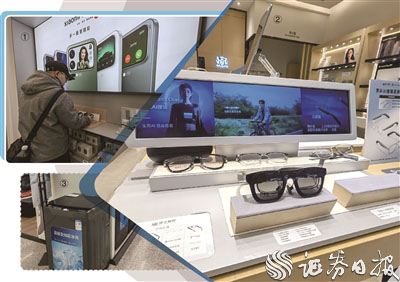
Group 1 - The new "National Subsidy" policy, with an initial funding of 62.5 billion yuan, aims to boost consumption and improve livelihoods through large-scale equipment updates and trade-in programs for consumer goods [1] - The policy covers key areas such as automobiles, home appliances, and digital smart products, with specific adjustments made for 2026 compared to 2025 [1][6] - The inclusion of smart glasses in the subsidy program reflects the government's support for the smart wearable industry and aligns with the trend of consumption upgrading [2][3] Group 2 - The subsidy for smart glasses, which are now recognized as practical tools rather than niche products, is expected to stimulate market growth and meet consumer demand for high-tech products [3][4] - The report predicts that the global AI glasses market will reach 6.653 billion yuan in 2025 and 18.209 billion yuan in 2026, indicating significant growth potential [4] - The adjustment in the subsidy policy for home appliances emphasizes energy efficiency, with consumers receiving a 15% subsidy on the purchase of energy-efficient products, capped at 1,500 yuan per item [6][8] Group 3 - The shift towards energy-efficient home appliances is expected to enhance the market share of green products and drive companies to invest more in high-end, eco-friendly production [6][7] - The policy changes are anticipated to create a positive cycle of hardware proliferation, ecosystem prosperity, and user growth in the smart glasses sector [4][5] - The demand for smart wearable products, such as AI glasses and smartwatches, has shown a significant increase, with online retail sales growing by 23.1% from January to October 2025 [8]
2025年我国外贸规模再创新高 “中国好物”在全球广受欢迎
Zheng Quan Ri Bao· 2026-01-14 16:18
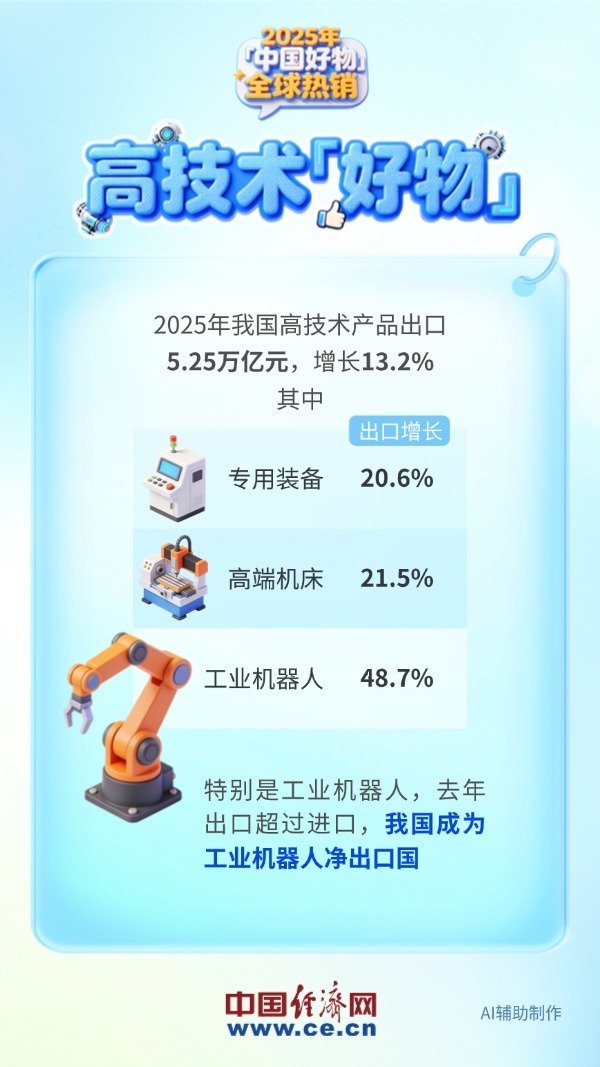
Core Viewpoint - In 2025, China's foreign trade achieved a total import and export value of 45.47 trillion yuan, marking a growth of 3.8%, with exports at 26.99 trillion yuan (up 6.1%) and imports at 18.48 trillion yuan (up 0.5%) [1] Group 1: Trade Performance - The scale of foreign trade reached a new high, with a significant increase in the share of private enterprises in total foreign trade value, rising by 1.8 percentage points to 57.3% [1] - Foreign-funded enterprises recorded an import and export value of 13.27 trillion yuan, growing by 3.7%, maintaining growth for seven consecutive quarters [1] - State-owned enterprises had an import and export value of 6.06 trillion yuan, accounting for 13.3% of total foreign trade, with an average import and export value of 9.4 billion yuan per enterprise, the highest among all types of enterprises [1] Group 2: Regional Contributions - Various regions in China leveraged their geographical advantages and resource endowments to contribute to steady growth in imports and exports, with notable performances from foreign trade provinces, border areas, and key regions [2] Group 3: Growth Drivers - The growth in exports was driven by reasonable volume growth and effective quality improvement, particularly through innovation, green initiatives, and cooperation [2] - High-tech product exports contributed 2.4 percentage points to overall export growth, with specialized equipment, high-end machine tools, and industrial robots seeing export increases of 20.6%, 21.5%, and 48.7% respectively [2] - In the green energy sector, exports of lithium batteries and wind turbine generators grew by 26.2% and 48.7%, respectively, while electric motorcycles and railway electric locomotives saw growth rates of 18.1% and 27.1% [2] Group 4: Market Diversification - China's export markets became more diversified, with exports to countries involved in the Belt and Road Initiative increasing by 11.2%, contributing 5.4 percentage points to overall export growth [3] - ASEAN has remained China's largest export market for three consecutive years, with emerging markets in Latin America, the Middle East, Central Asia, and Africa showing faster growth rates than the overall average [3] Group 5: Technological Advancements - The export of artificial intelligence-related products showed significant growth, with exports of optical transceiver modules for high-end graphics cards increasing by nearly 60% [3] - Exports of large transformers and energy storage batteries grew by 18.8%, while both handling robots and welding robots saw export growth rates exceeding 60% [3] - Smartwatches and smart toys from China were sold in over 170 countries and regions, indicating strong global demand [3] Group 6: Hainan Free Trade Port - The Hainan Free Trade Port officially started its full island closure on December 18, 2025, with policies effectively implemented, leading to smooth and efficient operations [4] - The number of people participating in duty-free shopping in Hainan reached 585,000, with total spending of 3.89 billion yuan, reflecting year-on-year increases of 32.4% and 49.6%, respectively [4] - The categories of duty-free goods expanded from 45 to 47, including new electronic products, enhancing the attractiveness of the shopping experience [4]
放弃元宇宙?Meta大幅削减VR业务岗位,全力转向AI
Zheng Quan Shi Bao Wang· 2026-01-14 13:14
Core Viewpoint - Meta's ambitious shift from Facebook to Meta, focusing on the Metaverse, has resulted in significant financial losses and layoffs, prompting a strategic pivot towards artificial intelligence (AI) and wearable technology, particularly smart glasses [1][4][6]. Group 1: VR Business and Layoffs - Meta has initiated layoffs affecting over 1,000 employees in its Reality Labs department, marking a significant reduction in its Metaverse ambitions and a shift towards AI [2][4]. - The layoffs include the closure of several VR content development studios, such as Armature Studio and Twisted Pixel, as part of a resource reallocation strategy [2][3]. - Horizon Worlds, Meta's virtual social network, has struggled with low user engagement, prompting the company to focus on mobile experiences and attract developers from successful platforms like Roblox [3][4]. Group 2: Financial Performance and Strategic Shift - Since late 2020, Reality Labs has incurred over $70 billion in losses, with a recent quarterly revenue of $470 million against a loss of $4.4 billion [4][6]. - Meta's strategic pivot towards AI is driven by the underperformance of its VR business and the rapid growth of mobile gaming, leading to a reassessment of its business direction [4][6]. Group 3: Investment in AI - Meta plans to invest significantly in AI, with a capital expenditure increase to $70-72 billion for 2025 and expectations for further expansion in 2026 [7]. - The company has made substantial acquisitions, including a $14.3 billion purchase of Scale AI, to bolster its AI capabilities [6][7]. - Despite heavy investments, Meta's AI models have not yet achieved competitive performance compared to industry leaders like Google and OpenAI, leading to internal disputes regarding the AI strategy [7][8]. Group 4: Smart Glasses as a Highlight - Meta's smart glasses, developed in partnership with Essilor Luxottica, have gained significant market traction, with a projected production capacity increase to 20 million units by the end of 2026 [8][9]. - The smart glasses feature advanced functionalities such as navigation, real-time translation, and video calls, positioning them as a key product in Meta's portfolio [8][9]. - Meta holds a dominant market share of approximately 73% in the smart glasses segment, with expectations for substantial growth in the coming years [8].
解码2026“国补”新政
Jing Ji Wang· 2026-01-14 02:24
Group 1: National Subsidy Policy - The new "National Subsidy" policy, with an initial funding of 62.5 billion yuan, aims to boost consumption upgrades and improve livelihoods by focusing on large-scale equipment updates and trade-in programs for consumer goods [2][4] - The 2026 subsidy rules have been optimized compared to 2025, with specific adjustments for automobiles and home appliances, including a 15% subsidy for energy-efficient products and a cap of 1,500 yuan per item [2][7] - The inclusion of smart glasses in the subsidy program reflects the government's support for the smart wearable industry and aligns with the trend of consumption upgrades [3][4] Group 2: Smart Glasses Market - Smart glasses are transitioning from niche products to practical tools for various scenarios, including education, workplace efficiency, and fitness monitoring, which is attracting attention from major tech companies [5][6] - The domestic retail market for smart glasses is expected to recover significantly this year, with companies like VITURE expanding their presence in key urban areas [3][6] - The smart glasses segment is projected to experience substantial growth, with the global AI glasses market expected to reach 6.653 billion yuan in 2025 and 18.209 billion yuan in 2026 [5] Group 3: Home Appliances and Environmental Focus - The 2026 subsidy policy emphasizes energy-efficient home appliances, with a focus on products meeting level 1 energy or water efficiency standards, which is expected to enhance the market share of green products [7][8] - The policy changes are anticipated to accelerate the elimination of outdated production capacities and drive companies to invest more in R&D for high-end, eco-friendly products [7][8] - The shift towards level 1 energy-efficient products is expected to significantly reduce carbon emissions, reinforcing the social value of green consumption [8] Group 4: Market Dynamics and Consumer Behavior - The adjustment in subsidy policies is likely to lead to a decline in sales for lower-efficiency products while promoting higher-efficiency alternatives, thus influencing consumer purchasing behavior [9][10] - The smart consumer electronics sector is experiencing high growth, with online retail sales of smart wearables increasing by 23.1% from January to October 2025, indicating a strong demand for intelligent and experiential products [10]
解码2026“国补”新政:撬动数码活力 赋能家电升级
Zheng Quan Ri Bao· 2026-01-13 17:05
Group 1: National Subsidy Policy Overview - The new round of "National Subsidy" policy has been implemented with an initial allocation of 62.5 billion yuan in special long-term government bonds to stimulate consumption and improve livelihoods [1] - The policy focuses on large-scale equipment updates and the replacement of old consumer goods, covering key areas such as automobiles, home appliances, and digital smart products, while also addressing public concerns like installing elevators in old residential areas and equipping elderly care facilities [1][6] - Compared to 2025, the subsidy rules for 2026 have been optimized, with specific subsidies for automobiles based on price and a 15% subsidy for energy-efficient home appliances, with a cap of 1,500 yuan per item [1][6] Group 2: Digital and Smart Products - The 2026 subsidy policy has expanded to include smart glasses, reflecting government support for the smart wearable industry and aligning with trends in consumption upgrades [2] - Smart glasses are transitioning from niche products to practical tools for various applications, including real-time translation for students and efficiency enhancement for professionals [3] - The inclusion of smart glasses in the subsidy program is expected to accelerate market growth and meet consumer demand for high-tech products [2][3] Group 3: Impact on Home Appliances - The 2026 subsidy policy emphasizes energy efficiency, with support limited to first-level energy-efficient or water-efficient products, thereby promoting green consumption [6][8] - The policy aims to increase the market share of energy-efficient products, with over 90% of home appliances updated to first-level efficiency during the previous years [7] - The adjustment in subsidy categories is expected to drive companies to enhance their R&D efforts towards high-end and green production [6][8] Group 4: Market Trends and Consumer Behavior - The smart wearable market, particularly AI glasses and smartwatches, has shown significant growth, with online retail sales increasing by 23.1% from January to October 2025 [8] - The subsidy adjustments are designed to align with current consumer preferences for high-quality and intelligent products, effectively stimulating new consumption potential [8] - The changes in subsidy policy are anticipated to create a positive cycle of hardware proliferation, ecosystem prosperity, and user growth in the digital consumption market [4][5]
年收入超10亿!深圳大卖再次冲刺上市
Sou Hu Cai Jing· 2026-01-13 15:33
Core Viewpoint - Future Wearable Technology Co., Ltd. (referred to as "the company") is making its third attempt to go public, this time targeting the Hong Kong stock market after previous attempts on the Shenzhen and Beijing exchanges. The company aims to leverage its strong brand in health and wellness to secure capital investment [1][3]. Financial Performance - The company reported revenues of 9.04 billion yuan in 2022, projected to reach 10.45 billion yuan in 2024, with a return on equity of 18.4% [1][4]. - For the first three quarters of 2025, the company achieved revenues of 8.78 billion yuan, reflecting a year-on-year growth of 16.22%, and a net profit of 1.06 billion yuan, up 24.92% [4][8]. - The gross profit margin for the company was reported at 49.43% in 2022, with a slight increase to 49.72% in 2023 [5]. Market Position - According to a report by Frost & Sullivan, the company holds a 21.5% market share in China's smart wearable device market, ranking first among domestic companies, and a global market share of 4.1% [6]. - The company has filed for over 2007 patents and invested 42.02 million yuan in R&D in the first half of 2024, receiving multiple international design awards [6]. Challenges and Concerns - The company's core revenue-generating segment, smart wearable devices, saw only a 0.2% increase in revenue for the first three quarters of 2025, with a significant decline of 18.41% in its waist comfort products in 2024 [8][10]. - The company declared dividends of 1.99 billion yuan, exceeding its net profit of 1.06 billion yuan for the same period, resulting in a dividend payout ratio of 187.74%, raising concerns about its cash management [10][20]. - Marketing expenses for overseas expansion have significantly outpaced revenue growth, with overseas revenue at only 28.54 million yuan in the first half of 2024, while marketing costs reached 118 million yuan [14][20]. Strategic Initiatives - The company is focusing on international expansion as a key growth strategy, having previously faced challenges in entering overseas markets. It has signed a strategic investment cooperation agreement with Morgan Stanley to accelerate its global presence [10][20]. - The company is replicating its domestic marketing strategies on platforms like Amazon and Walmart, offering substantial discounts during promotional events [10][13].