
自动驾驶

Search documents
小马智行2025年Robotaxi营收增129%
Huan Qiu Wang· 2026-03-26 09:43
【环球网财经综合报道】3月26日,小马智行发布2025年第四季度及全年财报。2025年公司总营收达 6.29亿元,同比增长20%,连续四年保持增长;Robotaxi业务全年收入1.16亿元,同比增长129%。第四 季度Robotaxi业务收入4660万元,同比增长160%,乘客车费收入同比增长超500%。截至2025年底,现 金等价物、长短期理财及投资总额达105.93亿元。 2025年11月,小马智行第七代Robotaxi开始规模投放市场,目前已在广州和深圳实现单车运营盈利转 正,成功验证商业模式。2026年,小马智行启动双擎战略,加深国内布局,加速国际扩展,将Robotaxi 核心成功经验快速复制到海内外超20个城市中。截至2026年3月,小马智行Robotaxi车队规模超1400 辆,预计年底前车队规模超3000辆。(旺旺) ...
小马智行-W2025年实现收入9000万美元,同比增加20.0%
Zhi Tong Cai Jing· 2026-03-26 09:42
Core Insights - The company reported a total revenue of $29.1 million for Q4 2025, with autonomous driving service revenue reaching $6.7 million, a year-on-year increase of 159.5% [1] - The net profit for Q4 2025 was $75.5 million, marking a turnaround from losses, primarily due to gains from the fair value changes of trading financial assets [1] - For the full year 2025, total revenue was $90 million, a 20% increase year-on-year, driven by strong growth in autonomous driving services and technology licensing [1] Revenue Breakdown - Autonomous driving service revenue for 2025 was $16.6 million, up 128.6% year-on-year, with passenger fare revenue increasing nearly 400% due to rising demand in first-tier cities and the successful launch of the seventh-generation autonomous taxi [1] - Technology licensing and application revenue reached $32.8 million in 2025, a 19.7% increase from 2024, driven by growing demand for autonomous driving domain controllers in various sectors [1] Profitability and Losses - The gross profit for 2025 was $14.2 million, reflecting a year-on-year increase of 24.2% [2] - The net loss for 2025 was narrowed to $76.8 million, a reduction of approximately 72% year-on-year, mainly due to increases in the fair value of trading financial assets [2] Strategic Outlook - The CEO highlighted 2025 as a year of significant performance, with scalable growth in revenue, fleet size, operational footprint, and user base [2] - The company aims to accelerate growth in 2026, with plans to expand its fleet to over 3,000 vehicles and operations to more than 20 cities domestically and internationally [2] - The CTO emphasized the company's leading position in driving capabilities, leveraging AI technologies to enhance user experience and profitability [2]
小马智行:2025年营收6.29亿元,Robotaxi收入翻番
Xin Lang Cai Jing· 2026-03-26 09:33
新浪科技讯3月26日下午消息,小马智行发布未经审计的2025年第四季度及全年财报。2025年公司总营 收达6.29亿元,同比增长20%,连续四年实现攀升。财报预计,2026年底前Robotaxi车队规模将达到 3000辆以上,并在海内外超20个城市部署Robotaxi。 2025年全年,小马智行Robotaxi业务收入达1.16亿元,同比增长129%,其中乘客车费收入年同比涨近 400%。第四季度Robotaxi业务收入4660万元,约占全年Robotaxi业务收入的四成,其中乘客车费收入同 比增长超500%,Robotaxi业务步入爆发式增长期。 公司表示,这主要得益于Robotaxi商业模式得到快速验证。第七代Robotaxi于2025年11月集中投入商业 运营,当月广州便实现了单车运营盈利转正。2026年第一季度,深圳的Robotaxi运营业绩亦屡创新高: 2026年1月1日至2月16日的付费订单量,已超2025年全年付费订单总数。以2月全月平均水平来看,也已 实现单车运营盈利转正。3月22日,深圳地区第七代Robotaxi单日车均净收入创下394元历史新高,当日 车均订单量达25单。截至目前,小马智行 ...
小马智行2025年Robotaxi收入翻番,双城单车盈利转正,2026年加速海内外超20城落地
Xin Lang Cai Jing· 2026-03-26 09:11
Core Insights - The company reported total revenue of 629 million yuan for 2025, marking a 20% year-on-year increase and achieving growth for four consecutive years [1][6] - The Robotaxi business is entering a phase of explosive growth, with annual revenue reaching 116 million yuan in 2025, a 129% increase, and passenger fare revenue increasing nearly 400% [1][6] - The company aims to expand its Robotaxi fleet to over 3,000 vehicles and deploy in more than 20 cities globally by the end of 2026 [1][6] Revenue and Growth - Total revenue for 2025 was 629 million yuan, with a 20% increase year-on-year [1][6] - Robotaxi revenue for 2025 was 116 million yuan, up 129% from the previous year, with Q4 revenue of 46.6 million yuan accounting for 40% of the annual total [1][6] - The company achieved its first quarterly profit in Q4 2025, with a net profit of 528 million yuan [10] Robotaxi Business Expansion - The seventh-generation Robotaxi began commercial operations in November 2025, achieving single-vehicle profitability in Guangzhou [2][7] - By early 2026, the Robotaxi operations in Shenzhen saw record-breaking performance, with paid order volume surpassing the total for 2025 [2][7] - The company has initiated a dual-engine strategy to ensure growth momentum in the Robotaxi business, focusing on expanding into over 20 cities by the end of 2026 [2][8] Fleet and Technology Development - The company is utilizing a co-built fleet model to rapidly expand its Robotaxi fleet, partnering with companies like Toyota and Verne [3][8] - As of now, the Robotaxi fleet has exceeded 1,400 vehicles, with plans to add 1,000 units of the seventh-generation Toyota model by the end of the year [3][8] - The company’s self-developed technology enhances user experience and operational efficiency, contributing to the growth of the Robotaxi business [9] Robotruck and Other Revenue Streams - The Robotruck business generated 284 million yuan in revenue for 2025, with ongoing expansion into various commercial applications [4][9] - Revenue from technology licensing and application services reached 229 million yuan, a 19.7% increase year-on-year, driven by a fivefold increase in the delivery of autonomous driving domain controllers [5][10] - The company maintains a strong financial position with cash and investments totaling 10.593 billion yuan as of December 31, 2025, supporting its growth initiatives [10]
小马智行2025年Robotaxi营收增129%,2026年启动双擎战略,驶向海内外20+城
Ge Long Hui· 2026-03-26 09:05
Core Insights - The company reported a total revenue of 629 million yuan for the fourth quarter of 2025, marking a 20% year-on-year growth and maintaining growth for four consecutive years [1] - The Robotaxi business generated an annual revenue of 116 million yuan, showing a significant year-on-year increase of 129% [1] - In Q4 2025, Robotaxi revenue reached 46.6 million yuan, reflecting a 160% year-on-year growth, with passenger fare revenue increasing by over 500% [1] Financial Performance - Total cash equivalents, short-term investments, and long-term investments amounted to 10.593 billion yuan by the end of 2025 [1] - The company successfully achieved single-vehicle operational profitability in Guangzhou and Shenzhen with its seventh-generation Robotaxi launched in November 2025 [1] Strategic Initiatives - In 2026, the company plans to implement a dual-engine strategy to deepen its domestic presence and accelerate international expansion, aiming to replicate its successful Robotaxi model in over 20 cities worldwide [1] - As of March 2026, the Robotaxi fleet exceeded 1,400 vehicles, with expectations to surpass 3,000 vehicles by the end of the year [1]
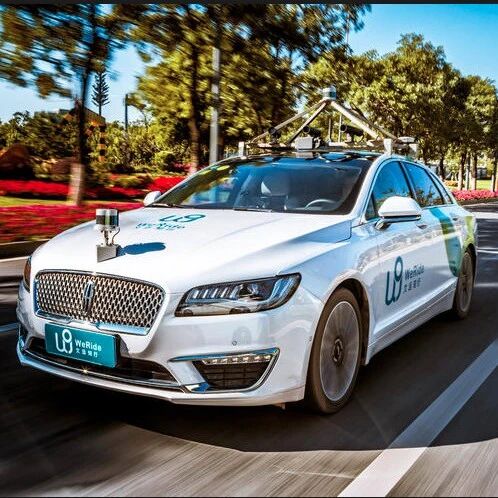
文远知行 | 2025营收高增 Robotaxi全球化持续落地【国联民生汽车 崔琰团队】
汽车琰究· 2026-03-25 13:51
Core Viewpoint - The company reported significant revenue growth for 2025, achieving 685 million yuan, a year-on-year increase of 89.6%, while reducing net losses to 1.7 billion yuan, a decrease of 34.2% compared to the previous year [3]. Revenue Growth - In Q4 2025, the company generated revenue of 314 million yuan, a year-on-year increase of 123.0%, with product revenue reaching 211 million yuan, up 308.9%, driven by increased sales of Robotaxi and Robobus [4]. - Service revenue in Q4 2025 was 103 million yuan, reflecting a 15.2% increase, primarily due to growth in smart data services and autonomous driving support services [4]. Profitability - The gross margin for Q4 2025 was 28.5%, down 8.0 percentage points year-on-year, mainly due to a reduction in high-margin ADAS research service contributions [4]. - The net loss for Q4 2025 was 556 million yuan, a decrease of 6.1% year-on-year [4]. Expense Management - R&D expenses in Q4 2025 amounted to 411 million yuan, an increase of 28.9% year-on-year, driven by enhanced global data compliance efforts and pre-installation R&D for Robotaxi [4]. - Administrative expenses were 217 million yuan, down 28.8% year-on-year, primarily due to a reduction in share-based payments [4]. - Sales expenses were 27 million yuan, up 76.3% year-on-year, but significantly lower than the revenue growth rate [4]. Robotaxi Commercialization - The company is accelerating the commercialization of its Robotaxi services, with operations now covering 12 countries and over 40 cities globally [5]. - As of March 2026, the global Robotaxi fleet reached 1,125 vehicles, a record high, with domestic user registration for Robotaxi services increasing by over 900% year-on-year [5]. - The company has initiated fully autonomous commercial operations in Abu Dhabi and received Switzerland's first passenger service autonomous driving license [5]. Technological Advancements - The company has developed a universal simulation platform, WeRide GENESIS, integrating physical AI and generative AI, which significantly accelerates model iteration cycles and safety validation efficiency [6]. - In collaboration with Geely, the company has launched a new generation GXR model specifically designed for autonomous taxis, adopting a pre-installed autonomous driving system production model, enhancing system safety consistency and significantly reducing manufacturing costs [6]. Future Projections - The company is expected to evolve into a comprehensive platform for "autonomous driving technology solutions + all-scenario smart travel services," with projected revenues of 1.076 billion yuan, 1.881 billion yuan, and 2.964 billion yuan for 2026, 2027, and 2028, respectively [7]. - The projected growth rates for revenue are 57.1%, 74.8%, and 57.6% for the years 2026, 2027, and 2028 [8].


文远知行-W:中东UE转正驱动商业化路径加速明朗-20260325
HTSC· 2026-03-25 02:45
Investment Rating - The report maintains a "Buy" rating for the company, with a target price of 20 USD for US shares and 50 HKD for Hong Kong shares [6][4]. Core Insights - The company has demonstrated significant revenue growth, with Q4 2025 revenue reaching 314 million RMB, a year-on-year increase of 123%. The full-year revenue for 2025 was 680 million RMB, up 90% year-on-year [1]. - The company is focusing on improving unit economics (UE) for its Robotaxi business, which has seen a 210% year-on-year revenue increase, indicating strong market demand and operational efficiency [1][2]. - The company has a robust cash reserve of approximately 7.1 billion RMB, allowing for continued investment and expansion, including a planned buyback of 100 million USD by March 2027 [1][4]. Summary by Sections Financial Performance - Q4 2025 Non-GAAP net profit was -376 million RMB, with a Non-GAAP net profit margin of -120%, showing a 41 percentage point improvement from the previous quarter [1]. - The company expects to achieve breakeven in unit economics by 2026 and 2028 at the company level, reflecting a positive long-term outlook [22]. Market Expansion - The company has expanded its Robotaxi operations to 12 countries and over 40 cities, with successful deployments in major markets such as Abu Dhabi and Dubai [3][4]. - The company plans to deploy at least 1,200 Robotaxis in the Middle East by 2027, focusing on key urban areas [3]. Technological Advancements - The company has partnered with Bosch to develop advanced driver-assistance systems (ADAS), enhancing its competitive edge in the autonomous driving sector [2]. - The upgraded GXR platform has reduced vehicle costs by approximately 15% and improved sensor capabilities, indicating a commitment to technological innovation [2]. Revenue Projections - Revenue forecasts for 2026 and 2027 have been adjusted upward by 1.3% and 0.6%, respectively, with projected revenues of 1.023 billion RMB and 2.08 billion RMB [22][23]. - The company anticipates a significant increase in revenue to 7.185 billion RMB by 2028, driven by expanding market presence and operational efficiencies [22].

Robotaxi不再是故事:文远知行财报背后的一个关键拐点
美股研究社· 2026-03-24 11:41
Core Viewpoint - The autonomous driving industry is transitioning from a "technology validation phase" to a more challenging "commercial examination" phase, where the focus shifts from technical capabilities to financial viability [1][2]. Group 1: Financial Performance and Business Model Transition - The latest financial report from WeRide reflects a significant shift in the industry, emphasizing the importance of financial sustainability as the business scales [2]. - Revenue growth is notable, with product revenue increasing threefold and overall revenue nearly doubling, but the critical insight lies in the shift from a service-driven model to a product and scale delivery model [4][5]. - The proportion of product revenue has surged from 24% to 52% within a year, indicating a fundamental restructuring of the business model [5]. Group 2: Market Dynamics and Profitability Challenges - Despite revenue growth, profitability remains a concern, with gross margins around 30%, which is low for software but acceptable for hardware, reflecting the company's mixed attributes [5][8]. - Adjusted losses have widened, indicating increased investments rather than operational deterioration, as the company focuses on cost reduction and efficiency improvements [5][8]. - The market is now prioritizing "growth quality" over mere growth, questioning the replicability of the growth model rather than just revenue expectations [6][8]. Group 3: Strategic Shifts and Future Outlook - The company is actively reducing reliance on one-time project revenues, transitioning towards data services and operational support, which suggests a long-term strategy for sustainable growth [7][8]. - The ability to eliminate safety drivers is identified as a crucial variable for future profitability, as human labor costs significantly impact the economic model of Robotaxi services [9]. - The company's partnerships with platforms like Uber and Grab are strategic moves to leverage existing user bases and reduce costs, positioning the business for future scalability [9][10]. Group 4: Industry Context and Competitive Landscape - The autonomous driving sector is entering a more rigorous phase where the competition will focus on achieving profitable city operations rather than just technological advancements [11][13]. - The financial report indicates that the industry is moving towards a phase where profitability and operational efficiency will be the key differentiators, similar to the evolution seen in early cloud computing and shared mobility sectors [11][13]. - The report serves as a case study for the industry, illustrating a potential path forward through increased product revenue and regulatory breakthroughs in international markets [13].
智能出行新浪潮,全球Robotaxi商业化提速
CMS· 2026-03-24 06:04
Investment Rating - The report maintains a "Recommended" investment rating for the Robotaxi industry, indicating a positive outlook for investment opportunities in this sector [3]. Core Insights - The Robotaxi industry is accelerating towards large-scale commercialization, driven by advancements in autonomous driving technology, favorable policies, and the maturation of the business ecosystem. Key players are rapidly iterating technologies and expanding globally, suggesting significant investment opportunities [1][10]. - Robotaxi represents a core application scenario for Level 4 (L4) autonomous driving, characterized by high technical challenges, clear business models, and substantial cost restructuring potential. The industry is expected to enter a phase of large-scale investment and application expansion from 2026 to 2030 [1][10]. Summary by Sections 1. High-Level Autonomous Driving Penetration - Autonomous driving is categorized from Level 0 to Level 5, with L3 and L4 being the focus of global regulatory and competitive landscapes. By 2025, the penetration rate of passenger cars with Level 2 and above in China is projected to reach approximately 66%, with significant growth in higher-level L2++ vehicles [14][21]. - The report highlights that the penetration of L2 and above vehicles is expected to cross 60% by 2025, marking a pivotal point for the widespread adoption of advanced driving assistance systems [21][22]. 2. Industry Catalysts - Multiple catalysts are propelling the Robotaxi industry towards commercialization: - **Policy Improvements**: Countries like China and the U.S. are gradually opening regions for L4 level paid operations, removing mandatory safety driver requirements, thus facilitating commercial operations [2][32]. - **Technological Advancements**: Hardware and algorithm iterations are enhancing safety redundancies, with companies like Waymo and Tesla leading the way in sensor fusion and vision-based approaches [2][32]. - **Cost Reductions**: The BOM (Bill of Materials) cost for vehicles has decreased significantly, enabling large-scale fleet deployments and reducing overall operational costs [2][32]. - **Unit Economics**: Robotaxi can save over 70% in labor costs, with some leading companies already achieving profitability in select cities, indicating a shift towards commercial viability [2][32]. 3. Competitive Landscape - The Robotaxi industry is characterized by a "U.S.-China dominance with multiple strong competitors" framework. In the U.S., Waymo and Tesla are leading, while in China, companies like Pony.ai, WeRide, and others are expanding aggressively [7][10]. - The report notes that the Robotaxi fleet size is increasing, with leading companies already operating fleets of over a thousand vehicles and expanding into more cities for paid operations [7][10]. 4. Market Size - The global autonomous driving mobility service market is projected to grow from $140 million in 2025 to $67.3 billion by 2030, with a compound annual growth rate (CAGR) of approximately 232.7%. In China, the market is expected to grow from $70 million to $39.4 billion during the same period, with a CAGR of about 253.6% [8][10].



文远知行20260323
2026-03-24 01:27
Summary of the Conference Call for WeRide (文远知行) Company Overview - **Company**: WeRide (文远知行) - **Industry**: Autonomous Driving and Robotaxi Services Key Financial Highlights - **2025 Revenue**: 6.85 billion RMB (+90% YoY) driven by Robotaxi deployment and demand for Robobus and other autonomous products [2][3] - **Robotaxi Revenue**: 1.48 billion RMB (+210% YoY) for the year, with Q4 revenue reaching 51 million RMB (+66% YoY) [2][9] - **Net Loss**: Reduced by 34% to 1.65 billion RMB for 2025, with cash reserves of 7.13 billion RMB [2][12] - **Overseas Revenue Contribution**: 29% of total revenue [10] Operational Efficiency and Cost Control - **Cost Reduction**: Total cost of ownership (TCO) per vehicle decreased by 38%, with BOM costs for the GXR model down by 15% [2][4] - **Operational Efficiency**: Remote assistance ratio improved from 1:10 to 1:40, enhancing unit economics [2][4] Robotaxi Business Developments - **Fleet Size**: Global Robotaxi fleet reached 1,125 vehicles, with plans to expand to 2,600 by the end of 2026 [2][5] - **Service Expansion**: Over 800 Robotaxis in commercial and testing fleets in China, covering over 1,000 square kilometers [4] - **User Growth**: Registered users increased by over 900% YoY in Q4 2025 [4] Technological Advancements - **WePilot 3.0**: Adopted by major manufacturers like Chery and GAC, enhancing L2+ ADAS capabilities [2][6] - **WeRide Genesis**: New simulation platform reducing edge case simulation time from days to minutes [2][7] Global Market Expansion - **International Presence**: Operations in 12 countries, with licenses in 8 markets, including the first autonomous Robotaxi service license in Switzerland [5] - **Middle East Focus**: Achieved full autonomous driving license in Abu Dhabi, covering 70% of the city [5][14] - **Partnerships**: Collaborating with Uber for future vehicle deployment, targeting 1,000 vehicles by 2027 [5][16] Competitive Landscape - **Market Position**: WeRide maintains a competitive edge in L2+ ADAS and Robotaxi operations, validated by performance in competitions against major competitors [13][14] - **Long-term Strategy**: Focus on maintaining technological superiority and operational capabilities to fend off competition [15] Future Outlook - **2026 Goals**: Plans to expand fleet size significantly and continue enhancing operational efficiency [2][18] - **Revenue Structure**: Anticipated growth in L2+ ADAS and overseas markets, with a focus on balancing speed of development and technological evolution [19][20] Additional Insights - **Stock Buyback Plan**: Board authorized a buyback of up to 100 million USD in shares over the next 12 months [12][18] - **R&D Investment**: R&D spending for 2025 was 1.37 billion RMB, reflecting a 26% increase YoY [11]