锂电池

Search documents
港股异动丨锂电池股普涨 天齐锂业涨3.4% 宁德时代涨1.6% 碳酸锂期货大涨
Ge Long Hui· 2026-01-21 02:41
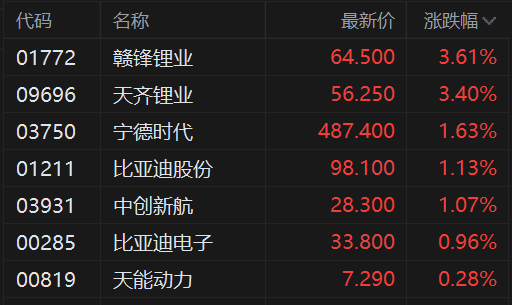
磷酸铁锂市场持续爆发。近一年来,宁德时代、比亚迪、亿纬锂能、欣旺达、楚能新能源等众多电池厂 商,疯狂抢购磷酸铁锂材料。据机构统计,仅上述几家厂商采购的磷酸铁锂材料,合计规模已达600万 吨,订单金额超2400亿元。中高端磷酸铁锂产品供不应求。 | 代码 | 名称 | 最新价 | 涨跌幅 √ | | --- | --- | --- | --- | | 01772 | 赣锋锂业 | 64.500 | 3.61% | | 09696 | 天齐锂业 | 56.250 | 3.40% | | 03750 | 宁德时代 | 487.400 | 1.63% | | 01211 | 比亚迪股份 | 98.100 | 1.13% | | 03931 | 中创新航 | 28.300 | 1.07% | | 00285 | 比亚迪电子 | 33.800 | 0.96% | | 00819 | 天能动力 | 7.290 | 0.28% | 港股锂电池股概念股继续上涨,其中,赣锋锂业涨3.6%,天齐锂业涨3.4%,宁德时代涨1.6%,比亚迪 股份、中航创新、比亚迪电子、天能动力跟涨。 消息上,早盘,碳酸锂主力合约涨幅扩大至6.00%, ...


甘肃2025年民营企业进出口增速达52.9% 成外贸增长主力
Zhong Guo Xin Wen Wang· 2026-01-21 02:23
图为在甘肃省金昌市甘肃金拓锂电新能源有限公司,工作人员正在进行锂电池生产相关工作。(资 料图)李亚龙 摄 民营企业的高速增长,与出口结构的优化密不可分。2025年,甘肃省出口总值增长44.5%。其中,以新 能源汽车、锂电池、光伏产品为代表的"新三样"产品出口实现爆发式增长,成为民营企业出口的新增长 极。这一变化表明,甘肃的产业转型升级成效正通过最具活力的民营经济,在外贸领域得到实质性体 现。 这一成绩的取得,也与甘肃持续优化营商环境、大力招商引资密不可分。2025年,甘肃招商引资成效显 著,全年新建、续建招商引资项目6531个,到位资金增长22.6%,引进了一批"三个500强"企业、上市公 司和国家级专精特新企业。 据介绍,2025年,甘肃对共建"一带一路"国家进出口额达502.1亿元,占全省外贸总额的70.5%。民营企 业在开拓这些市场过程中扮演了先锋角色,将本省的特色产品与技术优势带向全球。 中新网兰州1月20日电 (王牧雨)甘肃省统计局20日发布2025年全省经济运行情况数据显示,过去一年, 甘肃省民营企业进出口高速增长,增速达52.9%,增速是全省整体水平的3倍以上,占外贸总值比重较 上年跃升10个百 ...

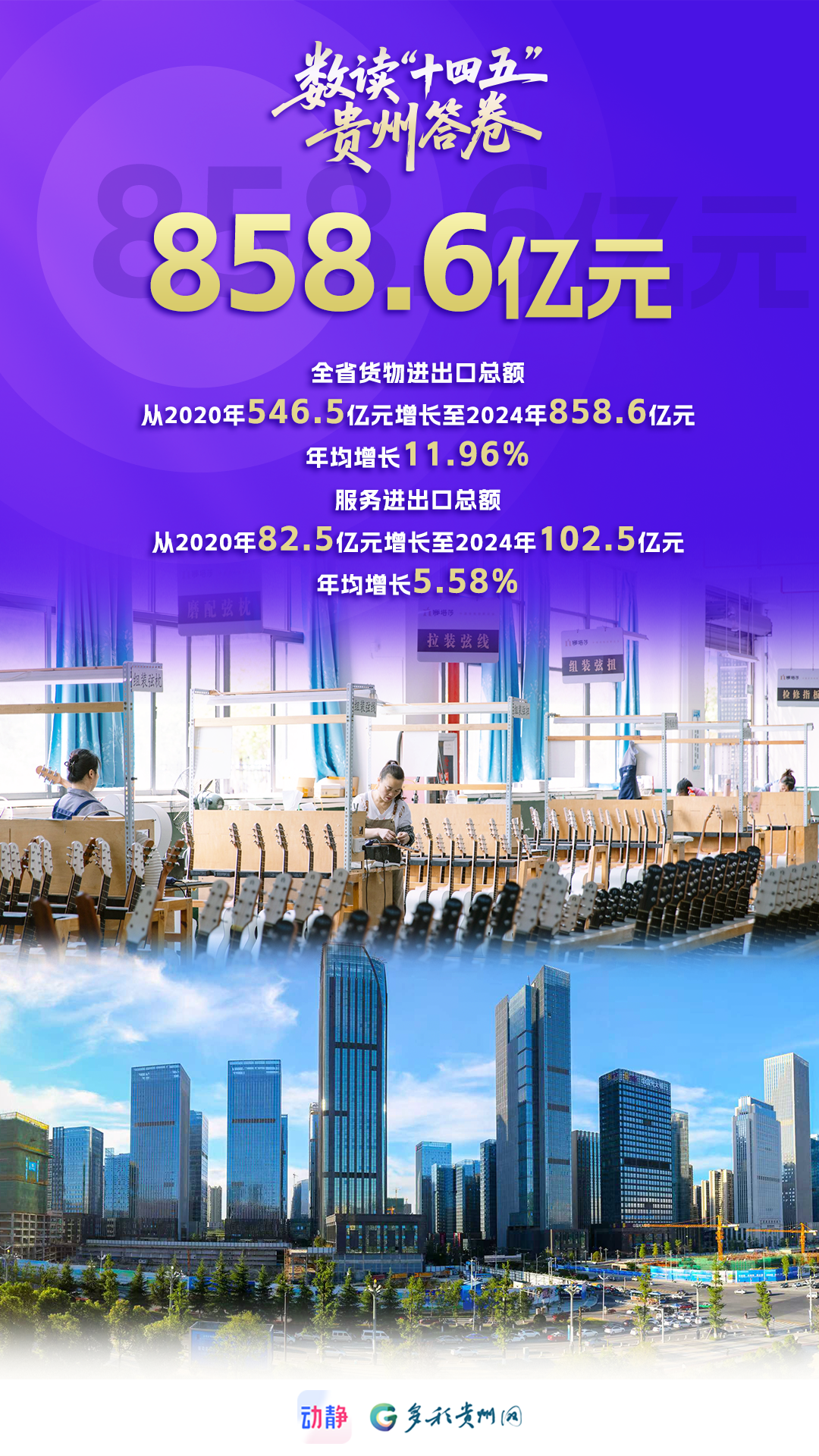
数读“十四五”贵州答卷丨从内陆腹地到开放前沿,贵州联通世界
Xin Lang Cai Jing· 2026-01-21 02:05
Core Insights - The article highlights the significant achievements of Guizhou during the "14th Five-Year Plan" period, emphasizing high-quality development across various sectors [1] Economic Development - Guizhou has established trade relations with 195 countries and regions, with an average annual growth of 23.4% in imports and exports with Belt and Road countries [4] - The province's trade with ASEAN countries has also seen an average annual growth of 21.5%, making ASEAN the largest trading partner for three consecutive years [4] Infrastructure and Connectivity - The Guizhou International Land Port has initiated a multi-zone logistics system, with 1,492 trains and 83,527 TEUs operated through various international routes [7] - By 2025, Guizhou plans to open five international cargo flight routes and 14 international passenger flight routes [8][9] Industry Growth - From 2020 to 2024, traditional industries such as liquor, tires, and fertilizers have shown annual growth rates of 18.27%, 11.68%, and 3.44% respectively [12] - Emerging industries, including lithium batteries and new energy vehicles, have experienced remarkable growth, with new energy vehicles increasing by 300.47% annually [12] Foreign Trade and Investment - The number of foreign trade enterprises in Guizhou increased from 792 in 2020 to 1,211 in 2024, reflecting an annual growth rate of 11.2% [19] - In 2024, the actual foreign investment in high-tech industries reached $6.763 million, accounting for 29.05% of the province's total foreign investment, an increase of 4.08 percentage points from the previous year [19]
中国经济将继续是全球经济增长最大引擎
Xin Lang Cai Jing· 2026-01-20 22:58
Core Viewpoint - In 2025, China's economy is projected to grow by 5.0%, reaching a GDP of over 140 trillion yuan, demonstrating resilience and innovation amid complex international challenges [8][9][10]. Economic Performance - China's economic growth reflects strong internal resilience and adaptability, with a shift from a single focus on growth rate to a multidimensional evaluation system that includes ecological improvement and public welfare [9][10]. - The government has successfully balanced growth stabilization and structural adjustment through policies that boost consumption, stabilize investment, and expand domestic demand [10][11]. Innovation and Development - Innovation is positioned as the core driver of China's high-quality economic development, with a focus on enhancing total factor productivity as traditional growth factors diminish [12][13]. - China maintains a strong momentum in sectors like artificial intelligence, robotics, and renewable energy, with significant investments in R&D, ranking second globally in R&D expenditure as a percentage of GDP [13][14]. Global Trade and Cooperation - China's trade resilience is attributed to a complete industrial system, innovation-driven growth, and institutional openness, which enhance the internal dynamics of foreign trade [14][15]. - The country continues to promote an open world economy, implementing practical measures to attract global resources and enhance trade relationships, thereby contributing to global economic stability [15][16]. Long-term Economic Outlook - China's contribution to global economic growth remains around 30%, with a focus on providing affordable goods and technological advancements to the world [16][17]. - Despite external uncertainties, the long-term positive trend of China's economy is supported by a large market, a complete industrial system, and ongoing innovation and green transformation efforts [17][18].
零碳工厂建设目标出台 激发工业企业节能降碳动力
Zheng Quan Ri Bao· 2026-01-20 16:25
Core Viewpoint - The joint release of the "Guiding Opinions on the Construction of Zero Carbon Factories" aims to drive carbon reduction and green transformation in key industrial sectors, injecting strong momentum into energy conservation and carbon reduction in China's industrial field [1][2]. Group 1: Zero Carbon Factory Development - The "Guiding Opinions" propose a phased approach to cultivate zero carbon factories, prioritizing industries with urgent decarbonization needs and primarily electric energy consumption [1][2]. - By 2026, a selection of zero carbon factories will be established as benchmarks, with a focus on sectors such as automotive, lithium batteries, photovoltaics, electronics, light industry, machinery, and computing facilities [2]. - By 2030, the initiative will expand to include high-energy industries like steel, non-ferrous metals, petrochemicals, building materials, and textiles, exploring new decarbonization pathways [2]. Group 2: Technological and Operational Implications - The construction of zero carbon factories is a comprehensive and systematic project that involves energy structure, process technology, funding, and management services, with varying implementation paths across regions and industries [2][3]. - The initiative is expected to stimulate industrial enterprises to increase investment in energy-saving and emission-reduction technology research and application, promoting production technology transformation [3]. - Zero carbon factory construction will encourage the optimization of production methods, leading to intelligent, green, and integrated development, enhancing energy resource output efficiency and reducing production costs [3]. Group 3: Digital Technology Integration - The demand for digital technology in zero carbon factory construction presents unprecedented business growth opportunities for the digital industry [4]. - Digital industry companies can leverage their expertise in 3D modeling and simulation analysis to create high-precision digital twin models for manufacturing enterprises, optimizing factory layout and energy consumption [4]. - The complexity and high standards of zero carbon factory construction will drive innovation in digital technologies, fostering deep integration and collaborative development between the digital industry and manufacturing sectors [4].
中美GDP差距再次缩小!25年中国GDP达20万亿美元,占美国GDP的64%
Sou Hu Cai Jing· 2026-01-20 15:42
Group 1 - The core viewpoint is that China's GDP is projected to reach $20 trillion by 2025, reducing the gap with the US to 64%, indicating a significant economic shift rather than mere catching up [1][4][6] - The 64% ratio reflects China's resilience in the face of global economic challenges, maintaining its position as the world's second-largest economy despite external pressures [6][9] - The strong performance in foreign trade, with exports growing by 6.1% and a historic trade surplus exceeding $1 trillion, highlights the shift towards high-tech products in China's export portfolio [11][16] Group 2 - Despite robust external trade, domestic consumption growth is only 3.7%, and investment is declining, indicating a structural imbalance in the economy [18][20] - The fluctuation of the exchange rate significantly impacts the perception of China's GDP in dollar terms, with the yuan's strength affecting the reported economic size [21][23] - The overall economic data may appear strong, but if household income does not increase and financial pressures remain, consumer confidence and spending will be adversely affected [25][26]
1200亿元订单存疑,容百科技被证监会立案调查背后
3 6 Ke· 2026-01-20 13:26
Core Viewpoint - The procurement agreement between Rongbai Technology and CATL has a total sales amount exceeding 120 billion yuan, raising market concerns about the feasibility and implications of the contract [1]. Group 1: Procurement Agreement Details - Rongbai Technology signed a procurement cooperation agreement with CATL to supply 3.05 million tons of lithium iron phosphate cathode materials from Q1 2026 to 2031, with a total sales amount exceeding 120 billion yuan [1]. - The Shanghai Stock Exchange issued an inquiry letter to Rongbai Technology regarding the procurement agreement, leading to a temporary suspension of the company's stock [1]. - Upon resuming trading on January 19, 2026, Rongbai Technology's stock opened at a limit-down price of 29.88 yuan per share and closed at 33.18 yuan, a drop of 11.16% [1]. Group 2: Capacity and Financial Implications - Rongbai Technology acknowledged that the 120 billion yuan contract amount is an estimate, and the actual sales scale and amount are uncertain [2]. - The company currently has a production capacity of only 60,000 tons per year from its newly acquired subsidiary, Guizhou Xinren New Energy Technology, which is significantly lower than the contract's requirements [2]. - The estimated order value is equivalent to eight years of Rongbai Technology's projected revenue for 2024, which is 15.1 billion yuan, indicating a substantial gap between current capacity and contract obligations [2]. Group 3: Expansion Plans - To meet the contract requirements, Rongbai Technology plans to expand its production capacity through investments and acquisitions, with an estimated capital expenditure of 8.7 billion yuan over the next three years [3]. - The expected capital investments for 2026, 2027, and 2028 are 3.6 billion yuan, 3.3 billion yuan, and 1.8 billion yuan, respectively [3]. - The company has established a lithium iron phosphate division to integrate R&D efforts and enhance production capabilities [3]. Group 4: Regulatory and Investor Concerns - Rongbai Technology is under investigation by the China Securities Regulatory Commission for potentially misleading disclosures related to the 120 billion yuan procurement agreement [4]. - Investors have expressed concerns regarding the company's production capacity and the implications of the regulatory investigation on its operations [5]. - The actual controller of Rongbai Technology, Bai Houshan, has a background in the lithium battery materials sector and has previously founded another listed company, indicating a strong industry presence [5]. Group 5: Financial Performance - In the first three quarters of 2025, CATL accounted for approximately 45% of Rongbai Technology's revenue, making it the company's largest customer [7]. - Rongbai Technology projected a net loss of between 150 million yuan and 190 million yuan for the full year of 2025, attributing the loss to a decline in sales volume [7]. - The company reported a significant improvement in performance in the fourth quarter, achieving profitability and indicating a recovery in operational results [7].


市场洞察:从工业控湿到家居防潮,除湿机如何适配全场景高湿难题?
Tou Bao Yan Jiu Yuan· 2026-01-20 12:36
Investment Rating - The report does not explicitly state an investment rating for the industry Core Insights - The dehumidifier market has evolved from a single-function device to a diverse product that addresses various air quality needs, with significant growth in applications across multiple sectors [2][7] - The household dehumidifier segment dominates the market, accounting for over 80% of total market share, driven by consumer demand for improved living conditions, especially in high-humidity regions of southern China [7] - The industrial dehumidifier market, while smaller, shows stable demand in specific sectors such as new energy, pharmaceuticals, and data centers, with a smaller decline in sales compared to household units [7] Summary by Sections Dehumidifier Types and Applications - Compression condensation dehumidifiers are the mainstream technology for household and commercial use, suitable for typical indoor environments [2] - Rotary dehumidifiers are used in low-temperature environments, ideal for laboratories and archives, but have higher energy consumption [3] - Household dehumidifiers focus on comfort and convenience, often featuring additional functions like air purification [4] - Commercial dehumidifiers are designed for durability and can service multiple areas, suitable for larger spaces like offices and hotels [5] - Industrial dehumidifiers are essential for maintaining optimal humidity in production environments, characterized by high stability and corrosion resistance [6] Regional Market Demand - In 2024, China's domestic and export markets for household dehumidifiers are projected to reach 1.526 million and 10.953 million units, respectively, with growth rates of 27.7% and 39.7% [11] - The export market is significantly larger than the domestic market, driven by differences in consumer habits and climate conditions [11] - The domestic market shows a clear regional disparity, with southern and eastern China accounting for over 50% of total shipments due to their high humidity climate [12] Impact of Lithium Battery Production - The expansion of lithium battery production is expected to drive demand for high-performance industrial dehumidifiers, as strict humidity control is critical in battery manufacturing processes [19] - The production of lithium batteries, particularly lithium iron phosphate batteries, has seen a significant increase, with a 71% year-on-year growth in installed capacity in the first half of 2025 [20] - The shift towards larger, centralized production lines necessitates more efficient and customized dehumidification solutions [20] Pharmaceutical Industry Trends - The pharmaceutical industry in China is experiencing steady growth, with revenue from large-scale enterprises projected to stabilize in 2024 [26] - Strict temperature and humidity control standards in pharmaceutical production and storage create significant opportunities for dehumidifier applications [27] - Future trends indicate a move towards high-precision, energy-efficient, and multifunctional dehumidifiers in the pharmaceutical sector, driven by technological advancements and increased quality demands [27]
中国除湿机行业调研简报:市场洞察:从工业控湿到家居防潮,除湿机如何适配全场景高湿难题?
Tou Bao Yan Jiu Yuan· 2026-01-20 12:24
Investment Rating - The report does not explicitly state an investment rating for the industry Core Insights - The dehumidifier market has evolved from a single-function device to a diverse product that addresses various air quality needs, with significant growth in applications across multiple sectors [2][7] - The household dehumidifier segment dominates the market, accounting for over 80% of total sales, driven by consumer demand for improved living conditions, especially in high-humidity regions of southern China [7] - The industrial dehumidifier market is also growing, particularly in sectors like new energy, pharmaceuticals, and data centers, despite a smaller overall market size [7] Summary by Relevant Sections Dehumidifier Types and Applications - Compression condensation dehumidifiers are the mainstream technology for home and commercial use, suitable for typical indoor environments [2] - Desiccant wheel dehumidifiers are used in specialized environments like laboratories and archives, where humidity control is critical [3] - Household dehumidifiers focus on comfort and convenience, often featuring additional functions like air purification [4] - Commercial dehumidifiers are designed for durability and can service multiple areas, suitable for larger spaces like offices and hotels [5] - Industrial dehumidifiers are essential for maintaining optimal humidity in production environments, characterized by high stability and corrosion resistance [6] Market Demand and Regional Differences - In 2024, China's domestic and export markets for household dehumidifiers are projected to reach 1.526 million and 10.953 million units, respectively, with growth rates of 27.7% and 39.7% [11][14] - The export market is significantly larger than the domestic market, driven by differences in consumer habits and climate conditions [11] - The domestic market shows a clear regional disparity, with southern and eastern China accounting for over 50% of total sales due to their humid climate [12][16] Impact of Lithium Battery Production - The expansion of lithium battery production is expected to increase demand for high-performance industrial dehumidifiers, as strict humidity control is critical in battery manufacturing processes [19][20] - The shift towards larger, centralized production lines necessitates more efficient and customized dehumidification solutions [20] Pharmaceutical Industry Trends - The pharmaceutical sector's growth will drive demand for high-precision, energy-efficient, and multifunctional dehumidifiers, as strict humidity control is essential for drug quality and safety [26][27] - The report highlights the increasing importance of humidity control standards in pharmaceutical production, with specific requirements for various processes [30]
亿纬锂能再次冲刺港股IPO 实控人夫妇已套现约44亿元
Xi Niu Cai Jing· 2026-01-20 09:28
Core Viewpoint - EVE Energy Co., Ltd. has submitted a new prospectus to the Hong Kong Stock Exchange, aiming to raise up to HKD 30 billion for the construction of a 30GWh cylindrical battery factory in Hungary, just three days after its previous prospectus expired [2]. Group 1: Company Overview - EVE Energy was established in 2001 and listed on the Shenzhen Growth Enterprise Market in 2009, being one of the few lithium battery companies with a full product line in consumer, power, and energy storage batteries [5]. - The company initially focused on consumer batteries for devices like "Little Smart" mobile phones and smart meters, but rose to prominence in the power battery sector after 2015 [5]. - In 2023, EVE Energy's power battery shipments reached 28.08GWh, ranking fourth in the country [5]. Group 2: Financial Performance - For the first three quarters of 2025, EVE Energy reported revenue of CNY 45 billion, a year-on-year increase of 32.17%, but net profit attributable to shareholders decreased by 11.17% to CNY 2.816 billion, indicating a situation of rising revenue but declining profit [6]. - The power battery business, once a key growth driver, is now experiencing a slowdown, with revenue expected to decline by 20.08% in 2024 and market share dropping from 4.45% in 2023 to 2.3% [6]. - To maintain market position, EVE Energy has resorted to "price for volume" strategies, with average selling prices for power batteries falling from CNY 1.1 per Wh in 2022 to CNY 0.6 per Wh in the first three quarters of 2025 [6]. Group 3: Debt and Financing - As of the end of the third quarter of 2025, EVE Energy's total liabilities reached CNY 73.86 billion, with a debt-to-asset ratio of 63.47%, the highest in its history [6]. - The company's cash and cash equivalents stood at CNY 9.445 billion, insufficient to cover CNY 27.9 billion in accounts payable [6]. - Prior to the IPO, EVE Energy raised CNY 5 billion through convertible bonds in 2025, primarily for a 23GWh cylindrical lithium iron phosphate energy storage battery project and a 21GWh cylindrical passenger vehicle power battery project [6]. Group 4: Shareholder Activity - In October 2025, EVE Energy disclosed a shareholder inquiry transfer plan, where controlling shareholders Liu Jincheng and Luo Jinhong planned to transfer up to 4.07768 million shares at a price of CNY 72.20 per share, potentially cashing out CNY 2.944 billion [7]. - This is the largest cash-out by Liu and Luo to date, following previous reductions in their holdings that totaled approximately CNY 1.44 billion for Liu and CNY 13.3 billion for Luo since May 2015 [7][8].