
博物馆

Search documents
文化中国行 | 一门见古今 一眼阅千年
Ke Ji Ri Bao· 2025-08-18 02:16
"博物馆充分利用现有的考古发掘现场作为其核心展示区域,并结合AR、VR、MR等数字化技术,以生 动形象的方式解读和传达遗址的丰富信息及其深远价值。"顺天门遗址博物馆运营总监陈兆锋介绍,通 过这种扎实严谨的研究与"文化+艺术+科技"的完美融合,公众将能够在游览过程中深入理解遗址的内 涵。 讲述黄河与文明的对话 天青色的屋顶,弧线形的屋檐,在河南省开封市区内,一座彰显宋代美学的博物馆——北宋东京城 顺天门遗址博物馆,即将向公众展现"城摞城"的奇观。 走进博物馆,宛如进入时光地层之中,这里保留了16层道路夯土叠压、6个朝代城墙、3次黄河决口淤 积、清代院落的水井。博物馆通过现代光影技术,将6个时代城墙的叠压痕迹鲜活展现,这种"地层+遗 迹+数字"的三维叙事,真正让文物遗址"活起来"。 从古迹中窥见历史变迁 据史料记载,北宋东京城的顺天门,最初被称为迎秋门,后更名为顺天门。因其向西直通郑州,并与内 城上的郑门相呼应,故又被誉为新郑门。 "顺天门兴盛于宋代,淹没于明代,见证了开封城的沧桑巨变。"顺天门遗址博物馆考古领队葛奇峰介 绍,为了更好地保护这一历史遗迹,开封市自2012年便启动了新郑门遗址项目,经过多年的保护性考 ...
焦点访谈|方寸之间,博古通今 中小博物馆如何成为各地文旅“破圈”密码?
Yang Shi Wang· 2025-08-17 13:38
Core Insights - The "museum fever" is on the rise during the summer tourism season, with both large and small museums experiencing a surge in visitor numbers, making museums popular cultural spaces and travel destinations [1][3] - Smaller museums are gaining popularity and becoming "internet celebrities" due to their unique characteristics and local cultural significance, attracting visitors who prefer a more intimate experience compared to larger institutions [5][11] Group 1: Visitor Trends - The summer has seen a significant increase in museum attendance, with long queues at entrances and crowded exhibition halls becoming the norm [3][7] - Families, particularly those with children, are the most active demographic, often traveling specifically to visit certain museums [7][9] Group 2: Museum Innovations - Museums are adapting to visitor demand by extending opening hours and offering free guided tours, enhancing the overall visitor experience [9][11] - Innovative activities such as VR experiences, interactive workshops, and themed events are being introduced to engage visitors and provide educational opportunities [11][19] Group 3: Case Studies of Successful Museums - The Dingzhou Museum in Hebei has become a model for smaller museums, showcasing over 50,000 artifacts, including national treasures, and offering free guided tours to enhance visitor engagement [5][9] - The Chengdu Shu Brocade and Embroidery Museum features interactive experiences and has seen a visitor increase of nearly 200% during the summer, highlighting the effectiveness of hands-on learning and cultural immersion [15][19]

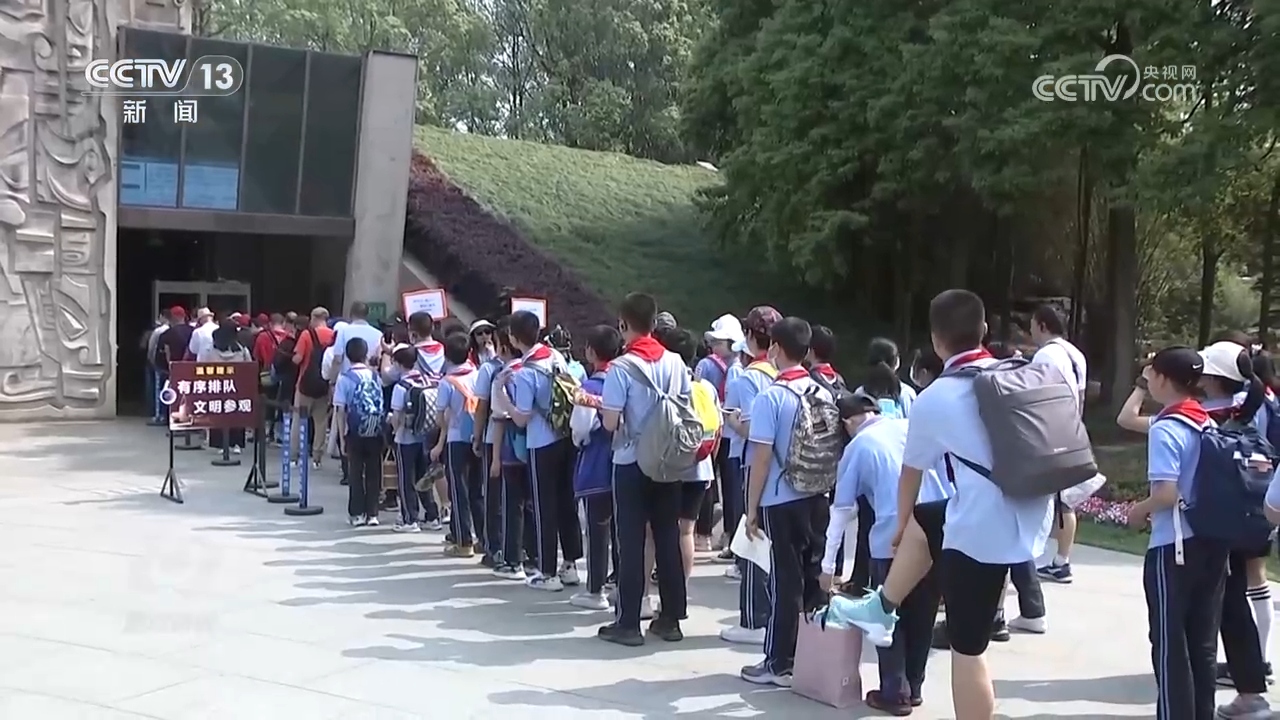
开馆两年仍用“样片”遭质疑,赤峰博物院等各方回应:不存在“拖欠尾款”
Zhong Guo Xin Wen Wang· 2025-08-16 05:44
Core Viewpoint - The presence of "DEMO" watermarked videos in the Chifeng Liao Dynasty History Museum has sparked public concern regarding the museum's professionalism and copyright awareness, raising questions about the project's completion and payment status [1][2][3] Group 1: Museum's Situation - The Chifeng Liao Dynasty History Museum, part of the Chifeng Museum, has been open to the public since June 2023, but issues with watermarked videos have persisted since its trial operation began in 2022 [1][2] - Museum staff confirmed the existence of "DEMO" marked videos but were unclear about the reasons, indicating that the issue has been internally reported [2] - The museum is not responsible for project organization and implementation, and it is stated that the presence of watermarks is not due to unpaid fees [2][3] Group 2: Project Management and Payment - The project is currently in the settlement phase, with some final payments pending to subcontractors, and the museum is actively coordinating to resolve these issues [3] - The process for payment involves multiple steps, including submission of settlement documents by the construction unit, which can delay the removal of watermarks [3] - Similar incidents have occurred in other museums, indicating a broader issue with project management and video content quality in cultural institutions [3][4] Group 3: Industry Implications - The situation highlights the need for cultural institutions to improve their project management processes, from bidding to production oversight and final acceptance [4] - The recurring issue of watermarked videos raises concerns about the professionalism and authority of public cultural services, emphasizing the importance of timely resolution of such issues [4]
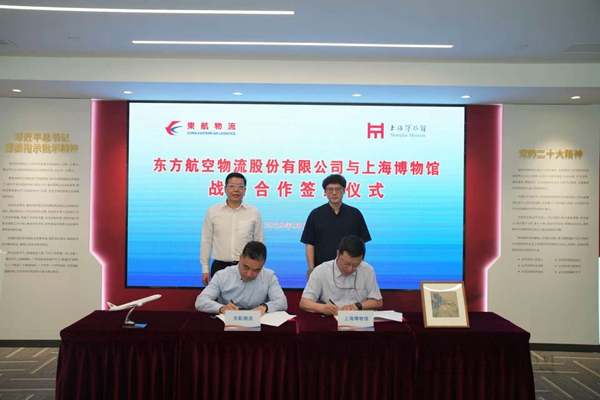
东航物流与上海博物馆签约 跨界融合助力文化传播
Zhong Guo Min Hang Wang· 2025-08-15 12:38
Group 1 - China Eastern Airlines' logistics arm, Eastern Logistics, signed a strategic cooperation agreement with the Shanghai Museum on August 15, marking a new chapter in the integration of aviation logistics and cultural heritage [1][2] - The collaboration aims to deepen the integration of culture and aviation, providing new pathways for the transmission and innovation of Chinese culture, with initiatives such as "ticket + admission" joint products and cross-border transportation of cultural relics [2][3] - Eastern Logistics is part of China Eastern Airlines' "3+5" industry strategy, leveraging its global route network and logistics service capabilities to offer comprehensive logistics solutions for cultural relic exchanges [2][3] Group 2 - The Shanghai Museum, one of the first national first-class museums, holds over 1.02 million cultural relics and is dedicated to showcasing the history of Chinese civilization and ancient art [2] - The agreement emphasizes the deep integration of aviation logistics capabilities with the needs of cultural heritage protection, supporting national cultural strategies and the construction of a culturally strong nation [2][3] - Future cooperation will focus on enhancing logistics services for cultural relic transportation, supporting cultural exchange activities, and promoting the dissemination of excellent traditional Chinese culture [3]


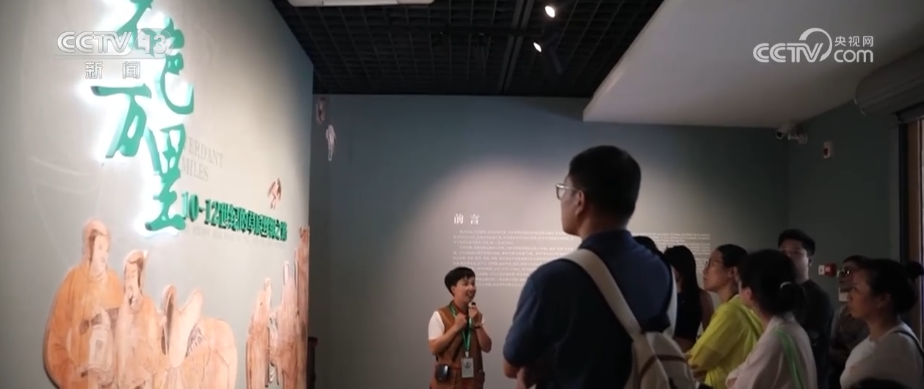
数字“牵手”文化点亮暑期“文博游” “触摸”历史沉浸式感受中华优秀传统文化
Yang Shi Wang· 2025-08-15 06:53
Group 1 - The popularity of "cultural tourism" remains high during the summer, with visitors engaging in new exhibitions and hands-on experiences to immerse themselves in traditional Chinese culture [2] - The China Silk Museum in Hangzhou launched a significant new exhibition titled "The Green Color of the Thousand Miles: The Silk Road of the Grasslands in the 10th to 12th Century," featuring 213 cultural relics, including 66 first-class artifacts [3] - The museum director emphasized the importance of the Silk Road's spirit of cooperation, openness, and mutual learning, aiming to help visitors understand the stories behind the national treasures [6] Group 2 - Representative exhibits, such as the shoulder pot engraved with the story of filial piety from the Central Plains, vividly showcase the cultural fusion along the Silk Road during the 10th to 12th centuries, attracting nearly 80,000 visitors this summer [7] - To enhance visitor understanding, the museum arranged for guides to interpret the stories behind the artifacts and designed engaging hands-on activities for young audiences [9] - The Liangzhu Ancient City Ruins Park in Zhejiang introduced a VR experience that allows visitors to immerse themselves in the life of the Liangzhu civilization over 5,000 years ago, showcasing advanced technology in cultural presentation [14][18]
国家自然博物馆首个馆外文创店试运行,就在天桥地铁站
Xin Jing Bao· 2025-08-15 02:26
Core Points - The National Museum of Nature has launched its first off-site cultural and creative store at the Tianqiao Station of Beijing Metro Line 8, allowing citizens to purchase officially designed cultural products without entering the museum [1][2] - The store features a variety of nature-themed products, including fridge magnets, plush toys, cups, and ornaments, reflecting the museum's unique characteristics [1] - To celebrate the store's opening, a series of activities titled "Urban Pulse, Natural Echo" will be held from August 15 to October 15, offering customers incentives for sharing their purchases on social media [1] Summary by Sections Store Launch - The National Museum of Nature's off-site store is located at Tianqiao Station, a key transit hub, enhancing accessibility to cultural products [2] - The store aims to integrate the museum's educational functions into the urban transportation network, creating a new cultural consumption scene that combines commuting with cultural and scientific education [2] Product Offerings - The store offers a diverse range of products, including postcards, badges, and bags, designed to evoke the museum's cultural essence and provide enjoyment to customers during their daily commutes [1] Promotional Activities - Customers who purchase items from the store and share their experience on social media will receive a complimentary folder and a unique stamp opportunity [1] - Viewers of the museum's educational film "Deep Ocean" will receive an 88% discount coupon for the store [1]
暑期“看展热”撬动消费新链条
Qi Lu Wan Bao· 2025-08-14 21:28
Core Insights - The "exhibition fever" continues to rise across various cities, with museums and art galleries becoming popular family destinations, leading to a vibrant cultural consumption trend during the summer [2][3] - The trend has created an economic chain encompassing ticket sales, cultural products, and dining, contributing positively to the summer cultural tourism market [2] Group 1: Exhibition Trends - Families are increasingly engaging in "cultural outings," with parents taking their children to multiple exhibitions, indicating a shift from traditional tourism to educational experiences [3][4] - Data from the Shandong Museum shows that it received 666,700 visitors over 40 days during the summer, highlighting the popularity of family-oriented exhibitions [3] Group 2: Consumer Behavior - The average spending per family during exhibitions has significantly increased, with one family spending over 1,000 yuan on a single visit, showcasing the extended consumption scenarios [4][5] - Parents are now seeking deeper cultural experiences, leading to a demand for interactive and educational activities within exhibitions [4][5] Group 3: Economic Impact - The cultural sector is witnessing a transformation, with parents willing to allocate a budget for cultural experiences, indicating a shift in spending priorities towards educational investments [6] - Museums are adapting to new demands by offering a variety of activities and products, with significant sales figures reported, such as over 4 billion yuan in revenue from cultural products at the Shanghai Museum [5][6]


逛展一天能花一千多元,“看展热”撬动消费新链条
Qi Lu Wan Bao Wang· 2025-08-14 13:36
Core Insights - The "exhibition fever" continues to rise across various cities in China, with museums and art galleries becoming popular family destinations, leading to a vibrant cultural consumption trend and a multi-faceted economic industry chain encompassing tickets, cultural products, and dining [1][2] Group 1: Trends in Cultural Consumption - Family-oriented visits to exhibitions are becoming a trend, with significant participation from parents and children, as evidenced by high visitor numbers at various museums [2][3] - The demand for deep cultural experiences has increased among parents, who are now seeking interactive and educational activities during their visits, leading to an extended consumption chain [3][4] Group 2: Economic Impact - The economic value of family visits to exhibitions is highlighted by the substantial spending on cultural products and dining, with examples of families spending over 1,000 yuan during a single visit [3][4] - The cultural sector is seeing a shift from traditional tourism to educational investments, with parents willing to allocate budgets for cultural experiences that provide high value for money [5] Group 3: Industry Adaptation - Museums and cultural institutions are adapting to new consumer demands by offering diverse experiences, including VR exhibitions and interactive activities, which have led to significant sales of cultural products [4][5] - The integration of technology and innovative cultural content is essential for museums to meet the evolving expectations of young audiences and their families [5]
这个县级小馆里,藏着“天下金银第一窖”|博物馆巡游
Jing Ji Guan Cha Bao· 2025-08-14 02:37
Core Insights - The article highlights the unique features and significance of the Pengzhou Museum, which houses the largest collection of gold and silver artifacts in a county-level museum, referred to as the "world's first gold and silver cellar" [1] Group 1: Museum Overview - The Pengzhou Museum combines garden style with traditional Sichuan residential architecture, creating a unique "museum-garden integration" aesthetic [1] - The museum has a total exhibition area of 600 square meters, which is relatively small but houses 139 national first-class cultural relics, the highest for a county-level museum [1] Group 2: Historical Significance - Pengzhou has historically been a prosperous area due to its advantageous geographical location, becoming a significant commercial waterway during the Song Dynasty [2] - The region is known for its rich cultural heritage, serving as a crucial junction for the integration of Southern and Northern cultures, with numerous historical artifacts remaining [3] Group 3: Notable Artifacts - The museum features exquisite artifacts such as the Song Dynasty chrysanthemum gold bowl and the melon-shaped gold cup, showcasing the peak of Song aesthetics [2][3] - A variety of artifacts from different dynasties are displayed, including bronze vessels from the Western Zhou and various silver and porcelain items from the Song, Ming, and Qing dynasties [4][5]
全省博物馆游客量连年全国第一的背后——多重破壁,“文化仓库”蝶变“活力枢纽”
Xin Hua Ri Bao· 2025-08-13 23:28
Core Insights - The article highlights the strong demand for upgraded museum experiences among visitors, as evidenced by the popularity of innovative cultural products like the "瑞龙呈祥" bracelet [2][6] - Jiangsu province has implemented systematic reforms in the cultural sector to address common challenges faced by museums, such as limited opening hours and homogenized cultural offerings [3][4] Group 1: Visitor Experience and Revenue - The "抱一文创" store at Xuzhou Museum generates significant revenue, reportedly earning 6 million yuan annually [2] - The introduction of innovative cultural products and extended opening hours has led to a notable increase in visitor numbers and revenue for museums, with some reporting ticket and cultural product sales growth of up to 398% [4][5] Group 2: Systematic Reforms - Jiangsu's "两高政策" aims to enhance museum operations by addressing key issues such as limited opening hours, content uniformity, and resource allocation [3][4] - The reforms include encouraging extended hours, supporting special exhibitions, and promoting cultural products, which have collectively led to a 16.76% increase in visitor numbers across the province [5] Group 3: Economic Impact - The cultural reforms have not only improved museum attendance but have also stimulated related economic activities, with night-time cultural consumption increasing by 14.6% in areas with extended museum hours [6] - The overall visitor count for Jiangsu's museums reached 139.02 million in 2024, maintaining the highest ranking in the country, while cultural product sales reached 492 million yuan, marking a 16.60% increase [5]