资产管理

Search documents
在投资中,越努力就会越幸运吗?
雪球· 2026-01-25 13:46
Core Viewpoint - The article discusses the paradox of increased effort in investing not necessarily leading to better returns, highlighting the concept of "inertia" in investment behavior [6][9]. Group 1: Investment Behavior - Many investors, despite being diligent, have seen lower returns compared to simply holding investments long-term due to poor trading and timing decisions [7]. - A significant number of investors tend to leave their funds in cash within personal retirement accounts (IRAs), often for extended periods, which is detrimental to long-term growth [11][12]. - Research indicates that many investors are unaware of their cash-heavy allocations, leading to unintentional inaction regarding their investments [12]. Group 2: Default Options and Inertia - The concept of "default options" is crucial; if retirement funds are automatically directed into better-performing investments like target-date funds, it can significantly enhance retirement wealth [13]. - Inertia can be both a hindrance and a benefit in investing, depending on how investment plans are structured [16]. - The power of default options is illustrated by the higher participation rates in 401(k) plans that use automatic enrollment compared to those that require voluntary participation [14]. Group 3: Market Predictions and Adjustments - Investors often base their market predictions on recent performance, which can lead to incorrect expectations about future market movements [17]. - It is advisable for investors to prepare for potential market corrections by rebalancing their portfolios, especially after significant market gains [18]. Group 4: Financial Education and Decision-Making - The article emphasizes the importance of financial education for children, suggesting that early discussions about money can shape their future investment behaviors [27]. - Parents are encouraged to simplify financial concepts and make learning enjoyable to foster healthy financial habits in their children [26].


英国前财政部长吉姆·奥尼尔:英国经济乏力的根源
Di Yi Cai Jing· 2026-01-25 12:48
去年7月笔者曾指出,尽管英国经济前景黯淡,但有两个重要积极信号却被专家圈子以外的人们所忽 视。首先是大曼彻斯特地区在生产力增长方面的表现优于伦敦,同时有迹象表明英格兰北部其他地区也 开始受益。 第二个问题涉及不动产。虽然经济学家在任何问题上都会有分歧,但英国荒谬的房地产税制却是个例 外,所有人都认为必须对其进行改革。一个显而易见的改革方向就是对土地价值而非其上的建筑物征 税。但如果这样的转变过于困难,那么次优的解决方案就是对市政税等级(住宅税级)进行大规模结构 性调整,使其得以反映当代估值,然后废除抑制了住房市场活动的印花税(即对超过特定价格的房产交 易征收的税)。这样一来就不需要违背工党的任何承诺。 第三个问题涉及国家医疗服务体系,尽管在过去十年间,特别是在新冠疫情后,生产率出现了负增长, 但该体系似乎仍有能力吞噬更多的公共开支。撒切尔夫人担任首相时(1979~1990年)教育经费相对 GDP的比率与国家医疗服务体系大体相当,而如今后者所获得的拨款却是前者的2.5倍。 对这一差距的容忍在经济上是站不住脚的,因为受过良好教育的劳动力将提高经济增长和生活水平,更 不用说创造更多的税收和培养更健康的生活方式(基于 ...
余韩被证监会罚没超10亿元;2只4倍大牛股停牌核查|周末要闻速递
21世纪经济报道· 2026-01-25 12:00
Group 1 - Silver prices have surpassed the $100 mark for the first time, marking a historical record and a year-to-date increase of 40%, significantly outperforming gold [1] - The International Monetary Fund (IMF) reports that the dollar's share in global foreign exchange reserves has fallen below 60%, the lowest in decades, indicating a shift towards physical assets like gold to hedge against concerns over dollar credit risk [2] - The China Securities Regulatory Commission (CSRC) has issued guidelines for the selection and use of performance benchmarks for publicly offered securities investment funds, effective from March 1, 2026, to enhance investor protection [3] Group 2 - The CSRC has imposed a penalty exceeding 1.02 billion yuan on an individual for manipulating the stock of "Doctor Glasses," with illegal gains of approximately 511 million yuan confiscated [4] - The CSRC has also announced penalties totaling over 41 million yuan against Zhejiang Ruifengda Asset Management Co., and its actual controller has been banned from the securities market for life [5] - The CSRC has expanded the range of futures market products, adding 14 new futures and options for specific domestic varieties, including nickel and lithium carbonate, to facilitate foreign participation [6] Group 3 - Reports of tightened listing requirements for mainland companies in Hong Kong have been confirmed as false, with no changes to the current overseas listing policies [7] - Beijing is set to implement the "Artificial Intelligence +" initiative, aiming to establish a national AI application pilot base and promote high-tech industries [8][9] - The founder of Galaxy Aerospace predicts that the global space economy will reach $1.8 trillion by 2035, driven by new infrastructure developments in the space sector [10] Group 4 - A leading robotics company has launched the world's first automated production line for robot joints, marking a significant advancement in the mass production of humanoid robot components [11] - The Shanghai Stock Exchange is monitoring stocks with significant price fluctuations, including *ST Zhengping and *ST Ya, due to abnormal trading behaviors [12] - The Shenzhen Stock Exchange has suspended trading for some investors of Fenglong Co. due to severe stock price volatility and abnormal trading activities [13][14] Group 5 - Zhongke Aerospace has completed its IPO counseling, indicating progress in the commercial rocket sector [15] - The Brazilian government has announced visa exemptions for Chinese citizens in response to China's similar policy for Brazilian nationals, enhancing bilateral relations [18]



格陵兰岛争端标志“欧美脱钩”?华尔街要应对“欧洲撤资”
Hua Er Jie Jian Wen· 2026-01-25 10:53
Core Viewpoint - The article discusses the emerging structural risk facing Wall Street due to potential "buyer strikes" from European investors, who hold approximately $10.4 trillion in U.S. stocks, threatening the foundation of the long-term bull market in U.S. equities [1]. Group 1: Market Sentiment and Trends - European investors are increasingly seeking to diversify their investments and reduce exposure to U.S. assets, a trend that began in April 2025 and has accelerated recently [1]. - The sentiment shift is driven by concerns over the U.S. government's aggressive stance and the weaponization of dollar assets, leading to a significant potential impact on U.S. stocks, bonds, and the dollar's exchange rate [1]. - European investors hold 49% of all foreign-held U.S. stocks, indicating that any sustained withdrawal could significantly disrupt the market [1]. Group 2: Performance Comparison - Historically, U.S. equities have outperformed developed market peers, but this trend has reversed since Trump's presidency, with the Stoxx 600 index rising 32% in USD terms last year, compared to a mere 16% increase in the U.S. benchmark index [5]. - The performance of other markets, such as the Korean Kospi index and the Canadian S&P/TSX index, has also outpaced U.S. stocks, prompting European investors to reconsider their asset allocation [5]. Group 3: Geopolitical and Financial Implications - The U.S. government's stance on globalization contrasts sharply with the reality of foreign investment, particularly from Europe, which has historically driven U.S. stock market gains [4]. - The potential for a "European divestment" is underscored by specific cases, such as Danish pension funds discussing the divestment of U.S. assets due to geopolitical tensions [8]. - The current environment is seen as unsuitable for full exposure to U.S. stocks, with some investors predicting a long-term reduction in U.S. asset weightings [7]. Group 4: Trust in International Order - There is a growing crisis of confidence among investors regarding the rules-based international order, as the U.S. appears to be abandoning previously supported international norms [9]. - This shift raises concerns about the reliability of the dollar and U.S. investments, leading to a more cautious investment approach among European investors [9].
拉抬打压股价,交易所盘后火速出手!限制账户交易3个月
券商中国· 2026-01-25 09:31
Core Viewpoint - Zhejiang Haokun Shengfa Asset Management Co., Ltd. has been found to engage in abnormal trading behaviors that violate the trading rules of the Beijing Stock Exchange, leading to self-regulatory measures being imposed on its accounts [2][3]. Group 1: Violations and Trading Activities - Zhejiang Haokun Shengfa was involved in abnormal trading activities with three securities accounts, which included price manipulation of the stock "Huawi Design" (stock code: 920427) [2]. - From January 21 to January 22, 2026, the closing price of "Huawi Design" experienced a cumulative increase of 68.07%, triggering abnormal trading conditions [2]. - On January 23, 2026, the accounts continued to manipulate the stock price, with a price increase of 6.42% during a specific time frame, and a total purchase of 436,700 shares amounting to 10.1374 million yuan, representing 67.90% of the total trading volume [2][3]. Group 2: Regulatory Actions - The Beijing Stock Exchange determined that the trading activities violated Article 6.2 of the trading rules, which prohibits significant and continuous trading that deviates from market prices [3]. - Despite previous self-regulatory measures taken against Zhejiang Haokun Shengfa for similar violations, the company continued its abnormal trading practices [3]. - As a result, the exchange imposed a three-month trading restriction on the relevant accounts, effective from January 26 to April 25, 2026 [3]. Group 3: Company Response - "Huawi Design" issued an announcement regarding the abnormal trading fluctuations, confirming that there were no significant changes in its operational environment or undisclosed major events affecting its stock price [4].

Vanguard在美国以外地区的资产规模突破1万亿美元
Xin Lang Cai Jing· 2026-01-25 06:09
该公司计划在未来五年内,将其1700万国际客户数量增加一倍以上,达到近4000万。 责任编辑:陈钰嘉 先锋领航(Vanguard)管理的美国境外客户资产规模已突破1万亿美元,该公司正计划推进大规模国际 扩张,目标在五年内将客户数量和资产规模翻倍。 这家全球第二大资产管理公司的首席执行官Salim Ramji表示,随着各国政府试图鼓励数百万储蓄者将 闲置资金用于投资,全球市场将涌现"巨大机遇"。 他指出,英国和欧洲市场的资金严重偏向现金及现金存款,部分原因在于"投资成本过高、流程过于复 杂,且存在诸多障碍,阻碍人们进行优质的长期投资"。 先锋领航在全球管理的资产总额超过12万亿美元,专注于低成本金融产品,为"自助型"投资者提供现成 的投资基金。 他指出,英国和欧洲市场的资金严重偏向现金及现金存款,部分原因在于"投资成本过高、流程过于复 杂,且存在诸多障碍,阻碍人们进行优质的长期投资"。 先锋领航在全球管理的资产总额超过12万亿美元,专注于低成本金融产品,为"自助型"投资者提供现成 的投资基金。 该公司计划在未来五年内,将其1700万国际客户数量增加一倍以上,达到近4000万。 责任编辑:陈钰嘉 先锋领航(Van ...
华尔街面临新风险:欧洲投资者“罢买”美国资产
财联社· 2026-01-25 03:55
Core Viewpoint - Foreign investors, particularly from Europe, have played a crucial role in driving U.S. stock market highs, but increasing tensions in U.S.-Europe relations under President Trump's potential second term may lead to a withdrawal of these key buyers from the market [1][5] Group 1: European Investment Trends - European investors currently hold approximately $10.4 trillion in U.S. stock assets, with over half coming from eight countries previously threatened by tariffs [2][4] - The trend of reducing reliance on U.S. assets has been noted since April 2025 and has accelerated recently, as indicated by Amundi SA's Chief Investment Officer [1][5] - European investors' holdings in U.S. stocks have increased by 91% over the past three years, amounting to about $4.9 trillion, driven by both continued purchases and rising asset prices [6] Group 2: Market Risks and Reactions - The potential for a coordinated sell-off of U.S. assets by European investors is low, but the ongoing threats from Trump have led to increased inquiries from asset managers about reducing exposure to U.S. assets [5][8] - Although direct sell-offs of U.S. stocks have been limited so far, the situation adds a new risk factor to an already historically high U.S. stock market valuation [8] - The Canadian Prime Minister highlighted the need for countries reliant on U.S. financial integration to reconsider their relationships due to the weaponization of interdependence by Trump [9] Group 3: Future Outlook - There is a possibility that the weight of U.S. assets in global asset allocation may be adjusted in the long term, as investors may no longer fully trust the dollar or U.S. assets [10] - The current environment suggests that investors should be cautious about having all their assets exposed to U.S. stocks or the dollar [8][11]
地缘政治与财政隐忧叠加,北欧投资者重新审视美国资产配置
Huan Qiu Wang· 2026-01-25 01:37
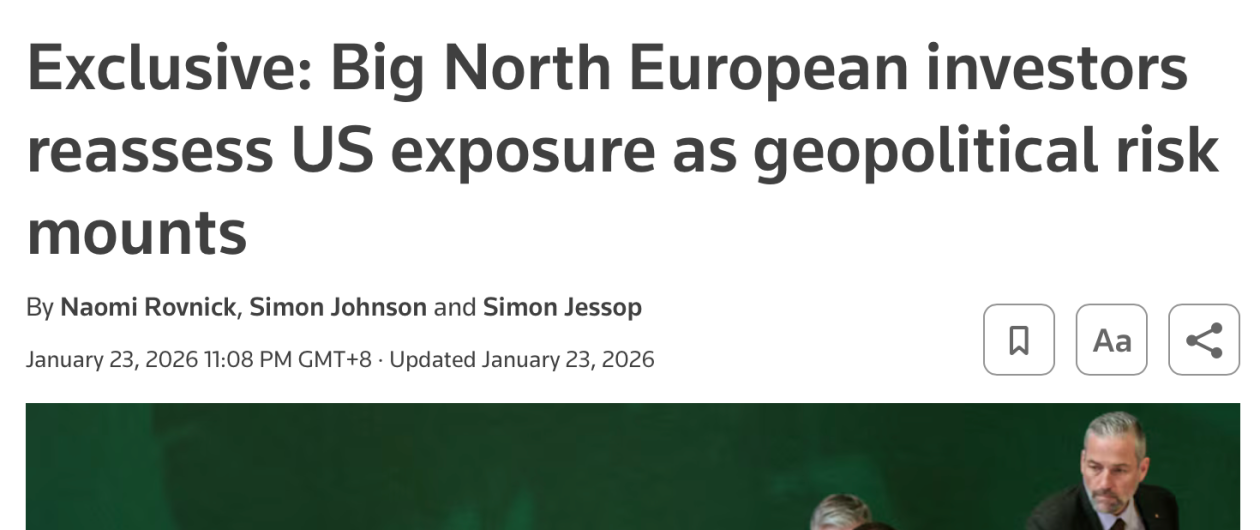
【环球网财经综合报道】据路透社等外媒报道,面对日益复杂的地缘政治紧张局势及美国财政状况的不确定性,北欧地区的大型机构投资者正对持有美国资 产表现出前所未有的担忧。包括顶级投资顾问、多家养老基金及行业机构在内的市场参与者普遍认为,美国资产的风险溢价正在上升,这一信号表明投资者 可能正逐步从全球最大的金融市场撤出资金。 市场数据印证了资金流向的微妙变化。欧洲最大的养老基金——荷兰ABP基金持有的美国国债价值,在2024年底至去年9月期间出现大幅下降,这极有可能 是其主动减持所致。瑞典Alecta表示,鉴于美国国债和美元相关风险增加,已出售了大部分美国债券;AkademikerPension则因美国政府财政状况疲软,计划 在本月底前完成美债减持。值得注意的是,AkademikerPension特别声明,此举并非针对丹麦与美国在格陵兰岛问题上的分歧发表政治声明。 尽管美国股市目前接近历史高位,且凭借强劲经济和深厚市场仍具吸引力,但政策不确定性已给美元带来压力。受关税上调和其他政策影响,美元兑主要货 币在去年下跌了10%,而30年期美国国债收益率目前维持在4.9%左右,接近全球金融危机期间的水平。 对于通常避免就时事发 ...
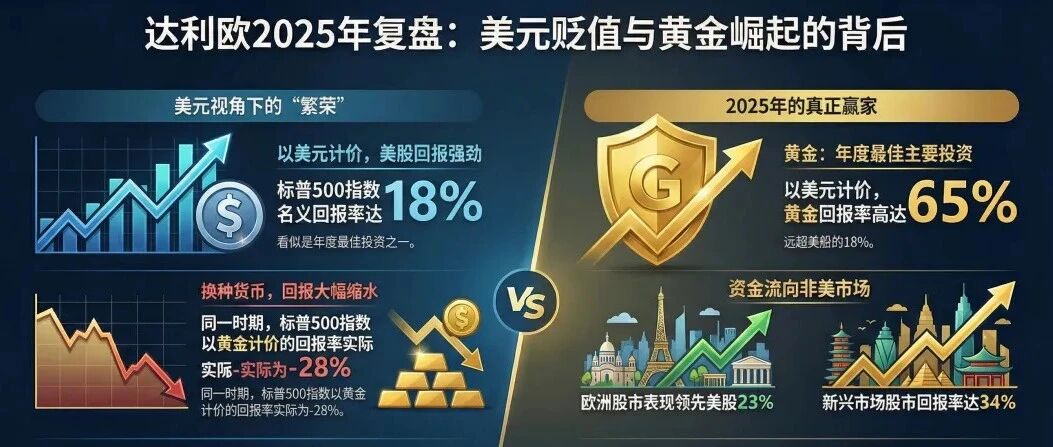
瑞·达利欧最新判断:真相不是股市繁荣,而是货币的贬值,2026年才刚开始
雪球· 2026-01-24 13:00
↑点击上面图片 加雪球核心交流群 ↑ 风险提示:本文所提到的观点仅代表个人的意见,所涉及标的不作推荐,据此买卖,风险自负。 作者:摩根在野 来源:雪球 "2025年的真正故事并非是股市或人工智能,而是货币价值的崩溃以及远离美国资产的转变。" 近期,桥水基金创始人Ray Dalio(瑞·达利欧)发布了最新的"2025年度报告与展望"。 曾经那本很火的畅销书《原则》,就是他写的。老爷子在投资领域非常成功,桥水基金旗下的"全天候策略"产品多年以来业绩优异,在海内外有非 常多的拥趸,每次他的新书和新的观点,总会对投资者有重要的参考意义。 这次Ray Dalio老爷子到底讲了啥?他对2025年的总结是什么?有哪些建议?作为全球多元配置的投资者,应该如何看待他的总结和建议?2026年 的多元资产配置应该如何调整?今天仔细研究了报告,下面我就来逐一解读。 一、瑞·达利欧的2025年总结 首先,老爷子并未被表面繁荣的美国股市所迷惑,而是发出了关于"金钱价值"和"资产泡沫"的深刻警告,他主要观点如下: 他指出,最关键的不是股票涨了多少,而是钱变得不值钱。如果以黄金(他视为唯一的非信用货币)计价,美元在2025年实际上大幅贬值。 ...
美联储主席,最大热门出炉
财联社· 2026-01-24 08:45
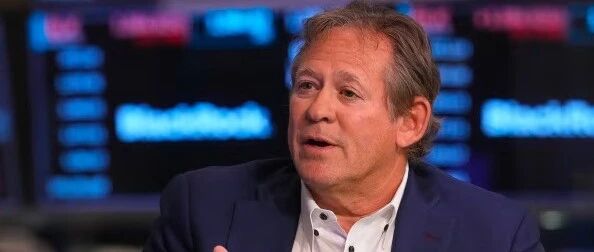
Core Viewpoint - The article discusses the potential candidacy of Rick Riedel from BlackRock for the position of Federal Reserve Chairman, highlighting his qualifications and the support he has garnered from various stakeholders, including President Trump and market participants [1][2][3]. Group 1: Candidate Profile - Rick Riedel is seen as a strong candidate for the Federal Reserve Chairman position due to his Wall Street experience and openness to Federal Reserve reforms, which aligns with the current administration's views [1][2]. - Riedel's lack of prior experience at the Federal Reserve is viewed as an advantage, distinguishing him from other candidates and allowing him to be perceived as an outsider [2][5]. - His public appearances and commentary on market conditions have received positive feedback from government insiders, further bolstering his candidacy [5]. Group 2: Market Reactions and Predictions - Support for Riedel among executives and investors at the Davos World Economic Forum has been notable, with a prediction platform indicating a 54% probability of his selection as Chairman, a significant increase from just 4% at the beginning of the year [3]. - Feedback from bond market participants has been favorable towards Riedel, indicating confidence in his potential leadership [2]. Group 3: Monetary Policy Views - Riedel has expressed concerns about the labor market and suggested that the Federal Reserve should lower the policy interest rate from the current range of 3.5%-3.75% to 3%, indicating a more aggressive approach to rate cuts than previously anticipated [6]. - He argues that high interest rates benefit wealthy savers while harming small business owners and low-income individuals, suggesting that rate cuts would be beneficial for a broader segment of the economy [6]. Group 4: Political Context - President Trump has indicated that he has completed interviews for the Federal Reserve Chairman candidates and may announce a decision soon, with Riedel being a prominent contender [8]. - There are concerns within Trump's inner circle regarding whether Riedel would follow the President's directives on interest rate cuts or maintain the Federal Reserve's independence [9]. - The selection of the next Federal Reserve Chairman is considered one of the most influential appointments of Trump's second term, especially given his previous dissatisfaction with the current Chairman, Jerome Powell [9][10].